Binance Square
#riskmanagementmastery

riskmanagementmastery

1.4M views
2,400 Discussing
ridoy930
ยท
--
๐Ÿ“Š What Is a Stop-Loss in Trading? A stop-loss is an order designed to help limit potential losses if the market moves against your trade. Before entering a position, traders often decide: ๐Ÿ”น Entry price ๐Ÿ”น Stop-loss level ๐Ÿ”น Take-profit target ๐Ÿ”น Maximum amount they are willing to risk A stop-loss does not guarantee that losses will be avoided, especially during fast market movements or price gaps. Always use proper risk management and never trade with money you cannot afford to lose. #TradingCommunity #RiskManagementMastery #crypto #TradingTales #BinanceSquareFamily

๐Ÿ“Š What Is a Stop-Loss in Trading?

A stop-loss is an order designed to help limit potential losses if the market moves against your trade.

Before entering a position, traders often decide:

๐Ÿ”น Entry price
๐Ÿ”น Stop-loss level
๐Ÿ”น Take-profit target
๐Ÿ”น Maximum amount they are willing to risk

A stop-loss does not guarantee that losses will be avoided, especially during fast market movements or price gaps. Always use proper risk management and never trade with money you cannot afford to lose.

#TradingCommunity #RiskManagementMastery #crypto #TradingTales #BinanceSquareFamily
ยท
--
Bullish
๐Ÿ”ฅ 3 Golden Rules of Risk Management in Crypto Trading Protecting your capital is far more important than chasing quick profits. To stay profitable in the long run, always follow these 3 core rules: Always Set a Stop-Loss: Never enter a trade without a predefined exit plan. A stop-loss protects your account from sudden market volatility and liquidation. Risk Only 1โ€“2% Per Trade: Never allocate more than 1% to 2% of your total portfolio risk to a single trade. This preserves your capital during consecutive loss streaks. Maintain a Positive Risk-to-Reward Ratio (RRR): Focus on trade setups offering at least a 1:2 or 1:3 ratio. A disciplined RRR ensures you remain net profitable even with a 50% win rate. Trade your plan, not your emotions! ๐Ÿ“ˆ Disclaimer: Not financial advice. Always do your own research (DYOR) before trading. #CryptoTrading #BinanceSquare #RiskManagementMastery #CryptoTips #BTC
๐Ÿ”ฅ 3 Golden Rules of Risk Management in Crypto Trading
Protecting your capital is far more important than chasing quick profits. To stay profitable in the long run, always follow these 3 core rules:
Always Set a Stop-Loss: Never enter a trade without a predefined exit plan. A stop-loss protects your account from sudden market volatility and liquidation.
Risk Only 1โ€“2% Per Trade: Never allocate more than 1% to 2% of your total portfolio risk to a single trade. This preserves your capital during consecutive loss streaks.
Maintain a Positive Risk-to-Reward Ratio (RRR): Focus on trade setups offering at least a 1:2 or 1:3 ratio. A disciplined RRR ensures you remain net profitable even with a 50% win rate.
Trade your plan, not your emotions! ๐Ÿ“ˆ
Disclaimer: Not financial advice. Always do your own research (DYOR) before trading.
#CryptoTrading #BinanceSquare #RiskManagementMastery #CryptoTips #BTC

ยท
--
Article
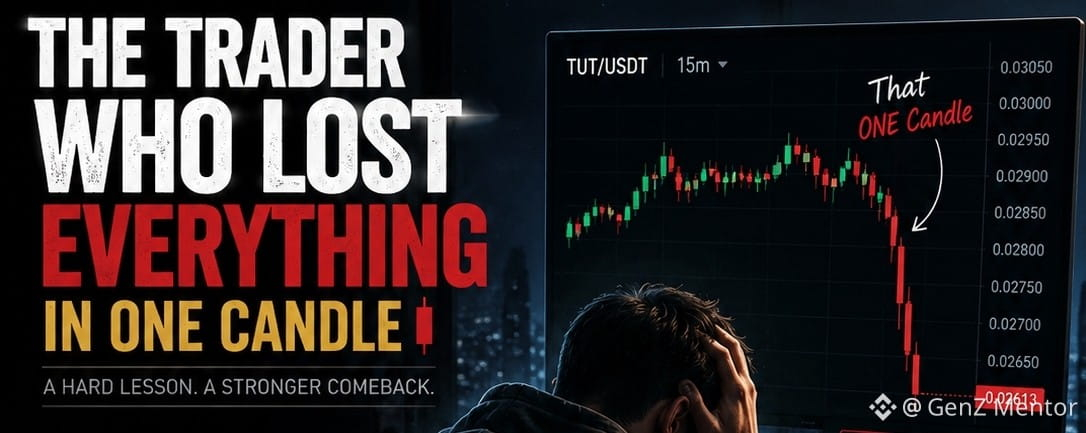
๐Ÿ•ฏ๏ธ The Trader Who Lost Everything in One CandleAt 2:17 AM, the market looked perfect. A trader had been watching the chart for hours. The setup finally appeared. Price was breaking resistance, volume was rising, and his confidence was higher than ever. He entered. Then came one candle. A sudden market move pushed price sharply against his position. He had no proper stop-loss, his position was too large, and within minutes, months of hard-earned profits were gone. He stared at the screen in silence. The market didn't care about his confidence. It didn't care how many hours he had spent analyzing the chart. It only punished one thing: poor risk management. ๐Ÿง  The Lesson The biggest mistake wasn't choosing the wrong direction. It was risking too much on one trade. A professional trader doesn't try to win every trade. They focus on surviving the losing ones. Protect your capital first. Profits come second. Before your next trade, ask yourself: โ€œIf this trade goes completely wrong, can I afford the loss?โ€ If the answer is no, your position is too big. One candle can change your account. One good risk-management rule can change your entire trading journey. ๐Ÿ“ˆ #Crypto #Trading #Bitcoinโ— #RiskManagementMastery #TradingPsychology #CryptoSuccess #BinanceSquare #Bitcoin #CryptoTradingInsights #BinanceSquareFamily

๐Ÿ•ฏ๏ธ The Trader Who Lost Everything in One Candle

At 2:17 AM, the market looked perfect.
A trader had been watching the chart for hours. The setup finally appeared. Price was breaking resistance, volume was rising, and his confidence was higher than ever.
He entered.
Then came one candle.
A sudden market move pushed price sharply against his position. He had no proper stop-loss, his position was too large, and within minutes, months of hard-earned profits were gone.
He stared at the screen in silence.
The market didn't care about his confidence.
It didn't care how many hours he had spent analyzing the chart.
It only punished one thing: poor risk management.
๐Ÿง  The Lesson
The biggest mistake wasn't choosing the wrong direction.
It was risking too much on one trade.
A professional trader doesn't try to win every trade. They focus on surviving the losing ones.
Protect your capital first. Profits come second.
Before your next trade, ask yourself:
โ€œIf this trade goes completely wrong, can I afford the loss?โ€
If the answer is no, your position is too big.
One candle can change your account.
One good risk-management rule can change your entire trading journey. ๐Ÿ“ˆ
#Crypto #Trading #Bitcoinโ— #RiskManagementMastery #TradingPsychology #CryptoSuccess #BinanceSquare #Bitcoin #CryptoTradingInsights #BinanceSquareFamily
ยท
--
๐Ÿ’ธ I lost $NVDAB 1,200 because of this 1 mistake... Mistake: Took a 10x leverage trade with NO stop loss during news. 3 Rules I follow now: 1. Never trade 5 min before/after major news 2. SL is non-negotiable on every trade 3. Max 5x leverage Discipline > Strategy What's the biggest mistake you've made in trading? Drop it below so new traders can learn ๐Ÿ‘‡ #tradingpsychology #RiskManagementMastery #crypto

๐Ÿ’ธ I lost $NVDAB 1,200 because of this 1 mistake...

Mistake: Took a 10x leverage trade with NO stop loss during news.

3 Rules I follow now:
1. Never trade 5 min before/after major news
2. SL is non-negotiable on every trade
3. Max 5x leverage

Discipline > Strategy

What's the biggest mistake you've made in trading? Drop it below so new traders can learn ๐Ÿ‘‡

#tradingpsychology #RiskManagementMastery #crypto
ยท
--
โš ๏ธ Why macro news kills 100x leverage traders Look at todayโ€™s Bitcoin charts. One economic report from Wall Street drops, the market moves by just 2-3%, and thousands of long positions get instantly liquidated! This is exactly why "whales" love to hunt high-leverage accounts during news releases Never trade without a Stop-Loss, especially when volatility is high. Manage your risk, keep your head cool, and survive the market noise. Stay safe out there! ๐Ÿ›ก๏ธ #btc #btcprice #RiskManagementMastery $BTC {spot}(BTCUSDT)

โš ๏ธ Why macro news kills 100x leverage traders

Look at todayโ€™s Bitcoin charts. One economic report from Wall Street drops, the market moves by just 2-3%, and thousands of long positions get instantly liquidated! This is exactly why "whales" love to hunt high-leverage accounts during news releases

Never trade without a Stop-Loss, especially when volatility is high. Manage your risk, keep your head cool, and survive the market noise. Stay safe out there! ๐Ÿ›ก๏ธ
#btc #btcprice #RiskManagementMastery $BTC
We need to be incredibly careful with our leverage positions at these current levels. Bitcoin $BTC is facing heavy overhead resistance , and the lack of aggressive spot buying suggests the market might clear out late buyers with a quick flush down. I am keeping a lot of stable coin cash on the sidelines, waiting to scoop up fundamentally strong coins at a discount if a pullback happens. Protect your capital and don't chase the FOMO $FOGO here. What is your survival plan if the market dips? #CryptoAnalysis #RiskManagementMastery #Write2Earn #BinanceSquare #TUT2026
We need to be incredibly careful with our leverage positions at these current levels. Bitcoin $BTC is facing heavy overhead resistance , and the lack of aggressive spot buying suggests the market might clear out late buyers with a quick flush down. I am keeping a lot of stable coin cash on the sidelines, waiting to scoop up fundamentally strong coins at a discount if a pullback happens. Protect your capital and don't chase the FOMO $FOGO here. What is your survival plan if the market dips?
#CryptoAnalysis #RiskManagementMastery #Write2Earn #BinanceSquare #TUT2026
ยท
--
๐Ÿฆ… THE HUNTER'S CODE โ€” 3Ala2 VIEW The market doesn't pay the fast. It pays the patient. Our constitution, written BEFORE any trade: 1๏ธโƒฃ No plan = No trade 2๏ธโƒฃ We don't chase rockets โ€” we wait for the kiss ๐Ÿค 3๏ธโƒฃ One position at a time. Always. 4๏ธโƒฃ The stop loss is a shield, not a shame 5๏ธโƒฃ Price hits 70% of the way to TP1 at resistance โ†’ take 25% off the table 6๏ธโƒฃ The middle of the range = the graveyard of trades We document everything: Entry โ€ข Targets โ€ข Stop โ€” published BEFORE the move, not after. Wins and losses, both on the record. Because trust is built with transparency, not with victory screenshots only. ุงู„ุตุจุฑ โ€ข ุงู„ุงู†ุถุจุงุท โ€ข ุฅุฏุงุฑุฉ ุงู„ู…ุฎุงุทุฑ ู…ุด ุดุนุงุฑุงุช โ€” ู‡ุงุฏ ุฏุณุชูˆุฑู†ุง. We don't chase rockets. We wait for the kiss ๐Ÿฆ… #Write2Earn #3ALA2 #tradingpsychology #RiskManagementMastery DYOR.
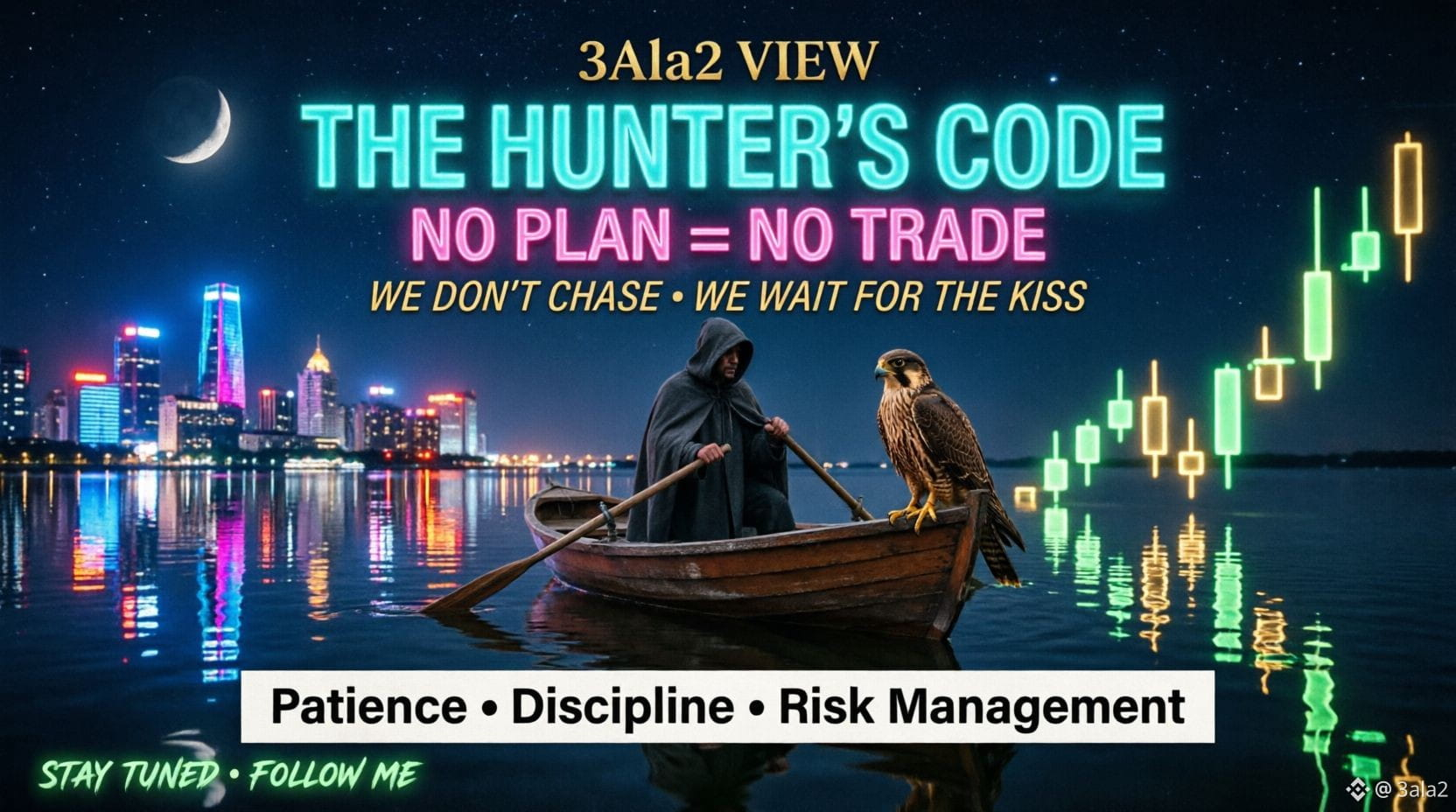
๐Ÿฆ… THE HUNTER'S CODE โ€” 3Ala2 VIEW

The market doesn't pay the fast.
It pays the patient.

Our constitution, written BEFORE any trade:

1๏ธโƒฃ No plan = No trade
2๏ธโƒฃ We don't chase rockets โ€” we wait for the kiss ๐Ÿค
3๏ธโƒฃ One position at a time. Always.
4๏ธโƒฃ The stop loss is a shield, not a shame
5๏ธโƒฃ Price hits 70% of the way to TP1 at resistance โ†’ take 25% off the table
6๏ธโƒฃ The middle of the range = the graveyard of trades

We document everything:
Entry โ€ข Targets โ€ข Stop โ€” published BEFORE the move, not after.
Wins and losses, both on the record.

Because trust is built with transparency,
not with victory screenshots only.

ุงู„ุตุจุฑ โ€ข ุงู„ุงู†ุถุจุงุท โ€ข ุฅุฏุงุฑุฉ ุงู„ู…ุฎุงุทุฑ
ู…ุด ุดุนุงุฑุงุช โ€” ู‡ุงุฏ ุฏุณุชูˆุฑู†ุง.

We don't chase rockets.
We wait for the kiss ๐Ÿฆ…

#Write2Earn #3ALA2 #tradingpsychology #RiskManagementMastery
DYOR.

ยท
--
๐Ÿ’ก STOP LOSING MONEY IN FUTURES TRADING! (3 Rules I Follow) If you keep getting liquidated, check your habit on these 3 things: 1๏ธโƒฃ Leverage is too high: Stick to 3x - 5x until your portfolio grows. 2๏ธโƒฃ No Stop Loss: Risking 100% of your margin for a 5% gain is a trap. 3๏ธโƒฃ Trading without confirmation: Wait for the candle closure! ๐Ÿ’ฌ Which of these errors ruined your last trade? Let's discuss in the comments! #CryptoTips #RiskManagementMastery #tradingStrategy #BฤฐNANCE
๐Ÿ’ก STOP LOSING MONEY IN FUTURES TRADING! (3 Rules I Follow)
If you keep getting liquidated, check your habit on these 3 things:
1๏ธโƒฃ Leverage is too high: Stick to 3x - 5x until your portfolio grows.
2๏ธโƒฃ No Stop Loss: Risking 100% of your margin for a 5% gain is a trap.
3๏ธโƒฃ Trading without confirmation: Wait for the candle closure!
๐Ÿ’ฌ Which of these errors ruined your last trade? Let's discuss in the comments!
#CryptoTips #RiskManagementMastery #tradingStrategy #BฤฐNANCE
๐Ÿงญ VIP SIGNAL ๐Ÿงญ Growth Plan โœ… ๐Ÿ’Ž Starting Capital = $10 ๐Ÿ’Ž Monthly Goal = $30 ๐Ÿ“ˆ Daily Goal = $1 Average ๐Ÿ’ฐ $1 ร— 30 Days = $30 โœ… ๐Ÿ’Ž Risk Per Trade = 2% - 3% ๐Ÿ’Ž Margin = $0.20 - $0.30 ๐Ÿ’Ž Leverage = 10X - 15X (Isolated) โš ๏ธ Never Risk More Than You Can Afford to Lose ๐Ÿš€ Small Capital โ€ข Small Risk โ€ข Consistent Growth #RiskManagementMastery #RiskControl #ProfitPotential #GrowthPlan
๐Ÿงญ VIP SIGNAL ๐Ÿงญ Growth Plan โœ…

๐Ÿ’Ž Starting Capital = $10

๐Ÿ’Ž Monthly Goal = $30

๐Ÿ“ˆ Daily Goal = $1 Average

๐Ÿ’ฐ $1 ร— 30 Days = $30 โœ…

๐Ÿ’Ž Risk Per Trade = 2% - 3%

๐Ÿ’Ž Margin = $0.20 - $0.30

๐Ÿ’Ž Leverage = 10X - 15X (Isolated)

โš ๏ธ Never Risk More Than You Can Afford to Lose

๐Ÿš€ Small Capital โ€ข Small Risk โ€ข Consistent Growth

#RiskManagementMastery #RiskControl #ProfitPotential #GrowthPlan
Risk Management A good trade is not just one that generates profitโ€”a good trade is one where your risk is defined in advance. Never ignore stop-loss and proper position sizing. ๐Ÿ“‰ #RiskManagementMastery
Risk Management

A good trade is not just one that generates profitโ€”a good trade is one where your risk is defined in advance.
Never ignore stop-loss and proper position sizing. ๐Ÿ“‰
#RiskManagementMastery
ยท
--
Article
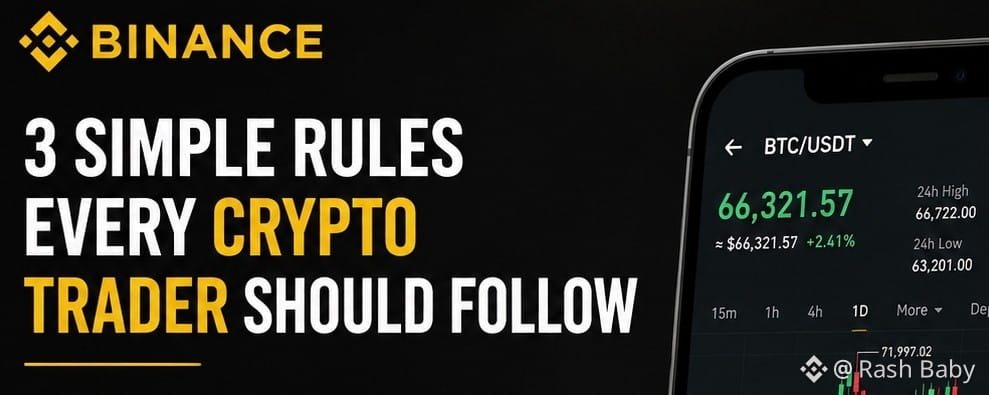
3 Simple Rules Every Crypto Trader Should Follow ๐Ÿ“ˆ3 Simple Rules Every Crypto Trader Should Follow ๐Ÿ“ˆ Crypto trading is not only about finding the next coin that can pump. The real skill is managing risk and protecting your capital. Here are 3 simple rules every trader should remember: 1๏ธโƒฃ Donโ€™t Risk Too Much on One Trade Never put your entire balance into a single trade. Even a strong setup can fail. Keeping your position size small helps you survive losing trades and stay in the market. 2๏ธโƒฃ Always Know Your Entry & Exit Before opening a trade, decide where you will enter, where you will take profit, and where you will exit if the trade goes against you. Trading without a plan often turns a small loss into a much bigger one. 3๏ธโƒฃ Donโ€™t Chase Pumping Coins When a coin suddenly goes up 20%, 50%, or even 100%, many traders enter because of FOMO. Instead of chasing the move, wait for a proper setup and confirmation. Sometimes the best trade is simply no trade. ๐Ÿ’ก Remember: Your first goal in trading should not be to make huge profits. Your first goal should be to protect your capital and stay consistent. What is the most important rule for you? ๐Ÿ‘‡ #Crypto #Binance #Trading #CryptoTrading #Bitcoin #Altcoins #TradingTips #RiskManagementMastery

3 Simple Rules Every Crypto Trader Should Follow ๐Ÿ“ˆ

3 Simple Rules Every Crypto Trader Should Follow ๐Ÿ“ˆ
Crypto trading is not only about finding the next coin that can pump. The real skill is managing risk and protecting your capital.
Here are 3 simple rules every trader should remember:
1๏ธโƒฃ Donโ€™t Risk Too Much on One Trade
Never put your entire balance into a single trade. Even a strong setup can fail. Keeping your position size small helps you survive losing trades and stay in the market.
2๏ธโƒฃ Always Know Your Entry & Exit
Before opening a trade, decide where you will enter, where you will take profit, and where you will exit if the trade goes against you.
Trading without a plan often turns a small loss into a much bigger one.
3๏ธโƒฃ Donโ€™t Chase Pumping Coins
When a coin suddenly goes up 20%, 50%, or even 100%, many traders enter because of FOMO.
Instead of chasing the move, wait for a proper setup and confirmation. Sometimes the best trade is simply no trade.
๐Ÿ’ก Remember:
Your first goal in trading should not be to make huge profits. Your first goal should be to protect your capital and stay consistent.
What is the most important rule for you? ๐Ÿ‘‡
#Crypto #Binance #Trading #CryptoTrading #Bitcoin #Altcoins #TradingTips #RiskManagementMastery
ยท
--
La regla de oro para no quemar tu cuenta de trading Muchos entran a las criptomonedas buscando hacerse ricos en dos dรญas, pero el verdadero รฉxito es sobrevivir a largo plazo. Si quieres proteger tu capital, grรกbate esto: Nunca arriesgues mรกs del 1-2% de tu capital total en una sola operaciรณn. El Stop Loss no es tu enemigo, es el cinturรณn de seguridad de tu portafolio. No uses sobreapalancamiento si estรกs operando en Futuros. El mercado es volรกtil. Es mejor ganar poco y constante, que perderlo todo en un solo movimiento en falso. ยกCuida tus fondos! BNB SOL #RiskManagementMastery ment #Futures #CryptoTips ps #Binance

La regla de oro para no quemar tu cuenta de trading

Muchos entran a las criptomonedas buscando hacerse ricos en dos dรญas, pero el verdadero รฉxito es sobrevivir a largo plazo. Si quieres proteger tu capital, grรกbate esto:

Nunca arriesgues mรกs del 1-2% de tu capital total en una sola operaciรณn.

El Stop Loss no es tu enemigo, es el cinturรณn de seguridad de tu portafolio.

No uses sobreapalancamiento si estรกs operando en Futuros. El mercado es volรกtil.

Es mejor ganar poco y constante, que perderlo todo en un solo movimiento en falso. ยกCuida tus fondos!

BNB SOL #RiskManagementMastery ment #Futures #CryptoTips ps #Binance
ยท
--
๐Ÿ›ก๏ธ 5 Simple Risk Management Rules for Crypto Crypto can give big profits, but it can also bring big losses. Managing risk should always come first. 1๏ธโƒฃ Accept the Risk Only take risks you can afford to lose. 2๏ธโƒฃ Transfer the Risk Use tools like insurance or hedging to reduce some of your exposure. 3๏ธโƒฃ Avoid the Risk If a trade looks too risky, simply stay out. Sometimes no trade is the best trade. 4๏ธโƒฃ Reduce the Risk Donโ€™t put everything into one coin. Diversifying can help reduce the impact of one bad move. 5๏ธโƒฃ Follow the 1% Rule Try not to risk more than 1% of your total capital on one trade. A stop-loss can help control the downside. ๐Ÿ’ก Extra tips: ๐Ÿ”ธ Keep long-term crypto in a secure hardware wallet. ๐Ÿ”ธ Use app based 2FA when possible. ๐Ÿ”ธ Be careful when connecting wallets to DeFi apps. ๐Ÿ”ธ Always do your own research before investing. Protect your capital first. Profits come second. ๐Ÿง  #RiskManagementMastery #CANProtocol
๐Ÿ›ก๏ธ 5 Simple Risk Management Rules for Crypto

Crypto can give big profits, but it can also bring big losses. Managing risk should always come first.

1๏ธโƒฃ Accept the Risk
Only take risks you can afford to lose.

2๏ธโƒฃ Transfer the Risk
Use tools like insurance or hedging to reduce some of your exposure.

3๏ธโƒฃ Avoid the Risk
If a trade looks too risky, simply stay out. Sometimes no trade is the best trade.

4๏ธโƒฃ Reduce the Risk
Donโ€™t put everything into one coin. Diversifying can help reduce the impact of one bad move.

5๏ธโƒฃ Follow the 1% Rule
Try not to risk more than 1% of your total capital on one trade. A stop-loss can help control the downside.

๐Ÿ’ก Extra tips:
๐Ÿ”ธ Keep long-term crypto in a secure hardware wallet.
๐Ÿ”ธ Use app based 2FA when possible.
๐Ÿ”ธ Be careful when connecting wallets to DeFi apps.
๐Ÿ”ธ Always do your own research before investing.

Protect your capital first. Profits come second. ๐Ÿง 

#RiskManagementMastery #CANProtocol
The Biggest Crypto Lesson Iโ€™m Learning ๐Ÿ’ก๐Ÿ“ˆ You donโ€™t need to become rich overnight in crypto. You need to learn how to protect your money before trying to multiply it. โœ… Donโ€™t invest money you canโ€™t afford to lose. โœ… Donโ€™t chase a coin just because it is pumping. โœ… Learn market structure and risk management. โœ… Always have a plan before entering a trade. โœ… One good decision repeated consistently is better than 10 emotional trades. Crypto rewards patience, knowledge and disciplineโ€”not desperation. Whatโ€™s the #1 crypto lesson you wish you knew when you started? ๐Ÿ‘‡ #Binance #BinanceSquare #Crypto #CryptoEducation #Trading #Bitcoin #RiskManagementMastery $AAPLB

The Biggest Crypto Lesson Iโ€™m Learning ๐Ÿ’ก๐Ÿ“ˆ

You donโ€™t need to become rich overnight in crypto.

You need to learn how to protect your money before trying to multiply it.

โœ… Donโ€™t invest money you canโ€™t afford to lose.
โœ… Donโ€™t chase a coin just because it is pumping.
โœ… Learn market structure and risk management.
โœ… Always have a plan before entering a trade.
โœ… One good decision repeated consistently is better than 10 emotional trades.

Crypto rewards patience, knowledge and disciplineโ€”not desperation.

Whatโ€™s the #1 crypto lesson you wish you knew when you started? ๐Ÿ‘‡

#Binance #BinanceSquare #Crypto #CryptoEducation #Trading #Bitcoin #RiskManagementMastery $AAPLB
The Traderโ€™s Rule ๐Ÿง  One mistake destroys more trading accounts than a bad entry: NO RISK MANAGEMENT. Even a great setup can fail. My simple rule: Risk small. Wait for confirmation. Use a stop-loss. Never revenge trade. Never increase size after a loss. You don't need to win every trade. You need to survive long enough to catch the BIG moves. ๐ŸŽฏ Agree or disagree? #tradingpsychology #RiskManagementMastery #trader #BฤฐNANCESQUARE #crypto
The Traderโ€™s Rule ๐Ÿง 

One mistake destroys more trading accounts than a bad entry:

NO RISK MANAGEMENT.

Even a great setup can fail.

My simple rule:

Risk small.
Wait for confirmation.
Use a stop-loss.
Never revenge trade.
Never increase size after a loss.

You don't need to win every trade.

You need to survive long enough to catch the BIG moves. ๐ŸŽฏ

Agree or disagree?

#tradingpsychology #RiskManagementMastery #trader #BฤฐNANCESQUARE #crypto
ยท
--
Bearish
๐Ÿš€ SMALL ACCOUNT? READ THIS.๐Ÿ‘‡ You donโ€™t always need a big account to learn how futures trading works. $GPS ๐Ÿ“Œ Trade #1 โ€ข Margin: 0.81 USDT โ€ข Position size: 16.33 USDT โ€ข Leverage: 20ร— โ€ข PNL: +3.66 USDT โ€ข ROI: +448.45% $CYS ๐Ÿ“Œ Trade #2 โ€ข Margin: 0.10 USDT โ€ข Position size: 2.15 USDT โ€ข PNL: +3.53 USDT โ€ข ROI: +3,298.88% ๐Ÿ”ฅ The interesting part: A 0.10 USDT margin produced 3.53 USDT PNL in this example. But remember: high leverage magnifies losses too. A huge ROI percentage doesn't mean huge profit in dollars. ๐Ÿ’ก Focus on: โœ… Small risk per trade โœ… Proper stop-loss โœ… Position sizing โœ… Avoiding over-leverage โœ… Protecting your capital Start small. Learn first. Survive long enough to improve. ๐Ÿ“ˆ #HOT #RiskManagementMastery
๐Ÿš€ SMALL ACCOUNT? READ THIS.๐Ÿ‘‡

You donโ€™t always need a big account to learn how futures trading works.

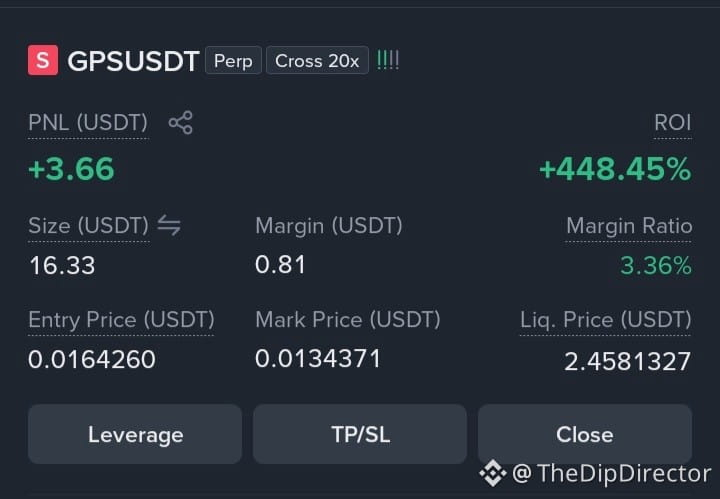
$GPS ๐Ÿ“Œ Trade #1
โ€ข Margin: 0.81 USDT
โ€ข Position size: 16.33 USDT
โ€ข Leverage: 20ร—
โ€ข PNL: +3.66 USDT
โ€ข ROI: +448.45%

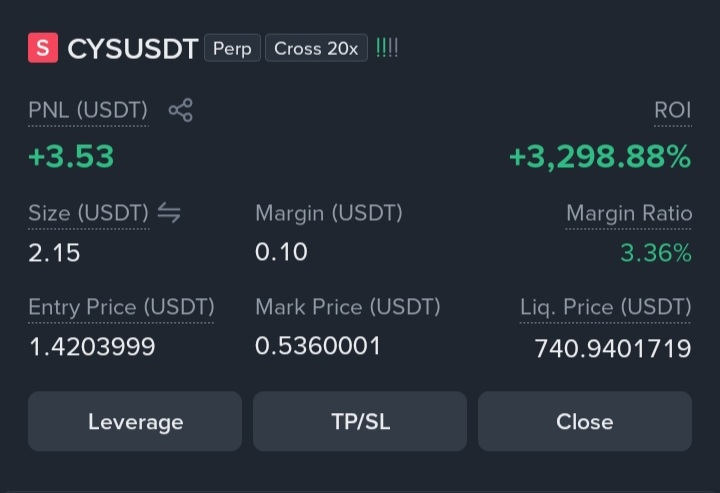
$CYS ๐Ÿ“Œ Trade #2
โ€ข Margin: 0.10 USDT
โ€ข Position size: 2.15 USDT
โ€ข PNL: +3.53 USDT
โ€ข ROI: +3,298.88%

๐Ÿ”ฅ The interesting part:
A 0.10 USDT margin produced 3.53 USDT PNL in this example.

But remember: high leverage magnifies losses too. A huge ROI percentage doesn't mean huge profit in dollars.

๐Ÿ’ก Focus on:
โœ… Small risk per trade
โœ… Proper stop-loss
โœ… Position sizing
โœ… Avoiding over-leverage
โœ… Protecting your capital

Start small. Learn first. Survive long enough to improve. ๐Ÿ“ˆ

#HOT #RiskManagementMastery
ยท
--
๐Ÿšจ CRYPTO TRADERS โ€” THIS ONE RULE CAN SAVE YOUR MONEY ๐Ÿง  Never enter a trade just because a coin is pumping. ๐Ÿšซ Before buying any crypto, check 3 things: 1๏ธโƒฃ TREND โ€” Bullish or bearish? 2๏ธโƒฃ VOLUME โ€” Is the move actually supported? 3๏ธโƒฃ RISK โ€” Where will you exit if youโ€™re wrong? Remember: ๐Ÿ“ˆ A good entry can make profit. ๐Ÿ›ก๏ธ Good risk management keeps you in the market. The goal isnโ€™t to win every trade. The goal is to survive long enough to catch the BIG moves. ๐Ÿ”ฅ Do you agree? ๐Ÿ‘‡ #trading #CryptoTradingPrediction #RiskManagementMastery #writetoearn

๐Ÿšจ CRYPTO TRADERS โ€” THIS ONE RULE CAN SAVE YOUR MONEY ๐Ÿง 

Never enter a trade just because a coin is pumping. ๐Ÿšซ

Before buying any crypto, check 3 things:

1๏ธโƒฃ TREND โ€” Bullish or bearish?
2๏ธโƒฃ VOLUME โ€” Is the move actually supported?
3๏ธโƒฃ RISK โ€” Where will you exit if youโ€™re wrong?

Remember:

๐Ÿ“ˆ A good entry can make profit.
๐Ÿ›ก๏ธ Good risk management keeps you in the market.

The goal isnโ€™t to win every trade.
The goal is to survive long enough to catch the BIG moves. ๐Ÿ”ฅ

Do you agree? ๐Ÿ‘‡

#trading #CryptoTradingPrediction #RiskManagementMastery #writetoearn
ยท
--
Bullish
๐Ÿช™ El juego de la moneda del MIT Un profesor del MIT les propuso a sus alumnos: ๐ŸŸข Cara: +US$125 ๐Ÿ”ด Cruz: โˆ’US$100 Matemรกticamente, la apuesta tiene un valor esperado de +US$12,50. Y aun asรญ, muchos NO quisieron jugar. ยฟPor quรฉ? Porque ganar en promedio no significa estar dispuesto a soportar una pรฉrdida. ๐Ÿ’ก Esa es una de las grandes lecciones para invertir: No preguntes solamente โ€œยฟcuรกnto puedo ganar?โ€ Preguntรก tambiรฉn: โ€œยฟCuรกnto puedo perder y seguir durmiendo tranquilo?โ€ En crypto, esta diferencia puede ser enorme. La rentabilidad te seduce. El riesgo te pone a prueba. ๐Ÿง  #Binance #Crypto #bitcoin #trading #Inversiones #RiskManagementMastery
๐Ÿช™ El juego de la moneda del MIT

Un profesor del MIT les propuso a sus alumnos:

๐ŸŸข Cara: +US$125
๐Ÿ”ด Cruz: โˆ’US$100

Matemรกticamente, la apuesta tiene un valor esperado de +US$12,50.

Y aun asรญ, muchos NO quisieron jugar.

ยฟPor quรฉ? Porque ganar en promedio no significa estar dispuesto a soportar una pรฉrdida.

๐Ÿ’ก Esa es una de las grandes lecciones para invertir:

No preguntes solamente โ€œยฟcuรกnto puedo ganar?โ€

Preguntรก tambiรฉn:

โ€œยฟCuรกnto puedo perder y seguir durmiendo tranquilo?โ€

En crypto, esta diferencia puede ser enorme.

La rentabilidad te seduce. El riesgo te pone a prueba. ๐Ÿง 

#Binance #Crypto #bitcoin #trading #Inversiones #RiskManagementMastery

ยท
--
Article
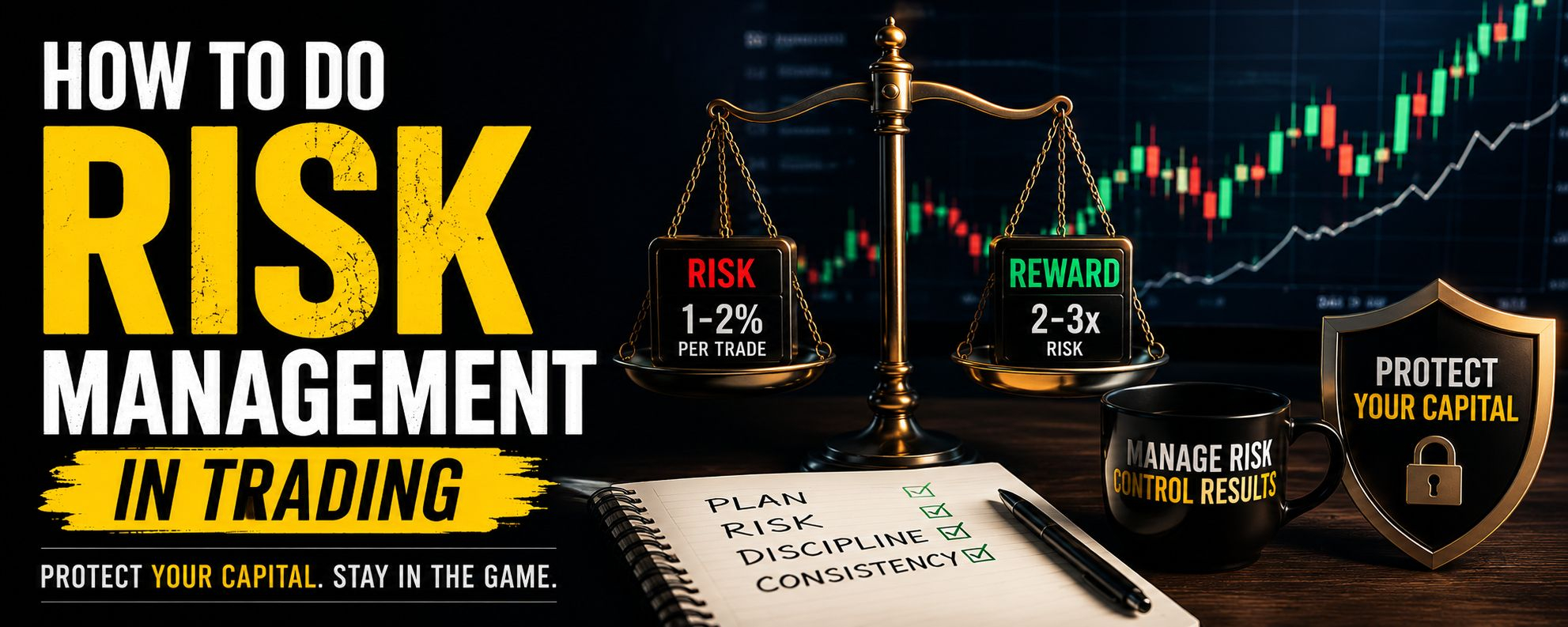
How To Do Risk Management In Crypto TradingI used to think risk management was the boring part of trading. Finding the right entry, reading market structure, catching a breakout before everyone elseโ€”those were the things that seemed important. But the longer I watch markets, the more I realize that entries are only one part of the game. Risk management is what determines whether a trader is still around after a bad week, a bad month, or simply a sequence of trades that did not work. Markets are uncertain by design. I can study a chart carefully, identify a strong setup, wait for confirmation, and still lose. That does not necessarily mean the analysis was bad. It means probability never becomes certainty just because a setup looks clean. That distinction changed the way I think about trading. Instead of asking, โ€œHow much can I make if this works?โ€ I prefer to start with a different question: โ€œWhat happens to my account if I am wrong?โ€ That question sounds defensive, but I think it actually gives me more freedom. Once the downside is defined, I can allow the trade to play out without needing every candle to confirm my opinion. Suppose I have a $10,000 trading account. If I risk 1% on a trade, my maximum planned loss is $100. That $100 should determine my position size. My position size should not determine how much I eventually discover I am risking. This is one of the most important differences I see between structured trading and emotional trading. A trader might decide to buy one full position because the setup looks good, place a stop somewhere that feels reasonable, and only afterward calculate the potential loss. I prefer reversing that process. First I decide how much money I am willing to lose. Then I determine where the trade idea becomes invalid. Only after those two things are known can I calculate an appropriate position size. The basic relationship is simple: Position Size = Maximum Acceptable Loss รท Risk per Unit The mathematics is easy. Following it consistently is harder. For me, the stop-loss should represent invalidation rather than discomfort. If I enter a long trade because I believe a particular support structure will hold, the stop should generally sit where that reasoning no longer makes sense. I do not want to move the stop simply because price is approaching it. If the market reaches the level where my original idea is invalidated, taking the loss is part of the trade. This is also why blindly using the same position size on every trade can create hidden risk. Imagine one setup requires a relatively tight stop while another requires a stop twice as wide. Using identical position sizes means the second trade may carry roughly twice the monetary risk. The chart might look similar, but the account exposure is not. Position sizing allows me to adjust for that difference. I also pay close attention to reward relative to risk, but I do not treat risk-to-reward ratios as magic numbers. A 1:3 setup is not automatically better than a 1:2 setup. The probability of reaching the target matters. If one strategy wins 60% of the time with an average winner of 1.5 times the average loser, it may have better economics than a strategy targeting five times its risk but rarely reaching the target. This is where expectancy becomes more useful than screenshots of individual winning trades. A simplified way I think about expectancy is: Expectancy = (Win Rate ร— Average Win) โˆ’ (Loss Rate ร— Average Loss) Consider a system that wins 45% of its trades. If its average winner is twice its average loser, the numbers can still work: 0.45 ร— 2R = 0.90R 0.55 ร— 1R = 0.55R That leaves an expected value of roughly +0.35R per trade before costs and execution differences. The important part is not that every trade wins. In fact, most trades could theoretically lose and a strategy could still remain profitable if the winners sufficiently outweigh the losers. That is why I think risk management becomes especially important during losing streaks. Five consecutive losses can happen even with a legitimate strategy. If I risk 1% of my current account balance per trade, five straight losses are painful but manageable. If I am risking 10% each time, the same sequence becomes destructive. Starting with $10,000 and losing 10% repeatedly would reduce the account to roughly $5,905 after five consecutive losses if each new trade risks 10% of the remaining balance. The psychological consequences can be even worse than the mathematical ones. Once a trader experiences a large drawdown, normal position sizes start feeling too small. The temptation is to increase risk to โ€œmake it back.โ€ That is where trading can quietly change from executing a strategy into chasing previous money. I try to treat previous losses as irrelevant to the next position. The market does not know that I lost three trades yesterday. The next setup does not become more likely to succeed because I need a winner. Increasing size after losing therefore changes my risk without necessarily improving my edge. Correlation is another area where risk is often underestimated. I can open several positions and feel diversified because I own different assets. But if those assets respond to essentially the same market factor, I may actually be making one large bet through several smaller trades. This is particularly visible in crypto. Holding multiple highly correlated altcoin longs during a broad market selloff can behave very differently from having several genuinely independent positions. What appears to be five separate 1% risks may become a concentrated directional exposure when volatility expands. Because of that, I think about portfolio risk rather than only trade risk. I also distinguish between normal volatility and abnormal conditions. Risk that feels comfortable during a quiet session may become excessive when liquidity disappears, spreads widen, major economic data is released, or the market begins moving violently. A stop-loss is an important tool, but it does not guarantee execution at the exact stop price. Slippage exists. Gaps exist. Exchange outages and technical problems exist. Leverage magnifies these problems. This is one reason I do not view leverage as free buying power. Leverage changes how quickly mistakes matter. A trader using excessive leverage can be directionally correct about the larger move and still get removed from the position by a relatively small move in the opposite direction. When the margin for error becomes tiny, normal market noise starts becoming account-threatening. There is also a psychological form of leverage that rarely appears in calculations. If losing a particular amount would make me unable to sleep, constantly check the chart, move my stop, close early, or revenge trade afterward, I am probably risking too muchโ€”even if a textbook says the percentage is acceptable. The correct risk level is therefore not necessarily identical for every trader. Some traders use 1% per position. Others operate below that. Certain experienced traders may deliberately use different risk models depending on strategy, volatility, portfolio size, or expected edge. I do not believe there is one universal percentage that makes trading safe. What matters more to me is whether the account can survive realistic periods of poor performance. That means thinking in sequences rather than individual trades. Before taking a strategy seriously, I want to know what ten losses would look like. I want to know the historical or simulated drawdown. I want to understand whether transaction costs materially change expectancy. I want to know whether my position sizing becomes dangerous when volatility suddenly increases. Most importantly, I want to know whether I could continue following the same process after the drawdown happens. Because that is where risk management becomes more than mathematics. A good risk system protects capital, but it also protects decision-making. Small controlled losses are psychologically easier to accept. Once losses become emotionally significant, traders start interfering with systems that may have been perfectly reasonable. I have come to see this as one of trading's uncomfortable truths: the objective is not to avoid losing. Trying to eliminate losses can actually produce worse behavior. Stops get widened. Losing positions get averaged without a predefined plan. Profits are taken too early because the trader desperately wants a win. Eventually one uncontrolled loss can erase many disciplined trades. The objective I prefer is much simpler: make individual losses unimportant enough that I can continue making rational decisions. There will always be another chart, another breakout, another trend, another market narrative and another opportunity that looks impossible to miss. Capital is what gives me the ability to participate in those opportunities. That is why I no longer think the best trader is necessarily the person who predicts the next move most accurately. Prediction attracts attention, but survival creates opportunity. I cannot control what the next candle does. I can control my position size, my predefined loss, my total exposure, my use of leverage, and whether I follow the rules I established before emotion entered the trade. For me, that is the real purpose of risk management. It is not designed to make every trade safe. No trade is completely safe. It is designed to make being wrong survivable. And in a business where being wrong is unavoidable, I think survivability is one of the closest things a trader can actually control. {spot}(NVDABUSDT) {spot}(AMZNBUSDT) #RiskManagementMastery {spot}(SPCXBUSDT)

How To Do Risk Management In Crypto Trading

I used to think risk management was the boring part of trading. Finding the right entry, reading market structure, catching a breakout before everyone elseโ€”those were the things that seemed important. But the longer I watch markets, the more I realize that entries are only one part of the game. Risk management is what determines whether a trader is still around after a bad week, a bad month, or simply a sequence of trades that did not work.
Markets are uncertain by design. I can study a chart carefully, identify a strong setup, wait for confirmation, and still lose. That does not necessarily mean the analysis was bad. It means probability never becomes certainty just because a setup looks clean.
That distinction changed the way I think about trading.
Instead of asking, โ€œHow much can I make if this works?โ€ I prefer to start with a different question: โ€œWhat happens to my account if I am wrong?โ€
That question sounds defensive, but I think it actually gives me more freedom. Once the downside is defined, I can allow the trade to play out without needing every candle to confirm my opinion.
Suppose I have a $10,000 trading account. If I risk 1% on a trade, my maximum planned loss is $100. That $100 should determine my position size. My position size should not determine how much I eventually discover I am risking.
This is one of the most important differences I see between structured trading and emotional trading.
A trader might decide to buy one full position because the setup looks good, place a stop somewhere that feels reasonable, and only afterward calculate the potential loss. I prefer reversing that process. First I decide how much money I am willing to lose. Then I determine where the trade idea becomes invalid. Only after those two things are known can I calculate an appropriate position size.
The basic relationship is simple:
Position Size = Maximum Acceptable Loss รท Risk per Unit
The mathematics is easy. Following it consistently is harder.
For me, the stop-loss should represent invalidation rather than discomfort. If I enter a long trade because I believe a particular support structure will hold, the stop should generally sit where that reasoning no longer makes sense. I do not want to move the stop simply because price is approaching it. If the market reaches the level where my original idea is invalidated, taking the loss is part of the trade.
This is also why blindly using the same position size on every trade can create hidden risk.
Imagine one setup requires a relatively tight stop while another requires a stop twice as wide. Using identical position sizes means the second trade may carry roughly twice the monetary risk. The chart might look similar, but the account exposure is not.
Position sizing allows me to adjust for that difference.
I also pay close attention to reward relative to risk, but I do not treat risk-to-reward ratios as magic numbers. A 1:3 setup is not automatically better than a 1:2 setup. The probability of reaching the target matters.
If one strategy wins 60% of the time with an average winner of 1.5 times the average loser, it may have better economics than a strategy targeting five times its risk but rarely reaching the target.
This is where expectancy becomes more useful than screenshots of individual winning trades.
A simplified way I think about expectancy is:
Expectancy = (Win Rate ร— Average Win) โˆ’ (Loss Rate ร— Average Loss)
Consider a system that wins 45% of its trades. If its average winner is twice its average loser, the numbers can still work:
0.45 ร— 2R = 0.90R
0.55 ร— 1R = 0.55R
That leaves an expected value of roughly +0.35R per trade before costs and execution differences.
The important part is not that every trade wins. In fact, most trades could theoretically lose and a strategy could still remain profitable if the winners sufficiently outweigh the losers.
That is why I think risk management becomes especially important during losing streaks.
Five consecutive losses can happen even with a legitimate strategy. If I risk 1% of my current account balance per trade, five straight losses are painful but manageable. If I am risking 10% each time, the same sequence becomes destructive.
Starting with $10,000 and losing 10% repeatedly would reduce the account to roughly $5,905 after five consecutive losses if each new trade risks 10% of the remaining balance.
The psychological consequences can be even worse than the mathematical ones.
Once a trader experiences a large drawdown, normal position sizes start feeling too small. The temptation is to increase risk to โ€œmake it back.โ€ That is where trading can quietly change from executing a strategy into chasing previous money.
I try to treat previous losses as irrelevant to the next position.
The market does not know that I lost three trades yesterday. The next setup does not become more likely to succeed because I need a winner. Increasing size after losing therefore changes my risk without necessarily improving my edge.
Correlation is another area where risk is often underestimated.
I can open several positions and feel diversified because I own different assets. But if those assets respond to essentially the same market factor, I may actually be making one large bet through several smaller trades.
This is particularly visible in crypto. Holding multiple highly correlated altcoin longs during a broad market selloff can behave very differently from having several genuinely independent positions. What appears to be five separate 1% risks may become a concentrated directional exposure when volatility expands.
Because of that, I think about portfolio risk rather than only trade risk.
I also distinguish between normal volatility and abnormal conditions. Risk that feels comfortable during a quiet session may become excessive when liquidity disappears, spreads widen, major economic data is released, or the market begins moving violently.
A stop-loss is an important tool, but it does not guarantee execution at the exact stop price. Slippage exists. Gaps exist. Exchange outages and technical problems exist. Leverage magnifies these problems.
This is one reason I do not view leverage as free buying power.
Leverage changes how quickly mistakes matter.
A trader using excessive leverage can be directionally correct about the larger move and still get removed from the position by a relatively small move in the opposite direction. When the margin for error becomes tiny, normal market noise starts becoming account-threatening.
There is also a psychological form of leverage that rarely appears in calculations.
If losing a particular amount would make me unable to sleep, constantly check the chart, move my stop, close early, or revenge trade afterward, I am probably risking too muchโ€”even if a textbook says the percentage is acceptable.
The correct risk level is therefore not necessarily identical for every trader.
Some traders use 1% per position. Others operate below that. Certain experienced traders may deliberately use different risk models depending on strategy, volatility, portfolio size, or expected edge. I do not believe there is one universal percentage that makes trading safe.
What matters more to me is whether the account can survive realistic periods of poor performance.
That means thinking in sequences rather than individual trades.
Before taking a strategy seriously, I want to know what ten losses would look like. I want to know the historical or simulated drawdown. I want to understand whether transaction costs materially change expectancy. I want to know whether my position sizing becomes dangerous when volatility suddenly increases.
Most importantly, I want to know whether I could continue following the same process after the drawdown happens.
Because that is where risk management becomes more than mathematics.
A good risk system protects capital, but it also protects decision-making. Small controlled losses are psychologically easier to accept. Once losses become emotionally significant, traders start interfering with systems that may have been perfectly reasonable.
I have come to see this as one of trading's uncomfortable truths: the objective is not to avoid losing.
Trying to eliminate losses can actually produce worse behavior. Stops get widened. Losing positions get averaged without a predefined plan. Profits are taken too early because the trader desperately wants a win. Eventually one uncontrolled loss can erase many disciplined trades.
The objective I prefer is much simpler: make individual losses unimportant enough that I can continue making rational decisions.
There will always be another chart, another breakout, another trend, another market narrative and another opportunity that looks impossible to miss. Capital is what gives me the ability to participate in those opportunities.
That is why I no longer think the best trader is necessarily the person who predicts the next move most accurately. Prediction attracts attention, but survival creates opportunity.
I cannot control what the next candle does. I can control my position size, my predefined loss, my total exposure, my use of leverage, and whether I follow the rules I established before emotion entered the trade.
For me, that is the real purpose of risk management. It is not designed to make every trade safe. No trade is completely safe. It is designed to make being wrong survivable.
And in a business where being wrong is unavoidable, I think survivability is one of the closest things a trader can actually control.

#RiskManagementMastery
Log in to explore more content
Join global crypto users on Binance Square
โšก๏ธ Get latest and useful information about crypto.
๐Ÿ’ฌ Trusted by the worldโ€™s largest crypto exchange.
๐Ÿ‘ Discover real insights from verified creators.
Email / Phone number