Binance Square

lorenzoprotocol

1.7M views
26,332 Discussing
Hazel crypto
--
I had a conversation recently with someone who has been holding Bitcoin for almost a decade. He told me he believed the best way to honor BTC was to do nothing with it. I understood his view, but I also knew he had never seen a system that treated Bitcoin with the same respect while still allowing it to grow. When I introduced him to @LorenzoProtocol , the idea finally made sense to him. Liquid staking keeps BTC in a liquid and usable form. Restaking expands its role without compromising its nature. The structured strategies inside the protocol surprised him most. They were built with patience and intention, #lorenzoprotocol not with wild assumptions about the market. They felt like financial tools with purpose. He asked how all these parts connect, and that led to $BANK . It is the link that ties user access, strategy participation and economic alignment. It gives a clear path for people who want to move from passive holding to thoughtful engagement. That moment made something clear to me. does not compete with Bitcoin. It completes a part of Bitcoin that has been missing for years.
I had a conversation recently with someone who has been holding Bitcoin for almost a decade. He told me he believed the best way to honor BTC was to do nothing with it. I understood his view, but I also knew he had never seen a system that treated Bitcoin with the same respect while still allowing it to grow.

When I introduced him to @Lorenzo Protocol , the idea finally made sense to him. Liquid staking keeps BTC in a liquid and usable form. Restaking expands its role without compromising its nature. The structured strategies inside the protocol surprised him most. They were built with patience and intention, #lorenzoprotocol not with wild assumptions about the market. They felt like financial tools with purpose. He asked how all these parts connect, and that led to $BANK .

It is the link that ties user access, strategy participation and economic alignment. It gives a clear path for people who want to move from passive holding to thoughtful engagement. That moment made something clear to me. does not compete with Bitcoin. It completes a part of Bitcoin that has been missing for years.
Pamila Pavlik v7Ok:
Market climbing higher
买了100u的$BANK 理由如下: 1、项目@LorenzoProtocol 是由币安YZi Labs 亲手孵化扶持的,项目定位是链上资产管理平台,和近期币安在链上扶持开通美股交易关联度非常高,换句话说,这个项目具备了操作热点的基础,还有高爆发的可能性。 2、项目创始人Matt Ye 有一个职场履历非常吸引人,那就是在Jump Trading 工作过,我想也正是这个背景才让币安大力扶持这个项目作为现货交易。 3、我个人正在参与这个项目的广场创作者任务,这是其中一个要求,我认为只有用心,并真金白银的支持这个项目,才可能深度理解并给读者朋友们带来更深层次的干货或者收货!!! #lorenzoprotocol $BANK
买了100u的$BANK

理由如下:

1、项目@Lorenzo Protocol 是由币安YZi Labs 亲手孵化扶持的,项目定位是链上资产管理平台,和近期币安在链上扶持开通美股交易关联度非常高,换句话说,这个项目具备了操作热点的基础,还有高爆发的可能性。

2、项目创始人Matt Ye 有一个职场履历非常吸引人,那就是在Jump Trading 工作过,我想也正是这个背景才让币安大力扶持这个项目作为现货交易。

3、我个人正在参与这个项目的广场创作者任务,这是其中一个要求,我认为只有用心,并真金白银的支持这个项目,才可能深度理解并给读者朋友们带来更深层次的干货或者收货!!!

#lorenzoprotocol $BANK
El Dilema de Bitcoin: ¿Vender para ganar o Holdear para siempre?Históricamente, tenías que elegir: Holdear: Esperar que el precio suba (Ganancia de Capital).Vender: Para tener liquidez o invertir en otra cosa. Lorenzo Protocol ( $BANK ) elimina este dilema con el Liquid Staking. 💎 El Truco del "Doble Dip": Al hacer staking de tus BTC con Lorenzo, obtienes un token líquido (stBTC). ✅ Sigues expuesto a la subida de precio de Bitcoin (si BTC se va a $100k, tú ganas).✅ ADEMÁS, generas un rendimiento (Yield) pasivo sobre ese capital. Es la evolución financiera definitiva: Apreciación del Activo + Flujo de Caja. 🇬🇧 English Summary: Historically, Bitcoiners had to choose between HODLing for price appreciation or selling for liquidity. Lorenzo Protocol solves this via Liquid Staking. You keep the exposure to Bitcoin's price upside (Capital Gains) AND earn passive yield on top of it. It's the ultimate "Double Dip" strategy for the 2025 cycle. 👇 En este Black Friday... ¿Estás buscando ofertas para comprar más o buscando formas de rentabilizar lo que ya tienes? #LorenzoProtocol @LorenzoProtocol #lorenzoprotocol #BTCFi #PassiveIncome #BlackFridayCrypto

El Dilema de Bitcoin: ¿Vender para ganar o Holdear para siempre?

Históricamente, tenías que elegir:
Holdear: Esperar que el precio suba (Ganancia de Capital).Vender: Para tener liquidez o invertir en otra cosa.
Lorenzo Protocol ( $BANK ) elimina este dilema con el Liquid Staking.
💎 El Truco del "Doble Dip": Al hacer staking de tus BTC con Lorenzo, obtienes un token líquido (stBTC).
✅ Sigues expuesto a la subida de precio de Bitcoin (si BTC se va a $100k, tú ganas).✅ ADEMÁS, generas un rendimiento (Yield) pasivo sobre ese capital.
Es la evolución financiera definitiva: Apreciación del Activo + Flujo de Caja.
🇬🇧 English Summary: Historically, Bitcoiners had to choose between HODLing for price appreciation or selling for liquidity. Lorenzo Protocol solves this via Liquid Staking. You keep the exposure to Bitcoin's price upside (Capital Gains) AND earn passive yield on top of it. It's the ultimate "Double Dip" strategy for the 2025 cycle.
👇 En este Black Friday... ¿Estás buscando ofertas para comprar más o buscando formas de rentabilizar lo que ya tienes?
#LorenzoProtocol @Lorenzo Protocol #lorenzoprotocol #BTCFi #PassiveIncome #BlackFridayCrypto
A Story About Money That Wants to Grow UpThere's one funny thing about money in the crypto world: it always wants to be a teenager forever. Wild, impulsive, changes mood quickly, full of drama. Today it feels the strongest, tomorrow it's already curled up because the market has fallen. Some people enjoy that; like watching a soap opera that never ends. But money, if it could choose, might actually want to grow up. It wants to have a schedule, have structure, have long-term plans. It wants to work, not always be chased by volatility. And in the gap of that desire, the Lorenzo Protocol finds its place, as a safe space for money that is tired of surfing without a board. Lorenzo didn't come with a big trumpet or a fireworks party. He appeared more like an old friend gently knocking on the door, saying, “Hey, if you want a bit of calm, I have a method.” Friendly, simple, but hiding a truly complex mechanism behind his calm smile. What makes Lorenzo different is how it treats yield. Many platforms rush it to run fast, but Lorenzo invites it to sit down, drink tea, assess all risks, and then move. They don't force yields to look extraordinary; they just ensure everything is consistent. Sometimes, people say, that's how adults work, not roaring to prove themselves, just disciplined in playing their roles. At the heart of its operations, Lorenzo is like a botanical garden where various financial flowers are neatly arranged. There are real-world assets strategies growing like old trees; there is liquidity management flowing like a clear river; there are instruments planted slowly, given time, and allowed to root in a non-dramatic way. Everything happens without shouting, without sensationalism. It is precisely that calmness that makes it feel modern. Interestingly, Lorenzo doesn't try to beat the market noise. He actually offers it a place to rest. The crypto world needs both, a storm and a dock. Many projects want to be the storm, fierce, fast, striking. Lorenzo prefers to be that dock, a place where people can moor some funds, ensuring they don't sink if the storm comes again. What people rarely realize is that the right financial products don't have to be glamorous. Many of the most enduring ones actually appear humble. Lorenzo understands that; he doesn't try to be an instant legend. He chooses his path: to be an infrastructure device stable enough to be forgotten for a moment—because it is precisely those that usually work best. Sometimes, when you read the mechanisms, you feel as if you're tracing the notes of an economic engineer who likes to work late at night. There is precision, there are calculations, there is patience. But everything is presented in a non-patronizing way. They seem to say, “Don't worry, we've arranged everything so you don't have to stress.” What makes Lorenzo even more relevant is the rhythm of today's world. After years of the crypto community spending energy chasing adrenaline, more and more are asking: where is the shelter when the market is too hot? where is the place to store profits without fear of losing them due to the noise? The answer doesn't have to be grand. No need for crystal towers or jumping graphs. Sometimes the answer is just a protocol that wants to work quietly. If it had to be likened, the Lorenzo Protocol is like someone arriving at a crowded party with a thermos of hot coffee and saying, “If everyone is tired, I'm here.” People may not approach immediately, but when the music stops and the lights dim, that warm coffee feels much more important than the loud music earlier. In the end, Lorenzo offered something simple yet rare: a boring sense of security. Stability that remains productive. Calmness that continues to yield. And in a world that often forgets that money needs a home, they try to build it in an honest way. If the future of DeFi truly wants to mature, perhaps later people will say that Lorenzo is one of the places that helped crypto learn to grow up. And ironically, there is nothing heroic about it, but that is precisely where the real heroism lies. @LorenzoProtocol #lorenzoprotocol $BANK

A Story About Money That Wants to Grow Up

There's one funny thing about money in the crypto world: it always wants to be a teenager forever. Wild, impulsive, changes mood quickly, full of drama. Today it feels the strongest, tomorrow it's already curled up because the market has fallen. Some people enjoy that; like watching a soap opera that never ends.
But money, if it could choose, might actually want to grow up. It wants to have a schedule, have structure, have long-term plans. It wants to work, not always be chased by volatility. And in the gap of that desire, the Lorenzo Protocol finds its place, as a safe space for money that is tired of surfing without a board.
Lorenzo didn't come with a big trumpet or a fireworks party. He appeared more like an old friend gently knocking on the door, saying, “Hey, if you want a bit of calm, I have a method.” Friendly, simple, but hiding a truly complex mechanism behind his calm smile.
What makes Lorenzo different is how it treats yield. Many platforms rush it to run fast, but Lorenzo invites it to sit down, drink tea, assess all risks, and then move. They don't force yields to look extraordinary; they just ensure everything is consistent. Sometimes, people say, that's how adults work, not roaring to prove themselves, just disciplined in playing their roles.
At the heart of its operations, Lorenzo is like a botanical garden where various financial flowers are neatly arranged. There are real-world assets strategies growing like old trees; there is liquidity management flowing like a clear river; there are instruments planted slowly, given time, and allowed to root in a non-dramatic way. Everything happens without shouting, without sensationalism. It is precisely that calmness that makes it feel modern.
Interestingly, Lorenzo doesn't try to beat the market noise. He actually offers it a place to rest. The crypto world needs both, a storm and a dock. Many projects want to be the storm, fierce, fast, striking. Lorenzo prefers to be that dock, a place where people can moor some funds, ensuring they don't sink if the storm comes again.
What people rarely realize is that the right financial products don't have to be glamorous. Many of the most enduring ones actually appear humble. Lorenzo understands that; he doesn't try to be an instant legend. He chooses his path: to be an infrastructure device stable enough to be forgotten for a moment—because it is precisely those that usually work best.
Sometimes, when you read the mechanisms, you feel as if you're tracing the notes of an economic engineer who likes to work late at night. There is precision, there are calculations, there is patience. But everything is presented in a non-patronizing way. They seem to say, “Don't worry, we've arranged everything so you don't have to stress.”
What makes Lorenzo even more relevant is the rhythm of today's world. After years of the crypto community spending energy chasing adrenaline, more and more are asking:
where is the shelter when the market is too hot?
where is the place to store profits without fear of losing them due to the noise?
The answer doesn't have to be grand. No need for crystal towers or jumping graphs. Sometimes the answer is just a protocol that wants to work quietly.
If it had to be likened, the Lorenzo Protocol is like someone arriving at a crowded party with a thermos of hot coffee and saying, “If everyone is tired, I'm here.” People may not approach immediately, but when the music stops and the lights dim, that warm coffee feels much more important than the loud music earlier.
In the end, Lorenzo offered something simple yet rare: a boring sense of security. Stability that remains productive. Calmness that continues to yield. And in a world that often forgets that money needs a home, they try to build it in an honest way.
If the future of DeFi truly wants to mature, perhaps later people will say that Lorenzo is one of the places that helped crypto learn to grow up.
And ironically, there is nothing heroic about it, but that is precisely where the real heroism lies.
@Lorenzo Protocol #lorenzoprotocol $BANK
Lorenzo Protocol gives me a feeling I do not get from most DeFi platforms. Each time I explore it, the approach to on chain strategies feels clearer and more practical. The way OTFs turn complex ideas into something simple makes the whole system easier to trust. The vault setup is clean and gives you a clear look at how strategies move, which is rare in this space. I also like how the $BANK token brings real purpose to governance and how veBANK rewards people who genuinely want to stay long term. It feels like a protocol built with both structure and care, and that balance is what keeps bringing me back. @LorenzoProtocol #lorenzoprotocol #LorenzoProtocol
Lorenzo Protocol gives me a feeling I do not get from most DeFi platforms.

Each time I explore it, the approach to on chain strategies feels clearer and more practical. The way OTFs turn complex ideas into something simple makes the whole system easier to trust.

The vault setup is clean and gives you a clear look at how strategies move, which is rare in this space. I also like how the $BANK token brings real purpose to governance and how veBANK rewards people who genuinely want to stay long term.

It feels like a protocol built with both structure and care, and that balance is what keeps bringing me back.

@Lorenzo Protocol #lorenzoprotocol #LorenzoProtocol
Today's PNL
2025-11-28
+$82.14
+24.87%
lalmuhammad 123:
lal
那天凌晨三点,我算了一笔BTC的“机会成本” 昨晚睡不着,我又习惯性地刷起了BTC价格。但这次,我没盯着涨跌,而是在备忘录里写了一行字:“如果牛市没来,我的BTC除了‘信仰’,还剩下什么?” 这个念头让我有点慌。过去十年,我们习惯了“买入-持有-等待”的单一剧本。但剧本外的成本呢?那些本可以参与建设、赚取收益的机会,那些在熊市里本可以积累的筹码,全在“等待”中被默默消耗了。这就像守着一片肥沃的土地,却从不播种。 直到我把 Lorenzo Protocol 的机制,套进这个“机会成本”的框架里,事情才开始变得清晰。我不想再做场景推演了,我想和你算三笔账。 第一笔账,是给“信仰者”算的安全账。 我们这类人,最怕的不是不赚钱,而是亏掉本金。Lorenzo 的本金票,我第一次理解它时,想到的不是收益,而是 “止损型进攻” 。它像一个永不沉没的航空母舰,我的 BTC 本金就是甲板。无论市场风浪多大,甲板永远在那里。而在这个绝对安全的基础上,收益票才是起飞的战机。这笔账算完,我意识到,安全不是不作为,而是为所有作为兜底。 我不再是“冒险”,而是在一个可控的防御工事里,进行战术出击。 第二笔账,是给“建设者”算的贡献账。 我们总说相信BTC生态,但我们的BTC大部分时间都在冷钱包里沉睡,对生态没有任何贡献。Lorenzo 让我看到,我的BTC可以通过可靠的策略,真实地参与到生态的DeFi活动中,成为支撑网络运行的生产性资本。 这笔账算的不是年化多少,而是:我的资产,终于从旁观者变成了参与者。 它不仅在价值上属于这个生态,在功能上也成为了生态的一部分。这种“我在参与建设”的感觉,远比冰冷的收益率数字更让人满足。 第三笔账,是给“现实主义者”算的效率账。 我们都是普通人,既想要安全,又渴望增长。以前我们在这两者之间做的是“选择题”,非此即彼。而 Lorenzo 的本息分离结构,让我们第一次可以做 “配置题”。 我可以根据我对市场的判断和我的风险偏好,自由调配“航母”(本金票)和“战机”(收益票)的比例。市场明朗时,多派战机出击;迷雾重重时,就让舰队稳坐钓鱼台。这笔账算的是资产掌控力。我不再是被动地祈祷牛市,而是主动地管理我的资产在不同周期里的状态。 算清这三笔账,天都快亮了。但我心里那股因为“不确定性”而产生的焦虑,反而平复了。 我突然觉得,我们这代BTC持有者的叙事,应该被更新了。我们不再是“HODL”的苦行僧,而是可以成为加密经济的“微观主权资本”。我们的每一枚BTC,都可以在保证主权和安全的前提下,高效、灵活地为我们工作。 Lorenzo Protocol 提供的,正是这样一个财务操作系统。它不鼓吹暴富,而是致力于解决我们最深的痛点:在拥抱未来的同时,如何牢牢地守住过去积累的成果。 我的BTC,终于醒了。它不再只是静静地躺在那里等待被拯救,而是开始起身,为我开疆拓土。 @LorenzoProtocol $BANK #lorenzoprotocol

那天凌晨三点,我算了一笔BTC的“机会成本”

昨晚睡不着,我又习惯性地刷起了BTC价格。但这次,我没盯着涨跌,而是在备忘录里写了一行字:“如果牛市没来,我的BTC除了‘信仰’,还剩下什么?”
这个念头让我有点慌。过去十年,我们习惯了“买入-持有-等待”的单一剧本。但剧本外的成本呢?那些本可以参与建设、赚取收益的机会,那些在熊市里本可以积累的筹码,全在“等待”中被默默消耗了。这就像守着一片肥沃的土地,却从不播种。
直到我把 Lorenzo Protocol 的机制,套进这个“机会成本”的框架里,事情才开始变得清晰。我不想再做场景推演了,我想和你算三笔账。
第一笔账,是给“信仰者”算的安全账。
我们这类人,最怕的不是不赚钱,而是亏掉本金。Lorenzo 的本金票,我第一次理解它时,想到的不是收益,而是 “止损型进攻” 。它像一个永不沉没的航空母舰,我的 BTC 本金就是甲板。无论市场风浪多大,甲板永远在那里。而在这个绝对安全的基础上,收益票才是起飞的战机。这笔账算完,我意识到,安全不是不作为,而是为所有作为兜底。 我不再是“冒险”,而是在一个可控的防御工事里,进行战术出击。
第二笔账,是给“建设者”算的贡献账。
我们总说相信BTC生态,但我们的BTC大部分时间都在冷钱包里沉睡,对生态没有任何贡献。Lorenzo 让我看到,我的BTC可以通过可靠的策略,真实地参与到生态的DeFi活动中,成为支撑网络运行的生产性资本。
这笔账算的不是年化多少,而是:我的资产,终于从旁观者变成了参与者。 它不仅在价值上属于这个生态,在功能上也成为了生态的一部分。这种“我在参与建设”的感觉,远比冰冷的收益率数字更让人满足。
第三笔账,是给“现实主义者”算的效率账。
我们都是普通人,既想要安全,又渴望增长。以前我们在这两者之间做的是“选择题”,非此即彼。而 Lorenzo 的本息分离结构,让我们第一次可以做 “配置题”。
我可以根据我对市场的判断和我的风险偏好,自由调配“航母”(本金票)和“战机”(收益票)的比例。市场明朗时,多派战机出击;迷雾重重时,就让舰队稳坐钓鱼台。这笔账算的是资产掌控力。我不再是被动地祈祷牛市,而是主动地管理我的资产在不同周期里的状态。
算清这三笔账,天都快亮了。但我心里那股因为“不确定性”而产生的焦虑,反而平复了。
我突然觉得,我们这代BTC持有者的叙事,应该被更新了。我们不再是“HODL”的苦行僧,而是可以成为加密经济的“微观主权资本”。我们的每一枚BTC,都可以在保证主权和安全的前提下,高效、灵活地为我们工作。
Lorenzo Protocol 提供的,正是这样一个财务操作系统。它不鼓吹暴富,而是致力于解决我们最深的痛点:在拥抱未来的同时,如何牢牢地守住过去积累的成果。
我的BTC,终于醒了。它不再只是静静地躺在那里等待被拯救,而是开始起身,为我开疆拓土。
@Lorenzo Protocol $BANK #lorenzoprotocol
于井志:
666
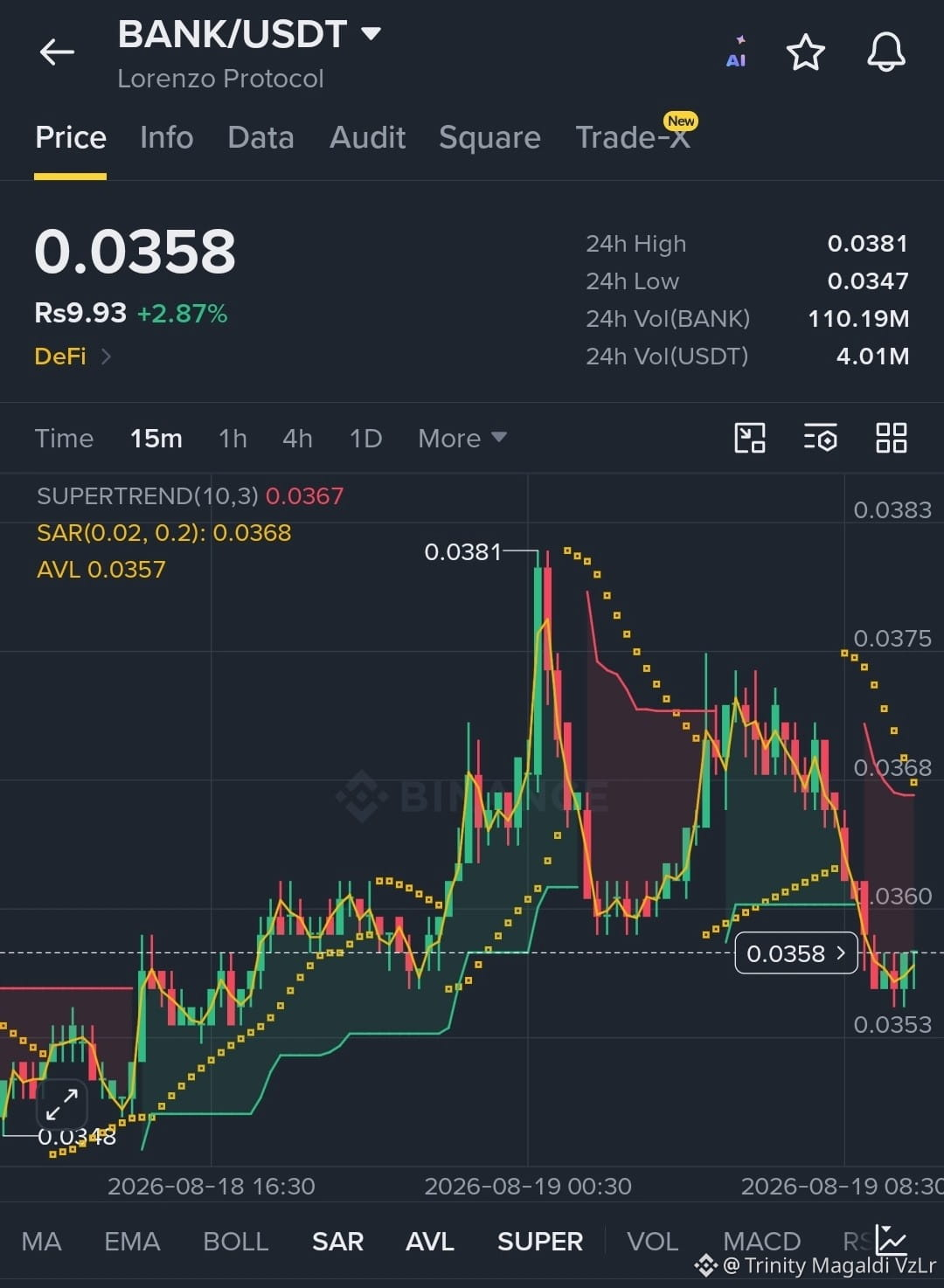
$BANK {spot}(BANKUSDT) 在过去 24 小时内下跌约 6.5%,但项目本身依然展现出强劲的长期价值与独特优势,市场关注度持续提升。以下是积极亮点总结: 1. 创新设计:BANK 所依托的 Lorenzo Protocol 正在重塑链上资产管理模式,凭借透明、结构化的金融产品设计不断吸引新用户。 2. 技术优势:协议在多策略金库、链上结构化产品及 BTC 流动性解决方案方面持续发展,强化了 BANK 的核心价值支撑。 3. 社区信心:社区对 Lorenzo 的长期愿景与治理机制保持高度认可,BANK 的治理与生态激励模型进一步推动生态扩张。 #lorenzoprotocol @LorenzoProtocol
$BANK
在过去 24 小时内下跌约 6.5%,但项目本身依然展现出强劲的长期价值与独特优势,市场关注度持续提升。以下是积极亮点总结:

1. 创新设计:BANK 所依托的 Lorenzo Protocol 正在重塑链上资产管理模式,凭借透明、结构化的金融产品设计不断吸引新用户。

2. 技术优势:协议在多策略金库、链上结构化产品及 BTC 流动性解决方案方面持续发展,强化了 BANK 的核心价值支撑。

3. 社区信心:社区对 Lorenzo 的长期愿景与治理机制保持高度认可,BANK 的治理与生态激励模型进一步推动生态扩张。
#lorenzoprotocol @Lorenzo Protocol
--
Bullish
Lorenzo Protocol makes advanced financial strategies simple for everyday users. Instead of forcing people to understand complicated trading systems or risky DeFi techniques, Lorenzo wraps everything into On-Chain Traded Funds (OTFs). These are tokenized portfolios that anyone can buy and hold without managing individual assets. For example, the USD1+ OTF combines three types of yield: returns from tokenized real-world assets, profits from professional quantitative trading, and earnings from decentralized finance. Users simply deposit stablecoins, receive sUSD1+, and watch their holdings grow as the fund gains value. The system updates automatically, and the performance is recorded on-chain where anyone can verify it. What makes Lorenzo especially beginner-friendly is its clear structure. Every strategy has its own vault. Each vault contributes to the OTF’s performance. And users don’t need to adjust anything manually. The BANK token gives the community control over how the protocol evolves. BANK holders can vote on key decisions, influence strategy allocation, and shape the platform’s future. For newcomers looking for a safer, professionally-managed way to join DeFi, Lorenzo offers clarity, transparency, and performance without complexity. #lorenzoprotocol $BANK {future}(BANKUSDT) @LorenzoProtocol
Lorenzo Protocol makes advanced financial strategies simple for everyday users. Instead of forcing people to understand complicated trading systems or risky DeFi techniques, Lorenzo wraps everything into On-Chain Traded Funds (OTFs). These are tokenized portfolios that anyone can buy and hold without managing individual assets.
For example, the USD1+ OTF combines three types of yield: returns from tokenized real-world assets, profits from professional quantitative trading, and earnings from decentralized finance. Users simply deposit stablecoins, receive sUSD1+, and watch their holdings grow as the fund gains value. The system updates automatically, and the performance is recorded on-chain where anyone can verify it.
What makes Lorenzo especially beginner-friendly is its clear structure. Every strategy has its own vault. Each vault contributes to the OTF’s performance. And users don’t need to adjust anything manually.
The BANK token gives the community control over how the protocol evolves. BANK holders can vote on key decisions, influence strategy allocation, and shape the platform’s future.
For newcomers looking for a safer, professionally-managed way to join DeFi, Lorenzo offers clarity, transparency, and performance without complexity.

#lorenzoprotocol $BANK

@Lorenzo Protocol
Lorenzo Protocol The On Chain Investing Layer That Is Quietly Becoming A Serious Force Some projects rise because of hype, but others rise because they solve a real problem at exactly the right moment. Lorenzo Protocol is firmly in the second category. The crypto world has matured fast, yet most users still struggle to access advanced strategies like quant trading, managed futures, volatility products, or diversified yield portfolios. These strategies usually exist behind closed doors in traditional finance, reserved for institutions or high net worth investors. Lorenzo aims to change that completely by bringing serious financial strategies on chain in a simple and accessible way. What makes Lorenzo so refreshing is the clarity of its mission. It is not trying to be a general DeFi protocol. It is not trying to be a new farm token. It is not chasing hype cycles. Lorenzo wants to be a clean and powerful asset management layer where anyone can access structured financial strategies without needing deep trading knowledge. The more you explore the protocol, the more you realize how big this vision actually is. The backbone of Lorenzo is its OTF systems which stands for On Chain Traded Funds. These funds work like tokenized financial instruments that bundle strategies inside vaults. Instead of users manually trading, adjusting risk, or managing positions, they simply mint an OTF token that represents a curated strategy. This is similar to ETFs in traditional finance, but with the transparency and composability of blockchain. It is a system that completely removes complexity for users while delivering exposure to strategies that previously required technical expertise. Recently, the protocol has been expanding aggressively with new vaults, upgraded strategies, and more sophisticated automated allocation systems. The simple vaults remain the entry point for users who want stable and predictable exposure, but the composed vaults are where things get interesting. These composed vaults allow complex strategies like long short quant models, volatility harvesting, multi directional futures portfolios, and structured yield rotation. The fact that these strategies can be accessed through a single click is one of the reasons people are starting to pay attention again. Another major update is the rising visibility and role of BANK which is Lorenzo’s native token. It is at the center of governance, incentives, and long term participation. BANK supports the ecosystem through staking, routing, and vote escrow systems where users can lock tokens to shape strategy weights or earn boosted rewards. This model mirrors traditional fund governance but with open smart contract transparency. The rise of veBANK holders shows how the community is maturing. People want to participate in decision making because the strategies have real value. Lorenzo has also been strengthening its partnerships. Many serious quant and financial strategy teams are realizing that tokenized structured products offer an easier way to reach global crypto users. This has led to new collaborations where external managers can deploy strategies into Lorenzo’s composed vaults. Every time a new manager joins, the ecosystem gains depth. And whenever the ecosystem gains depth, users gain more choice. This is how Lorenzo is quietly building one of the most diverse strategy markets on chain. Another important development is the improvement in transparency and analytics. Lorenzo now provides better insights for users to track performance, understand strategy behavior, monitor volatility exposure, and evaluate risk. These analytics help users feel confident without needing to be advanced traders. It also brings legitimacy to the protocol because real numbers, real performance, and real history matter when dealing with financial products. What makes the ecosystem even more interesting is the new wave of adoption from communities that previously avoided complex DeFi. People who only used simple staking or farming are now exploring structured OTF vaults because the interface feels familiar and safe. You deposit assets, mint your OTF, and the strategy does the work. No need for margin management. No liquidation fear. No constant monitoring. This ease of use is one of the biggest reasons Lorenzo is seeing strong organic growth. Another signal of maturity is the expansion of risk controlled products. Traditional markets rely heavily on volatility controlled or delta neutral strategies because they reduce stress during weak market conditions. Lorenzo is bringing these kinds of tools into crypto, which is something the ecosystem has needed for a long time. Many users want yield without extreme risk. Many want exposure without directional pressure. Lorenzo’s volatility strategies are built for exactly that type of user. The team has also been working on deeper integrations with wallets, portfolio trackers, and yield platforms. This makes Lorenzo vaults appear more naturally inside the broader DeFi environment. Users can track their OTF holdings, analyze returns, and rebalance positions without friction. The smoother the integrations become, the easier it is for casual users to adopt the system. Community growth has also been impressive. More creators are discussing Lorenzo strategies. More analysts are breaking down vault performance. More users are participating in governance. And more new investors are entering through simple vaults before exploring advanced ones. A strong and educated community is one of the most important ingredients for long term DeFi success. Lorenzo is building this foundation step by step. What truly separates Lorenzo from other protocols is its realism. It understands that most users do not want to be full time traders. They want tools that make their lives easier. They want systems that automate the heavy work. They want transparency without having to manage a hundred decisions. Lorenzo focuses on solving these real user problems, not chasing speculative hype. And this grounded approach is what gives it staying power. As the market shifts toward real world assets, tokenized funds, and structured strategies, protocols like Lorenzo become extremely important. The global financial world is moving toward tokenization at massive scale. Funds, bonds, commodities, and indexes will all eventually exist on chain. Lorenzo is positioning itself early in this movement by creating a structure where these types of strategies can grow naturally. BANK is also gaining utility as the ecosystem expands. More strategies mean more governance. More strategies mean more users locking BANK. More strategies mean higher demand for protocol incentives. This is why long term investors are paying closer attention. BANK is not just a reward token. It is a key part of the structure that keeps the ecosystem aligned. Looking ahead, Lorenzo is shaping itself into one of the most important asset management layers in crypto. It is already providing access to strategies that many users never had access to before. As more quant teams join, as more structured vaults launch, and as on chain investing matures, Lorenzo will only become stronger. This is one of the few protocols where you can feel the long term vision unfolding naturally. No shortcuts. No noise. Just consistent execution, expanding strategies, and a growing community of users who want smarter, better, and more transparent financial tools. The next phase will be even more powerful as Lorenzo continues breaking down the walls between traditional finance and on chain investing. And anyone watching closely can already see the foundation forming for something much bigger than a simple DeFi vault protocol. Lorenzo is building an entire marketplace for on chain strategies and the world is finally starting to notice. @LorenzoProtocol #lorenzoprotocol $BANK

Lorenzo Protocol The On Chain Investing Layer That Is Quietly Becoming A Serious Force

Some projects rise because of hype, but others rise because they solve a real problem at exactly the right moment. Lorenzo Protocol is firmly in the second category. The crypto world has matured fast, yet most users still struggle to access advanced strategies like quant trading, managed futures, volatility products, or diversified yield portfolios. These strategies usually exist behind closed doors in traditional finance, reserved for institutions or high net worth investors. Lorenzo aims to change that completely by bringing serious financial strategies on chain in a simple and accessible way.

What makes Lorenzo so refreshing is the clarity of its mission. It is not trying to be a general DeFi protocol. It is not trying to be a new farm token. It is not chasing hype cycles. Lorenzo wants to be a clean and powerful asset management layer where anyone can access structured financial strategies without needing deep trading knowledge. The more you explore the protocol, the more you realize how big this vision actually is.

The backbone of Lorenzo is its OTF systems which stands for On Chain Traded Funds. These funds work like tokenized financial instruments that bundle strategies inside vaults. Instead of users manually trading, adjusting risk, or managing positions, they simply mint an OTF token that represents a curated strategy. This is similar to ETFs in traditional finance, but with the transparency and composability of blockchain. It is a system that completely removes complexity for users while delivering exposure to strategies that previously required technical expertise.

Recently, the protocol has been expanding aggressively with new vaults, upgraded strategies, and more sophisticated automated allocation systems. The simple vaults remain the entry point for users who want stable and predictable exposure, but the composed vaults are where things get interesting. These composed vaults allow complex strategies like long short quant models, volatility harvesting, multi directional futures portfolios, and structured yield rotation. The fact that these strategies can be accessed through a single click is one of the reasons people are starting to pay attention again.

Another major update is the rising visibility and role of BANK which is Lorenzo’s native token. It is at the center of governance, incentives, and long term participation. BANK supports the ecosystem through staking, routing, and vote escrow systems where users can lock tokens to shape strategy weights or earn boosted rewards. This model mirrors traditional fund governance but with open smart contract transparency. The rise of veBANK holders shows how the community is maturing. People want to participate in decision making because the strategies have real value.

Lorenzo has also been strengthening its partnerships. Many serious quant and financial strategy teams are realizing that tokenized structured products offer an easier way to reach global crypto users. This has led to new collaborations where external managers can deploy strategies into Lorenzo’s composed vaults. Every time a new manager joins, the ecosystem gains depth. And whenever the ecosystem gains depth, users gain more choice. This is how Lorenzo is quietly building one of the most diverse strategy markets on chain.

Another important development is the improvement in transparency and analytics. Lorenzo now provides better insights for users to track performance, understand strategy behavior, monitor volatility exposure, and evaluate risk. These analytics help users feel confident without needing to be advanced traders. It also brings legitimacy to the protocol because real numbers, real performance, and real history matter when dealing with financial products.

What makes the ecosystem even more interesting is the new wave of adoption from communities that previously avoided complex DeFi. People who only used simple staking or farming are now exploring structured OTF vaults because the interface feels familiar and safe. You deposit assets, mint your OTF, and the strategy does the work. No need for margin management. No liquidation fear. No constant monitoring. This ease of use is one of the biggest reasons Lorenzo is seeing strong organic growth.

Another signal of maturity is the expansion of risk controlled products. Traditional markets rely heavily on volatility controlled or delta neutral strategies because they reduce stress during weak market conditions. Lorenzo is bringing these kinds of tools into crypto, which is something the ecosystem has needed for a long time. Many users want yield without extreme risk. Many want exposure without directional pressure. Lorenzo’s volatility strategies are built for exactly that type of user.

The team has also been working on deeper integrations with wallets, portfolio trackers, and yield platforms. This makes Lorenzo vaults appear more naturally inside the broader DeFi environment. Users can track their OTF holdings, analyze returns, and rebalance positions without friction. The smoother the integrations become, the easier it is for casual users to adopt the system.

Community growth has also been impressive. More creators are discussing Lorenzo strategies. More analysts are breaking down vault performance. More users are participating in governance. And more new investors are entering through simple vaults before exploring advanced ones. A strong and educated community is one of the most important ingredients for long term DeFi success. Lorenzo is building this foundation step by step.

What truly separates Lorenzo from other protocols is its realism. It understands that most users do not want to be full time traders. They want tools that make their lives easier. They want systems that automate the heavy work. They want transparency without having to manage a hundred decisions. Lorenzo focuses on solving these real user problems, not chasing speculative hype. And this grounded approach is what gives it staying power.

As the market shifts toward real world assets, tokenized funds, and structured strategies, protocols like Lorenzo become extremely important. The global financial world is moving toward tokenization at massive scale. Funds, bonds, commodities, and indexes will all eventually exist on chain. Lorenzo is positioning itself early in this movement by creating a structure where these types of strategies can grow naturally.

BANK is also gaining utility as the ecosystem expands. More strategies mean more governance. More strategies mean more users locking BANK. More strategies mean higher demand for protocol incentives. This is why long term investors are paying closer attention. BANK is not just a reward token. It is a key part of the structure that keeps the ecosystem aligned.

Looking ahead, Lorenzo is shaping itself into one of the most important asset management layers in crypto. It is already providing access to strategies that many users never had access to before. As more quant teams join, as more structured vaults launch, and as on chain investing matures, Lorenzo will only become stronger.

This is one of the few protocols where you can feel the long term vision unfolding naturally. No shortcuts. No noise. Just consistent execution, expanding strategies, and a growing community of users who want smarter, better, and more transparent financial tools.

The next phase will be even more powerful as Lorenzo continues breaking down the walls between traditional finance and on chain investing. And anyone watching closely can already see the foundation forming for something much bigger than a simple DeFi vault protocol. Lorenzo is building an entire marketplace for on chain strategies and the world is finally starting to notice.

@Lorenzo Protocol #lorenzoprotocol $BANK
Lorenzo Protocol and Its Impact on Smart Contract Development BANK COINLorenzo Protocol has been popping up in a lot of developer circles lately, mostly because it isn’t trying to reinvent the smart contract world with loud promises, but instead focusing on the kind of technical improvements that actually shift how developers build. When a blockchain tool quietly becomes a part of several teams’ workflow, that’s usually a bigger sign than a dozen marketing announcements. That’s sort of what happened with Lorenzo. At first glance, it looks like just another optimized protocol claiming faster execution and lower overheads, but when you dig in, you start to realize it alters the building environment for smart contracts in a way that feels more practical than hype-driven. And in the middle of all this, the Bank Coin ecosystem has taken an interesting angle by integrating parts of this protocol into its developer architecture, which is why a lot of creators, researchers, and developers are paying attention to this pairing. Most conversations about smart contracts go straight to the usual bottlenecks: execution cost, predictability, composability, and security gaps that arise when different on-chain components interact. Lorenzo’s design tries to streamline how contracts call external functions, how they store state changes, and how they resolve dependencies. That might sound like backend plumbing that average users don’t care about, but when you’re a developer, these are the parts that eat up hours of debugging. One of the earliest reactions from teams testing it was that contracts started behaving more consistently under heavy load, especially when they involved chained operations or multi-step instructions. The biggest gain wasn’t just speed on paper, but stability in complex deployments, which matters more than raw TPS charts when real business logic is involved. A lot of protocols promise “simpler” development, but simplicity is a tricky thing. You can only simplify the things developers actually use, otherwise it turns into another layer nobody touches. Lorenzo’s modules are the opposite of that. They feel familiar, like someone studied the existing development pain points and built the system around them instead of forcing everyone to adopt new patterns. For example, the way Lorenzo handles data persistence feels less rigid than typical EVM-style environments. Developers get a bit more room to define how the contract stores and retrieves data without risking corruption. In long-term projects, especially those dealing with finance, this flexibility translates into fewer migrations, fewer breaking changes, and lower maintenance costs. The impact becomes clearer when you look at how financial ecosystems like Bank Coin are using it. Bank Coin’s ecosystem relies heavily on smart contracts that manage lending logic, liquidity, asset locking, rate adjustments, and other automated processes. These types of contracts have to work with precision because users base real decisions on them. A tiny glitch or inefficiency can cascade into millions of dollars of risk. By using components from Lorenzo, Bank Coin developers get an environment where asynchronous instructions behave more predictably. In lending markets or automated banking processes, this matters a lot. Imagine a contract processing dozens of interactions at the same time—deposits, withdrawals, interest recalculations, collateral updates, and so on. If one part misbehaves under pressure, the entire system can stall or even break. Lorenzo’s architecture reduces that risk by isolating contract logic in a cleaner and more deterministic way. Another area where Lorenzo stands out is testing and debugging. Most blockchains claim to support solid testing frameworks, but developers know the difference between real debugging and simulated debugging. Lorenzo’s approach allows developers to test state changes and contract interactions in a way that stays closer to mainnet behavior. This reduces the “it worked in testing but failed in production” issue that plagues decentralized applications. For Bank Coin, the advantage is that updates roll out more confidently, with fewer surprises once contracts go live. This doesn’t sound flashy, but reliability is much more valuable than hype when you’re building a financial protocol. Security is also a major point. Blockchain security isn’t only about preventing hacks; it’s about reducing the number of possible failure points. Smart contracts are only as secure as the assumptions developers make when writing them. Lorenzo improves this by offering more transparent execution flows. Developers can see exactly what order certain operations will take, how contract calls stack, and how gas costs behave under variations. Predictability is a form of security, especially when the ecosystem depends on stable execution. In Bank Coin’s case, where contracts interact with user assets, predictable execution is basically mandatory. With Lorenzo’s tooling, developers can model worst-case scenarios more accurately, reducing the chances of unexpected behavior. Something interesting about Lorenzo is how it handles multi-contract systems. A lot of modern decentralized applications don’t run on a single contract. They rely on whole networks of contracts calling each other. Lorenzo tries to reduce friction in these connections. Instead of treating contracts like isolated units that need heavy scaffolding to communicate, it provides a more integrated environment where contracts can pass data more efficiently. Bank Coin uses this in its layered structure, where one contract handles asset logic, another handles risk, another manages orders, another updates rates, and so on. If the communication between them becomes smoother, the whole network feels more synchronized, which improves user experience indirectly. One thing developers quietly appreciate is how Lorenzo treats gas optimization. It doesn’t magically lower gas fees—no protocol realistically does that without trade-offs—but it helps developers write more efficient logic. A smart contract that uses cleaner structures usually costs less to execute. Over thousands of interactions, even a tiny reduction in gas use becomes meaningful. For the Bank Coin ecosystem, where users perform repetitive financial operations, these savings accumulate. More importantly, efficient code reduces the chances of a contract running out of gas mid-execution, which can disrupt user actions and open room for exploits. Another subtle benefit is that Lorenzo reduces redundancy. In most development processes, teams build internal libraries or tools just to compensate for limitations in the underlying platform. With Lorenzo, many of those tools become unnecessary because the protocol already handles those functions. This means teams can focus their time on actual product features instead of reinventing the same backend tools every other project has to build. Bank Coin’s development team, based on community commentary and developer notes, has reportedly trimmed down some of its internal code due to Lorenzo’s modular features. Less code often means fewer bugs, fewer points of failure, and faster deployment cycles. There’s also the matter of future-proofing. Smart contract development is evolving fast, and protocols that remain rigid end up aging poorly. Lorenzo’s structure feels more adjustable. Its components can be upgraded or swapped out without breaking the entire environment. This is a big win for financial protocols like Bank Coin that expect to operate long-term. If new regulatory requirements come up, or if the market needs new contract logic, the system doesn’t need a painful rewrite. Contract ecosystems get room to grow instead of getting stuck with old architecture. What’s especially interesting is the developer sentiment around Lorenzo. Many protocols get hyped by communities before developers even adopt them. Here, the opposite seems true. Developers started using it quietly, and only afterward did the broader community start asking what changed. That kind of adoption curve usually indicates genuine utility. Bank Coin’s integration effort also signals that they’re betting on long-term stability rather than short-term marketing value. Most financial platforms prefer to avoid experimental systems unless the gains are too significant to ignore. Another factor worth discussing is the user impact. Even though Lorenzo is a backend protocol, the improvements eventually reach users, whether they notice them or not. When smart contracts execute faster or more reliably, the user feels the difference. Transactions settle smoother, fewer operations fail, interfaces load more consistently, and the trust in the platform grows. Bank Coin’s users interacting with lending pools, staking programs, or automated financial tools indirectly benefit from the reduced friction Lorenzo brings. So even if they never hear the name Lorenzo, they experience the results. Of course, every protocol has limitations. Lorenzo isn’t a miracle solution. It can’t fix poorly written contracts. It doesn’t replace the need for audits or rigorous checks. But it does create an environment where good developers can produce better results with less effort. And in the blockchain world, where small issues can escalate fast, that’s a real improvement. The biggest strength might be that Lorenzo doesn’t try to overshadow developers. It merely gives them sharper tools. In the broader view, the pairing of Lorenzo Protocol with the Bank Coin ecosystem shows how infrastructure-level improvements can influence the financial layer of blockchain. When the base becomes more reliable, the platforms built on top can innovate more confidently. Developers don’t spend as much time patching limitations and instead invest more time in designing new features. Over time, this tends to separate serious financial protocols from the ones that rely only on marketing. If the current trajectory continues, Lorenzo might become one of those foundational technologies that developers treat as standard. Not famous, not flashy, but essential. And as more financial applications like Bank Coin adopt it, we’ll likely see a shift in how smart contracts are built and maintained. The blockchain world doesn’t move because of noise; it moves because the underlying tools evolve. Lorenzo seems to be one of those unseen shifts that quietly reshape the ecosystem from the code level upward.@LorenzoProtocol #lorenzoprotocol $BANK {spot}(BANKUSDT) {future}(BANKUSDT) {alpha}(560x3aee7602b612de36088f3ffed8c8f10e86ebf2bf)

Lorenzo Protocol and Its Impact on Smart Contract Development BANK COIN

Lorenzo Protocol has been popping up in a lot of developer circles lately, mostly because it isn’t trying to reinvent the smart contract world with loud promises, but instead focusing on the kind of technical improvements that actually shift how developers build. When a blockchain tool quietly becomes a part of several teams’ workflow, that’s usually a bigger sign than a dozen marketing announcements. That’s sort of what happened with Lorenzo. At first glance, it looks like just another optimized protocol claiming faster execution and lower overheads, but when you dig in, you start to realize it alters the building environment for smart contracts in a way that feels more practical than hype-driven. And in the middle of all this, the Bank Coin ecosystem has taken an interesting angle by integrating parts of this protocol into its developer architecture, which is why a lot of creators, researchers, and developers are paying attention to this pairing.

Most conversations about smart contracts go straight to the usual bottlenecks: execution cost, predictability, composability, and security gaps that arise when different on-chain components interact. Lorenzo’s design tries to streamline how contracts call external functions, how they store state changes, and how they resolve dependencies. That might sound like backend plumbing that average users don’t care about, but when you’re a developer, these are the parts that eat up hours of debugging. One of the earliest reactions from teams testing it was that contracts started behaving more consistently under heavy load, especially when they involved chained operations or multi-step instructions. The biggest gain wasn’t just speed on paper, but stability in complex deployments, which matters more than raw TPS charts when real business logic is involved.

A lot of protocols promise “simpler” development, but simplicity is a tricky thing. You can only simplify the things developers actually use, otherwise it turns into another layer nobody touches. Lorenzo’s modules are the opposite of that. They feel familiar, like someone studied the existing development pain points and built the system around them instead of forcing everyone to adopt new patterns. For example, the way Lorenzo handles data persistence feels less rigid than typical EVM-style environments. Developers get a bit more room to define how the contract stores and retrieves data without risking corruption. In long-term projects, especially those dealing with finance, this flexibility translates into fewer migrations, fewer breaking changes, and lower maintenance costs.

The impact becomes clearer when you look at how financial ecosystems like Bank Coin are using it. Bank Coin’s ecosystem relies heavily on smart contracts that manage lending logic, liquidity, asset locking, rate adjustments, and other automated processes. These types of contracts have to work with precision because users base real decisions on them. A tiny glitch or inefficiency can cascade into millions of dollars of risk. By using components from Lorenzo, Bank Coin developers get an environment where asynchronous instructions behave more predictably. In lending markets or automated banking processes, this matters a lot. Imagine a contract processing dozens of interactions at the same time—deposits, withdrawals, interest recalculations, collateral updates, and so on. If one part misbehaves under pressure, the entire system can stall or even break. Lorenzo’s architecture reduces that risk by isolating contract logic in a cleaner and more deterministic way.

Another area where Lorenzo stands out is testing and debugging. Most blockchains claim to support solid testing frameworks, but developers know the difference between real debugging and simulated debugging. Lorenzo’s approach allows developers to test state changes and contract interactions in a way that stays closer to mainnet behavior. This reduces the “it worked in testing but failed in production” issue that plagues decentralized applications. For Bank Coin, the advantage is that updates roll out more confidently, with fewer surprises once contracts go live. This doesn’t sound flashy, but reliability is much more valuable than hype when you’re building a financial protocol.

Security is also a major point. Blockchain security isn’t only about preventing hacks; it’s about reducing the number of possible failure points. Smart contracts are only as secure as the assumptions developers make when writing them. Lorenzo improves this by offering more transparent execution flows. Developers can see exactly what order certain operations will take, how contract calls stack, and how gas costs behave under variations. Predictability is a form of security, especially when the ecosystem depends on stable execution. In Bank Coin’s case, where contracts interact with user assets, predictable execution is basically mandatory. With Lorenzo’s tooling, developers can model worst-case scenarios more accurately, reducing the chances of unexpected behavior.

Something interesting about Lorenzo is how it handles multi-contract systems. A lot of modern decentralized applications don’t run on a single contract. They rely on whole networks of contracts calling each other. Lorenzo tries to reduce friction in these connections. Instead of treating contracts like isolated units that need heavy scaffolding to communicate, it provides a more integrated environment where contracts can pass data more efficiently. Bank Coin uses this in its layered structure, where one contract handles asset logic, another handles risk, another manages orders, another updates rates, and so on. If the communication between them becomes smoother, the whole network feels more synchronized, which improves user experience indirectly.

One thing developers quietly appreciate is how Lorenzo treats gas optimization. It doesn’t magically lower gas fees—no protocol realistically does that without trade-offs—but it helps developers write more efficient logic. A smart contract that uses cleaner structures usually costs less to execute. Over thousands of interactions, even a tiny reduction in gas use becomes meaningful. For the Bank Coin ecosystem, where users perform repetitive financial operations, these savings accumulate. More importantly, efficient code reduces the chances of a contract running out of gas mid-execution, which can disrupt user actions and open room for exploits.

Another subtle benefit is that Lorenzo reduces redundancy. In most development processes, teams build internal libraries or tools just to compensate for limitations in the underlying platform. With Lorenzo, many of those tools become unnecessary because the protocol already handles those functions. This means teams can focus their time on actual product features instead of reinventing the same backend tools every other project has to build. Bank Coin’s development team, based on community commentary and developer notes, has reportedly trimmed down some of its internal code due to Lorenzo’s modular features. Less code often means fewer bugs, fewer points of failure, and faster deployment cycles.

There’s also the matter of future-proofing. Smart contract development is evolving fast, and protocols that remain rigid end up aging poorly. Lorenzo’s structure feels more adjustable. Its components can be upgraded or swapped out without breaking the entire environment. This is a big win for financial protocols like Bank Coin that expect to operate long-term. If new regulatory requirements come up, or if the market needs new contract logic, the system doesn’t need a painful rewrite. Contract ecosystems get room to grow instead of getting stuck with old architecture.

What’s especially interesting is the developer sentiment around Lorenzo. Many protocols get hyped by communities before developers even adopt them. Here, the opposite seems true. Developers started using it quietly, and only afterward did the broader community start asking what changed. That kind of adoption curve usually indicates genuine utility. Bank Coin’s integration effort also signals that they’re betting on long-term stability rather than short-term marketing value. Most financial platforms prefer to avoid experimental systems unless the gains are too significant to ignore.

Another factor worth discussing is the user impact. Even though Lorenzo is a backend protocol, the improvements eventually reach users, whether they notice them or not. When smart contracts execute faster or more reliably, the user feels the difference. Transactions settle smoother, fewer operations fail, interfaces load more consistently, and the trust in the platform grows. Bank Coin’s users interacting with lending pools, staking programs, or automated financial tools indirectly benefit from the reduced friction Lorenzo brings. So even if they never hear the name Lorenzo, they experience the results.

Of course, every protocol has limitations. Lorenzo isn’t a miracle solution. It can’t fix poorly written contracts. It doesn’t replace the need for audits or rigorous checks. But it does create an environment where good developers can produce better results with less effort. And in the blockchain world, where small issues can escalate fast, that’s a real improvement. The biggest strength might be that Lorenzo doesn’t try to overshadow developers. It merely gives them sharper tools.

In the broader view, the pairing of Lorenzo Protocol with the Bank Coin ecosystem shows how infrastructure-level improvements can influence the financial layer of blockchain. When the base becomes more reliable, the platforms built on top can innovate more confidently. Developers don’t spend as much time patching limitations and instead invest more time in designing new features. Over time, this tends to separate serious financial protocols from the ones that rely only on marketing.

If the current trajectory continues, Lorenzo might become one of those foundational technologies that developers treat as standard. Not famous, not flashy, but essential. And as more financial applications like Bank Coin adopt it, we’ll likely see a shift in how smart contracts are built and maintained. The blockchain world doesn’t move because of noise; it moves because the underlying tools evolve. Lorenzo seems to be one of those unseen shifts that quietly reshape the ecosystem from the code level upward.@Lorenzo Protocol #lorenzoprotocol $BANK

Lorenzo Protocol The On Chain Strategy Layer Everyone Is Suddenly Paying Attention To If you have spent any time in crypto lately you probably noticed one thing. People are tired of hype products that promise the moon but cannot deliver real returns. The market is moving into a new phase where users want structure, they want predictable strategies, and they want access to systems that actually make sense. And this is exactly where Lorenzo Protocol is quietly sliding in and taking a strong position. Lorenzo does not show off. It does not need loud marketing. It has this calm confidence around it. You open the app, you look at the strategies, and you instantly feel that this is something built with maturity. The idea is simple but powerful. Take the strategies that traditional asset managers use, like quantitative trading, futures models, volatility strategies, and structured yield systems, and bring them fully on chain. Tokenize them. Automate them. Make them accessible to anyone. And make everything transparent so users can trust the structure, not the hype. The first time people see Lorenzo’s OTFs they get this feeling of wow this actually feels like the next level of ETFs. These On Chain Traded Funds are basically tokenized strategy baskets that run automatically. No humans trying to manually trade. No emotional decisions. Everything follows rules that are laid out openly. And because it all runs on smart contracts, you do not have to worry about hidden risks or the fund manager doing something you never approved. It is clean and predictable. One of the most interesting things about Lorenzo is how it organizes strategies. Instead of dumping everything into one vault and calling it a day, Lorenzo uses simple vaults and composed vaults. A simple vault runs one strategy. A composed vault mixes multiple strategies into a balanced system. This gives users freedom. If you want pure quant exposure, it is there. If you want a blend of futures, volatility, and structured yield, it is also there. The protocol keeps everything understandable which is rare in DeFi where most platforms confuse users with complex layouts. The recent updates from Lorenzo show that the team is entering a very active phase. New strategies are appearing more often, more composed vaults are being added, and users are starting to notice that Lorenzo is building something that feels like a real on chain asset manager. Not just a DeFi vault. Not just a yield farm. A complete strategy layer that can keep expanding without breaking its structure. Users also love that they can see everything. Every method, every rule, every rebalance cycle. Transparency is not a buzzword here. It is literally how the protocol works. It is refreshing to see a project in DeFi that builds trust through clarity instead of mystery. A big piece of the ecosystem is the BANK token, which is getting more attention because of the new veBANK system. Instead of being just a basic token, BANK is now part of a deeper system where users can lock it, shape governance decisions, influence strategy weightings, and earn boosted rewards. It feels like the protocol is giving its real community members a seat at the table. If you believe in the long term vision, veBANK gives you a way to participate in how the strategy layer evolves. Now let’s talk about something important. The DeFi meta is changing. We are entering a world where users prefer automated models that adjust to market conditions. The volatility is high. Liquidity rotates fast. Narratives shift instantly. Most users do not have time to track everything. So they are looking for options that feel like set and forget but still deliver actual performance. This is why quant strategies, managed futures, and volatility models are becoming popular. Lorenzo has leaned into this shift perfectly. Its vaults do not depend on hype. They depend on math, signals, and execution rules. When people try the protocol for the first time, they often say the same thing. It feels smooth. It feels professional. It does not feel like a rushed DeFi experiment. You can tell the team spent time polishing the UX and making things easy to understand. Even the strategy breakdowns are becoming more clear. The team recently began releasing better educational material and detailed explanations, which is honestly one of the best signs of maturity. Protocols that plan to stay long term always focus on clarity. Another interesting update is the expansion of integrations. Lorenzo is connecting with more liquidity layers, more ecosystem partners, and more infrastructure providers. This gives its OTFs a stronger base and better execution reliability. A strategy is only as strong as the tools it runs on, and the protocol seems to understand that building reliable foundations attracts long term users. Looking ahead, the growth potential here is huge. Lorenzo is preparing to launch more unique strategies, bring in external strategy partners, add more layered vaults, and deepen the incentive model around veBANK. If the protocol continues at this pace, it could easily become the core on chain strategy hub where users come to access multiple types of models under one roof. I think what makes Lorenzo stand out most is the feeling it gives. It feels trustworthy. It feels like something that was built to last and not for a short hype cycle. A lot of DeFi platforms come and go because they chase fast attention. Lorenzo is taking the opposite route. It is building slowly, but with real structure. And that structure is what gives it long term value. Users today want simple access to strategies that work. They want transparency. They want diversification. They want something that works across different market conditions. And they want to stay on chain without dealing with complicated steps. Lorenzo checks all these boxes. As more people discover how OTFs work and how easy the vault system feels, this protocol is likely to explode in adoption. Lorenzo is basically giving everyone a doorway into multi strategy investing without needing traditional financial institutions. It is turning complex strategies into liquid, verifiable, programmable tokens. And that might be one of the most powerful ideas in the next wave of DeFi. If you look closely, Lorenzo is not just another project. It is shaping up to be a long term pillar in the world of on chain asset management. And the momentum that is quietly building around it is a strong sign of what is coming next. #lorenzoprotocol $BANK @LorenzoProtocol

Lorenzo Protocol The On Chain Strategy Layer Everyone Is Suddenly Paying Attention To

If you have spent any time in crypto lately you probably noticed one thing. People are tired of hype products that promise the moon but cannot deliver real returns. The market is moving into a new phase where users want structure, they want predictable strategies, and they want access to systems that actually make sense. And this is exactly where Lorenzo Protocol is quietly sliding in and taking a strong position.

Lorenzo does not show off. It does not need loud marketing. It has this calm confidence around it. You open the app, you look at the strategies, and you instantly feel that this is something built with maturity. The idea is simple but powerful. Take the strategies that traditional asset managers use, like quantitative trading, futures models, volatility strategies, and structured yield systems, and bring them fully on chain. Tokenize them. Automate them. Make them accessible to anyone. And make everything transparent so users can trust the structure, not the hype.

The first time people see Lorenzo’s OTFs they get this feeling of wow this actually feels like the next level of ETFs. These On Chain Traded Funds are basically tokenized strategy baskets that run automatically. No humans trying to manually trade. No emotional decisions. Everything follows rules that are laid out openly. And because it all runs on smart contracts, you do not have to worry about hidden risks or the fund manager doing something you never approved. It is clean and predictable.

One of the most interesting things about Lorenzo is how it organizes strategies. Instead of dumping everything into one vault and calling it a day, Lorenzo uses simple vaults and composed vaults. A simple vault runs one strategy. A composed vault mixes multiple strategies into a balanced system. This gives users freedom. If you want pure quant exposure, it is there. If you want a blend of futures, volatility, and structured yield, it is also there. The protocol keeps everything understandable which is rare in DeFi where most platforms confuse users with complex layouts.

The recent updates from Lorenzo show that the team is entering a very active phase. New strategies are appearing more often, more composed vaults are being added, and users are starting to notice that Lorenzo is building something that feels like a real on chain asset manager. Not just a DeFi vault. Not just a yield farm. A complete strategy layer that can keep expanding without breaking its structure.

Users also love that they can see everything. Every method, every rule, every rebalance cycle. Transparency is not a buzzword here. It is literally how the protocol works. It is refreshing to see a project in DeFi that builds trust through clarity instead of mystery.

A big piece of the ecosystem is the BANK token, which is getting more attention because of the new veBANK system. Instead of being just a basic token, BANK is now part of a deeper system where users can lock it, shape governance decisions, influence strategy weightings, and earn boosted rewards. It feels like the protocol is giving its real community members a seat at the table. If you believe in the long term vision, veBANK gives you a way to participate in how the strategy layer evolves.

Now let’s talk about something important. The DeFi meta is changing. We are entering a world where users prefer automated models that adjust to market conditions. The volatility is high. Liquidity rotates fast. Narratives shift instantly. Most users do not have time to track everything. So they are looking for options that feel like set and forget but still deliver actual performance. This is why quant strategies, managed futures, and volatility models are becoming popular. Lorenzo has leaned into this shift perfectly. Its vaults do not depend on hype. They depend on math, signals, and execution rules.

When people try the protocol for the first time, they often say the same thing. It feels smooth. It feels professional. It does not feel like a rushed DeFi experiment. You can tell the team spent time polishing the UX and making things easy to understand. Even the strategy breakdowns are becoming more clear. The team recently began releasing better educational material and detailed explanations, which is honestly one of the best signs of maturity. Protocols that plan to stay long term always focus on clarity.

Another interesting update is the expansion of integrations. Lorenzo is connecting with more liquidity layers, more ecosystem partners, and more infrastructure providers. This gives its OTFs a stronger base and better execution reliability. A strategy is only as strong as the tools it runs on, and the protocol seems to understand that building reliable foundations attracts long term users.

Looking ahead, the growth potential here is huge. Lorenzo is preparing to launch more unique strategies, bring in external strategy partners, add more layered vaults, and deepen the incentive model around veBANK. If the protocol continues at this pace, it could easily become the core on chain strategy hub where users come to access multiple types of models under one roof.

I think what makes Lorenzo stand out most is the feeling it gives. It feels trustworthy. It feels like something that was built to last and not for a short hype cycle. A lot of DeFi platforms come and go because they chase fast attention. Lorenzo is taking the opposite route. It is building slowly, but with real structure. And that structure is what gives it long term value.

Users today want simple access to strategies that work. They want transparency. They want diversification. They want something that works across different market conditions. And they want to stay on chain without dealing with complicated steps. Lorenzo checks all these boxes.

As more people discover how OTFs work and how easy the vault system feels, this protocol is likely to explode in adoption. Lorenzo is basically giving everyone a doorway into multi strategy investing without needing traditional financial institutions. It is turning complex strategies into liquid, verifiable, programmable tokens. And that might be one of the most powerful ideas in the next wave of DeFi.

If you look closely, Lorenzo is not just another project. It is shaping up to be a long term pillar in the world of on chain asset management. And the momentum that is quietly building around it is a strong sign of what is coming next.

#lorenzoprotocol $BANK
@Lorenzo Protocol
How Lorenzo Protocol is quietly bringing hedge-fund level strategies to your crypto walletLorenzo Protocol sunke pehle laga koi aur boring DeFi project hoga lekin jab andar gaya to dil khush ho gaya yaar. Socha tha crypto mein to bas yield farming, memecoin, rug pull hi chal rahe hain lekin yeh log kuch alag kar rahe hain. Yeh jo kaam kar rahe hain na woh bilkul wahi hai jo hum log 2017 se sochte the ki kabhi hoga. Matlab jo strategies hedge funds wale 2 crore salary leke chalate hain woh ab hum log apne 10-20k USDT se bhi try kar sakte hain. Pehle samajh lo yeh OTF kya cheez hai. Yeh basically ETF ka crypto bhai hai. Jaise traditional mein BlackRock ka S&P 500 ETF hota hai na waise hi yeh log strategies ko tokenize kar rahe hain. Ab koi bhi banda apna wallet connect karke seed phrase daal ke ek click mein volatility trading mein ghus sakta hai. No KYC no bank account no bullshit. Maine khud try kiya hai bhai ek vault mein dala tha thoda sa USDC. Yeh log ek strategy chala rahe hain jo Bitcoin ki volatility bechti hai bilkul Deribit ke pros jaise karte hain. Risk defined hai matlab kitna bhi gir jaaye market tera principal safe rehta hai mostly. Jo premium collect hota hai woh weekly distribute ho jata hai. Maine 2 mahine mein 18% APY banaaya bina ek baar bhi tension liye. So raha tha aur paisa ban raha tha. Vaults bhi do tarah ke hain. Simple wale mein ek hi strategy hoti hai. Composed wale mein 4-5 strategies mix karke balanced portfolio bana dete hain. Matlab tu khud brain nahi lagana padta bas apni risk appetite choose kar aur daal de. Ab BANK token ki baat kar lete hain. Yeh token sirf pump dump ke liye nahi hai bhai. Iske real uses hain. Jo bhi naya strategy add karni hai uspe vote kar sakta hai. Treasury ka paisa kahan invest ho ispe vote. Fee structure change karna ho vote. Matlab actual ownership feel hota hai. Aur jo log long term mein believe karte hain woh BANK lock karke veBANK banate hain. Jitna lamba lock karoge utna voting power zyada aur rewards mein bada share. Maine 2 saal ke liye lock kar diya hai thoda sa portion kyunki yakeen hai yeh project 2026 tak bohot bada hone wala hai. Abhi tak jo strategies live hain unme se mera favorite managed futures wala hai. Yeh wahi system hai jo bade bade CTAs 30-40 saal se chala rahe hain. Trend following pura mathematical. Jab tak trend strong hai paisa banta hai jab choppy market aata hai thoda loss hota hai lekin overall lambi race mein bohot solid return deta hai. Is baar ke bear market mein bhi isne positive return diya tha jab baaki sab ro rahe the. Ek aur cheez jo dil jeet leti hai transparency. Sab kuch on-chain hai bhai. Har trade har position har fee tu khud Etherscan pe jaake dekh sakta hai. Koi backdoor nahi koi hidden fee nahi. Yeh feeling alag hi hai. Abhi community mein discussion chal raha hai ki equity indices pe bhi OTFs laaye jaaye. Matlab S&P 500 Nasdaq pe exposure on-chain. Socho zara Binance pe account banane ki zaroorat nahi seed phrase se direct Wall Street mein ghus jaayenge hum log. Total supply fixed hai BANK ka aur emissions bhi slow ho gaye hain. Jo log early the unhone to malai kha li lekin abhi bhi entry decent lag rahi hai kyunki real utility aa rahi hai har mahine. Bas itna kehna chahta hoon ki crypto mein bohot noise hai lekin Lorenzo jaisa project aata hai to lagta hai haan ab jaake DeFi mature ho raha hai. Yeh woh cheez hai jo hum sab 2021 ke bull mein soch rahe the ki kabhi to aayegi. Agar thoda sa bhi risk le sakte ho to ek baar try kar ke dekh lo. 100-200 dollar daal ke dekho kaisa feel hai jab tera paisa sach mein professional level pe kaam kar raha ho aur tu sirf phone pe notification dekh raha ho. @LorenzoProtocol #lorenzoprotocol $BANK

How Lorenzo Protocol is quietly bringing hedge-fund level strategies to your crypto wallet

Lorenzo Protocol sunke pehle laga koi aur boring DeFi project hoga lekin jab andar gaya to dil khush ho gaya yaar.
Socha tha crypto mein to bas yield farming, memecoin, rug pull hi chal rahe hain lekin yeh log kuch alag kar rahe hain. Yeh jo kaam kar rahe hain na woh bilkul wahi hai jo hum log 2017 se sochte the ki kabhi hoga. Matlab jo strategies hedge funds wale 2 crore salary leke chalate hain woh ab hum log apne 10-20k USDT se bhi try kar sakte hain.
Pehle samajh lo yeh OTF kya cheez hai. Yeh basically ETF ka crypto bhai hai. Jaise traditional mein BlackRock ka S&P 500 ETF hota hai na waise hi yeh log strategies ko tokenize kar rahe hain. Ab koi bhi banda apna wallet connect karke seed phrase daal ke ek click mein volatility trading mein ghus sakta hai. No KYC no bank account no bullshit.
Maine khud try kiya hai bhai ek vault mein dala tha thoda sa USDC. Yeh log ek strategy chala rahe hain jo Bitcoin ki volatility bechti hai bilkul Deribit ke pros jaise karte hain. Risk defined hai matlab kitna bhi gir jaaye market tera principal safe rehta hai mostly. Jo premium collect hota hai woh weekly distribute ho jata hai. Maine 2 mahine mein 18% APY banaaya bina ek baar bhi tension liye. So raha tha aur paisa ban raha tha.
Vaults bhi do tarah ke hain. Simple wale mein ek hi strategy hoti hai. Composed wale mein 4-5 strategies mix karke balanced portfolio bana dete hain. Matlab tu khud brain nahi lagana padta bas apni risk appetite choose kar aur daal de.
Ab BANK token ki baat kar lete hain. Yeh token sirf pump dump ke liye nahi hai bhai. Iske real uses hain. Jo bhi naya strategy add karni hai uspe vote kar sakta hai. Treasury ka paisa kahan invest ho ispe vote. Fee structure change karna ho vote. Matlab actual ownership feel hota hai.
Aur jo log long term mein believe karte hain woh BANK lock karke veBANK banate hain. Jitna lamba lock karoge utna voting power zyada aur rewards mein bada share. Maine 2 saal ke liye lock kar diya hai thoda sa portion kyunki yakeen hai yeh project 2026 tak bohot bada hone wala hai.
Abhi tak jo strategies live hain unme se mera favorite managed futures wala hai. Yeh wahi system hai jo bade bade CTAs 30-40 saal se chala rahe hain. Trend following pura mathematical. Jab tak trend strong hai paisa banta hai jab choppy market aata hai thoda loss hota hai lekin overall lambi race mein bohot solid return deta hai. Is baar ke bear market mein bhi isne positive return diya tha jab baaki sab ro rahe the.
Ek aur cheez jo dil jeet leti hai transparency. Sab kuch on-chain hai bhai. Har trade har position har fee tu khud Etherscan pe jaake dekh sakta hai. Koi backdoor nahi koi hidden fee nahi. Yeh feeling alag hi hai.
Abhi community mein discussion chal raha hai ki equity indices pe bhi OTFs laaye jaaye. Matlab S&P 500 Nasdaq pe exposure on-chain. Socho zara Binance pe account banane ki zaroorat nahi seed phrase se direct Wall Street mein ghus jaayenge hum log.
Total supply fixed hai BANK ka aur emissions bhi slow ho gaye hain. Jo log early the unhone to malai kha li lekin abhi bhi entry decent lag rahi hai kyunki real utility aa rahi hai har mahine.
Bas itna kehna chahta hoon ki crypto mein bohot noise hai lekin Lorenzo jaisa project aata hai to lagta hai haan ab jaake DeFi mature ho raha hai. Yeh woh cheez hai jo hum sab 2021 ke bull mein soch rahe the ki kabhi to aayegi.
Agar thoda sa bhi risk le sakte ho to ek baar try kar ke dekh lo. 100-200 dollar daal ke dekho kaisa feel hai jab tera paisa sach mein professional level pe kaam kar raha ho aur tu sirf phone pe notification dekh raha ho.

@Lorenzo Protocol #lorenzoprotocol $BANK
Lorenzo Protocol $BANK — Redefining Staking with Flexibility and PowerIn a space crowded with staking platforms, Lorenzo Protocol $BANK quietly stands apart. Instead of chasing hype or flashy launches, Lorenzo focuses on building a liquid restaking ecosystem that empowers users to maximize yield without sacrificing flexibility. This approach gives the protocol a unique edge in Ethereum’s growing staking landscape. The fundamental problem Lorenzo solves is liquidity. Traditional staking often locks assets for months, limiting participation in other DeFi opportunities. Lorenzo introduces liquid restaking, enabling users to earn rewards while retaining access to capital. This makes staking more efficient, more dynamic, and accessible to both individual users and institutional participants. The protocol’s design emphasizes precision and scalability. From the issuance of lzETH tokens to the distribution of rewards and integration with other staking layers, every component is engineered for efficiency and security. Users can participate confidently, knowing their assets are productive yet accessible, a combination few platforms manage to deliver. Recent updates show that Lorenzo is actively evolving to meet market demands. Enhancements to reward systems, better integrations with Ethereum’s broader staking ecosystem, and optimizations in liquidity management highlight a team focused on long-term growth rather than short-term attention. These improvements make the protocol increasingly attractive to users seeking both yield and flexibility. Community adoption reflects this careful approach. Users drawn to Lorenzo are typically those who value sustainable growth and strategic innovation over quick gains. The token is central to the ecosystem, enabling governance, staking rewards, and broader participation in protocol decisions. As Ethereum staking grows, $BANK’s utility and relevance are expected to expand alongside it. Looking ahead, Lorenzo Protocol positions itself as a critical player in the liquid staking space. Its focus on flexibility, security, and sustainable yield gives it the tools to thrive as Ethereum’s ecosystem grows. $B$BANK more than a token — it is a representation of a new era in staking where users are empowered, assets remain liquid, and opportunities are no longer constrained by lockups. Lorenzo Protocol $BANK quietly builds the future of staking, and those paying attention now may find themselves ahead when the rest of the market catches up. @LorenzoProtocol #lorenzoprotocol

Lorenzo Protocol $BANK — Redefining Staking with Flexibility and Power

In a space crowded with staking platforms, Lorenzo Protocol $BANK quietly stands apart. Instead of chasing hype or flashy launches, Lorenzo focuses on building a liquid restaking ecosystem that empowers users to maximize yield without sacrificing flexibility. This approach gives the protocol a unique edge in Ethereum’s growing staking landscape.

The fundamental problem Lorenzo solves is liquidity. Traditional staking often locks assets for months, limiting participation in other DeFi opportunities. Lorenzo introduces liquid restaking, enabling users to earn rewards while retaining access to capital. This makes staking more efficient, more dynamic, and accessible to both individual users and institutional participants.

The protocol’s design emphasizes precision and scalability. From the issuance of lzETH tokens to the distribution of rewards and integration with other staking layers, every component is engineered for efficiency and security. Users can participate confidently, knowing their assets are productive yet accessible, a combination few platforms manage to deliver.

Recent updates show that Lorenzo is actively evolving to meet market demands. Enhancements to reward systems, better integrations with Ethereum’s broader staking ecosystem, and optimizations in liquidity management highlight a team focused on long-term growth rather than short-term attention. These improvements make the protocol increasingly attractive to users seeking both yield and flexibility.

Community adoption reflects this careful approach. Users drawn to Lorenzo are typically those who value sustainable growth and strategic innovation over quick gains. The token is central to the ecosystem, enabling governance, staking rewards, and broader participation in protocol decisions. As Ethereum staking grows, $BANK ’s utility and relevance are expected to expand alongside it.

Looking ahead, Lorenzo Protocol positions itself as a critical player in the liquid staking space. Its focus on flexibility, security, and sustainable yield gives it the tools to thrive as Ethereum’s ecosystem grows. $B$BANK more than a token — it is a representation of a new era in staking where users are empowered, assets remain liquid, and opportunities are no longer constrained by lockups.

Lorenzo Protocol $BANK quietly builds the future of staking, and those paying attention now may find themselves ahead when the rest of the market catches up.
@Lorenzo Protocol #lorenzoprotocol
Lorenzo Protocol: When On-Chain Investing Starts Feeling Like Real Finance 🌊💼When I first stepped into the world of DeFi, the landscape felt a bit like a carnival. Bright lights, loud banners, high-stakes games, and every few feet, a new vault promising outrageous yields. It was exciting, intoxicating even—but also exhausting. The temptation to chase the next shiny return was relentless, and yet, beneath all the hype, a certain unease lingered. I kept asking myself: where’s the substance? Where’s the place that feels like investing rather than speculation? That question led me to Lorenzo Protocol. And slowly, over time, it stopped feeling like “just another DeFi experiment” and started feeling like something far more purposeful: a structured, on-chain investing layer where strategies have clear intent, portfolios are visible, and participation is about more than chasing APYs. Unlike the wild, unbridled days of yield farming, Lorenzo Protocol introduces a level of intentionality that feels almost rare in the crypto space. The core of the system revolves around OTFs, or On-Chain Tactical Funds. These are not random vaults promising astronomical short-term gains. Each OTF represents a deliberate investment strategy, coded into smart contracts that handle rebalancing, risk management, and execution automatically. It’s like having a full-fledged fund manager on the blockchain, but with transparency and trustlessness baked in. 💡 Seeing Beyond the Hype What’s remarkable is how this changes the mindset of the participant. In traditional DeFi, you often find yourself staring at a dashboard of APYs, unsure if you’re truly adding value or just hopping from one high-yield farm to another. Lorenzo flips that paradigm. Here, you can look at a fund, understand its strategy, and see how it moves over time. Risk is still present—markets are volatile, and no system can remove that—but now the risk is structured and visible. You start thinking in terms of portfolios, diversification, and tactical allocation rather than chasing a screenshot or a momentary spike. I remember one afternoon, scrolling through the protocol’s dashboard, I paused at an OTF focusing on multi-chain arbitrage. Instead of a vague number promising “200 percent APY,” I could see exactly how the strategy allocated capital across different chains, the types of trades executed, and how rebalancing occurred when market conditions shifted. It was almost meditative—like stepping from a crowded trading floor into a quiet room where you can actually think about your money rationally. This clarity brings a sense of control that’s often missing in DeFi. You’re no longer guessing which vault will perform or whether a new farm is sustainable. Instead, you can examine the logic, the portfolio mechanics, and the outcomes. That transparency is more than technical—it’s psychological. It shifts how participants engage with the system. You start acting like an investor, not a gambler. 🌱 Long-Term Partnership Through BANK and veBANK One of the most elegant features of Lorenzo Protocol is its approach to governance and user participation. At the heart of it are BANK tokens and veBANK, mechanisms designed to align incentives over the long term. Instead of rewarding short-term farm-and-run behavior, the protocol encourages users to lock in tokens, effectively turning them into stakeholders in the ecosystem. This design does something subtle but profound: it transforms the user experience from passive participation into active partnership. Those who commit to holding and locking their tokens aren’t just hoping for quick gains—they gain influence. They help decide which strategies are prioritized, how treasury capital is deployed, and the evolution of the ecosystem itself. It’s governance with teeth, but also with alignment. The people who care most about the protocol’s health naturally become the ones shaping it. I watched one community discussion unfold on the forum, where long-term veBANK holders debated the inclusion of a new cross-chain yield strategy. The discussion was thoughtful, grounded in data, and surprisingly civil for a DeFi forum. You could see how the incentives had changed behavior. These weren’t just traders looking for an edge—they were investors building a shared infrastructure. 🛠 The Mechanics That Make It Work At its core, Lorenzo Protocol isn’t just about locking funds and hoping for growth. Its smart contract design abstracts complexity while keeping users informed. When you deposit into an OTF, the system automatically handles rebalancing across different DeFi strategies, executes trades according to pre-defined rules, and ensures that risk parameters are respected. For example, imagine a fund that allocates across stablecoin lending platforms, liquidity pools, and algorithmic yield strategies. Each market has its nuances—interest rates fluctuate, liquidity shifts, impermanent loss creeps in—but the OTF contract monitors these factors and adjusts allocations without requiring manual intervention. From a user perspective, you simply see your balance evolving according to the fund’s strategy. From a technical perspective, the protocol ensures efficiency, minimizes slippage, and maintains alignment with defined risk thresholds. This is where Lorenzo differentiates itself from the crowded vault-and-farm ecosystem. It’s not a collection of disparate yield generators—it’s a cohesive investment engine. Each fund is purpose-built, risk-aware, and auditable. Transparency isn’t an afterthought; it’s central to the design philosophy. 📈 Shifting Mindsets: From Hype to Strategy One of the most interesting changes I’ve noticed among users is psychological. Early DeFi taught many participants to chase hot returns, often with little understanding of the underlying risk. Lorenzo encourages a different behavior. By providing visibility into strategies, users learn to think like portfolio managers. You start asking questions such as: How is this OTF diversifying exposure? What is the risk-adjusted return versus the raw yield? Are these strategies sustainable over multiple market cycles? This is no small shift. It changes how people interact with DeFi, how they perceive capital allocation, and how they conceptualize their exposure. The protocol essentially educates users through experience, turning short-term enthusiasts into long-term investors. 👥 Community as a Driver of Evolution Lorenzo’s focus on governance and alignment is complemented by its community-driven approach. The protocol recognizes that strategy selection, risk calibration, and ecosystem growth are not one-person decisions—they benefit from diverse perspectives. By giving users a voice through veBANK participation, the protocol taps into collective intelligence. This approach also strengthens trust. In an industry where smart contracts can fail and projects can vanish overnight, having a community actively involved in decision-making reduces systemic risk. People are not just passive participants—they are stewards of the ecosystem. That stewardship transforms the protocol from a technical construct into a living system, evolving organically with the needs of its participants. 🔍 Transparency and Accountability Another feature that resonates with me is the level of transparency built into Lorenzo Protocol. Every fund has visible rules, rebalancing schedules, and performance metrics. You don’t have to rely on blind faith or marketing copy to know what your capital is doing. Imagine the contrast with traditional DeFi: you deposit funds into a vault and wait for an abstract APY to materialize, often without knowing the precise risk exposure or strategy logic. Lorenzo flips that model. Here, you can see exactly how each strategy is executed, how capital moves between different DeFi primitives, and how risk is managed dynamically. The user experience is educational, empowering, and surprisingly reassuring. 🎯 A Protocol Built for Serious Investors What excites me most is the sense that Lorenzo is not just another playground for speculators. It is starting to feel like a platform where serious investors can operate on-chain. The combination of structured funds, transparency, active governance, and long-term incentive alignment creates an environment that is unusually mature for DeFi. The implications are significant. Institutional investors, family offices, and experienced DeFi participants have long been cautious about entering the ecosystem due to opacity and risk. Lorenzo’s approach addresses many of these concerns. It creates a system where exposure is quantifiable, strategies are visible, and governance is aligned with sustainable growth. 🌀 The Future: Layered Strategies and Evolving Portfolios I see Lorenzo evolving into something even more interesting: a platform for multi-layered investment strategies. Think of it as an on-chain portfolio manager capable of handling nested funds, automated rebalancing, and cross-chain allocations. Each OTF could serve as a building block for larger portfolios, where users can mix and match strategies according to their risk appetite and goals. This isn’t hypothetical. The architecture already allows for flexible strategy composition, meaning that over time, Lorenzo could support increasingly sophisticated investment approaches, all while keeping transparency intact. It’s like watching a DeFi laboratory in action—funds are no longer isolated experiments, they are components of a growing ecosystem of rational, strategic capital allocation. 💬 Human Stories Behind the Protocol Beyond the technical elegance, what truly makes Lorenzo feel special are the people. Early participants often talk about the sense of ownership and participation. It’s not just about financial returns—it’s about being part of a system that is evolving, growing, and improving with collective input. Users share insights, debate strategies, and collaborate on governance proposals. I’ve spoken with participants who describe the experience as transformative. They are learning portfolio management, risk assessment, and strategic allocation—all on-chain, in real time, and in a community of like-minded individuals. That human layer—the shared learning, decision-making, and participation—adds depth to the protocol that raw numbers or yield charts could never convey. 🌟 Why Lorenzo Protocol Matters In a space crowded with ephemeral yields and flashy marketing, Lorenzo stands out because it focuses on fundamentals: strategy clarity, transparency, governance alignment, and risk-conscious investing. It demonstrates that DeFi can mature beyond speculation into a platform for structured, accountable, and participatory investing. Every OTF, every veBANK participant, and every governance proposal contributes to a system where capital grows intentionally. Users don’t just speculate—they learn, participate, and influence the evolution of on-chain finance. This is the kind of foundation that can attract serious capital, create sustainable growth, and redefine how people perceive decentralized finance. 🛡 A Balanced Risk-Reward Ecosystem Lorenzo does not eliminate risk; it reframes it. Users still face market volatility, strategy failure, and systemic uncertainty. But the risk is visible, understood, and actively managed. By codifying strategy logic into transparent contracts and coupling it with aligned governance, Lorenzo mitigates the most dangerous form of risk in DeFi: uncertainty. The protocol turns what could be a chaotic, speculative playground into an environment where deliberate choices matter. It’s a rare blend of trustlessness, transparency, and human-centric governance. Participants can confidently deploy capital, knowing that they are operating in a system designed for clarity, collaboration, and long-term growth. 📌 Closing Thoughts Watching Lorenzo Protocol evolve is like observing a young financial ecosystem grow up before your eyes. What began as another experimental DeFi layer is maturing into a space where strategies are explicit, portfolios are structured, and users become genuine partners. The combination of OTFs, $BANK and veBANK governance, and community engagement transforms the experience from simple yield chasing into a real, measurable investment journey. For anyone who has felt lost in the wild volatility of DeFi, Lorenzo offers something rare: transparency, intentionality, and a path toward understanding and controlling your on-chain investments. It reminds us that decentralized finance can be more than hype—it can be structured, sustainable, and genuinely empowering. In a world where every other protocol seems focused on the next short-term yield spike, Lorenzo stands out as a space where strategy, portfolio thinking, and long-term alignment converge. It’s where on-chain finance starts to feel like real finance, and where users are no longer spectators—they are collaborators, investors, and stewards of a growing ecosystem. 💡 Final Reflection The promise of DeFi has always been empowerment: financial inclusion, accessibility, and new opportunities for everyone. Lorenzo Protocol delivers that promise in a way that feels thoughtful and grounded. Here, participation matters, strategy is visible, and trust is earned through transparency and aligned incentives. As I watch the protocol evolve, I see a future where on-chain funds are not just experiments—they are fully-fledged investment instruments. Where participants are no longer passive farmers, but active partners. Where DeFi portfolios start to feel like portfolios in the traditional sense: diversified, accountable, and capable of long-term growth. That is the thrilling potential of Lorenzo Protocol: turning the chaotic energy of decentralized finance into a purposeful, participatory, and strategic ecosystem. And for those willing to engage, the rewards extend far beyond numbers—they lie in mastery, understanding, and being part of a system that is building the future of on-chain investing. @LorenzoProtocol #lorenzoprotocol $BANK {spot}(BANKUSDT)

Lorenzo Protocol: When On-Chain Investing Starts Feeling Like Real Finance 🌊💼

When I first stepped into the world of DeFi, the landscape felt a bit like a carnival. Bright lights, loud banners, high-stakes games, and every few feet, a new vault promising outrageous yields. It was exciting, intoxicating even—but also exhausting. The temptation to chase the next shiny return was relentless, and yet, beneath all the hype, a certain unease lingered. I kept asking myself: where’s the substance? Where’s the place that feels like investing rather than speculation?

That question led me to Lorenzo Protocol. And slowly, over time, it stopped feeling like “just another DeFi experiment” and started feeling like something far more purposeful: a structured, on-chain investing layer where strategies have clear intent, portfolios are visible, and participation is about more than chasing APYs.

Unlike the wild, unbridled days of yield farming, Lorenzo Protocol introduces a level of intentionality that feels almost rare in the crypto space. The core of the system revolves around OTFs, or On-Chain Tactical Funds. These are not random vaults promising astronomical short-term gains. Each OTF represents a deliberate investment strategy, coded into smart contracts that handle rebalancing, risk management, and execution automatically. It’s like having a full-fledged fund manager on the blockchain, but with transparency and trustlessness baked in.

💡 Seeing Beyond the Hype

What’s remarkable is how this changes the mindset of the participant. In traditional DeFi, you often find yourself staring at a dashboard of APYs, unsure if you’re truly adding value or just hopping from one high-yield farm to another. Lorenzo flips that paradigm. Here, you can look at a fund, understand its strategy, and see how it moves over time. Risk is still present—markets are volatile, and no system can remove that—but now the risk is structured and visible. You start thinking in terms of portfolios, diversification, and tactical allocation rather than chasing a screenshot or a momentary spike.

I remember one afternoon, scrolling through the protocol’s dashboard, I paused at an OTF focusing on multi-chain arbitrage. Instead of a vague number promising “200 percent APY,” I could see exactly how the strategy allocated capital across different chains, the types of trades executed, and how rebalancing occurred when market conditions shifted. It was almost meditative—like stepping from a crowded trading floor into a quiet room where you can actually think about your money rationally.

This clarity brings a sense of control that’s often missing in DeFi. You’re no longer guessing which vault will perform or whether a new farm is sustainable. Instead, you can examine the logic, the portfolio mechanics, and the outcomes. That transparency is more than technical—it’s psychological. It shifts how participants engage with the system. You start acting like an investor, not a gambler.

🌱 Long-Term Partnership Through BANK and veBANK

One of the most elegant features of Lorenzo Protocol is its approach to governance and user participation. At the heart of it are BANK tokens and veBANK, mechanisms designed to align incentives over the long term. Instead of rewarding short-term farm-and-run behavior, the protocol encourages users to lock in tokens, effectively turning them into stakeholders in the ecosystem.

This design does something subtle but profound: it transforms the user experience from passive participation into active partnership. Those who commit to holding and locking their tokens aren’t just hoping for quick gains—they gain influence. They help decide which strategies are prioritized, how treasury capital is deployed, and the evolution of the ecosystem itself. It’s governance with teeth, but also with alignment. The people who care most about the protocol’s health naturally become the ones shaping it.

I watched one community discussion unfold on the forum, where long-term veBANK holders debated the inclusion of a new cross-chain yield strategy. The discussion was thoughtful, grounded in data, and surprisingly civil for a DeFi forum. You could see how the incentives had changed behavior. These weren’t just traders looking for an edge—they were investors building a shared infrastructure.

🛠 The Mechanics That Make It Work

At its core, Lorenzo Protocol isn’t just about locking funds and hoping for growth. Its smart contract design abstracts complexity while keeping users informed. When you deposit into an OTF, the system automatically handles rebalancing across different DeFi strategies, executes trades according to pre-defined rules, and ensures that risk parameters are respected.

For example, imagine a fund that allocates across stablecoin lending platforms, liquidity pools, and algorithmic yield strategies. Each market has its nuances—interest rates fluctuate, liquidity shifts, impermanent loss creeps in—but the OTF contract monitors these factors and adjusts allocations without requiring manual intervention. From a user perspective, you simply see your balance evolving according to the fund’s strategy. From a technical perspective, the protocol ensures efficiency, minimizes slippage, and maintains alignment with defined risk thresholds.

This is where Lorenzo differentiates itself from the crowded vault-and-farm ecosystem. It’s not a collection of disparate yield generators—it’s a cohesive investment engine. Each fund is purpose-built, risk-aware, and auditable. Transparency isn’t an afterthought; it’s central to the design philosophy.

📈 Shifting Mindsets: From Hype to Strategy

One of the most interesting changes I’ve noticed among users is psychological. Early DeFi taught many participants to chase hot returns, often with little understanding of the underlying risk. Lorenzo encourages a different behavior. By providing visibility into strategies, users learn to think like portfolio managers. You start asking questions such as:

How is this OTF diversifying exposure?

What is the risk-adjusted return versus the raw yield?

Are these strategies sustainable over multiple market cycles?

This is no small shift. It changes how people interact with DeFi, how they perceive capital allocation, and how they conceptualize their exposure. The protocol essentially educates users through experience, turning short-term enthusiasts into long-term investors.

👥 Community as a Driver of Evolution

Lorenzo’s focus on governance and alignment is complemented by its community-driven approach. The protocol recognizes that strategy selection, risk calibration, and ecosystem growth are not one-person decisions—they benefit from diverse perspectives. By giving users a voice through veBANK participation, the protocol taps into collective intelligence.

This approach also strengthens trust. In an industry where smart contracts can fail and projects can vanish overnight, having a community actively involved in decision-making reduces systemic risk. People are not just passive participants—they are stewards of the ecosystem. That stewardship transforms the protocol from a technical construct into a living system, evolving organically with the needs of its participants.

🔍 Transparency and Accountability

Another feature that resonates with me is the level of transparency built into Lorenzo Protocol. Every fund has visible rules, rebalancing schedules, and performance metrics. You don’t have to rely on blind faith or marketing copy to know what your capital is doing.

Imagine the contrast with traditional DeFi: you deposit funds into a vault and wait for an abstract APY to materialize, often without knowing the precise risk exposure or strategy logic. Lorenzo flips that model. Here, you can see exactly how each strategy is executed, how capital moves between different DeFi primitives, and how risk is managed dynamically. The user experience is educational, empowering, and surprisingly reassuring.

🎯 A Protocol Built for Serious Investors

What excites me most is the sense that Lorenzo is not just another playground for speculators. It is starting to feel like a platform where serious investors can operate on-chain. The combination of structured funds, transparency, active governance, and long-term incentive alignment creates an environment that is unusually mature for DeFi.

The implications are significant. Institutional investors, family offices, and experienced DeFi participants have long been cautious about entering the ecosystem due to opacity and risk. Lorenzo’s approach addresses many of these concerns. It creates a system where exposure is quantifiable, strategies are visible, and governance is aligned with sustainable growth.

🌀 The Future: Layered Strategies and Evolving Portfolios

I see Lorenzo evolving into something even more interesting: a platform for multi-layered investment strategies. Think of it as an on-chain portfolio manager capable of handling nested funds, automated rebalancing, and cross-chain allocations. Each OTF could serve as a building block for larger portfolios, where users can mix and match strategies according to their risk appetite and goals.

This isn’t hypothetical. The architecture already allows for flexible strategy composition, meaning that over time, Lorenzo could support increasingly sophisticated investment approaches, all while keeping transparency intact. It’s like watching a DeFi laboratory in action—funds are no longer isolated experiments, they are components of a growing ecosystem of rational, strategic capital allocation.

💬 Human Stories Behind the Protocol

Beyond the technical elegance, what truly makes Lorenzo feel special are the people. Early participants often talk about the sense of ownership and participation. It’s not just about financial returns—it’s about being part of a system that is evolving, growing, and improving with collective input. Users share insights, debate strategies, and collaborate on governance proposals.

I’ve spoken with participants who describe the experience as transformative. They are learning portfolio management, risk assessment, and strategic allocation—all on-chain, in real time, and in a community of like-minded individuals. That human layer—the shared learning, decision-making, and participation—adds depth to the protocol that raw numbers or yield charts could never convey.

🌟 Why Lorenzo Protocol Matters

In a space crowded with ephemeral yields and flashy marketing, Lorenzo stands out because it focuses on fundamentals: strategy clarity, transparency, governance alignment, and risk-conscious investing. It demonstrates that DeFi can mature beyond speculation into a platform for structured, accountable, and participatory investing.

Every OTF, every veBANK participant, and every governance proposal contributes to a system where capital grows intentionally. Users don’t just speculate—they learn, participate, and influence the evolution of on-chain finance. This is the kind of foundation that can attract serious capital, create sustainable growth, and redefine how people perceive decentralized finance.

🛡 A Balanced Risk-Reward Ecosystem

Lorenzo does not eliminate risk; it reframes it. Users still face market volatility, strategy failure, and systemic uncertainty. But the risk is visible, understood, and actively managed. By codifying strategy logic into transparent contracts and coupling it with aligned governance, Lorenzo mitigates the most dangerous form of risk in DeFi: uncertainty.

The protocol turns what could be a chaotic, speculative playground into an environment where deliberate choices matter. It’s a rare blend of trustlessness, transparency, and human-centric governance. Participants can confidently deploy capital, knowing that they are operating in a system designed for clarity, collaboration, and long-term growth.

📌 Closing Thoughts

Watching Lorenzo Protocol evolve is like observing a young financial ecosystem grow up before your eyes. What began as another experimental DeFi layer is maturing into a space where strategies are explicit, portfolios are structured, and users become genuine partners. The combination of OTFs, $BANK and veBANK governance, and community engagement transforms the experience from simple yield chasing into a real, measurable investment journey.

For anyone who has felt lost in the wild volatility of DeFi, Lorenzo offers something rare: transparency, intentionality, and a path toward understanding and controlling your on-chain investments. It reminds us that decentralized finance can be more than hype—it can be structured, sustainable, and genuinely empowering.

In a world where every other protocol seems focused on the next short-term yield spike, Lorenzo stands out as a space where strategy, portfolio thinking, and long-term alignment converge. It’s where on-chain finance starts to feel like real finance, and where users are no longer spectators—they are collaborators, investors, and stewards of a growing ecosystem.

💡 Final Reflection

The promise of DeFi has always been empowerment: financial inclusion, accessibility, and new opportunities for everyone. Lorenzo Protocol delivers that promise in a way that feels thoughtful and grounded. Here, participation matters, strategy is visible, and trust is earned through transparency and aligned incentives.

As I watch the protocol evolve, I see a future where on-chain funds are not just experiments—they are fully-fledged investment instruments. Where participants are no longer passive farmers, but active partners. Where DeFi portfolios start to feel like portfolios in the traditional sense: diversified, accountable, and capable of long-term growth.

That is the thrilling potential of Lorenzo Protocol: turning the chaotic energy of decentralized finance into a purposeful, participatory, and strategic ecosystem. And for those willing to engage, the rewards extend far beyond numbers—they lie in mastery, understanding, and being part of a system that is building the future of on-chain investing.

@Lorenzo Protocol
#lorenzoprotocol
$BANK
@LorenzoProtocol approaches the yield conversation from a direction that feels unusually sober for DeFi. Where many projects try to impress with aggressive strategies or novel complexity, Lorenzo seems more interested in building yield products that could survive in a world where hype plays no role. It treats yield not as a game of chasing the highest number, but as a structured financial service that demands clarity, boundaries, and measurable behavior. The mechanics are organized with that mindset. Each Lorenzo product is built like a defined instrument rather than a strategy bundle stitched together for promotional appeal. Users aren’t left guessing which contracts are firing in the background or which external factors might suddenly flip performance. The rules are explicit. The purpose is explicit. And the way returns are generated is explained rather than implied. That level of articulation makes the protocol feel more like an on-chain asset manager than a vault factory. The decision to lean into Bitcoin-based products is especially telling. BTC has always been the paradox of DeFi—an enormous reservoir of value that rarely participates in yield because the tooling around it has been either too fragile, too opaque, or too contrived. Lorenzo’s approach is different. It doesn’t treat Bitcoin as something to be forced into exotic mechanisms; it treats it as a conservative asset that deserves conservative, well-structured yield pathways. It’s a notable shift from the speculative wrappers that dominated earlier cycles. Where Lorenzo’s long-term credibility will really be tested is in its consistency. Yield systems earn trust by behaving predictably through market turbulence, not by delivering impressive screenshots during good conditions. Lorenzo’s architecture suggests it aims for durability: risk controls that make sense, strategies that don’t overextend, and reporting that doesn’t disappear when volatility arrives. $BANK #lorenzoprotocol #LorenzoProtocol @LorenzoProtocol
@Lorenzo Protocol approaches the yield conversation from a direction that feels unusually sober for DeFi. Where many projects try to impress with aggressive strategies or novel complexity, Lorenzo seems more interested in building yield products that could survive in a world where hype plays no role. It treats yield not as a game of chasing the highest number, but as a structured financial service that demands clarity, boundaries, and measurable behavior.

The mechanics are organized with that mindset. Each Lorenzo product is built like a defined instrument rather than a strategy bundle stitched together for promotional appeal. Users aren’t left guessing which contracts are firing in the background or which external factors might suddenly flip performance. The rules are explicit. The purpose is explicit. And the way returns are generated is explained rather than implied. That level of articulation makes the protocol feel more like an on-chain asset manager than a vault factory.

The decision to lean into Bitcoin-based products is especially telling. BTC has always been the paradox of DeFi—an enormous reservoir of value that rarely participates in yield because the tooling around it has been either too fragile, too opaque, or too contrived. Lorenzo’s approach is different. It doesn’t treat Bitcoin as something to be forced into exotic mechanisms; it treats it as a conservative asset that deserves conservative, well-structured yield pathways. It’s a notable shift from the speculative wrappers that dominated earlier cycles.

Where Lorenzo’s long-term credibility will really be tested is in its consistency. Yield systems earn trust by behaving predictably through market turbulence, not by delivering impressive screenshots during good conditions. Lorenzo’s architecture suggests it aims for durability: risk controls that make sense, strategies that don’t overextend, and reporting that doesn’t disappear when volatility arrives.

$BANK #lorenzoprotocol #LorenzoProtocol @Lorenzo Protocol
My 30 Days' PNL
2025-10-30~2025-11-28
+$5,339.56
+297.92%
I have been part of the crypto market long enough to recognize when a project is trying to follow noise and when a project is quietly building something that will matter over time. @LorenzoProtocol falls into the second group. It does not claim to reinvent Bitcoin. Instead it brings a missing financial architecture around it. When I studied its approach, the idea felt familiar in the best possible way. Liquid staking provides a usable form of BTC. Restaking adds structured participation. The strategies created on top resemble well managed financial products rather than short lived experiments. They follow rules, target stability and make clear what users can expect. That level of discipline is rare in this space. The role of $BANK ties everything together. It acts as the entry point to these strategies and provides the economic design that supports the network. The more I explored, the more I understood that this is not about chasing yield. It is about giving Bitcoin a long term financial identity inside a transparent environment. #lorenzoprotocol shows what BTC can become when handled with precision rather than excitement.
I have been part of the crypto market long enough to recognize when a project is trying to follow noise and when a project is quietly building something that will matter over time. @Lorenzo Protocol falls into the second group. It does not claim to reinvent Bitcoin.

Instead it brings a missing financial architecture around it. When I studied its approach, the idea felt familiar in the best possible way. Liquid staking provides a usable form of BTC. Restaking adds structured participation. The strategies created on top resemble well managed financial products rather than short lived experiments.

They follow rules, target stability and make clear what users can expect. That level of discipline is rare in this space. The role of $BANK ties everything together. It acts as the entry point to these strategies and provides the economic design that supports the network.

The more I explored, the more I understood that this is not about chasing yield. It is about giving Bitcoin a long term financial identity inside a transparent environment. #lorenzoprotocol shows what BTC can become when handled with precision rather than excitement.
Falak_axe:
BTC Heating up again 🔥
#lorenzoprotocol $BANK Exploring what @LorenzoProtocol is building has been impressive so far. The way $BANK is positioned within the ecosystem shows strong long-term vision for DeFi growth and user utility. Definitely one to keep an eye on as adoption continues to expand. #LorenzoProtocol
Dive into the future of liquid restaking with @LorenzoProtocol ! 🌊 They're building a groundbreaking infrastructure that will unlock immense potential for staked assets on Bitcoin. Imagine earning enhanced yield and participating in DeFi, all while securing the Bitcoin network. With their innovative approach, $BANK is set to be a cornerstone of this new financial paradigm. Don't miss out on the evolution of decentralized finance. #lorenzoprotocol
Dive into the future of liquid restaking with @Lorenzo Protocol ! 🌊 They're building a groundbreaking infrastructure that will unlock immense potential for staked assets on Bitcoin. Imagine earning enhanced yield and participating in DeFi, all while securing the Bitcoin network. With their innovative approach, $BANK is set to be a cornerstone of this new financial paradigm. Don't miss out on the evolution of decentralized finance. #lorenzoprotocol
#lorenzoprotocol $BANK 💰 Discovering the power of @LorenzoProtocol! Lorenzo Protocol is revolutionizing DeFi with its secure, scalable, and efficient banking solutions. $BANK is gaining attention for its strong utility and innovative approach to decentralized finance. Keep an eye on this project as it shapes the future of DeFi! #lorenzoprotocol
#lorenzoprotocol $BANK 💰 Discovering the power of @LorenzoProtocol!
Lorenzo Protocol is revolutionizing DeFi with its secure, scalable, and efficient banking solutions. $BANK is gaining attention for its strong utility and innovative approach to decentralized finance. Keep an eye on this project as it shapes the future of DeFi! #lorenzoprotocol
Lorenzo Protocol is reshaping how individuals access sophisticated financial strategies. Unlike traditional crypto projects focused on hype, Lorenzo provides a structured, transparent, and user-friendly ecosystem where advanced strategies are accessible to anyone. It brings quant models, structured yields, volatility management, and futures exposure—once exclusive to institutions—directly on-chain, allowing users to hold a single token representing an entire managed strategy. This approach shifts power from traditional financial institutions to the individual investor, making professional-grade finance approachable and automated. The protocol’s vault system ensures both precision and diversification. Simple vaults execute single strategies, while composed vaults combine multiple strategies into intelligent portfolios. Users can deposit assets and benefit from automated execution, rebalancing, and risk management without manual intervention. Lorenzo also separates principal and yield into distinct tokens, allowing flexibility for risk management, trading, or reinvestment. This modular structure adapts to diverse financial goals while maintaining transparency and control. Governance is powered by the BANK token. Users can lock BANK to receive veBANK, amplifying their voting power and rewards, encouraging long-term participation over short-term speculation. Every strategy, allocation, and yield movement is visible on-chain, ensuring trust and accountability. Additionally, Lorenzo integrates Bitcoin through stBTC, YAT, and enzoBTC, enabling yield generation and cross-chain liquidity. By combining traditional finance logic, DeFi mechanisms, and blockchain automation, Lorenzo offers a cohesive, adaptable ecosystem. Ultimately, it democratizes professional finance, providing clarity, security, and growth opportunities to users previously excluded from these strategies. It represents a new paradigm where financial power is transparent, accessible, and in the hands of the community. #lorenzoprotocol @LorenzoProtocol $BANK {spot}(BANKUSDT)
Lorenzo Protocol is reshaping how individuals access sophisticated financial strategies. Unlike traditional crypto projects focused on hype, Lorenzo provides a structured, transparent, and user-friendly ecosystem where advanced strategies are accessible to anyone. It brings quant models, structured yields, volatility management, and futures exposure—once exclusive to institutions—directly on-chain, allowing users to hold a single token representing an entire managed strategy. This approach shifts power from traditional financial institutions to the individual investor, making professional-grade finance approachable and automated.

The protocol’s vault system ensures both precision and diversification. Simple vaults execute single strategies, while composed vaults combine multiple strategies into intelligent portfolios. Users can deposit assets and benefit from automated execution, rebalancing, and risk management without manual intervention. Lorenzo also separates principal and yield into distinct tokens, allowing flexibility for risk management, trading, or reinvestment. This modular structure adapts to diverse financial goals while maintaining transparency and control.

Governance is powered by the BANK token. Users can lock BANK to receive veBANK, amplifying their voting power and rewards, encouraging long-term participation over short-term speculation. Every strategy, allocation, and yield movement is visible on-chain, ensuring trust and accountability.

Additionally, Lorenzo integrates Bitcoin through stBTC, YAT, and enzoBTC, enabling yield generation and cross-chain liquidity. By combining traditional finance logic, DeFi mechanisms, and blockchain automation, Lorenzo offers a cohesive, adaptable ecosystem. Ultimately, it democratizes professional finance, providing clarity, security, and growth opportunities to users previously excluded from these strategies. It represents a new paradigm where financial power is transparent, accessible, and in the hands of the community.

#lorenzoprotocol @Lorenzo Protocol $BANK
Login to explore more contents
Explore the latest crypto news
⚡️ Be a part of the latests discussions in crypto
💬 Interact with your favorite creators
👍 Enjoy content that interests you
Email / Phone number