
#fabric
fabric
42,813 views
977 Discussing
Hot
Latest

·
--

Article
What Is Fabric Protocol (ROBO)?As artificial intelligence moves beyond software and into physical machines, robots, and autonomous systems, new questions arise about how these machines should be coordinated, trusted, and governed. Blockchain technology has emerged as one proposed solution to these questions, and Fabric Protocol is a project aiming to bridge robotics and blockchain. By anchoring machine identity, behavior, and transactions onto a public ledger, it becomes possible to create verifiable, tamper-resistant records of what autonomous systems do and why. This article will explain what it is, how it works, and how the ROBO token fits into the ecosystem.
What Is Fabric Protocol?
Fabric Protocol is a decentralized infrastructure layer for coordinating robots, AI agents, and autonomous systems across devices, services, and humans. It is developed by the Fabric Foundation, a non-profit organization focused on building infrastructure for intelligent machines. To drive adoption, the Fabric Foundation has structured its protocol around four strategic pillars:
Robot Financing
Fabric Protocol introduces a revenue-based financing protocol designed for robot OEMs. Rather than relying on traditional loans, OEMs can access upfront capital by selling a portion of future revenue tied to confirmed customer orders. Financing operations are managed by Fabric Protocol, with users acting as liquidity providers. Fabric sees this as a differentiation from users earning traditional crypto yield, as users are instead rewarded through customer demand.
Agentic Payments
As robots become participants in the global economy, they’ll need to pay and be paid for goods and services autonomously (for example, purchasing software, paying for energy, maintenance, and services). However, today's financial systems impose significant restrictions: robots cannot open bank accounts, hold credit cards, and existing payment rails require human identity and manual authorization. Fabric Protocol aims to address this by embedding a native, programmable wallet into every robot, enabling autonomous transactions without traditional banking infrastructure or human intermediaries. Transactions are recorded on-chain, ensuring transparency.
Data Flywheel
Fabric Protocol sees robotics as a data problem. The project believes the companies that win the robotics race will control the highest-quality real-world data and use it to continuously improve performance and reliability. Fabric aims to build a demand-driven data marketplace: rather than collecting data first and searching for buyers later, it begins with specific data needs from companies building robots and AI systems.
Constitutional Robotics
Despite robots becoming more autonomous and integrated into our daily lives, there’s currently no shared framework defining how they should behave or who sets those rules. Fabric Protocol aims to build a constitutional layer for robotics: a set of guiding principles, rules, and governance mechanisms embedded on-chain that define how robots should operate in the world.
How Does Fabric Protocol Work?
Fabric Protocol operates around three interconnected mechanisms: machine identity, decentralized coordination, and verifiable task execution.
Each participating robot or autonomous agent is assigned a persistent cryptographic identity linked to embedded hardware keys, preventing spoofing or impersonation. This identity acts similarly to a wallet address: it records the machine's work history, allows it to receive task assignments, and enables it to accept payment in ROBO tokens. All of these interactions are settled via smart contracts on a public ledger, creating a transparent and auditable record of machine behavior.
Tasks are coordinated through decentralized coordination pools, which match human demand with machine capability. Users can stake ROBO to signal task priority and gain governance influence, while robots bid on jobs based on their capabilities, availability, and reputation score. When a robot completes a task, it submits verifiable evidence generated by its own sensors, such as GPS location data or camera footage. The network then verifies this evidence and releases the ROBO reward. Robots that fail to complete tasks or submit fraudulent proofs do not receive payment.
This task-verification mechanism is called Proof of Robotic Work (PoRW). It is designed to replace traditional proof-of-work mining with real-world robotic labor such as deliveries, inspections, mapping, logistics, or environmental monitoring. The result is a network where the economic value generated by machines doing useful physical work is captured and distributed on-chain, rather than through closed proprietary systems.
What Is ROBO?
ROBO is the native utility token of Fabric Protocol. It’s used to pay on-network fees and to post operational bonds, and was initially launched as an ERC-20 token on the Ethereum mainnet. It has a fixed total supply of 10 billion tokens with no inflation, meaning no new ROBO can ever be created. Understanding its tokenomics is useful for evaluating the project's incentive design.
ROBO serves four primary utilities within the network. First, network payments: ROBO is used to pay transaction fees for machine identity registration, coordination services, and on-chain robot interactions. Second, staking: participants may stake ROBO to access infrastructure services, participate in network validation, or support ecosystem activities, with operators staking as a performance bond for task completion. Third, governance: ROBO enables token-weighted voting on protocol upgrades, fee structures, and ecosystem parameters including safety constraints. Fourth, machine coordination: autonomous agents can use ROBO to access computational resources, data services, and protocol-level coordination mechanisms within the task marketplace.
The protocol also incorporates a buyback mechanism: revenue generated by the network is used to repurchase ROBO from the open market, introducing deflationary pressure over time as network activity grows.
ROBO On Binance
Spot trading for ROBO on Binance opened on March 4, 2026 with the seed tag applied and with the following pairs: ROBO/USDT, ROBO/USDC. ROBO was also introduced to Binance users as the 62nd project on the HODLer Airdrop program.
FAQ
What problem does Fabric Protocol solve?
Fabric Protocol addresses the lack of shared, open infrastructure for coordinating autonomous machines. Today, robots and AI agents from different manufacturers operate in isolated silos, with no common identity layer, no trustless way to settle payments between machines, and no transparent record of their actions. Fabric Protocol aims to provide identity, coordination, and settlement rails that allow machines to participate in a shared, verifiable economy without relying on a central intermediary.
What is Proof of Robotic Work?
Proof of Robotic Work (PoRW) is the mechanism Fabric Protocol uses to verify that a robot has completed a real-world task before releasing a ROBO reward. Rather than solving abstract mathematical puzzles like traditional proof-of-work mining, participating machines bid on tasks such as deliveries, inspections, or monitoring jobs and submit sensor-generated evidence (GPS data, camera footage, LiDAR readings) upon completion. The network verifies this evidence on-chain and releases payment. Robots that fail or submit fraudulent proofs do not receive rewards, and operators can face token slashing penalties.
What is the total supply of ROBO and is it inflationary?
ROBO has a fixed total supply of 10,000,000,000 (10 billion) tokens. The maximum supply inflation is 0%, meaning no additional ROBO can ever be minted. At the time of the Binance listing in March 2026, the circulating supply was approximately 2.231 billion tokens (22.31% of total supply). The remaining supply is subject to vesting schedules, including a 12-month cliff for investor and team allocations followed by multi-year linear vesting.
How does the ROBO token generate demand?
Demand for ROBO is tied to network activity. Every machine identity registration, task coordination event, and on-chain interaction requires ROBO for fees. Operators must stake ROBO as a performance bond to participate in the task marketplace, and users stake ROBO to access priority task routing and governance rights. The protocol also runs a buyback mechanism that uses network revenue to repurchase ROBO from the open market, reducing circulating supply as activity grows.
#ROBO #ROBOUSDT #FABRIC
$BNB
{future}(BNBUSDT)
$ROBO
{future}(ROBOUSDT)
What Is Fabric Protocol (ROBO)?
As artificial intelligence moves beyond software and into physical machines, robots, and autonomous systems, new questions arise about how these machines should be coordinated, trusted, and governed. Blockchain technology has emerged as one proposed solution to these questions, and Fabric Protocol is a project aiming to bridge robotics and blockchain. By anchoring machine identity, behavior, and transactions onto a public ledger, it becomes possible to create verifiable, tamper-resistant records of what autonomous systems do and why. This article will explain what it is, how it works, and how the ROBO token fits into the ecosystem.
What Is Fabric Protocol?
Fabric Protocol is a decentralized infrastructure layer for coordinating robots, AI agents, and autonomous systems across devices, services, and humans. It is developed by the Fabric Foundation, a non-profit organization focused on building infrastructure for intelligent machines. To drive adoption, the Fabric Foundation has structured its protocol around four strategic pillars:
Robot Financing
Fabric Protocol introduces a revenue-based financing protocol designed for robot OEMs. Rather than relying on traditional loans, OEMs can access upfront capital by selling a portion of future revenue tied to confirmed customer orders. Financing operations are managed by Fabric Protocol, with users acting as liquidity providers. Fabric sees this as a differentiation from users earning traditional crypto yield, as users are instead rewarded through customer demand.
Agentic Payments
As robots become participants in the global economy, they’ll need to pay and be paid for goods and services autonomously (for example, purchasing software, paying for energy, maintenance, and services). However, today's financial systems impose significant restrictions: robots cannot open bank accounts, hold credit cards, and existing payment rails require human identity and manual authorization. Fabric Protocol aims to address this by embedding a native, programmable wallet into every robot, enabling autonomous transactions without traditional banking infrastructure or human intermediaries. Transactions are recorded on-chain, ensuring transparency.
Data Flywheel
Fabric Protocol sees robotics as a data problem. The project believes the companies that win the robotics race will control the highest-quality real-world data and use it to continuously improve performance and reliability. Fabric aims to build a demand-driven data marketplace: rather than collecting data first and searching for buyers later, it begins with specific data needs from companies building robots and AI systems.
Constitutional Robotics
Despite robots becoming more autonomous and integrated into our daily lives, there’s currently no shared framework defining how they should behave or who sets those rules. Fabric Protocol aims to build a constitutional layer for robotics: a set of guiding principles, rules, and governance mechanisms embedded on-chain that define how robots should operate in the world.
How Does Fabric Protocol Work?
Fabric Protocol operates around three interconnected mechanisms: machine identity, decentralized coordination, and verifiable task execution.
Each participating robot or autonomous agent is assigned a persistent cryptographic identity linked to embedded hardware keys, preventing spoofing or impersonation. This identity acts similarly to a wallet address: it records the machine's work history, allows it to receive task assignments, and enables it to accept payment in ROBO tokens. All of these interactions are settled via smart contracts on a public ledger, creating a transparent and auditable record of machine behavior.
Tasks are coordinated through decentralized coordination pools, which match human demand with machine capability. Users can stake ROBO to signal task priority and gain governance influence, while robots bid on jobs based on their capabilities, availability, and reputation score. When a robot completes a task, it submits verifiable evidence generated by its own sensors, such as GPS location data or camera footage. The network then verifies this evidence and releases the ROBO reward. Robots that fail to complete tasks or submit fraudulent proofs do not receive payment.
This task-verification mechanism is called Proof of Robotic Work (PoRW). It is designed to replace traditional proof-of-work mining with real-world robotic labor such as deliveries, inspections, mapping, logistics, or environmental monitoring. The result is a network where the economic value generated by machines doing useful physical work is captured and distributed on-chain, rather than through closed proprietary systems.
What Is ROBO?
ROBO is the native utility token of Fabric Protocol. It’s used to pay on-network fees and to post operational bonds, and was initially launched as an ERC-20 token on the Ethereum mainnet. It has a fixed total supply of 10 billion tokens with no inflation, meaning no new ROBO can ever be created. Understanding its tokenomics is useful for evaluating the project's incentive design.
ROBO serves four primary utilities within the network. First, network payments: ROBO is used to pay transaction fees for machine identity registration, coordination services, and on-chain robot interactions. Second, staking: participants may stake ROBO to access infrastructure services, participate in network validation, or support ecosystem activities, with operators staking as a performance bond for task completion. Third, governance: ROBO enables token-weighted voting on protocol upgrades, fee structures, and ecosystem parameters including safety constraints. Fourth, machine coordination: autonomous agents can use ROBO to access computational resources, data services, and protocol-level coordination mechanisms within the task marketplace.
The protocol also incorporates a buyback mechanism: revenue generated by the network is used to repurchase ROBO from the open market, introducing deflationary pressure over time as network activity grows.
ROBO On Binance
Spot trading for ROBO on Binance opened on March 4, 2026 with the seed tag applied and with the following pairs: ROBO/USDT, ROBO/USDC. ROBO was also introduced to Binance users as the 62nd project on the HODLer Airdrop program.
FAQ
What problem does Fabric Protocol solve?
Fabric Protocol addresses the lack of shared, open infrastructure for coordinating autonomous machines. Today, robots and AI agents from different manufacturers operate in isolated silos, with no common identity layer, no trustless way to settle payments between machines, and no transparent record of their actions. Fabric Protocol aims to provide identity, coordination, and settlement rails that allow machines to participate in a shared, verifiable economy without relying on a central intermediary.
What is Proof of Robotic Work?
Proof of Robotic Work (PoRW) is the mechanism Fabric Protocol uses to verify that a robot has completed a real-world task before releasing a ROBO reward. Rather than solving abstract mathematical puzzles like traditional proof-of-work mining, participating machines bid on tasks such as deliveries, inspections, or monitoring jobs and submit sensor-generated evidence (GPS data, camera footage, LiDAR readings) upon completion. The network verifies this evidence on-chain and releases payment. Robots that fail or submit fraudulent proofs do not receive rewards, and operators can face token slashing penalties.
What is the total supply of ROBO and is it inflationary?
ROBO has a fixed total supply of 10,000,000,000 (10 billion) tokens. The maximum supply inflation is 0%, meaning no additional ROBO can ever be minted. At the time of the Binance listing in March 2026, the circulating supply was approximately 2.231 billion tokens (22.31% of total supply). The remaining supply is subject to vesting schedules, including a 12-month cliff for investor and team allocations followed by multi-year linear vesting.
How does the ROBO token generate demand?
Demand for ROBO is tied to network activity. Every machine identity registration, task coordination event, and on-chain interaction requires ROBO for fees. Operators must stake ROBO as a performance bond to participate in the task marketplace, and users stake ROBO to access priority task routing and governance rights. The protocol also runs a buyback mechanism that uses network revenue to repurchase ROBO from the open market, reducing circulating supply as activity grows.
#ROBO #ROBOUSDT #FABRIC
$BNB
$ROBO
1
414

AEON and Fabric, Connecting AI Payments With Autonomous Robotics
Every partnership that solves real problems moves innovation one step further.
AEON and Fabric are working together to connect AI payments with autonomous robots through RoboPay, making it possible for users and AI agents to pay intelligent machines onchain for real world tasks.
This collaboration strengthens the foundation of the agentic economy by connecting people, AI agents, merchants, and robots through one trusted settlement layer. As autonomous systems continue evolving, AEON and Fabric are helping create a future where intelligent machines can work, exchange value, and support everyday commerce more efficiently.
#AEON #Fabric #RoboPay #Binance
@AEON_Pay
1
129

·
--
Bullish
Exploring the vision of @FabricFND Foundation — building real infrastructure where AI meets blockchain. is designed to power automation, coordination, and on-chain intelligence inside the Fabric ecosystem. As adoption grows, could become a key utility layer for smart digital economies. Watching closely. #fabric $FARM
Exploring the vision of @Fabric Foundation Foundation — building real infrastructure where AI meets blockchain. is designed to power automation, coordination, and on-chain intelligence inside the Fabric ecosystem. As adoption grows, could become a key utility layer for smart digital economies. Watching closely. #fabric $FARM
2
73

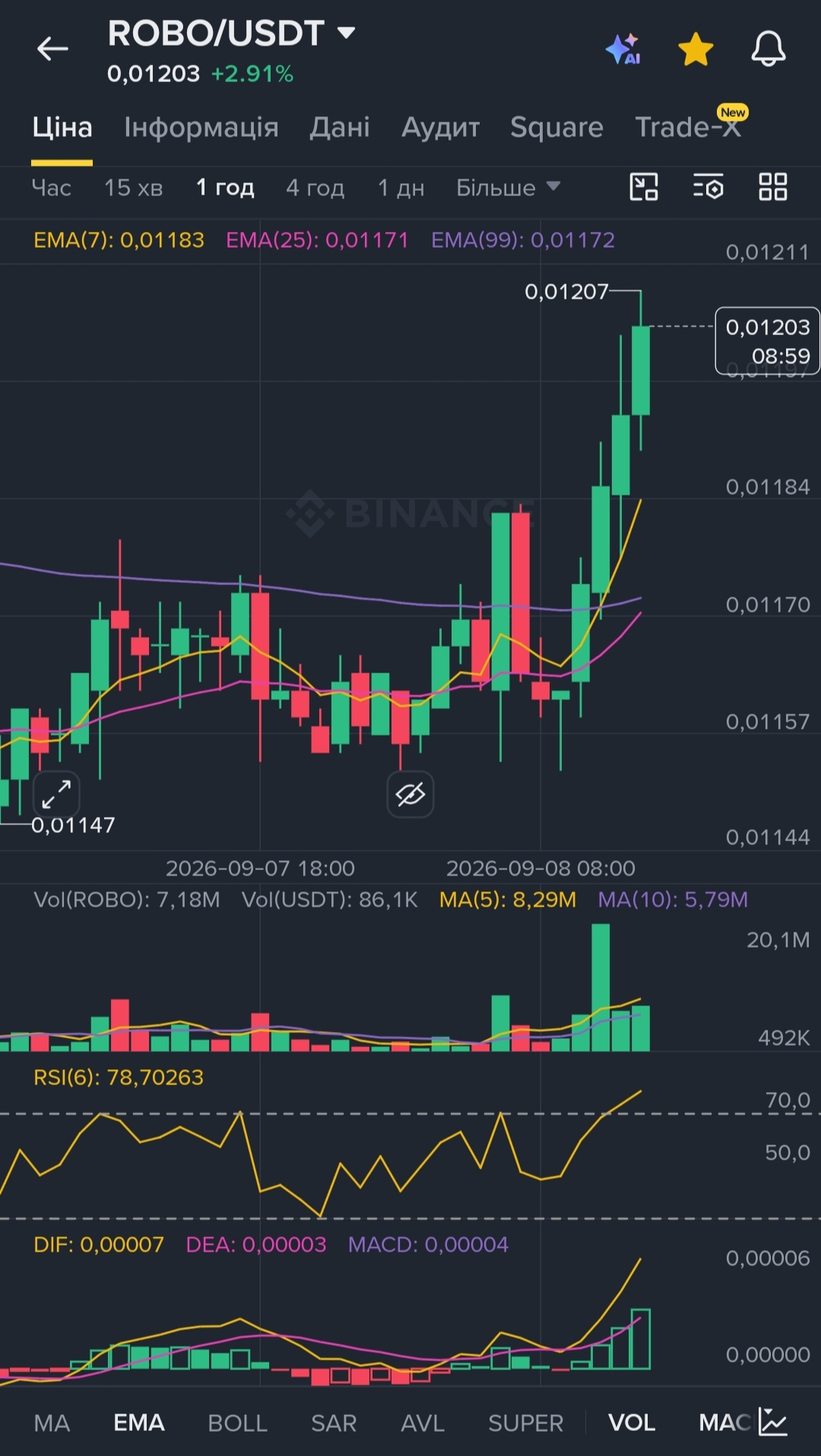
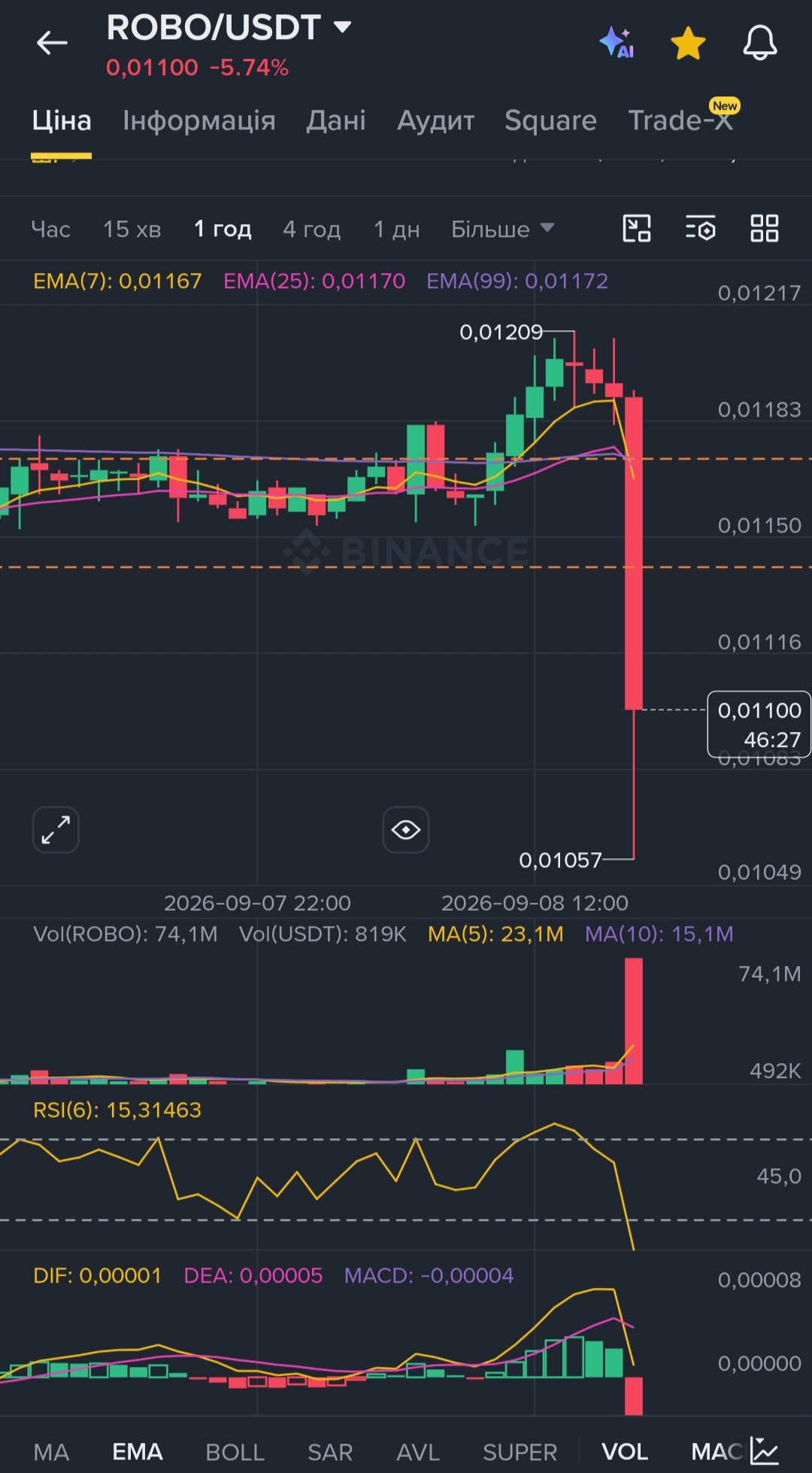
$ROBO Маємо таку реальність ринку на сьогодні. Спочатку токен сектору ШІ торгувався у вузькому діапазоні декілька днів від $0.0114 до $0.0116. Потім несподівано злетів до $0.0120, а далі впав, як підбитий літак нижче $0.0110 за токен 📈
І хоча #FABRIC має твердий фундамент і проект постійно розвивається у секторі ШІ і робототехніки, ціна токена піддається сильним коливанням.
👉 Ринок непередбачуваний, ніколи на 💯 % не знаєш, в яку сторону він піде. Він не шкодує ні новачків, ні професіоналів, тому торгувати потрібно з розумом ☝️😉
#FabricProtocolROBO #RoboForm #aicoins
12
397

$ROBO I explored the FabricFND ecosystem today and reviewed the current performance of the ROBO token. While the price experienced minor fluctuations, the overall trend appears positive. The project demonstrates a clear focus on practical use cases and sustainable growth, offering promise to both investors and the community. Engagement within the community continues to rise, reflecting the ecosystem’s strong health and adoption. Fabric Foundation aims to establish a decentralized and transparent network where users can efficiently conduct transactions, participate in staking, and access various earning opportunities. ROBO shows significant long-term potential.#FABRIC @Robokcam
$ROBO I explored the FabricFND ecosystem today and reviewed the current performance of the ROBO token. While the price experienced minor fluctuations, the overall trend appears positive. The project demonstrates a clear focus on practical use cases and sustainable growth, offering promise to both investors and the community. Engagement within the community continues to rise, reflecting the ecosystem’s strong health and adoption. Fabric Foundation aims to establish a decentralized and transparent network where users can efficiently conduct transactions, participate in staking, and access various earning opportunities. ROBO shows significant long-term potential.#FABRIC @Robo
22

·
--
Article
Fabric的$ROBO让我想起五年前投过的那个项目,后来它死了,但原因不是你想的那样写这篇文章之前,我想起一个故事。
五年前,有个项目特别火。也是宏大叙事,也是顶级团队,也是社区FOMO到不行。他们要做的是“物联网的区块链”,让每一台设备都有链上身份,让设备之间可以自动交易。
白皮书比Fabric的还厚。经济模型比Fabric的还复杂。投资机构比Fabric的还豪华。
我投了。
三年后,这个项目死了。不是被黑客攻击,不是团队跑路,不是监管叫停。就是悄无声息地死了——代码停止更新,社区没人说话,币价归零。
我复盘了很久,一直在想一个问题:它到底死在哪儿?
最近研究Fabric,读那几篇深度分析,翻这本80多页的白皮书,那个问题又冒出来了。我开始把两个项目放在一起对比,越比越发现一些有意思的东西。
今天把这些观察写出来,也许对理解$有帮助。
一、那个项目当年也是这么说的
翻出当年的白皮书,有一段话让我恍惚了一下:
“我们将为每一台物联网设备赋予唯一的链上身份,让设备可以在无需人类干预的情况下自动交易、自动协作、自动结算。这将开启一个全新的‘设备经济’时代。”
是不是很熟悉?
Fabric白皮书里写的是:“给每台机器人一个唯一的链上ID,让不同品牌的机器人可以通过去中心化网络互相配合,实现机器自主支付。”
五年前是“设备经济”,五年后是“机器经济”。词换了,底层逻辑没变。
当年那个项目,也设计了精巧的经济模型。也有类似“工作保证金”的机制,也要设备质押代币才能接入网络。也有类似“进化层”的奖励分配,也号称能防女巫攻击。
但后来为什么死了?
二、死因之一:鸡和蛋的游戏没玩通
当年那个项目遇到的第一个问题是:没有设备。
逻辑很简单:开发者想等设备多了再开发应用,用户想等应用多了再买设备,设备厂商想等网络有价值了再接入。结果就是谁都不动。
为了解决这个问题,他们搞了一个“设备众筹”——和Fabric现在说的“Coordination Units”几乎一模一样。社区出钱买设备,设备上线后给众筹者“优先使用权”。
听起来很顺对吧?
但实际跑起来发现一个问题:那些参与众筹的人,根本不是想用设备,而是想等设备升值了卖出去。结果设备真的上线了,没人用,没人租,没人付钱。众筹者手里的“优先使用权”一文不值,因为根本没地方用。
然后社区就开始骂项目方,项目方就开始各种解释,解释着解释着,就没人说话了。
Fabric现在也面临同样的问题:机器人众筹成功了,然后呢?谁来用这些机器人?用它们干什么?付不付得起钱?
白皮书第6.6节写得很细,但写的是怎么众筹,没写众筹完了之后怎么保证有人用。
这个坑,五年前那个项目踩过。我希望Fabric能绕过去。
三、死因之二:验证者的账算不过来
当年那个项目也有“验证节点”的设定。和Fabric一样,让节点抽查设备干没干活、干得好不好,干对了给奖励,干错了罚质押。
听起来也很顺对吧?
但实际跑起来又发现一个问题:验证一个任务,可能要花10分钟,但奖励只有几毛钱。时间成本算下来,还不如去送外卖。
结果就是,没人愿意当验证节点。偶尔有几个,也是那种挂着机自动验证的,根本不认真看,质量分形同虚设。
项目方试过提高奖励,但奖励高了,通胀就高,币价就跌。试过降低任务量,但任务量低了,安全性就下降。怎么调都调不到那个“刚刚好”的点。
Fabric现在也面临同样的问题:第8章的惩罚经济学写得很漂亮,公式推导也没问题。但推导的前提是:有人愿意花时间当验证者。如果没人愿意,公式就只是公式。
白皮书里没写怎么解决这个问题。也许要靠情怀,也许要靠补贴,也许要靠未来的自动化验证工具。
但这个坑,五年前那个项目也踩过。
四、死因之三:厂商永远是最后的玩家
当年那个项目最乐观的估计是:第一年接入100万台设备,第三年接入1000万台。
实际跑下来:第一年接入127台,大部分还是项目方自己买的。
原因特别简单:设备厂商根本不鸟他们。
我那会儿专门跑过几个做智能家居的厂商,聊下来就一句话:我们自己的云平台用得好好的,凭什么接你的?数据安全怎么办?出事了谁负责?你给我多少钱?
项目方想过用补贴,一台设备接入就给多少代币。但厂商更精:代币能干嘛?能交电费吗?能发工资吗?能换外汇吗?不能。那我们不要。
后来项目方想曲线救国,先做开源硬件,自己做设备自己接。但做硬件更坑:供应链、良品率、库存、售后——每一个坑都能埋掉一个创业公司。
Fabric现在也面临同样的问题:白皮书第3.3节列了一堆硬件合作伙伴,Unitree、LimX、DoBot、AGIBot、K-Bot。我挨个查了一遍,确实都是机器人圈子里有名字的。但问题是:它们愿意把自己的数据接进来吗?愿意让别的品牌的机器人调用自己的技能吗?愿意把自己的客户分给竞争对手吗?
这个坑,五年前那个项目踩得最深。
五、死因之四:叙事跑得比落地快,最后追不上了
当年那个项目死之前,有一个特别典型的阶段。
社区还在疯狂讨论:物联网是万亿美元市场,我们是唯一的底层协议,百倍可期。
但如果你真的去问:现在有多少设备接入了?每天多少笔交易?收入多少?
答案永远是:快了,在谈了,马上有进展。
就这样,从“快了”到“快了”到“快了”,拖了一年半。社区开始有人质疑,项目方开始沉默,币价开始阴跌。等到最后真的有什么进展公布的时候,已经没人关心了。
Fabric现在也处于这个危险的阶段。
广场上很热,讨论很多,关注度很高。白皮书很硬,经济模型很精巧,团队背景很亮眼。
但真实的进展呢?代码更新了多少?合作伙伴敲定了几个?测试网跑了多少笔交易?有没有任何一家真实的机器人厂商,愿意把自己的设备接进来?
这些问题,目前还没有特别明确的答案。
六、那五年前那个项目,到底死在哪?
复盘到最后,我的结论特别简单:
它死在“真实世界不配合”。
真实世界的设备厂商,不关心链上身份,只关心销量和利润。
真实世界的用户,不关心设备经济,只关心便不便宜、好不好用。
真实世界的验证者,不关心网络安全,只关心收益能不能覆盖时间成本。
这些“不关心”,没有一个项目能用白皮书解决。
Fabric的白皮书写得比五年前那个项目还好。经济模型更精巧,防作弊机制更严密,团队背景更豪华。但它要面对的“真实世界”,比五年前更复杂。
五年前是物联网,五年后是机器人。物联网好歹已经普及了,机器人还在早期。厂商更少,场景更窄,成本更高,落地更难。
七、但Fabric和那个项目有一个本质的不同
写到这儿,可能会觉得我彻底看空Fabric。其实不是。
因为我翻那本白皮书的时候,发现Fabric和五年前那个项目有一个本质的不同:
Fabric知道自己不知道。
第25页的“Open Questions”那一节,列了一堆还没解决的问题:子经济怎么定义?初始验证人怎么选?怎么激励持续优化?
团队没有假装自己已经把所有问题都想清楚了。这在白皮书里很少见——大部分项目都恨不得把自己包装成无所不能。Fabric反而留了这么多“开放式问题”,等着社区一起讨论。
这一点,五年前那个项目没做到。它的白皮书从头到尾都是“我们将如何如何”,没有一句“这个问题我们还没想好”。
后来我才明白:一个项目什么时候开始危险?不是它遇到问题的时候,是它假装没有问题的时候。
Fabric在假装没有问题吗?没有。它把问题写在白皮书里,写在roadmap里,写在Disclaimer里。
这让我愿意多看它几眼
八、我的态度
五年前那个项目,我亏了一笔钱。但我不后悔投过它,因为它让我学会了一件事:
不要用白皮书判断一个项目,要用“真实世界”判断它。
真实世界里,厂商愿不愿意接?用户愿不愿意用?验证者愿不愿意干活?开发者愿不愿意来?这些问题的答案,不在白皮书里,在代码提交里,在合作伙伴名单里,在测试数据里,在社区讨论的质量里。
@FabricFND 现在的白皮书,是我见过最好的之一。但它只是“起跑线”,不是“终点线”。
所以我现在的态度还是和之前一样:
不买,但盯着。
盯着代码更新,盯着合作伙伴,盯着测试网数据,盯着那些“开放问题”有没有被一个个回答。
如果有一天,我看到的不是白皮书的公式,而是真实机器人跑起来的视频;不是“快了”的承诺,而是厂商官宣接入的消息;不是社区喊单,而是开发者真的在生态里赚钱
到那时候,$ROBO 哪怕比现在贵十倍,我也会冲进去。
现在?我还是那句话:管住手。
在币圈待久了就知道,有些钱,是留给愿意等的人的。有些坑,是留给忘了疼的人的。在币圈必须要有等待BTC,ETH一样的决心去等待机器人。
#ROBO #FABRIC #DePIN #Aİ #原创分析
Fabric的$ROBO让我想起五年前投过的那个项目,后来它死了,但原因不是你想的那样
写这篇文章之前,我想起一个故事。
五年前,有个项目特别火。也是宏大叙事,也是顶级团队,也是社区FOMO到不行。他们要做的是“物联网的区块链”,让每一台设备都有链上身份,让设备之间可以自动交易。
白皮书比Fabric的还厚。经济模型比Fabric的还复杂。投资机构比Fabric的还豪华。
我投了。
三年后,这个项目死了。不是被黑客攻击,不是团队跑路,不是监管叫停。就是悄无声息地死了——代码停止更新,社区没人说话,币价归零。
我复盘了很久,一直在想一个问题:它到底死在哪儿?
最近研究Fabric,读那几篇深度分析,翻这本80多页的白皮书,那个问题又冒出来了。我开始把两个项目放在一起对比,越比越发现一些有意思的东西。
今天把这些观察写出来,也许对理解$有帮助。
一、那个项目当年也是这么说的
翻出当年的白皮书,有一段话让我恍惚了一下:
“我们将为每一台物联网设备赋予唯一的链上身份,让设备可以在无需人类干预的情况下自动交易、自动协作、自动结算。这将开启一个全新的‘设备经济’时代。”
是不是很熟悉?
Fabric白皮书里写的是:“给每台机器人一个唯一的链上ID,让不同品牌的机器人可以通过去中心化网络互相配合,实现机器自主支付。”
五年前是“设备经济”,五年后是“机器经济”。词换了,底层逻辑没变。
当年那个项目,也设计了精巧的经济模型。也有类似“工作保证金”的机制,也要设备质押代币才能接入网络。也有类似“进化层”的奖励分配,也号称能防女巫攻击。
但后来为什么死了?
二、死因之一:鸡和蛋的游戏没玩通
当年那个项目遇到的第一个问题是:没有设备。
逻辑很简单:开发者想等设备多了再开发应用,用户想等应用多了再买设备,设备厂商想等网络有价值了再接入。结果就是谁都不动。
为了解决这个问题,他们搞了一个“设备众筹”——和Fabric现在说的“Coordination Units”几乎一模一样。社区出钱买设备,设备上线后给众筹者“优先使用权”。
听起来很顺对吧?
但实际跑起来发现一个问题:那些参与众筹的人,根本不是想用设备,而是想等设备升值了卖出去。结果设备真的上线了,没人用,没人租,没人付钱。众筹者手里的“优先使用权”一文不值,因为根本没地方用。
然后社区就开始骂项目方,项目方就开始各种解释,解释着解释着,就没人说话了。
Fabric现在也面临同样的问题:机器人众筹成功了,然后呢?谁来用这些机器人?用它们干什么?付不付得起钱?
白皮书第6.6节写得很细,但写的是怎么众筹,没写众筹完了之后怎么保证有人用。
这个坑,五年前那个项目踩过。我希望Fabric能绕过去。
三、死因之二:验证者的账算不过来
当年那个项目也有“验证节点”的设定。和Fabric一样,让节点抽查设备干没干活、干得好不好,干对了给奖励,干错了罚质押。
听起来也很顺对吧?
但实际跑起来又发现一个问题:验证一个任务,可能要花10分钟,但奖励只有几毛钱。时间成本算下来,还不如去送外卖。
结果就是,没人愿意当验证节点。偶尔有几个,也是那种挂着机自动验证的,根本不认真看,质量分形同虚设。
项目方试过提高奖励,但奖励高了,通胀就高,币价就跌。试过降低任务量,但任务量低了,安全性就下降。怎么调都调不到那个“刚刚好”的点。
Fabric现在也面临同样的问题:第8章的惩罚经济学写得很漂亮,公式推导也没问题。但推导的前提是:有人愿意花时间当验证者。如果没人愿意,公式就只是公式。
白皮书里没写怎么解决这个问题。也许要靠情怀,也许要靠补贴,也许要靠未来的自动化验证工具。
但这个坑,五年前那个项目也踩过。
四、死因之三:厂商永远是最后的玩家
当年那个项目最乐观的估计是:第一年接入100万台设备,第三年接入1000万台。
实际跑下来:第一年接入127台,大部分还是项目方自己买的。
原因特别简单:设备厂商根本不鸟他们。
我那会儿专门跑过几个做智能家居的厂商,聊下来就一句话:我们自己的云平台用得好好的,凭什么接你的?数据安全怎么办?出事了谁负责?你给我多少钱?
项目方想过用补贴,一台设备接入就给多少代币。但厂商更精:代币能干嘛?能交电费吗?能发工资吗?能换外汇吗?不能。那我们不要。
后来项目方想曲线救国,先做开源硬件,自己做设备自己接。但做硬件更坑:供应链、良品率、库存、售后——每一个坑都能埋掉一个创业公司。
Fabric现在也面临同样的问题:白皮书第3.3节列了一堆硬件合作伙伴,Unitree、LimX、DoBot、AGIBot、K-Bot。我挨个查了一遍,确实都是机器人圈子里有名字的。但问题是:它们愿意把自己的数据接进来吗?愿意让别的品牌的机器人调用自己的技能吗?愿意把自己的客户分给竞争对手吗?
这个坑,五年前那个项目踩得最深。
五、死因之四:叙事跑得比落地快,最后追不上了
当年那个项目死之前,有一个特别典型的阶段。
社区还在疯狂讨论:物联网是万亿美元市场,我们是唯一的底层协议,百倍可期。
但如果你真的去问:现在有多少设备接入了?每天多少笔交易?收入多少?
答案永远是:快了,在谈了,马上有进展。
就这样,从“快了”到“快了”到“快了”,拖了一年半。社区开始有人质疑,项目方开始沉默,币价开始阴跌。等到最后真的有什么进展公布的时候,已经没人关心了。
Fabric现在也处于这个危险的阶段。
广场上很热,讨论很多,关注度很高。白皮书很硬,经济模型很精巧,团队背景很亮眼。
但真实的进展呢?代码更新了多少?合作伙伴敲定了几个?测试网跑了多少笔交易?有没有任何一家真实的机器人厂商,愿意把自己的设备接进来?
这些问题,目前还没有特别明确的答案。
六、那五年前那个项目,到底死在哪?
复盘到最后,我的结论特别简单:
它死在“真实世界不配合”。
真实世界的设备厂商,不关心链上身份,只关心销量和利润。
真实世界的用户,不关心设备经济,只关心便不便宜、好不好用。
真实世界的验证者,不关心网络安全,只关心收益能不能覆盖时间成本。
这些“不关心”,没有一个项目能用白皮书解决。
Fabric的白皮书写得比五年前那个项目还好。经济模型更精巧,防作弊机制更严密,团队背景更豪华。但它要面对的“真实世界”,比五年前更复杂。
五年前是物联网,五年后是机器人。物联网好歹已经普及了,机器人还在早期。厂商更少,场景更窄,成本更高,落地更难。
七、但Fabric和那个项目有一个本质的不同
写到这儿,可能会觉得我彻底看空Fabric。其实不是。
因为我翻那本白皮书的时候,发现Fabric和五年前那个项目有一个本质的不同:
Fabric知道自己不知道。
第25页的“Open Questions”那一节,列了一堆还没解决的问题:子经济怎么定义?初始验证人怎么选?怎么激励持续优化?
团队没有假装自己已经把所有问题都想清楚了。这在白皮书里很少见——大部分项目都恨不得把自己包装成无所不能。Fabric反而留了这么多“开放式问题”,等着社区一起讨论。
这一点,五年前那个项目没做到。它的白皮书从头到尾都是“我们将如何如何”,没有一句“这个问题我们还没想好”。
后来我才明白:一个项目什么时候开始危险?不是它遇到问题的时候,是它假装没有问题的时候。
Fabric在假装没有问题吗?没有。它把问题写在白皮书里,写在roadmap里,写在Disclaimer里。
这让我愿意多看它几眼
八、我的态度
五年前那个项目,我亏了一笔钱。但我不后悔投过它,因为它让我学会了一件事:
不要用白皮书判断一个项目,要用“真实世界”判断它。
真实世界里,厂商愿不愿意接?用户愿不愿意用?验证者愿不愿意干活?开发者愿不愿意来?这些问题的答案,不在白皮书里,在代码提交里,在合作伙伴名单里,在测试数据里,在社区讨论的质量里。
@Fabric Foundation 现在的白皮书,是我见过最好的之一。但它只是“起跑线”,不是“终点线”。
所以我现在的态度还是和之前一样:
不买,但盯着。
盯着代码更新,盯着合作伙伴,盯着测试网数据,盯着那些“开放问题”有没有被一个个回答。
如果有一天,我看到的不是白皮书的公式,而是真实机器人跑起来的视频;不是“快了”的承诺,而是厂商官宣接入的消息;不是社区喊单,而是开发者真的在生态里赚钱
到那时候,$ROBO 哪怕比现在贵十倍,我也会冲进去。
现在?我还是那句话:管住手。
在币圈待久了就知道,有些钱,是留给愿意等的人的。有些坑,是留给忘了疼的人的。在币圈必须要有等待BTC,ETH一样的决心去等待机器人。
#ROBO #FABRIC #DePIN #Aİ #原创分析
515

Fabric Protocol Powering the Economic Nervous System of the Robot CivilizationI’m going to say something that might sound dramatic, but I truly mean it — we are slowly entering a world where robots won’t just be tools. They’re going to be participants. And if that future is coming, then someone needs to build the economic and coordination layer for it. That’s where Fabric Protocol steps in.
Fabric Protocol is a global open network supported by the non-profit Fabric Foundation. But this isn’t just another blockchain project trying to attach itself to a trending narrative. They’re building infrastructure specifically designed for general-purpose robots — machines that can learn, adapt, and perform many types of tasks in the real world. And honestly, the more I think about it, the more it makes sense that robots will need their own digital rails.
Right now, most robots operate inside closed systems. A warehouse robot works only within that warehouse company’s software. A factory machine runs inside its manufacturer’s ecosystem. They don’t really have shared identity, shared payment systems, or a universal way to coordinate with other machines outside their own silo. I’m convinced that this model won’t scale in a world filled with autonomous agents. They’re going to need something bigger — something open.
Fabric Protocol acts like a public coordination layer. It uses blockchain technology as a shared ledger where data, computation, identity, and regulation can be recorded and verified. I know “public ledger” sounds technical, but in simple words, it’s just a shared record book that no single company controls. Everyone can verify what’s happening, and that transparency builds trust — which is critical when machines are making decisions.
One thing I find powerful is the idea of “verifiable computing.” Instead of just trusting that a robot did what it claimed to do, the system can verify actions and results cryptographically. That’s huge. If robots are delivering medicine, assembling hardware, managing logistics, or interacting with humans, we can’t rely on blind trust. We need proof. They’re designing Fabric so machine actions can be accountable, trackable, and auditable.
Another layer that really stands out to me is identity. Fabric allows robots and autonomous agents to have on-chain identities. I’m not talking about cute robot usernames. I’m talking about verifiable digital identities that connect machines to permissions, responsibilities, and economic activity. Just like humans have passports and bank accounts, robots in the Fabric ecosystem can have wallets, roles, and reputations.
And this is where it gets interesting. If a robot can hold a wallet, it can pay for services. It can receive payments for completing tasks. It can interact economically with humans and other machines. That’s what they mean by “agent-native infrastructure.” The system isn’t just built for humans using machines. It’s built for machines that can act within an economic network on their own.
The protocol coordinates tasks and resources through modular infrastructure. That means developers can plug in components — identity modules, payment rails, governance mechanisms — without rebuilding everything from scratch. I like this design because it feels realistic. They’re not trying to invent the entire robotics world overnight. They’re creating building blocks that others can use and expand.
Now let’s talk about governance, because this part matters more than people realize. Fabric is supported by a non-profit foundation. That tells me they’re serious about long-term development instead of short-term hype. Governance decisions — things like protocol upgrades, rule changes, and economic adjustments — are meant to happen through the community, not behind closed doors. In a world where machines might handle critical infrastructure, governance transparency isn’t optional. It’s necessary.
At the center of the ecosystem is the $ROBO token. I’m always cautious when I hear about tokens, but in this case, it’s clearly functional. $ROBO is used to pay network fees, register identities, access computational services, and participate in governance. If robots are performing work and settling transactions on the network, $ROBO becomes the medium that powers those interactions.
They’re also using staking mechanisms to align incentives. Participants who help secure or coordinate the network stake tokens, which encourages honest behavior. If you act maliciously, you risk losing value. That incentive structure is classic crypto design, but applying it to robotics infrastructure feels new and honestly bold.
I think what excites me most is the long-term vision. Fabric isn’t just building software. They’re building the foundation for a machine economy — a system where robots and AI agents can collaborate safely with humans under transparent rules. They’re trying to ensure that as machines become more capable, they don’t become uncontrollable or locked inside corporate monopolies.
Of course, I’m realistic. This is early. Very early. The robotics world is complex, hardware moves slower than software, and adoption won’t happen overnight. But I believe infrastructure projects are always early before they become obvious. Blockchains were once niche experiments too.
What Fabric is doing feels like planting seeds. They’re designing the coordination layer before the explosion of autonomous systems fully arrives. And if they succeed, we might look back and realize they quietly built the economic backbone for the robot age.
I’m not saying it’s guaranteed. Nothing in crypto ever is. But I genuinely respect the ambition. They’re thinking beyond DeFi, beyond NFTs, beyond short-term trends. They’re asking a bigger question: when machines become participants in society, how do we make that safe, verifiable, and open?
Fabric Protocol is their answer. And whether you’re deep into robotics or just curious about where blockchain is heading next, I think this is one of those stories worth paying attention to.
@FabricFND #Fabric $AB
{alpha}(560x95034f653d5d161890836ad2b6b8cc49d14e029a)
Fabric Protocol Powering the Economic Nervous System of the Robot Civilization
I’m going to say something that might sound dramatic, but I truly mean it — we are slowly entering a world where robots won’t just be tools. They’re going to be participants. And if that future is coming, then someone needs to build the economic and coordination layer for it. That’s where Fabric Protocol steps in.
Fabric Protocol is a global open network supported by the non-profit Fabric Foundation. But this isn’t just another blockchain project trying to attach itself to a trending narrative. They’re building infrastructure specifically designed for general-purpose robots — machines that can learn, adapt, and perform many types of tasks in the real world. And honestly, the more I think about it, the more it makes sense that robots will need their own digital rails.
Right now, most robots operate inside closed systems. A warehouse robot works only within that warehouse company’s software. A factory machine runs inside its manufacturer’s ecosystem. They don’t really have shared identity, shared payment systems, or a universal way to coordinate with other machines outside their own silo. I’m convinced that this model won’t scale in a world filled with autonomous agents. They’re going to need something bigger — something open.
Fabric Protocol acts like a public coordination layer. It uses blockchain technology as a shared ledger where data, computation, identity, and regulation can be recorded and verified. I know “public ledger” sounds technical, but in simple words, it’s just a shared record book that no single company controls. Everyone can verify what’s happening, and that transparency builds trust — which is critical when machines are making decisions.
One thing I find powerful is the idea of “verifiable computing.” Instead of just trusting that a robot did what it claimed to do, the system can verify actions and results cryptographically. That’s huge. If robots are delivering medicine, assembling hardware, managing logistics, or interacting with humans, we can’t rely on blind trust. We need proof. They’re designing Fabric so machine actions can be accountable, trackable, and auditable.
Another layer that really stands out to me is identity. Fabric allows robots and autonomous agents to have on-chain identities. I’m not talking about cute robot usernames. I’m talking about verifiable digital identities that connect machines to permissions, responsibilities, and economic activity. Just like humans have passports and bank accounts, robots in the Fabric ecosystem can have wallets, roles, and reputations.
And this is where it gets interesting. If a robot can hold a wallet, it can pay for services. It can receive payments for completing tasks. It can interact economically with humans and other machines. That’s what they mean by “agent-native infrastructure.” The system isn’t just built for humans using machines. It’s built for machines that can act within an economic network on their own.
The protocol coordinates tasks and resources through modular infrastructure. That means developers can plug in components — identity modules, payment rails, governance mechanisms — without rebuilding everything from scratch. I like this design because it feels realistic. They’re not trying to invent the entire robotics world overnight. They’re creating building blocks that others can use and expand.
Now let’s talk about governance, because this part matters more than people realize. Fabric is supported by a non-profit foundation. That tells me they’re serious about long-term development instead of short-term hype. Governance decisions — things like protocol upgrades, rule changes, and economic adjustments — are meant to happen through the community, not behind closed doors. In a world where machines might handle critical infrastructure, governance transparency isn’t optional. It’s necessary.
At the center of the ecosystem is the $ROBO token. I’m always cautious when I hear about tokens, but in this case, it’s clearly functional. $ROBO is used to pay network fees, register identities, access computational services, and participate in governance. If robots are performing work and settling transactions on the network, $ROBO becomes the medium that powers those interactions.
They’re also using staking mechanisms to align incentives. Participants who help secure or coordinate the network stake tokens, which encourages honest behavior. If you act maliciously, you risk losing value. That incentive structure is classic crypto design, but applying it to robotics infrastructure feels new and honestly bold.
I think what excites me most is the long-term vision. Fabric isn’t just building software. They’re building the foundation for a machine economy — a system where robots and AI agents can collaborate safely with humans under transparent rules. They’re trying to ensure that as machines become more capable, they don’t become uncontrollable or locked inside corporate monopolies.
Of course, I’m realistic. This is early. Very early. The robotics world is complex, hardware moves slower than software, and adoption won’t happen overnight. But I believe infrastructure projects are always early before they become obvious. Blockchains were once niche experiments too.
What Fabric is doing feels like planting seeds. They’re designing the coordination layer before the explosion of autonomous systems fully arrives. And if they succeed, we might look back and realize they quietly built the economic backbone for the robot age.
I’m not saying it’s guaranteed. Nothing in crypto ever is. But I genuinely respect the ambition. They’re thinking beyond DeFi, beyond NFTs, beyond short-term trends. They’re asking a bigger question: when machines become participants in society, how do we make that safe, verifiable, and open?
Fabric Protocol is their answer. And whether you’re deep into robotics or just curious about where blockchain is heading next, I think this is one of those stories worth paying attention to.
@Fabric Foundation #Fabric $AB
2
187

$ROBO$ROBO #ROBO
#Fabric
أعلنت Coinbase علنًا أنها ستقوم بإدراج RoboToken (ROBO) على منصتها للتداول. من المخطط أن يبدأ التداول في 27 فبراير، رهناً بتلبية متطلبات السيولة. هذه الخطوة توسع عروض الرموز في Coinbase، مما قد يزيد من الوصول والسيولة لحاملي ROBO.
أخبار BlockBeats، 4 مارس: وفقًا لمصادر رسمية، ستدرج Binance بروتوكول Fabric (ROBO) في 5 مارس 2026 الساعة 00:30 (بتوقيت UTC+8)، وستفتح أزواج تداول الفورية ROBO/USDT وROBO/USDC وROBO/TRY، مع إضافة علامة تعدين السيولة إلى ROBO.
$ROBO
$ROBO #ROBO
#Fabric
أعلنت Coinbase علنًا أنها ستقوم بإدراج RoboToken (ROBO) على منصتها للتداول. من المخطط أن يبدأ التداول في 27 فبراير، رهناً بتلبية متطلبات السيولة. هذه الخطوة توسع عروض الرموز في Coinbase، مما قد يزيد من الوصول والسيولة لحاملي ROBO.
أخبار BlockBeats، 4 مارس: وفقًا لمصادر رسمية، ستدرج Binance بروتوكول Fabric (ROBO) في 5 مارس 2026 الساعة 00:30 (بتوقيت UTC+8)، وستفتح أزواج تداول الفورية ROBO/USDT وROBO/USDC وROBO/TRY، مع إضافة علامة تعدين السيولة إلى ROBO.
2
112

·
--
Article
FABRIC FOUNDATION BUILDING VERIFIED AI INFRASTRUCTURE, NOT JUST A NARRATIVEThe Problem: Trust in Autonomous Computation
As AI agents become more autonomous, the biggest challenge is no longer execution speed or model intelligence. The real issue is verification. When agents begin handling data, making decisions, or executing transactions, how do we ensure that every computation is transparent and trustworthy?
#FabricFoundation positions itself directly in this gap. Instead of treating AI as an external add on, the protocol focuses on creating a verifiable computing environment where actions performed by agents can be validated on a public ledger. This approach moves the conversation from hype to accountability.
Architecture First: Why Infrastructure Design Matters
One detail that stands out to me is #Fabric architectural mindset. The project does not appear to be building a surface level AI application. It is constructing infrastructure designed for agent native interaction.
By integrating verifiable computation mechanisms into the base layer, Fabric attempts to ensure that machine driven processes are not black boxes. Transparency and auditability become structural features rather than optional extras. In a future where AI systems operate with increasing autonomy, this foundation could become critical.
Another important component is modularity. A modular infrastructure allows different components to evolve independently while staying connected through a unified verification framework. In fast moving technological environments, flexibility often determines longevity.
The Role of $ROBO in the Ecosystem
From an economic perspective, ROBO hould be evaluated based on utility depth rather than market momentum. If the token is embedded into computation validation, governance participation, and incentive distribution, it becomes an operational asset rather than a speculative placeholder.
A strong token model aligns incentives between network participants. Contributors who provide computational resources, developers building agent systems, and governance participants all require coordination. If $ROBO rves as the coordination mechanism, then network growth directly influences token relevance.
Long Term Signals Over Short Term Noise
Personally, I am less interested in short term volatility and more focused on structural indicators. Developer engagement, integration partnerships, computational throughput, and real usage metrics will ultimately define Fabric Foundation’s trajectory.
Projects that concentrate on infrastructure tend to move more quietly at first, but they often build deeper value over time. Fabric focus on verified AI interaction suggests an ambition to become a foundational layer rather than a temporary trend.
The real question is not simply how visible the narrative becomes, but whether the protocol succeeds in creating a trusted environment where human and machine collaboration can operate transparently and securely.
@FabricFND #ROBO
FABRIC FOUNDATION BUILDING VERIFIED AI INFRASTRUCTURE, NOT JUST A NARRATIVE
The Problem: Trust in Autonomous Computation
As AI agents become more autonomous, the biggest challenge is no longer execution speed or model intelligence. The real issue is verification. When agents begin handling data, making decisions, or executing transactions, how do we ensure that every computation is transparent and trustworthy?
#FabricFoundation positions itself directly in this gap. Instead of treating AI as an external add on, the protocol focuses on creating a verifiable computing environment where actions performed by agents can be validated on a public ledger. This approach moves the conversation from hype to accountability.
Architecture First: Why Infrastructure Design Matters
One detail that stands out to me is #Fabric architectural mindset. The project does not appear to be building a surface level AI application. It is constructing infrastructure designed for agent native interaction.
By integrating verifiable computation mechanisms into the base layer, Fabric attempts to ensure that machine driven processes are not black boxes. Transparency and auditability become structural features rather than optional extras. In a future where AI systems operate with increasing autonomy, this foundation could become critical.
Another important component is modularity. A modular infrastructure allows different components to evolve independently while staying connected through a unified verification framework. In fast moving technological environments, flexibility often determines longevity.
The Role of $ROBO in the Ecosystem
From an economic perspective, ROBO hould be evaluated based on utility depth rather than market momentum. If the token is embedded into computation validation, governance participation, and incentive distribution, it becomes an operational asset rather than a speculative placeholder.
A strong token model aligns incentives between network participants. Contributors who provide computational resources, developers building agent systems, and governance participants all require coordination. If $ROBO rves as the coordination mechanism, then network growth directly influences token relevance.
Long Term Signals Over Short Term Noise
Personally, I am less interested in short term volatility and more focused on structural indicators. Developer engagement, integration partnerships, computational throughput, and real usage metrics will ultimately define Fabric Foundation’s trajectory.
Projects that concentrate on infrastructure tend to move more quietly at first, but they often build deeper value over time. Fabric focus on verified AI interaction suggests an ambition to become a foundational layer rather than a temporary trend.
The real question is not simply how visible the narrative becomes, but whether the protocol succeeds in creating a trusted environment where human and machine collaboration can operate transparently and securely.
@Fabric Foundation #ROBO
16
1.8k

·
--
機器人進入 Web3 時代!🚀 機器人主權時代:從「工具」進化為「鏈上公民」
2026 年,物理世界與數位邊界的最後一道牆正在倒塌。機器人不再只是工廠裡的自動化手臂,而是正式進入 Web3 鏈上智能經濟,成為具備自主權的經濟主體。
🧠 雙引擎驅動:FABRIC × OM1
當「去中心化大腦」遇上「通用型身體」,一場範式轉移正在發生:
• FabricFND (FABRIC 協議):為機器人植入 Machine ID 與去信任化網路。透過 ZK 可驗證審計與微支付模型,機器人第一次擁有了「信用」與「錢包」。
• OpenMind (OM1 系統):機器人界的 Android。打破硬體孤島,讓從人形到四足的各類機器人都能共享同一套開源神經網絡。
💰 機器人經濟體 (The Robot Economy) 的誕生
這不只是技術堆疊,這是經濟邏輯的重構。在 $ROBO 代幣的驅動下:
1. 自主收益:機器人能執行任務並即時結算(與 Circle 合作的穩定幣結算)。
2. M2M 協作:機器人之間能自主發包任務、採購數據、共享算力。
3. 數據資產化:每一滴運行的數據,都透過 ZK 技術在鏈上轉化為可交易的價值。
「人類不再是唯一的生產者,我們正轉身成為這場智能網絡的設計師與治理者。」
$$ROBO 不僅是燃料,更是通往未來物理 AGI 世界的入場券。
未來已在鏈上運行,你是在圍觀,還是參與建設?
#Web3 #AI #Robotics #FABRIC #OM1 #ROBO #MachineEconomy #智能經濟
機器人進入 Web3 時代!
🚀 機器人主權時代:從「工具」進化為「鏈上公民」
2026 年,物理世界與數位邊界的最後一道牆正在倒塌。機器人不再只是工廠裡的自動化手臂,而是正式進入 Web3 鏈上智能經濟,成為具備自主權的經濟主體。
🧠 雙引擎驅動:FABRIC × OM1
當「去中心化大腦」遇上「通用型身體」,一場範式轉移正在發生:
• FabricFND (FABRIC 協議):為機器人植入 Machine ID 與去信任化網路。透過 ZK 可驗證審計與微支付模型,機器人第一次擁有了「信用」與「錢包」。
• OpenMind (OM1 系統):機器人界的 Android。打破硬體孤島,讓從人形到四足的各類機器人都能共享同一套開源神經網絡。
💰 機器人經濟體 (The Robot Economy) 的誕生
這不只是技術堆疊,這是經濟邏輯的重構。在 $ROBO 代幣的驅動下:
1. 自主收益:機器人能執行任務並即時結算(與 Circle 合作的穩定幣結算)。
2. M2M 協作:機器人之間能自主發包任務、採購數據、共享算力。
3. 數據資產化:每一滴運行的數據,都透過 ZK 技術在鏈上轉化為可交易的價值。
「人類不再是唯一的生產者,我們正轉身成為這場智能網絡的設計師與治理者。」
$$ROBO 不僅是燃料,更是通往未來物理 AGI 世界的入場券。
未來已在鏈上運行,你是在圍觀,還是參與建設?
#Web3 #AI #Robotics #FABRIC #OM1 #ROBO #MachineEconomy #智能經濟
7
1
9
270

·
--
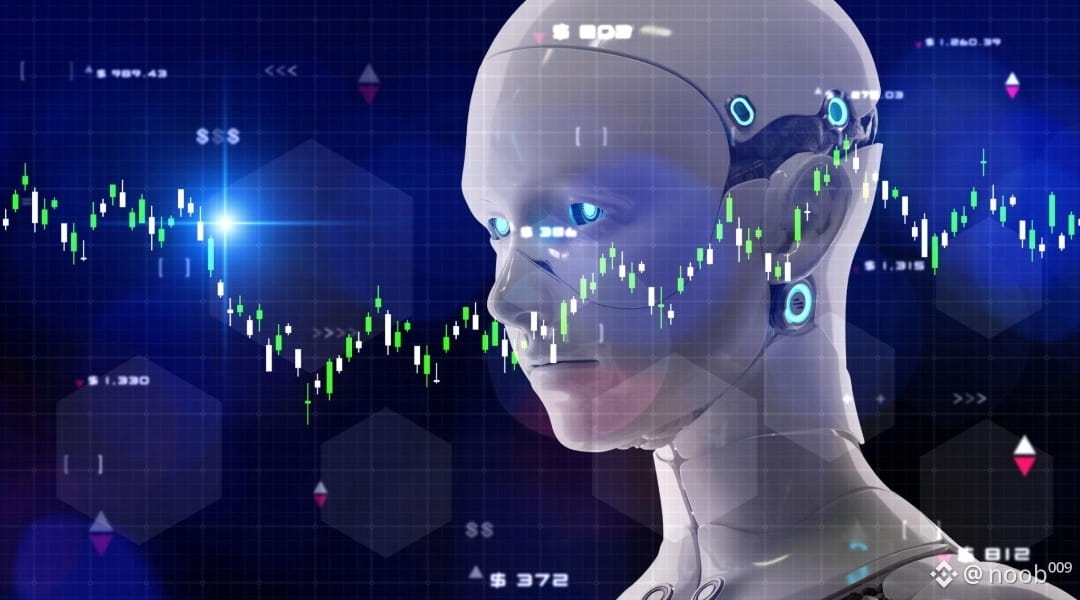
Fabric Protocol (ROBO) is trading around $0.02–$0.023, showing small-cap volatility with active trading volume.
Recent news highlights AI + robotics narrative growth, positioning ROBO as a niche “robot economy” project with future potential.
Price action shows independent movement from the broader market, sometimes rising despite Bitcoin weakness, indicating speculative demand.
However, the token has seen recent declines and high volatility, with price down significantly over past months.
Technically, candles suggest sideways consolidation near $0.02 support, indicating accumulation phase.
Short-term forecasts range between $0.015–$0.023, showing uncertainty in direction.
Long-term outlook for 2026 varies widely around $0.02–$0.04+ depending on adoption.
Overall sentiment: neutral with speculative bullish potential, driven by AI narrative and market conditions.
$ROBO #FABRIC
{future}(ROBOUSDT)
Fabric Protocol (ROBO) is trading around $0.02–$0.023, showing small-cap volatility with active trading volume.
Recent news highlights AI + robotics narrative growth, positioning ROBO as a niche “robot economy” project with future potential.
Price action shows independent movement from the broader market, sometimes rising despite Bitcoin weakness, indicating speculative demand.
However, the token has seen recent declines and high volatility, with price down significantly over past months.
Technically, candles suggest sideways consolidation near $0.02 support, indicating accumulation phase.
Short-term forecasts range between $0.015–$0.023, showing uncertainty in direction.
Long-term outlook for 2026 varies widely around $0.02–$0.04+ depending on adoption.
Overall sentiment: neutral with speculative bullish potential, driven by AI narrative and market conditions.
$ROBO #FABRIC
289
·
--
Understanding How #Fabric Actually Creates Value
After looking deeper into Fabric, I think many people still misunderstand what the project is trying to solve. It is not just about robotics or AI branding. The real focus is building a coordination and verification layer where autonomous agents can execute tasks under transparent and enforceable rules.
What I find important is how $ROBO fits into that structure. A coordination network only works if there is economic alignment. Validators need incentives to secure computation. Developers need a framework to deploy logic. Participants need a mechanism to interact with the system. #ROBO connects these roles. If staking secures validation and governance shapes upgrades, then the token is directly tied to network activity, not just market sentiment.
From my perspective, the strength of Fabric depends on ecosystem growth. If more developers build coordination modules and more agents rely on the protocol for verifiable execution, the demand for network participation increases. That is where sustainable value can form.
The key takeaway for me is this: Fabric is attempting to become infrastructure for machine collaboration. If adoption expands, $$ROBO enefits from real usage. If it does not, speculation alone will not be enough.
@FabricFND #ROBO
Understanding How #Fabric Actually Creates Value
After looking deeper into Fabric, I think many people still misunderstand what the project is trying to solve. It is not just about robotics or AI branding. The real focus is building a coordination and verification layer where autonomous agents can execute tasks under transparent and enforceable rules.
What I find important is how $ROBO fits into that structure. A coordination network only works if there is economic alignment. Validators need incentives to secure computation. Developers need a framework to deploy logic. Participants need a mechanism to interact with the system. #ROBO connects these roles. If staking secures validation and governance shapes upgrades, then the token is directly tied to network activity, not just market sentiment.
From my perspective, the strength of Fabric depends on ecosystem growth. If more developers build coordination modules and more agents rely on the protocol for verifiable execution, the demand for network participation increases. That is where sustainable value can form.
The key takeaway for me is this: Fabric is attempting to become infrastructure for machine collaboration. If adoption expands, $$ROBO enefits from real usage. If it does not, speculation alone will not be enough.
@Fabric Foundation #ROBO

9
2.8k

$ROBO 这两天走势挺有意思,机器人叙事概念轮番表演,板块资金虹吸效应明显,社区注意力被大幅抽走。链上数据显示成交量维持高位,24h 成交近 1700 万美元,但价格却卡在 0.01396 附近横盘整理,典型的放量滞涨形态。市值 3114 万美元,体量不大但活跃度不低,说明多空双方在这个位置博弈激烈。
从盘面逻辑来看,$ROBO 当前的核心矛盾不在项目本身,而在于机器人板块的整体节奏。一旦龙头熄火或者板块轮动结束,这种被资金虹吸的小众协议很容易出现补跌。MACD 指标在零轴附近黏合,方向性不明确,建议观望为主。
短期操作思路:不要追高,紧盯机器人板块龙头动向作为先行指标。如果板块出现集体退潮信号,$ROBO 这种跟涨不跟跌的标的要优先减仓;如果龙头继续走强,可以小仓位博弈补涨空间,但务必设好止损,控制好风险敞口。
#Fabric Protocol#机器人板块#盘面分析
从盘面逻辑来看,$ROBO 当前的核心矛盾不在项目本身,而在于机器人板块的整体节奏。一旦龙头熄火或者板块轮动结束,这种被资金虹吸的小众协议很容易出现补跌。MACD 指标在零轴附近黏合,方向性不明确,建议观望为主。
短期操作思路:不要追高,紧盯机器人板块龙头动向作为先行指标。如果板块出现集体退潮信号,$ROBO 这种跟涨不跟跌的标的要优先减仓;如果龙头继续走强,可以小仓位博弈补涨空间,但务必设好止损,控制好风险敞口。
#Fabric Protocol#机器人板块#盘面分析
123

·
--
Bullish
#robo $ROBO 🎉 Big news from the world of AI & Robotics! 🚀
The future of machine-to-machine (M2M) economies is being built right now by @FabricFND. As the open network for general-purpose robotics, Fabric is laying the groundwork for how autonomous agents will coordinate, transact, and evolve.
Its native token, $ROBO , is live and at the heart of this ecosystem🔥 serving as the key for governance, payments, and coordination within the Fabric protocol . Backed by top-tier funds and built by a world-class team, it's thrilling to watch this ecosystem develop .
有空投申领正在进行中——如果您是早期支持者,请务必在3月13日前检查资格 。未来已来,它正在去中心化!💪
#ROBO #DePIN #AI #FABRIC
32
·
--
Article
FABRIC FOUNDATION BUILDING THE ECONOMIC BACKBONE FOR AUTONOMOUS AIAs AI agents become more capable, the conversation often focuses on model performance and automation speed. However, a deeper structural issue remains unresolved: coordination. When autonomous systems begin executing tasks, managing data, or interacting financially, who verifies their actions and how are incentives aligned?
Fabric Foundation approaches this challenge from an infrastructure perspective. Instead of building a surface level AI application, the protocol is designed to anchor computational activity to a verifiable ledger. This transforms AI execution from a black box process into something transparent and auditable.
From Execution to Verification
Verification is not just a technical feature. It is an economic foundation. If computational outputs can be validated on chain, then trust shifts from assumption to proof. In my view, this is where #Fabric differentiates itself. The network is not merely enabling AI functionality, it is attempting to create a trusted environment for machine driven coordination.
By structuring agent interaction within a ledger based framework, Fabric establishes measurable accountability. This is essential if autonomous systems are expected to scale responsibly.
Token Utility as Structural Design
The sustainability of any infrastructure protocol depends on incentive alignment. This is where $ROBO becomes integral to the ecosystem. Rather than existing only as a tradable asset, the token functions within governance, validation, and participation layers.
If contributors and validators interact through $ROBO , then token utility is embedded directly into network operations. That creates a feedback loop where ecosystem growth reinforces economic demand. From my perspective, tokens that are structurally required tend to have stronger long term foundations than those driven purely by narrative momentum.
Governance and Adaptive Growth
Another aspect worth highlighting is governance flexibility. AI technology evolves rapidly, and infrastructure must adapt accordingly. A token based governance model allows stakeholders to influence protocol upgrades and economic parameters. This adaptability strengthens long term resilience.
Personally, I see @FabricFND as an attempt to merge blockchain verification with AI autonomy in a systematic way. The focus on economic structure, rather than short term visibility, signals a commitment to foundational development.
The long term trajectory of the ecosystem will depend on real adoption, developer integration, and active participation. If Fabric successfully creates a reliable coordination layer for intelligent agents, its infrastructure role could become increasingly relevant within the broader AI economy. #ROBO
FABRIC FOUNDATION BUILDING THE ECONOMIC BACKBONE FOR AUTONOMOUS AI
As AI agents become more capable, the conversation often focuses on model performance and automation speed. However, a deeper structural issue remains unresolved: coordination. When autonomous systems begin executing tasks, managing data, or interacting financially, who verifies their actions and how are incentives aligned?
Fabric Foundation approaches this challenge from an infrastructure perspective. Instead of building a surface level AI application, the protocol is designed to anchor computational activity to a verifiable ledger. This transforms AI execution from a black box process into something transparent and auditable.
From Execution to Verification
Verification is not just a technical feature. It is an economic foundation. If computational outputs can be validated on chain, then trust shifts from assumption to proof. In my view, this is where #Fabric differentiates itself. The network is not merely enabling AI functionality, it is attempting to create a trusted environment for machine driven coordination.
By structuring agent interaction within a ledger based framework, Fabric establishes measurable accountability. This is essential if autonomous systems are expected to scale responsibly.
Token Utility as Structural Design
The sustainability of any infrastructure protocol depends on incentive alignment. This is where $ROBO becomes integral to the ecosystem. Rather than existing only as a tradable asset, the token functions within governance, validation, and participation layers.
If contributors and validators interact through $ROBO , then token utility is embedded directly into network operations. That creates a feedback loop where ecosystem growth reinforces economic demand. From my perspective, tokens that are structurally required tend to have stronger long term foundations than those driven purely by narrative momentum.
Governance and Adaptive Growth
Another aspect worth highlighting is governance flexibility. AI technology evolves rapidly, and infrastructure must adapt accordingly. A token based governance model allows stakeholders to influence protocol upgrades and economic parameters. This adaptability strengthens long term resilience.
Personally, I see @Fabric Foundation as an attempt to merge blockchain verification with AI autonomy in a systematic way. The focus on economic structure, rather than short term visibility, signals a commitment to foundational development.
The long term trajectory of the ecosystem will depend on real adoption, developer integration, and active participation. If Fabric successfully creates a reliable coordination layer for intelligent agents, its infrastructure role could become increasingly relevant within the broader AI economy. #ROBO
20
2.8k

·
--
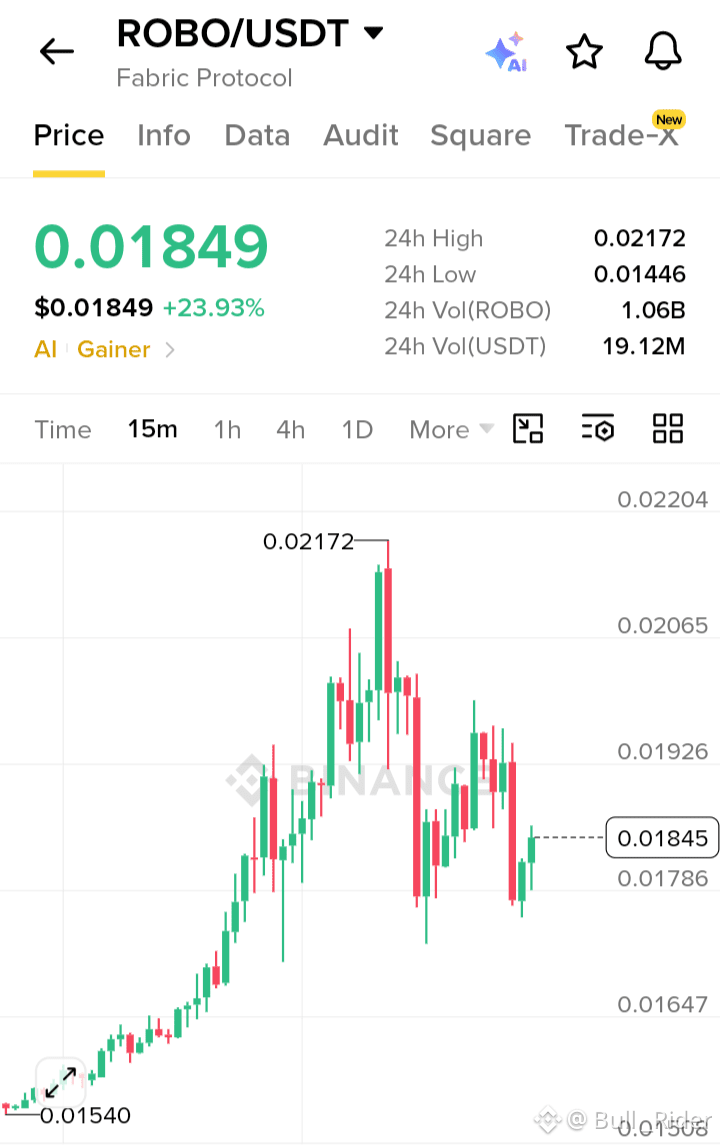
$ROBO is showing strong momentum with price at $0.01849, up 23.93% in the last 24 hours. With solid trading volume and price holding above key support, traders are watching for a potential continuation toward the next resistance zones.
Target 1: $0.01926
Target 2: $0.02065
Target 3: $0.02204
#ROBO #USDT #Fabric $ROSE $ROLL
{future}(ROSEUSDT)
$ROBO is showing strong momentum with price at $0.01849, up 23.93% in the last 24 hours. With solid trading volume and price holding above key support, traders are watching for a potential continuation toward the next resistance zones.
Target 1: $0.01926
Target 2: $0.02065
Target 3: $0.02204
#ROBO #USDT #Fabric $ROSE $ROLL
Target 1: $0.01926
Target 2: $0.02065
Target 3: $0.02204
#ROBO #USDT #Fabric $ROSE $ROLL
1
252
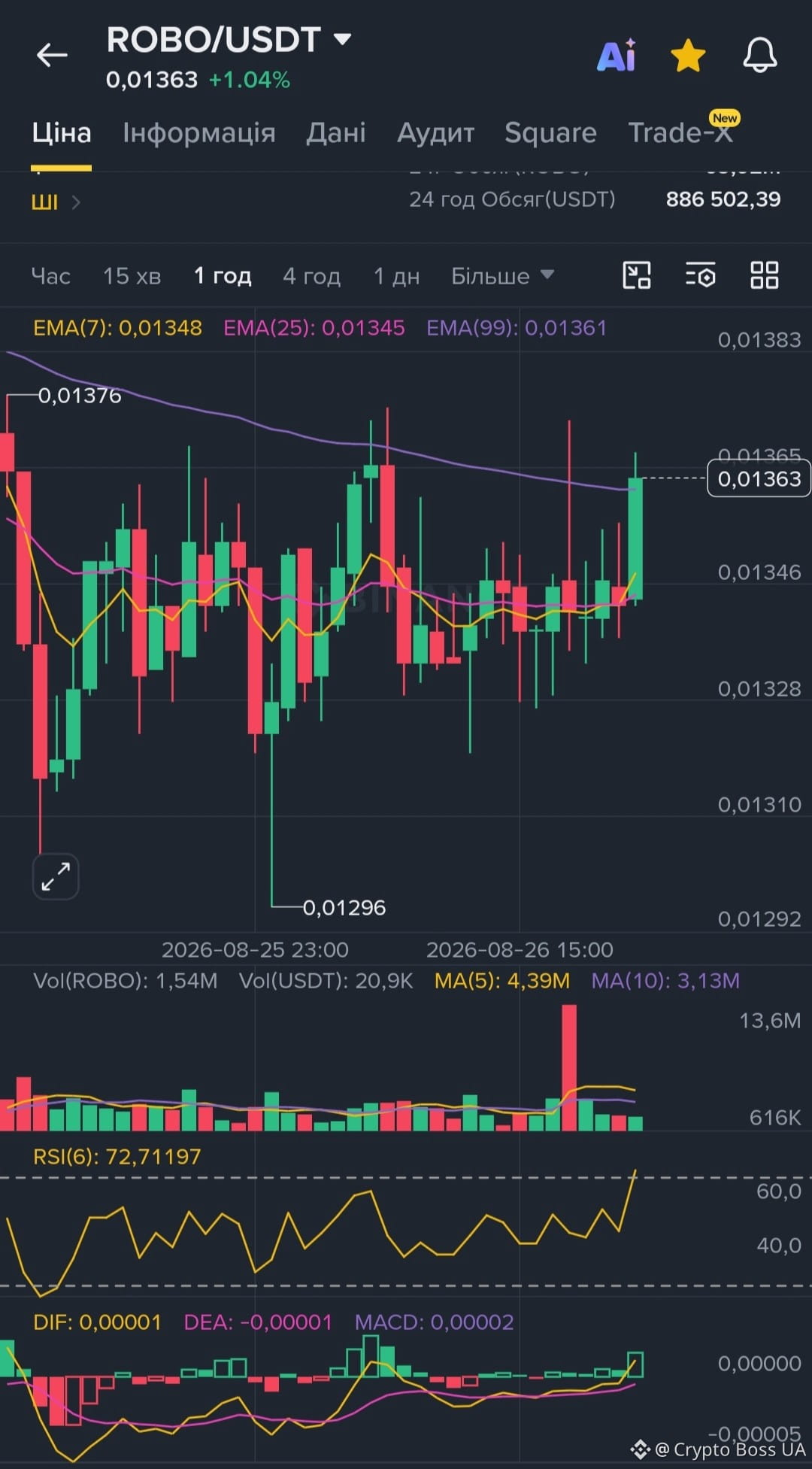
$ROBO сьогодні торгується досить добре, хоча завтра день розблокування токенів, що створює тиск на продажі через надмірну пропозицію. На 1Г таймфреймі ціна пробила ключовий опір EMA99, але ще не закріпилася над ним. RSI 72, MACD позитивна, обсяги торгів за 24 години досягають $1 млн. Скоріше за все ціна токена завтра впаде, і буде коливатися від 0.013 до 0.0140 в короткостроковій перспективі.
#RoboForm #ROBO #FABRIC
#RoboForm #ROBO #FABRIC
9
420
·
--
The Layer Beneath the Narrative Cycle
Personally, I think the biggest mistake in this market is assuming every token exists to ride the next trend. Some projects are clearly built for cycles. Others look like they are built for infrastructure. #Fabric feels closer to the second group.
While liquidity keeps rotating between hype themes, the thesis behind verifiable computing and autonomous coordination stands out to me. If robotics and agent driven systems truly expand over the next decade, machine to machine trust cannot rely on closed systems. It needs transparent validation and enforceable logic. That structural angle is what makes this interesting beyond short term volatility.
From my perspective, $ROBO makes sense only if the network usage grows alongside real integration. The value is not in headlines, but in whether developers and operators actually adopt the coordination layer. If that happens, the economic alignment between participants becomes more compelling than any temporary price spike.
I may be early in this view, but infrastructure plays are usually misunderstood before they are repriced.
@FabricFND $ROBO #ROBO
The Layer Beneath the Narrative Cycle
Personally, I think the biggest mistake in this market is assuming every token exists to ride the next trend. Some projects are clearly built for cycles. Others look like they are built for infrastructure. #Fabric feels closer to the second group.
While liquidity keeps rotating between hype themes, the thesis behind verifiable computing and autonomous coordination stands out to me. If robotics and agent driven systems truly expand over the next decade, machine to machine trust cannot rely on closed systems. It needs transparent validation and enforceable logic. That structural angle is what makes this interesting beyond short term volatility.
From my perspective, $ROBO makes sense only if the network usage grows alongside real integration. The value is not in headlines, but in whether developers and operators actually adopt the coordination layer. If that happens, the economic alignment between participants becomes more compelling than any temporary price spike.
I may be early in this view, but infrastructure plays are usually misunderstood before they are repriced.
@Fabric Foundation $ROBO #ROBO
10
4.5k


·
--
#ROBO很高兴看到@FabricFND在区块链领域持续发力!作为Fabric Foundation的核心代币,$ROBO 正在构建一个去中心化的未来。Fabric Foundation致力于推动Web3技术的创新与应用,通过$ROBO 实现社区治理、生态激励和价值流转。近期,Fabric宣布与多个知名项目达成合作,进一步拓展$ROBO的应用场景,包括在DeFi、NFT和元宇宙中的集成。$ROBO的持有者不仅能参与关键决策,还能享受生态发展的红利。随着主网上线在即,$ROBO的潜力不容小觑。
深入了解@FabricFND:Fabric Foundation是一个由全球顶尖开发者、研究者和企业家组成的非营利组织,旨在通过模块化架构和跨链互操作性,解决当前区块链的可扩展性和碎片化问题。其旗舰代币$ROBO不仅是治理通证,更是整个生态的燃料。用户可以通过质押$ROBO获得网络手续费折扣、参与流动性挖矿,甚至决定未来项目的资助方向。最近,Fabric发布了第二季度路线图,重点包括$ROBO在Layer2解决方案中的应用以及与其他公链的桥接。此外,Fabric还与多家游戏公司合作,将$ROBO作为游戏内资产,推动区块链游戏的大规模采用。社区治理方面,Fabric DAO已经启动,$ROBO持有者可以提交提案并投票,真正实现去中心化决策。
从市场表现看,$ROBO近期交易量稳步上升,越来越多的交易所上线了该代币,流动性不断增强。社区方面,Fabric的推特关注者已突破10万,Discord社群活跃度极高,每周都有AMA和开发者会议。这些都为$ROBO的未来奠定了坚实基础。别忘了关注@FabricFND的官方账号,获取最新动态。$ROBO持有者还可以通过Fabric钱包参与生态内项目的早期融资,享受独家空投。总之,Fabric Foundation正在打造一个全方位的Web3生态系统,而$ROBO就是进入这个世界的钥匙。我个人非常看好$ROBO的长期价值,因为它背后有强大的技术支持和活跃的社区。如果你也对Web3的未来感兴趣,不妨多了解一下 #ROBO 和Fabric Foundation,或许这就是下一个百倍机会!记住,投资需谨慎,但优质项目值得长期持有。让我们一起期待Fabric的下一步动作!#ROBO #Fabric #Crypto
#ROBO
很高兴看到@FabricFND在区块链领域持续发力!作为Fabric Foundation的核心代币,$ROBO 正在构建一个去中心化的未来。Fabric Foundation致力于推动Web3技术的创新与应用,通过$ROBO 实现社区治理、生态激励和价值流转。近期,Fabric宣布与多个知名项目达成合作,进一步拓展$ROBO 的应用场景,包括在DeFi、NFT和元宇宙中的集成。$ROBO 的持有者不仅能参与关键决策,还能享受生态发展的红利。随着主网上线在即,$ROBO 的潜力不容小觑。
深入了解@FabricFND:Fabric Foundation是一个由全球顶尖开发者、研究者和企业家组成的非营利组织,旨在通过模块化架构和跨链互操作性,解决当前区块链的可扩展性和碎片化问题。其旗舰代币$ROBO 不仅是治理通证,更是整个生态的燃料。用户可以通过质押$ROBO 获得网络手续费折扣、参与流动性挖矿,甚至决定未来项目的资助方向。最近,Fabric发布了第二季度路线图,重点包括$ROBO 在Layer2解决方案中的应用以及与其他公链的桥接。此外,Fabric还与多家游戏公司合作,将$ROBO 作为游戏内资产,推动区块链游戏的大规模采用。社区治理方面,Fabric DAO已经启动,$ROBO 持有者可以提交提案并投票,真正实现去中心化决策。
从市场表现看,$ROBO 近期交易量稳步上升,越来越多的交易所上线了该代币,流动性不断增强。社区方面,Fabric的推特关注者已突破10万,Discord社群活跃度极高,每周都有AMA和开发者会议。这些都为$ROBO 的未来奠定了坚实基础。别忘了关注@FabricFND的官方账号,获取最新动态。$ROBO 持有者还可以通过Fabric钱包参与生态内项目的早期融资,享受独家空投。总之,Fabric Foundation正在打造一个全方位的Web3生态系统,而$ROBO 就是进入这个世界的钥匙。我个人非常看好$ROBO 的长期价值,因为它背后有强大的技术支持和活跃的社区。如果你也对Web3的未来感兴趣,不妨多了解一下 #ROBO 和Fabric Foundation,或许这就是下一个百倍机会!记住,投资需谨慎,但优质项目值得长期持有。让我们一起期待Fabric的下一步动作!#ROBO #Fabric #Crypto
2
7
320
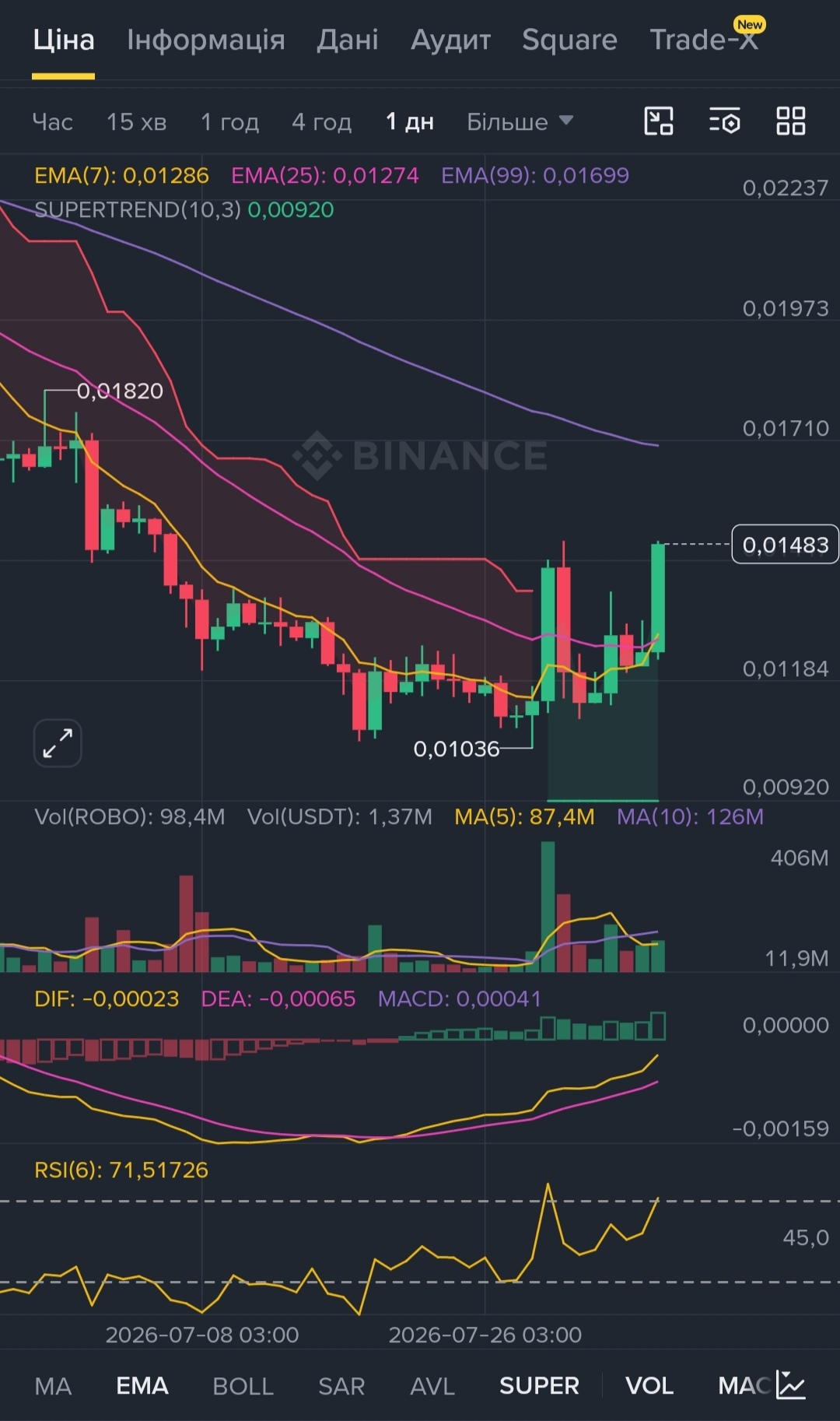
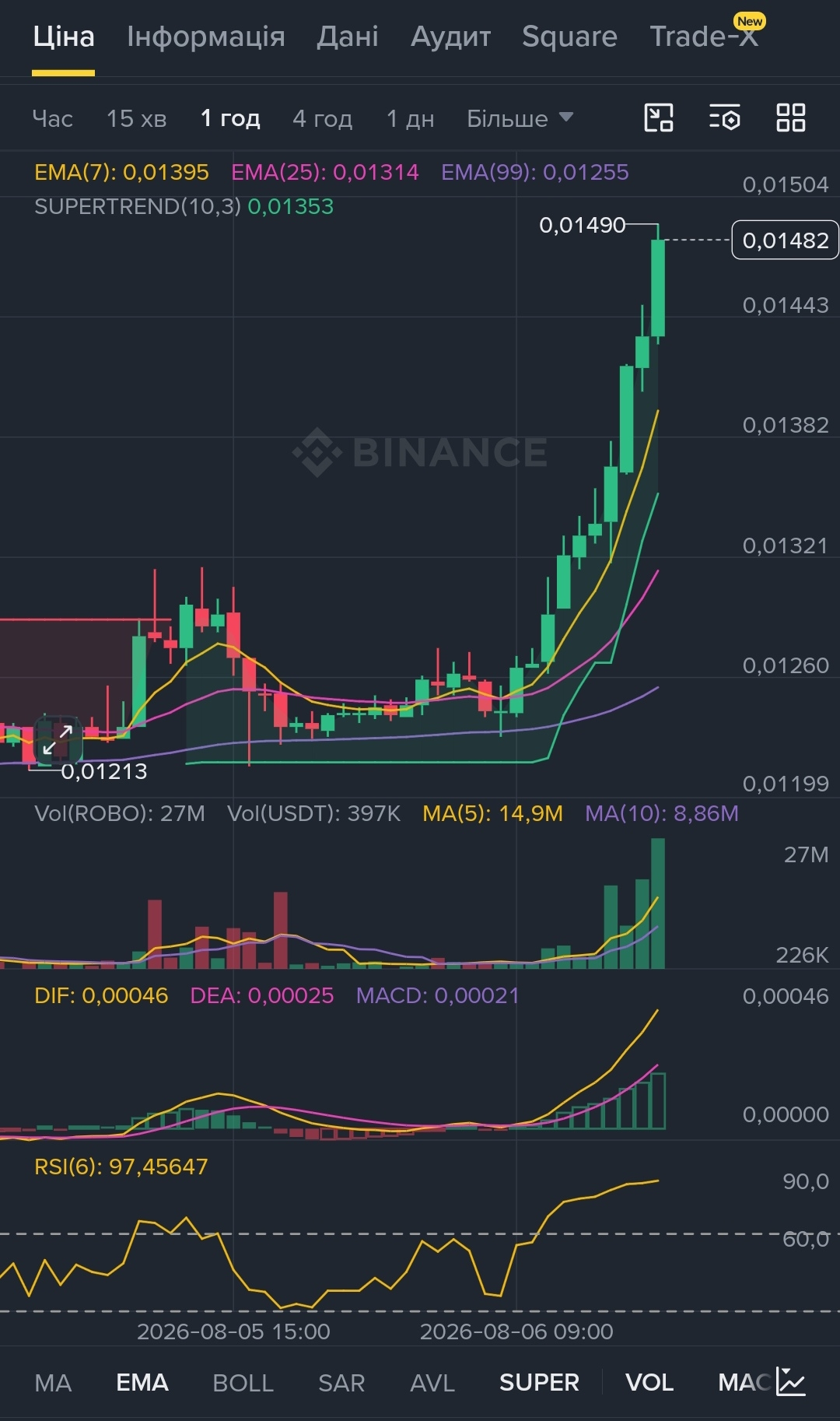
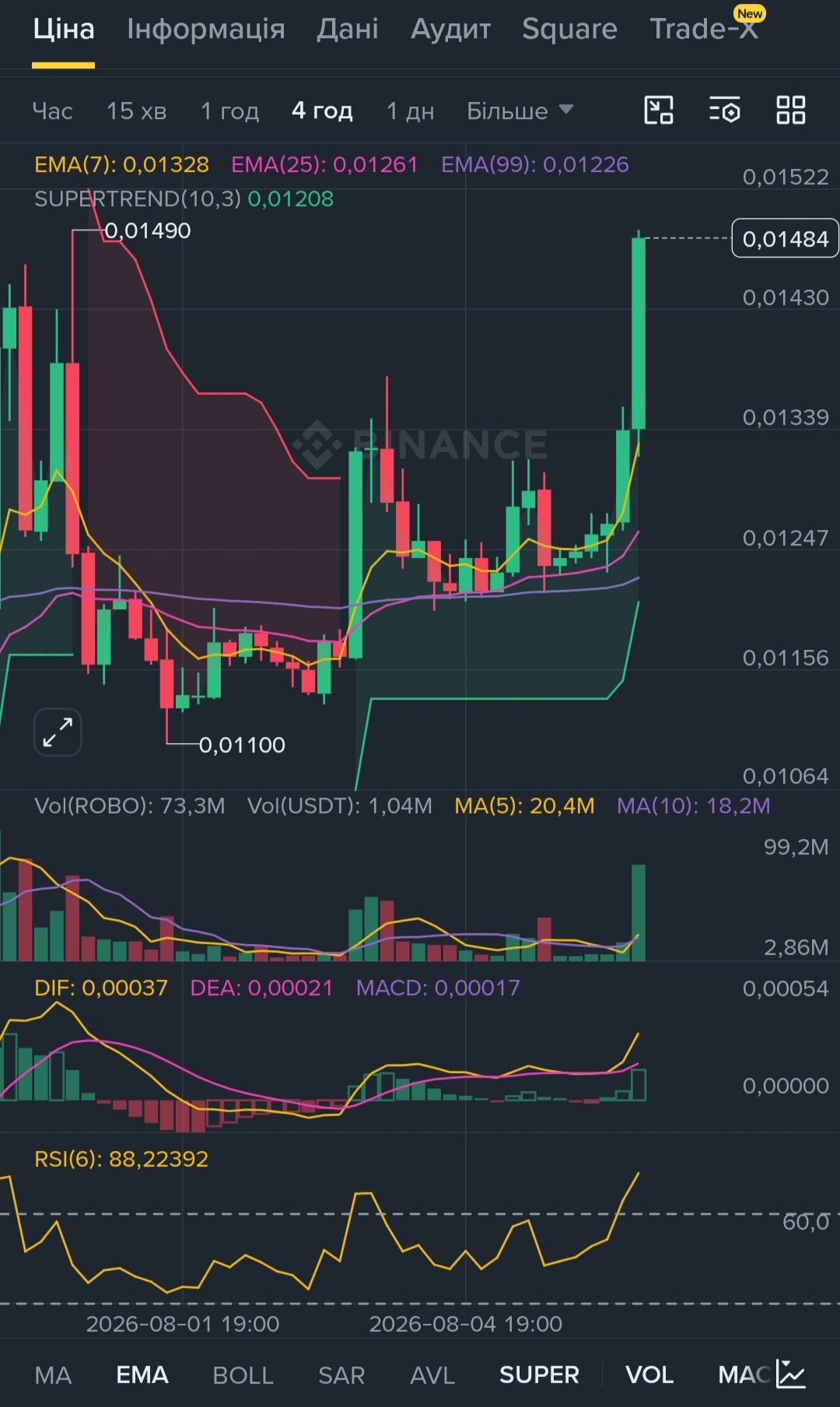
Токен $ROBO за останні 24 години зріс на 16%, що зумовлено досягненням успіхів в екосистемі ШІ, зокрема відкриттям коду AI-рунтайму OM1 та набором користувачів у додатку Fabric у кількості 735 тис. в списку очікування.
👉 Токен торгується приблизно по ціні $0.0147 у бичачому тренді на 1H і 4H таймфреймах, гістограма MACD позитивна, коефіцієнт RSI на обох таймфреймах у зоні перекупленості, вище 70, EMA7 і EMA25 знаходяться над EMA99. Індикатор SUPER підтверджує бичачий імпульс.
👉 На 1D таймфреймі ситуація дещо інша, токен торгується на ведмежому тренді, але EMA7 перетнула EMA25 знизу вгору, що свідчить про початок потужного бичачого імпульсу, тобто про ріст токена. Гістограма MACD і індикатор SUPER позитивні, що підтверджують ріст, коефіцієнт RSI у зоні перекупленості і ріст токена слабо підтверджений об'ємом торгів, тому можливий короткостроковий відкад вниз до EMA25, але користувачі настроєні позитивно👍😉
#FABRIC | #ROBO | #Ai_sector
1
2
180
Log in to explore more content
Join global crypto users on Binance Square
⚡️ Get latest and useful information about crypto.
💬 Trusted by the world’s largest crypto exchange.
👍 Discover real insights from verified creators.
Email / Phone number
Trending Topics
1
#BinanceReopensWithdrawalsForMoreAssets
722,268 views
3,741 Discussing
2
#BTCRebounds80K
220,849 views
1,927 Discussing
3
#Binance98PercentReplenished
115,254 views
1,278 Discussing
4
#KazakhstanReportedlyInvests$100MInCryptoFunds
348 views
14 Discussing
5
#StrategySTRCResumesIssuanceAfterOver170Days
5,166 views
129 Discussing
6
#ADPUSPrivateEmployersAdd86000JobsInOctober
19,048 views
317 Discussing
7
#HongKongPilotGrantSchemeFacilitatesHK$230MTokenization
269 views
3 Discussing
8
#SouthKoreaSeeksCryptoTaxDelayUntil2029
11,357 views
110 Discussing
9
#USMidterms-WhatAreMarketsExpecting?
530,167 views
2,630 Discussing
10
#US10YearTreasuryYieldFallsTo4.845%
11,416 views
98 Discussing