Binance Square
#apro

apro

5.5M views
98,370 Discussing
EliteDailySignals
·
--
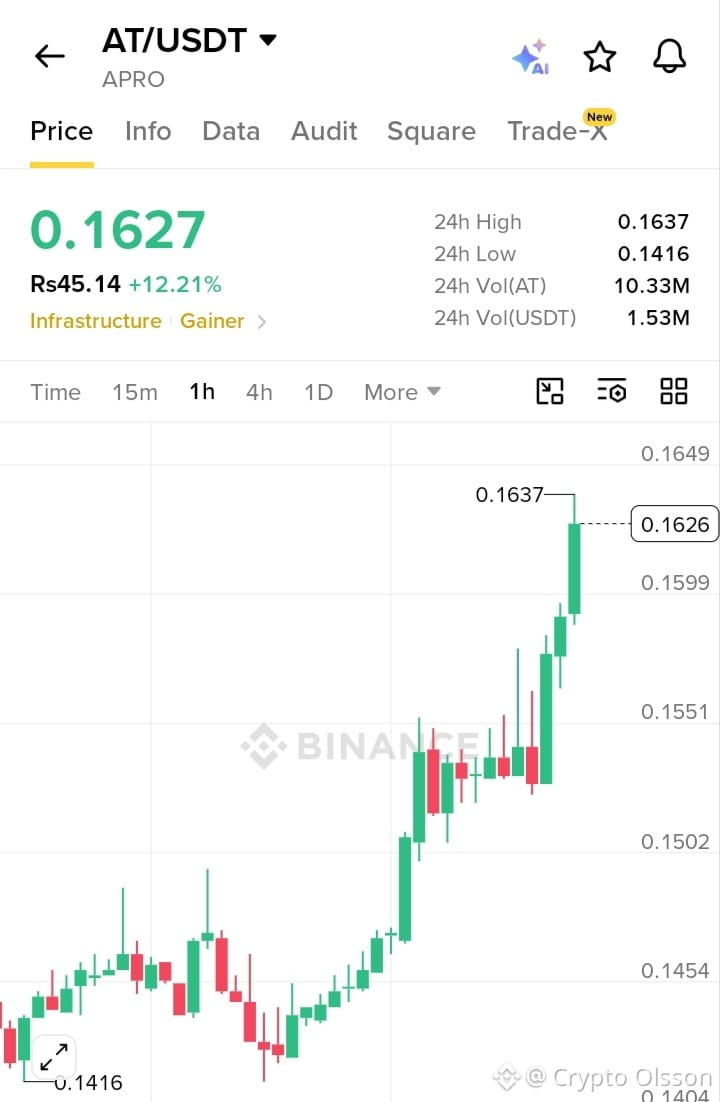
$ATUSDT Quick Analysis @ $0.1964 Artela ($AT) is stretching its boundaries with a notable +17.39% surge in 24h. As a high-performance Layer 1 featuring "EVM++," Artela is currently gaining traction following the recent rollout of its Parallel Execution Stack upgrades, which aim to eliminate the throughput bottlenecks that typically plague standard EVM chains. Narrative Check: The core of the Artela thesis in 2026 is Aspect Programming—a modular framework allowing developers to inject custom logic directly into the blockchain runtime. By enabling on-chain AI agents and high-frequency trading features natively, Artela is positioning itself as the "Extensible L1" choice for complex dApps that outgrow traditional smart contracts. The market is currently reacting to the increased developer activity and the "Elastic Block Space" stress tests designed to handle massive spikes in transaction demand. TA Snapshot Immediate Resistance: Faces a significant hurdle at $0.21. A clean flip of this level targets a run toward the $0.25 zone. Support Base: Vital support is holding firm at $0.17. A breach below $0.155 would signal a potential invalidation of the current leg up. Momentum: RSI is trending toward 65; it’s gathering heat but isn't quite at the "exhaustion" point yet. Volume is showing a healthy 30% increase alongside the price. With the network’s focus on on-chain AI and modularity, volatility is likely to remain high. Watch for a sustain above $0.19 to confirm the shift from consolidation to a macro recovery. DYOR | NFA #artela #APRO #ATUSDT #evm++ #TrendingTopic $AT @APRO-Oracle @EliteDaily 📹 We Live-stream a Bitcoin Footprint Chart every US (NY) session, it runs from ⏰️ 9h30 am EST/ (14h30 GMT) Set an Alarm, be disciplined! 🇺🇲🇬🇧🇩🇪 {future}(ATUSDT) Move with the market - move with us!
$ATUSDT Quick Analysis @ $0.1964

Artela ($AT ) is stretching its boundaries with a notable +17.39% surge in 24h. As a high-performance Layer 1 featuring "EVM++," Artela is currently gaining traction following the recent rollout of its Parallel Execution Stack upgrades, which aim to eliminate the throughput bottlenecks that typically plague standard EVM chains.

Narrative Check: The core of the Artela thesis in 2026 is Aspect Programming—a modular framework allowing developers to inject custom logic directly into the blockchain runtime. By enabling on-chain AI agents and high-frequency trading features natively, Artela is positioning itself as the "Extensible L1" choice for complex dApps that outgrow traditional smart contracts. The market is currently reacting to the increased developer activity and the "Elastic Block Space" stress tests designed to handle massive spikes in transaction demand.

TA Snapshot

Immediate Resistance: Faces a significant hurdle at $0.21. A clean flip of this level targets a run toward the $0.25 zone.

Support Base: Vital support is holding firm at $0.17. A breach below $0.155 would signal a potential invalidation of the current leg up.

Momentum: RSI is trending toward 65; it’s gathering heat but isn't quite at the "exhaustion" point yet. Volume is showing a healthy 30% increase alongside the price.

With the network’s focus on on-chain AI and modularity, volatility is likely to remain high. Watch for a sustain above $0.19 to confirm the shift from consolidation to a macro recovery.

DYOR | NFA

#artela #APRO #ATUSDT #evm++ #TrendingTopic $AT @APRO Oracle @EliteDailySignals

📹 We Live-stream a Bitcoin Footprint Chart every US (NY) session, it runs from ⏰️ 9h30 am EST/ (14h30 GMT) Set an Alarm, be disciplined! 🇺🇲🇬🇧🇩🇪
Move with the market - move with us!
·
--
Upaya Membangun Fondasi Informasi yang Lebih Andal untuk Aplikasi Blockchain APRO dalam Ekosistem Data Terverifikasi APRO menghadirkan pendekatan menarik dalam pengelolaan data terverifikasi di lingkungan blockchain yang semakin berkembang. Di tengah kebutuhan yang terus meningkat terhadap informasi dunia nyata yang akurat, proyek ini mencoba memadukan AI dan mekanisme validasi berlapis untuk memastikan bahwa data yang diteruskan ke dalam kontrak pintar benar-benar layak digunakan. Kualitas data menjadi inti dari keandalan sistem otomatis, dan di sinilah APRO menempatkan fokusnya. Salah satu hal yang membuat proyek ini relevan adalah bagaimana mereka melihat persoalan data dari perspektif jangka panjang. Alih-alih hanya menyediakan akses data mentah, APRO menambahkan proses penyaringan serta analisis sebelum data tersebut sampai ke pengguna. Pendekatan ini menempatkan oracle bukan hanya sebagai “pengambil” informasi, tetapi sebagai sistem yang turut menjaga integritas informasi tersebut, sehingga risiko kesalahan input dapat ditekan secara signifikan. Ketika data menjadi dasar pengambilan keputusan otomatis, akurasi adalah segalanya. Dalam perkembangannya, kebutuhan akan data berkualitas tidak lagi terbatas pada keuangan terdesentralisasi saja. Banyak sektor mulai beralih pada pemanfaatan smart contract yang membutuhkan informasi yang dapat dipercaya, baik untuk otomasi rantai pasok, pelacakan aset fisik, maupun pengelolaan catatan digital. APRO mencoba mengisi ruang ini dengan menawarkan jaringan oracle yang fleksibel dan mampu menyesuaikan diri dengan berbagai jenis aplikasi. Kemampuan untuk menyalurkan data secara real time, seraya mempertahankan proses verifikasi berlapis, menjadi nilai tambah yang cukup penting. Selain teknologi, APRO juga menaruh perhatian pada keterlibatan komunitas. Proyek ini mengembangkan model distribusi token yang dirancang untuk memperluas jangkauan partisipasi sehingga berbagai kalangan dapat memahami dan memanfaatkan solusi yang mereka hadirkan. Keterlibatan komunitas semacam ini mendukung pertumbuhan jangka panjang, karena teknologi tidak hanya dibangun oleh tim inti tetapi juga oleh pengguna yang aktif berperan dalam uji coba, masukan, dan adopsi awal. Di sisi teknis, pemanfaatan kecerdasan buatan membantu proses kurasi data menjadi lebih cepat dan terpadu. AI digunakan untuk membaca pola, mendeteksi anomali, dan menilai keabsahan data sebelum diteruskan ke sistem blockchain. Ini bukan hanya menekan risiko kesalahan, tetapi juga membuat data yang diterima pengguna menjadi lebih konsisten. Dalam ekosistem yang mengutamakan transparansi dan keandalan, kemampuan ini menjadi fondasi penting. Seiring semakin luasnya adopsi teknologi Web3, kebutuhan terhadap sistem oracle yang kuat dan adaptif akan terus meningkat. Proyek seperti APRO menawarkan perspektif baru mengenai bagaimana data bisa diolah secara lebih cerdas dan aman tanpa membebani performa jaringan. Perbaikan kualitas data pada akhirnya akan memperkuat kepercayaan pengguna terhadap solusi yang dibangun di atas kontrak pintar. Kesimpulan: APRO memperlihatkan bagaimana teknologi oracle dapat berkembang menjadi sistem yang bukan hanya menyalurkan data, tetapi juga menjaga kualitas informasi dengan proses verifikasi canggih. Dengan pendekatan yang menitikberatkan pada akurasi dan keandalan, APRO memperluas peran oracle sebagai fondasi penting dalam berbagai aplikasi blockchain modern. Jika tren ini berlanjut, kebutuhan akan data terverifikasi yang efektif akan membuat solusi seperti APRO semakin menonjol di masa mendatang. @APRO-Oracle #APRO $AT

Upaya Membangun Fondasi Informasi yang Lebih Andal untuk Aplikasi Blockchain

APRO dalam Ekosistem Data Terverifikasi

APRO menghadirkan pendekatan menarik dalam pengelolaan data terverifikasi di lingkungan blockchain yang semakin berkembang. Di tengah kebutuhan yang terus meningkat terhadap informasi dunia nyata yang akurat, proyek ini mencoba memadukan AI dan mekanisme validasi berlapis untuk memastikan bahwa data yang diteruskan ke dalam kontrak pintar benar-benar layak digunakan. Kualitas data menjadi inti dari keandalan sistem otomatis, dan di sinilah APRO menempatkan fokusnya.

Salah satu hal yang membuat proyek ini relevan adalah bagaimana mereka melihat persoalan data dari perspektif jangka panjang. Alih-alih hanya menyediakan akses data mentah, APRO menambahkan proses penyaringan serta analisis sebelum data tersebut sampai ke pengguna. Pendekatan ini menempatkan oracle bukan hanya sebagai “pengambil” informasi, tetapi sebagai sistem yang turut menjaga integritas informasi tersebut, sehingga risiko kesalahan input dapat ditekan secara signifikan. Ketika data menjadi dasar pengambilan keputusan otomatis, akurasi adalah segalanya.

Dalam perkembangannya, kebutuhan akan data berkualitas tidak lagi terbatas pada keuangan terdesentralisasi saja. Banyak sektor mulai beralih pada pemanfaatan smart contract yang membutuhkan informasi yang dapat dipercaya, baik untuk otomasi rantai pasok, pelacakan aset fisik, maupun pengelolaan catatan digital. APRO mencoba mengisi ruang ini dengan menawarkan jaringan oracle yang fleksibel dan mampu menyesuaikan diri dengan berbagai jenis aplikasi. Kemampuan untuk menyalurkan data secara real time, seraya mempertahankan proses verifikasi berlapis, menjadi nilai tambah yang cukup penting.

Selain teknologi, APRO juga menaruh perhatian pada keterlibatan komunitas. Proyek ini mengembangkan model distribusi token yang dirancang untuk memperluas jangkauan partisipasi sehingga berbagai kalangan dapat memahami dan memanfaatkan solusi yang mereka hadirkan. Keterlibatan komunitas semacam ini mendukung pertumbuhan jangka panjang, karena teknologi tidak hanya dibangun oleh tim inti tetapi juga oleh pengguna yang aktif berperan dalam uji coba, masukan, dan adopsi awal.

Di sisi teknis, pemanfaatan kecerdasan buatan membantu proses kurasi data menjadi lebih cepat dan terpadu. AI digunakan untuk membaca pola, mendeteksi anomali, dan menilai keabsahan data sebelum diteruskan ke sistem blockchain. Ini bukan hanya menekan risiko kesalahan, tetapi juga membuat data yang diterima pengguna menjadi lebih konsisten. Dalam ekosistem yang mengutamakan transparansi dan keandalan, kemampuan ini menjadi fondasi penting.

Seiring semakin luasnya adopsi teknologi Web3, kebutuhan terhadap sistem oracle yang kuat dan adaptif akan terus meningkat. Proyek seperti APRO menawarkan perspektif baru mengenai bagaimana data bisa diolah secara lebih cerdas dan aman tanpa membebani performa jaringan. Perbaikan kualitas data pada akhirnya akan memperkuat kepercayaan pengguna terhadap solusi yang dibangun di atas kontrak pintar.

Kesimpulan: APRO memperlihatkan bagaimana teknologi oracle dapat berkembang menjadi sistem yang bukan hanya menyalurkan data, tetapi juga menjaga kualitas informasi dengan proses verifikasi canggih. Dengan pendekatan yang menitikberatkan pada akurasi dan keandalan, APRO memperluas peran oracle sebagai fondasi penting dalam berbagai aplikasi blockchain modern. Jika tren ini berlanjut, kebutuhan akan data terverifikasi yang efektif akan membuat solusi seperti APRO semakin menonjol di masa mendatang.
@APRO Oracle #APRO $AT
apro如何用AI重构数据,成为defi的智能心脏昨天下午,我和朋友在咖啡厅喝咖啡,两杯美式都快凉透了,屏幕上的数字还在那上蹿下跳。我俩边看边摇头,想起以前好几次,就因为数据慢了那么几秒,一个好端端的策略直接扑街,整个下午的心情都搭进去了。在DeFi世界里,这种事太常见了,就那么一眨眼,机会就没了,仓位可能就没了。 喝着聊着,就扯到现在DeFi里大家心里都绷着的那根弦。智能合约、流动池、借贷,整个系统都指着外面喂数据进来。可传统的数据源,一到行情剧烈或者网络堵车,就爱抽风,延迟、出错、价格跳几下,上面搭的一切就跟着晃。多少人套利没套成,清算反被清算,都跟这有关。 聊到这儿,自然就说到apro。它像个新一代的数据中继层,感觉是想给行业把心跳稳住。道理其实不难懂:你再聪明的策略,信息要是又慢又歪,照样得栽。要是链上应用拿到的数据能更快、更准、更不容易被动手脚,整个生态不就更稳了嘛。apro干的就是这个,想当那个你信得过的数据源。 本质上它还是预言机,就是把链下的数据搬上链。但跟之前那些前辈不太一样,apro从根子上就在抓高保真。不仅要快,还得准、扛操控,而且什么复杂数据都得能接。不光是币价这种利落的数字,就连现实里的资产信息、事件结果、甚至一些报告文件,它都得能消化成链上能用的格式。听说架构也分两层,一层负责抓取和理解原始信息,另一层负责安全地把共识好的结果送出去。 我和朋友说,你想想那些挂钩房地产或者赌某个大事件结果的链上产品,以前的数据源对这些边缘需求可能有一搭没一搭,但apro是认真把它们当正事办的。对那些做预测市场、AI应用、或者想把真实资产搬上链的团队来说,等于有了一条现成的数据脊梁骨,不用自己到处扒数据,还老担心数据不准或者被人搞。 最近apro动静也不小,刚融了笔钱,不少专门投基础设施的老炮都跟了。钱主要用来往预测市场、现实资产这些对数据又快又准要求更高的领域扎。他们还在一些链上推预言机即服务,直接给开发者现成的数据接口,省得小团队自己折腾数据管道,能把力气都花在产品和业务上。 杯子见底,我们推门出去。阳光挺好,我忽然觉得,那些藏在界面背后、平时没人惦记的基础设施,其实才真正决定我们能走多稳。可靠的数据就像屋里的电,平时不觉得,一闪崩就全乱。 apro在做的,大概就是把这个电弄稳当点,让DeFi的脉搏别乱跳。 技术要真的改变金融,路还很长,也很少有一夜颠覆。但更好的数据,至少能让这条路少点坑,少点噪声,摩擦小一些。以后会怎么样,没人知道,但至少,下回再跟朋友在咖啡馆看行情的时候,心里或许能少抖两下。 @APRO-Oracle #APRO $AT {spot}(ATUSDT)

apro如何用AI重构数据,成为defi的智能心脏

昨天下午,我和朋友在咖啡厅喝咖啡,两杯美式都快凉透了,屏幕上的数字还在那上蹿下跳。我俩边看边摇头,想起以前好几次,就因为数据慢了那么几秒,一个好端端的策略直接扑街,整个下午的心情都搭进去了。在DeFi世界里,这种事太常见了,就那么一眨眼,机会就没了,仓位可能就没了。
喝着聊着,就扯到现在DeFi里大家心里都绷着的那根弦。智能合约、流动池、借贷,整个系统都指着外面喂数据进来。可传统的数据源,一到行情剧烈或者网络堵车,就爱抽风,延迟、出错、价格跳几下,上面搭的一切就跟着晃。多少人套利没套成,清算反被清算,都跟这有关。
聊到这儿,自然就说到apro。它像个新一代的数据中继层,感觉是想给行业把心跳稳住。道理其实不难懂:你再聪明的策略,信息要是又慢又歪,照样得栽。要是链上应用拿到的数据能更快、更准、更不容易被动手脚,整个生态不就更稳了嘛。apro干的就是这个,想当那个你信得过的数据源。
本质上它还是预言机,就是把链下的数据搬上链。但跟之前那些前辈不太一样,apro从根子上就在抓高保真。不仅要快,还得准、扛操控,而且什么复杂数据都得能接。不光是币价这种利落的数字,就连现实里的资产信息、事件结果、甚至一些报告文件,它都得能消化成链上能用的格式。听说架构也分两层,一层负责抓取和理解原始信息,另一层负责安全地把共识好的结果送出去。
我和朋友说,你想想那些挂钩房地产或者赌某个大事件结果的链上产品,以前的数据源对这些边缘需求可能有一搭没一搭,但apro是认真把它们当正事办的。对那些做预测市场、AI应用、或者想把真实资产搬上链的团队来说,等于有了一条现成的数据脊梁骨,不用自己到处扒数据,还老担心数据不准或者被人搞。
最近apro动静也不小,刚融了笔钱,不少专门投基础设施的老炮都跟了。钱主要用来往预测市场、现实资产这些对数据又快又准要求更高的领域扎。他们还在一些链上推预言机即服务,直接给开发者现成的数据接口,省得小团队自己折腾数据管道,能把力气都花在产品和业务上。
杯子见底,我们推门出去。阳光挺好,我忽然觉得,那些藏在界面背后、平时没人惦记的基础设施,其实才真正决定我们能走多稳。可靠的数据就像屋里的电,平时不觉得,一闪崩就全乱。
apro在做的,大概就是把这个电弄稳当点,让DeFi的脉搏别乱跳。
技术要真的改变金融,路还很长,也很少有一夜颠覆。但更好的数据,至少能让这条路少点坑,少点噪声,摩擦小一些。以后会怎么样,没人知道,但至少,下回再跟朋友在咖啡馆看行情的时候,心里或许能少抖两下。
@APRO Oracle #APRO $AT
·
--
Article
APRO giải quyết vấn đề thật hay chỉ làm Web3 trông gọn hơn?@APRO-Oracle #APRO $AT Khi mình đặt câu hỏi “APRO giải quyết vấn đề thật hay chỉ làm Web3 trông gọn hơn?”, thật ra đó không phải là câu hỏi mang tính chỉ trích. Nó xuất phát từ một cảm giác quen thuộc mà mình tin là rất nhiều người trong crypto từng trải qua: quá nhiều dự án nói rằng họ đang đơn giản hóa Web3, nhưng sau cùng chỉ là làm cho mọi thứ trông đẹp hơn, dễ dùng hơn, chứ không giải quyết được gốc rễ của vấn đề. Mình đã ở trong thị trường đủ lâu để thấy điều này lặp đi lặp lại. Ban đầu là “DeFi quá phức tạp, chúng tôi sẽ làm cho nó dễ dùng”. Sau đó là một giao diện mượt hơn, một nút bấm ít hơn, và rất nhiều thứ bị giấu đi phía sau. Khi thị trường thuận lợi, không ai quan tâm. Khi thị trường xấu, mọi rủi ro lộ ra cùng lúc, và lúc đó mới nhận ra rằng sự “gọn gàng” trước đó chỉ là lớp sơn. Vì vậy, khi nhìn vào APRO, phản xạ đầu tiên của mình cũng là hoài nghi. Liệu đây có phải chỉ là một nỗ lực nữa để sắp xếp lại Web3 cho gọn mắt hơn, hay thực sự đang cố xử lý một vấn đề sâu hơn? Càng tìm hiểu, mình càng thấy câu hỏi này không thể trả lời bằng cách nhìn vào UI, adoption hay giá token. Nó nằm ở thứ mà APRO đang cố tổ chức lại. Và ở đây, mình nhận ra một điểm quan trọng: APRO không xuất phát từ vấn đề “người dùng thấy rối”, mà từ vấn đề “hệ thống vận hành rối”. Web3 hiện tại rối không phải vì nhiều nút bấm, mà vì giá trị, rủi ro và trách nhiệm bị tách rời. Có protocol tạo ra yield, nhưng không rõ ai chịu trách nhiệm khi yield đó biến mất. Có token đại diện cho governance, nhưng governance đó không thực sự quyết định điều gì quan trọng. Có người dùng cung cấp vốn, nhưng lại không có tiếng nói tương xứng với rủi ro họ gánh. Mình đã thấy quá nhiều hệ sinh thái sụp đổ không phải vì thiếu công nghệ, mà vì không ai thực sự chịu trách nhiệm cho quyết định. Và đó là lúc mình bắt đầu nhìn APRO khác đi. Nếu APRO chỉ nhằm mục tiêu làm Web3 “dễ hiểu hơn”, thì mình không nghĩ nó cần phải tồn tại dưới dạng một token điều phối. Chỉ cần một layer UX tốt là đủ. Nhưng APRO lại được gắn rất chặt với governance, với quyền quyết định và với cam kết dài hạn. Điều đó cho mình cảm giác rằng nó không cố che giấu sự phức tạp, mà đang cố buộc sự phức tạp phải có trật tự. Mình đặc biệt để ý đến một điều: APRO không hứa sẽ làm mọi thứ trở nên đơn giản. Trái lại, nó ngầm thừa nhận rằng Web3 sẽ còn phức tạp hơn nữa. Nhưng thay vì để sự phức tạp đó lan ra mọi hướng, APRO cố gom nó về một điểm: nơi quyết định được đưa ra, nơi lợi ích được điều phối, và nơi trách nhiệm không thể né tránh. Với mình, đây là khác biệt rất lớn giữa “làm gọn” và “giải quyết vấn đề”. Làm gọn thường đi kèm với việc che đi rủi ro. Giải quyết vấn đề thường đi kèm với việc làm lộ rõ rủi ro, nhưng có cách xử lý nó. Tuy vậy, mình cũng không cho rằng APRO đã chắc chắn đứng ở phía “giải quyết vấn đề thật”. Thành thật mà nói, ranh giới giữa hai hướng này rất mỏng. Một hệ thống governance có thể rất đẹp trên giấy, nhưng nếu nó không được sử dụng trong những quyết định khó, thì nó chỉ là hình thức. Một token điều phối có thể mang danh nghĩa “trách nhiệm”, nhưng nếu cuối cùng mọi quyết định vẫn tập trung vào một nhóm nhỏ, thì mọi thứ lại quay về điểm cũ. Điều khiến mình tiếp tục theo dõi APRO không phải là vì mình tin chắc nó đúng, mà vì nó đang cố chạm vào một vấn đề mà phần lớn thị trường né tránh. Web3 rất giỏi tạo ra sản phẩm mới, nhưng lại khá yếu trong việc tạo ra cơ chế ra quyết định trưởng thành. APRO đặt mình đúng vào điểm yếu đó, và điều này khiến nó trông “kém hấp dẫn” hơn rất nhiều so với các dự án chạy narrative. Có một câu hỏi mình thường tự hỏi khi nhìn vào APRO: nếu ngày mai thị trường rất xấu, nếu phải cắt giảm, nếu phải từ chối một cơ hội lợi nhuận cao nhưng rủi ro lớn, thì liệu APRO có đóng vai trò gì trong quyết định đó không? Nếu câu trả lời là có, thì với mình, đó là dấu hiệu của một giải pháp thật. Nếu không, thì nó chỉ là một lớp sắp xếp lại cho gọn gàng hơn. Mình cũng nhận ra rằng cảm giác “APRO chỉ làm Web3 trông gọn hơn” phần nào đến từ việc giá trị của nó không hiển thị ngay. Nó không tạo ra cảm giác hào hứng tức thì. Nó không khiến mình nghĩ “mình phải dùng ngay”. Thay vào đó, nó khiến mình nghĩ “nếu hệ thống này lớn lên, thì thứ này có cần thiết không?”. Đây là kiểu giá trị chỉ xuất hiện khi hệ sinh thái đủ trưởng thành — và cũng là lý do vì sao rất dễ bị hiểu nhầm là thừa thãi. Từ góc nhìn cá nhân, mình thấy APRO giống một cấu trúc phòng ngừa hơn là một động cơ tăng trưởng. Nó không giúp Web3 chạy nhanh hơn, mà giúp Web3 đỡ tự bắn vào chân mình hơn. Trong một thị trường còn trẻ, điều đó không sexy. Nhưng trong một thị trường đã trải qua đủ thất bại, đó lại là thứ rất hiếm. Vậy nên, nếu hỏi mình một cách thẳng thắn: APRO giải quyết vấn đề thật hay chỉ làm Web3 trông gọn hơn? Mình sẽ trả lời thế này: APRO đang cố giải quyết một vấn đề thật, nhưng là vấn đề mà chỉ những người từng thất vọng đủ nhiều với Web3 mới thực sự quan tâm. Nó không làm Web3 đơn giản hơn. Nó làm Web3 khó trốn tránh trách nhiệm hơn. Và cuối cùng, điều khiến mình tiếp tục theo dõi APRO không phải là vì mình chắc chắn nó sẽ thành công, mà vì mình muốn xem điều gì sẽ xảy ra khi hệ thống bị đặt vào tình huống khó. Khi mọi thứ không thuận lợi, khi phải lựa chọn giữa “dễ” và “đúng”, lúc đó APRO sẽ bộc lộ bản chất thật của mình. Nếu đến lúc đó, nó vẫn giữ được vai trò điều phối, vẫn được dùng để ra quyết định thực chất, thì với mình, @APRO-Oracle đã vượt qua ranh giới của việc “làm cho Web3 trông gọn hơn”. Còn nếu không, nó sẽ chỉ là một nỗ lực nữa trong danh sách dài những dự án từng muốn dọn dẹp Web3, nhưng cuối cùng chỉ sắp xếp lại bề mặt. Và mình nghĩ, việc đặt ra câu hỏi này ngay từ bây giờ — thay vì tin tưởng mù quáng — đã là cách tiếp cận đúng nhất với một thứ như APRO.

APRO giải quyết vấn đề thật hay chỉ làm Web3 trông gọn hơn?

@APRO Oracle #APRO $AT
Khi mình đặt câu hỏi “APRO giải quyết vấn đề thật hay chỉ làm Web3 trông gọn hơn?”, thật ra đó không phải là câu hỏi mang tính chỉ trích.
Nó xuất phát từ một cảm giác quen thuộc mà mình tin là rất nhiều người trong crypto từng trải qua: quá nhiều dự án nói rằng họ đang đơn giản hóa Web3, nhưng sau cùng chỉ là làm cho mọi thứ trông đẹp hơn, dễ dùng hơn, chứ không giải quyết được gốc rễ của vấn đề.
Mình đã ở trong thị trường đủ lâu để thấy điều này lặp đi lặp lại.
Ban đầu là “DeFi quá phức tạp, chúng tôi sẽ làm cho nó dễ dùng”.
Sau đó là một giao diện mượt hơn, một nút bấm ít hơn, và rất nhiều thứ bị giấu đi phía sau.
Khi thị trường thuận lợi, không ai quan tâm.
Khi thị trường xấu, mọi rủi ro lộ ra cùng lúc, và lúc đó mới nhận ra rằng sự “gọn gàng” trước đó chỉ là lớp sơn.
Vì vậy, khi nhìn vào APRO, phản xạ đầu tiên của mình cũng là hoài nghi.
Liệu đây có phải chỉ là một nỗ lực nữa để sắp xếp lại Web3 cho gọn mắt hơn, hay thực sự đang cố xử lý một vấn đề sâu hơn?
Càng tìm hiểu, mình càng thấy câu hỏi này không thể trả lời bằng cách nhìn vào UI, adoption hay giá token.
Nó nằm ở thứ mà APRO đang cố tổ chức lại.
Và ở đây, mình nhận ra một điểm quan trọng: APRO không xuất phát từ vấn đề “người dùng thấy rối”, mà từ vấn đề “hệ thống vận hành rối”.
Web3 hiện tại rối không phải vì nhiều nút bấm, mà vì giá trị, rủi ro và trách nhiệm bị tách rời.
Có protocol tạo ra yield, nhưng không rõ ai chịu trách nhiệm khi yield đó biến mất.
Có token đại diện cho governance, nhưng governance đó không thực sự quyết định điều gì quan trọng.
Có người dùng cung cấp vốn, nhưng lại không có tiếng nói tương xứng với rủi ro họ gánh.
Mình đã thấy quá nhiều hệ sinh thái sụp đổ không phải vì thiếu công nghệ, mà vì không ai thực sự chịu trách nhiệm cho quyết định.
Và đó là lúc mình bắt đầu nhìn APRO khác đi.
Nếu APRO chỉ nhằm mục tiêu làm Web3 “dễ hiểu hơn”, thì mình không nghĩ nó cần phải tồn tại dưới dạng một token điều phối.
Chỉ cần một layer UX tốt là đủ.
Nhưng APRO lại được gắn rất chặt với governance, với quyền quyết định và với cam kết dài hạn.
Điều đó cho mình cảm giác rằng nó không cố che giấu sự phức tạp, mà đang cố buộc sự phức tạp phải có trật tự.
Mình đặc biệt để ý đến một điều: APRO không hứa sẽ làm mọi thứ trở nên đơn giản.
Trái lại, nó ngầm thừa nhận rằng Web3 sẽ còn phức tạp hơn nữa.
Nhưng thay vì để sự phức tạp đó lan ra mọi hướng, APRO cố gom nó về một điểm:
nơi quyết định được đưa ra,
nơi lợi ích được điều phối,
và nơi trách nhiệm không thể né tránh.
Với mình, đây là khác biệt rất lớn giữa “làm gọn” và “giải quyết vấn đề”.
Làm gọn thường đi kèm với việc che đi rủi ro.
Giải quyết vấn đề thường đi kèm với việc làm lộ rõ rủi ro, nhưng có cách xử lý nó.
Tuy vậy, mình cũng không cho rằng APRO đã chắc chắn đứng ở phía “giải quyết vấn đề thật”.
Thành thật mà nói, ranh giới giữa hai hướng này rất mỏng.
Một hệ thống governance có thể rất đẹp trên giấy, nhưng nếu nó không được sử dụng trong những quyết định khó, thì nó chỉ là hình thức.
Một token điều phối có thể mang danh nghĩa “trách nhiệm”, nhưng nếu cuối cùng mọi quyết định vẫn tập trung vào một nhóm nhỏ, thì mọi thứ lại quay về điểm cũ.
Điều khiến mình tiếp tục theo dõi APRO không phải là vì mình tin chắc nó đúng, mà vì nó đang cố chạm vào một vấn đề mà phần lớn thị trường né tránh.
Web3 rất giỏi tạo ra sản phẩm mới, nhưng lại khá yếu trong việc tạo ra cơ chế ra quyết định trưởng thành.
APRO đặt mình đúng vào điểm yếu đó, và điều này khiến nó trông “kém hấp dẫn” hơn rất nhiều so với các dự án chạy narrative.
Có một câu hỏi mình thường tự hỏi khi nhìn vào APRO:
nếu ngày mai thị trường rất xấu,
nếu phải cắt giảm,
nếu phải từ chối một cơ hội lợi nhuận cao nhưng rủi ro lớn,
thì liệu APRO có đóng vai trò gì trong quyết định đó không?
Nếu câu trả lời là có, thì với mình, đó là dấu hiệu của một giải pháp thật.
Nếu không, thì nó chỉ là một lớp sắp xếp lại cho gọn gàng hơn.
Mình cũng nhận ra rằng cảm giác “APRO chỉ làm Web3 trông gọn hơn” phần nào đến từ việc giá trị của nó không hiển thị ngay.
Nó không tạo ra cảm giác hào hứng tức thì.
Nó không khiến mình nghĩ “mình phải dùng ngay”.
Thay vào đó, nó khiến mình nghĩ “nếu hệ thống này lớn lên, thì thứ này có cần thiết không?”.
Đây là kiểu giá trị chỉ xuất hiện khi hệ sinh thái đủ trưởng thành — và cũng là lý do vì sao rất dễ bị hiểu nhầm là thừa thãi.
Từ góc nhìn cá nhân, mình thấy APRO giống một cấu trúc phòng ngừa hơn là một động cơ tăng trưởng.
Nó không giúp Web3 chạy nhanh hơn, mà giúp Web3 đỡ tự bắn vào chân mình hơn.
Trong một thị trường còn trẻ, điều đó không sexy.
Nhưng trong một thị trường đã trải qua đủ thất bại, đó lại là thứ rất hiếm.
Vậy nên, nếu hỏi mình một cách thẳng thắn:
APRO giải quyết vấn đề thật hay chỉ làm Web3 trông gọn hơn?
Mình sẽ trả lời thế này:
APRO đang cố giải quyết một vấn đề thật, nhưng là vấn đề mà chỉ những người từng thất vọng đủ nhiều với Web3 mới thực sự quan tâm.
Nó không làm Web3 đơn giản hơn.
Nó làm Web3 khó trốn tránh trách nhiệm hơn.
Và cuối cùng, điều khiến mình tiếp tục theo dõi APRO không phải là vì mình chắc chắn nó sẽ thành công, mà vì mình muốn xem điều gì sẽ xảy ra khi hệ thống bị đặt vào tình huống khó.
Khi mọi thứ không thuận lợi,
khi phải lựa chọn giữa “dễ” và “đúng”,
lúc đó APRO sẽ bộc lộ bản chất thật của mình.
Nếu đến lúc đó, nó vẫn giữ được vai trò điều phối,
vẫn được dùng để ra quyết định thực chất,
thì với mình, @APRO Oracle đã vượt qua ranh giới của việc “làm cho Web3 trông gọn hơn”.
Còn nếu không, nó sẽ chỉ là một nỗ lực nữa trong danh sách dài những dự án từng muốn dọn dẹp Web3, nhưng cuối cùng chỉ sắp xếp lại bề mặt.
Và mình nghĩ, việc đặt ra câu hỏi này ngay từ bây giờ — thay vì tin tưởng mù quáng — đã là cách tiếp cận đúng nhất với một thứ như APRO.
APRO THE QUIET HIGH FIDELITY BRAIN OF BLOCKCHAINS When Im sitting with APRO and really trying to understand what it is doing in this wild and noisy world of crypto I keep coming back to the same picture in my mind, I see a quiet brain sitting underneath many different chains watching real markets and real events all day long and then whispering careful truths into the ears of smart contracts that would otherwise be completely blind, and the more I read the more I feel that this is not a dramatic image at all, it is exactly the role APRO is trying to play because blockchains are strong but also stubborn, they only see what is already written on chain and they never reach out on their own to ask what the price of a token is or whether a bond payment has been made or whether a reserve report has changed, so if nobody stands in the middle to carry reality across that boundary then every fancy protocol we love stays locked in a bubble that has no idea what is happening outside. APRO steps into that gap as a decentralized oracle and data infrastructure layer, a system that connects on chain logic with off chain facts, and it does this with a design that mixes artificial intelligence, layered validation and economic incentives so that the data reaching contracts is not just available but also timely, resilient and deeply inspected before it is trusted. Im seeing that APRO describes itself as a new generation of oracle sometimes even using the phrase Oracle three point zero, which is their way of saying that they are not only moving raw numbers on chain but also verifying and interpreting them with machine intelligence and dual layer consensus, especially for ecosystems linked to Bitcoin and for the broader Web three world that is growing around many chains at once, and this matters because the more serious value flows into decentralized finance and real world assets the more unforgiving the oracle problem becomes, one bad tick or one delayed update is not just a small bug, it can be the spark that triggers liquidations, breaks pegs or scares institutions away. APRO is built on the idea of high fidelity data, which in normal human language means data that is precise, fresh and hard to manipulate, and this focus shows up again and again when I look at how they talk about their L one artificial intelligence pipeline, their data pull architecture and their commitment to multi chain reach, all of these elements are pointed at the same goal, to feed contracts with information that behaves more like a carefully produced signal and less like a random feed that nobody really understands. If we slow down for a moment and think about why oracles exist at all, the need for something like APRO becomes easier to feel, because a blockchain is a deterministic machine, it will always give the same result if you give it the same inputs and that is beautiful, but the side effect is that it refuses to open a window to the outside world and the outside world is where almost everything that matters in finance and life actually happens, prices move on markets, companies publish reports, games produce outcomes, legal processes finish, interest rates change and none of that arrives on chain by itself. An oracle is the bridge that carries this information across and the risk here is simple and brutal, if the bridge lies or makes mistakes real people lose money and faith, we have already seen how many billions have been lost in exploits connected to weak oracles or fragile bridges, and this history is like a constant shadow behind every new protocol that launches. APRO is trying to answer this by treating data like something that deserves the same engineering respect as consensus itself, when I read through the design I can feel that they are not satisfied with a model where a few nodes query a few sources and push a number on chain, they are building a layered architecture that separates heavy off chain reasoning from final on chain verification so that each part of the system can do what it is best at. In the first layer APRO runs an artificial intelligence powered pipeline that pulls information from many places, market feeds, price venues, proof of reserve reports, regulatory filings, general web data and even documents or images related to real world assets, then this layer converts all that messy content into structured fields using techniques like optical character recognition, natural language processing and large model style analysis, which means the output is not just a bare number but a number with context, with provenance and with a confidence score that expresses how strong the evidence is. After this preparation APRO sends the result to a second layer that focuses on audit, consensus and slashing, here decentralized validators check the proposed data against their own views and against protocol rules, if enough of them agree the data is accepted and written on chain, if someone misbehaves they risk losing stake, and this is where the economic incentives come into play because participants are not just computing for fun, they are putting value at risk to secure this truth layer. By splitting the process into a data and computation layer followed by a verification and settlement layer APRO keeps the path flexible and scalable at the top while keeping the final decision simple, transparent and easy to inspect at the bottom, and when Im imagining this in action I feel like the system is taking a deep breath off chain before speaking one clear sentence on chain. One of the most interesting choices APRO makes is the emphasis on data pull as a primary delivery method, traditional oracles often rely heavily on data push where nodes periodically write new values on chain according to a fixed schedule or a simple threshold rule, and APRO does support this push style as one of its two service models with decentralized node operators pushing updates based on time or price thresholds to keep feeds fresh for lending protocols and other slower moving applications, but the team also recognizes that many modern systems especially in trading and high frequency environments need more control over when they read the data. In the data pull model APRO keeps ultra high frequency data available off chain, updated in near real time by its nodes, and then lets smart contracts request the latest value when they need it, which avoids paying gas for every small tick while still letting protocols see fresh information right at the moment of execution, this is a subtle but powerful shift and it is one of the reasons people describe APRO as focused on high fidelity because it is not just how often you write but how intelligently you decide when to read. Im noticing that this flexibility between push and pull makes APRO feel less like a rigid oracle and more like a data operating system, if a lending market cares mostly about protection from big moves it can rely on steady push feeds with thresholds tuned to its risk appetite, if a derivatives protocol cares about tight spreads and fast reaction it can combine push for baseline safety with pull for precision around liquidations and liquid markets, and if a team is building something new like an automated strategy manager or an artificial intelligence trading agent they can integrate deeply with pull flows so that every time the agent acts it requests a fresh snapshot of reality that has been vetted by the APRO brain. The phrase high fidelity keeps coming up in official descriptions and partner articles and I like the way it captures several qualities at once, it is about timeliness, meaning that the delay between real world change and on chain visibility is minimized, it is about granularity, meaning that updates can get down to very fine intervals when needed, and it is about integrity, meaning that data is resistant to manipulation because it draws from many venues and passes through anomaly detection before it is accepted. APRO talks about focusing on high integrity data and about the idea that in serious decentralized finance and real world asset systems high integrity is non negotiable, you either have it or users get hurt, there is no comfortable middle ground once the numbers are large, and this mindset runs through their technical architecture and their roadmap. When I look at where APRO actually operates I see that it has already become a significant oracle provider for the chain centered around Binance and for the wider Bitcoin focused ecosystem, and it is not stopping there, sources describe how APRO is already live across more than forty public chains with over one thousand four hundred data feeds and how it plans to expand beyond sixty chains in the coming phases including new high performance networks, so this is not a single chain story, it is a multi chain infrastructure vision where the same high fidelity brain is plugged into many different environments. For builders this means they can learn one oracle interface and then use it wherever they go, for the broader space it means that patterns for security and risk can become more consistent across ecosystems instead of being fragmented and fragile everywhere. A detail that always catches my attention is that APRO is recognized as the first artificial intelligence powered oracle project within the Binance ecosystem, and this alignment matters because the Binance centered world has become one of the strongest gravity centers for liquidity, new projects and active users, if an oracle can establish itself in that environment it gains not only volume but also a level of constant real world testing that most smaller networks never see. Im feeling that this is one of the reasons APRO has moved quickly from an idea into something people call a backbone for applications that care about data quality, artificial intelligence features and real world asset tokenization, and it fits with the picture of APRO trying to position itself as foundational infrastructure rather than as a short term story. Underneath all these technical structures lives the AT token, which is the native asset that powers the APRO oracle protocol, and Im trying to understand it not as an abstract economic object but as a working tool inside the system. Official descriptions explain that AT has a total supply of one billion tokens and that it is used in several connected ways, it is used as a payment asset when applications request data or complex computation from the oracle network, it is staked by node operators and validators who want to participate in securing the system, and it can be used in governance and long term coordination as the ecosystem matures. In practice this means that every real use of the oracle, every price feed queried, every proof of reserve updated, every model output delivered, has a path that runs through AT, and nodes that want to earn rewards by serving this demand need to lock AT and accept that it can be slashed if they behave dishonestly or negligently, so the token becomes a bridge between usage and responsibility, not just a ticket for speculation. Im also aware that APRO has not grown in a vacuum, it has attracted strategic funding and attention from serious investors, with sources mentioning backing in its seed round from well known names in both the crypto and traditional finance world, including funds that usually concentrate on foundational infrastructure only when they believe it can shape a whole category, and these signals add another layer to the story because they suggest that people who study risk and long term potential for a living saw something in the APRO approach that felt important. Funding on its own never guarantees success of course, yet in a space where many ideas never move beyond talk it is a sign that this oracle vision has passed some demanding filters. When I shift my view from architecture to use cases Im starting to see just how wide the reach of APRO could be if it continues on this path, because almost every serious blockchain application depends on some external truth. In decentralized finance APRO feeds can power lending markets that need fair collateral valuations, perpetual and options platforms that need fast and honest prices, stable instruments that depend on external reference baskets, structured products that rely on indexes and risk metrics, and emerging artificial intelligence driven strategies that must react to real time data without overpaying for every tick, and in all of these cases the difference between a low fidelity feed and a high fidelity feed shows up directly in user experience and safety. In the world of real world assets APROs artificial intelligence pipeline becomes even more important, because these systems often depend on documents and events like reserve attestations, cash flow reports, payment schedules and legal changes, which are not simple price strings but complex pieces of information, so the ability of the L one layer to read proofs and filings, to extract structured values and to attach confidence to them, allows smart contracts to react to these off chain realities with more nuance than just a yes or no signal. There is another frontier where APRO feels almost naturally placed, and that is the meeting point between artificial intelligence agents and on chain finance, many people are exploring the idea that in the near future autonomous agents will manage positions, negotiate exposures, rebalance portfolios and coordinate complex workflows without constant human micromanagement, but all of that vision falls apart if those agents are reading weak or easily manipulated data, because even a perfect model will fail if it is fed lies. APRO is literally framing itself as an infrastructure layer for this world of agentic workflows, by giving machines trusted and interpretable data they can use as a stable base for their decisions, and by planning features like multi chain compliance layers, verifiable invoice and tax receipt generation and combined artificial intelligence and zero knowledge techniques for sensitive real world asset information, the project is clearly thinking ahead to a time when agents have to live not only in the world of yield but also in the world of rules. Prediction markets and gaming are also natural homes for APRO because they need both fair randomness and accurate result reporting to keep trust alive, and with APROs capacity to process many types of data including sports scores, event outcomes and on chain and off chain statistics, these systems can settle bets and distribute rewards with more confidence that the inputs were not gamed. At the same time APRO can provide random numbers and game relevant feeds that are hard to bias because they pass through decentralized validation rather than being generated behind closed doors, and this again fits with the theme that the project is not simply pushing prices but building a broader truth layer for many types of digital experiences. Whenever I look at an oracle or a bridge I always ask myself how it deals with attackers because this is not a peaceful environment, adversaries have already shown that they will poke at every seam to find a way to pull money out of systems that trust external inputs too casually, and APROs answer here is layered like the rest of its design. First it uses decentralization so that no single node can decide the data, nodes are selected and organized in ways that reduce predictable control and make collusion more expensive, then it uses broad data sourcing so that a single venue cannot single handedly drag a feed away from sanity, after that it uses artificial intelligence and statistical checks to look for unusual shapes in the data that might indicate manipulation or thin liquidity games, and finally it ties everything together with economic incentives where nodes that cheat or neglect their duties can have their AT stake slashed. This is not a magic shield and there will always be edge cases to handle, but it shows that APRO is designed under the assumption that the world is adversarial and that truth must be defended, not just assumed. The roadmap for APRO also tells a story about where the team thinks the pain points of the industry are moving, for example there are plans to extend the network from supporting over forty chains to more than sixty, with explicit targets that include new high performance ecosystems, and to build a multi chain compliance layer that can generate verifiable invoices and tax receipts on chain, which is the kind of infrastructure that institutional users and serious businesses will quietly require if they are going to bring more activity onto blockchain rails. There are also research directions combining trusted execution environments and zero knowledge proofs so that sensitive real world asset data like cap tables or private financial records can be processed by the oracle without exposing all the raw details to the world, while still giving verifiable guarantees to the contracts that depend on those results, and in the longer horizon APRO talks about creating an artificial intelligence data operating system for agents, a unified layer that combines market data, reserve information and macro indicators into streams that agents can consume in a coherent way. At the same time I do not want to pretend that everything is easy or inevitable, because APRO faces real challenges as it tries to grow into the role it is reaching for. Established oracle providers already have deep relationships with many protocols and those relationships are rooted in years of performance, so even if builders are excited about artificial intelligence and high fidelity data they will still require hard evidence that APRO can stay reliable under extreme market conditions, congested networks and rare edge cases that are hard to simulate. The complexity of the system, which includes off chain artificial intelligence pipelines, dual layer validation and multi chain deployment, must be balanced with clear documentation and tooling so that developers do not feel intimidated or confused, because if an oracle becomes too much of a black box people hesitate to stake their protocols on it no matter how advanced it looks on paper. There is also the ongoing question of token economics, AT must continue to be tightly bound to real utility and security functions rather than just speculative trading, otherwise incentives for node operators and governance can drift away from what is best for users, and this is something that only steady usage and thoughtful parameter choices over time can prove. Beyond that we have the slower but powerful forces of regulation and traditional oversight beginning to take interest in real world assets, prediction markets and cross border data flows, and APRO will have to navigate these forces carefully, finding ways to provide rich on chain signals about off chain assets and events while respecting privacy and compliance constraints that differ between regions, and this is where its plans for privacy preserving computation and compliance friendly data formats may become crucial. If that balance is found then APRO can be a bridge not only between off chain facts and on chain code but also between traditional institutions and decentralized infrastructure, giving both sides a language they can share. When I let myself imagine the future that APRO is aiming toward I see something that feels calmer and more grounded than the world of sharp panics and sudden oracle failures that we have lived through in past cycles, I see lending markets that still have risk but do not crumble because of one strange candle on a thin venue, I see real world asset platforms that can automatically update and respond to external reports without trusting one opaque gateway, I see artificial intelligence agents that can move funds or adjust positions without being easy prey #APRO @APRO-Oracle $AT

APRO THE QUIET HIGH FIDELITY BRAIN OF BLOCKCHAINS

When Im sitting with APRO and really trying to understand what it is doing in this wild and noisy world of crypto I keep coming back to the same picture in my mind, I see a quiet brain sitting underneath many different chains watching real markets and real events all day long and then whispering careful truths into the ears of smart contracts that would otherwise be completely blind, and the more I read the more I feel that this is not a dramatic image at all, it is exactly the role APRO is trying to play because blockchains are strong but also stubborn, they only see what is already written on chain and they never reach out on their own to ask what the price of a token is or whether a bond payment has been made or whether a reserve report has changed, so if nobody stands in the middle to carry reality across that boundary then every fancy protocol we love stays locked in a bubble that has no idea what is happening outside. APRO steps into that gap as a decentralized oracle and data infrastructure layer, a system that connects on chain logic with off chain facts, and it does this with a design that mixes artificial intelligence, layered validation and economic incentives so that the data reaching contracts is not just available but also timely, resilient and deeply inspected before it is trusted.

Im seeing that APRO describes itself as a new generation of oracle sometimes even using the phrase Oracle three point zero, which is their way of saying that they are not only moving raw numbers on chain but also verifying and interpreting them with machine intelligence and dual layer consensus, especially for ecosystems linked to Bitcoin and for the broader Web three world that is growing around many chains at once, and this matters because the more serious value flows into decentralized finance and real world assets the more unforgiving the oracle problem becomes, one bad tick or one delayed update is not just a small bug, it can be the spark that triggers liquidations, breaks pegs or scares institutions away. APRO is built on the idea of high fidelity data, which in normal human language means data that is precise, fresh and hard to manipulate, and this focus shows up again and again when I look at how they talk about their L one artificial intelligence pipeline, their data pull architecture and their commitment to multi chain reach, all of these elements are pointed at the same goal, to feed contracts with information that behaves more like a carefully produced signal and less like a random feed that nobody really understands.

If we slow down for a moment and think about why oracles exist at all, the need for something like APRO becomes easier to feel, because a blockchain is a deterministic machine, it will always give the same result if you give it the same inputs and that is beautiful, but the side effect is that it refuses to open a window to the outside world and the outside world is where almost everything that matters in finance and life actually happens, prices move on markets, companies publish reports, games produce outcomes, legal processes finish, interest rates change and none of that arrives on chain by itself. An oracle is the bridge that carries this information across and the risk here is simple and brutal, if the bridge lies or makes mistakes real people lose money and faith, we have already seen how many billions have been lost in exploits connected to weak oracles or fragile bridges, and this history is like a constant shadow behind every new protocol that launches.

APRO is trying to answer this by treating data like something that deserves the same engineering respect as consensus itself, when I read through the design I can feel that they are not satisfied with a model where a few nodes query a few sources and push a number on chain, they are building a layered architecture that separates heavy off chain reasoning from final on chain verification so that each part of the system can do what it is best at. In the first layer APRO runs an artificial intelligence powered pipeline that pulls information from many places, market feeds, price venues, proof of reserve reports, regulatory filings, general web data and even documents or images related to real world assets, then this layer converts all that messy content into structured fields using techniques like optical character recognition, natural language processing and large model style analysis, which means the output is not just a bare number but a number with context, with provenance and with a confidence score that expresses how strong the evidence is.

After this preparation APRO sends the result to a second layer that focuses on audit, consensus and slashing, here decentralized validators check the proposed data against their own views and against protocol rules, if enough of them agree the data is accepted and written on chain, if someone misbehaves they risk losing stake, and this is where the economic incentives come into play because participants are not just computing for fun, they are putting value at risk to secure this truth layer. By splitting the process into a data and computation layer followed by a verification and settlement layer APRO keeps the path flexible and scalable at the top while keeping the final decision simple, transparent and easy to inspect at the bottom, and when Im imagining this in action I feel like the system is taking a deep breath off chain before speaking one clear sentence on chain.

One of the most interesting choices APRO makes is the emphasis on data pull as a primary delivery method, traditional oracles often rely heavily on data push where nodes periodically write new values on chain according to a fixed schedule or a simple threshold rule, and APRO does support this push style as one of its two service models with decentralized node operators pushing updates based on time or price thresholds to keep feeds fresh for lending protocols and other slower moving applications, but the team also recognizes that many modern systems especially in trading and high frequency environments need more control over when they read the data. In the data pull model APRO keeps ultra high frequency data available off chain, updated in near real time by its nodes, and then lets smart contracts request the latest value when they need it, which avoids paying gas for every small tick while still letting protocols see fresh information right at the moment of execution, this is a subtle but powerful shift and it is one of the reasons people describe APRO as focused on high fidelity because it is not just how often you write but how intelligently you decide when to read.

Im noticing that this flexibility between push and pull makes APRO feel less like a rigid oracle and more like a data operating system, if a lending market cares mostly about protection from big moves it can rely on steady push feeds with thresholds tuned to its risk appetite, if a derivatives protocol cares about tight spreads and fast reaction it can combine push for baseline safety with pull for precision around liquidations and liquid markets, and if a team is building something new like an automated strategy manager or an artificial intelligence trading agent they can integrate deeply with pull flows so that every time the agent acts it requests a fresh snapshot of reality that has been vetted by the APRO brain.

The phrase high fidelity keeps coming up in official descriptions and partner articles and I like the way it captures several qualities at once, it is about timeliness, meaning that the delay between real world change and on chain visibility is minimized, it is about granularity, meaning that updates can get down to very fine intervals when needed, and it is about integrity, meaning that data is resistant to manipulation because it draws from many venues and passes through anomaly detection before it is accepted. APRO talks about focusing on high integrity data and about the idea that in serious decentralized finance and real world asset systems high integrity is non negotiable, you either have it or users get hurt, there is no comfortable middle ground once the numbers are large, and this mindset runs through their technical architecture and their roadmap.

When I look at where APRO actually operates I see that it has already become a significant oracle provider for the chain centered around Binance and for the wider Bitcoin focused ecosystem, and it is not stopping there, sources describe how APRO is already live across more than forty public chains with over one thousand four hundred data feeds and how it plans to expand beyond sixty chains in the coming phases including new high performance networks, so this is not a single chain story, it is a multi chain infrastructure vision where the same high fidelity brain is plugged into many different environments. For builders this means they can learn one oracle interface and then use it wherever they go, for the broader space it means that patterns for security and risk can become more consistent across ecosystems instead of being fragmented and fragile everywhere.

A detail that always catches my attention is that APRO is recognized as the first artificial intelligence powered oracle project within the Binance ecosystem, and this alignment matters because the Binance centered world has become one of the strongest gravity centers for liquidity, new projects and active users, if an oracle can establish itself in that environment it gains not only volume but also a level of constant real world testing that most smaller networks never see. Im feeling that this is one of the reasons APRO has moved quickly from an idea into something people call a backbone for applications that care about data quality, artificial intelligence features and real world asset tokenization, and it fits with the picture of APRO trying to position itself as foundational infrastructure rather than as a short term story.

Underneath all these technical structures lives the AT token, which is the native asset that powers the APRO oracle protocol, and Im trying to understand it not as an abstract economic object but as a working tool inside the system. Official descriptions explain that AT has a total supply of one billion tokens and that it is used in several connected ways, it is used as a payment asset when applications request data or complex computation from the oracle network, it is staked by node operators and validators who want to participate in securing the system, and it can be used in governance and long term coordination as the ecosystem matures. In practice this means that every real use of the oracle, every price feed queried, every proof of reserve updated, every model output delivered, has a path that runs through AT, and nodes that want to earn rewards by serving this demand need to lock AT and accept that it can be slashed if they behave dishonestly or negligently, so the token becomes a bridge between usage and responsibility, not just a ticket for speculation.

Im also aware that APRO has not grown in a vacuum, it has attracted strategic funding and attention from serious investors, with sources mentioning backing in its seed round from well known names in both the crypto and traditional finance world, including funds that usually concentrate on foundational infrastructure only when they believe it can shape a whole category, and these signals add another layer to the story because they suggest that people who study risk and long term potential for a living saw something in the APRO approach that felt important. Funding on its own never guarantees success of course, yet in a space where many ideas never move beyond talk it is a sign that this oracle vision has passed some demanding filters.

When I shift my view from architecture to use cases Im starting to see just how wide the reach of APRO could be if it continues on this path, because almost every serious blockchain application depends on some external truth. In decentralized finance APRO feeds can power lending markets that need fair collateral valuations, perpetual and options platforms that need fast and honest prices, stable instruments that depend on external reference baskets, structured products that rely on indexes and risk metrics, and emerging artificial intelligence driven strategies that must react to real time data without overpaying for every tick, and in all of these cases the difference between a low fidelity feed and a high fidelity feed shows up directly in user experience and safety. In the world of real world assets APROs artificial intelligence pipeline becomes even more important, because these systems often depend on documents and events like reserve attestations, cash flow reports, payment schedules and legal changes, which are not simple price strings but complex pieces of information, so the ability of the L one layer to read proofs and filings, to extract structured values and to attach confidence to them, allows smart contracts to react to these off chain realities with more nuance than just a yes or no signal.

There is another frontier where APRO feels almost naturally placed, and that is the meeting point between artificial intelligence agents and on chain finance, many people are exploring the idea that in the near future autonomous agents will manage positions, negotiate exposures, rebalance portfolios and coordinate complex workflows without constant human micromanagement, but all of that vision falls apart if those agents are reading weak or easily manipulated data, because even a perfect model will fail if it is fed lies. APRO is literally framing itself as an infrastructure layer for this world of agentic workflows, by giving machines trusted and interpretable data they can use as a stable base for their decisions, and by planning features like multi chain compliance layers, verifiable invoice and tax receipt generation and combined artificial intelligence and zero knowledge techniques for sensitive real world asset information, the project is clearly thinking ahead to a time when agents have to live not only in the world of yield but also in the world of rules.

Prediction markets and gaming are also natural homes for APRO because they need both fair randomness and accurate result reporting to keep trust alive, and with APROs capacity to process many types of data including sports scores, event outcomes and on chain and off chain statistics, these systems can settle bets and distribute rewards with more confidence that the inputs were not gamed. At the same time APRO can provide random numbers and game relevant feeds that are hard to bias because they pass through decentralized validation rather than being generated behind closed doors, and this again fits with the theme that the project is not simply pushing prices but building a broader truth layer for many types of digital experiences.

Whenever I look at an oracle or a bridge I always ask myself how it deals with attackers because this is not a peaceful environment, adversaries have already shown that they will poke at every seam to find a way to pull money out of systems that trust external inputs too casually, and APROs answer here is layered like the rest of its design. First it uses decentralization so that no single node can decide the data, nodes are selected and organized in ways that reduce predictable control and make collusion more expensive, then it uses broad data sourcing so that a single venue cannot single handedly drag a feed away from sanity, after that it uses artificial intelligence and statistical checks to look for unusual shapes in the data that might indicate manipulation or thin liquidity games, and finally it ties everything together with economic incentives where nodes that cheat or neglect their duties can have their AT stake slashed. This is not a magic shield and there will always be edge cases to handle, but it shows that APRO is designed under the assumption that the world is adversarial and that truth must be defended, not just assumed.

The roadmap for APRO also tells a story about where the team thinks the pain points of the industry are moving, for example there are plans to extend the network from supporting over forty chains to more than sixty, with explicit targets that include new high performance ecosystems, and to build a multi chain compliance layer that can generate verifiable invoices and tax receipts on chain, which is the kind of infrastructure that institutional users and serious businesses will quietly require if they are going to bring more activity onto blockchain rails. There are also research directions combining trusted execution environments and zero knowledge proofs so that sensitive real world asset data like cap tables or private financial records can be processed by the oracle without exposing all the raw details to the world, while still giving verifiable guarantees to the contracts that depend on those results, and in the longer horizon APRO talks about creating an artificial intelligence data operating system for agents, a unified layer that combines market data, reserve information and macro indicators into streams that agents can consume in a coherent way.

At the same time I do not want to pretend that everything is easy or inevitable, because APRO faces real challenges as it tries to grow into the role it is reaching for. Established oracle providers already have deep relationships with many protocols and those relationships are rooted in years of performance, so even if builders are excited about artificial intelligence and high fidelity data they will still require hard evidence that APRO can stay reliable under extreme market conditions, congested networks and rare edge cases that are hard to simulate. The complexity of the system, which includes off chain artificial intelligence pipelines, dual layer validation and multi chain deployment, must be balanced with clear documentation and tooling so that developers do not feel intimidated or confused, because if an oracle becomes too much of a black box people hesitate to stake their protocols on it no matter how advanced it looks on paper. There is also the ongoing question of token economics, AT must continue to be tightly bound to real utility and security functions rather than just speculative trading, otherwise incentives for node operators and governance can drift away from what is best for users, and this is something that only steady usage and thoughtful parameter choices over time can prove.

Beyond that we have the slower but powerful forces of regulation and traditional oversight beginning to take interest in real world assets, prediction markets and cross border data flows, and APRO will have to navigate these forces carefully, finding ways to provide rich on chain signals about off chain assets and events while respecting privacy and compliance constraints that differ between regions, and this is where its plans for privacy preserving computation and compliance friendly data formats may become crucial. If that balance is found then APRO can be a bridge not only between off chain facts and on chain code but also between traditional institutions and decentralized infrastructure, giving both sides a language they can share.

When I let myself imagine the future that APRO is aiming toward I see something that feels calmer and more grounded than the world of sharp panics and sudden oracle failures that we have lived through in past cycles, I see lending markets that still have risk but do not crumble because of one strange candle on a thin venue, I see real world asset platforms that can automatically update and respond to external reports without trusting one opaque gateway, I see artificial intelligence agents that can move funds or adjust positions without being easy prey

#APRO @APRO Oracle $AT
Article
APRO And Why Oracles Are Really The Nervous System Of DeFihello my dear cryptopm binance square family, today in this article we will talk about APRO Oracle Oracles Are Not Price Feeds They Are Nerves Lately i stopped thinking about oracles as price feeds. Not plugins. Not backend tools you slap at the end. I see them more like nervous system. Smart contracts do not understand world. They understand rules only. They execute logic blindly. They do not know what changed what is real what is fake what is manipulated. As DeFi grow this blind spot become dangerous. Bigger system bigger damage. @APRO-Oracle #apro $AT {future}(ATUSDT) Truth Is Fragile And APRO Treat It That Way What stand out to me about APRO is mindset. It does not treat data like clean number you drop into contract. It treat truth like fragile thing. Something that need to be tested defended proven before it trigger irreversible onchain action. That framing alone put it in different category. Speed Is Not The Real Problem Most oracle talk stuck on speed. Who faster who lower latency who more feeds. Speed matter sometimes yes. But after watching DeFi break you learn real danger is not slow data. It is wrong data arriving confidently. That is how systems die quietly. APRO start from assumption that data is messy delayed contradictory sometimes malicious. That is adult design. Reality Is Not Clean So Stop Pretending APRO basically say reality is ugly. So why treat it like spreadsheet. That honesty matter. Market conditions are chaotic reports incomplete signals noisy. Treating everything as perfect feed is naive. APRO design acknowledge mess instead of hiding it. Push And Pull Respect Context Not Ego One thing i genuinely like is APRO does not force one truth rhythm on everyone. Push data when system need constant awareness like lending leverage liquidation. Pull data when truth matter only at execution moment. This respect cost risk context at same time. You are not paying for noise you do not need. But you are not blind when heartbeat data is critical. Verification Is Discipline Not Checkbox This is where APRO start feeling serious. Oracle manipulation is sneaky. It does not look like hack. It look like system doing what it was told. That is scary. APRO treat verification as discipline. Truth should be challengeable not blindly accepted. Structure exists to slow down bad data before it cascade into liquidation unfair outcomes broken settlement. Expecting Stress Instead Of Hoping For Calm Good systems expect stress. APRO feel built for stress. It does not assume best case. It assume adversarial environment. That is what i want in oracle. Not just decentralization theater but design that assume someone is trying to bend reality for profit. AI As Support Not Authority AI inside APRO is framed in way i prefer. Not god not judge. Extra eyes. Flag anomalies inconsistencies weird patterns. Especially for messy data like real world reports documents reserves. Humans understand but do not scale. AI help surface what deserve scrutiny. Final truth still grounded in verification logic not black box decision. This Goes Way Beyond Prices Price feeds are basic now. Future is messy. Tokenized RWAs need verification timing reporting. Onchain games need real randomness not trust me bro randomness. AI agents will act instantly without second guessing input. Cross ecosystem apps will depend on integrity more than brand name. In that world oracle is systemic risk layer not accessory. APRO Is Trying To Reduce Risk Not Erase It APRO does not pretend risk can be eliminated. That honesty matter. It aim to reduce systemic risk by making truth harder to fake easier to verify. That is realistic goal. Infrastructure You Only Notice When It Breaks APRO will never be loud project. That is fine. Good infrastructure disappear into background. You only notice when it fail. What i watch is simple. Does APRO keep making truth expensive to fake and manipulation hard when incentives get ugly. If yes it become protocol people rely on quietly for years. my take I think APRO is one of those projects people ignore until they desperately need it. Oracles are boring until they fail then everything burn. I like that APRO design assume chaos instead of pretending order. Adoption will be slow hype low but if DeFi want to grow without repeating old disasters then systems like this matter a lot. Real value in crypto usually hide where no one is screaming. APRO feel like that place. @APRO-Oracle #APRO $AT

APRO And Why Oracles Are Really The Nervous System Of DeFi

hello my dear cryptopm binance square family, today in this article we will talk about APRO Oracle

Oracles Are Not Price Feeds They Are Nerves

Lately i stopped thinking about oracles as price feeds. Not plugins. Not backend tools you slap at the end. I see them more like nervous system. Smart contracts do not understand world. They understand rules only. They execute logic blindly. They do not know what changed what is real what is fake what is manipulated. As DeFi grow this blind spot become dangerous. Bigger system bigger damage.

@APRO Oracle #apro $AT

Truth Is Fragile And APRO Treat It That Way

What stand out to me about APRO is mindset. It does not treat data like clean number you drop into contract. It treat truth like fragile thing. Something that need to be tested defended proven before it trigger irreversible onchain action. That framing alone put it in different category.

Speed Is Not The Real Problem

Most oracle talk stuck on speed. Who faster who lower latency who more feeds. Speed matter sometimes yes. But after watching DeFi break you learn real danger is not slow data. It is wrong data arriving confidently. That is how systems die quietly. APRO start from assumption that data is messy delayed contradictory sometimes malicious. That is adult design.

Reality Is Not Clean So Stop Pretending

APRO basically say reality is ugly. So why treat it like spreadsheet. That honesty matter. Market conditions are chaotic reports incomplete signals noisy. Treating everything as perfect feed is naive. APRO design acknowledge mess instead of hiding it.

Push And Pull Respect Context Not Ego

One thing i genuinely like is APRO does not force one truth rhythm on everyone. Push data when system need constant awareness like lending leverage liquidation. Pull data when truth matter only at execution moment. This respect cost risk context at same time. You are not paying for noise you do not need. But you are not blind when heartbeat data is critical.

Verification Is Discipline Not Checkbox

This is where APRO start feeling serious. Oracle manipulation is sneaky. It does not look like hack. It look like system doing what it was told. That is scary. APRO treat verification as discipline. Truth should be challengeable not blindly accepted. Structure exists to slow down bad data before it cascade into liquidation unfair outcomes broken settlement.

Expecting Stress Instead Of Hoping For Calm

Good systems expect stress. APRO feel built for stress. It does not assume best case. It assume adversarial environment. That is what i want in oracle. Not just decentralization theater but design that assume someone is trying to bend reality for profit.

AI As Support Not Authority

AI inside APRO is framed in way i prefer. Not god not judge. Extra eyes. Flag anomalies inconsistencies weird patterns. Especially for messy data like real world reports documents reserves. Humans understand but do not scale. AI help surface what deserve scrutiny. Final truth still grounded in verification logic not black box decision.

This Goes Way Beyond Prices

Price feeds are basic now. Future is messy. Tokenized RWAs need verification timing reporting. Onchain games need real randomness not trust me bro randomness. AI agents will act instantly without second guessing input. Cross ecosystem apps will depend on integrity more than brand name. In that world oracle is systemic risk layer not accessory.

APRO Is Trying To Reduce Risk Not Erase It

APRO does not pretend risk can be eliminated. That honesty matter. It aim to reduce systemic risk by making truth harder to fake easier to verify. That is realistic goal.

Infrastructure You Only Notice When It Breaks

APRO will never be loud project. That is fine. Good infrastructure disappear into background. You only notice when it fail. What i watch is simple. Does APRO keep making truth expensive to fake and manipulation hard when incentives get ugly. If yes it become protocol people rely on quietly for years.

my take

I think APRO is one of those projects people ignore until they desperately need it. Oracles are boring until they fail then everything burn. I like that APRO design assume chaos instead of pretending order. Adoption will be slow hype low but if DeFi want to grow without repeating old disasters then systems like this matter a lot. Real value in crypto usually hide where no one is screaming. APRO feel like that place.

@APRO Oracle #APRO $AT
·
--
Article
APRO: The Intelligent Oracle Powering the Next Era of Onchain Data There is a quiet shift happening in the world of blockchain right now and APRO is sitting right at the center of it. For years the oracle space has been dominated by the same assumptions that data feeds simply need to be moved from offchain to onchain. But APRO is approaching the problem with a completely different mindset. Instead of just transporting data it is focusing on transforming data into something that is verifiable, intelligent, AI enhanced and ready for the next generation of applications that will rely on real world information. That is what makes APRO feel different. It is not just an oracle but an evolving data infrastructure that is preparing blockchains for the age of RWAs AI agents and global interoperability. When you look at the way APRO is designed you immediately see the intention behind it. It is built as a hybrid system where offchain nodes and onchain logic interact continuously to create a fast safe and reliable data layer. The Data Push method is perfect for applications that need constant updates such as price feeds liquidity signals yield curves and market movements. On the other hand the Data Pull method gives developers a clean and cost efficient way to fetch data only when they need it. This reduces unnecessary gas consumption and opens the door to more advanced use cases that require real time triggers or conditional logic. This flexibility is exactly what the industry needs. DeFi today moves extremely fast. Markets shift in seconds. Risk parameters change rapidly. Derivatives platforms liquidation engines RWA pricing tools and onchain trading systems all depend on accurate data. If an oracle fails the entire ecosystem suffers. APRO is targeting this pain point with a structure that can scale across dozens of different chains and support hundreds of different data types. From crypto prices to stock indexes from real estate valuations to gaming data APRO wants to make onchain apps feel like they are connected directly to the real world without the usual delays or inconsistencies. One of the most impressive features of APRO is its AI driven verification layer. This is where the project truly steps into the next decade. Traditional oracles simply read data and pass it along. APRO goes further by analyzing that data with AI models that can detect anomalies check multi source consistency score confidence levels and filter out noise before it ever touches the blockchain. This is a major unlock for developers. It means the smart contracts they deploy are not just using raw data but refined verified and reliability scored data. That difference can completely change the outcome of high value transactions. The two layer network architecture also strengthens APROs structure. The lower layer focuses on data collection and aggregation while the upper layer applies AI verification routing governance and delivery rules. This separation makes the entire system more organized and modular which means it can evolve much faster as the industry expands. New chains new data types new AI models and new frameworks can be plugged into APRO without disrupting its core logic. This is the kind of modularity that long term protocols need especially those aiming to operate across more than forty blockchains. What makes APRO even more exciting is the direction of its most recent announcements and updates. The protocol has entered a phase where real integrations are starting to appear across major platforms. The funding round led by YZI Labs in late 2025 injected fresh capital into APROs expansion plans and signaled that investors see real value in an AI enhanced oracle. This funding is not just to scale nodes. It is meant to accelerate APROs roadmap which includes stronger prediction market infrastructure deeper RWA integrations and the launch of the AI Agent Data OS in early 2026. This OS will allow autonomous AI agents to connect directly with verified real world information something that the entire AI driven economy will depend on. Another major development was APROs rapidly expanding ecosystem presence. The official listing and token launch on major exchanges gave AT a wider reach and dramatically increased liquidity. After that APRO partnered with OKX Wallet which was a smart strategic move. This partnership brings APROs oracle feeds directly into a huge user base and integrates its secure data services into a platform that is already powering millions of wallets and dApps. When an oracle starts getting embedded into wallet level tooling you know it is serious infrastructure not just another plug in service. One of the most impactful updates came from the collaboration with Lista DAO. Lista is one of the most active liquid staking and LSDfi ecosystems on BNB Chain and by choosing APRO as an oracle provider it essentially validated APRO as a reliable source for collateral pricing and staking data. Oracle integrity is crucial in LSDfi because inaccurate pricing can break the entire liquid staking economy. APROs involvement is a strong endorsement of the depth and reliability of its data feeds. You also cannot ignore the growing momentum APRO has in multi chain support. Being present across more than forty chains is not just a marketing line. It is a sign that APRO is building an ecosystem where dApps can scale across networks without needing to integrate multiple oracles or rewrite their data logic. This creates a unified data experience which is exactly what cross chain DeFi has been missing for years. Imagine launching a product on Ethereum then expanding to BNB Chain Solana Polygon or Base and having a single oracle system functioning consistently across all of them. Developers want this. Investors want this. Users want this. APRO is positioning itself to deliver it. Real world assets are another category where APRO can shine. RWAs need reliable verifiable and structured data to function onchain. A tokenized real estate asset for example needs accurate price updates property metadata market conditions supply and demand trends interest rate signals and compliance information. Traditional oracles cannot handle this type of complex data in a structured way. APROs AI verification and multi layer data processing make it ideal for the RWA space. As RWAs become a multi trillion dollar category on blockchains APRO could become a go to oracle for asset managers who need trustworthy offchain data. The AI wave is also pushing APRO into a new spotlight. AI agents will soon run portfolios conduct trading operate businesses perform risk assessments and even interact with government grade systems. These AI agents cannot operate on random low quality or stale data. They need a data layer that is intelligent self checking and near real time. That is exactly the role APRO is trying to fill. The upcoming AI Agent Data OS will be the critical piece that allows these agents to connect with all forms of external data without compromising safety or accuracy. What people love most about APRO is the combination of ambition and execution. A lot of projects talk about AI but APRO is building specific AI modules that run inside its oracle network. A lot of projects talk about multi chain ecosystems but APRO is already integrated across dozens of networks. A lot of projects talk about RWAs but APRO is structuring an entire verification pipeline for complex assets. This blend of vision and real development is why the project has gained so much attention lately across exchanges communities and developer networks. As the ecosystem grows AT the native token becomes even more important. Node operators stake AT to participate in the network. Applications use AT for data service fees. AI modules rely on AT for compute access and verification cycles. Governance proposals require AT. This creates natural demand for the token as the oracle activity increases. If APRO succeeds in expanding across DeFi RWA and AI driven markets AT could become one of the most utilized infrastructure tokens in the industry. Looking toward 2026 the roadmap becomes even more interesting. There is a strong emphasis on compliance ready data frameworks which means APRO is preparing for institutional adoption. Banks asset managers regulators and enterprise grade platforms will all need verifiable data pipelines before they can move serious capital onto public blockchains. APRO is shaping itself as a data solution that can meet those standards rather than just functioning as a crypto niche tool. The oracle space is more competitive than ever but APRO is carving out its own category. It is moving away from the old oracle model and toward a future where oracles act as intelligent trust layers that interpret data understand context and feed smart contracts with verified information. That evolution is necessary for blockchain to grow into global finance AI automation and digital asset ecosystems. At this stage APRO feels like one of those projects that is not fully understood by the market yet but already understood by the builders. Developers love flexibility. Institutions love security. AI builders love structured intelligence. RWA protocols love verification. APRO sits right in the middle of all these sectors and that is why its momentum is building month after month. The coming year will reveal how far APRO can scale. With fresh funding new partnerships exchange expansions multi chain integrations and major AI tools on the way the project is perfectly positioned to become one of the most important data infrastructures in Web3. There is still work to be done but the foundation is strong and the vision is aligned with where the entire industry is heading. If APRO delivers on the roadmap and continues expanding its integrations it can easily become one of the defining oracle networks of the AI and RWA era. The intelligent data layer it is building may soon become the backbone that powers thousands of applications across finance gaming enterprise AI agents and tokenized real world economies. #APRO $AT @APRO-Oracle

APRO: The Intelligent Oracle Powering the Next Era of Onchain Data

There is a quiet shift happening in the world of blockchain right now and APRO is sitting right at the center of it. For years the oracle space has been dominated by the same assumptions that data feeds simply need to be moved from offchain to onchain. But APRO is approaching the problem with a completely different mindset. Instead of just transporting data it is focusing on transforming data into something that is verifiable, intelligent, AI enhanced and ready for the next generation of applications that will rely on real world information. That is what makes APRO feel different. It is not just an oracle but an evolving data infrastructure that is preparing blockchains for the age of RWAs AI agents and global interoperability.

When you look at the way APRO is designed you immediately see the intention behind it. It is built as a hybrid system where offchain nodes and onchain logic interact continuously to create a fast safe and reliable data layer. The Data Push method is perfect for applications that need constant updates such as price feeds liquidity signals yield curves and market movements. On the other hand the Data Pull method gives developers a clean and cost efficient way to fetch data only when they need it. This reduces unnecessary gas consumption and opens the door to more advanced use cases that require real time triggers or conditional logic.

This flexibility is exactly what the industry needs. DeFi today moves extremely fast. Markets shift in seconds. Risk parameters change rapidly. Derivatives platforms liquidation engines RWA pricing tools and onchain trading systems all depend on accurate data. If an oracle fails the entire ecosystem suffers. APRO is targeting this pain point with a structure that can scale across dozens of different chains and support hundreds of different data types. From crypto prices to stock indexes from real estate valuations to gaming data APRO wants to make onchain apps feel like they are connected directly to the real world without the usual delays or inconsistencies.

One of the most impressive features of APRO is its AI driven verification layer. This is where the project truly steps into the next decade. Traditional oracles simply read data and pass it along. APRO goes further by analyzing that data with AI models that can detect anomalies check multi source consistency score confidence levels and filter out noise before it ever touches the blockchain. This is a major unlock for developers. It means the smart contracts they deploy are not just using raw data but refined verified and reliability scored data. That difference can completely change the outcome of high value transactions.

The two layer network architecture also strengthens APROs structure. The lower layer focuses on data collection and aggregation while the upper layer applies AI verification routing governance and delivery rules. This separation makes the entire system more organized and modular which means it can evolve much faster as the industry expands. New chains new data types new AI models and new frameworks can be plugged into APRO without disrupting its core logic. This is the kind of modularity that long term protocols need especially those aiming to operate across more than forty blockchains.

What makes APRO even more exciting is the direction of its most recent announcements and updates. The protocol has entered a phase where real integrations are starting to appear across major platforms. The funding round led by YZI Labs in late 2025 injected fresh capital into APROs expansion plans and signaled that investors see real value in an AI enhanced oracle. This funding is not just to scale nodes. It is meant to accelerate APROs roadmap which includes stronger prediction market infrastructure deeper RWA integrations and the launch of the AI Agent Data OS in early 2026. This OS will allow autonomous AI agents to connect directly with verified real world information something that the entire AI driven economy will depend on.

Another major development was APROs rapidly expanding ecosystem presence. The official listing and token launch on major exchanges gave AT a wider reach and dramatically increased liquidity. After that APRO partnered with OKX Wallet which was a smart strategic move. This partnership brings APROs oracle feeds directly into a huge user base and integrates its secure data services into a platform that is already powering millions of wallets and dApps. When an oracle starts getting embedded into wallet level tooling you know it is serious infrastructure not just another plug in service.

One of the most impactful updates came from the collaboration with Lista DAO. Lista is one of the most active liquid staking and LSDfi ecosystems on BNB Chain and by choosing APRO as an oracle provider it essentially validated APRO as a reliable source for collateral pricing and staking data. Oracle integrity is crucial in LSDfi because inaccurate pricing can break the entire liquid staking economy. APROs involvement is a strong endorsement of the depth and reliability of its data feeds.

You also cannot ignore the growing momentum APRO has in multi chain support. Being present across more than forty chains is not just a marketing line. It is a sign that APRO is building an ecosystem where dApps can scale across networks without needing to integrate multiple oracles or rewrite their data logic. This creates a unified data experience which is exactly what cross chain DeFi has been missing for years. Imagine launching a product on Ethereum then expanding to BNB Chain Solana Polygon or Base and having a single oracle system functioning consistently across all of them. Developers want this. Investors want this. Users want this. APRO is positioning itself to deliver it.

Real world assets are another category where APRO can shine. RWAs need reliable verifiable and structured data to function onchain. A tokenized real estate asset for example needs accurate price updates property metadata market conditions supply and demand trends interest rate signals and compliance information. Traditional oracles cannot handle this type of complex data in a structured way. APROs AI verification and multi layer data processing make it ideal for the RWA space. As RWAs become a multi trillion dollar category on blockchains APRO could become a go to oracle for asset managers who need trustworthy offchain data.

The AI wave is also pushing APRO into a new spotlight. AI agents will soon run portfolios conduct trading operate businesses perform risk assessments and even interact with government grade systems. These AI agents cannot operate on random low quality or stale data. They need a data layer that is intelligent self checking and near real time. That is exactly the role APRO is trying to fill. The upcoming AI Agent Data OS will be the critical piece that allows these agents to connect with all forms of external data without compromising safety or accuracy.

What people love most about APRO is the combination of ambition and execution. A lot of projects talk about AI but APRO is building specific AI modules that run inside its oracle network. A lot of projects talk about multi chain ecosystems but APRO is already integrated across dozens of networks. A lot of projects talk about RWAs but APRO is structuring an entire verification pipeline for complex assets. This blend of vision and real development is why the project has gained so much attention lately across exchanges communities and developer networks.

As the ecosystem grows AT the native token becomes even more important. Node operators stake AT to participate in the network. Applications use AT for data service fees. AI modules rely on AT for compute access and verification cycles. Governance proposals require AT. This creates natural demand for the token as the oracle activity increases. If APRO succeeds in expanding across DeFi RWA and AI driven markets AT could become one of the most utilized infrastructure tokens in the industry.

Looking toward 2026 the roadmap becomes even more interesting. There is a strong emphasis on compliance ready data frameworks which means APRO is preparing for institutional adoption. Banks asset managers regulators and enterprise grade platforms will all need verifiable data pipelines before they can move serious capital onto public blockchains. APRO is shaping itself as a data solution that can meet those standards rather than just functioning as a crypto niche tool.

The oracle space is more competitive than ever but APRO is carving out its own category. It is moving away from the old oracle model and toward a future where oracles act as intelligent trust layers that interpret data understand context and feed smart contracts with verified information. That evolution is necessary for blockchain to grow into global finance AI automation and digital asset ecosystems.

At this stage APRO feels like one of those projects that is not fully understood by the market yet but already understood by the builders. Developers love flexibility. Institutions love security. AI builders love structured intelligence. RWA protocols love verification. APRO sits right in the middle of all these sectors and that is why its momentum is building month after month.

The coming year will reveal how far APRO can scale. With fresh funding new partnerships exchange expansions multi chain integrations and major AI tools on the way the project is perfectly positioned to become one of the most important data infrastructures in Web3. There is still work to be done but the foundation is strong and the vision is aligned with where the entire industry is heading.

If APRO delivers on the roadmap and continues expanding its integrations it can easily become one of the defining oracle networks of the AI and RWA era. The intelligent data layer it is building may soon become the backbone that powers thousands of applications across finance gaming enterprise AI agents and tokenized real world economies.
#APRO $AT
@APRO Oracle
·
--
价格在说谎,结构在说真话:一次从交易视角重读 APRO 的底层价值【开场不是故事,是一个盘面瞬间】 如果你盯过 AT 的K线,会有一种很真实、甚至有点烦躁的感觉: “这项目怎么回事? 明明生态一直在动,价格却走得像个不听话的小孩。” 冲高、回落、再横、再被砸。 离历史高点一段距离,看起来一点都不“强”。 但我想说一句交易员才会说的话: 当价格表现让你困惑的时候,通常不是项目错了,而是你看的时间尺度不对。 一、先把一句话放在桌面上 基础设施代币,早期价格 ≠ 项目价值。 不是“可能不等于”,是几乎一定不等于。 因为它们的价格,早期反映的从来不是“用得多不多”, 而是三个更残酷的东西: 释放节奏 流动性结构 参与者类型 APRO,正好三样全中。 二、先看供给端:你看到的“抛压”,其实是结构性释放 很多人看到 AT 的回调,第一反应是: “是不是有人不看好,在跑?” 但如果你把情绪拿掉,只看结构,会发现一个事实: 这是一个标准的“基础设施早期供给展开期”。 几个典型来源: 空投解锁 早期参与者的流动性兑现 挖矿期的被动卖出 注意一个关键词:被动。 不是“看空项目”, 而是“我拿到的是流通筹码,不是信仰筹码”。 这在所有底层协议里,几乎是必经之路。 三、再看需求端:真实使用,对价格的反馈是“延迟”的 这是很多人完全没意识到的地方。 应用型代币: 用户一来,价格就能被拉。 但预言机这种基础设施代币不一样: 使用者不是散户 使用行为不等于二级市场买入 价值更多体现在“被锁定、被嵌入、被依赖” 结果就是一个很反直觉的现象: 真实用例在增长,但买盘反应极慢。 这不是市场失灵,而是机制如此。 四、价格波动,其实在暴露一个关键信息 你有没有发现 AT 的波动,并不是那种: “利好爆拉 → 利空暴跌” 而更像: “释放期下压 → 横盘消化 → 再次测试 → 再压” 这是一种非常典型的底层资产换手结构。 翻译成人话就是: 短线资金在离场, 长线资金在低位慢慢接。 这种过程,永远不好看,但极其健康。 五、为什么机构反而不怕这种图形? 因为机构看的不是“回调了多少”, 而是三个问题: 流通是否在分散? 使用场景是否在扩大? 是否存在不可替代性路径? APRO 在这三点上,给出的答案都非常清晰。 这也是为什么你会看到: 价格在犹豫,但生态参与没有停。 这是一个非常重要的信号。 六、挖矿期与价格的“错位关系” 再说一个散户最容易误判的点。 很多人潜意识里觉得: “挖矿 = 利好价格”。 但在基础设施项目早期, 挖矿往往意味着: 更多流通 更多卖压 更多短期波动 真正的价值不在“挖矿本身”, 而在挖矿结束后留下什么。 如果留下的是: 稳定的使用者 已嵌入的系统 无法轻易迁移的依赖关系 那价格迟早会回来。 七、市场对“真实使用”的反应,永远慢半拍 这是老市场的老规律。 市场最先奖励的,永远是: 情绪 想象 故事 而不是: 稳定 可用 底层替代成本 但当情绪耗尽后, 市场最终会回头寻找一个问题的答案: “谁是真正被用着的?” 预言机项目,尤其如此。 【结尾不是判断,是一个操作级别的认知】 如果你是用短线视角看 APRO, 那现在的一切都会显得“很别扭”。 但如果你把它放进一个更现实的框架: 基础设施 长周期 使用驱动而非情绪驱动 那你会发现一件事: 价格现在表现得不像明星, 但结构已经开始像基石。 而市场历史一再证明—— 真正可怕的,不是短期回调, 而是当所有人还在讨论价格的时候,它已经被写进系统里了。 这一类资产, 从来不会提前给你舒服的入场信号。 #APRO $AT @APRO-Oracle

价格在说谎,结构在说真话:一次从交易视角重读 APRO 的底层价值

【开场不是故事,是一个盘面瞬间】
如果你盯过 AT 的K线,会有一种很真实、甚至有点烦躁的感觉:
“这项目怎么回事?
明明生态一直在动,价格却走得像个不听话的小孩。”
冲高、回落、再横、再被砸。
离历史高点一段距离,看起来一点都不“强”。
但我想说一句交易员才会说的话:
当价格表现让你困惑的时候,通常不是项目错了,而是你看的时间尺度不对。
一、先把一句话放在桌面上
基础设施代币,早期价格 ≠ 项目价值。
不是“可能不等于”,是几乎一定不等于。
因为它们的价格,早期反映的从来不是“用得多不多”,
而是三个更残酷的东西:
释放节奏
流动性结构
参与者类型
APRO,正好三样全中。
二、先看供给端:你看到的“抛压”,其实是结构性释放
很多人看到 AT 的回调,第一反应是:
“是不是有人不看好,在跑?”
但如果你把情绪拿掉,只看结构,会发现一个事实:
这是一个标准的“基础设施早期供给展开期”。
几个典型来源:
空投解锁
早期参与者的流动性兑现
挖矿期的被动卖出
注意一个关键词:被动。
不是“看空项目”,
而是“我拿到的是流通筹码,不是信仰筹码”。
这在所有底层协议里,几乎是必经之路。
三、再看需求端:真实使用,对价格的反馈是“延迟”的
这是很多人完全没意识到的地方。
应用型代币:
用户一来,价格就能被拉。
但预言机这种基础设施代币不一样:
使用者不是散户
使用行为不等于二级市场买入
价值更多体现在“被锁定、被嵌入、被依赖”
结果就是一个很反直觉的现象:
真实用例在增长,但买盘反应极慢。
这不是市场失灵,而是机制如此。
四、价格波动,其实在暴露一个关键信息
你有没有发现 AT 的波动,并不是那种:
“利好爆拉 → 利空暴跌”
而更像:
“释放期下压 → 横盘消化 → 再次测试 → 再压”
这是一种非常典型的底层资产换手结构。
翻译成人话就是:
短线资金在离场,
长线资金在低位慢慢接。
这种过程,永远不好看,但极其健康。
五、为什么机构反而不怕这种图形?
因为机构看的不是“回调了多少”,
而是三个问题:
流通是否在分散?
使用场景是否在扩大?
是否存在不可替代性路径?
APRO 在这三点上,给出的答案都非常清晰。
这也是为什么你会看到:
价格在犹豫,但生态参与没有停。
这是一个非常重要的信号。
六、挖矿期与价格的“错位关系”
再说一个散户最容易误判的点。
很多人潜意识里觉得:
“挖矿 = 利好价格”。
但在基础设施项目早期,
挖矿往往意味着:
更多流通
更多卖压
更多短期波动
真正的价值不在“挖矿本身”,
而在挖矿结束后留下什么。
如果留下的是:
稳定的使用者
已嵌入的系统
无法轻易迁移的依赖关系
那价格迟早会回来。
七、市场对“真实使用”的反应,永远慢半拍
这是老市场的老规律。
市场最先奖励的,永远是:
情绪
想象
故事
而不是:
稳定
可用
底层替代成本
但当情绪耗尽后,
市场最终会回头寻找一个问题的答案:
“谁是真正被用着的?”
预言机项目,尤其如此。
【结尾不是判断,是一个操作级别的认知】
如果你是用短线视角看 APRO,
那现在的一切都会显得“很别扭”。
但如果你把它放进一个更现实的框架:
基础设施
长周期
使用驱动而非情绪驱动
那你会发现一件事:
价格现在表现得不像明星,
但结构已经开始像基石。
而市场历史一再证明——
真正可怕的,不是短期回调,
而是当所有人还在讨论价格的时候,它已经被写进系统里了。
这一类资产,
从来不会提前给你舒服的入场信号。
#APRO $AT @APRO Oracle
#apro $AT 不止是预言机:APRO-Oracle的$AT代币,正在重构Web3数据信任基石 @APRO-Oracle 深入了解后发现,APRO-Oracle的核心竞争力远不止“数据传输”——它独创的“多层节点验证+动态佣金机制”,让AT代币成为了整个预言机生态的“信任枢纽”。节点运营商质押AT才能参与数据验证,验证越精准获得的AT奖励越多;开发者调用APRO的跨链数据接口,也需支付少量AT作为手续费,这让AT的需求直接和生态活跃度挂钩。比起传统预言机的单一功能,APRO用AT打通了“验证-激励-使用”的闭环,真正解决了Web3数据的可信度难题。#APRO 未来若能接入更多公链生态,$AT的价值天花板还会持续抬高,值得长期跟踪!@APRO-Oracle
#apro $AT 不止是预言机:APRO-Oracle的$AT 代币,正在重构Web3数据信任基石

@APRO Oracle 深入了解后发现,APRO-Oracle的核心竞争力远不止“数据传输”——它独创的“多层节点验证+动态佣金机制”,让AT代币成为了整个预言机生态的“信任枢纽”。节点运营商质押AT才能参与数据验证,验证越精准获得的AT奖励越多;开发者调用APRO的跨链数据接口,也需支付少量AT作为手续费,这让AT的需求直接和生态活跃度挂钩。比起传统预言机的单一功能,APRO用AT打通了“验证-激励-使用”的闭环,真正解决了Web3数据的可信度难题。#APRO 未来若能接入更多公链生态,$AT 的价值天花板还会持续抬高,值得长期跟踪!@APRO Oracle
APRO ORACLE WHEN BLOCKCHAINS LEARN TO FEEL THE REAL WORLDAPRO Oracle was born from a quiet but painful truth that has followed blockchains since the beginning. Smart contracts are powerful yet blind. They can execute rules perfectly but they cannot see prices events documents or reality beyond their own chain. This weakness creates fear and fragility. APRO exists to heal that weakness. I’m not looking at APRO as just another protocol. I’m looking at it as an attempt to give blockchains awareness and memory in a world that moves too fast. From the very start the idea behind APRO was not about speed alone and not about decentralization as a slogan. It was about balance. Data must arrive fast but it must also be provable. It must be cheap but not careless. And when people disagree the system must not collapse. They’re building something that assumes the world is messy and designs for that reality instead of pretending everything is clean. At its core APRO is a decentralized oracle network that connects blockchains with real world information. This includes crypto prices randomness proof of reserve data real world assets gaming outcomes and complex documents. Instead of focusing on one narrow use case APRO was designed as a flexible truth layer. The vision is simple to say but hard to execute. Any blockchain application should be able to ask a question about the world and receive an answer it can trust. The architecture of APRO reflects this philosophy. It is built in layers because truth itself is layered. Data does not magically appear correct. It is collected evaluated challenged and finally accepted. The first layer is where data is born. Independent oracle nodes gather information from many sources. These sources can be exchanges public records structured feeds or outputs derived from complex documents. APRO avoids single points of failure by design. One source one node one opinion is never enough. We’re seeing this become essential as manipulation grows more sophisticated. Once data is collected it is aggregated. APRO uses aggregation logic that reduces the impact of extreme values. This protects against sudden spikes thin liquidity and malicious attempts to push false data. This step is critical because most oracle failures do not come from complex hacks but from simple manipulation of weak inputs. APRO treats data quality as a first class concern. One of the most important choices APRO made was supporting two ways of delivering data. Data Push and Data Pull exist side by side because the world does not run on one rhythm. Data Push is designed for systems that need constant awareness. Lending markets derivatives and collateral systems depend on regular updates. APRO pushes updates based on time or meaningful changes so these systems stay aligned with reality. Data Pull is designed for moments that matter. Instead of updating the chain constantly data is fetched only when it is needed. A signed report is brought to the blockchain and verified at that exact moment. This reduces cost and increases efficiency. If It becomes normal for applications to optimize for both speed and cost then oracles must offer both paths. APRO does this naturally without forcing developers into one model. After data reaches the chain it must be verified. This is where belief becomes fact. Smart contracts check signatures proofs and conditions before accepting the data. Applications receive a clean answer without needing to understand how complex the process was behind the scenes. This is also where economics come into play. Honest behavior is rewarded. Dishonest behavior can be punished. Without this step decentralization has no meaning. APRO also confronts a topic many systems avoid. Disagreement. Real world data is not always clear. Sources can conflict. Events can be disputed. APRO includes a verdict layer designed to handle these moments. When data is challenged the system can escalate verification and apply economic logic to reach a final answer. This layer exists because trust is not built by ignoring conflict but by resolving it fairly. AI plays a careful role inside APRO. It is used as a helper not as a judge. AI helps process unstructured information like documents reports and complex datasets. It can extract structure detect anomalies and standardize formats. This allows APRO to support real world assets and proof of reserve use cases where human style documents dominate. But AI is never the final authority. Outputs are still verified aggregated and open to challenge. This balance matters deeply. They’re not replacing trust. They’re scaling understanding. APRO offers several core capabilities that define its value. Price feeds are designed to resist manipulation through multi source aggregation. This protects users during volatile markets where a single bad price can cause massive harm. Verifiable randomness allows games and distribution systems to prove fairness. Users can verify outcomes themselves which builds long term confidence. Proof of reserve mechanisms allow on chain systems to verify backing without blind trust. This moves the industry from promises to evidence. The AT token ties everything together. It is used for staking governance and incentives. Node operators stake tokens to participate in the network. If they act honestly they earn rewards. If they act maliciously they risk losing what they staked. This creates alignment between data quality and economic interest. It encourages responsibility instead of shortcuts. The health of APRO is not measured by noise. It is measured by data freshness accuracy under stress cost efficiency network coverage and dispute resolution quality. APRO is designed to function during chaos not just during calm markets. Support for many blockchains and many data types shows long term thinking rather than narrow focus. Risks still exist. Data sources can be attacked. Nodes can collude. AI can misread context. Smart contracts can fail. APRO responds with redundancy layered verification economic penalties and cautious design. The system assumes failure is possible and builds defenses instead of denial. This mindset is what separates infrastructure from experiments. Looking forward the vision of APRO is clear. It aims to become a permissionless truth layer where participation expands while trust assumptions shrink. The future includes deeper verification richer data formats stronger community governance and broader real world integration. If this vision succeeds blockchains will no longer feel isolated from reality. They will feel connected grounded and confident. In the end infrastructure is invisible when it works and unforgettable when it fails. APRO is choosing the hard path of building something that lasts. I’m watching this journey because the future of decentralized systems depends on quiet reliable truth. If APRO stays true to verification incentives and responsibility it can become something people rely on without thinking. And when trust becomes invisible you know something meaningful has been built. @APRO-Oracle $AT #APRO

APRO ORACLE WHEN BLOCKCHAINS LEARN TO FEEL THE REAL WORLD

APRO Oracle was born from a quiet but painful truth that has followed blockchains since the beginning. Smart contracts are powerful yet blind. They can execute rules perfectly but they cannot see prices events documents or reality beyond their own chain. This weakness creates fear and fragility. APRO exists to heal that weakness. I’m not looking at APRO as just another protocol. I’m looking at it as an attempt to give blockchains awareness and memory in a world that moves too fast.

From the very start the idea behind APRO was not about speed alone and not about decentralization as a slogan. It was about balance. Data must arrive fast but it must also be provable. It must be cheap but not careless. And when people disagree the system must not collapse. They’re building something that assumes the world is messy and designs for that reality instead of pretending everything is clean.

At its core APRO is a decentralized oracle network that connects blockchains with real world information. This includes crypto prices randomness proof of reserve data real world assets gaming outcomes and complex documents. Instead of focusing on one narrow use case APRO was designed as a flexible truth layer. The vision is simple to say but hard to execute. Any blockchain application should be able to ask a question about the world and receive an answer it can trust.

The architecture of APRO reflects this philosophy. It is built in layers because truth itself is layered. Data does not magically appear correct. It is collected evaluated challenged and finally accepted. The first layer is where data is born. Independent oracle nodes gather information from many sources. These sources can be exchanges public records structured feeds or outputs derived from complex documents. APRO avoids single points of failure by design. One source one node one opinion is never enough. We’re seeing this become essential as manipulation grows more sophisticated.

Once data is collected it is aggregated. APRO uses aggregation logic that reduces the impact of extreme values. This protects against sudden spikes thin liquidity and malicious attempts to push false data. This step is critical because most oracle failures do not come from complex hacks but from simple manipulation of weak inputs. APRO treats data quality as a first class concern.

One of the most important choices APRO made was supporting two ways of delivering data. Data Push and Data Pull exist side by side because the world does not run on one rhythm. Data Push is designed for systems that need constant awareness. Lending markets derivatives and collateral systems depend on regular updates. APRO pushes updates based on time or meaningful changes so these systems stay aligned with reality.

Data Pull is designed for moments that matter. Instead of updating the chain constantly data is fetched only when it is needed. A signed report is brought to the blockchain and verified at that exact moment. This reduces cost and increases efficiency. If It becomes normal for applications to optimize for both speed and cost then oracles must offer both paths. APRO does this naturally without forcing developers into one model.

After data reaches the chain it must be verified. This is where belief becomes fact. Smart contracts check signatures proofs and conditions before accepting the data. Applications receive a clean answer without needing to understand how complex the process was behind the scenes. This is also where economics come into play. Honest behavior is rewarded. Dishonest behavior can be punished. Without this step decentralization has no meaning.

APRO also confronts a topic many systems avoid. Disagreement. Real world data is not always clear. Sources can conflict. Events can be disputed. APRO includes a verdict layer designed to handle these moments. When data is challenged the system can escalate verification and apply economic logic to reach a final answer. This layer exists because trust is not built by ignoring conflict but by resolving it fairly.

AI plays a careful role inside APRO. It is used as a helper not as a judge. AI helps process unstructured information like documents reports and complex datasets. It can extract structure detect anomalies and standardize formats. This allows APRO to support real world assets and proof of reserve use cases where human style documents dominate. But AI is never the final authority. Outputs are still verified aggregated and open to challenge. This balance matters deeply. They’re not replacing trust. They’re scaling understanding.

APRO offers several core capabilities that define its value. Price feeds are designed to resist manipulation through multi source aggregation. This protects users during volatile markets where a single bad price can cause massive harm. Verifiable randomness allows games and distribution systems to prove fairness. Users can verify outcomes themselves which builds long term confidence. Proof of reserve mechanisms allow on chain systems to verify backing without blind trust. This moves the industry from promises to evidence.

The AT token ties everything together. It is used for staking governance and incentives. Node operators stake tokens to participate in the network. If they act honestly they earn rewards. If they act maliciously they risk losing what they staked. This creates alignment between data quality and economic interest. It encourages responsibility instead of shortcuts.

The health of APRO is not measured by noise. It is measured by data freshness accuracy under stress cost efficiency network coverage and dispute resolution quality. APRO is designed to function during chaos not just during calm markets. Support for many blockchains and many data types shows long term thinking rather than narrow focus.

Risks still exist. Data sources can be attacked. Nodes can collude. AI can misread context. Smart contracts can fail. APRO responds with redundancy layered verification economic penalties and cautious design. The system assumes failure is possible and builds defenses instead of denial. This mindset is what separates infrastructure from experiments.

Looking forward the vision of APRO is clear. It aims to become a permissionless truth layer where participation expands while trust assumptions shrink. The future includes deeper verification richer data formats stronger community governance and broader real world integration. If this vision succeeds blockchains will no longer feel isolated from reality. They will feel connected grounded and confident.

In the end infrastructure is invisible when it works and unforgettable when it fails. APRO is choosing the hard path of building something that lasts. I’m watching this journey because the future of decentralized systems depends on quiet reliable truth. If APRO stays true to verification incentives and responsibility it can become something people rely on without thinking. And when trust becomes invisible you know something meaningful has been built.

@APRO Oracle $AT #APRO
·
--
APRO: Building the Next-Gen Oracle Layer for AI, RWAs, and DeFiOracles are the invisible backbone of DeFi, RWAs, prediction markets, and AI agents. Without reliable real-world data, even the best smart contract is blind. This is where @APRO-Oracle enters the picture. APRO is a decentralized oracle protocol designed to deliver verified real-world data to blockchain applications, with a strong focus on AI-assisted validation and cross-chain compatibility. Unlike traditional oracle models that rely on limited data sources or simple aggregation, APRO is built to operate in a world where speed, accuracy, and manipulation resistance matter more than ever. One of APRO’s biggest strengths is its ability to connect off-chain data to more than 40 blockchains, serving DeFi protocols, RWA platforms, and AI-driven applications simultaneously. Whether it’s asset prices, event outcomes, or external signals for autonomous agents, APRO positions itself as a data layer optimized for real-time use cases. The protocol uses a hybrid architecture that combines off-chain computation with on-chain verification. This means heavy data processing and AI-based checks happen off-chain for efficiency, while final validation and settlement remain on-chain for transparency and security. The result is faster updates without sacrificing trust. APRO supports both data push and data pull models. In the push model, oracle nodes automatically update data when predefined conditions are met, such as a significant price movement. In the pull model, developers can request the latest verified data directly from smart contracts. This flexibility makes APRO suitable for everything from lending protocols to prediction markets. A key technical component is APRO’s TVWAP mechanism, which aggregates data from tens of thousands of validations using time and volume weighting. By doing so, the system becomes more resilient to sudden spikes, flash crashes, and coordinated manipulation attempts. This is especially critical for RWAs and derivatives, where inaccurate data can cascade into systemic risk. On the AI side, APRO integrates machine learning models to validate inputs and outputs, helping filter anomalies and low-quality data. As of late 2025, the protocol claims to have processed over 94,000 AI-verified data points, signaling a shift toward smarter oracle infrastructure rather than simple price feeds. The $AT token plays a central role in the ecosystem. It is used for staking by node operators, governance decisions such as data source selection and fee structures, and incentive mechanisms that reward accurate reporting. This aligns network security with economic incentives, a core requirement for decentralized oracle systems. APRO also gained visibility through Binance’s 2025 HODLer airdrop, where 20 million AT tokens were distributed to users, expanding community participation and awareness. This move positioned APRO in front of a broader audience at a time when oracle competition is intensifying. Chainlink remains the dominant player, but the oracle landscape is evolving. As RWAs, AI agents, and prediction markets grow, demand is shifting toward oracles that can verify complex, real-world signals at scale. APRO is betting that AI-assisted validation and hybrid design will be the differentiator. The real question is not whether oracles are needed, but which ones can adapt to a future where blockchains interact continuously with the real world. If data is the new oil of Web3, protocols like APRO aim to be the refineries. Mindshare in crypto often comes before market share. Watching how developers, AI builders, and RWA platforms adopt @APRO-Oracle will be one of the more interesting narratives to follow. $AT #APRO

APRO: Building the Next-Gen Oracle Layer for AI, RWAs, and DeFi

Oracles are the invisible backbone of DeFi, RWAs, prediction markets, and AI agents. Without reliable real-world data, even the best smart contract is blind. This is where @APRO Oracle enters the picture.
APRO is a decentralized oracle protocol designed to deliver verified real-world data to blockchain applications, with a strong focus on AI-assisted validation and cross-chain compatibility. Unlike traditional oracle models that rely on limited data sources or simple aggregation, APRO is built to operate in a world where speed, accuracy, and manipulation resistance matter more than ever.
One of APRO’s biggest strengths is its ability to connect off-chain data to more than 40 blockchains, serving DeFi protocols, RWA platforms, and AI-driven applications simultaneously. Whether it’s asset prices, event outcomes, or external signals for autonomous agents, APRO positions itself as a data layer optimized for real-time use cases.
The protocol uses a hybrid architecture that combines off-chain computation with on-chain verification. This means heavy data processing and AI-based checks happen off-chain for efficiency, while final validation and settlement remain on-chain for transparency and security. The result is faster updates without sacrificing trust.
APRO supports both data push and data pull models. In the push model, oracle nodes automatically update data when predefined conditions are met, such as a significant price movement. In the pull model, developers can request the latest verified data directly from smart contracts. This flexibility makes APRO suitable for everything from lending protocols to prediction markets.
A key technical component is APRO’s TVWAP mechanism, which aggregates data from tens of thousands of validations using time and volume weighting. By doing so, the system becomes more resilient to sudden spikes, flash crashes, and coordinated manipulation attempts. This is especially critical for RWAs and derivatives, where inaccurate data can cascade into systemic risk.
On the AI side, APRO integrates machine learning models to validate inputs and outputs, helping filter anomalies and low-quality data. As of late 2025, the protocol claims to have processed over 94,000 AI-verified data points, signaling a shift toward smarter oracle infrastructure rather than simple price feeds.
The $AT token plays a central role in the ecosystem. It is used for staking by node operators, governance decisions such as data source selection and fee structures, and incentive mechanisms that reward accurate reporting. This aligns network security with economic incentives, a core requirement for decentralized oracle systems.
APRO also gained visibility through Binance’s 2025 HODLer airdrop, where 20 million AT tokens were distributed to users, expanding community participation and awareness. This move positioned APRO in front of a broader audience at a time when oracle competition is intensifying.
Chainlink remains the dominant player, but the oracle landscape is evolving. As RWAs, AI agents, and prediction markets grow, demand is shifting toward oracles that can verify complex, real-world signals at scale. APRO is betting that AI-assisted validation and hybrid design will be the differentiator.
The real question is not whether oracles are needed, but which ones can adapt to a future where blockchains interact continuously with the real world. If data is the new oil of Web3, protocols like APRO aim to be the refineries.
Mindshare in crypto often comes before market share. Watching how developers, AI builders, and RWA platforms adopt @APRO Oracle will be one of the more interesting narratives to follow.
$AT
#APRO
Blockchains can execute code perfectly, but they still depend on outside data to make sense. If that data is wrong, everything built on top of it starts to wobble. That is why I keep paying attention to what APRO is doing. APRO is focused on making on chain data reliable, not just fast. It combines different verification methods so apps are not relying on a single source. I like that developers can choose how data is delivered, either in real time or only when needed. That flexibility actually matters in real products. The use of AI for data checks adds another safety layer, while verifiable randomness helps keep games and apps fair. With support across many chains and asset types, APRO feels practical. Not flashy, just solid infrastructure. And honestly, that is what Web3 needs more of right now. @APRO-Oracle $AT #APRO
Blockchains can execute code perfectly, but they still depend on outside data to make sense.

If that data is wrong, everything built on top of it starts to wobble. That is why I keep paying attention to what APRO is doing.

APRO is focused on making on chain data reliable, not just fast. It combines different verification methods so apps are not relying on a single source.

I like that developers can choose how data is delivered, either in real time or only when needed. That flexibility actually matters in real products.

The use of AI for data checks adds another safety layer, while verifiable randomness helps keep games and apps fair.

With support across many chains and asset types, APRO feels practical. Not flashy, just solid infrastructure.

And honestly, that is what Web3 needs more of right now.

@APRO Oracle $AT #APRO
#apro $AT شارك في حملة ابرو للحصول على مكافأة
#apro $AT Exploring the potential of @APRO-Oracle and how it's revolutionizing the oracle landscape. High-quality data feeds are essential for DeFi growth, and $AT is at the heart of this innovation. Very optimistic about the future of this project and the ecosystem they are building. #APR
Solving the Gas Crisis with "Data Pull" Mechanics Efficiency is the unsung hero of the bull market. As activity on the BNB Chain heats up, protocols that waste gas on constant oracle updates will bleed value. @APRO-Oracle offers a strategic advantage with its Data Pull architecture. Instead of flooding the chain with price updates every block (Data Push), APRO allows dApps to "pull" data on-demand. This is critical for GameFi and high-frequency derivatives where latency and cost are the difference between profit and loss. Combined with a Two-Layer Network that separates execution from security verification, APRO provides the scalability needed for the next 40 blockchains. $AT {future}(ATUSDT) $RECALL {future}(RECALLUSDT) $SKYAI {future}(SKYAIUSDT) #APRO #apro #BTCVSGOLD #BinanceBlockchainWeek
Solving the Gas Crisis with "Data Pull" Mechanics

Efficiency is the unsung hero of the bull market. As activity on the BNB Chain heats up, protocols that waste gas on constant oracle updates will bleed value.
@APRO Oracle offers a strategic advantage with its Data Pull architecture.
Instead of flooding the chain with price updates every block (Data Push), APRO allows dApps to "pull" data on-demand. This is critical for GameFi and high-frequency derivatives where latency and cost are the difference between profit and loss.

Combined with a Two-Layer Network that separates execution from security verification, APRO provides the scalability needed for the next 40 blockchains.

$AT

$RECALL

$SKYAI

#APRO
#apro
#BTCVSGOLD
#BinanceBlockchainWeek
·
--
Article
Menyigi Peran APRO dalam Lanskap Oracle TerdesentralisasiMenghubungkan Data Dunia Nyata dengan Inovasi Smart Contract APRO telah menjadi salah satu proyek oracle yang cukup menarik perhatian di komunitas teknologi blockchain karena pendekatannya yang berfokus pada kualitas dan akurasi data yang masuk ke dalam kontrak pintar. Oracle sebagai teknologi menggantikan kebutuhan sistem untuk hanya bergantung pada data internal blockchain saja, sehingga memungkinkan kontrak pintar berinteraksi dengan data real-world seperti harga aset dunia nyata, hasil statistik, atau informasi lain yang diperlukan oleh aplikasi terdesentralisasi. APRO berusaha membangun jaringan yang dapat menyediakan data tersebut dengan verifikasi yang kuat dan proses validasi otomatis menggunakan teknologi lanjutan. Salah satu aspek menarik dari pendekatan APRO adalah penggunaan teknologi kecerdasan buatan untuk membantu mengolah dan memverifikasi data sebelum masuk ke dalam sistem jaringan blockchain. Proses ini bukan hanya sekadar mengambil informasi dari satu sumber, tetapi menyaringnya melalui lapisan algoritma AI sehingga data yang dihasilkan lebih terpercaya, aman, dan cocok untuk penggunaan kontrak otomatis. Pendekatan ini membantu mencegah adanya data yang manipulatif atau tidak akurat, terutama dalam sistem yang memerlukan kecepatan dan ketepatan tinggi untuk mengambil keputusan otomasi. Di samping itu, APRO juga menghadirkan jaringan oracle yang mendukung berbagai blockchain sekaligus sehingga pengembang yang membutuhkan data real time dapat menggunakan sumber yang sama tanpa harus bergantung pada sistem oracle tunggal yang terbatas. Teknologi multi-chain seperti ini memungkinkan integrasi antara proyek yang berbeda dan membuka peluang bagi aplikasi lintas jaringan dalam berbagai kategori seperti layanan prediksi, aplikasi keuangan terdesentralisasi, dan teknologi tokenisasi aset nyata. Tidak hanya teknologi inti, proyek ini juga memperlihatkan strategi pengembangan yang menyentuh aspek komunitas serta adopsi. Melalui program distribusi token awal dan insentif komunitas, APRO berupaya memperluas basis pengguna sehingga lebih banyak pihak bisa merasakan manfaat solusi oracle yang ditawarkan. Langkah semacam ini penting mengingat teknologi oracle berperan sebagai tulang punggung data dalam arsitektur blockchain modern, semakin banyak pengguna yang memahami fungsi dan nilai teknologi tersebut, semakin besar pula kemungkinan aplikasinya diadopsi secara luas. Dengan semakin kompleksnya aplikasi blockchain saat ini, kebutuhan akan data berkualitas tinggi semakin penting. Tidak hanya untuk aplikasi keuangan terdesentralisasi saja, tetapi juga untuk penggunaan lain seperti otomatisasi logistik, sistem prediksi yang canggih, hingga proyek yang memanfaatkan data dunia nyata untuk mendukung keputusan algoritmik. APRO, dengan teknologi AI dan validasi data multi-chain, mencoba menjawab tantangan tersebut sekaligus membuktikan bahwa oracle modern bisa menjadi bagian penting dalam ekosistem Web3. Pemahaman tentang peran data dalam smart contract juga menuntut sudut pandang yang lebih luas dari sekadar feed harga aset. Data yang kompleks seperti statistik real time, ukuran hasil eksperimen, atau record transaksi bisa menjadi bagian dari kontrak pintar yang menjalankan fungsi otomatis tertentu. Oleh karena itu, jaringan oracle yang mampu memberikan sumber data berkualitas tinggi dan aman akan semakin dibutuhkan. Kesimpulan: APRO menempati posisi penting dalam evolusi oracle terdesentralisasi melalui pendekatan teknologi yang memadukan kecerdasan buatan, validasi data yang ketat, dan dukungan multi-chain. Dengan semakin kompleksnya aplikasi yang memerlukan data real world verified, peran oracle seperti APRO semakin relevan bagi pengembang dan komunitas yang ingin membawa kontrak pintar ke level berikutnya. @APRO-Oracle #APRO $AT

Menyigi Peran APRO dalam Lanskap Oracle Terdesentralisasi

Menghubungkan Data Dunia Nyata dengan Inovasi Smart Contract

APRO telah menjadi salah satu proyek oracle yang cukup menarik perhatian di komunitas teknologi blockchain karena pendekatannya yang berfokus pada kualitas dan akurasi data yang masuk ke dalam kontrak pintar. Oracle sebagai teknologi menggantikan kebutuhan sistem untuk hanya bergantung pada data internal blockchain saja, sehingga memungkinkan kontrak pintar berinteraksi dengan data real-world seperti harga aset dunia nyata, hasil statistik, atau informasi lain yang diperlukan oleh aplikasi terdesentralisasi. APRO berusaha membangun jaringan yang dapat menyediakan data tersebut dengan verifikasi yang kuat dan proses validasi otomatis menggunakan teknologi lanjutan.

Salah satu aspek menarik dari pendekatan APRO adalah penggunaan teknologi kecerdasan buatan untuk membantu mengolah dan memverifikasi data sebelum masuk ke dalam sistem jaringan blockchain. Proses ini bukan hanya sekadar mengambil informasi dari satu sumber, tetapi menyaringnya melalui lapisan algoritma AI sehingga data yang dihasilkan lebih terpercaya, aman, dan cocok untuk penggunaan kontrak otomatis. Pendekatan ini membantu mencegah adanya data yang manipulatif atau tidak akurat, terutama dalam sistem yang memerlukan kecepatan dan ketepatan tinggi untuk mengambil keputusan otomasi.

Di samping itu, APRO juga menghadirkan jaringan oracle yang mendukung berbagai blockchain sekaligus sehingga pengembang yang membutuhkan data real time dapat menggunakan sumber yang sama tanpa harus bergantung pada sistem oracle tunggal yang terbatas. Teknologi multi-chain seperti ini memungkinkan integrasi antara proyek yang berbeda dan membuka peluang bagi aplikasi lintas jaringan dalam berbagai kategori seperti layanan prediksi, aplikasi keuangan terdesentralisasi, dan teknologi tokenisasi aset nyata.

Tidak hanya teknologi inti, proyek ini juga memperlihatkan strategi pengembangan yang menyentuh aspek komunitas serta adopsi. Melalui program distribusi token awal dan insentif komunitas, APRO berupaya memperluas basis pengguna sehingga lebih banyak pihak bisa merasakan manfaat solusi oracle yang ditawarkan. Langkah semacam ini penting mengingat teknologi oracle berperan sebagai tulang punggung data dalam arsitektur blockchain modern, semakin banyak pengguna yang memahami fungsi dan nilai teknologi tersebut, semakin besar pula kemungkinan aplikasinya diadopsi secara luas.

Dengan semakin kompleksnya aplikasi blockchain saat ini, kebutuhan akan data berkualitas tinggi semakin penting. Tidak hanya untuk aplikasi keuangan terdesentralisasi saja, tetapi juga untuk penggunaan lain seperti otomatisasi logistik, sistem prediksi yang canggih, hingga proyek yang memanfaatkan data dunia nyata untuk mendukung keputusan algoritmik. APRO, dengan teknologi AI dan validasi data multi-chain, mencoba menjawab tantangan tersebut sekaligus membuktikan bahwa oracle modern bisa menjadi bagian penting dalam ekosistem Web3.

Pemahaman tentang peran data dalam smart contract juga menuntut sudut pandang yang lebih luas dari sekadar feed harga aset. Data yang kompleks seperti statistik real time, ukuran hasil eksperimen, atau record transaksi bisa menjadi bagian dari kontrak pintar yang menjalankan fungsi otomatis tertentu. Oleh karena itu, jaringan oracle yang mampu memberikan sumber data berkualitas tinggi dan aman akan semakin dibutuhkan.

Kesimpulan: APRO menempati posisi penting dalam evolusi oracle terdesentralisasi melalui pendekatan teknologi yang memadukan kecerdasan buatan, validasi data yang ketat, dan dukungan multi-chain. Dengan semakin kompleksnya aplikasi yang memerlukan data real world verified, peran oracle seperti APRO semakin relevan bagi pengembang dan komunitas yang ingin membawa kontrak pintar ke level berikutnya.
@APRO Oracle #APRO $AT
【绝杀时刻!】这个预言机偷了NCAA的“数据水晶球”,链上赌神时代要来了!兄弟们,昨晚刷推看到 @APRO-Oracle 官宣上线NCAA数据,我直接拍案叫绝——这团队根本不是在做预言机,他们是在 “偷家”美国千亿体育黑箱帝国! 为什么?因为NCAA(全美大学体育协会)根本不是普通赛事,而是一个 年吸金140亿美元、全美6000万人疯狂下注的“合法赌场”,但至今还是个数据黑箱! 1. NCAA:被巨头垄断的“数据金矿”,APRO来炸门了 传统体育平台靠信息差年赚几十亿,赔率怎么定、结算有没有猫腻?用户全是瞎子。链上预测市场本可以颠覆这一切,但前提是得有可靠、实时、防篡改的数据源——而NCAA恰恰是最难啃的骨头! 为啥难?350多所大学、几千支球队、赛事散落全美各地,很多比赛连全国转播都没有。传统预言机嫌麻烦不碰,但APRO在 1月4日精准卡位NCAA赛季高峰,直接上线全套数据馈送。这要么说明他们签了独家数据源,要么已经建成 全自动化数据绞肉机——从ESPN、CBS体育到地方小报,甚至学校官网,AI实时抓取清洗,瞬间变成链上“真相”。 2. AI预言机变身“NCAA数据侦探”,连教练停赛都能嗅到 NCAA数据复杂到变态:球员伤病、主客场优势、教练战术、甚至当地天气都会影响结果。传统预言机只会喂比分,但APRO的AI引擎能: 用自然语言处理扫新闻,自动识别“核心后卫膝盖手术赛季报销”。分析历史数据,预警“某队客场战绩比主场烂70%”。实时追踪赔率波动,发现异常下注立马标记可疑。 更狠的是,它内置 “仲裁层”——当节点对比赛结果有争议(比如加时赛判罚),会重新验证官方记录并投票裁决。这是把裁判委员会搬上区块链了! 3. 千亿市场引爆点:March Madness(三月疯狂)倒计时! 现在1月,正是NCAA篮球赛季关键期。到了3月,“March Madness”(全国锦标赛)将引爆全美:64支球队单败淘汰,6000万人填“预言表”竞猜,收视率碾压NBA总决赛! APRO在这个时间点上线,就是给链上预测市场 装好“数据核弹发射井”——等3月流量海啸来时,所有基于APRO的竞猜DApp能瞬间接住这泼天富贵。错过这窗口?等明年吧! 4. 护城河已挖穿:垄断大学体育,只是第一步 NCAA有24个运动项目,从橄榄球、棒球到冰球、田径。APRO路线图显示要全拿下!一旦建成 “大学体育数据全库”,后来者想竞争?先烧几年钱重建数据采集网吧。这还不是全部——NFL、NBA、英超、世界杯……体育是全球万亿美元赛道,APRO正在垂直领域建立 “数据霸权”。 5. 秒杀传统体验:1美元也能赌,比赛途中随时加注 传统平台最低投注5-10美元,把学生党挡在门外。而基于APRO的链上竞猜: 1美元就能押,Gas费几乎为零(Solana/Aptos加持)。比赛途中实时调赔率,看到落后球队翻盘迹象?随时加注!结算全自动,结束秒到账,没有黑箱拖延。 这才是年轻人要的:低成本、高透明、强刺激。 6. 去中心化“本地眼线”:让球迷变成数据验证者 APRO即将推出的 无需许可节点,能让各地大学生、体育迷跑节点赚钱。比如密歇根大学的比赛,当地学生节点第一时间核实比分,甚至现场拍照上链验证。这是把“人肉数据源”变成去中心化网络——Chainlink的数据中心节点根本做不到这种本地渗透! 7. 生态合力:Aptos官方刚站台,Grant金库已打开 别忘了,1月3日Aptos官方才给APRO背书。现在NCAA数据上线,任何在Aptos上做大学体育竞猜的DApp,去申请 15万美元生态Grant 几乎稳过——这是公链和基础设施的 “双簧战略”:APRO提供炮弹,Aptos给钱给流量,一起轰开市场。 8. 灰色地带红利:用数据,不碰IP,合规险棋玩得溜 NCAA的Logo和品牌授权费是天价,但原始比赛数据(比分、统计)不受版权保护。APRO只提供数据“原材料”,DApp自己包装——这招既避了法律铁拳,又吃了市场肥肉。在监管反应过来前,生态已经长成巨兽。 冷静泼冰水: 数据准确性是生命线,AI误判一次可能毁掉整个赛季信誉。传统体育巨头不会坐视蛋糕被抢,法律战可能随后就来。多链运维和数据同步是技术地狱。 但为什么这步棋可能改变游戏规则? 因为体育预测是 “全民刚需”,链上体验一旦超越Web2,用户迁移会快得吓人。APRO卡住NCAA这个流量核弹,等于在传统万亿帝国脚下埋了炸药。2026年的三月,我们可能见证链上体育竞猜的“奇点爆发”。 兄弟们,有时候颠覆不需要新科技,只需要把旧世界 “黑箱变透明”。APRO正在干的,就是这件事。如果成功,它不会是又一个预言机——而是 “链上拉斯维加斯”的奠基人。 本文为市场观察狂想,不构成任何投资建议。体育竞猜有风险,链上冲浪需谨慎,别赌上你输不起的钱。 @APRO-Oracle #APRO $AT

【绝杀时刻!】这个预言机偷了NCAA的“数据水晶球”,链上赌神时代要来了!

兄弟们,昨晚刷推看到 @APRO-Oracle 官宣上线NCAA数据,我直接拍案叫绝——这团队根本不是在做预言机,他们是在 “偷家”美国千亿体育黑箱帝国! 为什么?因为NCAA(全美大学体育协会)根本不是普通赛事,而是一个 年吸金140亿美元、全美6000万人疯狂下注的“合法赌场”,但至今还是个数据黑箱!
1. NCAA:被巨头垄断的“数据金矿”,APRO来炸门了
传统体育平台靠信息差年赚几十亿,赔率怎么定、结算有没有猫腻?用户全是瞎子。链上预测市场本可以颠覆这一切,但前提是得有可靠、实时、防篡改的数据源——而NCAA恰恰是最难啃的骨头!
为啥难?350多所大学、几千支球队、赛事散落全美各地,很多比赛连全国转播都没有。传统预言机嫌麻烦不碰,但APRO在 1月4日精准卡位NCAA赛季高峰,直接上线全套数据馈送。这要么说明他们签了独家数据源,要么已经建成 全自动化数据绞肉机——从ESPN、CBS体育到地方小报,甚至学校官网,AI实时抓取清洗,瞬间变成链上“真相”。
2. AI预言机变身“NCAA数据侦探”,连教练停赛都能嗅到
NCAA数据复杂到变态:球员伤病、主客场优势、教练战术、甚至当地天气都会影响结果。传统预言机只会喂比分,但APRO的AI引擎能:
用自然语言处理扫新闻,自动识别“核心后卫膝盖手术赛季报销”。分析历史数据,预警“某队客场战绩比主场烂70%”。实时追踪赔率波动,发现异常下注立马标记可疑。
更狠的是,它内置 “仲裁层”——当节点对比赛结果有争议(比如加时赛判罚),会重新验证官方记录并投票裁决。这是把裁判委员会搬上区块链了!
3. 千亿市场引爆点:March Madness(三月疯狂)倒计时!
现在1月,正是NCAA篮球赛季关键期。到了3月,“March Madness”(全国锦标赛)将引爆全美:64支球队单败淘汰,6000万人填“预言表”竞猜,收视率碾压NBA总决赛!
APRO在这个时间点上线,就是给链上预测市场 装好“数据核弹发射井”——等3月流量海啸来时,所有基于APRO的竞猜DApp能瞬间接住这泼天富贵。错过这窗口?等明年吧!
4. 护城河已挖穿:垄断大学体育,只是第一步
NCAA有24个运动项目,从橄榄球、棒球到冰球、田径。APRO路线图显示要全拿下!一旦建成 “大学体育数据全库”,后来者想竞争?先烧几年钱重建数据采集网吧。这还不是全部——NFL、NBA、英超、世界杯……体育是全球万亿美元赛道,APRO正在垂直领域建立 “数据霸权”。
5. 秒杀传统体验:1美元也能赌,比赛途中随时加注
传统平台最低投注5-10美元,把学生党挡在门外。而基于APRO的链上竞猜:
1美元就能押,Gas费几乎为零(Solana/Aptos加持)。比赛途中实时调赔率,看到落后球队翻盘迹象?随时加注!结算全自动,结束秒到账,没有黑箱拖延。
这才是年轻人要的:低成本、高透明、强刺激。
6. 去中心化“本地眼线”:让球迷变成数据验证者
APRO即将推出的 无需许可节点,能让各地大学生、体育迷跑节点赚钱。比如密歇根大学的比赛,当地学生节点第一时间核实比分,甚至现场拍照上链验证。这是把“人肉数据源”变成去中心化网络——Chainlink的数据中心节点根本做不到这种本地渗透!
7. 生态合力:Aptos官方刚站台,Grant金库已打开
别忘了,1月3日Aptos官方才给APRO背书。现在NCAA数据上线,任何在Aptos上做大学体育竞猜的DApp,去申请 15万美元生态Grant 几乎稳过——这是公链和基础设施的 “双簧战略”:APRO提供炮弹,Aptos给钱给流量,一起轰开市场。
8. 灰色地带红利:用数据,不碰IP,合规险棋玩得溜
NCAA的Logo和品牌授权费是天价,但原始比赛数据(比分、统计)不受版权保护。APRO只提供数据“原材料”,DApp自己包装——这招既避了法律铁拳,又吃了市场肥肉。在监管反应过来前,生态已经长成巨兽。
冷静泼冰水:
数据准确性是生命线,AI误判一次可能毁掉整个赛季信誉。传统体育巨头不会坐视蛋糕被抢,法律战可能随后就来。多链运维和数据同步是技术地狱。
但为什么这步棋可能改变游戏规则?
因为体育预测是 “全民刚需”,链上体验一旦超越Web2,用户迁移会快得吓人。APRO卡住NCAA这个流量核弹,等于在传统万亿帝国脚下埋了炸药。2026年的三月,我们可能见证链上体育竞猜的“奇点爆发”。
兄弟们,有时候颠覆不需要新科技,只需要把旧世界 “黑箱变透明”。APRO正在干的,就是这件事。如果成功,它不会是又一个预言机——而是 “链上拉斯维加斯”的奠基人。
本文为市场观察狂想,不构成任何投资建议。体育竞猜有风险,链上冲浪需谨慎,别赌上你输不起的钱。
@APRO Oracle #APRO $AT
Redefining Trustless Data Feeds for DeFi MarketsIn the DeFi space, information regarding prices and other data from outside aren't novelties; they are rather sustaining forces that fuel smart contracts worth several billion in tokens locked in TVL, collateral verification, trading, and yield farms. Hence, it's not a surprise that the discussions on APRO oracles have been gaining significant steam. They are making a mark in the effort to shape how data feeds should be in a trustless manner in the decentralized space and are something to be digested by those in the space who are involved in trading and development activities. Essentially, it’s data that can be trusted by Smart Contracts irrespective of having to trust a centralized third-party feed source. It’s no mystery why blockchains are trustless. Code runs as it’s written, and nothing can change what’s been written once it’s been written because it’s immutable. However, this lack of trust makes it impossible for blockchains to access external data because there’s nobody to trust it to in this process. This is precisely why oracles exist in the first place—as solutions for accessing external data such as prices for assets, settlement of assets or transactions, interbank interest rates, among other feeds. Traditional oracles were all about centralized solutions for data feeds, which wasn’t ideal because what happens when just one feed for prices in a lending market goes rogue? Well, as anyone from the old days knows all too well, it makes it simply easy for all of the safety measures taken in DeFi protocols to completely fall apart at the seams. This is essentially the gap APRO oracles are filling. It is easy to illustrate it in this way: Rather than waiting on one reporter telling the blockchain about the price of Ether, APRO’s network is one in which multiple independent validators pool their efforts. They each retrieve information from multiple off-chain sources. They then agree on what is likely the accurate price, and put it out on-chain. This is just what traders are fearful of when they see markets moving rapidly and algos are eager for quality price feeds. Another one of the economic innovations that makes the trustless nature of the APRO network so distinct is staked tokens as collateral for good behavior. Validators must stake the APRO tokens to wield them during the process of reaching a consensus. In the event that a node misrepresents or misinterprets the information, some of the staking tokens could be penalized; this is known as the process of ‘slashing.’ As a trader, one should recognize the relevance and importance as the networks' incentives are aligned. Validators risk actual economic loss in the event they misbehave. While not a novel mechanism, the implementation that has garnered so much attention is definitely noteworthy. By late 2025, APRO’s network will extend to accommodate the needs of thousands of unique data feeds on large blockchain platforms. These data sources include, of course, the values of prominent cryptocurrencies, but also, especially, such metrics as loaning rates, volatility indices, and event outcome probabilities. For DeFi traders, this will mean that protocols have access to enhanced and more complex levels of information in carrying out trades. For instance, an options market could compensate for the lack of standardization by pricing contracts based not simply on their last sale but on all validated sources. Why is this receiving so much attention now? One part of the answer is simply the timing. As of mid-2025, the total value locked in the DeFi space was in the tens of billions, and high frequency and algorithmic trading approaches were becoming more frequent. While in the past a price point even a minute before might have been acceptable, traders now require prices to be updated in seconds or in blocks. This meant the competition among the oracle services grew, and APRO's emphasis on validation in the decentralized space caught the attention of the protocols. The other reason is because of ecosystem development. The number of protocols integrated with APRO oracles has increased over the last year, as have listing events on big exchanges in mid-2025, making it easier for people to engage with a native token like APRO. It should also be understood that it's not a mere speculation token; it's been distributed through staking, validation rewards, as well as governance. This has been important, as it has been reported by traders observing it from an on-chain perspective—that a considerable portion of APRO is actually staked. For my part, I think that a move towards a more decentralized oracle solution is indicative of a certain level of development for the DeFi community. The original DeFi community cared about one thing: yield and leverage. Now yield is good and well; now it’s all about being rugged and reliable. Look no longer at how a given protocol performs under stress conditions if you want a leading indicator of systemic risk than looking at how well a given set of contracts report their underlying data during a time of extreme price volatility. Of course, no one has any guarantees. There is fierce competition within the oracle network. There are other projects that are enterprise-supported on the major DeFi platforms. A failure or lag on the APRO network could impede the adoption pace. There is the matter of token economics and maintaining the aligned incentives. A breakdown in reward structures or non-competitive staking rewards could encourage non-participation among the validators. A decentralized network is only as good as the incentives that maintain it. However, let’s be clear that it’s a good thing for the industry to go through such an innovation. DeFi projects’ desire for growing levels of complexity, ranging from structured notes to on-chain derivatives and other solutions, has brought a heightened need for real-time and secure data. This is because more and more traders are now creating systems that work in fragments of a block time, and more and more devs are using their smart contracts for innovative inputs. This is actively recognized by APRO. And where does this leave us? For traders and investors, it’s another layer in the infrastructure puzzle that we now must keep track of. Explosive moves and memes are not what we are concerned with. It’s durability, it’s security, it’s something that aligns with economic incentives and actual market action. Whether or not APRO will be “the” oracle standard is yet to be determined, but it is certainly a step in the right direction on how trustless data feeds are designed. The higher these smart contracts begin to transact actual value, however, the non-optional nature of their data inputs becomes a matter of mission-critical concern. That’s why traders and builders and financiers might want to keep an ear to the ground as oracle networks such as APRO begin to change expectations with regard to trustless feeds. Though it won’t hit headlines every morning, it could make your markets a lot more reliable. @APRO-Oracle #APRO $AT {spot}(ATUSDT)

Redefining Trustless Data Feeds for DeFi Markets

In the DeFi space, information regarding prices and other data from outside aren't novelties; they are rather sustaining forces that fuel smart contracts worth several billion in tokens locked in TVL, collateral verification, trading, and yield farms. Hence, it's not a surprise that the discussions on APRO oracles have been gaining significant steam. They are making a mark in the effort to shape how data feeds should be in a trustless manner in the decentralized space and are something to be digested by those in the space who are involved in trading and development activities.
Essentially, it’s data that can be trusted by Smart Contracts irrespective of having to trust a centralized third-party feed source. It’s no mystery why blockchains are trustless. Code runs as it’s written, and nothing can change what’s been written once it’s been written because it’s immutable. However, this lack of trust makes it impossible for blockchains to access external data because there’s nobody to trust it to in this process. This is precisely why oracles exist in the first place—as solutions for accessing external data such as prices for assets, settlement of assets or transactions, interbank interest rates, among other feeds. Traditional oracles were all about centralized solutions for data feeds, which wasn’t ideal because what happens when just one feed for prices in a lending market goes rogue? Well, as anyone from the old days knows all too well, it makes it simply easy for all of the safety measures taken in DeFi protocols to completely fall apart at the seams.
This is essentially the gap APRO oracles are filling. It is easy to illustrate it in this way: Rather than waiting on one reporter telling the blockchain about the price of Ether, APRO’s network is one in which multiple independent validators pool their efforts. They each retrieve information from multiple off-chain sources. They then agree on what is likely the accurate price, and put it out on-chain. This is just what traders are fearful of when they see markets moving rapidly and algos are eager for quality price feeds.
Another one of the economic innovations that makes the trustless nature of the APRO network so distinct is staked tokens as collateral for good behavior. Validators must stake the APRO tokens to wield them during the process of reaching a consensus. In the event that a node misrepresents or misinterprets the information, some of the staking tokens could be penalized; this is known as the process of ‘slashing.’ As a trader, one should recognize the relevance and importance as the networks' incentives are aligned. Validators risk actual economic loss in the event they misbehave. While not a novel mechanism, the implementation that has garnered so much attention is definitely noteworthy.
By late 2025, APRO’s network will extend to accommodate the needs of thousands of unique data feeds on large blockchain platforms. These data sources include, of course, the values of prominent cryptocurrencies, but also, especially, such metrics as loaning rates, volatility indices, and event outcome probabilities. For DeFi traders, this will mean that protocols have access to enhanced and more complex levels of information in carrying out trades. For instance, an options market could compensate for the lack of standardization by pricing contracts based not simply on their last sale but on all validated sources.
Why is this receiving so much attention now? One part of the answer is simply the timing. As of mid-2025, the total value locked in the DeFi space was in the tens of billions, and high frequency and algorithmic trading approaches were becoming more frequent. While in the past a price point even a minute before might have been acceptable, traders now require prices to be updated in seconds or in blocks. This meant the competition among the oracle services grew, and APRO's emphasis on validation in the decentralized space caught the attention of the protocols.
The other reason is because of ecosystem development. The number of protocols integrated with APRO oracles has increased over the last year, as have listing events on big exchanges in mid-2025, making it easier for people to engage with a native token like APRO. It should also be understood that it's not a mere speculation token; it's been distributed through staking, validation rewards, as well as governance. This has been important, as it has been reported by traders observing it from an on-chain perspective—that a considerable portion of APRO is actually staked.
For my part, I think that a move towards a more decentralized oracle solution is indicative of a certain level of development for the DeFi community. The original DeFi community cared about one thing: yield and leverage. Now yield is good and well; now it’s all about being rugged and reliable. Look no longer at how a given protocol performs under stress conditions if you want a leading indicator of systemic risk than looking at how well a given set of contracts report their underlying data during a time of extreme price volatility.
Of course, no one has any guarantees. There is fierce competition within the oracle network. There are other projects that are enterprise-supported on the major DeFi platforms. A failure or lag on the APRO network could impede the adoption pace. There is the matter of token economics and maintaining the aligned incentives. A breakdown in reward structures or non-competitive staking rewards could encourage non-participation among the validators. A decentralized network is only as good as the incentives that maintain it. However, let’s be clear that it’s a good thing for the industry to go through such an innovation. DeFi projects’ desire for growing levels of complexity, ranging from structured notes to on-chain derivatives and other solutions, has brought a heightened need for real-time and secure data.
This is because more and more traders are now creating systems that work in fragments of a block time, and more and more devs are using their smart contracts for innovative inputs. This is actively recognized by APRO. And where does this leave us? For traders and investors, it’s another layer in the infrastructure puzzle that we now must keep track of. Explosive moves and memes are not what we are concerned with. It’s durability, it’s security, it’s something that aligns with economic incentives and actual market action. Whether or not APRO will be “the” oracle standard is yet to be determined, but it is certainly a step in the right direction on how trustless data feeds are designed. The higher these smart contracts begin to transact actual value, however, the non-optional nature of their data inputs becomes a matter of mission-critical concern. That’s why traders and builders and financiers might want to keep an ear to the ground as oracle networks such as APRO begin to change expectations with regard to trustless feeds. Though it won’t hit headlines every morning, it could make your markets a lot more reliable.
@APRO Oracle #APRO $AT
·
--
Bullish
$AT #APRO @APRO-Oracle chart is in huge bearish trend with no current signs of life whatsoever, so don't try to catch the falling knife. I would only buy if it starts to reclaim some major level as shown below. No trade until then {future}(ATUSDT)
$AT #APRO @APRO Oracle
chart is in huge bearish trend with no current signs of life whatsoever, so don't try to catch the falling knife.
I would only buy if it starts to reclaim some major level as shown below.
No trade until then
Login to explore more contents
Join global crypto users on Binance Square
⚡️ Get latest and useful information about crypto.
💬 Trusted by the world’s largest crypto exchange.
👍 Discover real insights from verified creators.
Email / Phone number