
阿Bob波哥说币
453 Posts

阿Bob波哥说币
公众号:《恋上波哥》 关注我,多交流,祝各位钱包越来越鼓!多年交易经验,走过多轮牛熊,对市场节奏和资金动向有成熟判断。依靠稳定的信息源和实战策略做交易,不空谈理论。长期用同一套逻辑操作,胜率保持在 80%–85%。分享真实思路,追求稳健、长期收益。
7 Following
44 Followers
272 Liked
Posts
No matter how much you make, it’s all for nothing if you can’t withdraw safely
In these past few years, I’ve seen too many tragedies like “account frozen” and “bank card locked.” A friend turned a small amount into 10x during this bull run, but his funds got frozen—he couldn’t get back a single cent for months. This isn’t about a scammer ring or money laundering; it’s simply that his withdrawal method hit a trap.
The most common pitfalls people fall into:
OTC transactions get you implicated. If there’s any transaction history involving suspected scam accounts, the system traces it and freezes you directly.
Large amount arrives then instant transfer—system flags it as cash-out/money shifting.
Using a salary card mixed with crypto accounts—once it’s frozen, your whole life gets stalled.
How to avoid these traps? Five hard rules:
Withdraw only through major platforms—Binance, OKX, and other top exchanges—not through “small fry” platforms. The few bucks you save on fees aren’t worth losing during a single freeze.
Withdraw less using USDT—USDT is a control-risk focus. If possible, convert to BTC/ETH and withdraw.
Use cards exclusively—get a dedicated local bank “secondary card” used only for deposits and withdrawals, and don’t mix it with your salary card. If it gets frozen, it won’t affect your normal life.
Don’t rush after funds arrive—keep the money in the card for two days before moving it; don’t do instant in-and-out. Once the funds arrive, transferring immediately is even easier to trigger alerts.
Choose the right time to operate—do it during the day on weekdays; don’t do large deposits or withdrawals late at night.
How to choose a merchant?
Prefer merchants registered for more than two years, with a success rate above 98%, and whose monthly trading volume exceeds 10,000. Merchants marked with OKX’s “freeze compensation” indicator are your first choice. Complete the entire transaction within the platform—don’t transfer privately.
What if your funds get frozen?
First observe for a few days—it might be a temporary suspension. Ask your bank which department and which case the freeze relates to. Prepare on-chain records, transfer screenshots, and chat logs. Proactively cooperate and explain that you are a legitimate trader. Many people get frozen not because they committed a crime, but because they panicked and can’t provide evidence.
Don’t always look for shortcuts when withdrawing. Compliance, clarity, traceability, and doing it in batches—remember these four words. They matter more than anything else. Only money that can be safely withdrawn is what you truly “earned.”
Follow Brother Bo, interact more, and wish everyone can withdraw safely and smoothly!
In these past few years, I’ve seen too many tragedies like “account frozen” and “bank card locked.” A friend turned a small amount into 10x during this bull run, but his funds got frozen—he couldn’t get back a single cent for months. This isn’t about a scammer ring or money laundering; it’s simply that his withdrawal method hit a trap.
The most common pitfalls people fall into:
OTC transactions get you implicated. If there’s any transaction history involving suspected scam accounts, the system traces it and freezes you directly.
Large amount arrives then instant transfer—system flags it as cash-out/money shifting.
Using a salary card mixed with crypto accounts—once it’s frozen, your whole life gets stalled.
How to avoid these traps? Five hard rules:
Withdraw only through major platforms—Binance, OKX, and other top exchanges—not through “small fry” platforms. The few bucks you save on fees aren’t worth losing during a single freeze.
Withdraw less using USDT—USDT is a control-risk focus. If possible, convert to BTC/ETH and withdraw.
Use cards exclusively—get a dedicated local bank “secondary card” used only for deposits and withdrawals, and don’t mix it with your salary card. If it gets frozen, it won’t affect your normal life.
Don’t rush after funds arrive—keep the money in the card for two days before moving it; don’t do instant in-and-out. Once the funds arrive, transferring immediately is even easier to trigger alerts.
Choose the right time to operate—do it during the day on weekdays; don’t do large deposits or withdrawals late at night.
How to choose a merchant?
Prefer merchants registered for more than two years, with a success rate above 98%, and whose monthly trading volume exceeds 10,000. Merchants marked with OKX’s “freeze compensation” indicator are your first choice. Complete the entire transaction within the platform—don’t transfer privately.
What if your funds get frozen?
First observe for a few days—it might be a temporary suspension. Ask your bank which department and which case the freeze relates to. Prepare on-chain records, transfer screenshots, and chat logs. Proactively cooperate and explain that you are a legitimate trader. Many people get frozen not because they committed a crime, but because they panicked and can’t provide evidence.
Don’t always look for shortcuts when withdrawing. Compliance, clarity, traceability, and doing it in batches—remember these four words. They matter more than anything else. Only money that can be safely withdrawn is what you truly “earned.”
Follow Brother Bo, interact more, and wish everyone can withdraw safely and smoothly!

🔥 Tanker war fully upgrades; Brent briefly nears $100
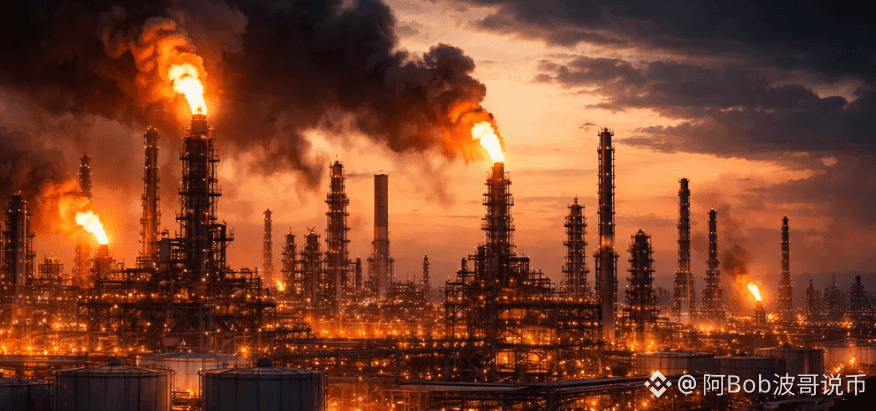
Over the weekend, the Iran–U.S. “tanker confrontation” entered a new stage.
On September 5, the U.S. launched strikes on three Iranian crude oil tankers—leaving the Downy disabled off the coast outside Kharg Island, leaving Stark 1 disabled near Jask, and sinking the empty tanker Kylo in the Gulf of Oman. The U.S. then publicly released a video of Kylo’s sinking.
Iran retaliated immediately, claiming it hit three vessels associated with the United States that were unauthorized to pass through the Strait of Hormuz, and that it shot down a U.S. Navy drone and an unmanned craft. Iranian Parliament Speaker Mohammad Bagher Qalibaf warned that the era of “proportional responses” has ended, and that any attacks on Iranian interests will be met with retaliation that is “faster, heavier, and more painful.” Iran’s top security official, Rezaei, announced that in the coming days, new restricted zones would be established outside the Strait of Hormuz.
On Monday, Brent crude rose to as high as $98.06 per barrel during intraday trading, nearing the three-digit mark. Last week, Brent surged 7.8%, while WTI’s week-on-week gain was nearly 10%.
🛢️ Strait traffic falls to the lowest since May
According to Kpler data, over the past 10 days, average daily passage through the Strait of Hormuz was only about 10 cargo ships—its lowest since May. On Saturday, just 2 ships passed; on Sunday, 6 did. Traffic has dropped by more than 85% versus normal levels. The U.S. has directed 92 merchant vessels to avoid the area.
🎯 The “tanker-for-tanker” policy is being pushed in a systematic way
Axios reported that last week, Trump approved a new policy—“tanker-for-tanker”—to retaliate against Iranian tankers in an “eye-for-an-eye” manner against how Iran attacked commercial shipping. Axios cited U.S. officials as saying that this new strike policy targeting Iranian tankers signals that the Trump administration intends to escalate economic pressure on Iran—by directly attacking the lifeline of its oil exports.
The tanker war is evolving from “limited retaliation” to “systematic strikes.” Iran’s announcement of new restricted zones means the risk around the strait is expanding rather than narrowing. Goldman Sachs predicts that if the attacks continue, oil prices could rise to $120 per barrel. In the short term, oil prices are likely to be prone to upside moves with limited downside; if Brent holds above $98, the next target is $100.
#美伊互袭油轮冲突升级
Over the weekend, the Iran–U.S. “tanker confrontation” entered a new stage.
On September 5, the U.S. launched strikes on three Iranian crude oil tankers—leaving the Downy disabled off the coast outside Kharg Island, leaving Stark 1 disabled near Jask, and sinking the empty tanker Kylo in the Gulf of Oman. The U.S. then publicly released a video of Kylo’s sinking.
Iran retaliated immediately, claiming it hit three vessels associated with the United States that were unauthorized to pass through the Strait of Hormuz, and that it shot down a U.S. Navy drone and an unmanned craft. Iranian Parliament Speaker Mohammad Bagher Qalibaf warned that the era of “proportional responses” has ended, and that any attacks on Iranian interests will be met with retaliation that is “faster, heavier, and more painful.” Iran’s top security official, Rezaei, announced that in the coming days, new restricted zones would be established outside the Strait of Hormuz.
On Monday, Brent crude rose to as high as $98.06 per barrel during intraday trading, nearing the three-digit mark. Last week, Brent surged 7.8%, while WTI’s week-on-week gain was nearly 10%.
🛢️ Strait traffic falls to the lowest since May
According to Kpler data, over the past 10 days, average daily passage through the Strait of Hormuz was only about 10 cargo ships—its lowest since May. On Saturday, just 2 ships passed; on Sunday, 6 did. Traffic has dropped by more than 85% versus normal levels. The U.S. has directed 92 merchant vessels to avoid the area.
🎯 The “tanker-for-tanker” policy is being pushed in a systematic way
Axios reported that last week, Trump approved a new policy—“tanker-for-tanker”—to retaliate against Iranian tankers in an “eye-for-an-eye” manner against how Iran attacked commercial shipping. Axios cited U.S. officials as saying that this new strike policy targeting Iranian tankers signals that the Trump administration intends to escalate economic pressure on Iran—by directly attacking the lifeline of its oil exports.
The tanker war is evolving from “limited retaliation” to “systematic strikes.” Iran’s announcement of new restricted zones means the risk around the strait is expanding rather than narrowing. Goldman Sachs predicts that if the attacks continue, oil prices could rise to $120 per barrel. In the short term, oil prices are likely to be prone to upside moves with limited downside; if Brent holds above $98, the next target is $100.
#美伊互袭油轮冲突升级
Verified
🔥 Comprehensive U.S.-Canada Tariff War Escalates: $20 Billion Retaliatory Tariffs Take Effect
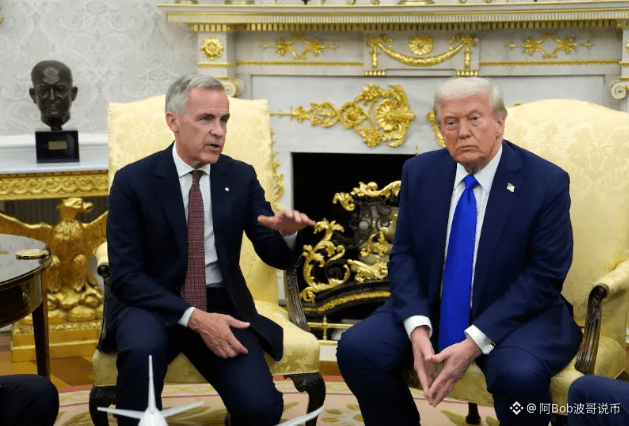
On September 8, Canada’s retaliatory tariffs against the U.S. officially took effect. From brothers bickering to turning physical—it only took about half a month.
📋 The trigger was simple: on August 21, the talks fell apart, and the U.S. immediately imposed a 50% tariff on Canadian goods worth $20 billion. Canada didn’t hesitate either—three days later it announced: you add tariffs, I add tariffs too—$20 billion, more than 700 types of goods, with rates ranging from 15% to 50%.
Steel and aluminum doubled to 50%, while furniture, apparel, and cosmetics also went to 50%. Cheese and appliances are at 25%, and electronics at 15%. The point is pinpointed retaliation—hit whatever industry hurts the U.S. the most.
So what are these two plotting? They were once one family, but now they’re dumping chili oil into each other’s pot.
🗣️ Trump on his side also wasn’t idle. The day before the tariffs took effect, he posted on Truth Social, threatening to ban the sale of Canadian Bombardier aircraft in the U.S. unless Canada builds factories on U.S. soil. Earlier, he even renamed Lake Ontario as “American Lake.”
How do you say this? It’s like when you can’t win an argument, you change the other person’s WeChat nickname.
With this fight, who suffers?
📊 The Canadian dollar first took a hit. The Bank of Canada itself calculated that by the end of 2026, U.S. tariffs would reduce Canada’s GDP by 1.5% below expectations. JPMorgan also believes the tariffs will increase the risk of Canada’s economic downturn.
The U.S. also isn’t doing much better. The $20 billion in tariffs will ultimately be passed on to U.S. consumers and businesses. The auto supply chain is highly dependent on Canadian parts—higher tariffs directly raise manufacturing costs and vehicle prices.
🎯 The most ironic part is this: 63% of analysts expect that the Bank of Canada’s next move could be another rate hike, because tariffs are pushing up inflation. They meant to pressure others, but they ended up inflating themselves first.
In one sentence: Canada’s $2.0 billion in tariffs officially kicks in, and Trump threatens to ban Bombardier sales—this trade war involving the closest allies has fully escalated.
#美加关税战升级
On September 8, Canada’s retaliatory tariffs against the U.S. officially took effect. From brothers bickering to turning physical—it only took about half a month.
📋 The trigger was simple: on August 21, the talks fell apart, and the U.S. immediately imposed a 50% tariff on Canadian goods worth $20 billion. Canada didn’t hesitate either—three days later it announced: you add tariffs, I add tariffs too—$20 billion, more than 700 types of goods, with rates ranging from 15% to 50%.
Steel and aluminum doubled to 50%, while furniture, apparel, and cosmetics also went to 50%. Cheese and appliances are at 25%, and electronics at 15%. The point is pinpointed retaliation—hit whatever industry hurts the U.S. the most.
So what are these two plotting? They were once one family, but now they’re dumping chili oil into each other’s pot.
🗣️ Trump on his side also wasn’t idle. The day before the tariffs took effect, he posted on Truth Social, threatening to ban the sale of Canadian Bombardier aircraft in the U.S. unless Canada builds factories on U.S. soil. Earlier, he even renamed Lake Ontario as “American Lake.”
How do you say this? It’s like when you can’t win an argument, you change the other person’s WeChat nickname.
With this fight, who suffers?
📊 The Canadian dollar first took a hit. The Bank of Canada itself calculated that by the end of 2026, U.S. tariffs would reduce Canada’s GDP by 1.5% below expectations. JPMorgan also believes the tariffs will increase the risk of Canada’s economic downturn.
The U.S. also isn’t doing much better. The $20 billion in tariffs will ultimately be passed on to U.S. consumers and businesses. The auto supply chain is highly dependent on Canadian parts—higher tariffs directly raise manufacturing costs and vehicle prices.
🎯 The most ironic part is this: 63% of analysts expect that the Bank of Canada’s next move could be another rate hike, because tariffs are pushing up inflation. They meant to pressure others, but they ended up inflating themselves first.
In one sentence: Canada’s $2.0 billion in tariffs officially kicks in, and Trump threatens to ban Bombardier sales—this trade war involving the closest allies has fully escalated.
#美加关税战升级
Why would I choose to step into the crypto world that year, even to try what others call a “backdoor” path?
The answer is actually simple. When I was young, I didn’t have many choices. Back then, it wasn’t just the crypto space—any direction that sounded promising and could change my income structure, I basically studied it.
Internet projects, all kinds of tracks, different circles—if someone told me there might be an opportunity there, I would go and find out. Along the way, I made money and I also lost money. But the biggest value of these experiences wasn’t how much I earned; it was that they helped me see the rules of different worlds early. I met different people, went through all kinds of collaborations, and witnessed both warmth and coldness in human relationships. Some were sincere, some were calculating. Some were willing to share opportunities, while others only wanted to take advantage of others.
Little by little, these experiences made me realize: to go far in society, ability matters, but character matters even more. So now, when I judge people and do things, the two words I care most about are: sincerity.
Many people think that those with connections can choose a stable route. But for those from ordinary families, in many cases there aren’t many shortcuts. When others have an umbrella, we can only find our own way; when others have resources, we can only rely on learning, on trying, and on constantly breaking through.
But one thing must be remembered: rules are always the bottom line, not the ceiling that limits growth. What people mean by taking a “backdoor” path isn’t crossing red lines—it’s, within compliant boundaries, finding the opportunities that belong to you. When you’re young, you dare to try; only then will you have a chance to accumulate knowledge afterward.
As I’ve walked this path, I’ve come to believe more and more: what truly changes a person isn’t some one lucky break, but the way you become stronger through repeated choices. Opportunities are always reserved for those who dare to step out—and who still keep their bottom line.
#Zcash周涨45%创2016年来新高
#CFTC请求驳回CME诉Kalshi比特币期货案
The answer is actually simple. When I was young, I didn’t have many choices. Back then, it wasn’t just the crypto space—any direction that sounded promising and could change my income structure, I basically studied it.
Internet projects, all kinds of tracks, different circles—if someone told me there might be an opportunity there, I would go and find out. Along the way, I made money and I also lost money. But the biggest value of these experiences wasn’t how much I earned; it was that they helped me see the rules of different worlds early. I met different people, went through all kinds of collaborations, and witnessed both warmth and coldness in human relationships. Some were sincere, some were calculating. Some were willing to share opportunities, while others only wanted to take advantage of others.
Little by little, these experiences made me realize: to go far in society, ability matters, but character matters even more. So now, when I judge people and do things, the two words I care most about are: sincerity.
Many people think that those with connections can choose a stable route. But for those from ordinary families, in many cases there aren’t many shortcuts. When others have an umbrella, we can only find our own way; when others have resources, we can only rely on learning, on trying, and on constantly breaking through.
But one thing must be remembered: rules are always the bottom line, not the ceiling that limits growth. What people mean by taking a “backdoor” path isn’t crossing red lines—it’s, within compliant boundaries, finding the opportunities that belong to you. When you’re young, you dare to try; only then will you have a chance to accumulate knowledge afterward.
As I’ve walked this path, I’ve come to believe more and more: what truly changes a person isn’t some one lucky break, but the way you become stronger through repeated choices. Opportunities are always reserved for those who dare to step out—and who still keep their bottom line.
#Zcash周涨45%创2016年来新高
#CFTC请求驳回CME诉Kalshi比特币期货案
Log in to explore more content