
Farha03
1.9k Posts

Farha03
Crypto | Web3 | Future tech | Spot trader | Active in Binance Events & community ✨
Open Trade
High-Frequency Trader
2.2 Years
561 Following
8.3K+ Followers
2.3K+ Liked
Posts
Portfolio
All
Quotes
Live
PINNED
convert
aug
ok
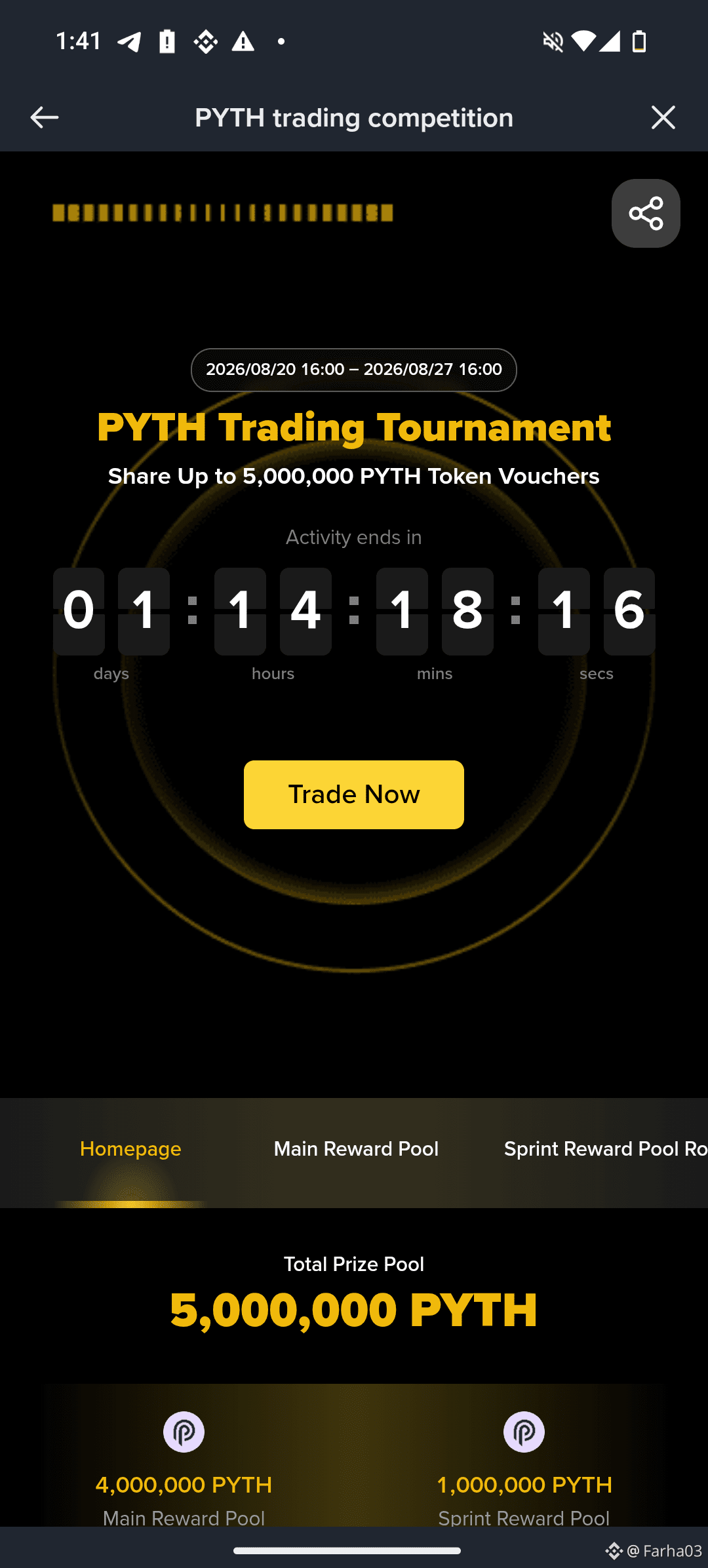
1 Day 14 hours left to event $PYTH Tournament
Total Prize Pool
5,000,000 PYTH
join link - event
trade 👇
Total Prize Pool
5,000,000 PYTH
join link - event
trade 👇
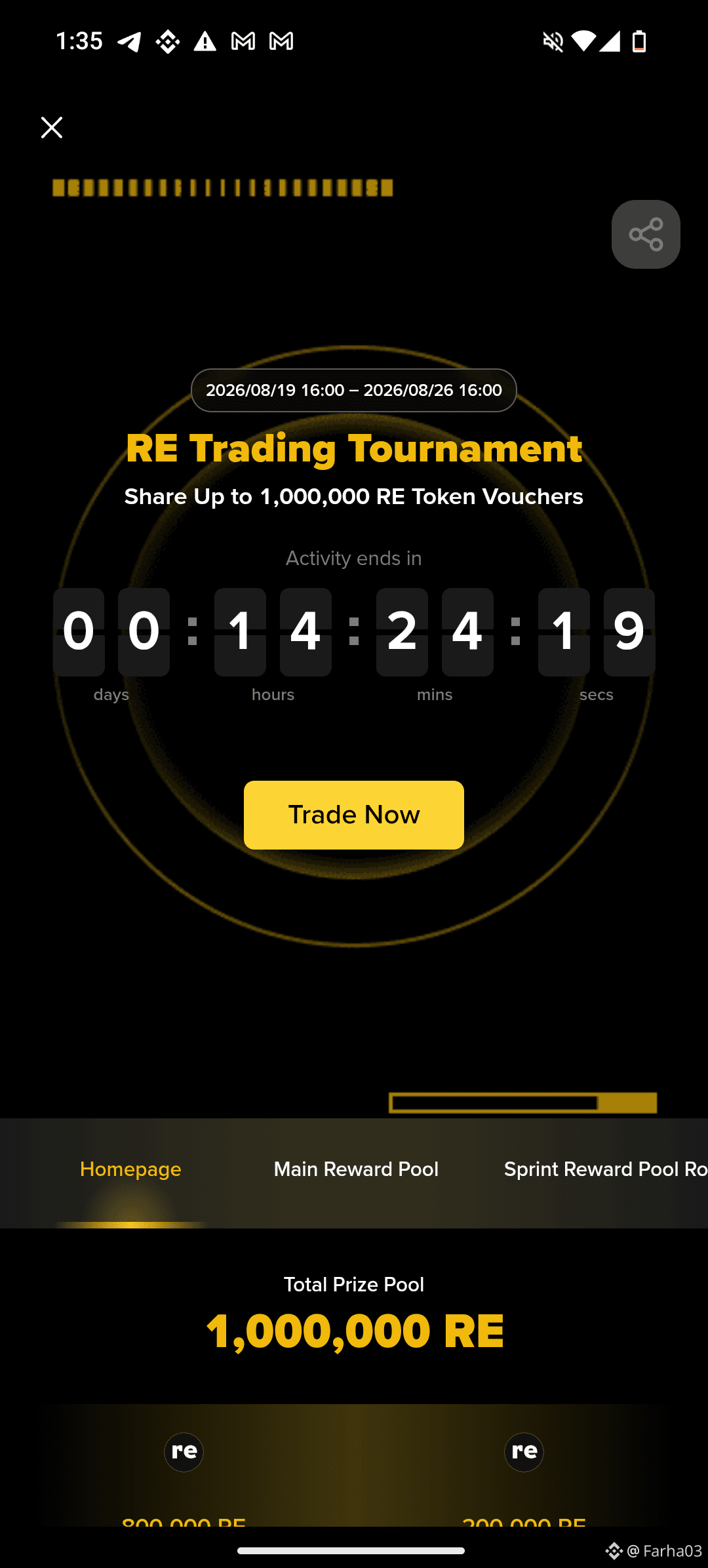
RE Trading Tournament end tomorrow
1,000,000 RE in total rewards 🏆
Trade more, rank higher, grab your share! 🚀
Ends 26 Aug, 16:00 UTC.
#TradingTournament $RE
link to join-
Re trading event
1,000,000 RE in total rewards 🏆
Trade more, rank higher, grab your share! 🚀
Ends 26 Aug, 16:00 UTC.
#TradingTournament $RE
link to join-
Re trading event

·
--
🎙️ Crypto market trends discussion; Newcomers’ Q&A ✅ Build the Binance Square 🦅 Spread the idea of freedom! Maintain ecosystem balance!

End
03 h 12 m 12 s
8.9k
69
·
--
🎙️ Day 10 of DCA BTC with Superman 100U, is DUSK bullish or bearish?

End
03 h 22 m 38 s
11.8k
16
·
--
🎙️ Build the Binance Plaza, DCA BNB|A new Monday—BTC is hovering around 77,000; how long do you think it needs to gather strength before taking off again? Let’s chat~

End
05 h 14 m 53 s
9.1k
37

·
--
🎙️ Crypto market updates and discussion; answers to new users’ questions ✅ Build the Binance Plaza 🦅 Spread the ideas of freedom! Maintain ecological balance!

End
03 h 21 m 35 s
10.8k
85
When I think about a DeFi protocol, smart contract security is one area I don’t think should be treated as a small detail. The code is handling real assets, so finding problems before users depend on the protocol matters.
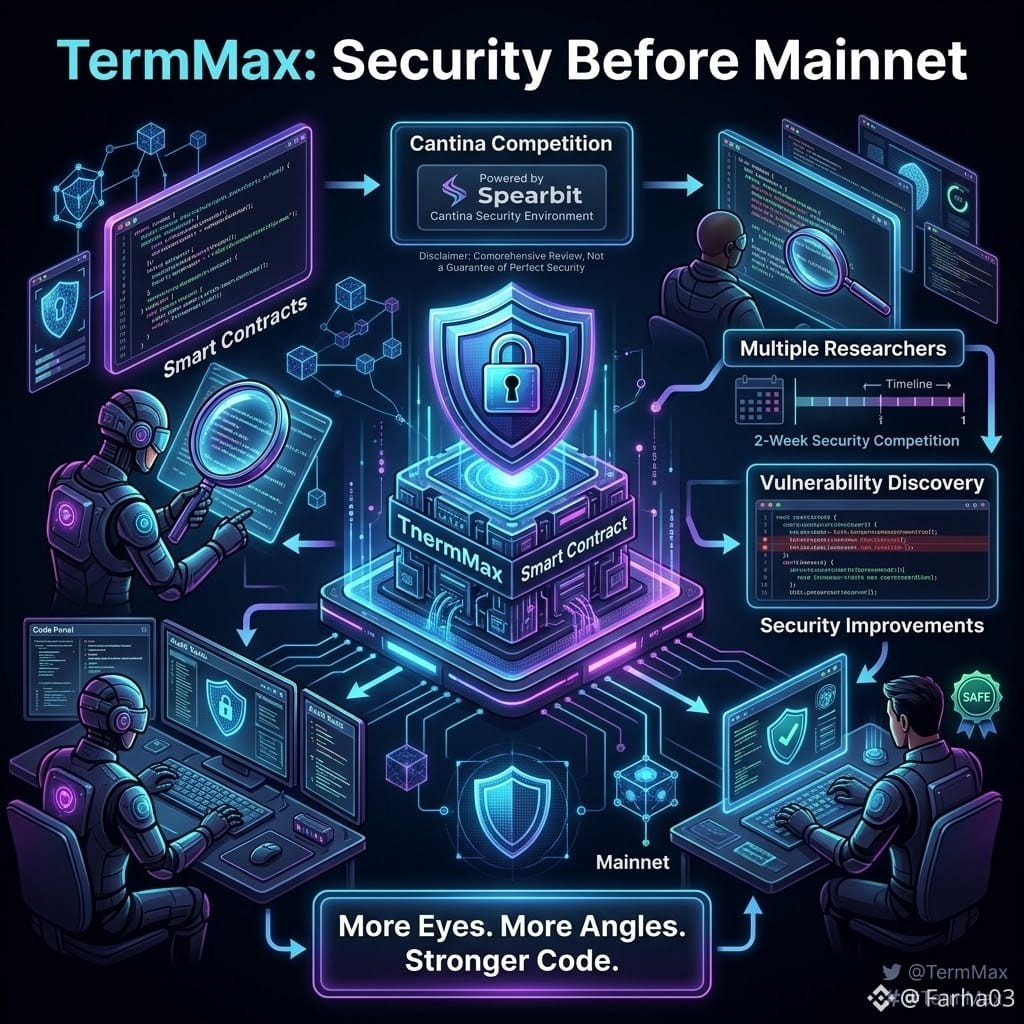
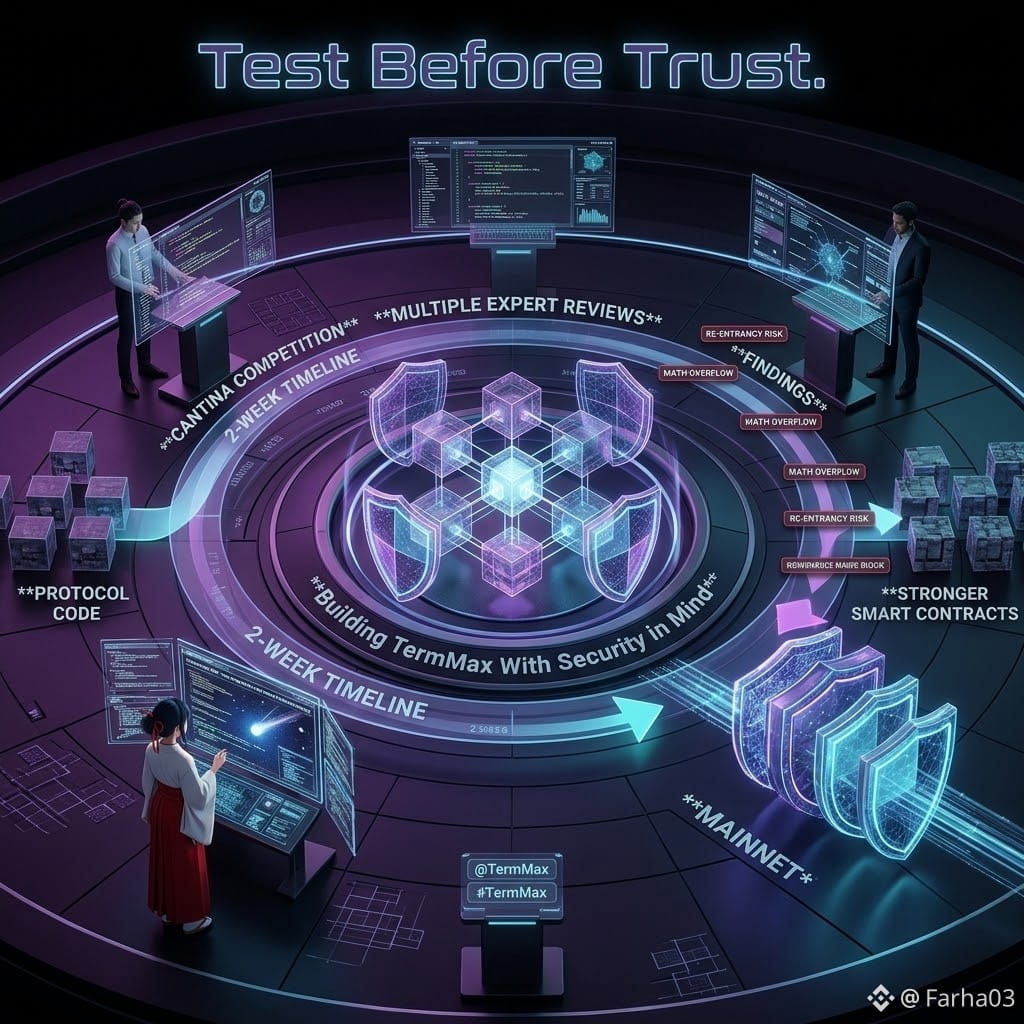
That’s why the security approach at termmax caught my attention. TermMax is using Spearbit’s Cantina Competition model, where multiple security researchers can examine the smart contracts and look for potential vulnerabilities.
I find the crowdsourced part particularly interesting. Instead of relying on one person or one perspective, different researchers can approach the same code from different angles. The goal is to uncover issues that might otherwise be missed during a more traditional review.
TermMax is organizing a two-week competition specifically focused on its protocol and smart contracts, with findings intended to help strengthen the platform before mainnet deployment.
I wouldn’t take a security review as a guarantee that nothing can ever go wrong. But for me, TermMax taking the time to actively search for vulnerabilities before wider deployment is a meaningful part of building a DeFi protocol responsibly.
@TermMax #TermMax
That’s why the security approach at termmax caught my attention. TermMax is using Spearbit’s Cantina Competition model, where multiple security researchers can examine the smart contracts and look for potential vulnerabilities.
I find the crowdsourced part particularly interesting. Instead of relying on one person or one perspective, different researchers can approach the same code from different angles. The goal is to uncover issues that might otherwise be missed during a more traditional review.
TermMax is organizing a two-week competition specifically focused on its protocol and smart contracts, with findings intended to help strengthen the platform before mainnet deployment.
I wouldn’t take a security review as a guarantee that nothing can ever go wrong. But for me, TermMax taking the time to actively search for vulnerabilities before wider deployment is a meaningful part of building a DeFi protocol responsibly.
@TermMax #TermMax
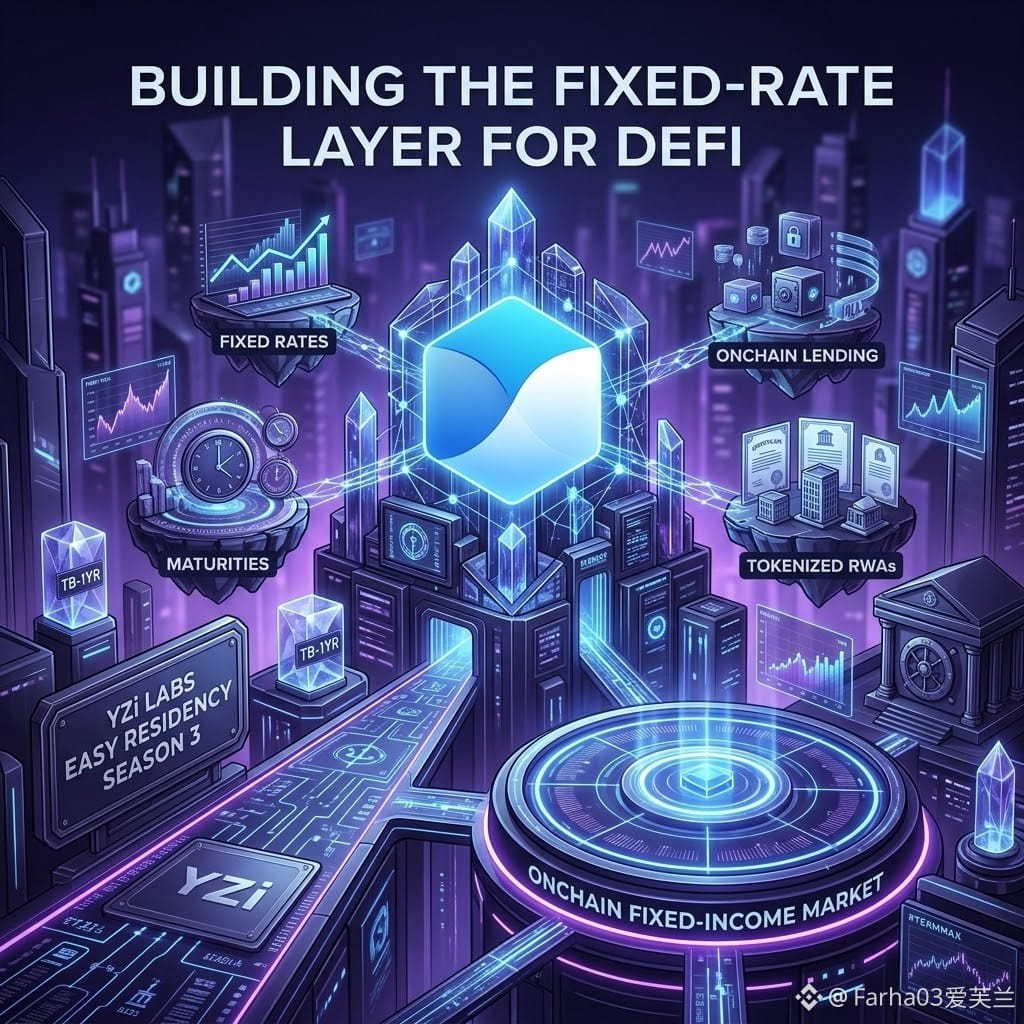
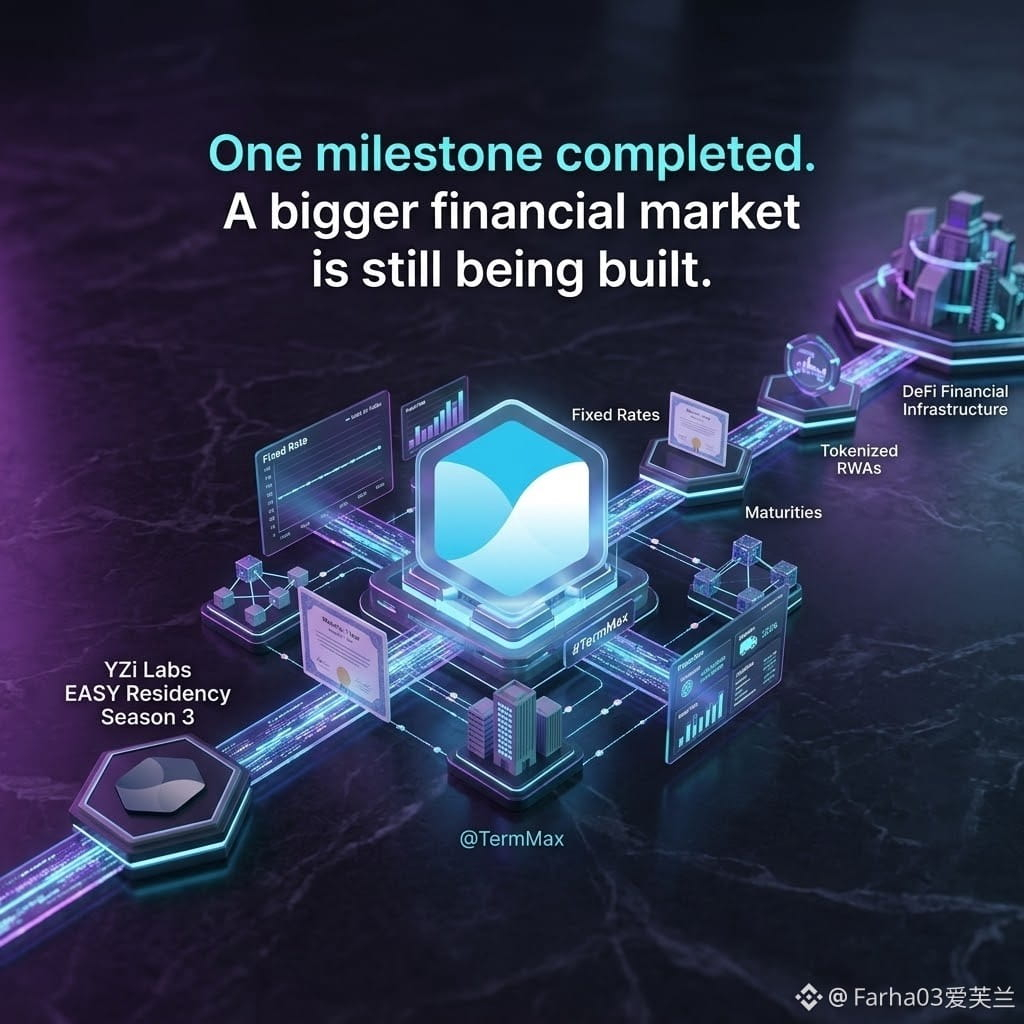
When I saw that @TermMax graduated from YZi Labs’ EASY Residency Season 3, my first thought wasn’t simply “another program completed.” What interested me more was what the recognition says about the direction TermMax is taking.
TermMax isn’t trying to be just another place where people deposit assets and borrow against them. Its bigger idea is to build fixed-rate markets onchain, with defined terms, maturities, and different financial positions that can be structured around them.
That matters because DeFi has already made lending accessible, but predictable fixed-income markets are still an area with plenty of room to develop. Seeing TermMax included in a program focused on areas like onchain financial market structure and tokenized RWAs makes the journey feel more connected to that bigger picture.
For me, TermMax is interesting because the graduation itself isn’t the main story. The more important question is what they build after it. If the goal is really to create a broader fixed-income foundation for DeFi, then this feels more like one step in a much longer journey. #TermMax
TermMax isn’t trying to be just another place where people deposit assets and borrow against them. Its bigger idea is to build fixed-rate markets onchain, with defined terms, maturities, and different financial positions that can be structured around them.
That matters because DeFi has already made lending accessible, but predictable fixed-income markets are still an area with plenty of room to develop. Seeing TermMax included in a program focused on areas like onchain financial market structure and tokenized RWAs makes the journey feel more connected to that bigger picture.
For me, TermMax is interesting because the graduation itself isn’t the main story. The more important question is what they build after it. If the goal is really to create a broader fixed-income foundation for DeFi, then this feels more like one step in a much longer journey. #TermMax
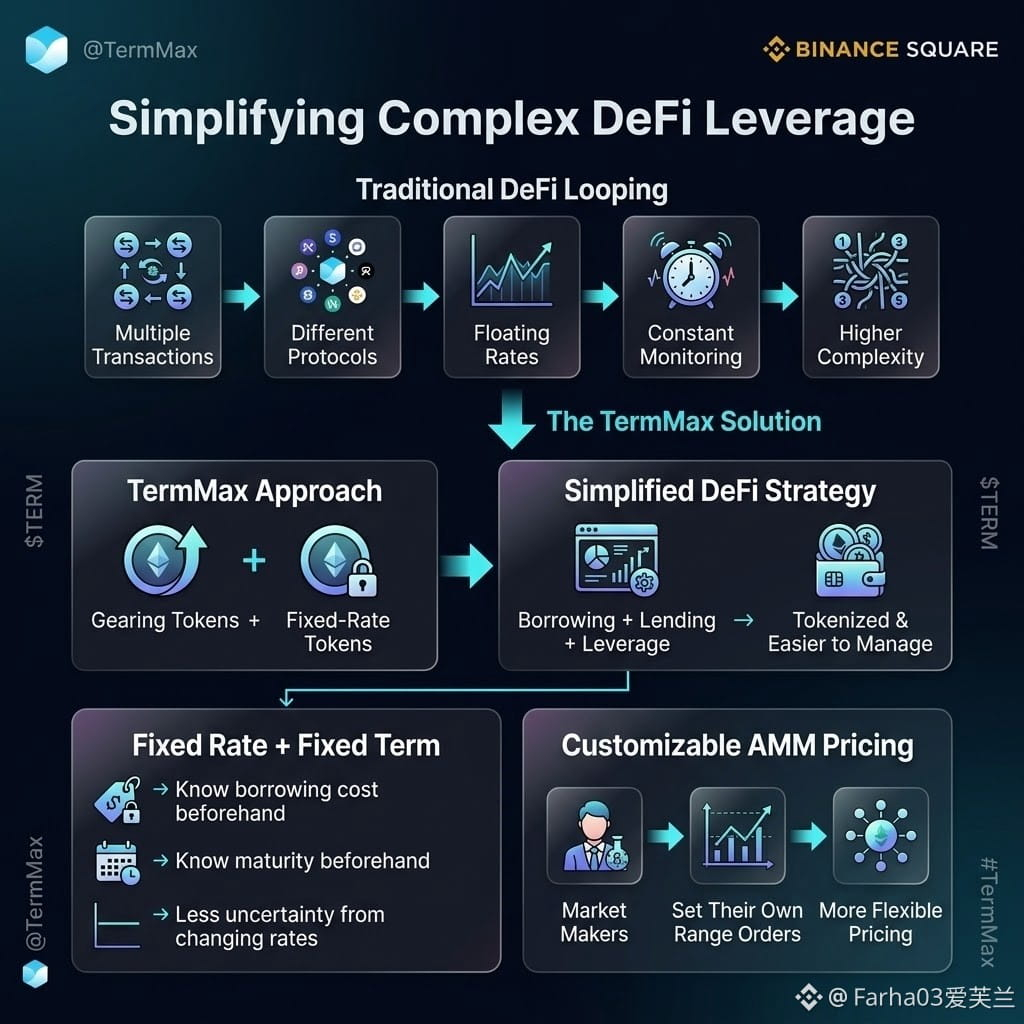
I’ve always found leveraged DeFi strategies interesting, but the part I don’t enjoy is how quickly they can become complicated. A simple looping strategy can mean several transactions, different protocols, changing interest rates, and constant monitoring. One small mistake can change the whole outcome.
That’s why the approach from TermMax caught my attention. Instead of making users manage every step separately, TermMax uses Gearing Tokens and Fixed-Rate Tokens to package complex borrowing, lending, and leverage into simpler token-based actions. The fixed rate and fixed term are also something I find practical because I can think about the cost and maturity beforehand instead of constantly guessing where a floating rate might move.
What makes Termmax more interesting to me is the customizable AMM pricing. Market makers can set their own range orders instead of everyone simply accepting one available rate.
I don’t think simplicity alone makes a DeFi product better, but reducing unnecessary complexity while giving users more control is definitely a direction I appreciate.
@TermMax #TermMax
That’s why the approach from TermMax caught my attention. Instead of making users manage every step separately, TermMax uses Gearing Tokens and Fixed-Rate Tokens to package complex borrowing, lending, and leverage into simpler token-based actions. The fixed rate and fixed term are also something I find practical because I can think about the cost and maturity beforehand instead of constantly guessing where a floating rate might move.
What makes Termmax more interesting to me is the customizable AMM pricing. Market makers can set their own range orders instead of everyone simply accepting one available rate.
I don’t think simplicity alone makes a DeFi product better, but reducing unnecessary complexity while giving users more control is definitely a direction I appreciate.
@TermMax #TermMax
#dusk $DUSK
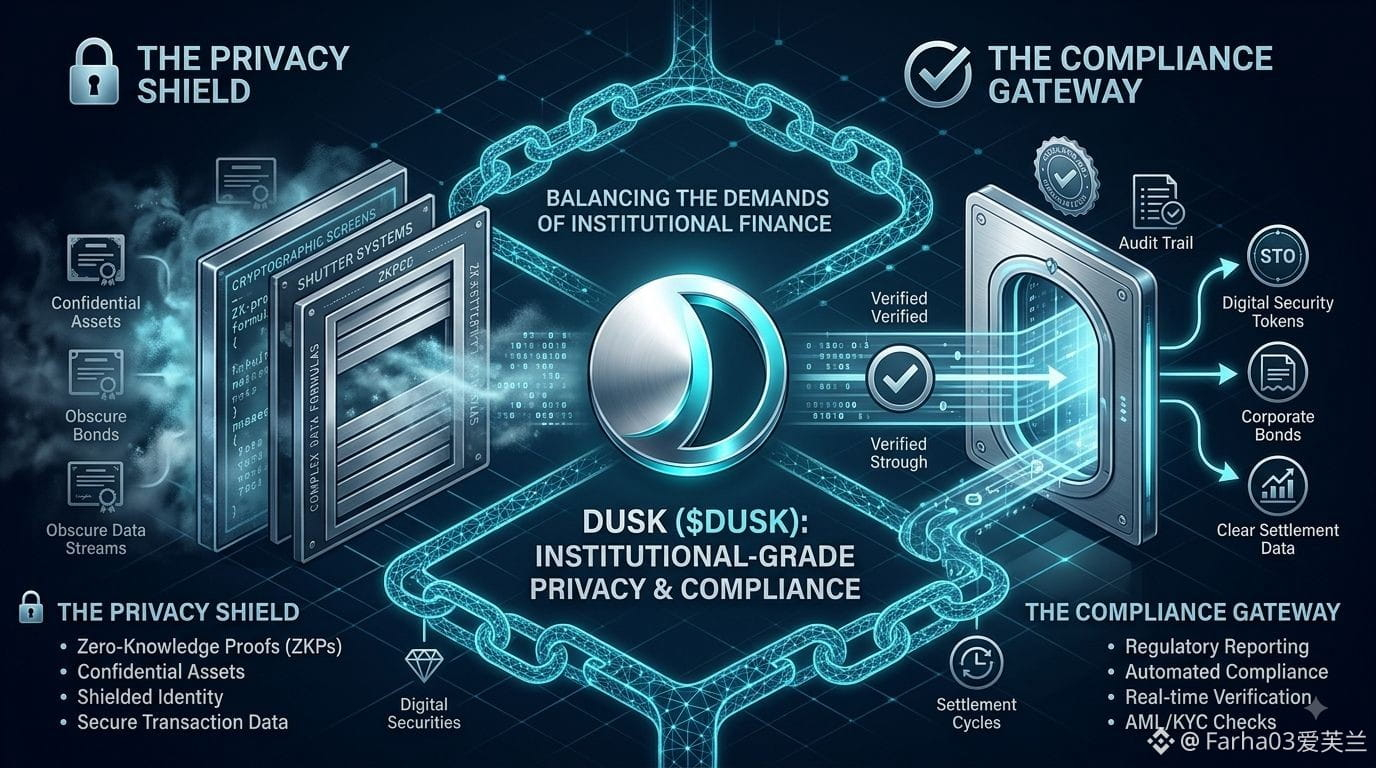
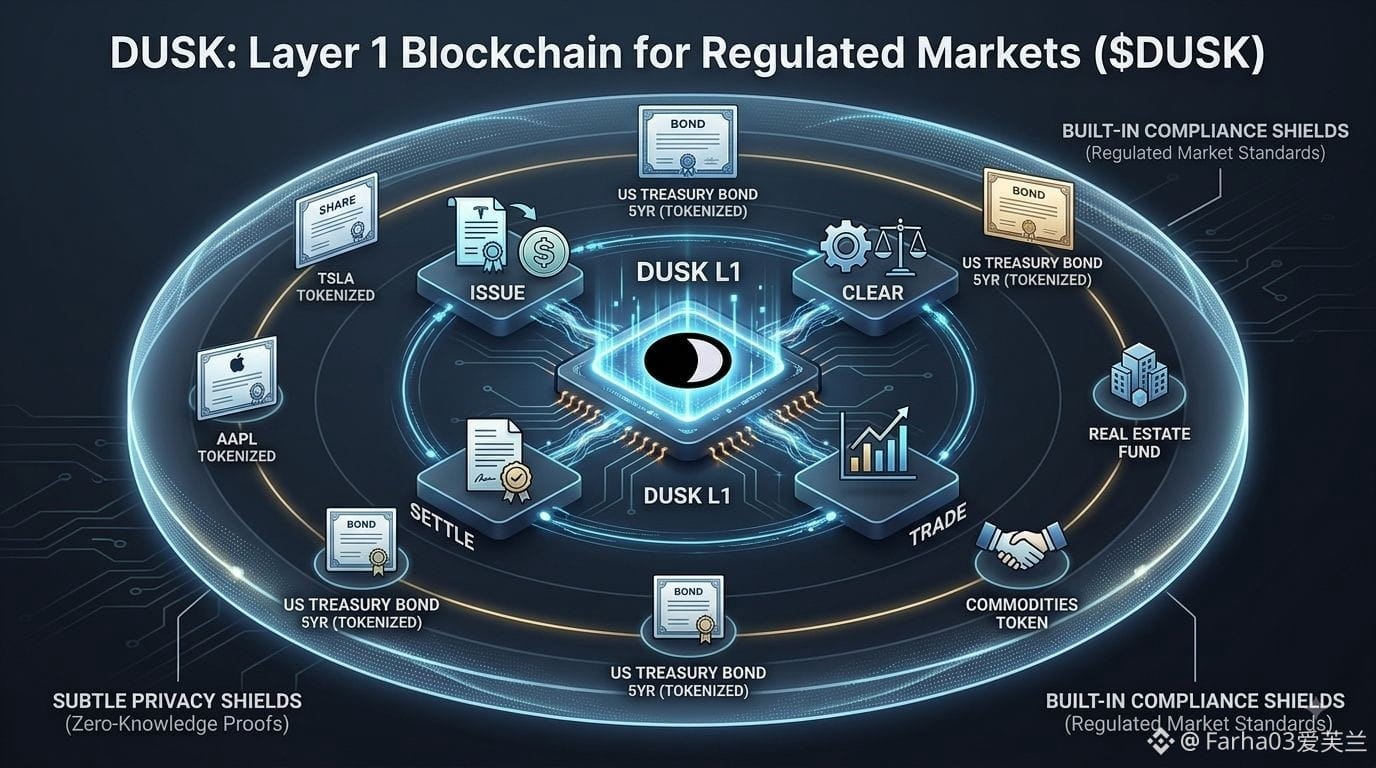
What I find interesting about @Dusk $DUSK #dusk is that it is building around a real problem in financial markets: how to bring regulated assets onchain without giving up privacy or compliance.
Dusk is designed as a Layer 1 for issuing, clearing, settling and trading assets like stocks and bonds. Using zero-knowledge proofs and other cryptographic tools, it aims to reduce reliance on traditional intermediaries while keeping financial activity suitable for regulated environments.
The part that stands out to me is the balance. Financial markets need transparency, but they also deal with sensitive information. Dusk is trying to make privacy programmable, so information can remain protected while still allowing the right parties to review it when required.
That makes Dusk feel less like another general-purpose blockchain and more focused on building infrastructure for regulated financial markets.@Dusk
What I find interesting about @Dusk $DUSK #dusk is that it is building around a real problem in financial markets: how to bring regulated assets onchain without giving up privacy or compliance.
Dusk is designed as a Layer 1 for issuing, clearing, settling and trading assets like stocks and bonds. Using zero-knowledge proofs and other cryptographic tools, it aims to reduce reliance on traditional intermediaries while keeping financial activity suitable for regulated environments.
The part that stands out to me is the balance. Financial markets need transparency, but they also deal with sensitive information. Dusk is trying to make privacy programmable, so information can remain protected while still allowing the right parties to review it when required.
That makes Dusk feel less like another general-purpose blockchain and more focused on building infrastructure for regulated financial markets.@Dusk
Log in to explore more content