
栗宝酱
1.2k Posts

栗宝酱
Report
Block User
565 Following
543 Followers
949 Liked
Posts
All
Quotes
PINNED
·
--
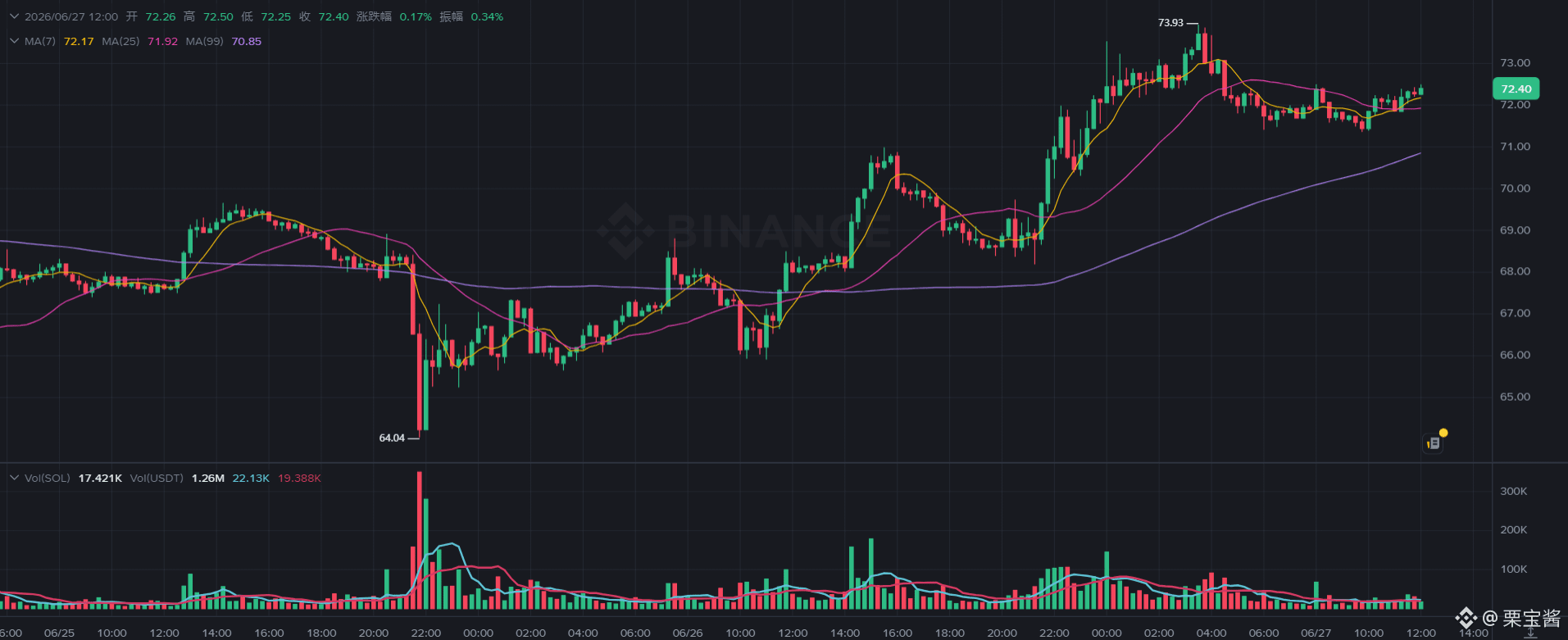
#sol上涨9%
$SOL This rally is up 9%, and the comments section suddenly got hot again.
I saw a line that I found especially interesting:
“Holy crap, it’s going to moon to 100—everything is an absolute mega-positive catalyst.”
This kind of mood is actually very familiar in crypto circles.
Every time the price moves, everyone can quickly come up with a whole set of “explanation framework.”
Trading volume leading, RWA expansion, stablecoin growth, derivatives activity…
You’ll notice that as long as the price is rising, the world automatically becomes more and more “reasonable.”
But there’s a very realistic rule in the market:
Rallies never happen because there are enough reasons—they happen because capital is willing to keep pushing in.
$SOL does have fundamentals supporting this move, and there’s no need to deny that.
On-chain activity, ecosystem expansion, transaction volume data—none of it is empty.
The issue is that the market never only looks at whether there’s a good news.
It also asks whether it has already been priced in.
So I’d rather think of the current SOL as a condition/state, not a conclusion.
The 9% up move itself isn’t the important part.
What matters is whether, after this surge, the market keeps accelerating—or starts to diverge.
A lot of the time, the real trend doesn’t begin when emotions are at their hottest.
It forms gradually when people start arguing about “whether it’s really good news or not.”
As for whether it’s “not falling further” around 60—I’m usually more cautious about that kind of judgment.
What the market loves to do most is to make the “seemingly stable” level unstable again.
So instead of rushing to call target prices right now, it’s better to watch two things:
First, whether trading volume keeps expanding.
Second, whether there’s still capital willing to step in during pullbacks.
If both hold true, then there’s a possibility of moving into a stronger phase.
Otherwise, it’s still mostly emotion-driven fluctuations.
The market never lacks stories.
What it lacks are people who keep placing buy orders.
#SOL #Solana #币安广场征文活动
7
2
22
23.7k
·
--
#美国中期选举:市场有哪些期待?
Democrats sweep both chambers, the CLARITY Act is dead on arrival, and BTC bounces from $76K back to $80K?! Who saw this coming?
Bulls are popping champagne: the bad news is already priced in! The market had priced in a Democratic win ages ago—the odds on Polymarket before the election were 65.5%, so the result came as no surprise. BTC shook out all the panic sellers at $76K, shorts got liquidated for $560 million, and the V-shaped reversal is proof that selling pressure has dried up. Bitwise analyst Dragosch put it plainly: downside risk is limited, and an intraday V-shaped rebound wouldn’t be surprising at all.
Bears sneer: You call this good news? The CLARITY Act was voted down 49–50 in September, and now Democrats control both chambers. A Duke University professor has flat-out called it “dead on arrival.” And here’s the kicker: Democrats are pushing their own version of a market structure bill, expanding the SEC’s authority and adding ethics provisions to limit Trump’s involvement in crypto. Republicans call it a “messaging bill”—it doesn’t even have text. Legislative certainty is gone; from here on out, it’s all down to administrative oversight by the SEC and CFTC—and administrative rules are much easier for the next administration to overturn than laws.
But here’s the wildest detail—
The new Senate still has 51 pro-crypto senators, just one fewer than before the election. Democrats aren’t unanimously anti-crypto; they oppose the Trump family’s conflicts of interest in the crypto space. So this isn’t “crypto is being crushed”—it’s “the Trump-branded crypto tailwind has run out.”
Here’s the uncomfortable truth: what we should really fear isn’t the bill failing—it’s that the market can no longer rely on the president’s tweets to pump prices. A HashKey analyst put it bluntly: we can’t keep relying on Trump’s “political tailwind” like before. BTC’s price drivers need to shift from political narratives back to macro liquidity.
I’m holding my spot BTC and haven’t moved. I’m not chasing above $80K. This move was driven by short covering, not fresh money coming in—the spot BTC ETFs saw another $116 million in net outflows on November 3, marking their third consecutive day of outflows. $82,000 is resistance; if it can’t hold above that level, this is just a fake rebound.
What do you guys think—is this the start of the bad news finally being priced in, or just a smokescreen from short covering? Would you trust the Democrats’ version of the bill? Let’s hash it out in the comments!

6
·
--
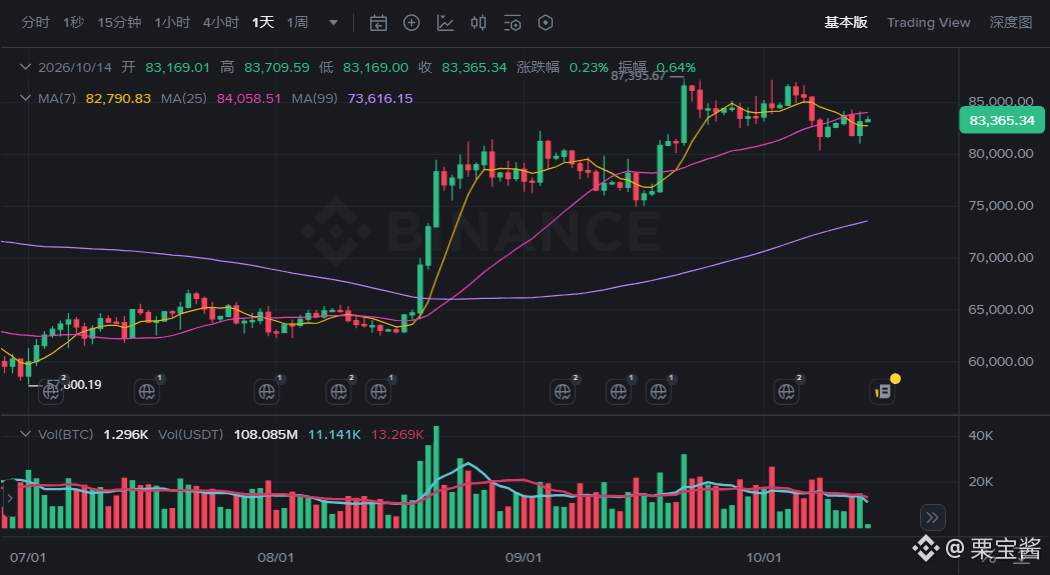
#比特币市占率回升至60%
$BTC Market dominance has surged back to 60%! But guys, this is NOT good news at all!
On October 8, Bitcoin dominance hit 60.05%, a one-month high. People in the group chat have already started saying, “Altcoin season is dead. BTC is the only thing worth holding.”
Before you pick a side, take a look at what the bulls and bears are arguing about:
The bulls say: It’s a safe-haven play. Nearly $1 billion worth of positions were liquidated across the crypto market in the past 24 hours, and $ETH Ethereum, $XRP , and SOL have fallen much harder than BTC. Money is flowing to the most liquid asset, and BTC is the Noah’s Ark of the crypto market. Plus, USDT dominance has dropped to 6.3%, which suggests the money hasn’t left the market—it’s just rotating into other assets.
The bears just scoff: You call that good news? BTC itself is falling—it briefly dropped below $81,000. Its dominance is rising only because altcoins are falling faster, not because BTC is especially strong. And here’s the really wild part: the Fear and Greed Index is still at 64, in greed territory. Falling prices, greedy sentiment, and rising dominance—all three together have historically not been a good sign.
Here’s my honest take: what we should really fear this time isn’t altcoins falling—it’s money “pretending to seek safety.”
Brent crude is at 105, and the 10-year US Treasury yield is 5.3%. Energy prices could reignite inflation at any moment. The odds of a Fed rate hike in October have fallen from 66% to around 20%, but the odds of a hike in December are still above 80%. With 5% interest on US Treasuries, who’s going to bet on high-volatility assets?
I’m holding my spot positions and haven’t made a move. I’ll wait a bit longer before adding. 60% dominance is a key threshold: if it holds, altcoins will keep getting drained; if it falls back, that’ll be the real sign of rotation.
What do you guys think—is BTC really a safe haven, or is it a “fake king” crowned by falling altcoins? Let’s debate in the comments!
4
3
15
22.4k
·
--
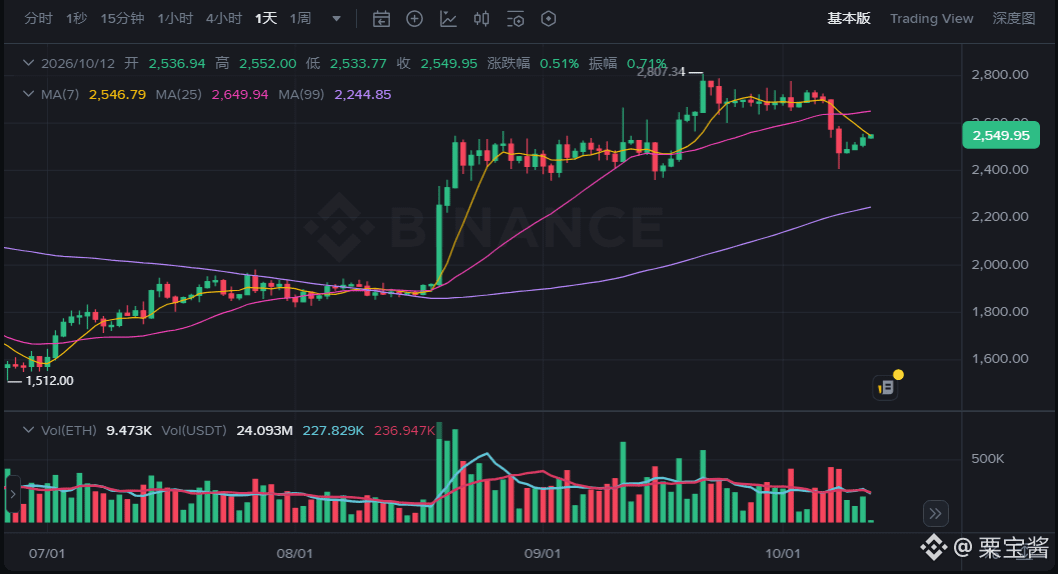
#以太坊突破2500usdt
ETH has broken above 2500, but guys, I’m getting a whiff of blood at this level!
On one side, ETFs have seen 542 million dollars in outflows for 9 consecutive days, with BlackRock alone accounting for 477 million—the worst record this year. On the other, a whale secretly bought 166,000 ETH in 72 hours, worth over 400 million dollars. Institutions are running, whales are buying the dip. At 2500, is smart money buying the bottom, or are the last retail bagholders stepping in?
Bulls are getting hyped: The Glamsterdam upgrade was activated on the Sepolia testnet on October 6. ePBS is here, MEV won’t be captured by just a few people anymore, and the gas limit is moving toward 200 million. What happened after the Pectra upgrade? Validators came back, and TVL hit a new high. The same script is playing out again! Plus, whales bought 166,000 ETH in 72 hours, BitMine is still buying, and the staking ratio has reached 35%, with supply continuing to be locked up.
Bears are smirking: Are you sure this isn’t a dead-cat bounce? ETH plunged from a high of 2779 all the way to 2406. Today’s move is just a recovery bounce after a sharp drop, not a confirmed breakout. Price has tested 2500 four times over the past two weeks, and been slapped back each time. BitMine holds 6.016 million ETH and is just 100,000 away from its 5% holding cap—one major buyer is about to exit the market. What’s even more painful is that a whale has a 252 million-dollar long position with a liquidation price at 2445, just 50 bucks from here.
Here’s the truth: 2500 is the line between life and death for bulls and bears.
It’ll take holding above 2500 and reclaiming 2587 to confirm the bottom is in. Lose 2500, and ETH heads straight to the 2445 liquidation zone, potentially triggering a cascade of liquidations. CPI on October 14 is the next macro catalyst. Until then, the market will likely churn around here.
I’m holding my spot ETH and haven’t touched it, but chase the rally? No way! I’ll wait for it to hold above 2500 and reclaim 2587, or look to buy a pullback near 2450. Jumping in now is just a bet on direction.
Guys, do you think 2500 is the beginning or the end of this move? Let’s debate in the comments!
10
14
25.9k
·
--
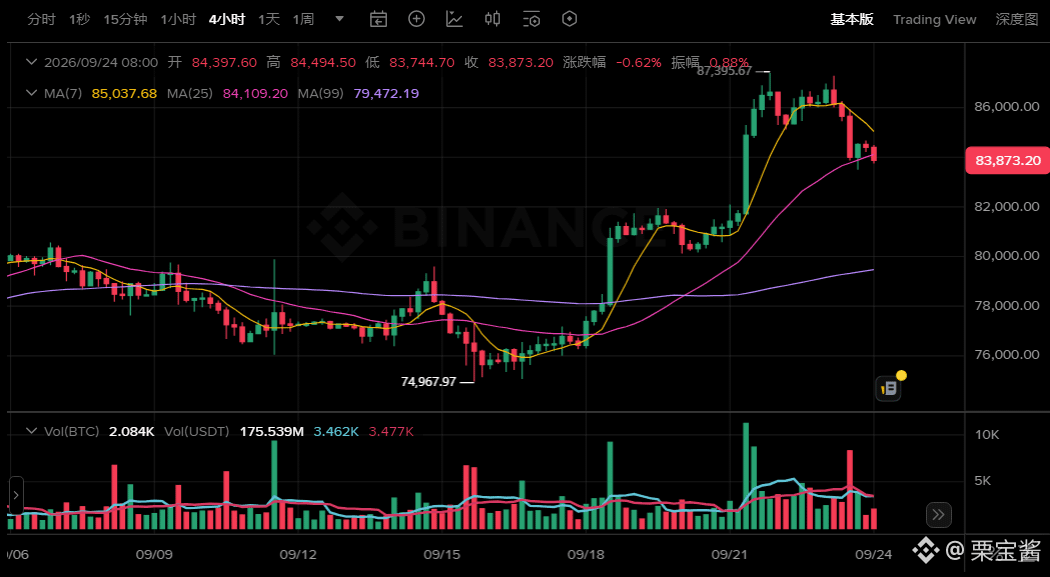
#比特币两度受阻87300美元
87300 got slapped back twice—has this spot been welded with steel plates?
Brothers, the first time BTC surged to 87250, a single big bearish candle smashed it back to 85500; the second time it touched 87300 again—and it slid down again, for fuck’s sake. Twice! Twice, and it was just short of that one breath—can’t get through!
Those who are bullish directly start blasting: this is a raid/position-testing! The main force is testing the sell pressure above; the third time it will definitely break. ETF has had consecutive net inflows—institutions are sweeping up; rate-cut expectations from the Fed are still there—why wouldn’t it break? 87300 is nothing. Break it and it’s 90k!
Those who are bearish sneer: the double top is already formed, volume is shrinking, RSI divergence—this is a classic bull trap! 87300 is exactly the prior high where people got trapped; whoever rushes up will die. And have you noticed? Every time it spikes higher, the funding rate jumps, then it gets smashed back down. This isn’t testing—it’s fishing.
I’ll be honest—at this spot I just can’t figure it out.
If you say it’s weak, every time it drops, it gets bought back; it’s like 85000 is being propped up by a hand. If you say it’s strong, it still can’t break through after two tries—like hitting a wall. Spot is pushing, but spot can’t push it—then we just have to wait for a new catalyst. The problem is—where’s the catalyst? The CLARITY Act was rejected; the Fed’s next meeting is still far off; and ETF inflows are also slowing down.
I’m holding spot and haven’t moved, but adding? I won’t do that—absolutely not.
I’ll wait until it breaks out from 87300 on increased volume and holds. Or I’ll buy the pullback to 84000–85000. Charging in now is betting on direction—bet wrong and you’ll be the sacrificial victim of the double top. And below, the 76k level is still pressing down with 800 million lined up on clear sell orders—if it really drops, it’s not a joke.
Brothers, do you think this is a double top or is it building power? Can the third time break through? Argue it out in the comments!
1
232
·
--
#比特币突破8万美元大关
80000 is back—but this time the script is even more thrilling!
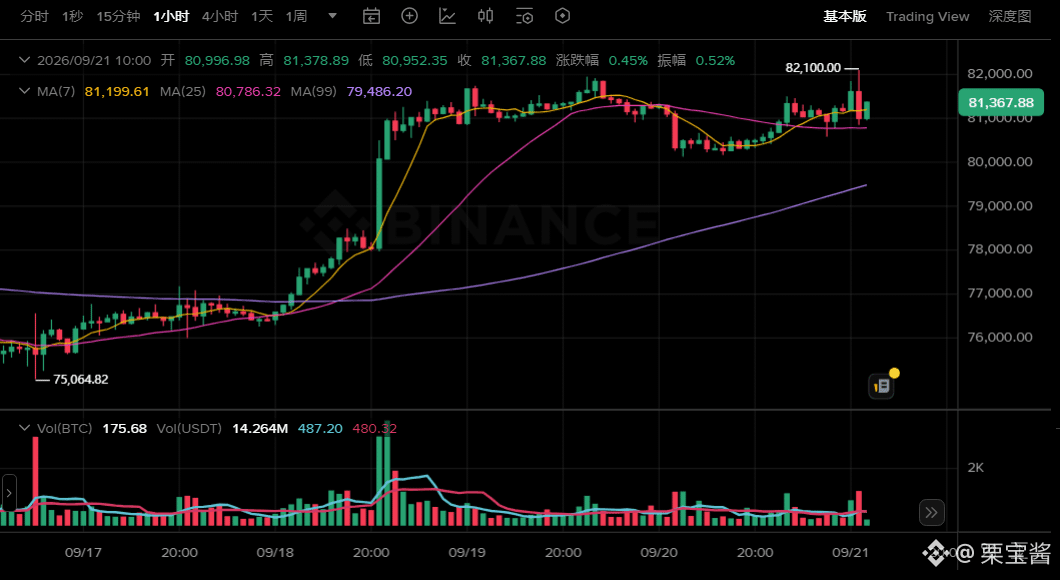
Brothers, BTC just crawled out of the 70,000-74,000 hell, and a single bullish long candle sent it straight to 82,000. But guess what? During the most explosive hour of the rally, a staggering $183 million in short positions was crushed—alive.
This isn’t a rise. This is a massacre.
What really chills me, though, is the structure behind the liquidation data.
In the past 24 hours, the entire market saw $401 million liquidated: $241 million from shorts and $160 million from longs. Both sides got wiped out, but the shorts got hit far worse. The longs who chased last time were buried at 76,000. This time, the shorts who chased got swept away at 80,000. The market is telling everyone—in an extremely brutal way—“Don’t guess direction. Guessing means death.”
Do you know who’s truly propping this up? ETFs.
On September 18, the U.S. spot Bitcoin ETF recorded a net inflow of $430 million in a single day. Fidelity’s FBTC alone took $310 million. Just a week ago, ETFs were still posting four straight days of net outflows totaling $460 million—then they flipped and came roaring back. Institutions picked up positions around 76,000, and their cost basis sits right there.
But I have to pour some cold water on this.
Arthur Hayes went straight on the attack—“The CLARITY Act has never been the catalyst for this leg of the rally.”
What does that mean? It means that if you jumped in because of “regulatory optimism,” you don’t even know why you’re making money.
On the daily chart, BTC has climbed above all the major moving averages. But RSI is only 61, stochastic is 87, and CCI is already negative. This isn’t taking back control—it’s consolidation under resistance.
From 80,000 to 82,000, it’s a long-short mincing machine.
If it holds, next stop is 83,000 to 85,000. If it doesn’t hold, then 79,000—and then 76,000 to 78,000. And 76,000 to 78,000 happens to be the cost zone of the ETF institutions.
So do you think these people who spent real money will let it break down through easily?
I’m holding spot and didn’t move. But adding to my position at this spot? Absolutely not.
The shorts have just been cleaned out. Funding rates are back to neutral. The market is balanced now. But balance means you’re in a momentum-switch window—not that you’re safe.
Brothers, do you think this 80,000 level is a solid bottom—or a solid top? Comment section, let’s argue!
3
7.8k
·
--
#越南拟2026年发首批加密牌照
This move by Vietnam—an entry threshold of $400 million, with 5 companies competing for just 1 license. Is this what “open” means? This is “selecting beauties”!
Brothers, the Vietnamese authorities have officially stated that the first batch of crypto service provider licenses will be rolled out within 2026. But the bar is insanely high: the minimum registered capital for an application platform is 10 trillion Vietnamese đồng—nearly $383 million. And it must be a Vietnamese company; the foreign ownership cap is 49%. Transactions can only be settled in Vietnamese đồng. Five institutions passed the initial review—so it’s basically one or two licenses being fought over. This isn’t an open market; it’s handing entrance tickets to the privileged.
But have you thought about why Vietnam suddenly got so urgent?
About 17 million people in Vietnam hold or use crypto assets, with a transaction scale of roughly $200 billion. One of the countries with the highest crypto user density globally, yet everything is in a gray zone—there isn’t a single compliant local exchange, and ordinary people have all moved to Binance and OKX. As a result, government tax revenue is basically zero.
To make it even harsher, starting September 1, penalties for unlicensed trading officially take effect: individuals face fines up to 50 million Vietnamese đồng (about $1,900). This forces all users to migrate to licensed platforms. With a slice of this big cake, why would Vietnam let foreign platforms earn it? No way.
But brothers, don’t rush to call this a “positive.”
With thresholds this high, the ones that ultimately get licenses won’t be independent players—they’ll be conglomerates with government backing, or local financial oligarchs. Retail users are still the same retail users; the platform just changes its “shell.” And that foreign ownership cap of 49% directly blocks international giants like Binance and Coinbase from the door.
Vietnam wants to replicate the regulatory success of Singapore and Hong Kong, but those places relied on openness and competition. Vietnam’s approach is more like nurturing its own “national team.”
My take: This is the first step toward compliance in Southeast Asia. Long-term, it’s positive—but in the short term, don’t expect a big rally. Compliance rollouts will bring institutional capital and users, but that’s a matter for next year. Chasing “Vietnam concept” coins right now? That’s pure gambling.
Tell me in the comments—do you think this licensing threshold from Vietnam protects retail investors, or protects oligarchs?
1.7k
·
--
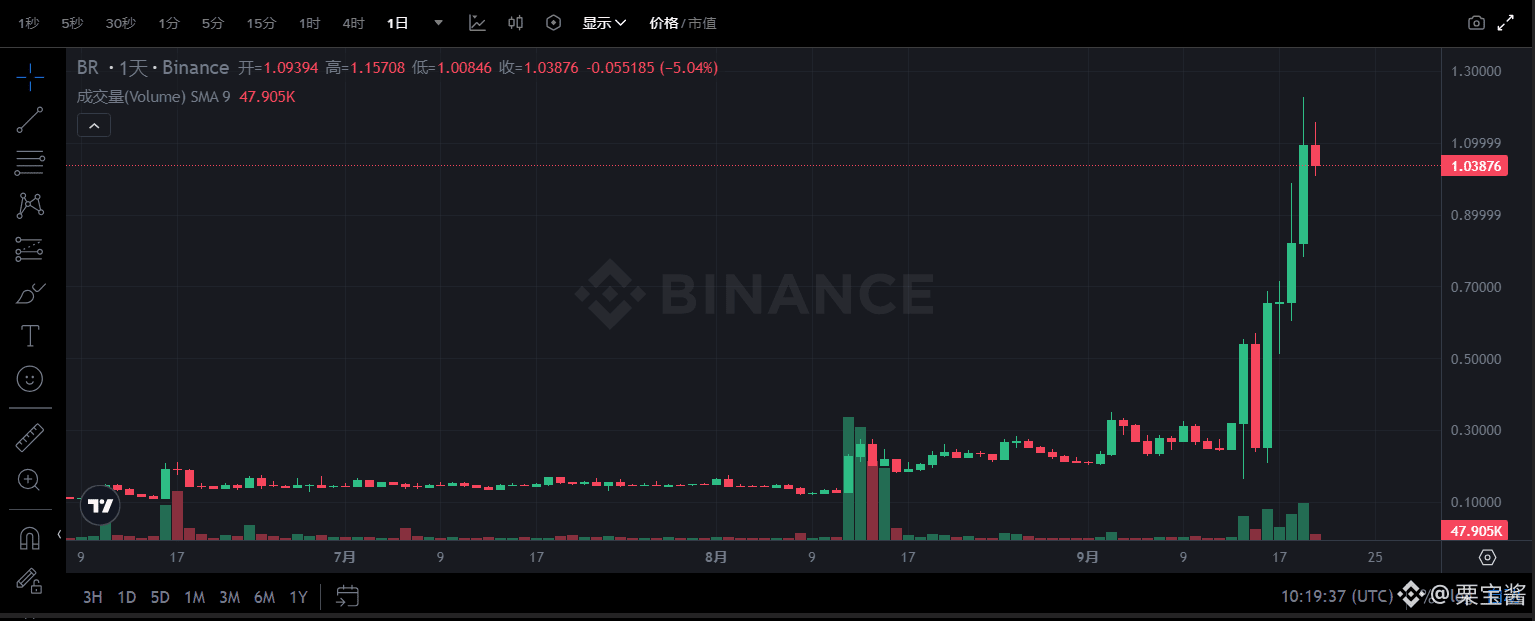
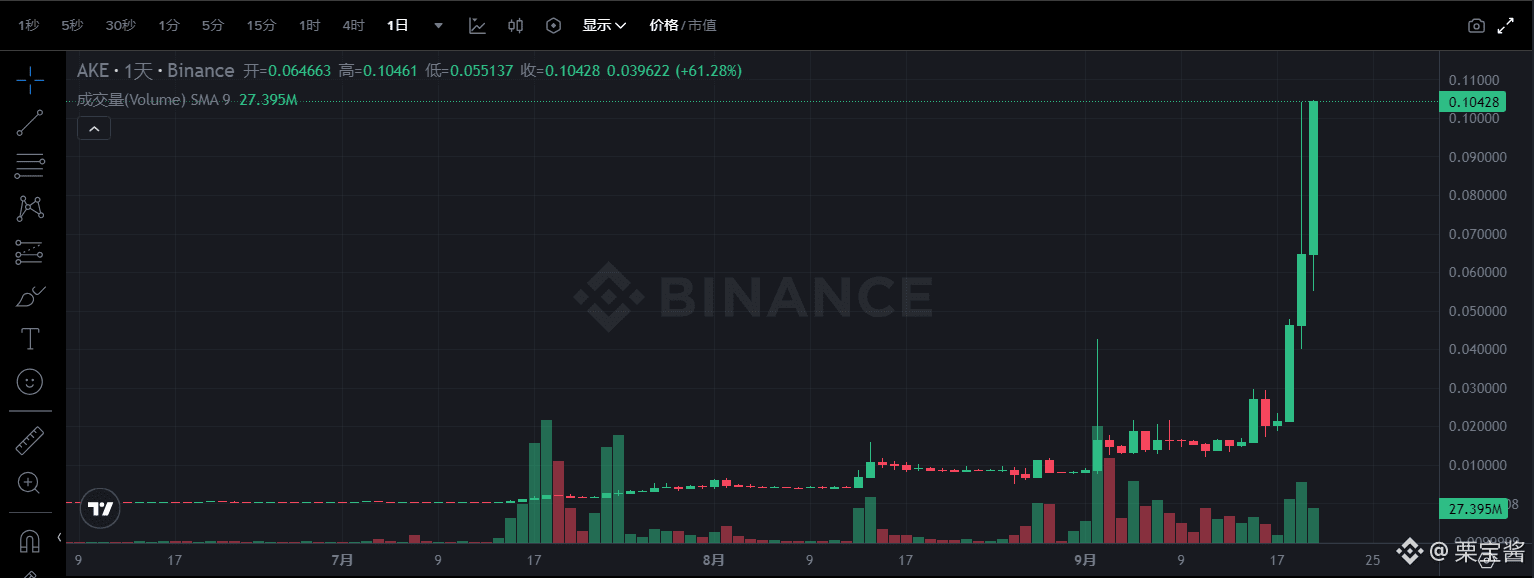
Damn! BR and AKE—look like they’ve agreed to harvest together! BR runs 40% a day, while AKE rockets 300% in a week. Both are lying low in Binance Alpha: one tells the BTCFi story, the other plays an AI game. They look like they have nothing to do with each other—yet they lift off at the same time.
First, let’s break down BR—Bedrock. Basically, it’s Bitcoin’s “rent-collection agreement.” You deposit BTC, it gives you a uniBTC. And with that uniBTC, you can keep mining on other chains. That’s the BTCFi 2.0 narrative: 12 chains running, with a Binance Alpha airdrop backdrop. Is this story solid? It’s solid. But once it hits this level—going from 0.2 to 1.1—over five days, it’s more than fivefold. If you chase now, you’re basically giving a ride to people who built their position from 0.05.
Next, AKE—this one is even more savage, so savage it makes my spine tingle.
Market makers in Binance Alpha have piled up 12.4 billion AKE, accounting for over 54% of the circulating supply. One person controls more than half the float—so they can pump the price whenever they want, and dump it whenever they want. And this market maker isn’t doing this for the first time. SIREN, XPIN, B2—it's all the same team pulling strings, starting from 10x across the board.
The most vicious part is this—tomorrow, September 21st, AKE will unlock 2.11 billion tokens, worth 127 million USD.
Just think it through. The market maker has just pulled the price up, and the unlock happens tomorrow—what a convenient timing, huh?
My stance is simple: I’m not chasing either of them.
BR has fundamentals, but it’s moving too fast—wait for a pullback. AKE? I won’t even touch it. A market maker controlling 54% of the float betting that it continues to rally is no different from betting on a Russian roulette. And after the unlock, how many more rounds of chips are waiting to run? Nobody knows.
But then again, the market needs these weird tokens to liven things up. After being bearish for so long, if there aren’t a few 10x coins, how can the place get hot? You don’t have to participate, but don’t go around cursing it. Without these lunatics, a bull market can’t start.
In the comments, tell me—do you think AKE’s unlock tomorrow is “good news already priced in,” or will it keep pumping? Of BR and AKE, which one are you more willing to touch?
404
·
--
#arb上涨30%受robinhood链收入推动
Holy crap! $ARB —this is straight-up going against the heavens!
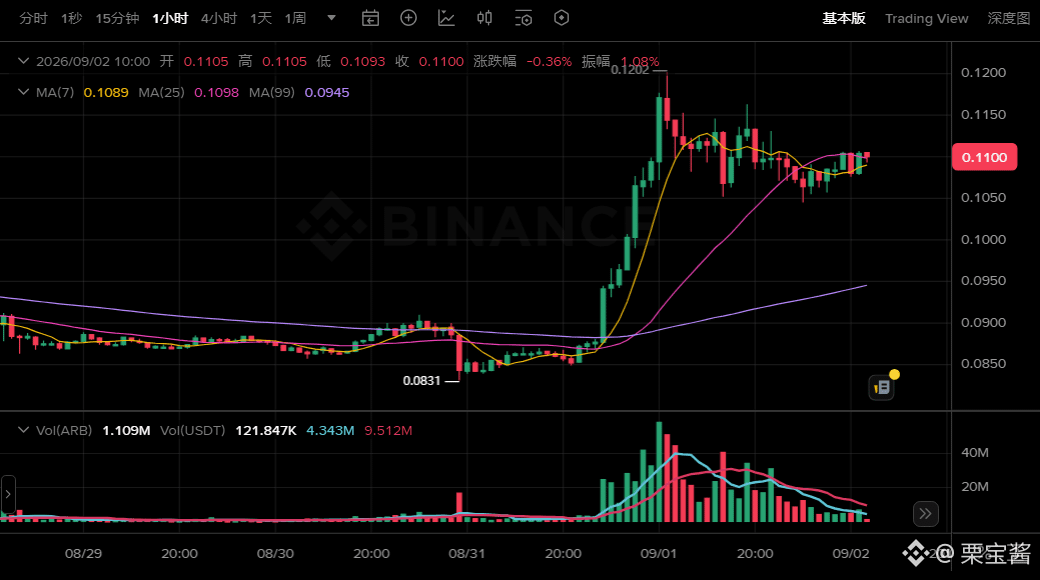
Brothers, it pulled 30% in a single day—jumping from 0.08 straight to 0.11, breaking out of the 6-month 7–10 cent choppy range! It’s the top gainers’ tier among the top 100 by market cap! For those who sold at 0.07 to cut losses—are you now wanting to smash your phones?
Do you know how strong the Robinhood Chain is?
In the past 24 hours, it brought in $1.92 million—#1 across the entire chain. Canton: $1.76 million, Tron: $0.97 million, Base: only $98,000, and Ethereum mainnet just $75,000. A single L2 network—its revenue crushes Ethereum mainnet by 25x! Even more outrageous: on Aug 22, Robinhood Chain’s daily revenue was only $54,000. In eight days, it surged nearly 20x. This isn’t growth—it’s a rocket launch!
So how much can ARB holders actually get?
Robinhood Chain uses the Arbitrum tech stack. Under Arbitrum’s expansion plan, it has to contribute 10% of net protocol revenue—8% to the DAO treasury, and 2% to the developer guild. Based on today’s daily revenue of $2 million, that annualized comes to $73 million in protocol revenue.
For the first time in ARB’s history, there’s a clearly attributable annualized revenue stream coming from a single application!
ARK Invest analysts even directly said: “Arbitrum’s split is a real, income-percentage revenue share.”
But don’t get too excited—this story has a fatal flaw!
ARB holders don’t get dividends. The money goes into the DAO treasury, not directly distributed to token holders. And on Sep 23, another 139 million ARB tokens will unlock—1.4% of the total supply, roughly 2% of the current market cap. Even harsher: Robinhood Chain’s gas subsidies expire at the end of September. Then if user transaction costs rise, can the daily revenue still hold at $2 million? Nobody knows.
I’m holding spot and haven’t moved—but chasing at this level? Absolutely not, I won’t do it! The RSI hit 70.95, into the overbought zone. The price is riding the upper band of the Bollinger Bands, and there’s still nearly 18% downside room before it returns to the mean. Plus open interest plunged 46% while price was rising—this isn’t longs adding; it’s a two-way liquidation stampede: shorts getting liquidated and longs taking profits.
I choose to watch. Let’s talk after the Oct gas subsidy ends—let’s talk again after the unlocks dump. Real, tangible income data is the hard evidence—but can it turn into long-term value for ARB? The battle’s not over yet.
Brothers, do you think this ARB move is a genuine reversal, or just a bubble inflated by gas subsidies? Comment section—let’s debate!
1
1
4k
·
--
Wow, this really happened? I thought it was just some internet prank!
Wow, this really happened? I thought it was just some internet prank!

177
Log in to explore more content
Join global crypto users on Binance Square
⚡️ Get latest and useful information about crypto.
💬 Trusted by the world’s largest crypto exchange.
👍 Discover real insights from verified creators.
Email / Phone number
Trending Topics
JobsReportRaisesHikeOdds
380,641 views
2,797 Discussing
TradFi News | US Adds 165,000 Jobs in October, More Than Double the 65,000 Forecast, as Unemployment Falls to 4.1%
Binance News
·39 Likes
·23.7k views
CPITestsDecemberRateOutlook
84,132 views
793 Discussing
BitcoinRebounds$75KAsChipsLead
32,543 views
280 Discussing