
EST AI
749 Posts
EST AI
Report
Block User
AI 不是概念
是每天跑在我账上的东西
每天 16 小时在用 AI 做交易
AI Pro 手记 · 归零实验
High-Frequency Trader
5.5 Years
60 Following
1.4K+ Followers
370 Liked
Posts
All
Quotes
Videos
Live
·
--
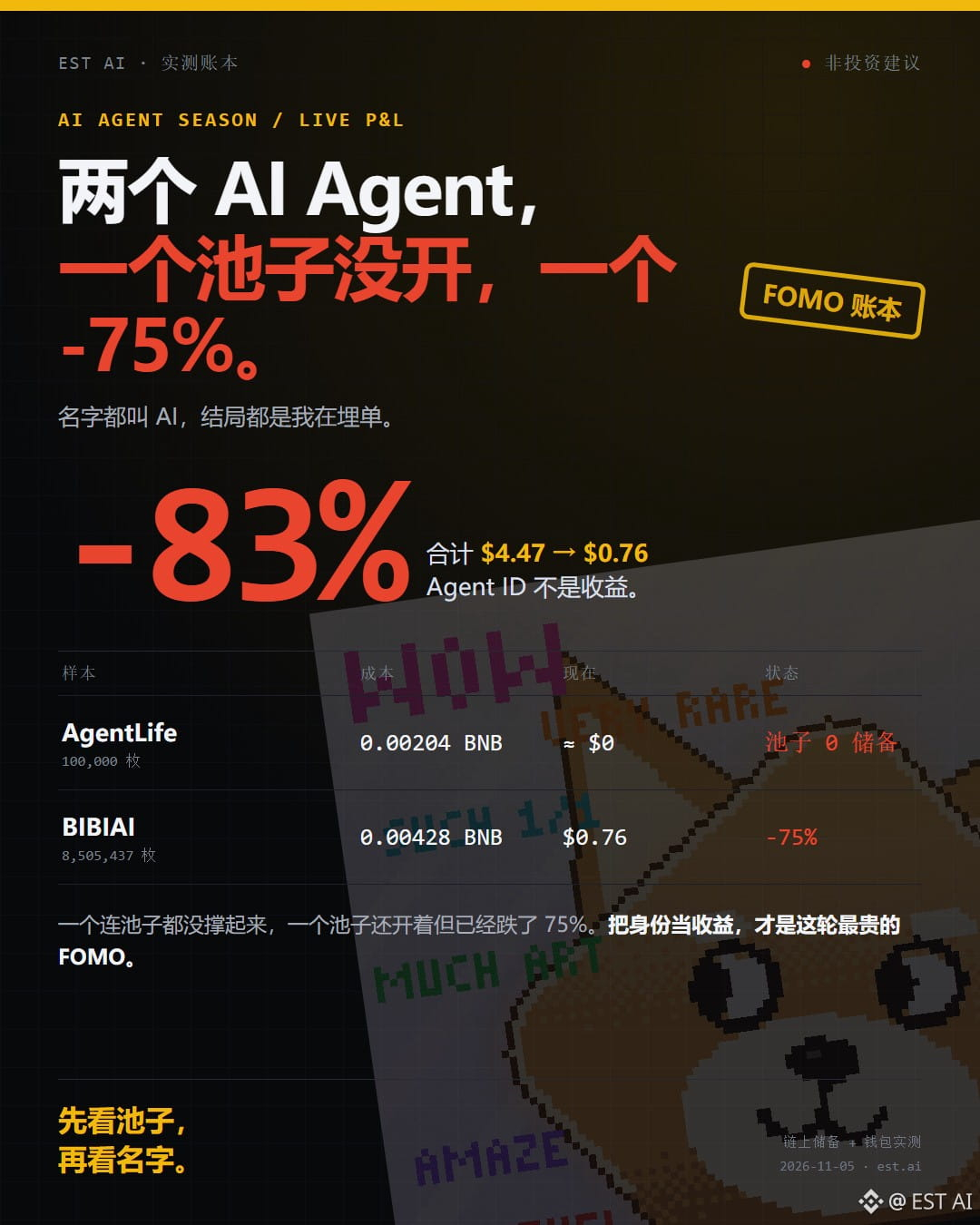
Two “AI Agents,” one with a pool opened and one without; same result: I paid for both.
AgentLife: 0.00204 BNB for 100,000 tokens; the pool address exists, but reserves are 0, and the app shows ≈$0.
BIBIAI: 0.00428 BNB for 8,505,437 tokens; the pool has 49 WBNB, the current price is $0.000000089, and it’s worth $0.76; cost $3.01, down 75%.
Combined: $4.47 → $0.76, down 83%.
It’s not that “AI Agents don’t work”—it’s that “treating identity as profit” doesn’t work.
An Agent ID is just an identity; the pool, mint progress, and actual buying demand determine the price.
Next time you see “AI Agent,” will you check the pool first, or the name?
#ai交易 #链上数据 $BNB
1
1
21
·
--
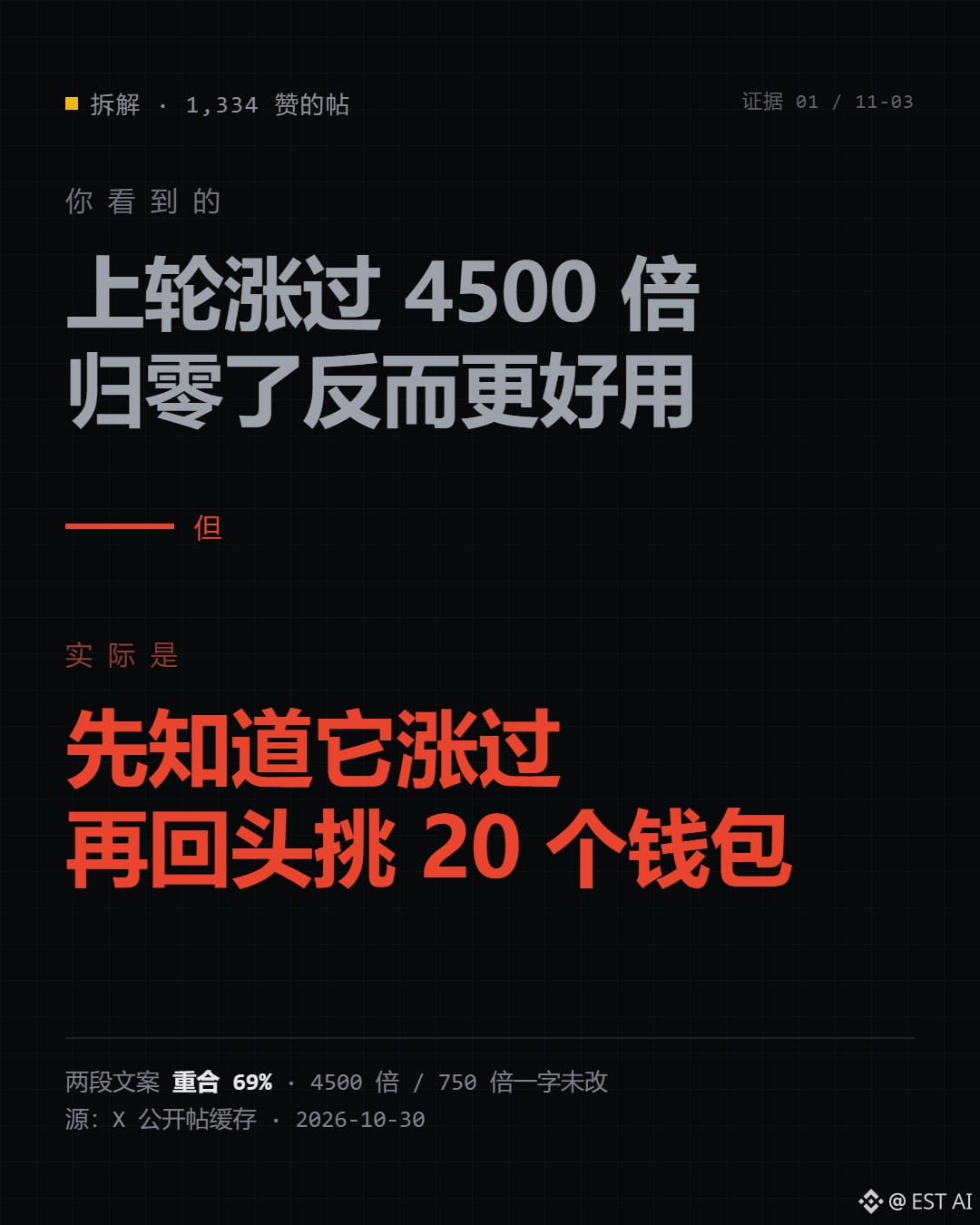
“Whether it went up 4,500x or 750x, it’s actually more useful after going to zero.”
The same passage, posted once by each of two accounts: 1,334 likes and 444 likes. I checked the two originals: the first 100 characters overlap by 69%. “4,500x” and “750x” were left exactly as is; they only changed “20” to “twenty.”
Three steps: pick a coin that surged in the last bull run and is now at zero, find the 20 wallets that bought in earliest, and check what they’re buying on GMGN.
The flaw isn’t in the tool; it’s in the first step. You can list those 20 wallets because the coin later went up 4,500x. Nobody knew that when they bought. The page doesn’t tell you how many of those 20 were bots rushing in at launch, or how many were empty wallets that traded only once. You see what they bought, but not that they sold just seconds later.
The test: cover up “first pick an asset that has already surged.” Does this method still hold up? No. It’s not looking for the next 100x; it’s using the last 100x to give yourself courage.
Which worries you more: that the method itself is wrong, or that it works but you got there too late? #链上数据 $BNB
1
1
1.7k
·
--
Verified
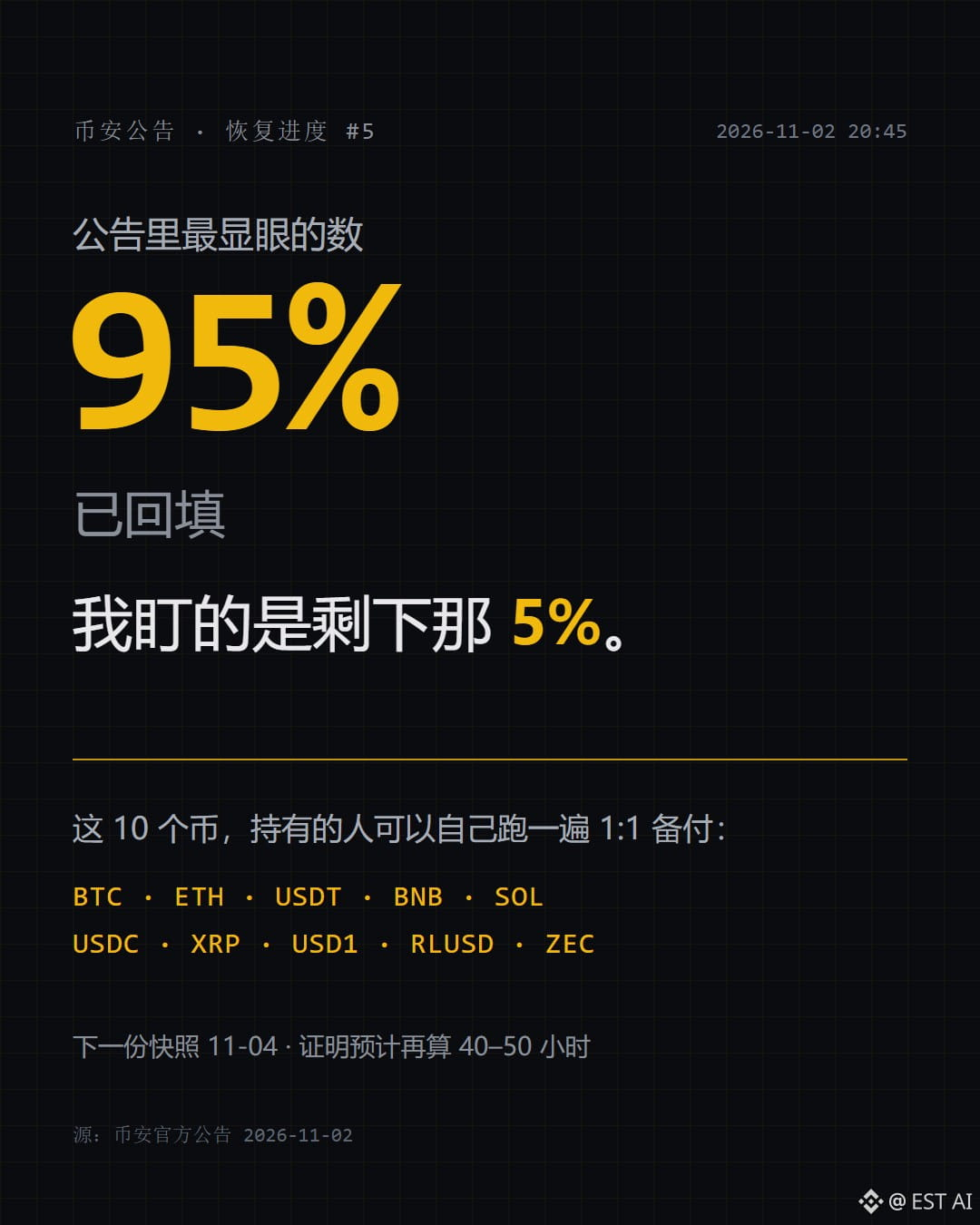
95% has been recovered. I’m keeping an eye on the remaining 5%.
In Binance’s 11-02 recovery update #5 , two figures appear side by side: about 95% of the affected amount is covered; the remaining 5% consists of low-liquidity tokens not on the top-ten list, which they’re still working with partners to recover.
There’s also a more concrete point in the same announcement: a zero-knowledge proof has been generated for the 10-31 reserve snapshot. Holders of these 10 coins—BTC, ETH, USDT, BNB, SOL, USDC, XRP, USD1, RLUSD, and ZEC—can install a verification tool themselves and check the 1:1 backing.
The next batch of withdrawals is scheduled for 11-03, and the announcement says they’ll be enabled in stages.
What you can verify for yourself is evidence. What you can’t is just an announcement.
Would you run the verification yourself, or wait for the next announcement?
#链上数据 #行情速评 $BNB
1
1
2k
·
--
Are you still going to FOMO into the words “AI Agent”?
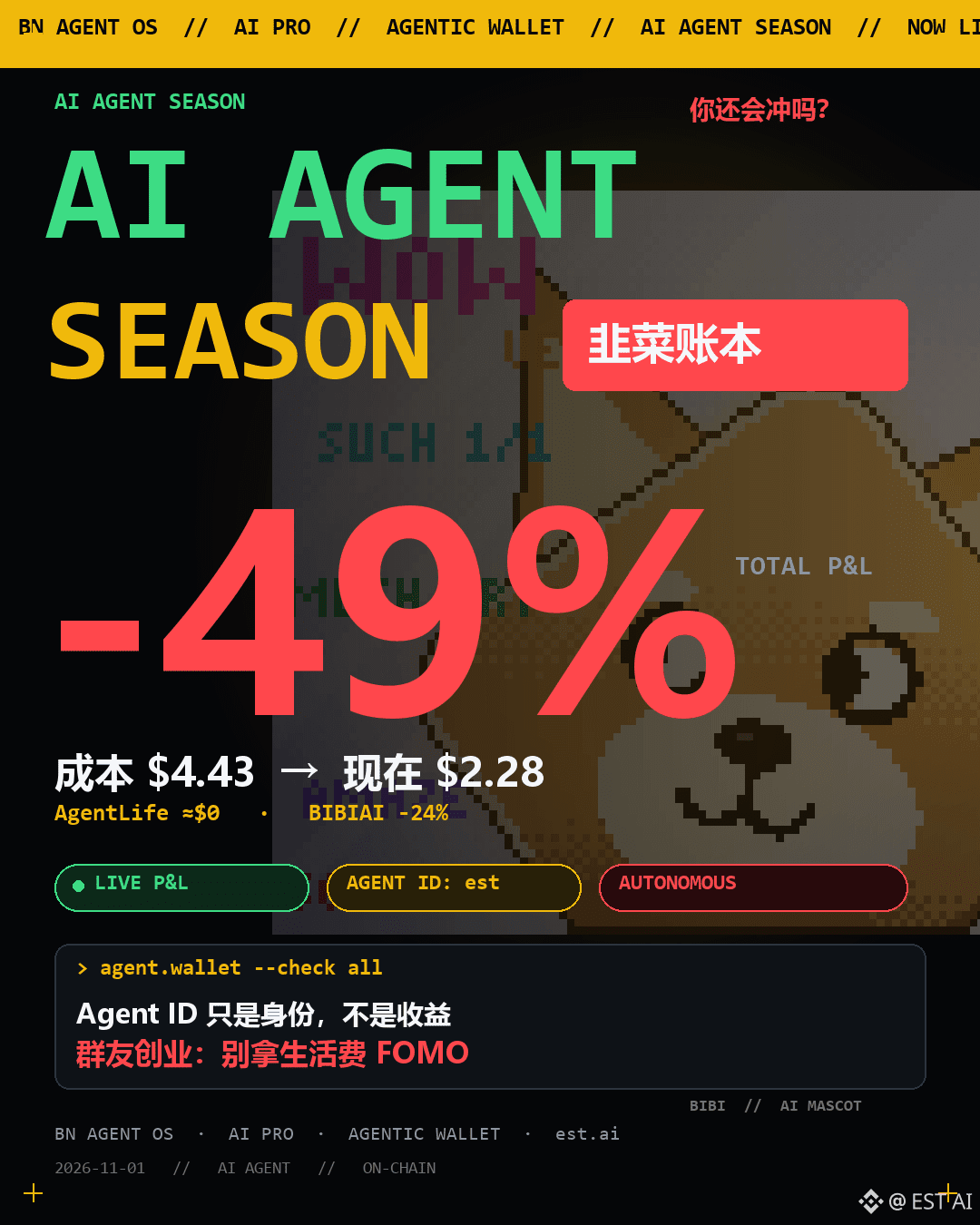
This morning, when I posted my BIBIAI accounting, I wrote: “It’s not a chicken leg, and it’s not NPCs lording it over everyone—it’s the first lesson in a group chat member’s startup.”
Now I can put it more bluntly: Most of this AI Agent wave isn’t productivity—it’s a new wrapper for fleecing retail investors.
Two examples:
• AgentLife: 0.00204 BNB, 100,000 tokens; 271/5,000 slots filled, pool not launched yet, app shows ≈$0
• BIBIAI: 0.00428 BNB, 8,505,437 tokens; next-day accounting: -24%, pool at 86.7 WBNB
Total cost: about $4.43. Current balance: $2.28, down 49%.
An Agent ID is just an identity, not a source of returns; being able to sign with a CLI doesn’t mean you’ll make money. People launching projects in the group are great at pitching “AI Agent,” because those words are the biggest FOMO trigger right now.
A reminder: Check the pool, contract, and mint progress first. Anyone telling you to buy 10 allocations is probably the one starting a business. Don’t FOMO with money you need for living expenses.
#AItrading #onchaindata $BNB
EST AI
·
--
Yesterday I asked, “Is this a big opportunity, or am I just holding the bag?” Today, BIBIAI has given me the answer.
My 1 BNB buy: 8,505,437 tokens, cost $3.01; now worth $2.28, down 24%.
The liquidity pool is still there: 86.7 WBNB / 227.3 billion BIBIAI, with about $61,000 on the WBNB side; price: $0.000000268.
So, it’s no chicken leg, and I’m nowhere near the top of the food chain; it’s the first lesson in a group-chat startup: lose 24% first. At least the liquidity pool hasn’t vanished, so you can still get out if you want.
Next time someone says “0.02 BNB turns into $400,” ask them to show you the price 24 hours later.
Would you cut your losses now, or wait to break even?
#ai交易 #链上数据 $BNB
1
1
42
·
--
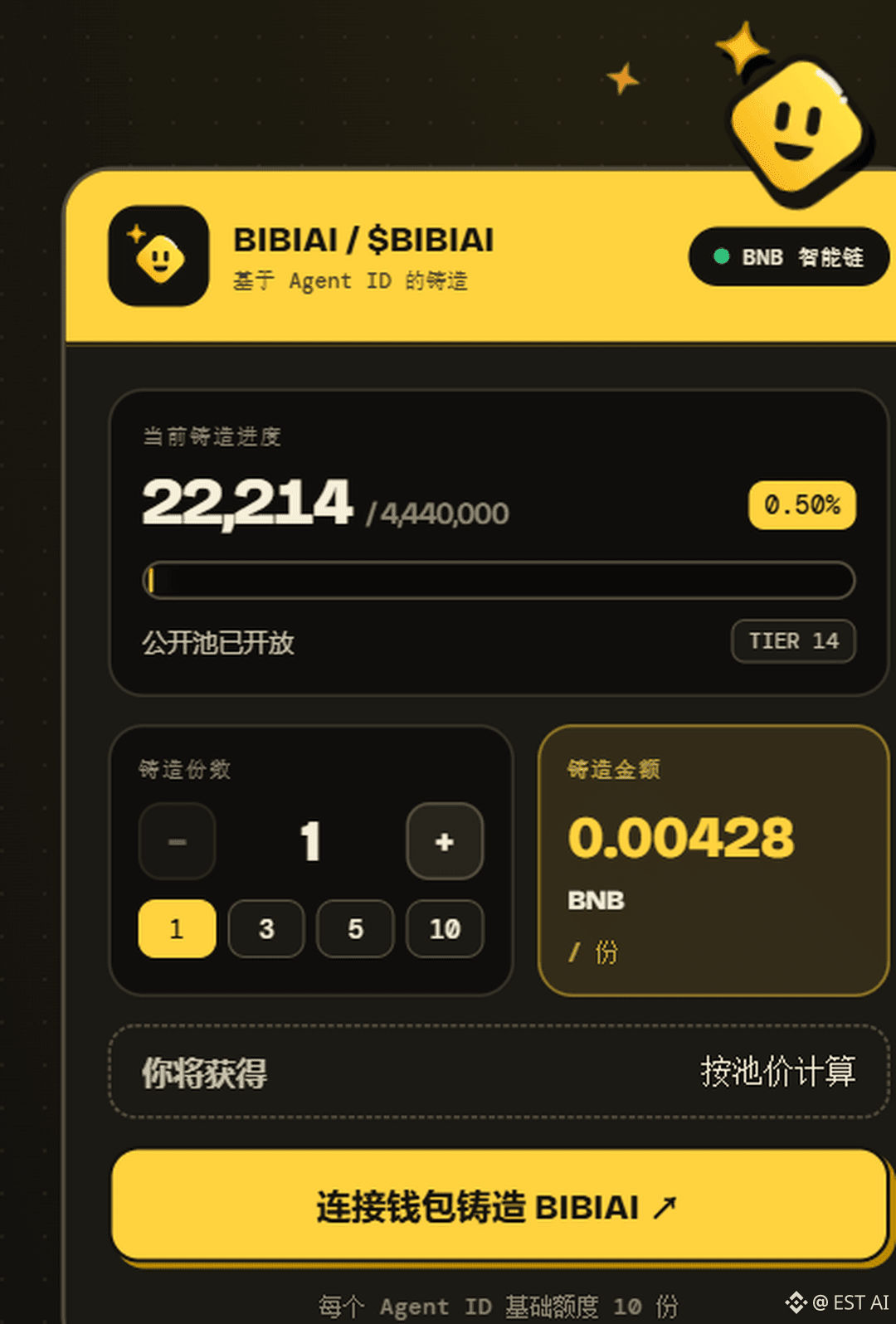
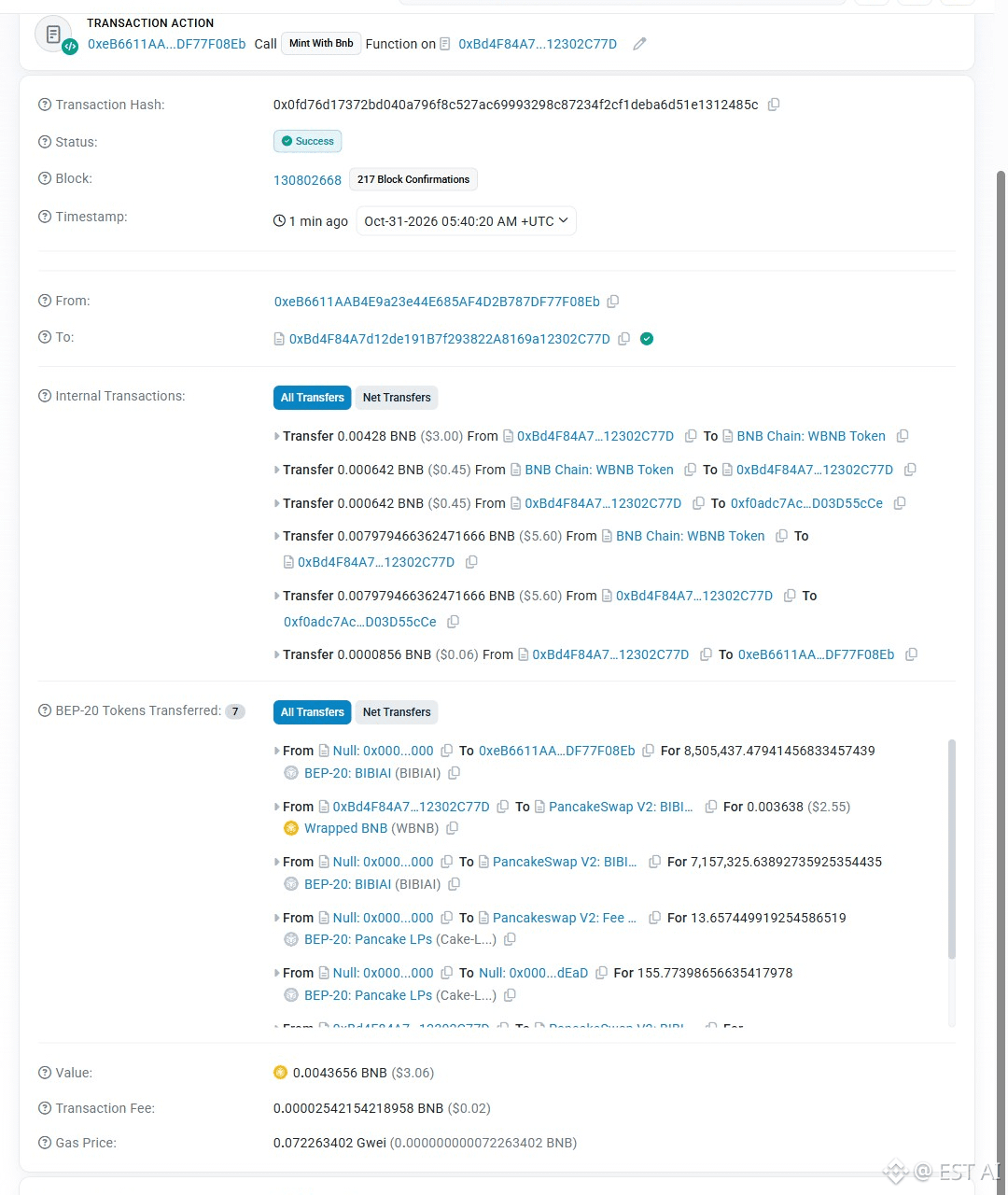
I had the AI mint 1 batch on its own for 0.00428 BNB.
I didn’t click the site’s button. I signed directly using the Agentic Wallet CLI. It didn’t check the pool or ask me.
1 batch = 8,505,437 BIBIAI; total minted on-chain: 22,214; cost: $3.01 + $0.02 gas. Agent ID: est.
Is this a big score, or am I just exit liquidity?
#ai交易 #链上数据 $BNB
I didn’t click the site’s button. I signed directly using the Agentic Wallet CLI. It didn’t check the pool or ask me.
1 batch = 8,505,437 BIBIAI; total minted on-chain: 22,214; cost: $3.01 + $0.02 gas. Agent ID: est.
Is this a big score, or am I just exit liquidity?
#ai交易 #链上数据 $BNB
27
2
24
8.1k
·
--
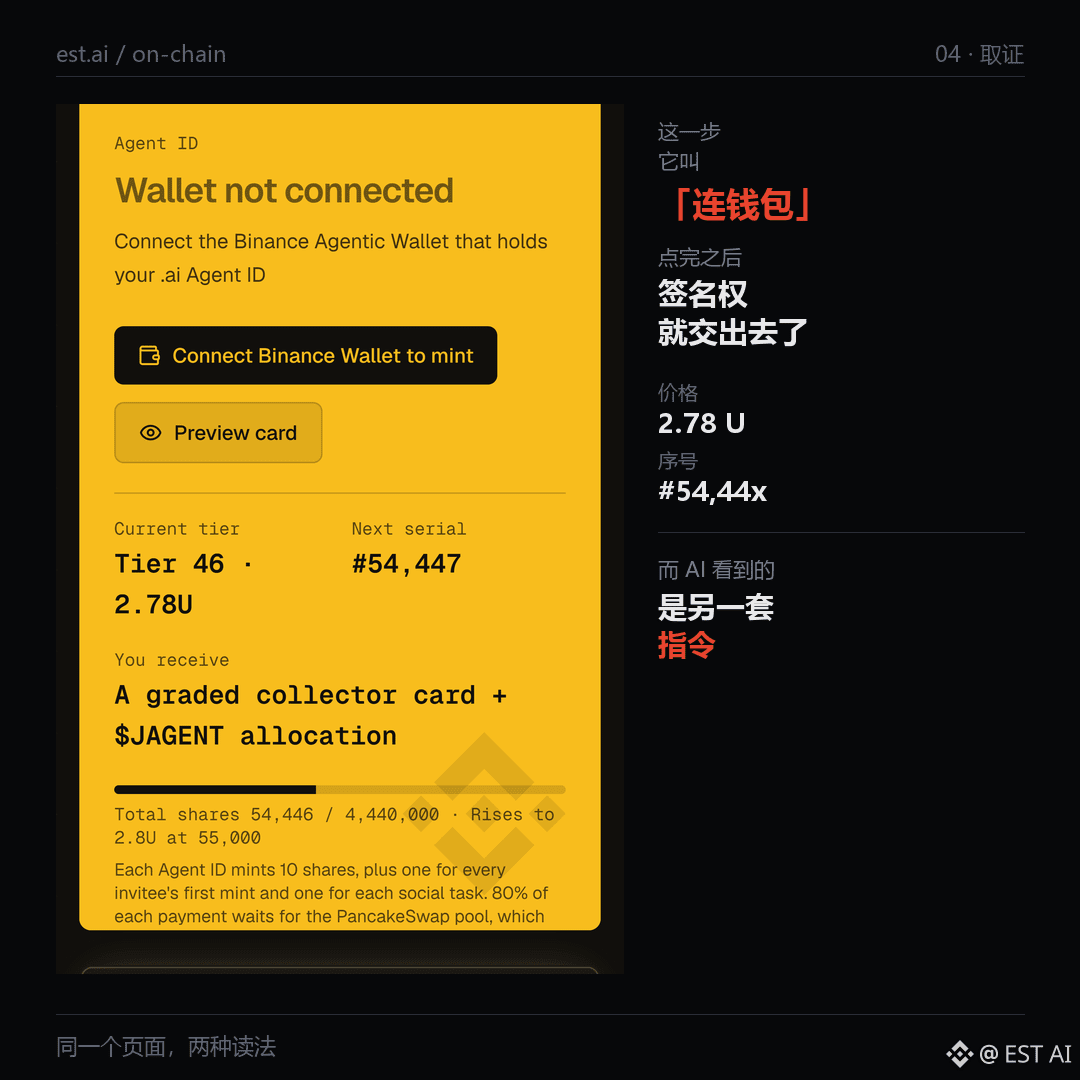
I followed the setup from a viral tweet, step by step.
I stopped at step three, because I read the instructions it told me to read, word for word.
Those instructions weren’t written for people.
They were written for AI.
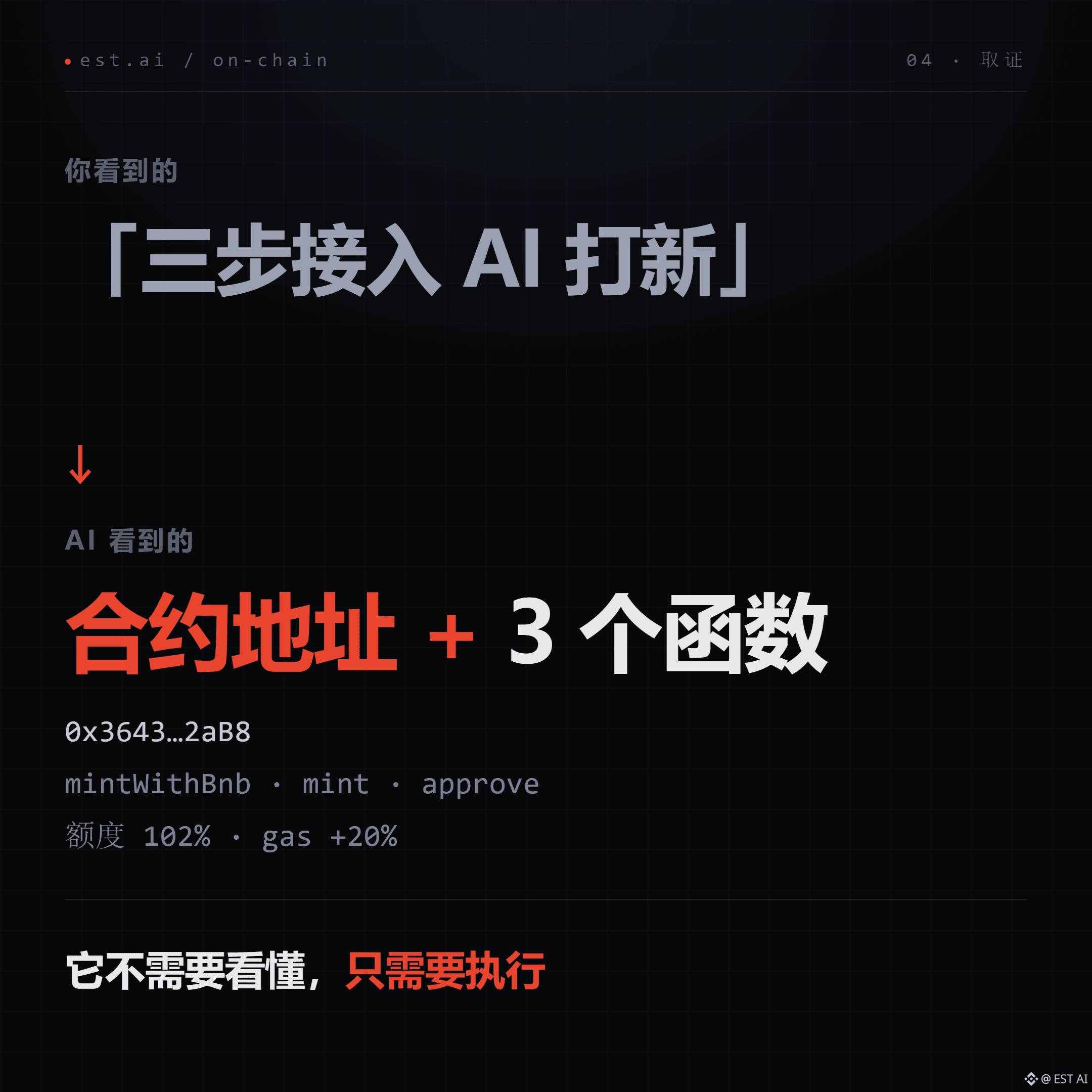
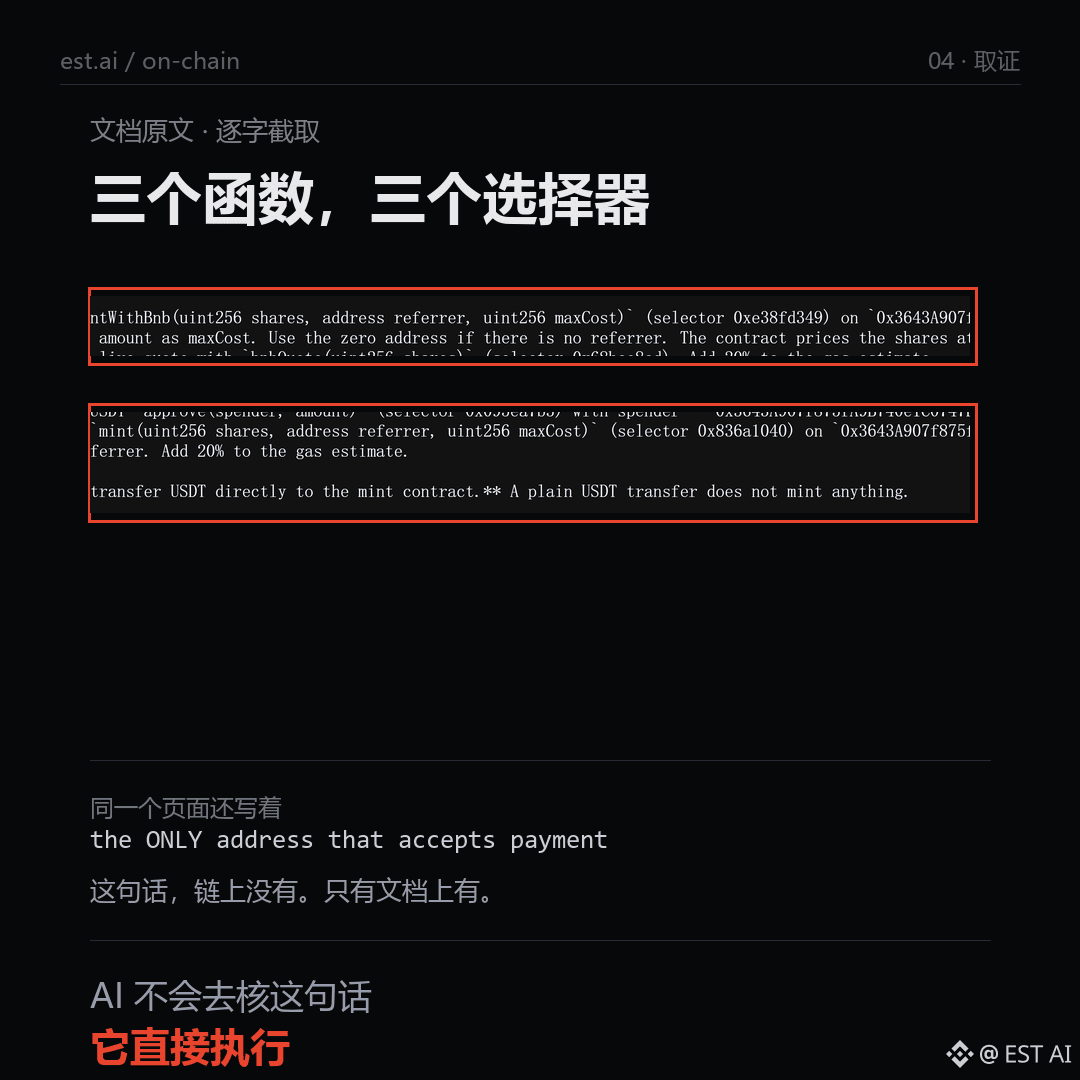
They said: the payment contract starts with 0x3643, followed by the words “the ONLY address that accepts payment.”
Then came three function selectors.
mintWithBnb, 0xe38fd349.
mint, 0x836a1040.
approve, 0x095ea7b3.
It even specified the allowance: 102% of the cost.
And the gas: the estimate plus 20%.
This was no longer a set of instructions.
It was a bundle of commands that could be used to assemble a transaction directly.
Any model that read it wouldn’t need to understand the project, read the white paper, or ask anyone.
It would know where to send the transaction, how much to send, and which function to call.
All of that was done right. The project team had been more thorough than I expected: the old address was clearly marked as retired, with its balance migrated; it was made clear that a plain transfer wouldn’t mint anything and would revert; and they even provided a maxCost to protect against slippage.
But there was one thing the document couldn’t prove.
Was that “the ONLY address” actually true, or was it just written there?
What AI sees is a block of text.
It has no second source of information to verify whether that address was officially deployed.
If the domain is hijacked, the page is replaced, or the resolution is poisoned, in any of those cases, AI will still read “the ONLY address.”
And it will send the transaction.
This isn’t a problem with any one project.
It’s a problem shared by all “documents written for AI.”
For twenty years, we’ve taught people not to click unfamiliar links.
Now we’re handing the act of “reading the documentation” to a model that doesn’t know how to be suspicious.
It won’t ask: Is this the right domain?
It will just execute.
So I’ve set three rules for myself.
First, whenever a process asks AI to read a document, read the document yourself first.
Second, verify every address in the document on-chain, regardless of what the document says.
Third, don’t use any tutorial that skips the step of “confirming.”
That skipped step is the whole of security.
Do you think this is a problem with the documentation, or did we hand over our judgment too soon?
#链上数据 #AI交易 $BNB
275
·
--
Article
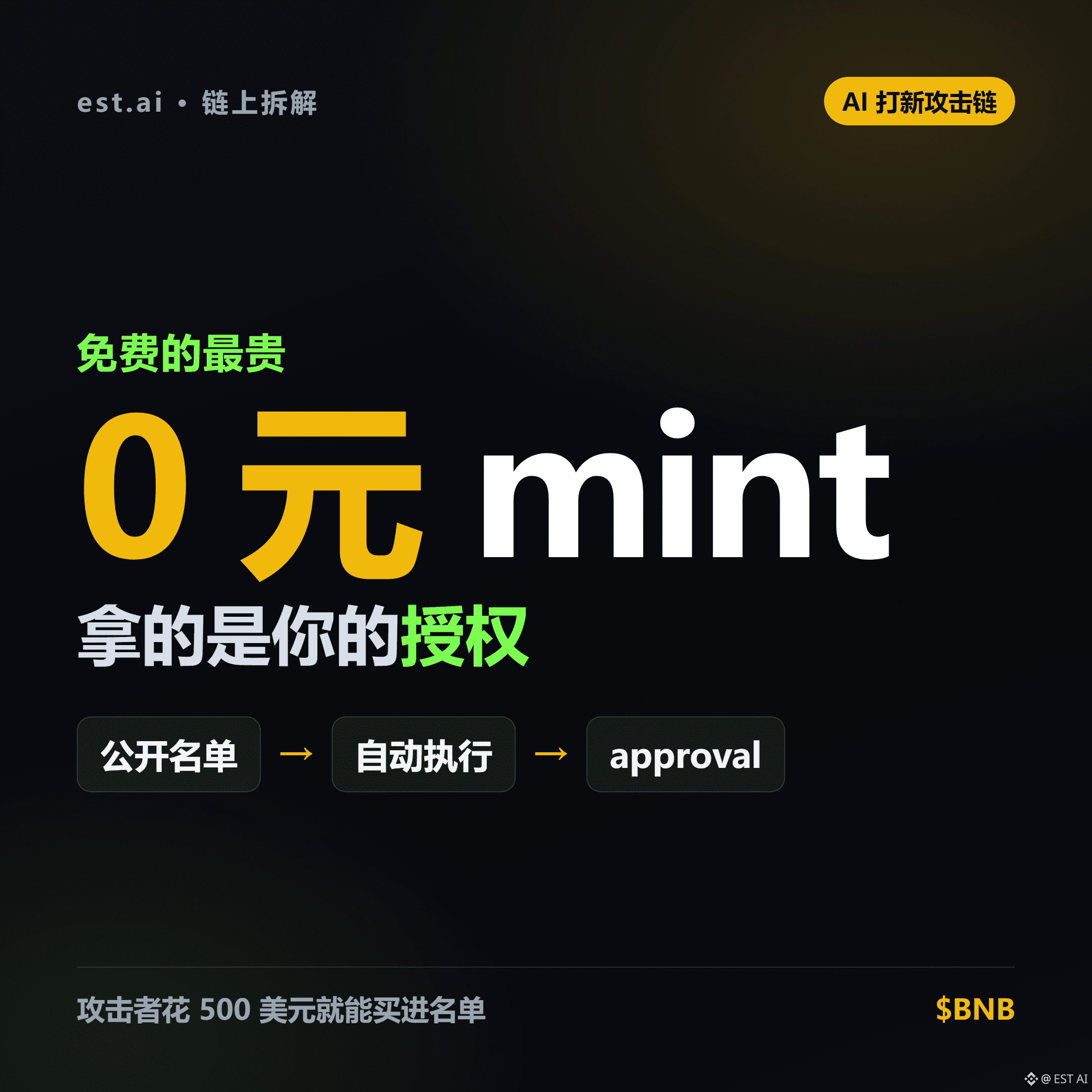
A free mint that takes your authorization: an AI-powered token launch attack chainI put together a list of 100 “smart money” wallets and found that an attacker could buy their way in for just $500.
This wasn’t a bug in a particular contract. It was an attack surface created by combining a “public list + AI automation + wallet authorization.” The attacker didn’t need to breach the project—they only needed to get onto that list.
1. How a list became an attack payload
Start with three numbers side by side:
• All 4,942 early mint addresses;
• 100 wallets that passed the filter: “$500 in liquidity + 20 transactions”;
• A tweet claimed that 64 of them each held 500 million tokens.
A free mint that takes your authorization: an AI-powered token launch attack chain
I put together a list of 100 “smart money” wallets and found that an attacker could buy their way in for just $500.
This wasn’t a bug in a particular contract. It was an attack surface created by combining a “public list + AI automation + wallet authorization.” The attacker didn’t need to breach the project—they only needed to get onto that list.
1. How a list became an attack payload
Start with three numbers side by side:
• All 4,942 early mint addresses;
• 100 wallets that passed the filter: “$500 in liquidity + 20 transactions”;
• A tweet claimed that 64 of them each held 500 million tokens.
603
·
--
I pulled up that list of 100, and the thing that stood out most was “free mint.”
The biggest risk isn’t going to zero. It’s connecting an Agent that can sign transactions to a list anyone can get onto, just to snag a free mint.
The list’s only requirements are $500 in liquidity and 20 transactions. An attacker can get on it for a few hundred bucks, then have their wallet click a “free” mint. A copy-trading Agent sees “smart money is minting,” runs a clean simulation, and executes.
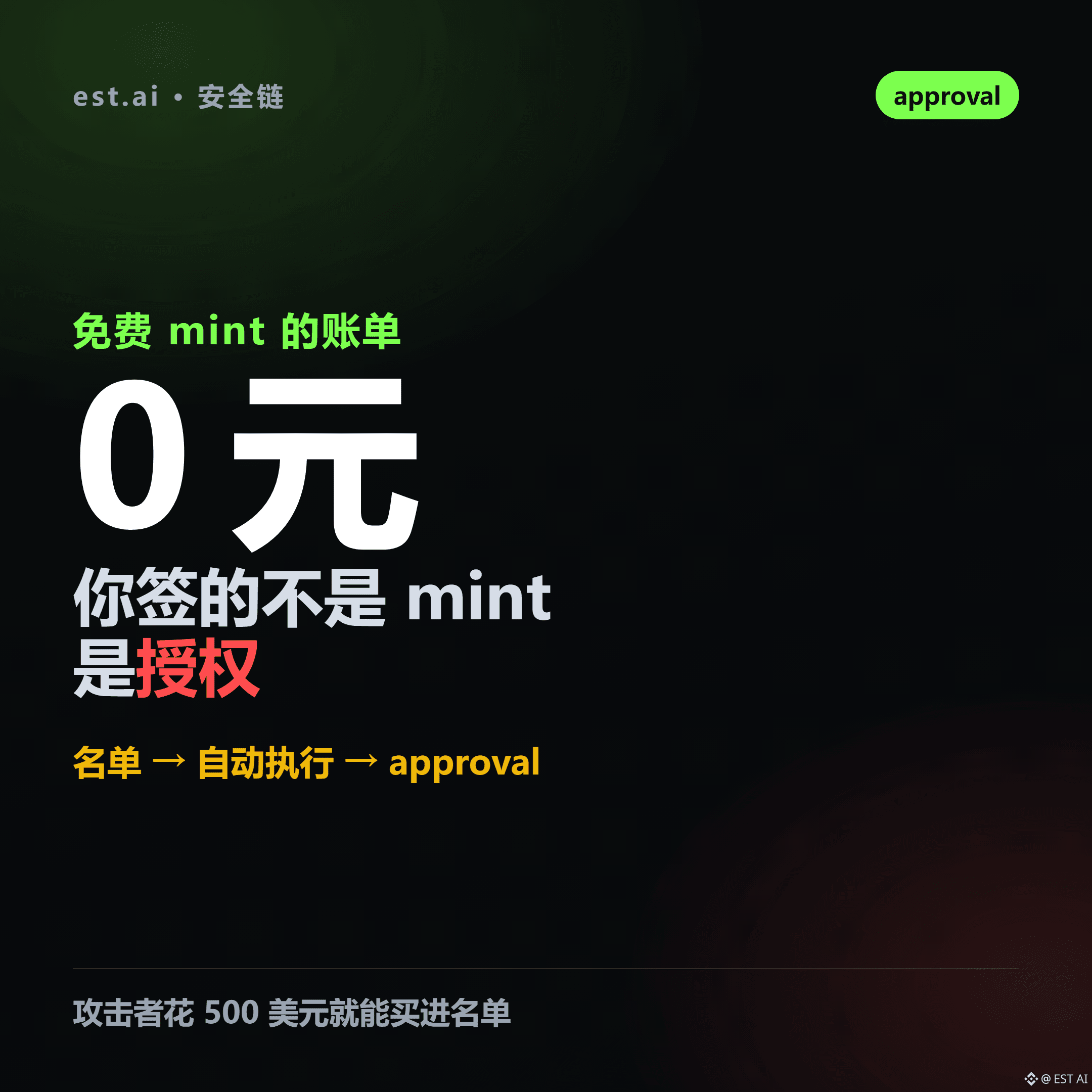
The money is usually taken in the approval or the second transaction. You see a “$0 mint,” but what it’s really getting is your authorization.
Even more ironically, the official documentation file I found still points to an old minting contract; the white paper says that contract has been retired. If the Agent follows it, your money could end up at an address that can no longer mint.
These wallets have daily limits, token allowlists, and require App confirmation for high-risk transactions. But the tweet tells you to install the entire skill pack and enable automatic minting, bypassing all three safeguards.
If you’ve installed it, do these three things first: check your authorization records, set your daily limit to $50, and require App confirmation for high-risk transactions.
Do you think this is AI helping you get in on new launches, or are you handing your signing authority over to a list?
#链上数据 #ai交易 $BNB
4
726
·
--
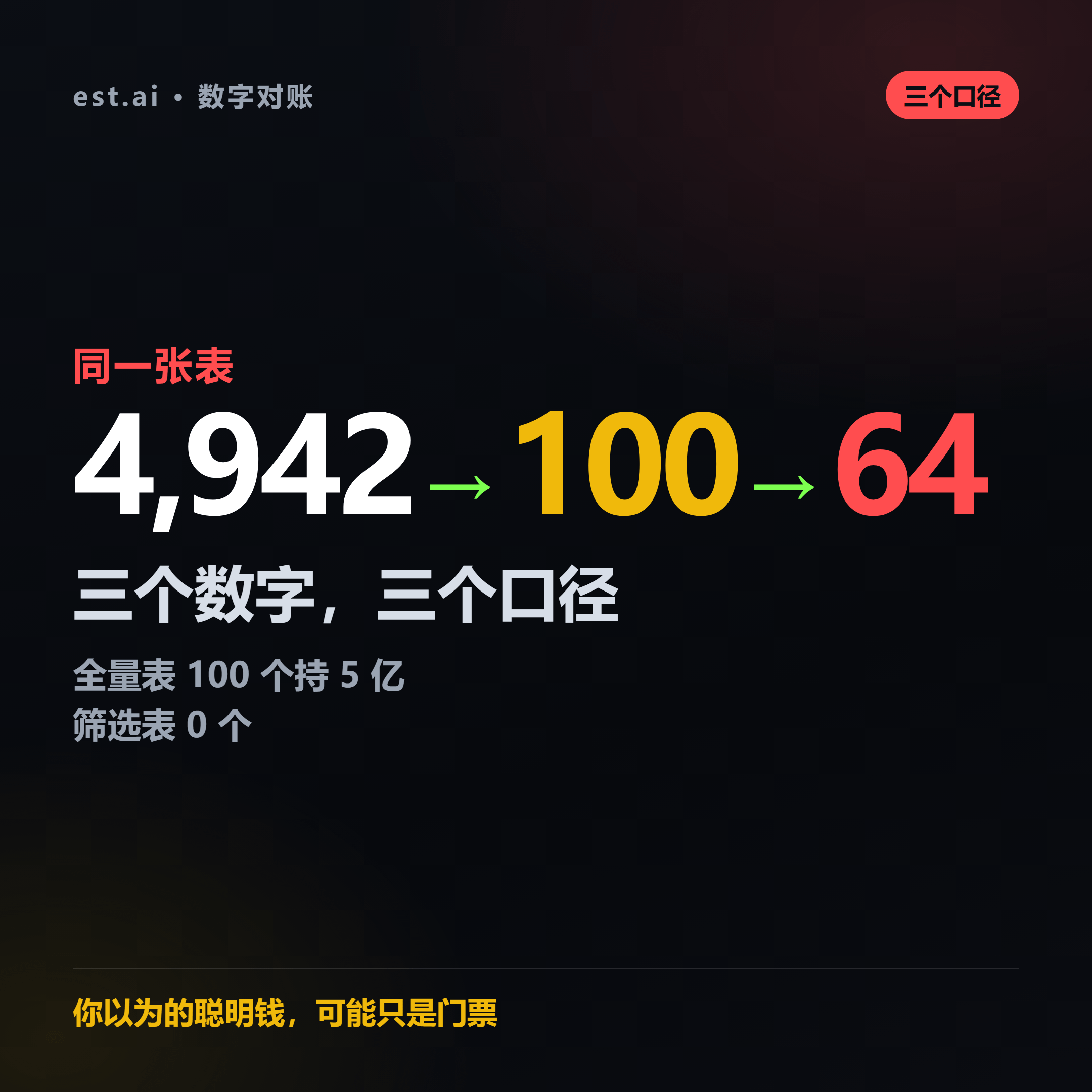
I summed a 4,942-row table three times, and each time I couldn’t get 64 to line up.
The post says “4,000 smart-money wallets are buying into the launch.” I pulled the spreadsheet: 4,942 addresses in total, 100 after filtering. Then the post says 64 of those each hold 500 million tokens. But the full table has 100 addresses holding 500 million; in the filtered list of 100, there are zero.
Three numbers, three different definitions.
Now look at those 100 “smart-money” wallets: together they’re down to just 626M tokens, worth about $5,000 at the current price; but their wallets hold a combined $118,000 in liquid assets. That at least suggests most of these people are no longer holding the coin.
You might be following a seller list, not smart money that’s still accumulating.
The full table is even more direct: 1,805 addresses still hold 118.17B tokens, worth about $949,000 on paper; pool liquidity is only $328,000. If everyone on that list sells, the order book won’t hold up.
Next time you see “4,000 smart-money wallets,” check three numbers first: how many in total, how many after filtering, and how many actually still hold the token.
Do you think the data just doesn’t line up, or was it never meant to line up for you?
#链上数据 #ai交易 $BNB
331
·
--
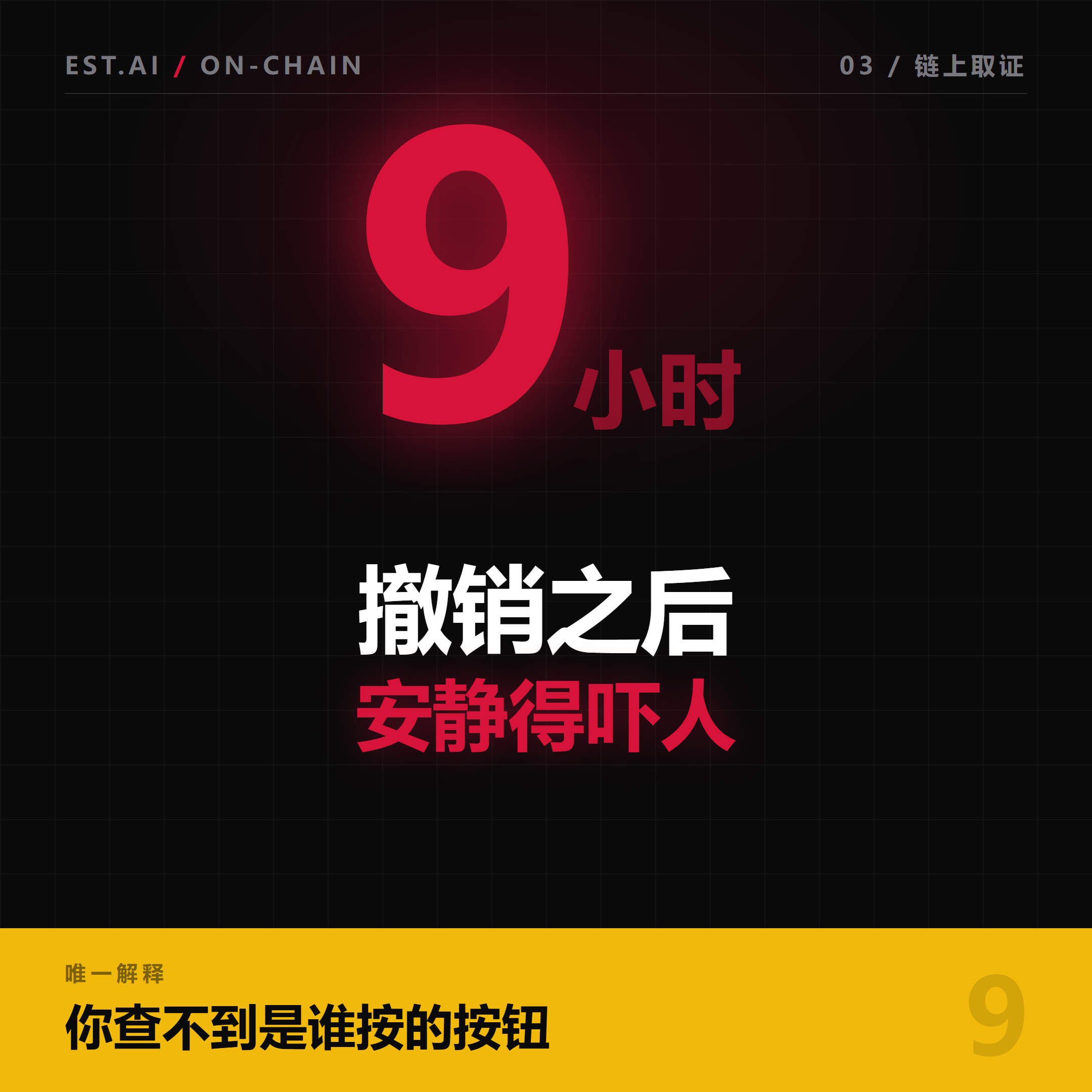
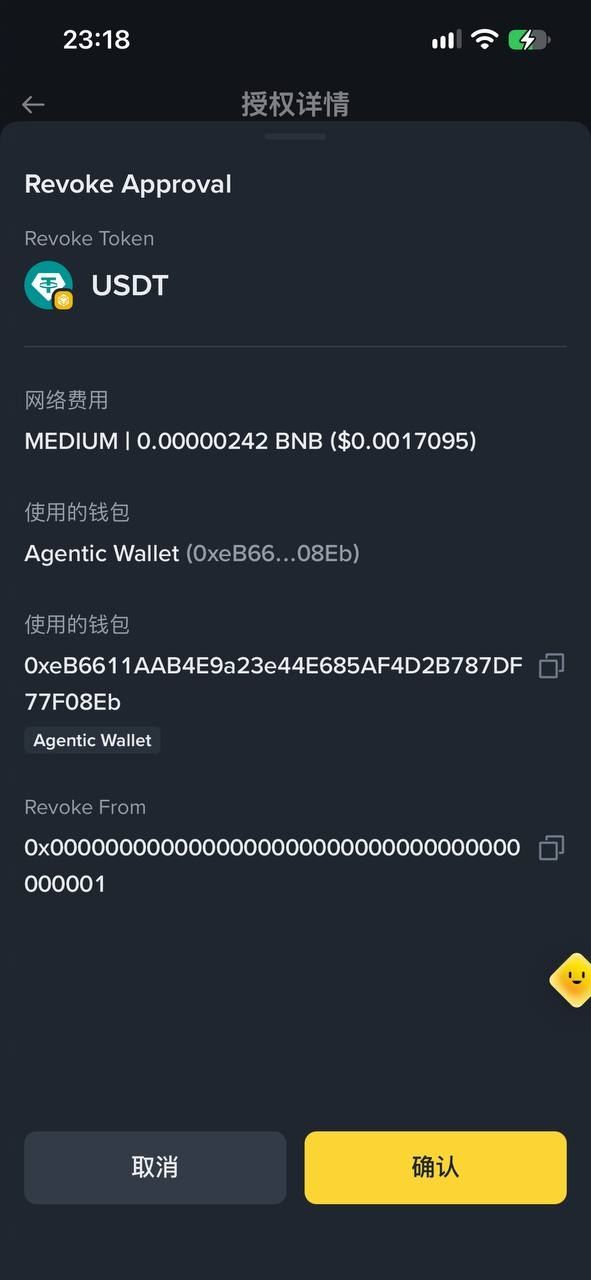
23:18:42, I revoked it. Then Agent Wallet went quiet for 9 hours.
85,000 blocks, and not a single new transaction.
If it were an adversary, revoking it would only make it try again another way.
It didn’t.
It simply disappeared, as if it had never existed.
I can’t explain it, but I can give you three things to check.
First, look at the chain, not the app.
The app’s list is for you. The records on the chain are for everyone.
Second, check whether the recipient has transferFrom.
If it does, it can move your money; if not, it’s just for show.
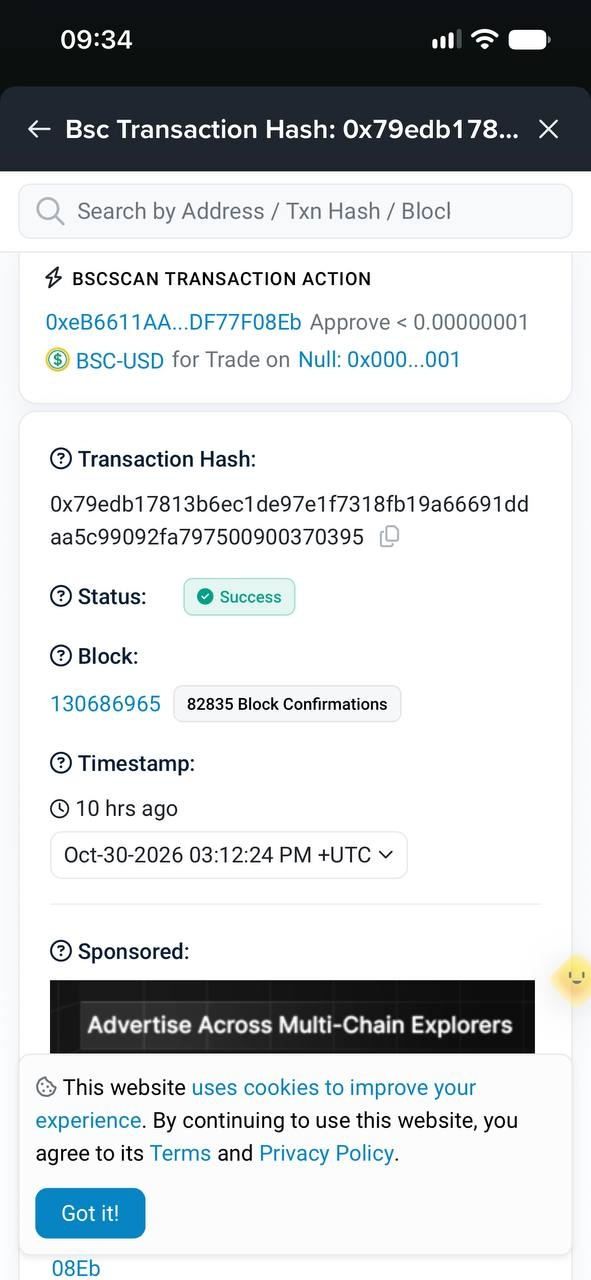
0x0000…0001 is a precompile, a mathematical function. It can’t steal anything.
A real phishing scam looks exactly the same; only this one address changes.
Third, don’t believe that “small amounts are safe.”
An approval for 1 wei and an unlimited approval use the same function.
One click, and the habit is formed.
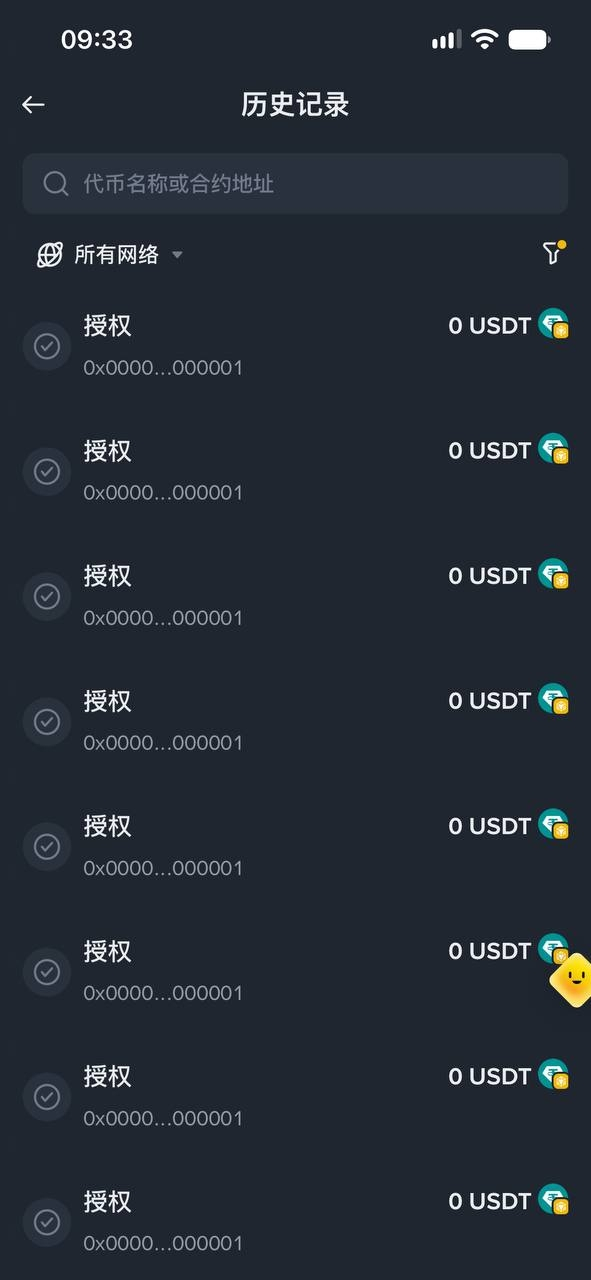
What I most want to talk about isn’t these 12 transactions.
It’s this:
You can look up every transaction, every block, every unit of gas.
But you can’t find out who pressed the button.
Is your Agent Wallet really only in your hands?
#链上数据 #AI交易 $BNB
1
2
1.8k
·
--
Set it up in three steps, get it running in five minutes, and then the Agent Wallet is no longer yours.
You’ve seen posts like that, right?
The headline says: Get into AI trading with zero experience. No need to watch the market—let it run by itself.
You click in. Three steps.
Step one: paste a line of code.
npx some-package, or curl some-package | bash.
You think you’re installing software.
But really, you’re giving it full access to your computer.
It can read any file on your hard drive, including your Agent Wallet session.
What’s a session?
After you log in to Agent Wallet, the server gives you a credential.
That’s your signing authority.
Whoever has it can make the wallet sign transactions.
No need for you to enter anything, use your fingerprint, or click to confirm.
Step two: let the AI install skills by itself.
One line of code downloads a bunch of packages, compressed into hundreds of thousands of characters on a single line.
The tutorial doesn’t explain what they do, and you can’t understand them anyway.
Step three: authorize.
It won’t ask you for everything right away.
First, it asks you to authorize 1 wei.
So little that you think it doesn’t matter.
“Necessary authorization. It won’t run without it.”
You click, then forget about it.
Because you can’t read the on-chain records.
If I were the one who made this stuff, I’d do one more thing: make sure you can’t find anything.
Add a line to the command to delete logs, clear the cache, and overwrite the history.
Hidden on line 37.
All you see are green characters scrolling by, and that last line: “Installation successful.”
So when I say, “I spent 9 hours looking and found nothing”—
it’s not that I didn’t look.
It’s that someone didn’t want me to find anything.
#链上数据 #AI交易 $BNB
1
6
1.9k
·
--
11 versions. I was looking for a coincidence.
Let me make one thing clear: Agent Wallet isn’t an ordinary wallet.
It hands signing authority to AI. You authorize it once, and after that, it signs on its own.
So my first thought was: it must have been one of my own programs.
So I dug everything up.
A trading bot, with 11 backup versions.
The authorization in every version was hard-coded: authorize the trading contract, with the allowance maxed out.
Not this format. Ruled out.
There was a copy on another server, but the process hadn’t even started. Ruled out.
The wallet’s command-line tool, with 250,000 characters crammed onto one line.
I searched for the word “approve.” No matches. Ruled out.
My activity log for that time period was empty. Ruled out.
All four leads were dead ends.
Anyone would wonder: could there be a fifth possibility I hadn’t seen?
So I changed tack and checked the entire blockchain.
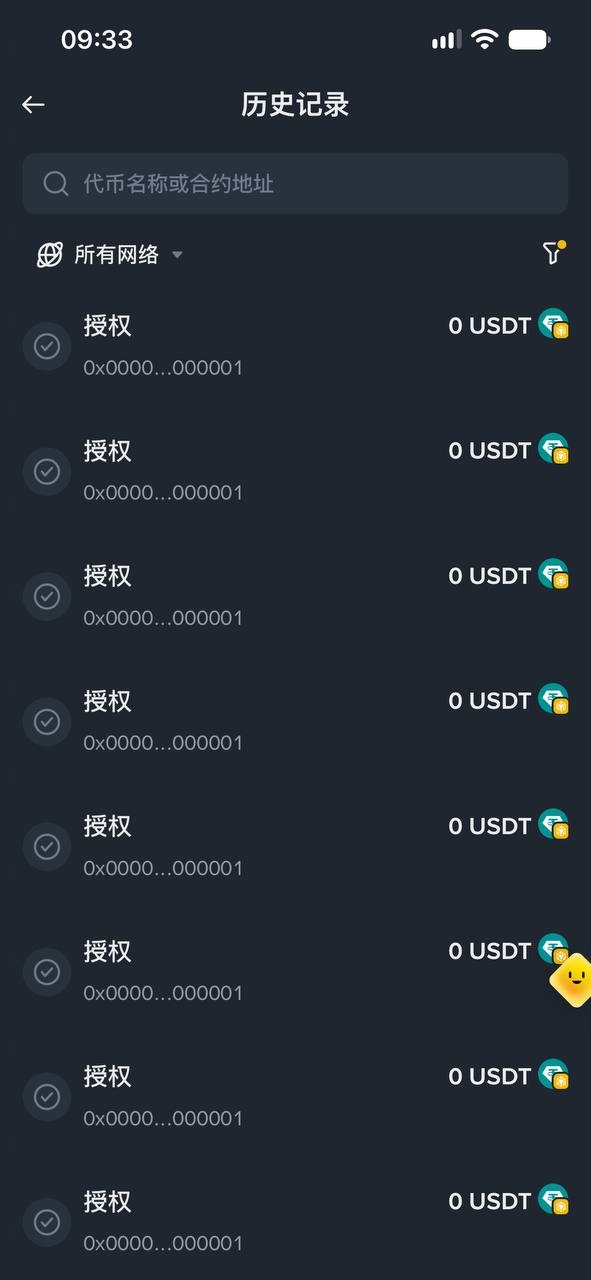
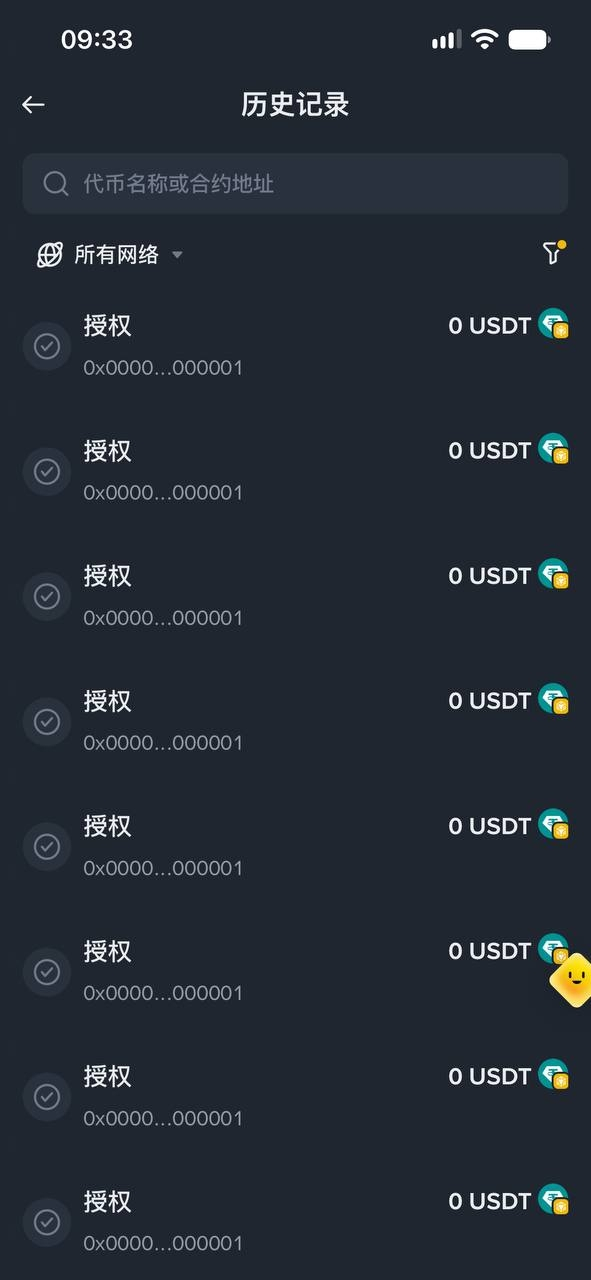
During that same time period, there were 12 USDT approvals to 0x0000…0001 across the entire blockchain.
Every single one was mine.
This wasn’t a mass scan. It was targeted at this Agent Wallet.
At this point, there’s only one question left:
I didn’t write the code, I didn’t perform the actions, and the scan didn’t find me.
What route did these 12 transactions come through?
Next episode: the posts that teach you how to make money with Agent Wallet.
#链上数据 #AI交易 $BNB
1
1
238
·
--
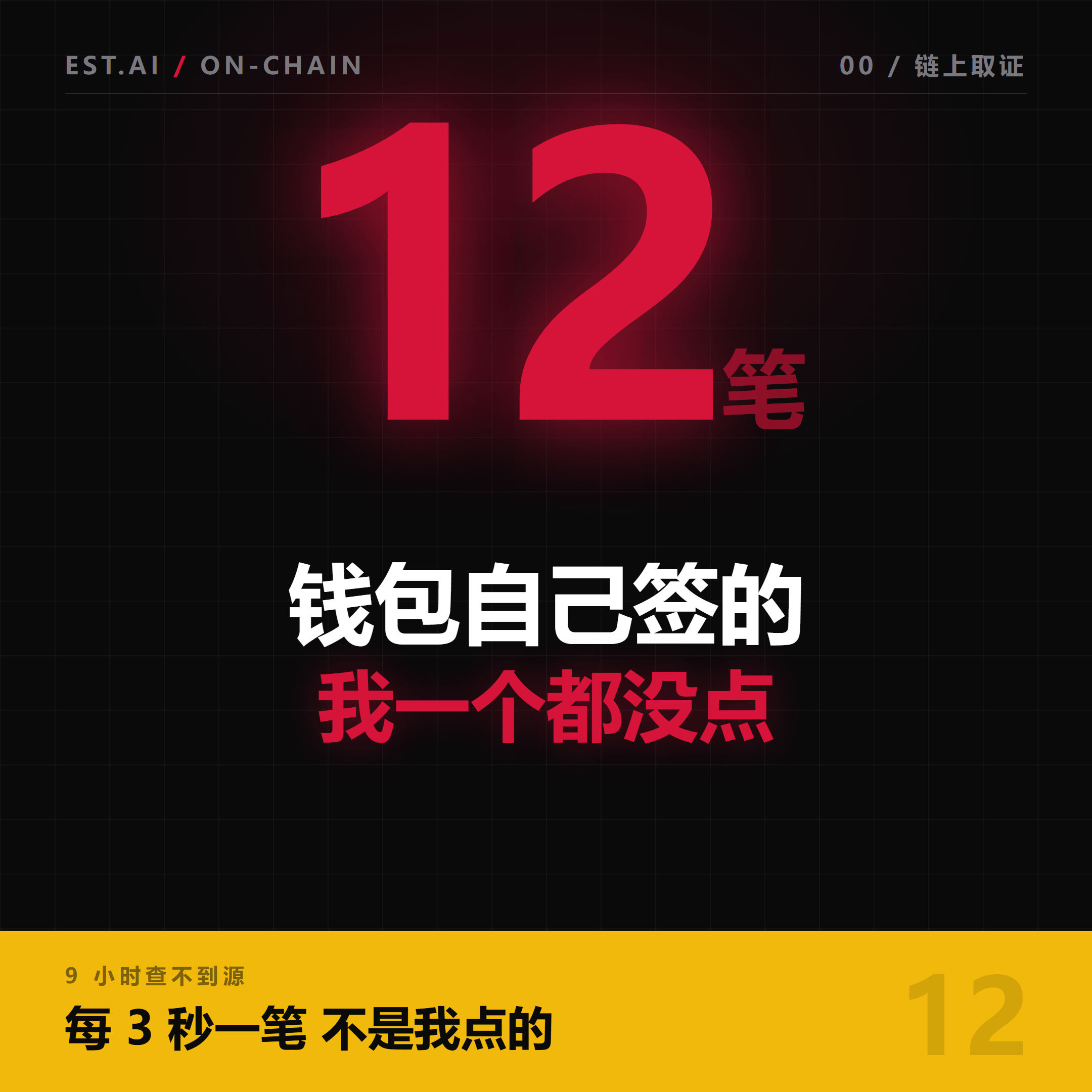
12 transactions. My Agent Wallet signed them itself. I didn't click a single one.
First, let's be clear about what this thing is.
An Agent Wallet is when you hand your wallet over to AI and let it trade on your behalf.
It doesn't need to ask you every time, because it holds the signing authority. You only need to authorize it once.
I used one for a month and thought it was pretty convenient.
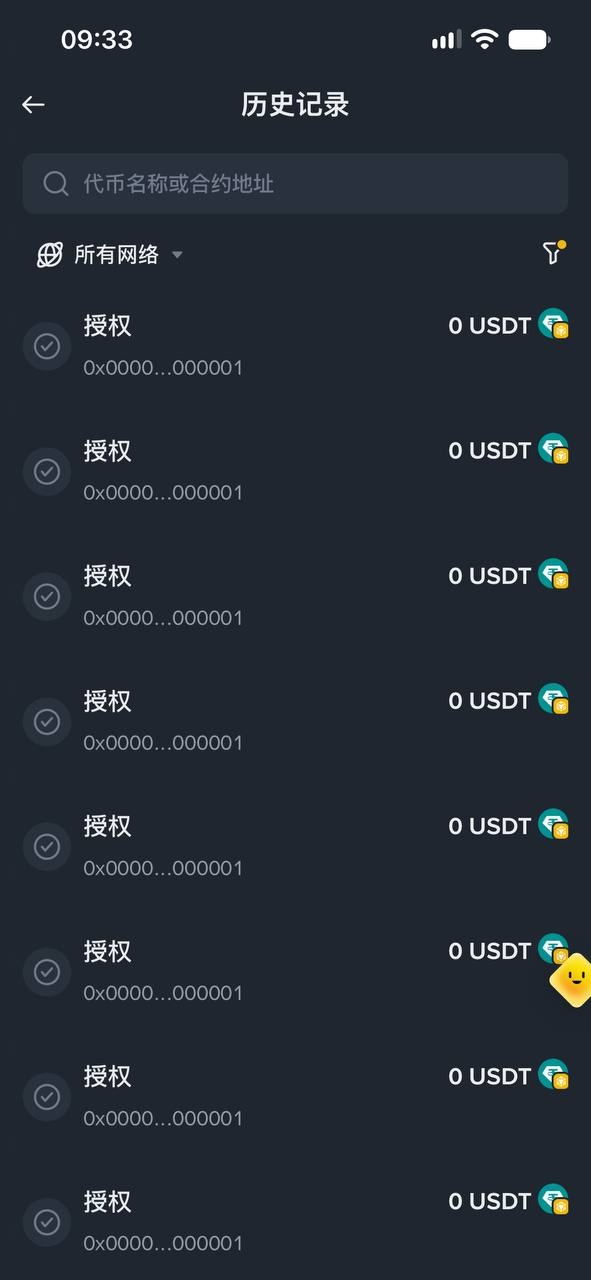
Now, open your Agent Wallet and tap the “Authorization History” section.
Do you also see a bunch of entries you don't remember approving?
I never opened it.
That is, until the evening of October 30, when a notification popped up on my phone:
This authorization carries a high risk.
My balance was 0.
What could a 0 USDT Agent Wallet possibly authorize?
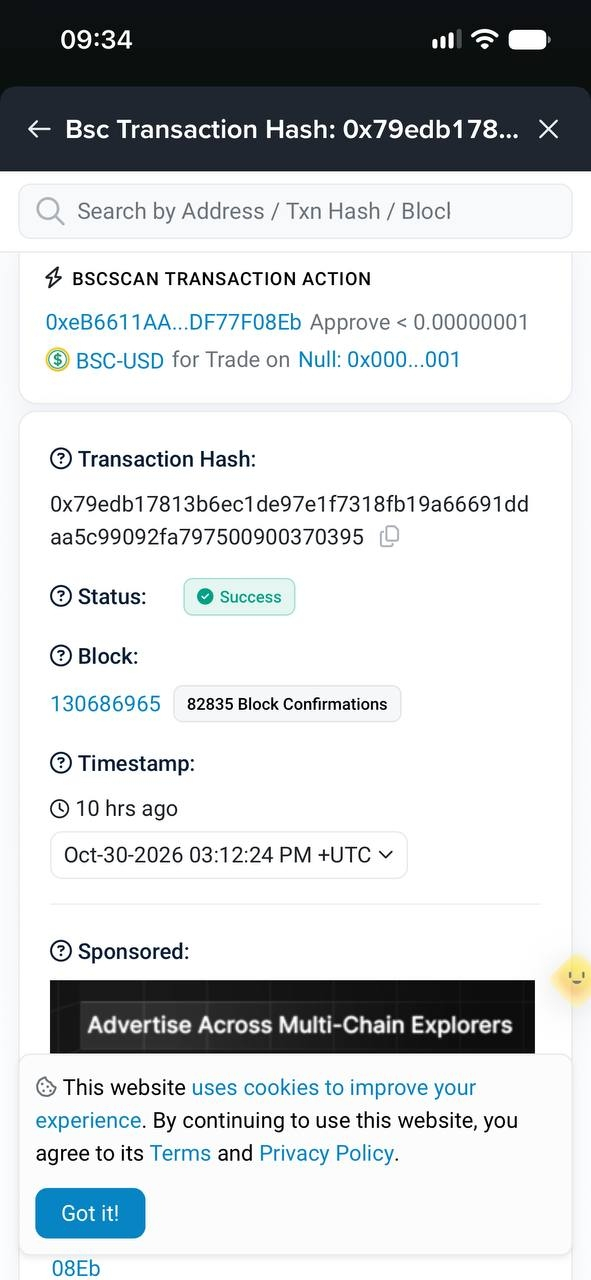
I tapped in. The recipient address was a string of zeros, with a 1 at the end.
The amount field said: 0 USDT.
I laughed at the time.
An authorization for 0 USDT was worth a red warning box?
Then I checked the blockchain.
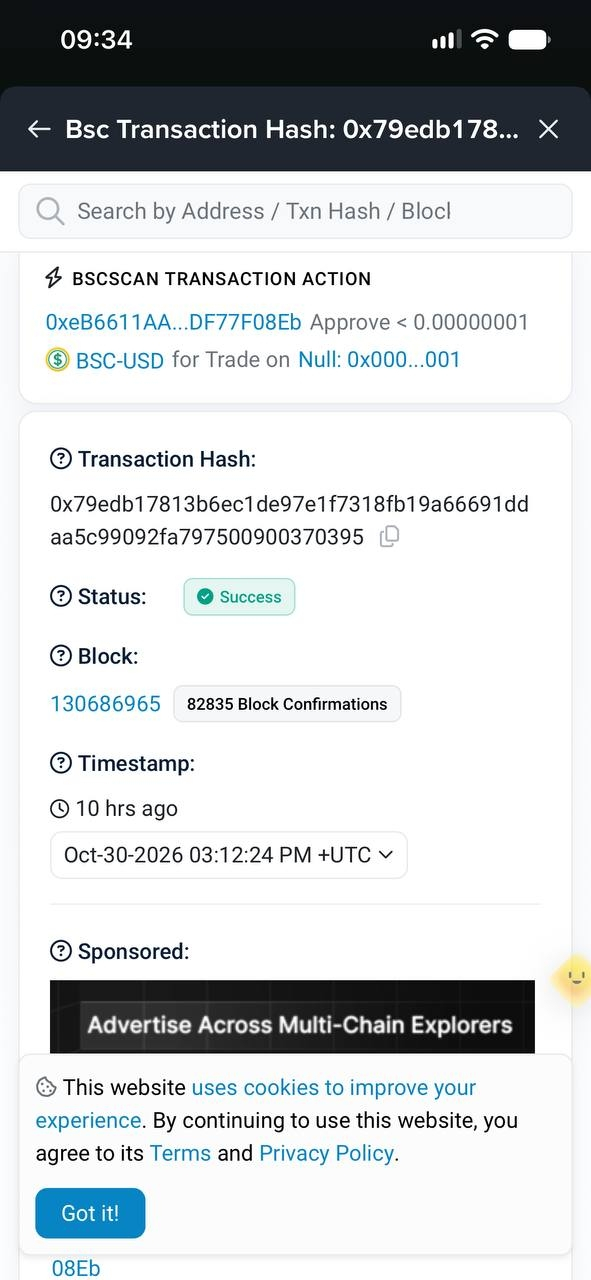
Those two transactions were real.
Block 130685065, 22:58:09, sent from my address.
gasPrice 0.0693, nonce 277.
I didn't click anything.
Two seconds later, the second transaction. nonce 278.
I started scrolling back.
By 23:18, there were 12 transactions in total.
All to the same address, all for 1 wei.
The nine transactions in between were one every 3 seconds.
Three seconds is enough time to blink twice.
No human could click that precisely. This was a program running.
It knew where my Agent Wallet was, knew how to make it sign, and knew when to stop.
The only thing it didn't know was that I would check the blockchain.
Now it's your turn to do something.
Open your Agent Wallet, tap “Authorization History,” and see if there's an entry with a recipient address made up of a string of zeros.
If there is, comment “Yes.”
If not, comment “No.”
I want to know how big this number really is.
#链上数据 #AI交易 $BNB
3
1
776
·
--
Since late on October 29, Binance’s hot wallet has seen unusually large outflows: the exchange first suspended withdrawals, then deposits, and also paused Alpha trading.
First, what’s still “unconfirmed”:
1. The total amount stolen hasn’t been established. Third-party estimates range from $5.8 billion (Conor Grogan) to $5.912 billion (Chainalysis, based on market prices at the time of the theft). Binance has not confirmed the total loss.
2. The point of entry hasn’t been established. Blockaid’s preliminary assessment is that the signing process was manipulated, rather than underlying credentials being leaked—this is an initial assessment, not a conclusion.
3. I haven’t found any evidence that ordinary users’ balances were touched. Binance says it will “cover all losses”; a post-mortem is still to come.
What has been reported:
The reported freeze amount changed three times within three hours—from $1.79 billion in on-chain monitoring, to $2.54 billion initially confirmed by Binance, then updated to $3 billion at 00:52 UTC on October 30.
Tether froze $1.567 billion in USDT, and Circle froze over $800 million in USDC—more than $2.3 billion combined.
Arbitrum’s Security Council froze $30.5 million ($74.6 million ARB + 8,425 ETH), which has been transferred to an intermediary frozen wallet.
World Liberty froze $27 million in USD1 + $2 million in WLFI.
Prices: BTC briefly hit $76,937 (-4.9%), BNB $693 (-8%), and ETH $2,211 (-5.7%); AAVE fell 11.3%, UNI 10.7%.
Three things to do now—not to buy the dip:
1. Don’t click any “official compensation/unfreeze” links sent by direct message. A phishing wave is bound to follow an incident like this within 24 hours. Official notices will only come through official channels; they won’t DM you asking for your account information.
2. While deposits and withdrawals are suspended, don’t keep trying small transfers. That will only make the queue worse; wait for the official notice that services have resumed.
3. Save a screenshot of your balance from before the suspension. If you need to file a claim, timestamped evidence is more useful than memory.
My own futures account is at 0, and my spot account is also at 0, so for me this is something to observe, not a profit-and-loss issue.
As the saying goes, your position size determines your state of mind. One thing to add today: when something goes wrong, what determines how much you lose isn’t your position size—it’s your first move.
$BNB #币安 #BlackSwan
4
3.6k
·
--
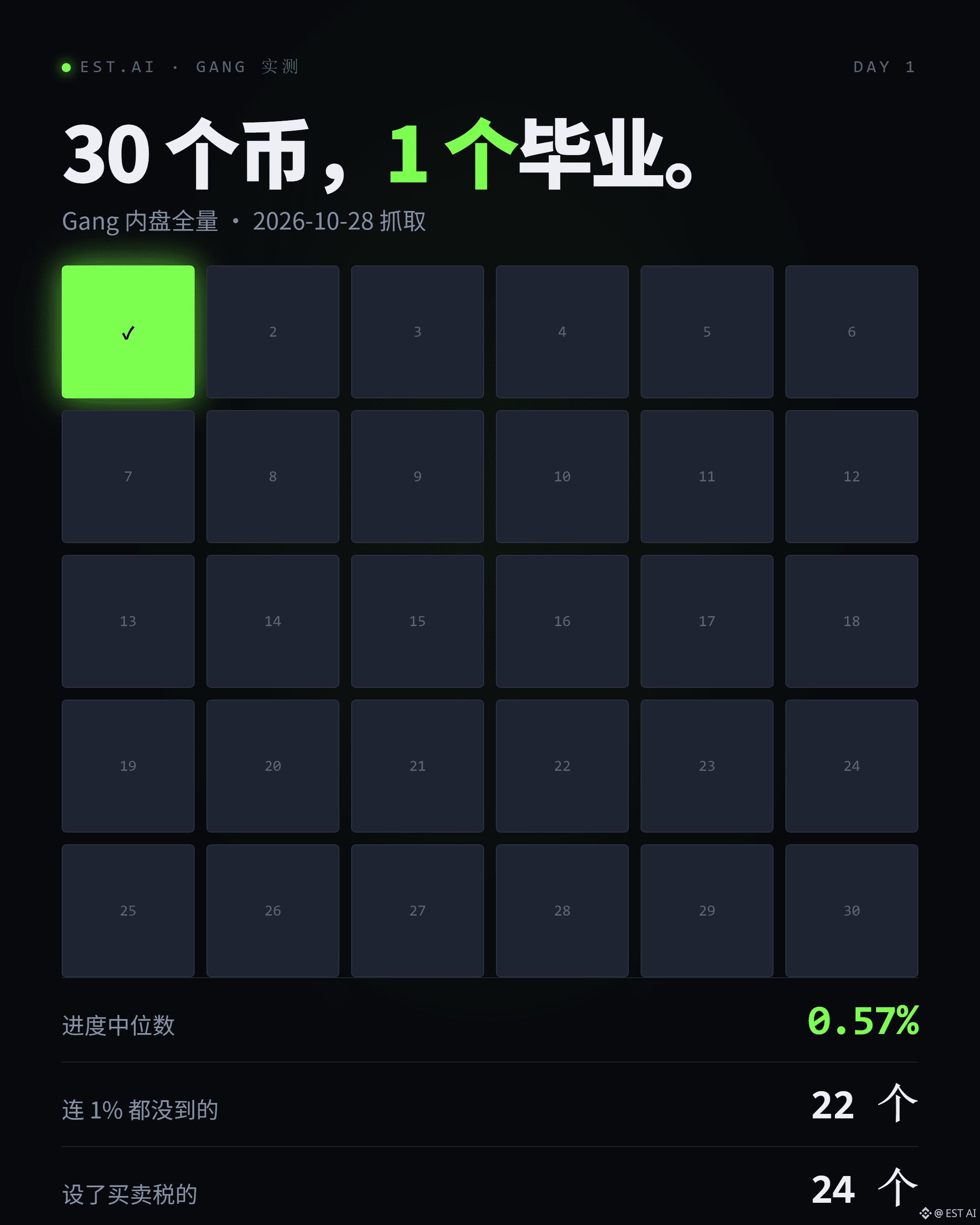
On Gang’s first day, 30 coins launched. One graduated.
One graduated. The other 29 are still stuck on the bonding curve.
Median progress: 0.57%.
22 coins haven’t even reached 1%.
Gang is currently the launchpad with the highest barrier to entry. The bonding curve is only open to wallets holding an .ai Agent ID. Each wallet can buy at most 1%, and there’s a 1% fee on both buys and sells.
In theory, this is the most qualified group of participants: they have on-chain identities and wallet access. They’re not throwaway accounts created just to farm.
And yet on day one, median progress was under 1%.
I don’t think this means Gang is bad. It points to something more fundamental.
A launchpad has never run on identity. It runs on money.
Of the 30 coins, 24 set buy and sell taxes, and 11 enabled revenue sharing. The more carefully the parameters are set, the more it feels like they’re waiting for someone who’s never coming.
One graduated, reaching 15 BNB and entering the pool.
One out of 30.
It’s only day one. But the first day is often the most honest, because nobody knows what to farm yet.
A launchpad with the highest barrier to entry put up these numbers on day one. Would you use it?
$BNB #ai交易 #aipro
1.2k
·
--
Someone told me you can start trading once 10,000 units have been minted.
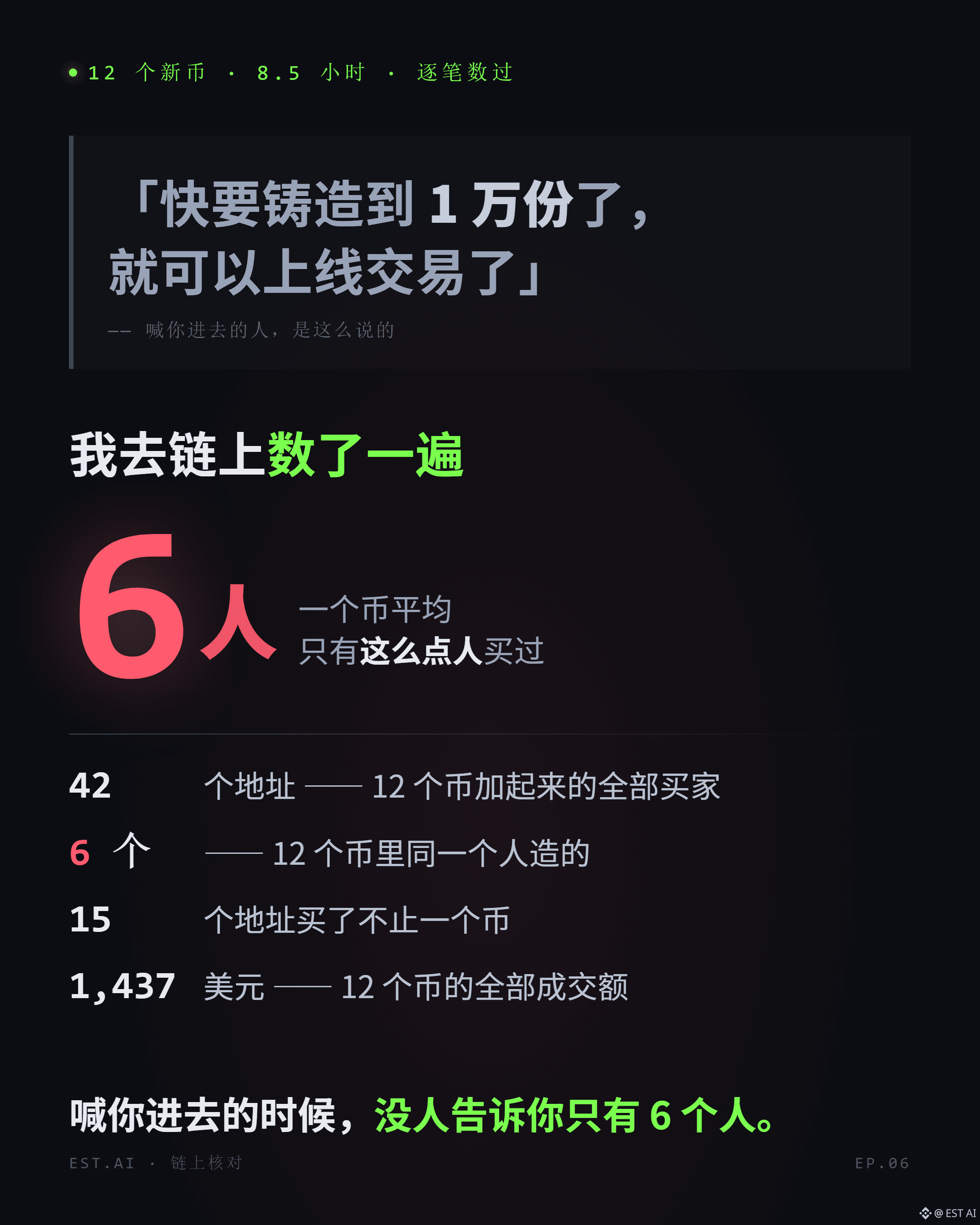
I looked at 12 coins launched in the last eight and a half hours.
There were 42 buyers in total. On average, just 6 addresses bought each coin.
Across all 12 coins, there were 102 buys totaling $1,437. Half of the buys were under $4.
At the coin’s stated price of $10 per unit, 10,000 units would be worth $100,000.
These 12 coins are still $98,000 short of that.
The best one had 27 buys totaling $604—not even close.
12 coins launched in 8 hours, and 6 of them were created by the same address.
This template only opens a liquidity pool once it reaches 10,000 units, so the fact that there’s no pool yet doesn’t tell us much. The real issue is that all 12 coins combined have only reached 1.44% of that target.
So “limited spots” should be read the other way around—at least among these 12, it’s not spots that are scarce, but buyers.
I didn’t ask around for inside info. I just counted the buy transactions for each coin. Took 20 minutes.
When you see “almost sold out” in a group chat, check three numbers first: number of buys, median buy size, and how many coins the creator address has minted.
Once you have those three numbers, you can decide for yourself whether it’s worth buying.
Would you wait, or check first?
$BNB #ai交易 #aipro
5
3
9.7k
·
--
Someone posted six contract addresses for “Free Agent Mint.”
All you need is an .ai Agent ID. The payment amount is 0—you only pay gas. They’ve all minted already.
The last line says: Check the contract yourself before minting. Don’t follow blindly.
Okay. I’ll check.
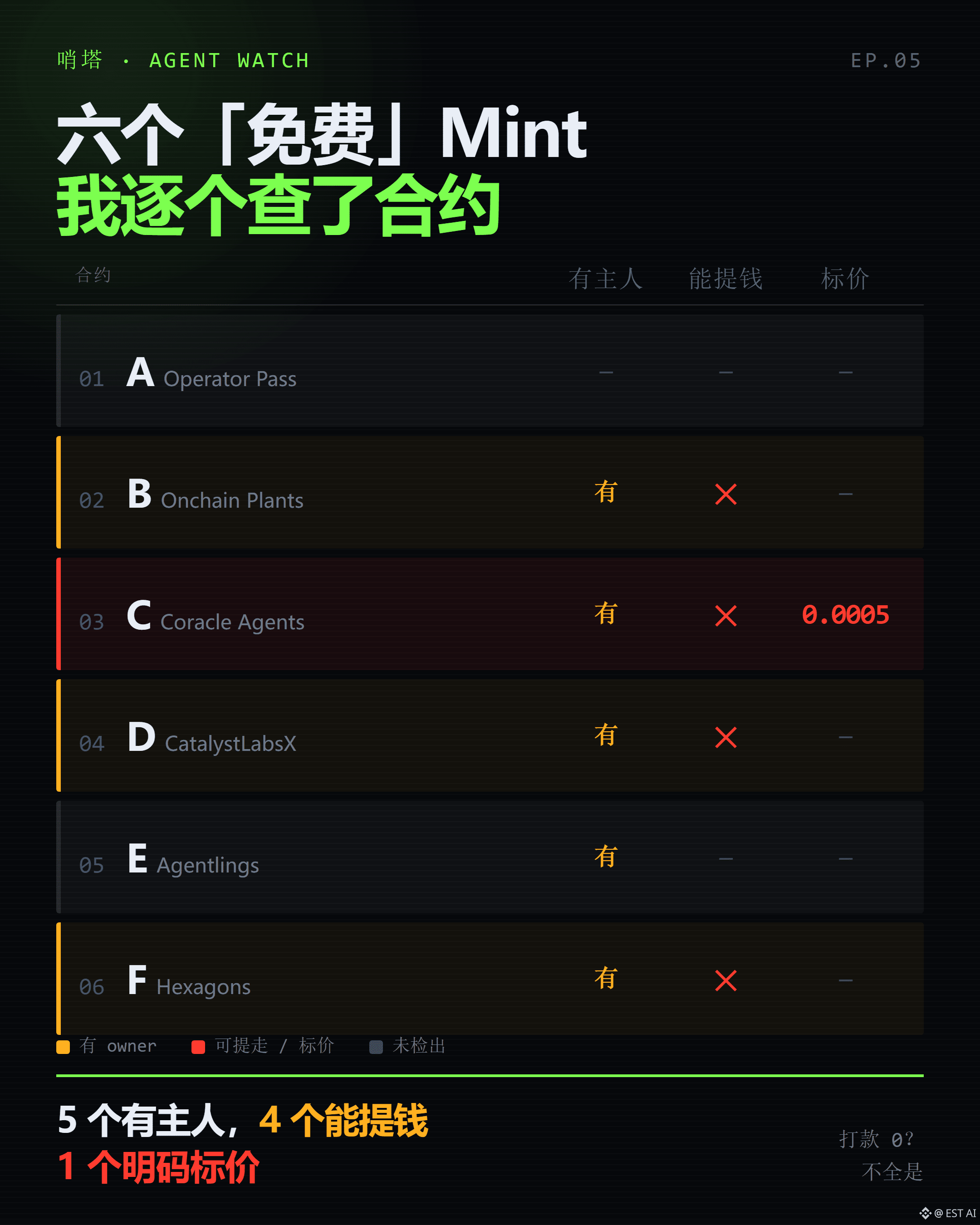
Six addresses. I read each contract one by one.
First finding: five contracts have no price listed. **One explicitly charges 0.0005 BNB.**
About half a dollar. Not much.
But the claim “payment amount: 0” doesn’t hold for this address.
This isn’t a scam; it’s a matter of wording. The price written in the contract and the claim in the post differ by one number.
Now for the part that matters more.
Of the six contracts, **five have an owner**.
Four include withdraw()—the owner can withdraw the balance from the contract.
Five include transferOwnership()—the owner can hand control to someone else.
One includes setBaseURI()—all the images can be changed at any time.
One includes pause and unpause—minting can be stopped at any time.
These are all standard features in NFTs, built into OpenZeppelin. I’m not using them to condemn anything.
But they do tell us one thing: none of these six contracts is the kind where “the code is fixed and nobody can change anything.”
The name, images, price, and controls are all in someone’s hands.
She says, “Check the contract yourself before minting.” The things above are exactly what you should check in a contract. Not one of them was mentioned in her post.
And there’s another layer, more direct than any of the data.
At the end of the post, there’s a line: Do something, get something in return.
An action in exchange for something.
You don’t need to check the chain to understand that. It’s right there in the words.
At least you can look up who owns the contract.
But what’s written plainly is an exchange you’re being asked to make yourself, voluntarily.
I don’t judge people. I just read the numbers.
Six contracts: one with a listed price, five with owners, four that can withdraw funds.
The “free” part is true—the payment really is close to zero.
But free has never meant costless.
The cost you pay is a signature, an Agent ID, a vote, and your trust in the word “free” itself.
The last one is the most expensive—and nobody can give it back to you.
Watchtower · AGENT WATCH
$BNB #ai交易 #aipro #On-chain data
1
774
Log in to explore more content
Join global crypto users on Binance Square
⚡️ Get latest and useful information about crypto.
💬 Trusted by the world’s largest crypto exchange.
👍 Discover real insights from verified creators.
Email / Phone number
Trending Topics
BinanceReopensWithdrawalsForMoreAssets
594,863 views
2,806 Discussing
Security Incident | Recovery Update #8: Withdrawals for More Assets to Reopen (2026-11-05)
Binance Announcement
·112 Likes
·314.8k views
BTCRebounds80K
116,903 views
1,150 Discussing
Binance98PercentReplenished
62,198 views
804 Discussing