Binance Square
Mù 穆涵
3.8k Posts

Mù 穆涵

x:@mu121472
237 Following
17.1K+ Followers
12.0K+ Liked
Posts
·
--
Verified
$STAR $GPS $DUSK #dusk @Dusk_Foundation Dusk's 80/10/5/5 isn't real here's what's actually in the block reward I was checking my rewards this morning around 10–11 and the split looked different from what I remembered, so I pulled up the staking dashboard and went back to the tokenomics page. The line that caught me was: "70% + up to 10%." The block generator gets a fixed 70%. That extra 10% isn't guaranteed — it depends on credits included in the certificate. And if part of it isn't distributed, Dusk burns it. So the usual shorthand: 80% → block generator 10% → development 5% → validation 5% → ratification misses an important condition. The actual structure is: 70% → fixed block-generator share up to 10% → conditional block-generator share 10% → development 5% → validation 5% → ratification The part I found interesting is where the unused reward goes: nowhere. It isn't redirected to another committee or the development fund. It's burned. It reminded me of how airline miles work. You earn a base rate on every ticket, guaranteed. But bonus miles — the ones tied to fare class or promo conditions — only land if you actually meet the condition. Miss it, and that bonus doesn't roll over to next time. It's just gone. Dusk's certificate-based 10% works the same way: conditional, and unclaimed by default. That matters against the bigger picture. Dusk is scheduled to emit 500M DUSK for staking rewards over 36 years, on a fixed decay curve. The headline schedule only tells you what can be emitted. This mechanism quietly decides how much of that actually gets distributed. A small, structural deflationary pressure, sitting inside what looks like a straightforward inflation model. What the docs don't spell out: what exactly earns those certificate credits, and how often a provisioner captures the full extra 10% versus losing part of it to the burn. I opened the dashboard expecting a simple reward split. I found a conditional one instead. 🧐 {future}(GPSUSDT) What do you think of Dusk’s conditional 10% reward?
$STAR $GPS $DUSK #dusk @Dusk
Dusk's 80/10/5/5 isn't real here's what's actually in the block reward

I was checking my rewards this morning around 10–11 and the split looked different from what I remembered, so I pulled up the staking dashboard and went back to the tokenomics page.

The line that caught me was: "70% + up to 10%."

The block generator gets a fixed 70%. That extra 10% isn't guaranteed — it depends on credits included in the certificate. And if part of it isn't distributed, Dusk burns it.

So the usual shorthand:

80% → block generator
10% → development
5% → validation
5% → ratification

misses an important condition. The actual structure is:

70% → fixed block-generator share
up to 10% → conditional block-generator share
10% → development
5% → validation
5% → ratification

The part I found interesting is where the unused reward goes: nowhere. It isn't redirected to another committee or the development fund. It's burned.

It reminded me of how airline miles work. You earn a base rate on every ticket, guaranteed. But bonus miles — the ones tied to fare class or promo conditions — only land if you actually meet the condition. Miss it, and that bonus doesn't roll over to next time. It's just gone. Dusk's certificate-based 10% works the same way: conditional, and unclaimed by default.

That matters against the bigger picture. Dusk is scheduled to emit 500M DUSK for staking rewards over 36 years, on a fixed decay curve.

The headline schedule only tells you what can be emitted. This mechanism quietly decides how much of that actually gets distributed. A small, structural deflationary pressure, sitting inside what looks like a straightforward inflation model.

What the docs don't spell out: what exactly earns those certificate credits, and how often a provisioner captures the full extra 10% versus losing part of it to the burn.

I opened the dashboard expecting a simple reward split. I found a conditional one instead. 🧐

What do you think of Dusk’s conditional 10% reward?
🔥 Good incentive design
🤔 Too complicated
👀 Need more data
🧐 Not sure yet
9 hr(s) left
Verified
$HEMI $COW $DUSK {future}(DUSKUSDT) {future}(COWUSDT) {future}(HEMIUSDT) I was looking at Dusk’s node security docs and one detail made me stop. Dusk recommends separating the consensus key from the owner key: the node uses the consensus key to vote and sign blocks, while only the owner key can unstake or withdraw the stake. That sounds like a clean security boundary. But then I noticed the important part: Dusk says the separate owner key can be another address derived from the same mnemonic, and the setup is most effective when that mnemonic is not stored on the server. The node itself only needs the consensus key file. So the interesting security boundary may not actually be “two keys” — it’s really about where the recovery secret lives, and what each key can and can’t do if compromised. If an attacker compromises the node but never gets the mnemonic or owner key, they can’t withdraw the stake. But they can still control the consensus key — which creates a different risk: consensus-level penalties for invalid or conflicting votes. The owner key protects the principal from direct withdrawal, but it can’t prevent consensus-level penalties if the consensus key is compromised. That’s a meaningfully different risk profile than simply thinking “two keys = safe.” Does Dusk’s documented slashing-recovery process fully address a compromised consensus key, or is key rotation still the main practical response? #dusk @Dusk_Foundation What’s the bigger risk? 👀
$HEMI $COW $DUSK


I was looking at Dusk’s node security docs and one detail made me stop.

Dusk recommends separating the consensus key from the owner key: the node uses the consensus key to vote and sign blocks, while only the owner key can unstake or withdraw the stake.

That sounds like a clean security boundary.

But then I noticed the important part: Dusk says the separate owner key can be another address derived from the same mnemonic, and the setup is most effective when that mnemonic is not stored on the server. The node itself only needs the consensus key file.

So the interesting security boundary may not actually be “two keys” — it’s really about where the recovery secret lives, and what each key can and can’t do if compromised.

If an attacker compromises the node but never gets the mnemonic or owner key, they can’t withdraw the stake. But they can still control the consensus key — which creates a different risk: consensus-level penalties for invalid or conflicting votes.

The owner key protects the principal from direct withdrawal, but it can’t prevent consensus-level penalties if the consensus key is compromised.

That’s a meaningfully different risk profile than simply thinking “two keys = safe.”

Does Dusk’s documented slashing-recovery process fully address a compromised consensus key, or is key rotation still the main practical response?
#dusk @Dusk

What’s the bigger risk? 👀
🪙 Losing the stake
100%
⚡ Getting slashed
0%
🔑 Key compromise
0%
🛡️ Both
0%
1 votes • Voting closed
$AKE $ACE $DUSK #dusk @Dusk_Foundation I used to think “private blockchain” meant nobody sees anything, full stop. Then I tried moving funds between two accounts for a small OTC deal and realized I had no idea which model to even use — and honestly panicked for a second thinking I’d picked the wrong one and my counterparty would see an amount I didn’t want shown. 😅 Turns out DuskDS gives you two native transaction models: Moonlight for public transfers and Phoenix for shielded ones — and picking wrong isn’t the disaster I imagined, since each one is doing an intentional job. With Moonlight, it’s like a bank transfer — sender, recipient, amount, all visible on a statement anyone with access can pull up. Phoenix is closer to paying cash — funds sit as encrypted notes, and zero-knowledge proofs confirm the transaction is valid without showing the amount, sender, or which notes moved. What caught me is that Dusk doesn’t force one visibility model onto everything. The same settlement layer carries a flow that needs to be seen and one that needs to stay shielded, side by side. And Phoenix isn’t “nothing can ever be disclosed” — viewing keys let authorized parties see the details when auditing or regulation actually requires it. So my “what if my counterparty sees the wrong thing” panic wasn’t really the right worry — the real question is who’s authorized to see it, not whether it’s visible by default. The real privacy question isn’t “can blockchain hide everything?” It’s “who gets to see what, and when?” If regulated finance needs both transparency and confidentiality, is choosing the visibility model at the transaction level the better approach? Privacy or transparency? 👀 {future}(DUSKUSDT) {future}(ACEUSDT)
$AKE $ACE $DUSK #dusk @Dusk

I used to think “private blockchain” meant nobody sees anything, full stop. Then I tried moving funds between two accounts for a small OTC deal and realized I had no idea which model to even use — and honestly panicked for a second thinking I’d picked the wrong one and my counterparty would see an amount I didn’t want shown. 😅

Turns out DuskDS gives you two native transaction models: Moonlight for public transfers and Phoenix for shielded ones — and picking wrong isn’t the disaster I imagined, since each one is doing an intentional job.

With Moonlight, it’s like a bank transfer — sender, recipient, amount, all visible on a statement anyone with access can pull up. Phoenix is closer to paying cash — funds sit as encrypted notes, and zero-knowledge proofs confirm the transaction is valid without showing the amount, sender, or which notes moved.

What caught me is that Dusk doesn’t force one visibility model onto everything. The same settlement layer carries a flow that needs to be seen and one that needs to stay shielded, side by side.

And Phoenix isn’t “nothing can ever be disclosed” — viewing keys let authorized parties see the details when auditing or regulation actually requires it. So my “what if my counterparty sees the wrong thing” panic wasn’t really the right worry — the real question is who’s authorized to see it, not whether it’s visible by default.

The real privacy question isn’t “can blockchain hide everything?” It’s “who gets to see what, and when?”

If regulated finance needs both transparency and confidentiality, is choosing the visibility model at the transaction level the better approach?

Privacy or transparency? 👀
🔐 Privacy by default
100%
👁️ Controlled transparency
0%
⚖️ A balance of both
0%
🤔 Depends on the use case
0%
2 votes • Voting closed
Verified
I used to share my full KYC docs passport, address, income proof every time a platform needed to verify I was eligible to invest. Last month, one of those platforms got breached. My data wasn’t even the target, it just sat there, exposed, because “verify once” meant “store everywhere.” Looking deeper into @DuskFoundation, I realized the real question isn’t privacy vs compliance. It’s what actually needs to be disclosed. Citadel is Dusk’s identity and access layer. Here’s the mechanism: a trusted License Provider checks your attributes (eligibility, residency, accreditation) offchain, then issues a signed credential. When a service needs proof, you generate a zero-knowledge proof from that credential — confirming the attribute without revealing your wallet, your identity, or the underlying data. That changes the trade-off. The goal isn’t making regulated finance opaque. It’s making disclosure intentional prove what’s needed, keep the rest private. Maybe the real innovation isn’t hiding data. It’s deciding exactly what needs to become provable. In that model, a compromised credential could be revoked without turning the underlying identity data into another permanent exposure. Would you trust a credential system enough to stop uploading full KYC docs everywhere? $DUSK #dusk @Dusk_Foundation $AKE {future}(AKEUSDT) {future}(DUSKUSDT)
I used to share my full KYC docs passport, address, income proof every time a platform needed to verify I was eligible to invest. Last month, one of those platforms got breached. My data wasn’t even the target, it just sat there, exposed, because “verify once” meant “store everywhere.”

Looking deeper into @DuskFoundation, I realized the real question isn’t privacy vs compliance. It’s what actually needs to be disclosed.

Citadel is Dusk’s identity and access layer. Here’s the mechanism: a trusted License Provider checks your attributes (eligibility, residency, accreditation) offchain, then issues a signed credential. When a service needs proof, you generate a zero-knowledge proof from that credential — confirming the attribute without revealing your wallet, your identity, or the underlying data.

That changes the trade-off. The goal isn’t making regulated finance opaque. It’s making disclosure intentional prove what’s needed, keep the rest private.

Maybe the real innovation isn’t hiding data. It’s deciding exactly what needs to become provable.

In that model, a compromised credential could be revoked without turning the underlying identity data into another permanent exposure.

Would you trust a credential system enough to stop uploading full KYC docs everywhere?

$DUSK #dusk @Dusk $AKE
·
--
Bearish
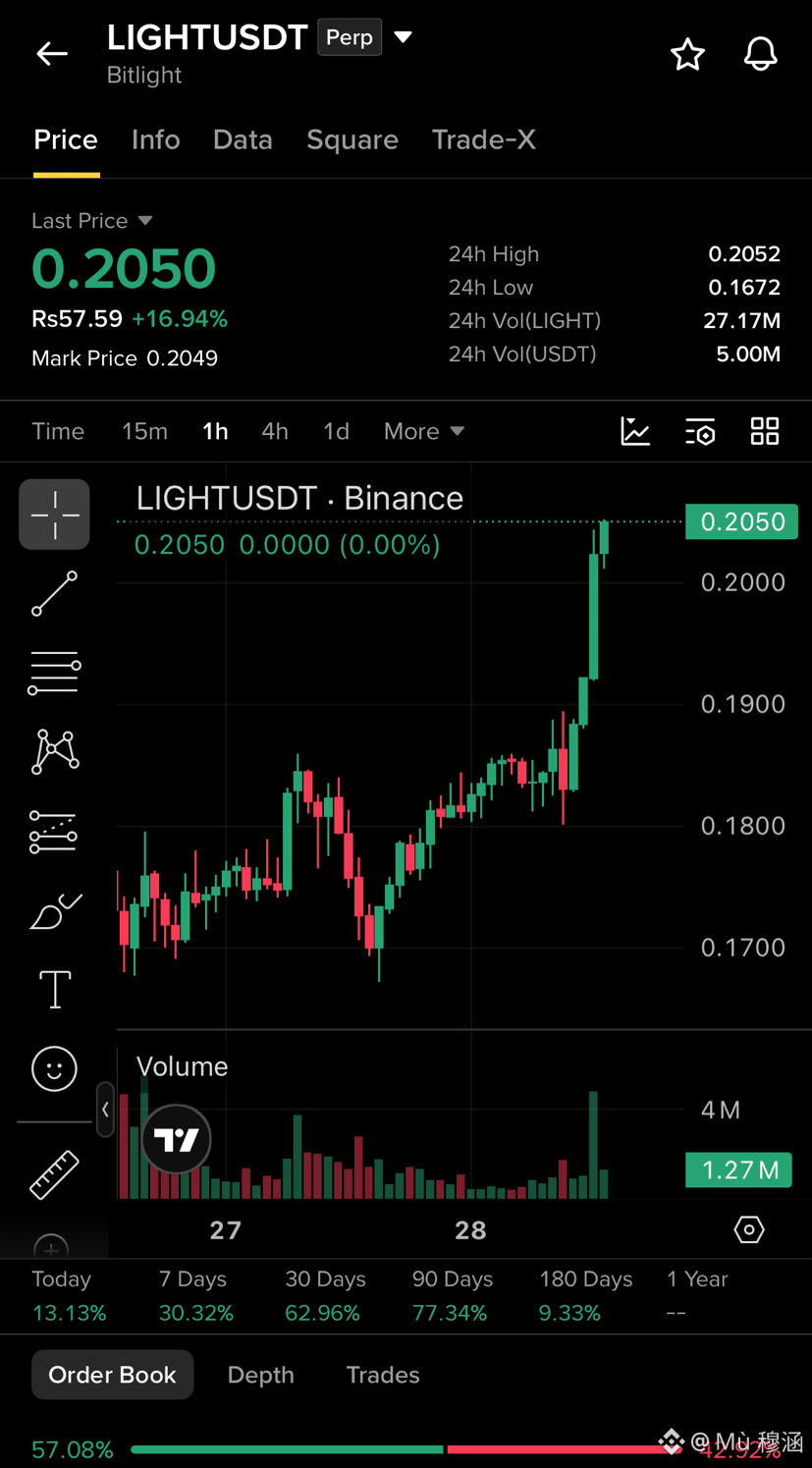
$LIGHT /USDT – SHORT 📉 The breakout is strong, but price is now stretched into fresh resistance. The key is whether buyers can hold the 0.1800–0.1840 area after this volume spike. Trade Plan: Entry: 0.1785 – 0.1830 SL: 0.1885 TP1: 0.1726 TP2: 0.1650 TP3: 0.1577 Why this setup? - $LIGHT just printed a sharp vertical move from the 0.15 zone, pushing into a fresh high at 0.1841. - The breakout candle came with a major volume expansion, so chasing here carries higher pullback risk. - 0.1840 is the immediate resistance; a rejection from this area could trigger profit-taking toward the previous breakout zone. - A move back below 0.1785 would strengthen the short setup and open the path toward 0.1726, then 0.1650. - The short thesis is invalidated if price cleanly reclaims 0.1885 after the breakout. Debate: Is $LIGHT preparing for another leg higher, or is this breakout finally due for a cooldown? 👀📉 {future}(LIGHTUSDT) #write2earn
$LIGHT /USDT – SHORT 📉

The breakout is strong, but price is now stretched into fresh resistance. The key is whether buyers can hold the 0.1800–0.1840 area after this volume spike.

Trade Plan:

Entry: 0.1785 – 0.1830
SL: 0.1885

TP1: 0.1726
TP2: 0.1650
TP3: 0.1577

Why this setup?

- $LIGHT just printed a sharp vertical move from the 0.15 zone, pushing into a fresh high at 0.1841.
- The breakout candle came with a major volume expansion, so chasing here carries higher pullback risk.
- 0.1840 is the immediate resistance; a rejection from this area could trigger profit-taking toward the previous breakout zone.
- A move back below 0.1785 would strengthen the short setup and open the path toward 0.1726, then 0.1650.
- The short thesis is invalidated if price cleanly reclaims 0.1885 after the breakout.

Debate:

Is $LIGHT preparing for another leg higher, or is this breakout finally due for a cooldown? 👀📉
#write2earn
·
--
Bearish
Not every sharp rally deserves to be chased. Sometimes the strongest move is the rejection that follows exhaustion. $RIVER /USDT – SHORT Trade Plan: Entry: 3.08 – 3.13 SL: 3.33 TP1: 2.95 TP2: 2.80 TP3: 2.62 Why this setup? - After an explosive rally from the 2.46 region to 3.49, momentum has started to fade as heavy selling pressure appeared near the highs. - The 1H chart is printing a lower high after rejection, while MA(7) is beginning to roll over, signaling weakening bullish momentum. - Price is attempting to hold above MA(25), but repeated failures to reclaim the 3.20–3.30 area keep sellers in control. - A break below the 3.00 psychological level could trigger another wave of liquidation, making 2.95 the first downside target before extending toward 2.80 and 2.62. - The bearish setup remains valid unless buyers reclaim and close above 3.33, offering an attractive risk-to-reward for a continuation short. Debate: Is this just a healthy pullback before another push higher, or the beginning of a deeper correction after an overheated rally? 👇 #write2earn {future}(RIVERUSDT)
Not every sharp rally deserves to be chased. Sometimes the strongest move is the rejection that follows exhaustion.

$RIVER /USDT – SHORT

Trade Plan:

Entry: 3.08 – 3.13
SL: 3.33

TP1: 2.95
TP2: 2.80
TP3: 2.62

Why this setup?

- After an explosive rally from the 2.46 region to 3.49, momentum has started to fade as heavy selling pressure appeared near the highs.
- The 1H chart is printing a lower high after rejection, while MA(7) is beginning to roll over, signaling weakening bullish momentum.
- Price is attempting to hold above MA(25), but repeated failures to reclaim the 3.20–3.30 area keep sellers in control.
- A break below the 3.00 psychological level could trigger another wave of liquidation, making 2.95 the first downside target before extending toward 2.80 and 2.62.
- The bearish setup remains valid unless buyers reclaim and close above 3.33, offering an attractive risk-to-reward for a continuation short.

Debate:

Is this just a healthy pullback before another push higher, or the beginning of a deeper correction after an overheated rally? 👇
#write2earn
·
--
Bullish
Most traders are chasing the breakout, but the strongest trends often reward those who buy the first healthy pullback—not the last green candle. $ALICE /USDT – LONG Trade Plan: Entry: 0.1218 – 0.1233 SL: 0.1170 TP1: 0.1260 TP2: 0.1305 TP3: 0.1360 Why this setup? - The 4H chart has shifted into a bullish structure after breaking above the MA(25) and reclaiming the MA(99), signaling that buyers have regained control of the higher-timeframe trend. - Price is holding above the MA(7), while the recent surge in volume confirms that the breakout was supported by genuine buying interest rather than a low-volume spike. - The 0.1218–0.1233 area is acting as a key retest zone. As long as buyers defend this region, the latest pullback looks like profit-taking instead of a bearish reversal. - A clean move above the recent high at 0.1253 could trigger breakout momentum and short liquidations, opening the path toward 0.1305 and eventually 0.1360. - The setup remains valid above 0.1170, offering a favorable risk-to-reward profile while the sequence of higher highs and higher lows continues to strengthen. Debate: Would you buy this pullback into support, or wait for a confirmed breakout above 0.1253 before entering the next leg higher? #alice {future}(ALICEUSDT)
Most traders are chasing the breakout, but the strongest trends often reward those who buy the first healthy pullback—not the last green candle.

$ALICE /USDT – LONG

Trade Plan:

Entry: 0.1218 – 0.1233
SL: 0.1170

TP1: 0.1260
TP2: 0.1305
TP3: 0.1360

Why this setup?

- The 4H chart has shifted into a bullish structure after breaking above the MA(25) and reclaiming the MA(99), signaling that buyers have regained control of the higher-timeframe trend.
- Price is holding above the MA(7), while the recent surge in volume confirms that the breakout was supported by genuine buying interest rather than a low-volume spike.
- The 0.1218–0.1233 area is acting as a key retest zone. As long as buyers defend this region, the latest pullback looks like profit-taking instead of a bearish reversal.
- A clean move above the recent high at 0.1253 could trigger breakout momentum and short liquidations, opening the path toward 0.1305 and eventually 0.1360.
- The setup remains valid above 0.1170, offering a favorable risk-to-reward profile while the sequence of higher highs and higher lows continues to strengthen.

Debate:

Would you buy this pullback into support, or wait for a confirmed breakout above 0.1253 before entering the next leg higher?

#alice
Everyone's focused on the recent pullback, but the bigger picture still favors the bulls as long as the breakout structure remains intact. $ACT has cooled off after an explosive rally from around $0.0088 to a local high near $0.0116, with the breakout backed by a clear surge in trading volume. The current retracement toward the $0.0103 area looks more like profit-taking than a change in trend, while buyers continue defending the previous breakout zone. My Take: If $0.0102–$0.0103 continues to hold, I expect bullish momentum to rebuild. A reclaim of $0.0110 would likely put $0.0116 back in focus, and a decisive break above that resistance could trigger the next leg toward the $0.0120–$0.0125 region. On the other hand, losing the $0.0102 support would weaken the short-term structure and increase the probability of a deeper retracement into the $0.0096–$0.0098 demand zone before buyers attempt another recovery. For now, the overall market structure remains bullish, but this support level is the key battlefield. I'll be watching volume and buyer reaction closely to determine whether this is simply a healthy pullback or the start of a larger correction. **Debate:** Are you accumulating this pullback, or waiting for a confirmed breakout above $0.0116 before entering the next trade? 📈🚀 #write2earn {future}(ACTUSDT)
Everyone's focused on the recent pullback, but the bigger picture still favors the bulls as long as the breakout structure remains intact.

$ACT has cooled off after an explosive rally from around $0.0088 to a local high near $0.0116, with the breakout backed by a clear surge in trading volume. The current retracement toward the $0.0103 area looks more like profit-taking than a change in trend, while buyers continue defending the previous breakout zone.

My Take:

If $0.0102–$0.0103 continues to hold, I expect bullish momentum to rebuild. A reclaim of $0.0110 would likely put $0.0116 back in focus, and a decisive break above that resistance could trigger the next leg toward the $0.0120–$0.0125 region.

On the other hand, losing the $0.0102 support would weaken the short-term structure and increase the probability of a deeper retracement into the $0.0096–$0.0098 demand zone before buyers attempt another recovery.

For now, the overall market structure remains bullish, but this support level is the key battlefield. I'll be watching volume and buyer reaction closely to determine whether this is simply a healthy pullback or the start of a larger correction.

**Debate:**

Are you accumulating this pullback, or waiting for a confirmed breakout above $0.0116 before entering the next trade? 📈🚀

#write2earn
·
--
Bearish
Most traders are buying every dip, but the 4H chart is beginning to show signs of exhaustion after failing to hold above key resistance. $BNB /USDT – SHORT Trade Plan: Entry: 587.50 – 590.50 SL: 599.80 TP1: 579.50 TP2: 572.00 TP3: 562.50 Why this setup? - The 4H structure has weakened after a clear rejection from the 605.50 swing high, with sellers regaining control below the recent resistance zone. - Price has slipped beneath both the MA(7) and MA(25), while momentum continues to fade, suggesting the latest recovery was corrective rather than the start of a new bullish leg. - The 588–590 area is now acting as an intraday supply zone. Unless buyers reclaim it with strong volume, rallies into this region are likely to attract fresh selling. - A breakdown below current support opens the door to the 579.50 liquidity zone first, with further downside toward 572.00 and 562.50 if bearish pressure accelerates. - The bearish outlook remains valid while price stays below 599.80, offering a favorable risk-to-reward setup in line with the current 4H trend. Debate: Would you short the rejection below 590, or wait for a retest of the 598 resistance before looking for confirmation? {future}(BNBUSDT) #write2earn
Most traders are buying every dip, but the 4H chart is beginning to show signs of exhaustion after failing to hold above key resistance.

$BNB /USDT – SHORT

Trade Plan:

Entry: 587.50 – 590.50
SL: 599.80

TP1: 579.50
TP2: 572.00
TP3: 562.50

Why this setup?

- The 4H structure has weakened after a clear rejection from the 605.50 swing high, with sellers regaining control below the recent resistance zone.
- Price has slipped beneath both the MA(7) and MA(25), while momentum continues to fade, suggesting the latest recovery was corrective rather than the start of a new bullish leg.
- The 588–590 area is now acting as an intraday supply zone. Unless buyers reclaim it with strong volume, rallies into this region are likely to attract fresh selling.
- A breakdown below current support opens the door to the 579.50 liquidity zone first, with further downside toward 572.00 and 562.50 if bearish pressure accelerates.
- The bearish outlook remains valid while price stays below 599.80, offering a favorable risk-to-reward setup in line with the current 4H trend.

Debate:

Would you short the rejection below 590, or wait for a retest of the 598 resistance before looking for confirmation?

#write2earn
·
--
Bearish
Most traders see the latest bounce and assume the correction is over, but the higher-timeframe structure still favors another move lower. $VANRY /USDT – SHORT Trade Plan: Entry: 0.0032914 – 0.0033126 SL: 0.0035775 TP1: 0.0030954 TP2: 0.0029577 TP3: 0.0027510 Why this setup? - The daily market structure remains bearish, with the broader trend continuing to favor sellers despite the recent intraday recovery. - The 15m RSI at 53.96 reflects neutral momentum rather than true bullish strength, suggesting buyers are losing conviction as price approaches resistance. - The 0.0032914–0.0033126 entry zone aligns with a key rejection area, where failed breakouts could invite fresh selling pressure. - A move toward TP1 at 0.0030954 offers roughly a 6% downside, while a sustained breakdown could extend the decline toward 0.0029577 and 0.0027510. - The setup remains valid below 0.0035775, keeping the risk-to-reward attractive as long as the higher-timeframe bearish structure remains intact. Debate: Would you short the resistance retest, or wait for a confirmed rejection before positioning for the next leg down? Click here to Trade 👇 #write2earn {future}(VANRYUSDT)
Most traders see the latest bounce and assume the correction is over, but the higher-timeframe structure still favors another move lower.

$VANRY /USDT – SHORT

Trade Plan:

Entry: 0.0032914 – 0.0033126
SL: 0.0035775

TP1: 0.0030954
TP2: 0.0029577
TP3: 0.0027510

Why this setup?

- The daily market structure remains bearish, with the broader trend continuing to favor sellers despite the recent intraday recovery.
- The 15m RSI at 53.96 reflects neutral momentum rather than true bullish strength, suggesting buyers are losing conviction as price approaches resistance.
- The 0.0032914–0.0033126 entry zone aligns with a key rejection area, where failed breakouts could invite fresh selling pressure.
- A move toward TP1 at 0.0030954 offers roughly a 6% downside, while a sustained breakdown could extend the decline toward 0.0029577 and 0.0027510.
- The setup remains valid below 0.0035775, keeping the risk-to-reward attractive as long as the higher-timeframe bearish structure remains intact.

Debate:

Would you short the resistance retest, or wait for a confirmed rejection before positioning for the next leg down?

Click here to Trade 👇

#write2earn
·
--
Bullish
Most traders are chasing the candle that already moved 28%, but the higher-timeframe trend says the first pullback—not the breakout—is where the better risk/reward usually appears. $COOKIE /USDT – LONG Trade Plan: Entry: 0.01055 – 0.01090 SL: 0.00985 TP1: 0.01175 TP2: 0.01260 TP3: 0.01380 Why this setup? - The 4H chart has completed a strong breakout from a prolonged accumulation range, with price holding well above the MA(25) (0.00865) and MA(99) (0.00830), confirming a bullish shift in market structure. - Despite the explosive rally, price continues to respect the rising MA(7), suggesting buyers are defending momentum instead of immediately taking profits. As long as the 0.0105 zone holds, the trend remains in favor of the bulls. - The surge was accompanied by a significant expansion in trading volume, indicating genuine participation rather than a low-liquidity spike. Strong volume after a breakout often supports continuation once the market absorbs short-term selling. - The recent high at 0.01219 is the primary liquidity target. A decisive close above that level could trigger breakout buying and short-liquidation flows, opening the path toward 0.01260 and 0.01380. - Risk is clearly defined below 0.00985. Holding above this invalidation keeps the sequence of higher highs and higher lows intact, offering a favorable risk-to-reward profile for trend-following traders. Debate: Would you buy this pullback before price challenges 0.01219 again, or wait for a confirmed breakout into fresh highs before entering? #Write2Earn {future}(COOKIEUSDT)
Most traders are chasing the candle that already moved 28%, but the higher-timeframe trend says the first pullback—not the breakout—is where the better risk/reward usually appears.

$COOKIE /USDT – LONG

Trade Plan:

Entry: 0.01055 – 0.01090
SL: 0.00985

TP1: 0.01175
TP2: 0.01260
TP3: 0.01380

Why this setup?

- The 4H chart has completed a strong breakout from a prolonged accumulation range, with price holding well above the MA(25) (0.00865) and MA(99) (0.00830), confirming a bullish shift in market structure.
- Despite the explosive rally, price continues to respect the rising MA(7), suggesting buyers are defending momentum instead of immediately taking profits. As long as the 0.0105 zone holds, the trend remains in favor of the bulls.
- The surge was accompanied by a significant expansion in trading volume, indicating genuine participation rather than a low-liquidity spike. Strong volume after a breakout often supports continuation once the market absorbs short-term selling.
- The recent high at 0.01219 is the primary liquidity target. A decisive close above that level could trigger breakout buying and short-liquidation flows, opening the path toward 0.01260 and 0.01380.
- Risk is clearly defined below 0.00985. Holding above this invalidation keeps the sequence of higher highs and higher lows intact, offering a favorable risk-to-reward profile for trend-following traders.

Debate:

Would you buy this pullback before price challenges 0.01219 again, or wait for a confirmed breakout into fresh highs before entering?

#Write2Earn
Verified
$BABY #baby @babylonlabs_io Picked a finality provider based on their BTC delegation size and uptime history, the numbers every dashboard shows. Only later did I read what actually keeps that provider running day to day, and it isn't BTC at all. Every finality provider needs a separate operation key funded with BABY, small amounts, used to pay gas for committing fresh randomness on a recurring schedule. Vote submissions get refunded automatically, Babylon's own operator docs confirm that directly. Other transactions on that same key, including the recurring randomness commits, require gas that doesn't come back. The docs describe it almost as an afterthought, fund it with a minimum amount, keep it running a long time, a single sentence next to the security machinery I actually went looking for. Miss that refill and the provider isn't secretly compromised, their BTC delegation is still exactly as large and honest as it was yesterday. They just can't keep participating until someone notices an empty wallet and tops it up. A provider can be flawless on every metric I checked before delegating and still go dark over something as small as a gas key nobody remembered to refill. Delegation dashboards show commission, delegation size, uptime history. None of them show whether a provider's operation key is sitting comfortably funded or running on fumes, because that number was never designed to be public in the first place. I don't think this is a flaw in the design, keeping the operation key minimal and separate from a provider's real holdings is a reasonable security choice, not negligence. What it means for anyone delegating is smaller: the provider you picked for their BTC track record is also, quietly, in the business of remembering to buy gas. $HEI {future}(HEIUSDT) {future}(BABYUSDT) Did you know a finality provider’s operation key can run dry even while their BTC delegation looks perfectly healthy?
$BABY #baby @BabylonLabs_io
Picked a finality provider based on their BTC delegation size and uptime history, the numbers every dashboard shows. Only later did I read what actually keeps that provider running day to day, and it isn't BTC at all.
Every finality provider needs a separate operation key funded with BABY, small amounts, used to pay gas for committing fresh randomness on a recurring schedule. Vote submissions get refunded automatically, Babylon's own operator docs confirm that directly. Other transactions on that same key, including the recurring randomness commits, require gas that doesn't come back. The docs describe it almost as an afterthought, fund it with a minimum amount, keep it running a long time, a single sentence next to the security machinery I actually went looking for.
Miss that refill and the provider isn't secretly compromised, their BTC delegation is still exactly as large and honest as it was yesterday. They just can't keep participating until someone notices an empty wallet and tops it up. A provider can be flawless on every metric I checked before delegating and still go dark over something as small as a gas key nobody remembered to refill.
Delegation dashboards show commission, delegation size, uptime history. None of them show whether a provider's operation key is sitting comfortably funded or running on fumes, because that number was never designed to be public in the first place.
I don't think this is a flaw in the design, keeping the operation key minimal and separate from a provider's real holdings is a reasonable security choice, not negligence. What it means for anyone delegating is smaller: the provider you picked for their BTC track record is also, quietly, in the business of remembering to buy gas.
$HEI

Did you know a finality provider’s operation key can run dry even while their BTC delegation looks perfectly healthy?
⛽ No, had no idea
20%
🔍 Suspected it
0%
✅ Already check for this
60%
🤷 Wouldn’t change my choice
20%
5 votes • Voting closed
#baby $BABY @babylonlabs_io Checked a finality provider's commission before delegating last night, 5%, looked reasonable next to the others on the list. Almost delegated on that number alone. Then I found the registration command Babylon actually requires behind it. Every finality provider sets three numbers at registration, not one. The current commission rate, a maximum rate it can never exceed, and a maximum change rate, how fast it's allowed to climb toward that ceiling. The 5% I was looking at was never the whole picture, it was one snapshot on a dial with its own separate, higher stop built in from day one. Nothing stops a provider from registering at 5% with a max rate of 50%, then raising it in small legal steps every period until delegators who joined at 5% are earning under a very different number. No rule broken, no rug, just a ceiling that was public the entire time. I went looking for where that ceiling actually shows up for a delegator deciding who to pick. From what I could find, Babylon's own staking docs and the API feeding the dashboard surface exactly one field at that stage, commission, lower means higher rewards, nothing more granular than that. Not the max rate sitting one field over in the provider's own registration data. I don't think this makes the mechanism predatory. A change-rate cap exists precisely so commission can't jump overnight, and that protection is real. What's missing is smaller: the number that actually bounds your future earnings was never built to reach the screen you're deciding from. Docs don't say how many active providers have already moved off their starting rate, or how close any of them are to their ceiling right now, so I can't tell you if this is a live risk or a theoretical one. The 5% you see is a photograph. The ceiling was always the actual agreement. {future}(BABYUSDT) Did you know your finality provider’s commission can climb past the number you see today? 📈
#baby $BABY @BabylonLabs_io

Checked a finality provider's commission before delegating last night, 5%, looked reasonable next to the others on the list. Almost delegated on that number alone. Then I found the registration command Babylon actually requires behind it.

Every finality provider sets three numbers at registration, not one. The current commission rate, a maximum rate it can never exceed, and a maximum change rate, how fast it's allowed to climb toward that ceiling. The 5% I was looking at was never the whole picture, it was one snapshot on a dial with its own separate, higher stop built in from day one.

Nothing stops a provider from registering at 5% with a max rate of 50%, then raising it in small legal steps every period until delegators who joined at 5% are earning under a very different number. No rule broken, no rug, just a ceiling that was public the entire time.

I went looking for where that ceiling actually shows up for a delegator deciding who to pick. From what I could find, Babylon's own staking docs and the API feeding the dashboard surface exactly one field at that stage, commission, lower means higher rewards, nothing more granular than that. Not the max rate sitting one field over in the provider's own registration data.

I don't think this makes the mechanism predatory. A change-rate cap exists precisely so commission can't jump overnight, and that protection is real. What's missing is smaller: the number that actually bounds your future earnings was never built to reach the screen you're deciding from. Docs don't say how many active providers have already moved off their starting rate, or how close any of them are to their ceiling right now, so I can't tell you if this is a live risk or a theoretical one.

The 5% you see is a photograph. The ceiling was always the actual agreement.

Did you know your finality provider’s commission can climb past the number you see today? 📈
✅ No, had no idea
0%
👀 Suspected it
0%
🔒 Already checked mine
0%
🤷 Doesn’t change my pick
0%
0 votes • Voting closed
#baby $BABY @babylonlabs_io Your BTC stake in one Babylon-secured network is supposed to be untouchable by problems in another. That's the promise in black and white: isolation boundaries prevent security issues in one BSN from affecting others. I went looking for where that promise actually gets tested. I found it in three names: Corn, BOB, and Pell Network — three separate BSNs, reportedly secured by the same finality provider, Lombard. Same operator. Same infrastructure. Same team holding the signing keys online, all night, for all three. The isolation is real — but only at the layer it was built for. Slashing. If Lombard double-signs on Corn, the penalty hits BTC delegated to Corn. BOB and Pell stay untouched. That part of the guarantee holds exactly as written. What it doesn't reach is the layer underneath the cryptography. A slashing rule can isolate which stake gets punished. It can't isolate which operator goes down. If Lombard's infrastructure misconfigures a failover, gets compromised, or just has a bad night — that's not three unrelated incidents on three unrelated networks. It's one incident wearing three names. If you've delegated BTC anywhere in this system believing your risk stops at your chosen BSN's border, this is the part worth sitting with. Multi-staking's entire pitch is that one BTC deposit can secure many networks at once. Nobody advertises the mirror image: one operator's failure can reach many networks at once too. "Isolation boundaries" was never built to tell the two apart. This isn't an argument against the design. Concentrating delegation with fewer, better-vetted operators is a reasonable trade-off for a young network still short on finality providers. But nothing public shows how many BSNs any single operator currently serves — or what happens to all of them at once on that operator's bad day. You can isolate a penalty. You can't isolate a person. $EPIC $PROM {future}(BABYUSDT) {future}(PROMUSDT) {future}(EPICUSDT) If your finality provider secures multiple BSNs, whose problem is a bad night?
#baby $BABY @BabylonLabs_io

Your BTC stake in one Babylon-secured network is supposed to be untouchable by problems in another. That's the promise in black and white: isolation boundaries prevent security issues in one BSN from affecting others.
I went looking for where that promise actually gets tested. I found it in three names: Corn, BOB, and Pell Network — three separate BSNs, reportedly secured by the same finality provider, Lombard. Same operator. Same infrastructure. Same team holding the signing keys online, all night, for all three.
The isolation is real — but only at the layer it was built for. Slashing. If Lombard double-signs on Corn, the penalty hits BTC delegated to Corn. BOB and Pell stay untouched. That part of the guarantee holds exactly as written.
What it doesn't reach is the layer underneath the cryptography. A slashing rule can isolate which stake gets punished. It can't isolate which operator goes down. If Lombard's infrastructure misconfigures a failover, gets compromised, or just has a bad night — that's not three unrelated incidents on three unrelated networks. It's one incident wearing three names.
If you've delegated BTC anywhere in this system believing your risk stops at your chosen BSN's border, this is the part worth sitting with.
Multi-staking's entire pitch is that one BTC deposit can secure many networks at once. Nobody advertises the mirror image: one operator's failure can reach many networks at once too. "Isolation boundaries" was never built to tell the two apart.
This isn't an argument against the design. Concentrating delegation with fewer, better-vetted operators is a reasonable trade-off for a young network still short on finality providers. But nothing public shows how many BSNs any single operator currently serves — or what happens to all of them at once on that operator's bad day.
You can isolate a penalty. You can't isolate a person.

$EPIC $PROM

If your finality provider secures multiple BSNs, whose problem is a bad night?
⚠️ Just that BSN
100%
🔗 All of them
0%
🤷 Never thought about it
0%
📊 Need more data first
0%
2 votes • Voting closed
Gooooo and claim 👀
Gooooo and claim 👀
阿尔法灰
·
--
hello guys let's share some reward🤑🤑🤑
💰 Comment yes and grab your reward before it's gone! 🎁👇
hurry up catch your reward
Verified
#baby $BABY @babylonlabs_io Was picking a validator to delegate to last night, self-delegation column open in one tab, Babylon's own docs open in another out of habit more than suspicion. The two tabs didn't agree with each other. Self-delegation isn't just a trust signal in Cosmos-based chains like Babylon's Genesis layer, it's mechanically load-bearing. If a validator double-signs, their own staked BABY gets slashed first, before any delegator's. The number exists so an operator has real skin in a real wound, not just a number a UI displays to look reassuring. Except on April 8, 2025, Babylon's own validator documentation shows Foundation-delegated accounts receiving BABY specifically to cover initial gas costs and clear that same minimum self-delegation bar. Tokens the Foundation supplied directly, for a specific set of validators, to satisfy the exact requirement designed to prove they'd risked their own capital first. That's not the covenant committee's kind of risk, nobody's censoring a transaction here, and it's not the checkpoint relayer's either, nobody's racing a confirmation. It's earlier and quieter than both: the wound that's supposed to hurt an operator first, for at least this initial set, was stitched with capital that wasn't theirs to lose. Nothing in the docs says whether this was one-time seed funding or an ongoing arrangement, or names how many validators it touched versus how many funded themselves outright. Both facts change how much that self-delegation column should actually mean to someone deciding who to trust with BTC, and neither is public anywhere I found. I don't think this makes those validators dangerous. Bootstrapping a validator set from zero is a real problem every new chain has to solve somehow, and someone has to go first. What I can't get past is smaller: no dashboard tells you which validators are bleeding their own capital if something goes wrong, and which ones are bleeding the Foundation's. $GIGGLE {future}(GIGGLEUSDT) {future}(BABYUSDT) Does Foundation-funded self-delegation change how you view a validator? 👀
#baby $BABY @BabylonLabs_io

Was picking a validator to delegate to last night, self-delegation column open in one tab, Babylon's own docs open in another out of habit more than suspicion. The two tabs didn't agree with each other.
Self-delegation isn't just a trust signal in Cosmos-based chains like Babylon's Genesis layer, it's mechanically load-bearing. If a validator double-signs, their own staked BABY gets slashed first, before any delegator's. The number exists so an operator has real skin in a real wound, not just a number a UI displays to look reassuring.
Except on April 8, 2025, Babylon's own validator documentation shows Foundation-delegated accounts receiving BABY specifically to cover initial gas costs and clear that same minimum self-delegation bar. Tokens the Foundation supplied directly, for a specific set of validators, to satisfy the exact requirement designed to prove they'd risked their own capital first.
That's not the covenant committee's kind of risk, nobody's censoring a transaction here, and it's not the checkpoint relayer's either, nobody's racing a confirmation. It's earlier and quieter than both: the wound that's supposed to hurt an operator first, for at least this initial set, was stitched with capital that wasn't theirs to lose.
Nothing in the docs says whether this was one-time seed funding or an ongoing arrangement, or names how many validators it touched versus how many funded themselves outright. Both facts change how much that self-delegation column should actually mean to someone deciding who to trust with BTC, and neither is public anywhere I found.
I don't think this makes those validators dangerous. Bootstrapping a validator set from zero is a real problem every new chain has to solve somehow, and someone has to go first. What I can't get past is smaller: no dashboard tells you which validators are bleeding their own capital if something goes wrong, and which ones are bleeding the Foundation's.
$GIGGLE

Does Foundation-funded self-delegation change how you view a validator? 👀
✨ Still skin in the game
60%
🤏 Less convincing
10%
⚠️ Raises concerns
0%
❓ Didn’t know
30%
10 votes • Voting closed
#baby @babylonlabs_io $BABY Rewatched Babylon's Q4 2025 founders call last night instead of just reading the recap, and two answers stuck with me that never made it into any of the launch messaging. First, someone asked about partial redemption. The answer was flat: a vault comes out whole or not at all. No clipping off a portion of collateral for a smaller repayment, no partial unlock while the rest stays parked. One piece in, one piece out, by design. The team said this catches people off guard constantly, since most users assume a vault behaves like a pooled account they can draw from incrementally. It doesn't. Second question hit harder. What happens if BABE, the proof system TBV runs on, ever fails? No hedging in the answer. Without BABE, there's no trustless verification left. The system doesn't degrade gracefully. It stops. That's a founder saying the entire trust model rests on one piece of cryptography holding up, out loud, on a recorded call. Neither line made the actual launch copy. Peg-in times dropping to roughly three hours and transaction costs falling by more than 3x got the spotlight instead, real numbers, easier to put in a headline than a single point of failure or a redemption rule that fights user intuition. Also worth sitting with: staked BTC and TBV collateral still aren't connected, despite living under the same company. Migrating staking TVL into TBV is on the roadmap, not in production. Right now they're two systems sharing a name and nothing else. None of this makes TBV weaker. It just means the honest version of the pitch is longer than the clip that gets shared. $SNXXB {future}(BABYUSDT) {spot}(SNXXBUSDT) Did TBV’s design choices surprise you? 👀
#baby @BabylonLabs_io $BABY
Rewatched Babylon's Q4 2025 founders call last night instead of just reading the recap, and two answers stuck with me that never made it into any of the launch messaging.

First, someone asked about partial redemption. The answer was flat: a vault comes out whole or not at all. No clipping off a portion of collateral for a smaller repayment, no partial unlock while the rest stays parked. One piece in, one piece out, by design. The team said this catches people off guard constantly, since most users assume a vault behaves like a pooled account they can draw from incrementally. It doesn't.

Second question hit harder. What happens if BABE, the proof system TBV runs on, ever fails? No hedging in the answer. Without BABE, there's no trustless verification left. The system doesn't degrade gracefully. It stops. That's a founder saying the entire trust model rests on one piece of cryptography holding up, out loud, on a recorded call.

Neither line made the actual launch copy. Peg-in times dropping to roughly three hours and transaction costs falling by more than 3x got the spotlight instead, real numbers, easier to put in a headline than a single point of failure or a redemption rule that fights user intuition.

Also worth sitting with: staked BTC and TBV collateral still aren't connected, despite living under the same company. Migrating staking TVL into TBV is on the roadmap, not in production. Right now they're two systems sharing a name and nothing else.

None of this makes TBV weaker. It just means the honest version of the pitch is longer than the clip that gets shared.

$SNXXB
Did TBV’s design choices surprise you? 👀
✨ Yes, the redemption rule
50%
🤯 BABE dependency surprised
25%
🤌🏻 Both, honestly
0%
❌ Didn’t know this
25%
4 votes • Voting closed
Verified
$BABY #baby @babylonlabs_io kept staring at the "41.6 million baby unlocking monthly" line until i realized nobody had actually finished the sentence. team tokens vest 1.5 billion total, one-year cliff, then 36 equal monthly slices starting may 10th through april 2029. that math is clean enough on its own. what's missing is what sits right next to it on babylon's own tokenomics page. advisors hold 350 million baby on that exact same cliff-and-36-month structure, another 9.7 million a month. early investors hold 3.05 billion, 30.5% of total supply, same calendar, same 36 slices, that's 84.7 million a month by itself, more than double the team's share. nobody adds these three lines together anywhere i could find. do it yourself and the real number isn't 41.6 million baby landing every month. it's roughly 136 million, close to $1.73 million at today's price, all three cliffs releasing on the same day, every month, until 2029. against babylon's own daily volume, somewhere between $5 and $13 million depending which tracker i trust, that's not an hour of normal trading. it's closer to three to eight hours of a full day absorbed in one sitting, monthly, for three more years. the page lists the allocations separately. it never totals them. $COTI {future}(BABYUSDT) {future}(COTIUSDT) Which number do you check first?
$BABY #baby @BabylonLabs_io

kept staring at the "41.6 million baby unlocking monthly" line until i realized nobody had actually finished the sentence. team tokens vest 1.5 billion total, one-year cliff, then 36 equal monthly slices starting may 10th through april 2029. that math is clean enough on its own.
what's missing is what sits right next to it on babylon's own tokenomics page. advisors hold 350 million baby on that exact same cliff-and-36-month structure, another 9.7 million a month. early investors hold 3.05 billion, 30.5% of total supply, same calendar, same 36 slices, that's 84.7 million a month by itself, more than double the team's share.
nobody adds these three lines together anywhere i could find. do it yourself and the real number isn't 41.6 million baby landing every month. it's roughly 136 million, close to $1.73 million at today's price, all three cliffs releasing on the same day, every month, until 2029.
against babylon's own daily volume, somewhere between $5 and $13 million depending which tracker i trust, that's not an hour of normal trading. it's closer to three to eight hours of a full day absorbed in one sitting, monthly, for three more years.
the page lists the allocations separately. it never totals them.
$COTI
Which number do you check first?
📦 Monthly unlock size
100%
💸 Daily trading volume
0%
⚖️ Both together
0%
🤔 Neither
0%
4 votes • Voting closed
#baby $BABY @babylonlabs_io digging through TBV's safety docs again today, this time not the vault contracts, the part underneath them, how Bitcoin state actually gets proven to Ethereum in the first place. turns out it's light-client proofs, ZK SNARKs specifically, plus a separate layer of independent indexers, all working together so no single node has to be trusted for Bitcoin's on-chain state to count as real on the Ethereum side. neat setup honestly. but then i got stuck on one line in the risk section, bitcoin reorg timing risk, listed right next to ethereum light-client correctness risk. two separate line items, not one. took me a minute to actually get why that's two problems and not one. the ZK proof can be mathematically perfect and still prove something that stops being true a few blocks later if bitcoin reorgs. and separately, the light client on the ethereum side has to interpret that proof correctly too, a second place things can go sideways that has nothing to do with the cryptography being sound. so "trustless" here doesn't mean zero risk, it means the risk moved from trust a person to trust that two independent systems agree with each other at the exact right moment. different problem, not automatically a smaller one. coffee's cold, still rereading this section tbh. docs don't say how deep a reorg would actually have to go to matter here, or if there's a confirmation buffer built in before a proof gets accepted. anyone actually found that number, or is it just assumed bitcoin reorgs that deep basically don't happen? $ON $BROCCOLIF3B {future}(BROCCOLIF3BUSDT) {future}(ONUSDT) {future}(BABYUSDT) Did this change how you think about "trustless"?
#baby $BABY @BabylonLabs_io

digging through TBV's safety docs again today, this time not the vault contracts, the part underneath them, how Bitcoin state actually gets proven to Ethereum in the first place.

turns out it's light-client proofs, ZK SNARKs specifically, plus a separate layer of independent indexers, all working together so no single node has to be trusted for Bitcoin's on-chain state to count as real on the Ethereum side. neat setup honestly.

but then i got stuck on one line in the risk section, bitcoin reorg timing risk, listed right next to ethereum light-client correctness risk. two separate line items, not one.

took me a minute to actually get why that's two problems and not one. the ZK proof can be mathematically perfect and still prove something that stops being true a few blocks later if bitcoin reorgs. and separately, the light client on the ethereum side has to interpret that proof correctly too, a second place things can go sideways that has nothing to do with the cryptography being sound.

so "trustless" here doesn't mean zero risk, it means the risk moved from trust a person to trust that two independent systems agree with each other at the exact right moment. different problem, not automatically a smaller one.

coffee's cold, still rereading this section tbh. docs don't say how deep a reorg would actually have to go to matter here, or if there's a confirmation buffer built in before a proof gets accepted. anyone actually found that number, or is it just assumed bitcoin reorgs that deep basically don't happen?

$ON $BROCCOLIF3B

Did this change how you think about "trustless"?
✅ Yes
38%
❌ No
50%
🤔 Need to read more
0%
📚 Already knew
12%
8 votes • Voting closed
Log in to explore more content
Join global crypto users on Binance Square
⚡️ Get latest and useful information about crypto.
💬 Trusted by the world’s largest crypto exchange.
👍 Discover real insights from verified creators.
Email / Phone number
Sitemap
Cookie Preferences
Platform T&Cs