

Wanli一本万莉168
3.9k Posts

Wanli一本万莉168
 Square Verified+
Report
Block User
最早广场直播建设者,加密圈学习者,活到老学到老,现布局Web3新赛道。北京时间每天15:00直播,欢迎来直播间一起探讨:共建广场、共建社区。喜欢的可加我币安聊天室:wanli168

BNB Holder
Frequent Trader
2.8 Years
649 Following
88.4K+ Followers
90.2K+ Liked
Posts
All
Quotes
Videos
Live
·
--
Bullish
$ETH rose 70% in the third quarter—has Ethereum finally returned to the spotlight?
Ethereum’s presence has clearly come back recently.
In Q3 2026, $ETH climbed about 70.8%, delivering the strongest Q3 performance since 2016.
This gain stands out across the entire crypto market.
More importantly, Ethereum isn’t just slightly rising in tandem with Bitcoin.
In the third quarter, it charted a relatively independent period of strength.
So now the market is starting to revisit a question:
Will Ethereum become the next main storyline again?
Judging by price action, $ETH is currently around $2,715, up about 1.45% over the past 24 hours, with a market cap exceeding $330 billion.
This level isn’t low anymore.
But compared with Bitcoin, Ethereum’s market sentiment hasn’t fully reached peak euphoria yet.
That’s what makes it particularly interesting.
Bitcoin largely carries the narrative of macro assets and capital as a safe haven.
Ethereum’s rise, however, still depends on ecosystem activity, capital staying on-chain, and app expectations.
If it’s driven only by attractive quarterly data, the market may most likely range and consolidate at high levels.
But if on-chain capital becomes active again and DeFi and stablecoin demand continues to expand, then Ethereum’s valuation logic would be more solid.
Worth noting is that Ethereum’s October performance historically isn’t always especially strong.
Since 2016, Ethereum has had 6 up months and 4 down months in October, with an average increase of about 3.29% and a median of only 0.36%.
This points to one fact:
Bitcoin’s October patterns can’t simply be copied over to Ethereum.
$ETH will need its own catalysts.
The market won’t automatically reward it with further upside just because it surged a lot in the third quarter.
Especially after a 70% quarterly rally, profit-taking positions are likely to become more sensitive.
Looking ahead, if Ethereum can hold steady near $2,700, and trading activity and capital continue to expand, it has a chance to become one of the core assets in Q4.
But if the rebound lacks sustained capital support, it may also lead to high-level consolidation and even a pullback in a given phase.
Ethereum has indeed returned to the main stage.
But the contest in the next phase won’t be about the “rally story” alone.
It’s about whether the ecosystem can bring back genuine demand.
$ETH rose 70% in the third quarter—has Ethereum finally returned to the spotlight?
Ethereum’s presence has clearly come back recently.
In Q3 2026, $ETH climbed about 70.8%, delivering the strongest Q3 performance since 2016.
This gain stands out across the entire crypto market.
More importantly, Ethereum isn’t just slightly rising in tandem with Bitcoin.
In the third quarter, it charted a relatively independent period of strength.
So now the market is starting to revisit a question:
Will Ethereum become the next main storyline again?
Judging by price action, $ETH is currently around $2,715, up about 1.45% over the past 24 hours, with a market cap exceeding $330 billion.
This level isn’t low anymore.
But compared with Bitcoin, Ethereum’s market sentiment hasn’t fully reached peak euphoria yet.
That’s what makes it particularly interesting.
Bitcoin largely carries the narrative of macro assets and capital as a safe haven.
Ethereum’s rise, however, still depends on ecosystem activity, capital staying on-chain, and app expectations.
If it’s driven only by attractive quarterly data, the market may most likely range and consolidate at high levels.
But if on-chain capital becomes active again and DeFi and stablecoin demand continues to expand, then Ethereum’s valuation logic would be more solid.
Worth noting is that Ethereum’s October performance historically isn’t always especially strong.
Since 2016, Ethereum has had 6 up months and 4 down months in October, with an average increase of about 3.29% and a median of only 0.36%.
This points to one fact:
Bitcoin’s October patterns can’t simply be copied over to Ethereum.
$ETH will need its own catalysts.
The market won’t automatically reward it with further upside just because it surged a lot in the third quarter.
Especially after a 70% quarterly rally, profit-taking positions are likely to become more sensitive.
Looking ahead, if Ethereum can hold steady near $2,700, and trading activity and capital continue to expand, it has a chance to become one of the core assets in Q4.
But if the rebound lacks sustained capital support, it may also lead to high-level consolidation and even a pullback in a given phase.
Ethereum has indeed returned to the main stage.
But the contest in the next phase won’t be about the “rally story” alone.
It’s about whether the ecosystem can bring back genuine demand.
Ethereum’s presence has clearly come back recently.
In Q3 2026, $ETH climbed about 70.8%, delivering the strongest Q3 performance since 2016.
This gain stands out across the entire crypto market.
More importantly, Ethereum isn’t just slightly rising in tandem with Bitcoin.
In the third quarter, it charted a relatively independent period of strength.
So now the market is starting to revisit a question:
Will Ethereum become the next main storyline again?
Judging by price action, $ETH is currently around $2,715, up about 1.45% over the past 24 hours, with a market cap exceeding $330 billion.
This level isn’t low anymore.
But compared with Bitcoin, Ethereum’s market sentiment hasn’t fully reached peak euphoria yet.
That’s what makes it particularly interesting.
Bitcoin largely carries the narrative of macro assets and capital as a safe haven.
Ethereum’s rise, however, still depends on ecosystem activity, capital staying on-chain, and app expectations.
If it’s driven only by attractive quarterly data, the market may most likely range and consolidate at high levels.
But if on-chain capital becomes active again and DeFi and stablecoin demand continues to expand, then Ethereum’s valuation logic would be more solid.
Worth noting is that Ethereum’s October performance historically isn’t always especially strong.
Since 2016, Ethereum has had 6 up months and 4 down months in October, with an average increase of about 3.29% and a median of only 0.36%.
This points to one fact:
Bitcoin’s October patterns can’t simply be copied over to Ethereum.
$ETH will need its own catalysts.
The market won’t automatically reward it with further upside just because it surged a lot in the third quarter.
Especially after a 70% quarterly rally, profit-taking positions are likely to become more sensitive.
Looking ahead, if Ethereum can hold steady near $2,700, and trading activity and capital continue to expand, it has a chance to become one of the core assets in Q4.
But if the rebound lacks sustained capital support, it may also lead to high-level consolidation and even a pullback in a given phase.
Ethereum has indeed returned to the main stage.
But the contest in the next phase won’t be about the “rally story” alone.
It’s about whether the ecosystem can bring back genuine demand.
1
7
1.1k
·
--
Verified
Solana is once again grabbing the narrative around real-world assets—but this time the focus isn’t on hype
Recently, the Solana ecosystem has seen a development worth paying attention to
Metaplex has introduced a new MPL-3643 standard, aiming to support permissioned real-world asset and securities tokenization on-chain
A lot of people, the moment they hear “RWA,” assume it’s just another new concept
But this time, it’s not exactly the same
In the past, many projects that talked about RWAs focused on wrapping things like government bonds, funds, and stocks into on-chain tokens. But when it comes to actually deploying them, a whole set of problems crops up
Who is allowed to hold them?
Who is allowed to transfer them?
Can the asset issuer freeze them?
How do we handle regulatory requirements across different regions?
Without standards to address these issues, asset tokenization is easily stuck at the marketing stage
The value of MPL-3643 is that it tries to bake compliance restrictions directly into the token standard
In other words, these kinds of assets aren’t something everyone can buy freely, and not every address can transfer freely. Instead, access and transfer permissions can be configured according to the issuer and regulatory requirements
That may sound less “free” than ordinary tokens, but for institutions, it’s actually necessary
Banks, securities firms, and asset management institutions can’t put real financial assets into an environment with completely unmanaged permissions
Solana has already shown clear advantages in low cost and high speed recently. If standardized asset issuance is added on top, it could become important infrastructure for institutions to build on-chain securities in the future
That said, we also need to keep things in perspective
Launching a standard doesn’t mean assets will be tokenized on a large scale immediately
The real key is whether there are issuers, real assets, and sustained demand for trading
So this news is more like a signal of infrastructure building—not a reason to “pump” right away
If, later on, large institutions adopt MPL-3643, its significance will be amplified clearly
The real competition in RWAs isn’t about who can shout the loudest anymore, but about who can truly connect compliance, issuance, and liquidity $SOL
{spot}(SOLUSDT)
Solana is once again grabbing the narrative around real-world assets—but this time the focus isn’t on hype
Recently, the Solana ecosystem has seen a development worth paying attention to
Metaplex has introduced a new MPL-3643 standard, aiming to support permissioned real-world asset and securities tokenization on-chain
A lot of people, the moment they hear “RWA,” assume it’s just another new concept
But this time, it’s not exactly the same
In the past, many projects that talked about RWAs focused on wrapping things like government bonds, funds, and stocks into on-chain tokens. But when it comes to actually deploying them, a whole set of problems crops up
Who is allowed to hold them?
Who is allowed to transfer them?
Can the asset issuer freeze them?
How do we handle regulatory requirements across different regions?
Without standards to address these issues, asset tokenization is easily stuck at the marketing stage
The value of MPL-3643 is that it tries to bake compliance restrictions directly into the token standard
In other words, these kinds of assets aren’t something everyone can buy freely, and not every address can transfer freely. Instead, access and transfer permissions can be configured according to the issuer and regulatory requirements
That may sound less “free” than ordinary tokens, but for institutions, it’s actually necessary
Banks, securities firms, and asset management institutions can’t put real financial assets into an environment with completely unmanaged permissions
Solana has already shown clear advantages in low cost and high speed recently. If standardized asset issuance is added on top, it could become important infrastructure for institutions to build on-chain securities in the future
That said, we also need to keep things in perspective
Launching a standard doesn’t mean assets will be tokenized on a large scale immediately
The real key is whether there are issuers, real assets, and sustained demand for trading
So this news is more like a signal of infrastructure building—not a reason to “pump” right away
If, later on, large institutions adopt MPL-3643, its significance will be amplified clearly
The real competition in RWAs isn’t about who can shout the loudest anymore, but about who can truly connect compliance, issuance, and liquidity $SOL
Recently, the Solana ecosystem has seen a development worth paying attention to
Metaplex has introduced a new MPL-3643 standard, aiming to support permissioned real-world asset and securities tokenization on-chain
A lot of people, the moment they hear “RWA,” assume it’s just another new concept
But this time, it’s not exactly the same
In the past, many projects that talked about RWAs focused on wrapping things like government bonds, funds, and stocks into on-chain tokens. But when it comes to actually deploying them, a whole set of problems crops up
Who is allowed to hold them?
Who is allowed to transfer them?
Can the asset issuer freeze them?
How do we handle regulatory requirements across different regions?
Without standards to address these issues, asset tokenization is easily stuck at the marketing stage
The value of MPL-3643 is that it tries to bake compliance restrictions directly into the token standard
In other words, these kinds of assets aren’t something everyone can buy freely, and not every address can transfer freely. Instead, access and transfer permissions can be configured according to the issuer and regulatory requirements
That may sound less “free” than ordinary tokens, but for institutions, it’s actually necessary
Banks, securities firms, and asset management institutions can’t put real financial assets into an environment with completely unmanaged permissions
Solana has already shown clear advantages in low cost and high speed recently. If standardized asset issuance is added on top, it could become important infrastructure for institutions to build on-chain securities in the future
That said, we also need to keep things in perspective
Launching a standard doesn’t mean assets will be tokenized on a large scale immediately
The real key is whether there are issuers, real assets, and sustained demand for trading
So this news is more like a signal of infrastructure building—not a reason to “pump” right away
If, later on, large institutions adopt MPL-3643, its significance will be amplified clearly
The real competition in RWAs isn’t about who can shout the loudest anymore, but about who can truly connect compliance, issuance, and liquidity $SOL
7
981
·
--
$SUI jumps 16% in a day — the real highlight isn’t just the price
One of the strongest mainstream L1 chains in the market today is $SUI.
Data shows that over the past 24 hours, $SUI is up more than 16%, trading volume is nearly $1.7 billion, and the network has recorded 41.44 million transactions. Active addresses are around 125,000, and the amount locked on-chain is also near $550 million.
When you look at these figures together, they’re more convincing than a price increase alone.
Because if a token suddenly surges, it might be driven only by short-term capital.
But if price, trading volume, active addresses, and on-chain capital all improve at the same time, it indicates that market attention toward this ecosystem is heating up rapidly.
$SUI previously went through a period of consolidation, with its price long suppressed by a downward trend.
Now that it breaks out on increased volume, it suggests that short-term capital has started repricing.
The target zone the market is currently discussing is around $2.
But one point needs to be reminded here:
After a quick rise from around $1, $SUI has already accumulated a lot of profit-taking positions in the short term.
The faster the price shoots up, the easier it is to see a spike followed by a pullback—especially when market sentiment becomes concentrated on a single token. Chasing buyers often arrive sooner than you’d expect.
So next, we should watch three signals:
First, whether trading volume can keep holding up. If price rises but trading volume clearly shrinks, the market may enter short-term fatigue.
Second, whether active addresses can continue growing. A true ecosystem-led trend shouldn’t be just derivatives and short-term capital excitement—on-chain users also need to keep up.
Third, whether the breakout zone can be defended during the pullback. If, after breaking out, the retest holds and doesn’t fail, it means capital is willing to stage the next round of support at higher levels.
I won’t conclude that $SUI will keep doubling just because it rose 16% in a single day.
But what can be confirmed is that $SUI has returned to the market’s mainstream focus.
Next, if public chain data keeps growing and ecosystem projects continue to increase, then $SUI’s momentum may be more than just a one-off short-term rebound—it could be the start of a new round of capital rotation.
$SUI jumps 16% in a day — the real highlight isn’t just the price
One of the strongest mainstream L1 chains in the market today is $SUI.
Data shows that over the past 24 hours, $SUI is up more than 16%, trading volume is nearly $1.7 billion, and the network has recorded 41.44 million transactions. Active addresses are around 125,000, and the amount locked on-chain is also near $550 million.
When you look at these figures together, they’re more convincing than a price increase alone.
Because if a token suddenly surges, it might be driven only by short-term capital.
But if price, trading volume, active addresses, and on-chain capital all improve at the same time, it indicates that market attention toward this ecosystem is heating up rapidly.
$SUI previously went through a period of consolidation, with its price long suppressed by a downward trend.
Now that it breaks out on increased volume, it suggests that short-term capital has started repricing.
The target zone the market is currently discussing is around $2.
But one point needs to be reminded here:
After a quick rise from around $1, $SUI has already accumulated a lot of profit-taking positions in the short term.
The faster the price shoots up, the easier it is to see a spike followed by a pullback—especially when market sentiment becomes concentrated on a single token. Chasing buyers often arrive sooner than you’d expect.
So next, we should watch three signals:
First, whether trading volume can keep holding up. If price rises but trading volume clearly shrinks, the market may enter short-term fatigue.
Second, whether active addresses can continue growing. A true ecosystem-led trend shouldn’t be just derivatives and short-term capital excitement—on-chain users also need to keep up.
Third, whether the breakout zone can be defended during the pullback. If, after breaking out, the retest holds and doesn’t fail, it means capital is willing to stage the next round of support at higher levels.
I won’t conclude that $SUI will keep doubling just because it rose 16% in a single day.
But what can be confirmed is that $SUI has returned to the market’s mainstream focus.
Next, if public chain data keeps growing and ecosystem projects continue to increase, then $SUI’s momentum may be more than just a one-off short-term rebound—it could be the start of a new round of capital rotation.
One of the strongest mainstream L1 chains in the market today is $SUI.
Data shows that over the past 24 hours, $SUI is up more than 16%, trading volume is nearly $1.7 billion, and the network has recorded 41.44 million transactions. Active addresses are around 125,000, and the amount locked on-chain is also near $550 million.
When you look at these figures together, they’re more convincing than a price increase alone.
Because if a token suddenly surges, it might be driven only by short-term capital.
But if price, trading volume, active addresses, and on-chain capital all improve at the same time, it indicates that market attention toward this ecosystem is heating up rapidly.
$SUI previously went through a period of consolidation, with its price long suppressed by a downward trend.
Now that it breaks out on increased volume, it suggests that short-term capital has started repricing.
The target zone the market is currently discussing is around $2.
But one point needs to be reminded here:
After a quick rise from around $1, $SUI has already accumulated a lot of profit-taking positions in the short term.
The faster the price shoots up, the easier it is to see a spike followed by a pullback—especially when market sentiment becomes concentrated on a single token. Chasing buyers often arrive sooner than you’d expect.
So next, we should watch three signals:
First, whether trading volume can keep holding up. If price rises but trading volume clearly shrinks, the market may enter short-term fatigue.
Second, whether active addresses can continue growing. A true ecosystem-led trend shouldn’t be just derivatives and short-term capital excitement—on-chain users also need to keep up.
Third, whether the breakout zone can be defended during the pullback. If, after breaking out, the retest holds and doesn’t fail, it means capital is willing to stage the next round of support at higher levels.
I won’t conclude that $SUI will keep doubling just because it rose 16% in a single day.
But what can be confirmed is that $SUI has returned to the market’s mainstream focus.
Next, if public chain data keeps growing and ecosystem projects continue to increase, then $SUI’s momentum may be more than just a one-off short-term rebound—it could be the start of a new round of capital rotation.
10
2.4k
·
--
Bullish
Verified
SOL at $118 on the platform — the real highlights aren’t just the price
SOL’s performance today isn’t particularly extraordinary. The price is hovering around $118, with a 24-hour gain of about 0.6%.
But if we rewind to yesterday, SOL once broke above $115 and the 24-hour rise at one point exceeded 4%.
This suggests market attention to SOL is still there, and funds have not fully left the L1/L2 blockchain track.
More notably, Solana’s recent technical progress is advancing in parallel.
The network’s target block time has been shortened from 300 milliseconds to 250 milliseconds. Block production speed has increased from roughly 3.3 blocks per second to around 4.
Here’s an important point: faster block production doesn’t automatically mean network capacity doubles. This upgrade is more about tightening the confirmation rhythm—making transaction apps, wallets, and on-chain trading experiences smoother.
In addition, institutional fund activity within the Solana ecosystem has been fairly evident.
Last week, DeFi Development Corp added more than 100,000 SOL, bringing its total holdings to about 2.49 million SOL.
These actions don’t mean SOL is guaranteed to rise immediately, but at least they indicate that some capital is still willing to allocate SOL as a long-term ecosystem asset.
The key levels for SOL are quite clear right now.
If it can hold steadily above $115, the bullish structure remains intact.
If it breaks back above $120, market sentiment could heat up further.
But if it falls back below $110, you’ll need to watch out for the profit-taking of buyers who chased the rally earlier.
SOL’s biggest advantage now is its activity level and ecosystem narrative.
The biggest risk is that the price isn’t exactly low anymore—chasing higher still needs to be cautious.
If you’re bullish, consider scaling in. If you’re not, don’t rush to short. Markets never change direction because of one person’s emotions.
SOL at $118 on the platform — the real highlights aren’t just the price
SOL’s performance today isn’t particularly extraordinary. The price is hovering around $118, with a 24-hour gain of about 0.6%.
But if we rewind to yesterday, SOL once broke above $115 and the 24-hour rise at one point exceeded 4%.
This suggests market attention to SOL is still there, and funds have not fully left the L1/L2 blockchain track.
More notably, Solana’s recent technical progress is advancing in parallel.
The network’s target block time has been shortened from 300 milliseconds to 250 milliseconds. Block production speed has increased from roughly 3.3 blocks per second to around 4.
Here’s an important point: faster block production doesn’t automatically mean network capacity doubles. This upgrade is more about tightening the confirmation rhythm—making transaction apps, wallets, and on-chain trading experiences smoother.
In addition, institutional fund activity within the Solana ecosystem has been fairly evident.
Last week, DeFi Development Corp added more than 100,000 SOL, bringing its total holdings to about 2.49 million SOL.
These actions don’t mean SOL is guaranteed to rise immediately, but at least they indicate that some capital is still willing to allocate SOL as a long-term ecosystem asset.
The key levels for SOL are quite clear right now.
If it can hold steadily above $115, the bullish structure remains intact.
If it breaks back above $120, market sentiment could heat up further.
But if it falls back below $110, you’ll need to watch out for the profit-taking of buyers who chased the rally earlier.
SOL’s biggest advantage now is its activity level and ecosystem narrative.
The biggest risk is that the price isn’t exactly low anymore—chasing higher still needs to be cautious.
If you’re bullish, consider scaling in. If you’re not, don’t rush to short. Markets never change direction because of one person’s emotions.
SOL’s performance today isn’t particularly extraordinary. The price is hovering around $118, with a 24-hour gain of about 0.6%.
But if we rewind to yesterday, SOL once broke above $115 and the 24-hour rise at one point exceeded 4%.
This suggests market attention to SOL is still there, and funds have not fully left the L1/L2 blockchain track.
More notably, Solana’s recent technical progress is advancing in parallel.
The network’s target block time has been shortened from 300 milliseconds to 250 milliseconds. Block production speed has increased from roughly 3.3 blocks per second to around 4.
Here’s an important point: faster block production doesn’t automatically mean network capacity doubles. This upgrade is more about tightening the confirmation rhythm—making transaction apps, wallets, and on-chain trading experiences smoother.
In addition, institutional fund activity within the Solana ecosystem has been fairly evident.
Last week, DeFi Development Corp added more than 100,000 SOL, bringing its total holdings to about 2.49 million SOL.
These actions don’t mean SOL is guaranteed to rise immediately, but at least they indicate that some capital is still willing to allocate SOL as a long-term ecosystem asset.
The key levels for SOL are quite clear right now.
If it can hold steadily above $115, the bullish structure remains intact.
If it breaks back above $120, market sentiment could heat up further.
But if it falls back below $110, you’ll need to watch out for the profit-taking of buyers who chased the rally earlier.
SOL’s biggest advantage now is its activity level and ecosystem narrative.
The biggest risk is that the price isn’t exactly low anymore—chasing higher still needs to be cautious.
If you’re bullish, consider scaling in. If you’re not, don’t rush to short. Markets never change direction because of one person’s emotions.
6
753
·
--
ETH above $2,560: this time the key isn’t just breaking out—it’s whether it can hold
Ethereum’s price action today is clearly stronger than in the past few days.
Data shows ETH is trading around $2,659, with a 24-hour gain of over 3%. Meanwhile, around the $2,560 level on the order book, what used to be a resistance zone is gradually turning into a short-term support.
This change is important.
Because a truly effective breakout has never meant “cross a price and that’s it.”
Pushing higher is only the first step; confirmation comes only when a pullback fails to break.
In many past setups, the breakout looked great—then the very next day price dropped straight back into the original range. Traders who chased ended up trapped at the highs and eventually had to cut losses.
For ETH to keep strengthening this time, I think it depends on three things.
First, whether the $2,560 area can be held.
Second, whether trading volume can continue to stay strong.
Third, whether ETH’s relative strength versus BTC can improve.
If BTC keeps moving steadily upward while ETH is able to run faster, that suggests the market is starting to assign Ethereum a higher risk premium—one that benefits not only ETH, but also the broader ecosystem.
That would likely drive ARB, UNI, AAVE, and a batch of Ethereum-related assets.
But if ETH is merely following the market’s general rebound, without showing relative strength, then this rally is more likely tied to an overall improvement in risk appetite.
Right now, market sentiment toward ETH is changing.
Previously, people mainly discussed why Ethereum couldn’t outperform other L1/L2 chains.
Now, more people are starting to revisit Ethereum’s ecosystem valuation and the value of mainstream capital allocation.
This shift in expectations is often more important than a simple price increase.
Of course, $2,650 isn’t a no-brainer reason to go all-in bullish.
If afterward the price falls back below $2,560 and volume expands, then the breakout could turn out to be a false one.
For short-term traders, don’t just stare at the target level.
What you should really watch is whether the support can hold.
Once it holds, there’s a chance to look at higher levels.
If it can’t hold, be wary that this upmove may be nothing more than a sentiment-driven repair rally.
ETH above $2,560: this time the key isn’t just breaking out—it’s whether it can hold
Ethereum’s price action today is clearly stronger than in the past few days.
Data shows ETH is trading around $2,659, with a 24-hour gain of over 3%. Meanwhile, around the $2,560 level on the order book, what used to be a resistance zone is gradually turning into a short-term support.
This change is important.
Because a truly effective breakout has never meant “cross a price and that’s it.”
Pushing higher is only the first step; confirmation comes only when a pullback fails to break.
In many past setups, the breakout looked great—then the very next day price dropped straight back into the original range. Traders who chased ended up trapped at the highs and eventually had to cut losses.
For ETH to keep strengthening this time, I think it depends on three things.
First, whether the $2,560 area can be held.
Second, whether trading volume can continue to stay strong.
Third, whether ETH’s relative strength versus BTC can improve.
If BTC keeps moving steadily upward while ETH is able to run faster, that suggests the market is starting to assign Ethereum a higher risk premium—one that benefits not only ETH, but also the broader ecosystem.
That would likely drive ARB, UNI, AAVE, and a batch of Ethereum-related assets.
But if ETH is merely following the market’s general rebound, without showing relative strength, then this rally is more likely tied to an overall improvement in risk appetite.
Right now, market sentiment toward ETH is changing.
Previously, people mainly discussed why Ethereum couldn’t outperform other L1/L2 chains.
Now, more people are starting to revisit Ethereum’s ecosystem valuation and the value of mainstream capital allocation.
This shift in expectations is often more important than a simple price increase.
Of course, $2,650 isn’t a no-brainer reason to go all-in bullish.
If afterward the price falls back below $2,560 and volume expands, then the breakout could turn out to be a false one.
For short-term traders, don’t just stare at the target level.
What you should really watch is whether the support can hold.
Once it holds, there’s a chance to look at higher levels.
If it can’t hold, be wary that this upmove may be nothing more than a sentiment-driven repair rally.
Ethereum’s price action today is clearly stronger than in the past few days.
Data shows ETH is trading around $2,659, with a 24-hour gain of over 3%. Meanwhile, around the $2,560 level on the order book, what used to be a resistance zone is gradually turning into a short-term support.
This change is important.
Because a truly effective breakout has never meant “cross a price and that’s it.”
Pushing higher is only the first step; confirmation comes only when a pullback fails to break.
In many past setups, the breakout looked great—then the very next day price dropped straight back into the original range. Traders who chased ended up trapped at the highs and eventually had to cut losses.
For ETH to keep strengthening this time, I think it depends on three things.
First, whether the $2,560 area can be held.
Second, whether trading volume can continue to stay strong.
Third, whether ETH’s relative strength versus BTC can improve.
If BTC keeps moving steadily upward while ETH is able to run faster, that suggests the market is starting to assign Ethereum a higher risk premium—one that benefits not only ETH, but also the broader ecosystem.
That would likely drive ARB, UNI, AAVE, and a batch of Ethereum-related assets.
But if ETH is merely following the market’s general rebound, without showing relative strength, then this rally is more likely tied to an overall improvement in risk appetite.
Right now, market sentiment toward ETH is changing.
Previously, people mainly discussed why Ethereum couldn’t outperform other L1/L2 chains.
Now, more people are starting to revisit Ethereum’s ecosystem valuation and the value of mainstream capital allocation.
This shift in expectations is often more important than a simple price increase.
Of course, $2,650 isn’t a no-brainer reason to go all-in bullish.
If afterward the price falls back below $2,560 and volume expands, then the breakout could turn out to be a false one.
For short-term traders, don’t just stare at the target level.
What you should really watch is whether the support can hold.
Once it holds, there’s a chance to look at higher levels.
If it can’t hold, be wary that this upmove may be nothing more than a sentiment-driven repair rally.
5
1.1k
·
--
Don’t Sleep In Tomorrow: Strategic Bitcoin Reserve Bill + Circle Arc Mainnet, Dropped on the Same Day
On September 16, two things land on the calendar that sound like the future—yet are already right on schedule.
First: the U.S. House Financial Services Committee considers a bill related to a strategic Bitcoin reserve. The core logic is to fold seized Bitcoin into a reserve framework, while also establishing a digital-asset reserve. Note, this isn’t “the government goes on a buying spree tomorrow,” but more like moving $BTC from “seizable spoils” to “manageable national assets.” The narrative punch is strong, but the implementation cadence is usually slow. On the short term, what’s most likely is clickbait-style hype—then it returns to the boring legislative process.
Second, this one is tougher: Circle’s Arc public mainnet is set to go live on September 16. The validator list includes traditional-finance “ID cards” like BlackRock, DTCC, Visa, and Mastercard. The testnet has already processed 500 million+ transactions. Arc isn’t just another meme chain—it’s aimed at native USDC settlement, institutional clearing, and compliant payments. For the $USDC ecosystem, RWA, and on-chain FX, this is a infrastructure-level event. But for people still asking today, “Is there enough liquidity yet?” you may be disappointed—on the first day of an institutional chain, it’s usually power-on first, then the story, and only later does the coin-price carnival begin.
When these two events hit the same day, the market will trade “imagination” first, then “details.” My advice: treat tomorrow as a volatility day, not a get-rich day. Let’s see whether the reserve narrative for $BTC delivers an 80,000 shock; in altcoins, you should focus even more on whether there is real capital behind stablecoin settlement, RWA, and payment-related plays—not who has the louder headline.
Don’t Sleep In Tomorrow: Strategic Bitcoin Reserve Bill + Circle Arc Mainnet, Dropped on the Same Day
On September 16, two things land on the calendar that sound like the future—yet are already right on schedule.
First: the U.S. House Financial Services Committee considers a bill related to a strategic Bitcoin reserve. The core logic is to fold seized Bitcoin into a reserve framework, while also establishing a digital-asset reserve. Note, this isn’t “the government goes on a buying spree tomorrow,” but more like moving $BTC from “seizable spoils” to “manageable national assets.” The narrative punch is strong, but the implementation cadence is usually slow. On the short term, what’s most likely is clickbait-style hype—then it returns to the boring legislative process.
Second, this one is tougher: Circle’s Arc public mainnet is set to go live on September 16. The validator list includes traditional-finance “ID cards” like BlackRock, DTCC, Visa, and Mastercard. The testnet has already processed 500 million+ transactions. Arc isn’t just another meme chain—it’s aimed at native USDC settlement, institutional clearing, and compliant payments. For the $USDC ecosystem, RWA, and on-chain FX, this is a infrastructure-level event. But for people still asking today, “Is there enough liquidity yet?” you may be disappointed—on the first day of an institutional chain, it’s usually power-on first, then the story, and only later does the coin-price carnival begin.
When these two events hit the same day, the market will trade “imagination” first, then “details.” My advice: treat tomorrow as a volatility day, not a get-rich day. Let’s see whether the reserve narrative for $BTC delivers an 80,000 shock; in altcoins, you should focus even more on whether there is real capital behind stablecoin settlement, RWA, and payment-related plays—not who has the louder headline.
On September 16, two things land on the calendar that sound like the future—yet are already right on schedule.
First: the U.S. House Financial Services Committee considers a bill related to a strategic Bitcoin reserve. The core logic is to fold seized Bitcoin into a reserve framework, while also establishing a digital-asset reserve. Note, this isn’t “the government goes on a buying spree tomorrow,” but more like moving $BTC from “seizable spoils” to “manageable national assets.” The narrative punch is strong, but the implementation cadence is usually slow. On the short term, what’s most likely is clickbait-style hype—then it returns to the boring legislative process.
Second, this one is tougher: Circle’s Arc public mainnet is set to go live on September 16. The validator list includes traditional-finance “ID cards” like BlackRock, DTCC, Visa, and Mastercard. The testnet has already processed 500 million+ transactions. Arc isn’t just another meme chain—it’s aimed at native USDC settlement, institutional clearing, and compliant payments. For the $USDC ecosystem, RWA, and on-chain FX, this is a infrastructure-level event. But for people still asking today, “Is there enough liquidity yet?” you may be disappointed—on the first day of an institutional chain, it’s usually power-on first, then the story, and only later does the coin-price carnival begin.
When these two events hit the same day, the market will trade “imagination” first, then “details.” My advice: treat tomorrow as a volatility day, not a get-rich day. Let’s see whether the reserve narrative for $BTC delivers an 80,000 shock; in altcoins, you should focus even more on whether there is real capital behind stablecoin settlement, RWA, and payment-related plays—not who has the louder headline.
3
9
790
·
--
Bullish
$ZEC Is Back Above $1000 Ten Years Later! $DASH Is Up +41% in One Day — the privacy sector is really catching fire this time.
The broader market is falling, but one sector is moving against the trend. That’s what a real hot spot looks like.
$ZEC has climbed back above $1000, a level not seen in nearly ten years. At the time of writing, it’s around $1016–$1018, with a 24-hour gain of a little over 8%, trading volume exceeding $1.2 billion, and market cap reaching about $17.2 billion, pushing it into the top ranks. Even more exciting is the spillover: $DASH rose to around $66, up +41% in one day; $ZEN is around $7.3, up +23%; $XMR also reached $529 and is strengthening along with the others.
This isn’t just one coin going wild — it’s the entire privacy narrative being repriced. The logic is actually pretty solid: when the market starts talking about compliance, custody, and auditable wrapped assets, there will always be people on the other side revaluing “censorship resistance” and “default privacy.” You know how capital behaves — it doesn’t just buy one story, it sweeps through all the tradable assets under the same theme.
But the hotter the sector, the more discipline matters. Privacy coins are extremely volatile; a coin that can move 40% in a day can just as easily pull back 20% as a normal move. If you chase a +41% candle, what you’re buying isn’t the narrative — it’s someone else’s exit liquidity.
My framework comes down to three things. For the leader, watch whether $ZEC can turn $1000 into a stepping stone rather than a one-off top; for laggards catching up, focus on volume — don’t touch the ones without it; and in terms of position sizing, treat them as thematic trades, never as a core holding like $BTC.
Weak market, strong theme — that means the market isn’t dead, it’s just being pickier with its money. In a picky market, the people who survive longest are usually not the ones who buy the hardest, but the ones who sell the clearest.
$ZEC Is Back Above $1000 Ten Years Later! $DASH Is Up +41% in One Day — the privacy sector is really catching fire this time.
The broader market is falling, but one sector is moving against the trend. That’s what a real hot spot looks like.
$ZEC has climbed back above $1000, a level not seen in nearly ten years. At the time of writing, it’s around $1016–$1018, with a 24-hour gain of a little over 8%, trading volume exceeding $1.2 billion, and market cap reaching about $17.2 billion, pushing it into the top ranks. Even more exciting is the spillover: $DASH rose to around $66, up +41% in one day; $ZEN is around $7.3, up +23%; $XMR also reached $529 and is strengthening along with the others.
This isn’t just one coin going wild — it’s the entire privacy narrative being repriced. The logic is actually pretty solid: when the market starts talking about compliance, custody, and auditable wrapped assets, there will always be people on the other side revaluing “censorship resistance” and “default privacy.” You know how capital behaves — it doesn’t just buy one story, it sweeps through all the tradable assets under the same theme.
But the hotter the sector, the more discipline matters. Privacy coins are extremely volatile; a coin that can move 40% in a day can just as easily pull back 20% as a normal move. If you chase a +41% candle, what you’re buying isn’t the narrative — it’s someone else’s exit liquidity.
My framework comes down to three things. For the leader, watch whether $ZEC can turn $1000 into a stepping stone rather than a one-off top; for laggards catching up, focus on volume — don’t touch the ones without it; and in terms of position sizing, treat them as thematic trades, never as a core holding like $BTC.
Weak market, strong theme — that means the market isn’t dead, it’s just being pickier with its money. In a picky market, the people who survive longest are usually not the ones who buy the hardest, but the ones who sell the clearest.
The broader market is falling, but one sector is moving against the trend. That’s what a real hot spot looks like.
$ZEC has climbed back above $1000, a level not seen in nearly ten years. At the time of writing, it’s around $1016–$1018, with a 24-hour gain of a little over 8%, trading volume exceeding $1.2 billion, and market cap reaching about $17.2 billion, pushing it into the top ranks. Even more exciting is the spillover: $DASH rose to around $66, up +41% in one day; $ZEN is around $7.3, up +23%; $XMR also reached $529 and is strengthening along with the others.
This isn’t just one coin going wild — it’s the entire privacy narrative being repriced. The logic is actually pretty solid: when the market starts talking about compliance, custody, and auditable wrapped assets, there will always be people on the other side revaluing “censorship resistance” and “default privacy.” You know how capital behaves — it doesn’t just buy one story, it sweeps through all the tradable assets under the same theme.
But the hotter the sector, the more discipline matters. Privacy coins are extremely volatile; a coin that can move 40% in a day can just as easily pull back 20% as a normal move. If you chase a +41% candle, what you’re buying isn’t the narrative — it’s someone else’s exit liquidity.
My framework comes down to three things. For the leader, watch whether $ZEC can turn $1000 into a stepping stone rather than a one-off top; for laggards catching up, focus on volume — don’t touch the ones without it; and in terms of position sizing, treat them as thematic trades, never as a core holding like $BTC.
Weak market, strong theme — that means the market isn’t dead, it’s just being pickier with its money. In a picky market, the people who survive longest are usually not the ones who buy the hardest, but the ones who sell the clearest.
6
1
10
2.8k
·
--
BlackRock has snatched back the #1 spot in tokenized U.S. Treasuries again. RWA isn’t a slogan—it’s real turf worth $15.1 billion.
In crypto, some narratives can be shouted for three years, but execution only comes in PowerPoint. This time, there’s a narrative where the numbers themselves will speak.
BlackRock’s tokenized U.S. Treasury fund, BUIDL, is about $2.8 billion in size and has regained the lead. The entire tokenized U.S. Treasuries pool is roughly in the $15.1 billion range. Think about it: this isn’t the market cap of some meme—it’s people actually moving U.S. Treasuries onto the blockchain, and putting real cash in to earn interest.
There’s an even quieter layer. Under the new rules for stablecoin reserves, a large amount needs to be held in cash, repos, and short-duration Treasuries—and the maturities are constrained to within about 93 days. So on the short-end Treasuries side, stablecoins become the buyer; the $28 billion-ish pressure on the long-end Treasuries side can’t really be solved by this. In plain language: “crypto dollars” are providing the U.S. Treasury with blood for its short-term working capital, not rescuing 30-year bonds.
If you still understand RWA as “issuing a token that represents a house,” you’re one version behind. The main plot now is: Treasuries, money market funds, and collateral. What institutions want isn’t a story—it’s a cash-equivalent that can round-trip.
What’s the practical use for trading? For the short term there’s almost no spot for emotional spikes; it won’t explode like small coins that can do +50% in a day. But it determines where next year’s money will come from. ETFs buy exposure; BUIDL-type products buy on-chain Treasuries; stablecoins buy short-dated debt. With three pipelines feeding into traditional finance at the same time, no matter how much spot volume contracts, you can’t honestly say “institutions have left.”
I won’t let you go all-in on some RWA token. What you really need to do is change your mindset: when you look at crypto going forward, don’t just watch who’s hitting the daily limit. Watch who is custodying U.S. Treasuries on-chain. That’s where big money is willing to stay overnight.
Whoever doubles tonight will be forgotten tomorrow. The $280 million worth of Treasury allocations won’t be.
BlackRock has snatched back the #1 spot in tokenized U.S. Treasuries again. RWA isn’t a slogan—it’s real turf worth $15.1 billion.
In crypto, some narratives can be shouted for three years, but execution only comes in PowerPoint. This time, there’s a narrative where the numbers themselves will speak.
BlackRock’s tokenized U.S. Treasury fund, BUIDL, is about $2.8 billion in size and has regained the lead. The entire tokenized U.S. Treasuries pool is roughly in the $15.1 billion range. Think about it: this isn’t the market cap of some meme—it’s people actually moving U.S. Treasuries onto the blockchain, and putting real cash in to earn interest.
There’s an even quieter layer. Under the new rules for stablecoin reserves, a large amount needs to be held in cash, repos, and short-duration Treasuries—and the maturities are constrained to within about 93 days. So on the short-end Treasuries side, stablecoins become the buyer; the $28 billion-ish pressure on the long-end Treasuries side can’t really be solved by this. In plain language: “crypto dollars” are providing the U.S. Treasury with blood for its short-term working capital, not rescuing 30-year bonds.
If you still understand RWA as “issuing a token that represents a house,” you’re one version behind. The main plot now is: Treasuries, money market funds, and collateral. What institutions want isn’t a story—it’s a cash-equivalent that can round-trip.
What’s the practical use for trading? For the short term there’s almost no spot for emotional spikes; it won’t explode like small coins that can do +50% in a day. But it determines where next year’s money will come from. ETFs buy exposure; BUIDL-type products buy on-chain Treasuries; stablecoins buy short-dated debt. With three pipelines feeding into traditional finance at the same time, no matter how much spot volume contracts, you can’t honestly say “institutions have left.”
I won’t let you go all-in on some RWA token. What you really need to do is change your mindset: when you look at crypto going forward, don’t just watch who’s hitting the daily limit. Watch who is custodying U.S. Treasuries on-chain. That’s where big money is willing to stay overnight.
Whoever doubles tonight will be forgotten tomorrow. The $280 million worth of Treasury allocations won’t be.
In crypto, some narratives can be shouted for three years, but execution only comes in PowerPoint. This time, there’s a narrative where the numbers themselves will speak.
BlackRock’s tokenized U.S. Treasury fund, BUIDL, is about $2.8 billion in size and has regained the lead. The entire tokenized U.S. Treasuries pool is roughly in the $15.1 billion range. Think about it: this isn’t the market cap of some meme—it’s people actually moving U.S. Treasuries onto the blockchain, and putting real cash in to earn interest.
There’s an even quieter layer. Under the new rules for stablecoin reserves, a large amount needs to be held in cash, repos, and short-duration Treasuries—and the maturities are constrained to within about 93 days. So on the short-end Treasuries side, stablecoins become the buyer; the $28 billion-ish pressure on the long-end Treasuries side can’t really be solved by this. In plain language: “crypto dollars” are providing the U.S. Treasury with blood for its short-term working capital, not rescuing 30-year bonds.
If you still understand RWA as “issuing a token that represents a house,” you’re one version behind. The main plot now is: Treasuries, money market funds, and collateral. What institutions want isn’t a story—it’s a cash-equivalent that can round-trip.
What’s the practical use for trading? For the short term there’s almost no spot for emotional spikes; it won’t explode like small coins that can do +50% in a day. But it determines where next year’s money will come from. ETFs buy exposure; BUIDL-type products buy on-chain Treasuries; stablecoins buy short-dated debt. With three pipelines feeding into traditional finance at the same time, no matter how much spot volume contracts, you can’t honestly say “institutions have left.”
I won’t let you go all-in on some RWA token. What you really need to do is change your mindset: when you look at crypto going forward, don’t just watch who’s hitting the daily limit. Watch who is custodying U.S. Treasuries on-chain. That’s where big money is willing to stay overnight.
Whoever doubles tonight will be forgotten tomorrow. The $280 million worth of Treasury allocations won’t be.
6
1k
·
--
Bullish
#孙割一笑 #女神生死难料 #景甜
These days’ big scandal is truly huge 👍 The whole internet is No. 1 🤣
After #孙宇晨 published a long post titled “My Girlfriend Jing Tian”
Jing Tian responded: “Now and in the future, I will never sell love for money, and I will never sell my soul.” Meanwhile, Sun Yucheng has sued Jing Tian and her parents over a property dispute, seeking repayment of more than 30 million.
On August 27, cryptocurrency entrepreneur Sun Yucheng posted a ten-thousand-word long article “My Girlfriend Jing Tian” on an overseas platform, detailing the intimate details of his relationship with actress Jing Tian, and mentioning surrogacy, large transfers, and how the breakup unfolded. At the end, it was marked “Purely fictional,” but because it is so clearly targeted, it quickly sparked heated discussion across the whole internet 🤣
One is chasing the heat 📈 and the other is chasing the money 💰—it’s got you covered 🤙🤙🤙#BNB $BNB
{future}(BNBUSDT)
#孙割一笑 #女神生死难料 #景甜
These days’ big scandal is truly huge 👍 The whole internet is No. 1 🤣
After #孙宇晨 published a long post titled “My Girlfriend Jing Tian”
Jing Tian responded: “Now and in the future, I will never sell love for money, and I will never sell my soul.” Meanwhile, Sun Yucheng has sued Jing Tian and her parents over a property dispute, seeking repayment of more than 30 million.
On August 27, cryptocurrency entrepreneur Sun Yucheng posted a ten-thousand-word long article “My Girlfriend Jing Tian” on an overseas platform, detailing the intimate details of his relationship with actress Jing Tian, and mentioning surrogacy, large transfers, and how the breakup unfolded. At the end, it was marked “Purely fictional,” but because it is so clearly targeted, it quickly sparked heated discussion across the whole internet 🤣
One is chasing the heat 📈 and the other is chasing the money 💰—it’s got you covered 🤙🤙🤙#BNB $BNB
These days’ big scandal is truly huge 👍 The whole internet is No. 1 🤣
After #孙宇晨 published a long post titled “My Girlfriend Jing Tian”
Jing Tian responded: “Now and in the future, I will never sell love for money, and I will never sell my soul.” Meanwhile, Sun Yucheng has sued Jing Tian and her parents over a property dispute, seeking repayment of more than 30 million.
On August 27, cryptocurrency entrepreneur Sun Yucheng posted a ten-thousand-word long article “My Girlfriend Jing Tian” on an overseas platform, detailing the intimate details of his relationship with actress Jing Tian, and mentioning surrogacy, large transfers, and how the breakup unfolded. At the end, it was marked “Purely fictional,” but because it is so clearly targeted, it quickly sparked heated discussion across the whole internet 🤣
One is chasing the heat 📈 and the other is chasing the money 💰—it’s got you covered 🤙🤙🤙#BNB $BNB




421
4
34
1.3k
·
--
Bullish
I ran a simple dark pool matching contract in DuskEVM’s test environment, configured an RPC node with Hardhat, and deployed it in one go. The whole process was so smooth it almost gave the wrong impression—that writing Solidity on DuskEVM is basically no different from doing it on Arbitrum or Optimism.
But once I really started stress-testing large-order hiding and off-chain state proof generation, that sense of smoothness quickly fell apart.
When you play finance on a public chain, the pain points are very real. Last week I chatted with a few friends doing bulk trading, and everyone’s shared complaint was that you simply can’t hide your cards on-chain. The moment you place a big order or adjust a position, MEV bots across the network swarm in within seconds, stripping you clean. But if you really want them to use a completely anonymous mixing solution, the legal and compliance side would kill it outright. So this “programmable compliance + hidden order book depth” setup that Dusk is building really hits the soft spot of large capital: it doesn’t protect against regulatory audits, only against opponents peeking at your hand.
Still, setting aside these shiny, dream-like scenarios, there’s a very fatal detail in real-world implementation: state bloat and local compute consumption. Writing Solidity feels great, but once the contract logic involves complex zero-knowledge proof verification, the cost of generating witness data locally and having nodes verify it rises sharply. If hundreds of validator nodes later have to shoulder massive institutional settlement data, can state synchronization really hold up? And looking at on-chain interaction, aside from developers like us testing the network and airdrop hunters, how many institutions are really moving real assets over to stake, trade, and steadily burn Gas?
Having the logic work is only the first step—don’t mistake a vision for a meal. Good developer tools can only help you lure developers in; whether real institutional capital can actually be locked on-chain still depends on how large-scale settlement performs after mainnet launch, and whether there’s enough buy-side depth to absorb selling pressure from unlocks. Start by observing with a small position and verifying against real on-chain Gas burn data—that’s the posture a seasoned player should have. #dusk $DUSK @Dusk_Foundation
When you trade or deploy applications on-chain, what problem gives you the biggest headache?$AAPLB
I ran a simple dark pool matching contract in DuskEVM’s test environment, configured an RPC node with Hardhat, and deployed it in one go. The whole process was so smooth it almost gave the wrong impression—that writing Solidity on DuskEVM is basically no different from doing it on Arbitrum or Optimism.
But once I really started stress-testing large-order hiding and off-chain state proof generation, that sense of smoothness quickly fell apart.
When you play finance on a public chain, the pain points are very real. Last week I chatted with a few friends doing bulk trading, and everyone’s shared complaint was that you simply can’t hide your cards on-chain. The moment you place a big order or adjust a position, MEV bots across the network swarm in within seconds, stripping you clean. But if you really want them to use a completely anonymous mixing solution, the legal and compliance side would kill it outright. So this “programmable compliance + hidden order book depth” setup that Dusk is building really hits the soft spot of large capital: it doesn’t protect against regulatory audits, only against opponents peeking at your hand.
Still, setting aside these shiny, dream-like scenarios, there’s a very fatal detail in real-world implementation: state bloat and local compute consumption. Writing Solidity feels great, but once the contract logic involves complex zero-knowledge proof verification, the cost of generating witness data locally and having nodes verify it rises sharply. If hundreds of validator nodes later have to shoulder massive institutional settlement data, can state synchronization really hold up? And looking at on-chain interaction, aside from developers like us testing the network and airdrop hunters, how many institutions are really moving real assets over to stake, trade, and steadily burn Gas?
Having the logic work is only the first step—don’t mistake a vision for a meal. Good developer tools can only help you lure developers in; whether real institutional capital can actually be locked on-chain still depends on how large-scale settlement performs after mainnet launch, and whether there’s enough buy-side depth to absorb selling pressure from unlocks. Start by observing with a small position and verifying against real on-chain Gas burn data—that’s the posture a seasoned player should have. #dusk $DUSK @Dusk
When you trade or deploy applications on-chain, what problem gives you the biggest headache?$AAPLB
But once I really started stress-testing large-order hiding and off-chain state proof generation, that sense of smoothness quickly fell apart.
When you play finance on a public chain, the pain points are very real. Last week I chatted with a few friends doing bulk trading, and everyone’s shared complaint was that you simply can’t hide your cards on-chain. The moment you place a big order or adjust a position, MEV bots across the network swarm in within seconds, stripping you clean. But if you really want them to use a completely anonymous mixing solution, the legal and compliance side would kill it outright. So this “programmable compliance + hidden order book depth” setup that Dusk is building really hits the soft spot of large capital: it doesn’t protect against regulatory audits, only against opponents peeking at your hand.
Still, setting aside these shiny, dream-like scenarios, there’s a very fatal detail in real-world implementation: state bloat and local compute consumption. Writing Solidity feels great, but once the contract logic involves complex zero-knowledge proof verification, the cost of generating witness data locally and having nodes verify it rises sharply. If hundreds of validator nodes later have to shoulder massive institutional settlement data, can state synchronization really hold up? And looking at on-chain interaction, aside from developers like us testing the network and airdrop hunters, how many institutions are really moving real assets over to stake, trade, and steadily burn Gas?
Having the logic work is only the first step—don’t mistake a vision for a meal. Good developer tools can only help you lure developers in; whether real institutional capital can actually be locked on-chain still depends on how large-scale settlement performs after mainnet launch, and whether there’s enough buy-side depth to absorb selling pressure from unlocks. Start by observing with a small position and verifying against real on-chain Gas burn data—that’s the posture a seasoned player should have. #dusk $DUSK @Dusk
When you trade or deploy applications on-chain, what problem gives you the biggest headache?$AAPLB
大额挂单被 MEV 夹子无情套利,底牌全裸
34%
隐私协议不合规,随时面临黑钱与监管冻结风险
33%
交互 Gas 费太贵,吞吐量跟不上高频交易
0%
各家公链都在重复造轮子,根本没有真正的机构资产
33%
3 votes • Voting closed
4
7
537
·
--
Bullish
When using scripts to stress-test the interaction flow between the Piecrust virtual machine and DuskEVM, you have to admit that the underlying decoupling is quite clever. Compared with Oasis, which relies on TEE hardware black-boxing or Secret Network’s approach of globally encrypted state, it uses pure cryptographic ZK proofs to split public ledgers from privacy state very cleanly. When contract developers call the audited authorization interface, they don’t have to wrestle with an awkward proprietary language—this genuinely provides a decent foundation for on-chain settlement of regulated assets.
But once you bring the concurrency test scripts up, the problems are completely exposed.
As soon as you pack shielded asset transfers with complex disclosure rules into the same block interval, the time for local proof generation and node verification fluctuates dramatically. This mechanism can prove the chain is running, and even prove the mathematical logic is airtight, but it fundamentally cannot prove that real financial demand forms a closed loop. What traditional broker-dealers and market makers need is millisecond-level determinism, whereas a pure ZK approach—while avoiding hardware trust—shifts extremely heavy proof computation to clients and verification nodes. In an extreme-market clearing stampede scenario, this latency would be enough to instantly cripple any institutional-grade matching.
If you break down the attribution, the “pretty” interaction traces on the books are, in most cases, developers and nodes entertaining themselves by running test cases, with absolutely no heavy-duty asset trades involving real default or forced transfers.
To verify whether it can truly work, don’t look at the official published cumulative interaction total—that’s just stagnant water in a reservoir. Keep an eye on the upper bound of proof generation delay during large transfers under high concurrency, as well as the amount of new, real institutional settlement water flowing in every day. If latency can’t be reduced under concurrency, then at best it’s a piece of precision cryptography “toy” on display in a showroom—still separated from carrying large funds by several difficult-to-cross engineering gulfs.
Let’s do a quick survey: where do you think the biggest bottleneck for deploying a compliant privacy chain lies? #dusk $DUSK @Dusk_Foundation
{future}(DUSKUSDT)
When using scripts to stress-test the interaction flow between the Piecrust virtual machine and DuskEVM, you have to admit that the underlying decoupling is quite clever. Compared with Oasis, which relies on TEE hardware black-boxing or Secret Network’s approach of globally encrypted state, it uses pure cryptographic ZK proofs to split public ledgers from privacy state very cleanly. When contract developers call the audited authorization interface, they don’t have to wrestle with an awkward proprietary language—this genuinely provides a decent foundation for on-chain settlement of regulated assets.
But once you bring the concurrency test scripts up, the problems are completely exposed.
As soon as you pack shielded asset transfers with complex disclosure rules into the same block interval, the time for local proof generation and node verification fluctuates dramatically. This mechanism can prove the chain is running, and even prove the mathematical logic is airtight, but it fundamentally cannot prove that real financial demand forms a closed loop. What traditional broker-dealers and market makers need is millisecond-level determinism, whereas a pure ZK approach—while avoiding hardware trust—shifts extremely heavy proof computation to clients and verification nodes. In an extreme-market clearing stampede scenario, this latency would be enough to instantly cripple any institutional-grade matching.
If you break down the attribution, the “pretty” interaction traces on the books are, in most cases, developers and nodes entertaining themselves by running test cases, with absolutely no heavy-duty asset trades involving real default or forced transfers.
To verify whether it can truly work, don’t look at the official published cumulative interaction total—that’s just stagnant water in a reservoir. Keep an eye on the upper bound of proof generation delay during large transfers under high concurrency, as well as the amount of new, real institutional settlement water flowing in every day. If latency can’t be reduced under concurrency, then at best it’s a piece of precision cryptography “toy” on display in a showroom—still separated from carrying large funds by several difficult-to-cross engineering gulfs.
Let’s do a quick survey: where do you think the biggest bottleneck for deploying a compliant privacy chain lies? #dusk $DUSK @Dusk
But once you bring the concurrency test scripts up, the problems are completely exposed.
As soon as you pack shielded asset transfers with complex disclosure rules into the same block interval, the time for local proof generation and node verification fluctuates dramatically. This mechanism can prove the chain is running, and even prove the mathematical logic is airtight, but it fundamentally cannot prove that real financial demand forms a closed loop. What traditional broker-dealers and market makers need is millisecond-level determinism, whereas a pure ZK approach—while avoiding hardware trust—shifts extremely heavy proof computation to clients and verification nodes. In an extreme-market clearing stampede scenario, this latency would be enough to instantly cripple any institutional-grade matching.
If you break down the attribution, the “pretty” interaction traces on the books are, in most cases, developers and nodes entertaining themselves by running test cases, with absolutely no heavy-duty asset trades involving real default or forced transfers.
To verify whether it can truly work, don’t look at the official published cumulative interaction total—that’s just stagnant water in a reservoir. Keep an eye on the upper bound of proof generation delay during large transfers under high concurrency, as well as the amount of new, real institutional settlement water flowing in every day. If latency can’t be reduced under concurrency, then at best it’s a piece of precision cryptography “toy” on display in a showroom—still separated from carrying large funds by several difficult-to-cross engineering gulfs.
Let’s do a quick survey: where do you think the biggest bottleneck for deploying a compliant privacy chain lies? #dusk $DUSK @Dusk
算力开销太大,高并发下结算延迟直接劝退机构
72%
传统金融依然更信任私有云,根本没动力上链
14%
监管要求随时冻结召回,与去中心化理念根本冲突
14%
只要工具链打磨顺畅,性能瓶颈早晚会被硬件加速解决
0%
7 votes • Voting closed
9
702
·
--
Dusk’s claimed use of the SBA (Isolated Byzantine Agreement) and the Blind Bid mechanism, in theory, hides the identities of block-producing nodes through zero-knowledge proofs to prevent targeted attacks. But when you look at the actual distribution of node stakes, you’ll find that the verification threshold—starting from tens of thousands of tokens and requiring dedicated hardware—keeps the vast majority of ordinary users out. As a result, the so-called “anonymous verifier pool” has, in practice, only a very narrow range of participants over the long term, with computing power and block production rights highly concentrated among a few early core whales and nodes with official backing.
This leads to a absurd reality: a Layer 1 designed to provide compliant privacy settlement for traditional financial institutions, yet its network finality is controlled by a small circle of validators with extremely limited liquidity. What institutions want is certain legal enforceability and an immutable decentralized foundation—not a closed test environment where finality can be delayed at any time if a few key nodes go down or collude.
Even more deadly is the “idle loop” deadlock of staking rewards. The so-called Staking rewards currently earned by validator nodes still depend mostly on a pre-set token inflation model as subsidies, rather than on real fee allocation from on-chain compliant asset interactions, privacy transfers, and contract calls. Without real on-chain economic activity paying the bill, stakers are essentially earning tokens from accounting inflation; during sell-pressure cycles, this “false security budget” propped up purely by token subsidies can instantly face a rush to exit, driving nodes offline.
If a foundational network that claims to support billions of real financial assets hasn’t even moved its validator economic model beyond the original self-reinforcing loop of “inflation subsidies paid to itself,” then its resilience to risk is extremely fragile. No matter how sophisticated the technical documentation is, as long as the on-chain validator ecosystem has not achieved self-sufficiency through real Gas fees, you must maintain absolute vigilance about such an overestimated level of security.
When the decentralized security of a compliant chain relies entirely on inflation tokens to stay afloat, do you think it truly has the confidence to endorse final settlement for trillions of traditional assets? #dusk $DUSK @Dusk_Foundation $ETH
{future}(DUSKUSDT)
Dusk’s claimed use of the SBA (Isolated Byzantine Agreement) and the Blind Bid mechanism, in theory, hides the identities of block-producing nodes through zero-knowledge proofs to prevent targeted attacks. But when you look at the actual distribution of node stakes, you’ll find that the verification threshold—starting from tens of thousands of tokens and requiring dedicated hardware—keeps the vast majority of ordinary users out. As a result, the so-called “anonymous verifier pool” has, in practice, only a very narrow range of participants over the long term, with computing power and block production rights highly concentrated among a few early core whales and nodes with official backing.
This leads to a absurd reality: a Layer 1 designed to provide compliant privacy settlement for traditional financial institutions, yet its network finality is controlled by a small circle of validators with extremely limited liquidity. What institutions want is certain legal enforceability and an immutable decentralized foundation—not a closed test environment where finality can be delayed at any time if a few key nodes go down or collude.
Even more deadly is the “idle loop” deadlock of staking rewards. The so-called Staking rewards currently earned by validator nodes still depend mostly on a pre-set token inflation model as subsidies, rather than on real fee allocation from on-chain compliant asset interactions, privacy transfers, and contract calls. Without real on-chain economic activity paying the bill, stakers are essentially earning tokens from accounting inflation; during sell-pressure cycles, this “false security budget” propped up purely by token subsidies can instantly face a rush to exit, driving nodes offline.
If a foundational network that claims to support billions of real financial assets hasn’t even moved its validator economic model beyond the original self-reinforcing loop of “inflation subsidies paid to itself,” then its resilience to risk is extremely fragile. No matter how sophisticated the technical documentation is, as long as the on-chain validator ecosystem has not achieved self-sufficiency through real Gas fees, you must maintain absolute vigilance about such an overestimated level of security.
When the decentralized security of a compliant chain relies entirely on inflation tokens to stay afloat, do you think it truly has the confidence to endorse final settlement for trillions of traditional assets? #dusk $DUSK @Dusk $ETH
This leads to a absurd reality: a Layer 1 designed to provide compliant privacy settlement for traditional financial institutions, yet its network finality is controlled by a small circle of validators with extremely limited liquidity. What institutions want is certain legal enforceability and an immutable decentralized foundation—not a closed test environment where finality can be delayed at any time if a few key nodes go down or collude.
Even more deadly is the “idle loop” deadlock of staking rewards. The so-called Staking rewards currently earned by validator nodes still depend mostly on a pre-set token inflation model as subsidies, rather than on real fee allocation from on-chain compliant asset interactions, privacy transfers, and contract calls. Without real on-chain economic activity paying the bill, stakers are essentially earning tokens from accounting inflation; during sell-pressure cycles, this “false security budget” propped up purely by token subsidies can instantly face a rush to exit, driving nodes offline.
If a foundational network that claims to support billions of real financial assets hasn’t even moved its validator economic model beyond the original self-reinforcing loop of “inflation subsidies paid to itself,” then its resilience to risk is extremely fragile. No matter how sophisticated the technical documentation is, as long as the on-chain validator ecosystem has not achieved self-sufficiency through real Gas fees, you must maintain absolute vigilance about such an overestimated level of security.
When the decentralized security of a compliant chain relies entirely on inflation tokens to stay afloat, do you think it truly has the confidence to endorse final settlement for trillions of traditional assets? #dusk $DUSK @Dusk $ETH

1
6
443
·
--
TRUMP jumps 20% in one day; the team is also transferring coins outward
$TRUMP is going crazy again today.
Its current price is about $2.3; it’s up over 20% in 24 hours, and trading volume has surged straight to the $2 billion range. There were also rumors in the market about “a new coin coming out,” only for it to be denied by the person’s family member. The coin rose first anyway—this is a classic political-meme play: we don’t even need to verify whether the news is true or not; when the emotion hits, it can fly.
But pay attention to one really dirty detail—about 646,000 $TRUMP were transferred out from the team address, which is worth roughly $15.5 million at market price. Sending it to an exchange doesn’t necessarily mean they’re dumping, but on a day like this when it’s spiking violently, it doesn’t smell clean. A lot of people only see the candlestick spike and don’t see the chips moving.
Meme coins—I've never told you about value investing. I’ll just tell you one thing: liquidity comes fast, and it leaves even faster. If you want to play, treat it like emotion-driven futures—set your take-profit and stop-loss, and don’t put your family meal money into it. When it’s up 20%, everyone’s a genius; when it drops 20%, that’s when you find out who you really are.
TRUMP jumps 20% in one day; the team is also transferring coins outward
$TRUMP is going crazy again today.
Its current price is about $2.3; it’s up over 20% in 24 hours, and trading volume has surged straight to the $2 billion range. There were also rumors in the market about “a new coin coming out,” only for it to be denied by the person’s family member. The coin rose first anyway—this is a classic political-meme play: we don’t even need to verify whether the news is true or not; when the emotion hits, it can fly.
But pay attention to one really dirty detail—about 646,000 $TRUMP were transferred out from the team address, which is worth roughly $15.5 million at market price. Sending it to an exchange doesn’t necessarily mean they’re dumping, but on a day like this when it’s spiking violently, it doesn’t smell clean. A lot of people only see the candlestick spike and don’t see the chips moving.
Meme coins—I've never told you about value investing. I’ll just tell you one thing: liquidity comes fast, and it leaves even faster. If you want to play, treat it like emotion-driven futures—set your take-profit and stop-loss, and don’t put your family meal money into it. When it’s up 20%, everyone’s a genius; when it drops 20%, that’s when you find out who you really are.
$TRUMP is going crazy again today.
Its current price is about $2.3; it’s up over 20% in 24 hours, and trading volume has surged straight to the $2 billion range. There were also rumors in the market about “a new coin coming out,” only for it to be denied by the person’s family member. The coin rose first anyway—this is a classic political-meme play: we don’t even need to verify whether the news is true or not; when the emotion hits, it can fly.
But pay attention to one really dirty detail—about 646,000 $TRUMP were transferred out from the team address, which is worth roughly $15.5 million at market price. Sending it to an exchange doesn’t necessarily mean they’re dumping, but on a day like this when it’s spiking violently, it doesn’t smell clean. A lot of people only see the candlestick spike and don’t see the chips moving.
Meme coins—I've never told you about value investing. I’ll just tell you one thing: liquidity comes fast, and it leaves even faster. If you want to play, treat it like emotion-driven futures—set your take-profit and stop-loss, and don’t put your family meal money into it. When it’s up 20%, everyone’s a genius; when it drops 20%, that’s when you find out who you really are.
1
4
4k
·
--
Bullish
The fundamental contradiction between the “low-cost certainty” pursued by compliant securities settlement and the “volatile speculation” of using a native token on the base layer as a Gas medium. While the community largely focuses on the underlying network usage frequency enabled by NPEX and the onboarding of traditional securities, from the perspective of actual financial engineering, institutional-grade settlement is extremely sensitive to cost volatility. In its architecture, Dusk uses a Succinct Attestation (SA mechanism) and a self-developed Piecrust virtual machine to support DuskDS compliant settlement; both transaction fees and state storage are directly pegged to the native token. When market speculation causes the token price to swing sharply, if a company issues a compliant bond worth tens of millions of euros, the on-chain evidencing and dividend settlement costs across the entire lifecycle become completely unpredictable variables.
The core of the contradiction lies in misaligned incentives. Traditional regulated financial institutions (license holders of MTFs) need accounting services in the form of transparent SaaS with something like a fixed fee rate, whereas public-chain consensus nodes rely on token appreciation and dynamic Gas revenues to maintain decentralized compute power and block-production security. If the official side hard-caps the fees for compliant settlement via on-chain parameters to please traditional brokers, the economic model of validation nodes would be severely weakened; conversely, if market games are allowed to push up settlement costs, traditional financial assets simply would not be willing to routinely migrate the logic of core transfers to the chain.
Even more concerning is the risk of institutionalized monopolization of staking and governance. To meet European regulatory requirements for accountability related to money laundering and black swan events, nodes participating in DuskDS core block validation inevitably need to undergo qualification checks. This directly causes the native PoS mechanism to gradually tilt toward a small set of consortium nodes that have fiat-currency licenses and can perform compliant audits. When ordinary retail staking turns into a pure yield instrument, and when the real discretionary power over consensus rules is consolidated by institutional nodes, is the network building open, decentralized financial infrastructure—or is it using Web3 to wrap a traditional settlement intranet with even higher thresholds?
Financial-grade compliance does not mean the base-layer token economics can be ignored. When native assets must both serve as anti-censorship fuel for the public chain and also act as a stable settlement lubricating agent under strict regulation, the value-capture logic of the two is hard to remain compatible for long within the same token model.
#dusk $DUSK @Dusk_Foundation $ZEC
The fundamental contradiction between the “low-cost certainty” pursued by compliant securities settlement and the “volatile speculation” of using a native token on the base layer as a Gas medium. While the community largely focuses on the underlying network usage frequency enabled by NPEX and the onboarding of traditional securities, from the perspective of actual financial engineering, institutional-grade settlement is extremely sensitive to cost volatility. In its architecture, Dusk uses a Succinct Attestation (SA mechanism) and a self-developed Piecrust virtual machine to support DuskDS compliant settlement; both transaction fees and state storage are directly pegged to the native token. When market speculation causes the token price to swing sharply, if a company issues a compliant bond worth tens of millions of euros, the on-chain evidencing and dividend settlement costs across the entire lifecycle become completely unpredictable variables.
The core of the contradiction lies in misaligned incentives. Traditional regulated financial institutions (license holders of MTFs) need accounting services in the form of transparent SaaS with something like a fixed fee rate, whereas public-chain consensus nodes rely on token appreciation and dynamic Gas revenues to maintain decentralized compute power and block-production security. If the official side hard-caps the fees for compliant settlement via on-chain parameters to please traditional brokers, the economic model of validation nodes would be severely weakened; conversely, if market games are allowed to push up settlement costs, traditional financial assets simply would not be willing to routinely migrate the logic of core transfers to the chain.
Even more concerning is the risk of institutionalized monopolization of staking and governance. To meet European regulatory requirements for accountability related to money laundering and black swan events, nodes participating in DuskDS core block validation inevitably need to undergo qualification checks. This directly causes the native PoS mechanism to gradually tilt toward a small set of consortium nodes that have fiat-currency licenses and can perform compliant audits. When ordinary retail staking turns into a pure yield instrument, and when the real discretionary power over consensus rules is consolidated by institutional nodes, is the network building open, decentralized financial infrastructure—or is it using Web3 to wrap a traditional settlement intranet with even higher thresholds?
Financial-grade compliance does not mean the base-layer token economics can be ignored. When native assets must both serve as anti-censorship fuel for the public chain and also act as a stable settlement lubricating agent under strict regulation, the value-capture logic of the two is hard to remain compatible for long within the same token model.
#dusk $DUSK @Dusk $ZEC
The core of the contradiction lies in misaligned incentives. Traditional regulated financial institutions (license holders of MTFs) need accounting services in the form of transparent SaaS with something like a fixed fee rate, whereas public-chain consensus nodes rely on token appreciation and dynamic Gas revenues to maintain decentralized compute power and block-production security. If the official side hard-caps the fees for compliant settlement via on-chain parameters to please traditional brokers, the economic model of validation nodes would be severely weakened; conversely, if market games are allowed to push up settlement costs, traditional financial assets simply would not be willing to routinely migrate the logic of core transfers to the chain.
Even more concerning is the risk of institutionalized monopolization of staking and governance. To meet European regulatory requirements for accountability related to money laundering and black swan events, nodes participating in DuskDS core block validation inevitably need to undergo qualification checks. This directly causes the native PoS mechanism to gradually tilt toward a small set of consortium nodes that have fiat-currency licenses and can perform compliant audits. When ordinary retail staking turns into a pure yield instrument, and when the real discretionary power over consensus rules is consolidated by institutional nodes, is the network building open, decentralized financial infrastructure—or is it using Web3 to wrap a traditional settlement intranet with even higher thresholds?
Financial-grade compliance does not mean the base-layer token economics can be ignored. When native assets must both serve as anti-censorship fuel for the public chain and also act as a stable settlement lubricating agent under strict regulation, the value-capture logic of the two is hard to remain compatible for long within the same token model.
#dusk $DUSK @Dusk $ZEC
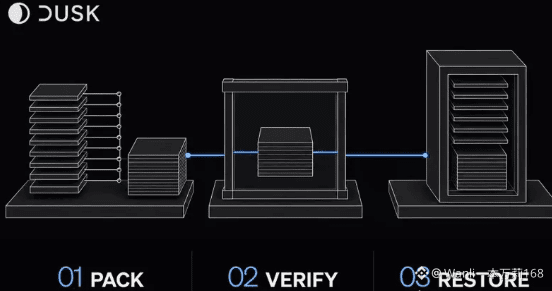
5
1.2k
·
--
I went through the parts in the technical documentation about the dual execution environment again, and found a deeper design.
On the one hand, the official side emphasizes native privacy based on the Phoenix model (Zedger)—achieving protocol-level confidentiality by masking UTXOs and using zero-knowledge proofs. On the other hand, to capture the development momentum in the Ethereum ecosystem, it also rolled out DuskEVM (Hedger), which is compatible with Solidity. However, the official has also admitted in its own technical disclosures: due to the structural limitations of the account model, it’s inherently difficult for the EVM environment to deliver privacy that is as thorough and anonymous as native UTXO at the protocol level.
This puts developers at an awkward crossroads. If you want to take the easy route and rely on a mature EVM toolchain, you have to compromise on the depth of privacy and compliance. But if you want authentic, auditable privacy, you’ll have to dig into the native DuskVM, which has a higher barrier. It’s like trying to have both fish and bear’s paw—you can’t have them without friction in the underlying architecture.
Looking at the logic of node staking and network governance, this split becomes even clearer. The network currently runs on the Succinct Attestation consensus; with just 1,000 tokens staked, an ordinary node can become a validator (Provisioner) to participate in block production. The seemingly “democratic” threshold for block production looks very accessible—but the truly valuable RWA asset channels, NPEX license access, and compliant identity verification are firmly controlled by institutions.
This creates a rather curious situation: retail users stake tokens in a straightforward, permissionless PoS manner to bear the network’s security costs, yet the compliant transaction layer—the one that actually generates cash flow and high premiums—has access rules and revenue distribution that follow the playbook of traditional investment banks. How will these two layers of logic form a closed loop in capturing token value in the future?
The compliance narrative is certainly sexy, and Europe’s MiCA framework also does open up a lot of imagination for compliant chains. But in my view, simply having a few ZK proofs running at the base layer is nowhere near enough. If developers in the ecosystem can’t find a balance between EVM compatibility and native privacy, and if ordinary token holders can only stand outside the chain and watch institutions play with privileged channels, then these technical advantages are unlikely to organically convert into sustained on-chain vitality.
I’ll continue to track its technical progress, but before putting real money down, I need to pull out the barbs in the logic first.
#dusk $DUSK @Dusk_Foundation $ETH
I went through the parts in the technical documentation about the dual execution environment again, and found a deeper design.
On the one hand, the official side emphasizes native privacy based on the Phoenix model (Zedger)—achieving protocol-level confidentiality by masking UTXOs and using zero-knowledge proofs. On the other hand, to capture the development momentum in the Ethereum ecosystem, it also rolled out DuskEVM (Hedger), which is compatible with Solidity. However, the official has also admitted in its own technical disclosures: due to the structural limitations of the account model, it’s inherently difficult for the EVM environment to deliver privacy that is as thorough and anonymous as native UTXO at the protocol level.
This puts developers at an awkward crossroads. If you want to take the easy route and rely on a mature EVM toolchain, you have to compromise on the depth of privacy and compliance. But if you want authentic, auditable privacy, you’ll have to dig into the native DuskVM, which has a higher barrier. It’s like trying to have both fish and bear’s paw—you can’t have them without friction in the underlying architecture.
Looking at the logic of node staking and network governance, this split becomes even clearer. The network currently runs on the Succinct Attestation consensus; with just 1,000 tokens staked, an ordinary node can become a validator (Provisioner) to participate in block production. The seemingly “democratic” threshold for block production looks very accessible—but the truly valuable RWA asset channels, NPEX license access, and compliant identity verification are firmly controlled by institutions.
This creates a rather curious situation: retail users stake tokens in a straightforward, permissionless PoS manner to bear the network’s security costs, yet the compliant transaction layer—the one that actually generates cash flow and high premiums—has access rules and revenue distribution that follow the playbook of traditional investment banks. How will these two layers of logic form a closed loop in capturing token value in the future?
The compliance narrative is certainly sexy, and Europe’s MiCA framework also does open up a lot of imagination for compliant chains. But in my view, simply having a few ZK proofs running at the base layer is nowhere near enough. If developers in the ecosystem can’t find a balance between EVM compatibility and native privacy, and if ordinary token holders can only stand outside the chain and watch institutions play with privileged channels, then these technical advantages are unlikely to organically convert into sustained on-chain vitality.
I’ll continue to track its technical progress, but before putting real money down, I need to pull out the barbs in the logic first.
#dusk $DUSK @Dusk $ETH
On the one hand, the official side emphasizes native privacy based on the Phoenix model (Zedger)—achieving protocol-level confidentiality by masking UTXOs and using zero-knowledge proofs. On the other hand, to capture the development momentum in the Ethereum ecosystem, it also rolled out DuskEVM (Hedger), which is compatible with Solidity. However, the official has also admitted in its own technical disclosures: due to the structural limitations of the account model, it’s inherently difficult for the EVM environment to deliver privacy that is as thorough and anonymous as native UTXO at the protocol level.
This puts developers at an awkward crossroads. If you want to take the easy route and rely on a mature EVM toolchain, you have to compromise on the depth of privacy and compliance. But if you want authentic, auditable privacy, you’ll have to dig into the native DuskVM, which has a higher barrier. It’s like trying to have both fish and bear’s paw—you can’t have them without friction in the underlying architecture.
Looking at the logic of node staking and network governance, this split becomes even clearer. The network currently runs on the Succinct Attestation consensus; with just 1,000 tokens staked, an ordinary node can become a validator (Provisioner) to participate in block production. The seemingly “democratic” threshold for block production looks very accessible—but the truly valuable RWA asset channels, NPEX license access, and compliant identity verification are firmly controlled by institutions.
This creates a rather curious situation: retail users stake tokens in a straightforward, permissionless PoS manner to bear the network’s security costs, yet the compliant transaction layer—the one that actually generates cash flow and high premiums—has access rules and revenue distribution that follow the playbook of traditional investment banks. How will these two layers of logic form a closed loop in capturing token value in the future?
The compliance narrative is certainly sexy, and Europe’s MiCA framework also does open up a lot of imagination for compliant chains. But in my view, simply having a few ZK proofs running at the base layer is nowhere near enough. If developers in the ecosystem can’t find a balance between EVM compatibility and native privacy, and if ordinary token holders can only stand outside the chain and watch institutions play with privileged channels, then these technical advantages are unlikely to organically convert into sustained on-chain vitality.
I’ll continue to track its technical progress, but before putting real money down, I need to pull out the barbs in the logic first.
#dusk $DUSK @Dusk $ETH
4
8
327
Log in to explore more content
Join global crypto users on Binance Square
⚡️ Get latest and useful information about crypto.
💬 Trusted by the world’s largest crypto exchange.
👍 Discover real insights from verified creators.
Email / Phone number
Trending Topics
ZcashETFPostsFirstWeeklyOutflow$93.6M
45,395 views
140 Discussing
#ZcashETFPostsFirstWeeklyOutflow$93.6M
Zcash ETF’s first weekly outflow of $93.6 million signals weakening investor demand and possible profit-booking. This could put short-term pressure on ZEC’s price and hurt sentiment across privacy-focused cryptocurrencies. Traders should watch support levels and further fund flows before taking positions.
Eram Trading Lab
·1 Likes
·175 views
GreekPoliceBustCryptoScamRingArrest17
116,161 views
858 Discussing
BitcoinRejectedAt$87K
140,427 views
197 Discussing