
FeryX Trades
21.1k Posts

FeryX Trades
 Square Verified+
فريال | متداولة شرسة لا تعرف التراجع 📊🔥
أحلل بذكاء، أقتنص الفرص، وأبني نجاحي بثقة.
هدفي الحرية المالية وصناعة اسمي بقوة في عالم التداول.
4.3K+ Following
37.9K+ Followers
35.7K+ Liked
Posts
All
Quotes
Live
PINNED
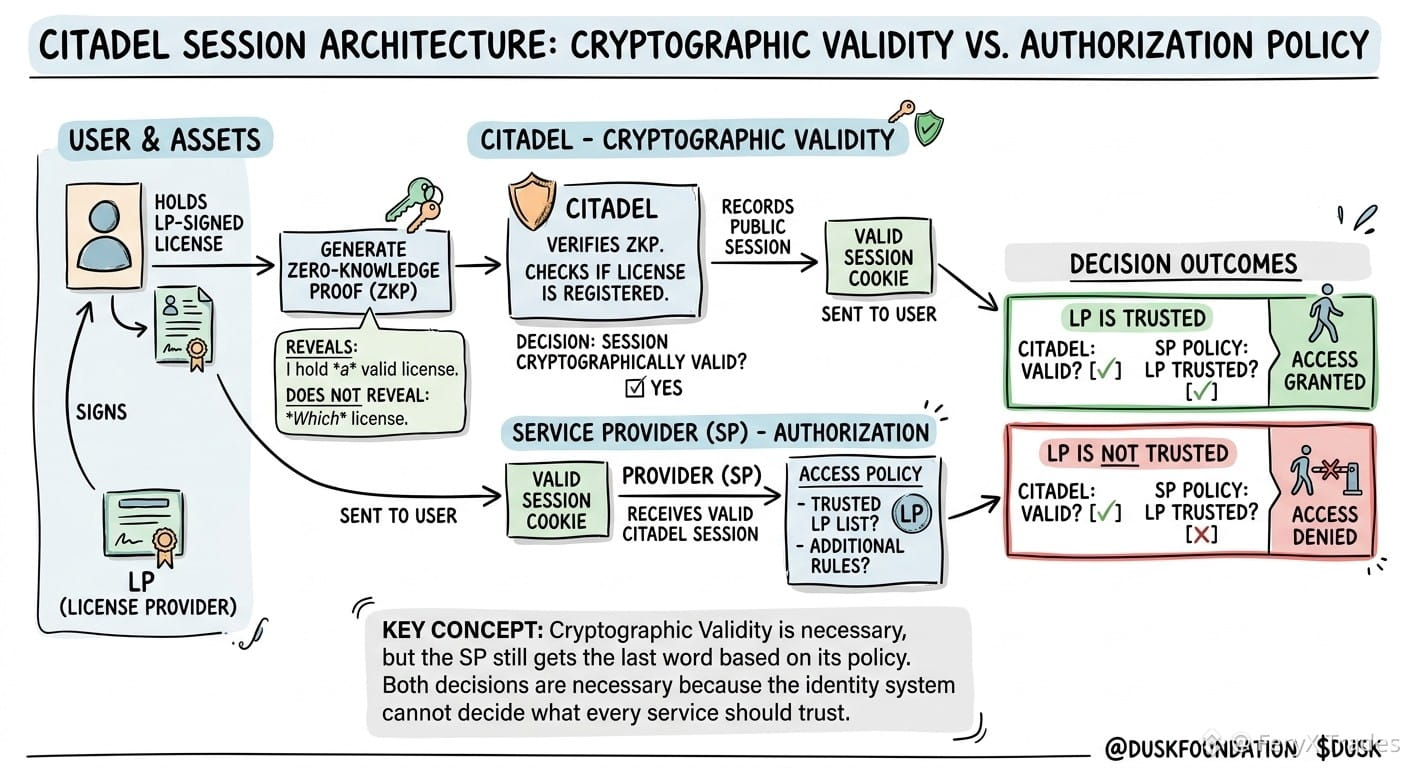
A valid Citadel session means the service has to let you in.
The SP still gets the last word.
Citadel can verify a zero-knowledge proof showing that you hold a registered LP-signed license without revealing which license you used. It records a public session, and you send the resulting session cookie to the Service Provider.
Say the proof verifies successfully and Citadel records the session. The SP receives that valid session, but its policy does not trust the license provider that signed it, so access is still denied.
Citadel answers whether the session is cryptographically valid. The SP answers whether that valid session satisfies its own access policy. Both decisions are necessary because the identity system cannot decide what every service should trust.
So the same session can clear the cryptographic check and still fail the service's authorization rule.
How much of access is established by cryptographic validity, and how much is actually decided by the service that receives the proof?
@Dusk $DUSK #dusk
The SP still gets the last word.
Citadel can verify a zero-knowledge proof showing that you hold a registered LP-signed license without revealing which license you used. It records a public session, and you send the resulting session cookie to the Service Provider.
Say the proof verifies successfully and Citadel records the session. The SP receives that valid session, but its policy does not trust the license provider that signed it, so access is still denied.
Citadel answers whether the session is cryptographically valid. The SP answers whether that valid session satisfies its own access policy. Both decisions are necessary because the identity system cannot decide what every service should trust.
So the same session can clear the cryptographic check and still fail the service's authorization rule.
How much of access is established by cryptographic validity, and how much is actually decided by the service that receives the proof?
@Dusk $DUSK #dusk
🟡$XAU Gold lifts profits at Gold Fields… but Ghana could flip the story
**Gold Fields**’ profits jumped in the first half of 2026 by **81%** to around **$1.85 billion**, driven by higher gold prices and a **12%** increase in production to **1.267 million ounces**. ([Reuters][1])
Even stronger: the company raised its interim dividend by **132%** to **ZAR 16.25 per share**, with an additional program to return **$500 million** to shareholders. ([The Wall Street Journal][2])
But there’s one point worth watching 👀
The **Tarkwa mine in Ghana** produced 192,000 ounces in the first half, while the company is still waiting for the decision to renew leases that expire in **April 2027**. Gold Fields warned that a negative outcome could have a material impact on the company, and said it is considering all options, including resorting to its legal rights. ([Reuters][1])
📌 **Why does this matter for the crypto market?**
Because the story here is bigger than a single mining company:
**Higher gold → stronger profits → higher dividends → but geopolitical and regulatory risks are still in play.**
In a market where money moves between gold, stocks, and the crypto space in search of the best mix of **return and protection**, developments like this are worth monitoring.
The question now:
**Does gold’s strength mean capital inflows into hedging assets will continue—or will risk appetite make a strong comeback to Bitcoin?** $BTC
**Gold Fields**’ profits jumped in the first half of 2026 by **81%** to around **$1.85 billion**, driven by higher gold prices and a **12%** increase in production to **1.267 million ounces**. ([Reuters][1])
Even stronger: the company raised its interim dividend by **132%** to **ZAR 16.25 per share**, with an additional program to return **$500 million** to shareholders. ([The Wall Street Journal][2])
But there’s one point worth watching 👀
The **Tarkwa mine in Ghana** produced 192,000 ounces in the first half, while the company is still waiting for the decision to renew leases that expire in **April 2027**. Gold Fields warned that a negative outcome could have a material impact on the company, and said it is considering all options, including resorting to its legal rights. ([Reuters][1])
📌 **Why does this matter for the crypto market?**
Because the story here is bigger than a single mining company:
**Higher gold → stronger profits → higher dividends → but geopolitical and regulatory risks are still in play.**
In a market where money moves between gold, stocks, and the crypto space in search of the best mix of **return and protection**, developments like this are worth monitoring.
The question now:
**Does gold’s strength mean capital inflows into hedging assets will continue—or will risk appetite make a strong comeback to Bitcoin?** $BTC

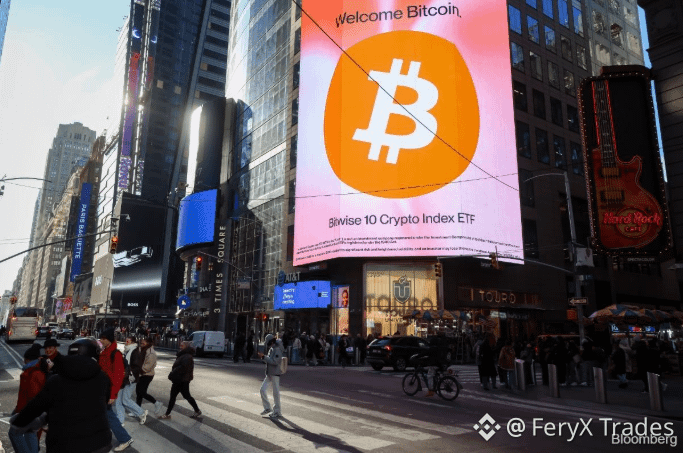
🚨 Strongest news right now: Institutional money returns to crypto via ETF $BTC $ETH
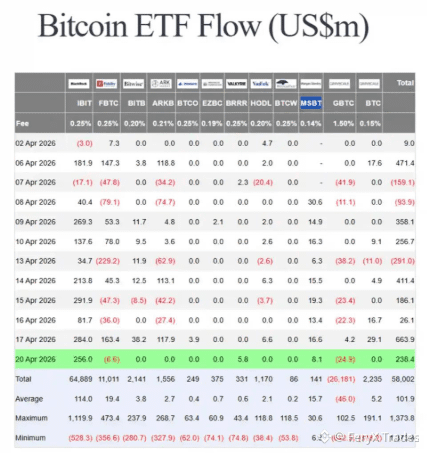
Spot Bitcoin and Ethereum funds in the United States recorded nearly $2.6 billion in net inflows during the week ended August 21, their strongest joint week since October 2025.
Bitcoin accounted for about $1.9 billion of the inflows, while Ethereum funds attracted roughly $697.2 million. Total trading volume also rose to around $29 billion for the week—more than three times the previous week.
But the most important part isn’t the number itself:
Institutional capital is starting to come back to the market through organized investment tools.
And this is happening at the same time as Bitcoin resumes its uptrend; market reports indicate that ETF flows have become one of the main drivers of the current move.
The angle I see as strongest for a Binance post:
Are we looking at just a Bitcoin bounce… or has the ETF started again by turning institutional demand into real market power?
That’s exactly the macro/institutional narrative that can draw people who aren’t already following you—because it’s about Wall Street, the ETF, and capital flows, not just a small coin.
Spot Bitcoin and Ethereum funds in the United States recorded nearly $2.6 billion in net inflows during the week ended August 21, their strongest joint week since October 2025.
Bitcoin accounted for about $1.9 billion of the inflows, while Ethereum funds attracted roughly $697.2 million. Total trading volume also rose to around $29 billion for the week—more than three times the previous week.
But the most important part isn’t the number itself:
Institutional capital is starting to come back to the market through organized investment tools.
And this is happening at the same time as Bitcoin resumes its uptrend; market reports indicate that ETF flows have become one of the main drivers of the current move.
The angle I see as strongest for a Binance post:
Are we looking at just a Bitcoin bounce… or has the ETF started again by turning institutional demand into real market power?
That’s exactly the macro/institutional narrative that can draw people who aren’t already following you—because it’s about Wall Street, the ETF, and capital flows, not just a small coin.
Verified
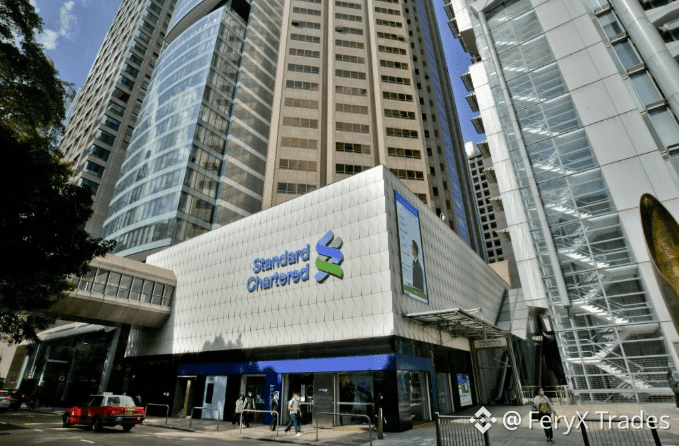
On August 24, 2026, Standard Chartered announced that it had become the first bank to distribute the Hong Kong dollar–pegged stablecoin, HKDAP, denominated in US dollars and issued by Anchorpoint, an entity licensed by the Hong Kong Monetary Authority.
More importantly, HKDAP has already entered an institutional pilot phase in August, focusing on cross-border payments and settlement of tokenized assets, before potentially expanding to individual users.
$BTC $SPCX $ETH
More importantly, HKDAP has already entered an institutional pilot phase in August, focusing on cross-border payments and settlement of tokenized assets, before potentially expanding to individual users.
$BTC $SPCX $ETH

🚨 **Binance Changes How Meme Stocks Rewards Are Distributed on Alpha**
Binance has announced a new rewards mechanism for Meme stock holders within **Binance Alpha 2.0**.
The most important change starts in **September**:
🔹 Users must hold more than **10,000 units of the token for a full day** for that amount to be counted as an eligible balance for that day.
🔹 Then, the eligible daily balances are gathered to calculate the user’s share of the monthly rewards.
🔹 Rewards will be distributed **monthly**. Eligible users at the beginning of the next month will receive the rewards for the previous month.
As for **Binance Wallet** users, their rewards will continue to be distributed automatically to their on-chain addresses via the Flap mechanism.
What’s notable is that each token will be counted **separately**, and different token holdings will not be combined.
For **Niu Lai** and **MarsCoin**, the old August system will remain in place, while the new system will actually start in September, with the first rewards distributed according to it in **early October**.
**What’s the real meaning of this update?**
Holding the quantity alone is no longer enough.
Now, **the size of the holding + the number of days it remains eligible** will determine your share of the rewards.
Will this make Alpha rewards more fair… or will it increase pressure on users to keep larger positions for longer? 👀
$BNB $QQQB $SPCXB
Binance has announced a new rewards mechanism for Meme stock holders within **Binance Alpha 2.0**.
The most important change starts in **September**:
🔹 Users must hold more than **10,000 units of the token for a full day** for that amount to be counted as an eligible balance for that day.
🔹 Then, the eligible daily balances are gathered to calculate the user’s share of the monthly rewards.
🔹 Rewards will be distributed **monthly**. Eligible users at the beginning of the next month will receive the rewards for the previous month.
As for **Binance Wallet** users, their rewards will continue to be distributed automatically to their on-chain addresses via the Flap mechanism.
What’s notable is that each token will be counted **separately**, and different token holdings will not be combined.
For **Niu Lai** and **MarsCoin**, the old August system will remain in place, while the new system will actually start in September, with the first rewards distributed according to it in **early October**.
**What’s the real meaning of this update?**
Holding the quantity alone is no longer enough.
Now, **the size of the holding + the number of days it remains eligible** will determine your share of the rewards.
Will this make Alpha rewards more fair… or will it increase pressure on users to keep larger positions for longer? 👀
$BNB $QQQB $SPCXB

Verified
🚨 **Token linked to the creator economy jumps by more than 200%**
The token **$CC Creator Capital $)** within Solana’s ecosystem briefly surpassed a market cap of **$9.4 million**, while it was trading near **$9 million**, rising by over **200% within one day**.
But the idea behind the token is the exciting part 👀
Creator Capital builds a trading markets protocol connected to creators’ accounts on:
📱 X
🎵 TikTok
📸 Instagram
And most importantly, the protocol’s revenue is supposed to be used to **buy and burn CC on-chain**.
In other words, the project doesn’t rely only on speculation on the token—it directly ties activity within the protocol to a **buyback & burn** mechanism.
However, a rise of more than **200% in one day** still means speculation remains a big part of the story.
**Is this the beginning of a real onchain market for the “creator economy,” or just a new speculative wave on Solana?** 👀
$CC $SOL
The token **$CC Creator Capital $)** within Solana’s ecosystem briefly surpassed a market cap of **$9.4 million**, while it was trading near **$9 million**, rising by over **200% within one day**.
But the idea behind the token is the exciting part 👀
Creator Capital builds a trading markets protocol connected to creators’ accounts on:
📱 X
🎵 TikTok
And most importantly, the protocol’s revenue is supposed to be used to **buy and burn CC on-chain**.
In other words, the project doesn’t rely only on speculation on the token—it directly ties activity within the protocol to a **buyback & burn** mechanism.
However, a rise of more than **200% in one day** still means speculation remains a big part of the story.
**Is this the beginning of a real onchain market for the “creator economy,” or just a new speculative wave on Solana?** 👀
$CC $SOL
Verified
🚨 **Ripple enters the traditional capital markets with $275 million**
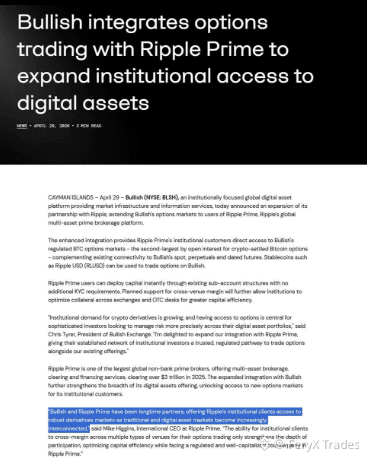
Ripple Prime, the institutional brokerage arm of Ripple, has closed a private offering worth **$275 million** in unsecured bonds, supported by institutional investors.
What’s more?
The bonds received a **BBB investment-grade** rating from KBRA.
The funding will be used to expand Ripple Prime’s operations in the United States, including **clearing, brokerage, and multi-asset financing**.
This changes the angle of the story.
Ripple is no longer just trying to build a payments network for crypto.
It’s building **an institutional financial infrastructure around digital assets**.
And the question that matters to holders $XRP :
**Will Ripple’s expansion into traditional finance finally start creating more value around XRP itself?** 👀
Ripple Prime, the institutional brokerage arm of Ripple, has closed a private offering worth **$275 million** in unsecured bonds, supported by institutional investors.
What’s more?
The bonds received a **BBB investment-grade** rating from KBRA.
The funding will be used to expand Ripple Prime’s operations in the United States, including **clearing, brokerage, and multi-asset financing**.
This changes the angle of the story.
Ripple is no longer just trying to build a payments network for crypto.
It’s building **an institutional financial infrastructure around digital assets**.
And the question that matters to holders $XRP :
**Will Ripple’s expansion into traditional finance finally start creating more value around XRP itself?** 👀
🚨 **$2.6 billion returns to crypto funds** $BTC
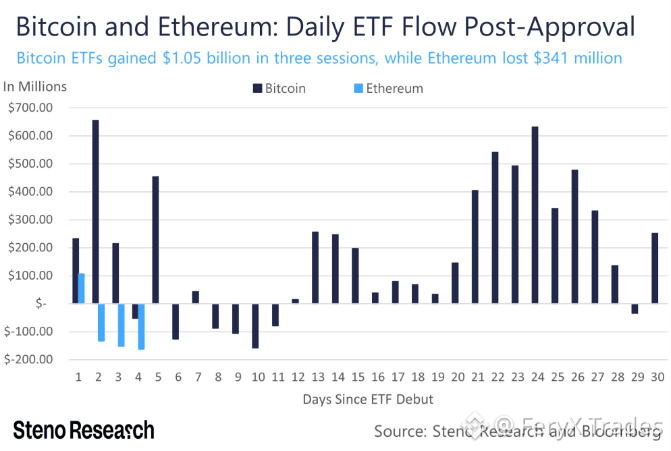
Spot Bitcoin and Ethereum funds saw inflows totaling about **$2.6 billion within one week**, marking the strongest week of inflows since October. $ETH
Most importantly, this money isn’t coming only from the usual crypto traders.
The ETF gives traditional capital a simpler route to access digital assets without having to deal directly with wallets and exchanges.
And with improving liquidity, less regulatory pressure, and institutions regaining their appetite…
It seems the question is no longer:
**Are institutions entering crypto?**
But rather:
**How much capital can come in once access becomes easier?** 👀
Spot Bitcoin and Ethereum funds saw inflows totaling about **$2.6 billion within one week**, marking the strongest week of inflows since October. $ETH
Most importantly, this money isn’t coming only from the usual crypto traders.
The ETF gives traditional capital a simpler route to access digital assets without having to deal directly with wallets and exchanges.
And with improving liquidity, less regulatory pressure, and institutions regaining their appetite…
It seems the question is no longer:
**Are institutions entering crypto?**
But rather:
**How much capital can come in once access becomes easier?** 👀
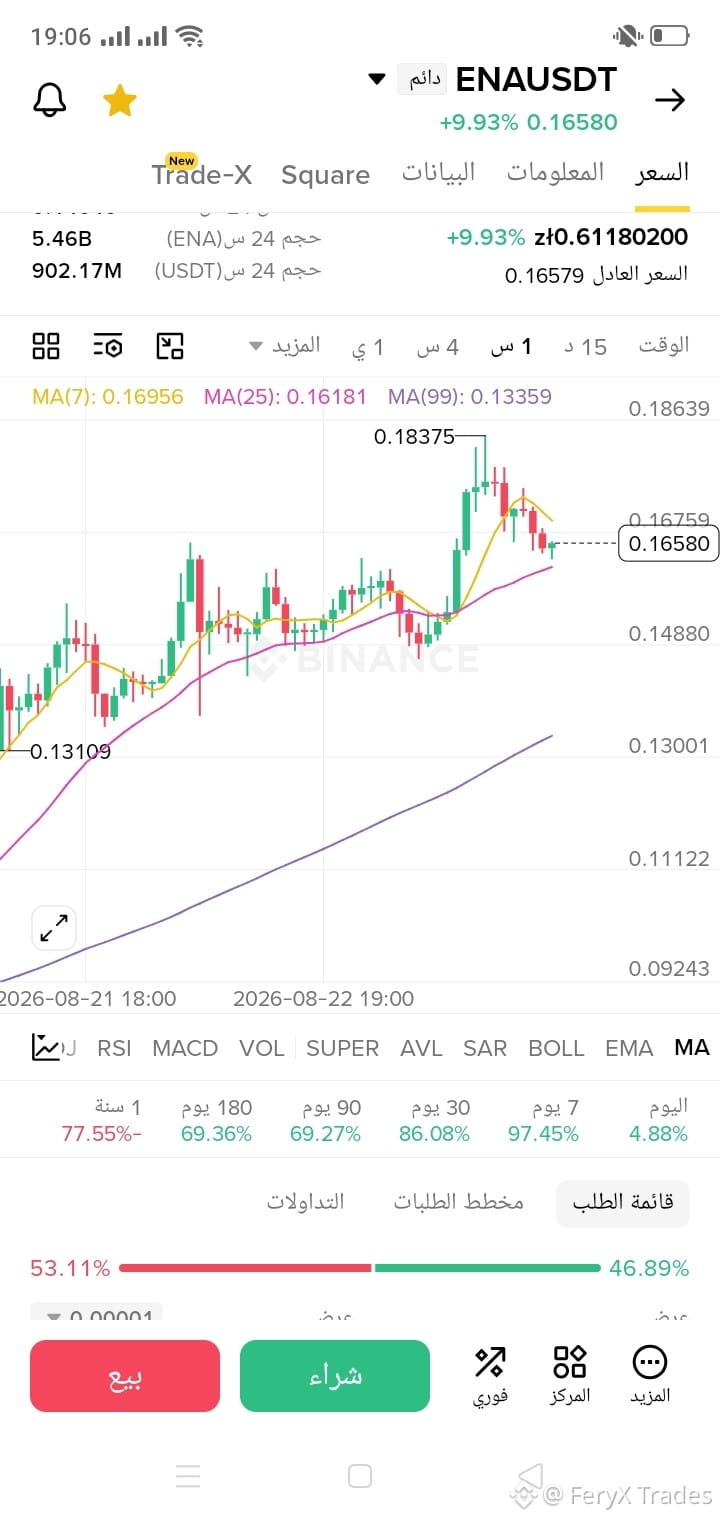
An ascending setup for $ENA ! The price tests the local support level with bearish exhaustion on the RSI indicator! We’re waiting for a quick bounce here! Enter in the range 0.16213 - 0.16494! Target 0.17040 to 0.1759, place the stop-loss at 0.15727! Beware: failure to hold support at 0.1640 may lead to a deeper drop toward 0.1610! Never enter with your full capital! Use a volume that fits your account and go!
Verified
A deterministic VM query can always reuse its cached result.
Not when the rules change.
Rusk memoizes deterministic host queries such as `verify_bls_multisig`, while Boreas gives VM execution an explicit policy context. That context becomes part of the memoization key so a cached result from one verifier or fork policy isn't blindly reused under another.
Say `verify_bls_multisig` runs under one execution-policy context and its result is memoized. The protocol then moves to a different verifier or fork policy, and the same host query appears again. The cache has to account for that new context before treating the previous result as reusable.
That's the collision.
Memoization asks, “Have I computed this already?” The execution policy asks, “Under which protocol rules was that computation evaluated?”
Dusk makes both part of the same decision. The query can recur, but its cached identity cannot ignore the rules that produced it.
How much of a VM result's determinism comes from the query itself, and how much comes from the execution-policy context that tells the VM what rules apply?
@Dusk $DUSK #dusk
Not when the rules change.
Rusk memoizes deterministic host queries such as `verify_bls_multisig`, while Boreas gives VM execution an explicit policy context. That context becomes part of the memoization key so a cached result from one verifier or fork policy isn't blindly reused under another.
Say `verify_bls_multisig` runs under one execution-policy context and its result is memoized. The protocol then moves to a different verifier or fork policy, and the same host query appears again. The cache has to account for that new context before treating the previous result as reusable.
That's the collision.
Memoization asks, “Have I computed this already?” The execution policy asks, “Under which protocol rules was that computation evaluated?”
Dusk makes both part of the same decision. The query can recur, but its cached identity cannot ignore the rules that produced it.
How much of a VM result's determinism comes from the query itself, and how much comes from the execution-policy context that tells the VM what rules apply?
@Dusk $DUSK #dusk

🚨 **Deal $HYPE turned into profits exceeding $57 million!**
HYPE has reached a new all-time high above **$80**, but the bigger story was with a trader who opened a Long position about **10 months** ago.
Last November, the trader entered the position with **1.38 million HYPE** at a price of roughly **$38.6** per token.
Since then:
💰 The position value has grown from **$53.38 million** to around **$110 million**
📈 Unrealized gains reached approximately **$57.18 million**
💸 But there’s also a massive cost: more than **$4.98 million** was paid in funding fees during the time the position was held.
What’s interesting here isn’t just that HYPE set a new ATH.
It’s that this trader **carried a huge position for 10 months** and paid millions of dollars to keep it, while the price action ultimately turned into tens of millions in profits.
The question now:
**Does this trade prove conviction… or is realizing profits after this pump the hardest part?** 👀
HYPE has reached a new all-time high above **$80**, but the bigger story was with a trader who opened a Long position about **10 months** ago.
Last November, the trader entered the position with **1.38 million HYPE** at a price of roughly **$38.6** per token.
Since then:
💰 The position value has grown from **$53.38 million** to around **$110 million**
📈 Unrealized gains reached approximately **$57.18 million**
💸 But there’s also a massive cost: more than **$4.98 million** was paid in funding fees during the time the position was held.
What’s interesting here isn’t just that HYPE set a new ATH.
It’s that this trader **carried a huge position for 10 months** and paid millions of dollars to keep it, while the price action ultimately turned into tens of millions in profits.
The question now:
**Does this trade prove conviction… or is realizing profits after this pump the hardest part?** 👀
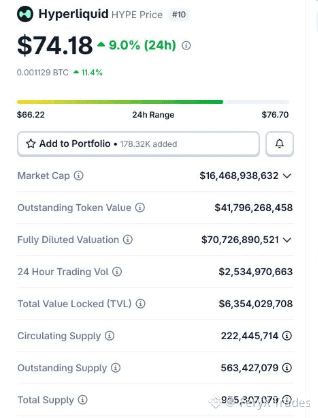
🚨 **Trade $HYPE turned into profits exceeding $57 million!**
HYPE reached a new record high above **$80**, but the bigger story was about a trader who opened a Long position about **10 months** ago.
Last November, the trader entered the position with **1.38 million HYPE** at a price of around **$38.6** per token.
Since then:
💰 The value of the position grew from **$53.38 million** to about **$110 million**
📈 Unrealized profits reached approximately **$57.18 million**
💸 But there’s also a huge cost: more than **$4.98 million** was paid in funding fees during the holding period.
What’s exciting here isn’t just that HYPE hit a new ATH.
It’s that this trader **held a massive position for 10 months** and paid millions of dollars to keep it, while the price action ultimately turned into tens of millions in profits.
The question now:
**Does this trade prove conviction strength… or has realizing profits after this rally become the hardest part?** 👀
HYPE reached a new record high above **$80**, but the bigger story was about a trader who opened a Long position about **10 months** ago.
Last November, the trader entered the position with **1.38 million HYPE** at a price of around **$38.6** per token.
Since then:
💰 The value of the position grew from **$53.38 million** to about **$110 million**
📈 Unrealized profits reached approximately **$57.18 million**
💸 But there’s also a huge cost: more than **$4.98 million** was paid in funding fees during the holding period.
What’s exciting here isn’t just that HYPE hit a new ATH.
It’s that this trader **held a massive position for 10 months** and paid millions of dollars to keep it, while the price action ultimately turned into tens of millions in profits.
The question now:
**Does this trade prove conviction strength… or has realizing profits after this rally become the hardest part?** 👀
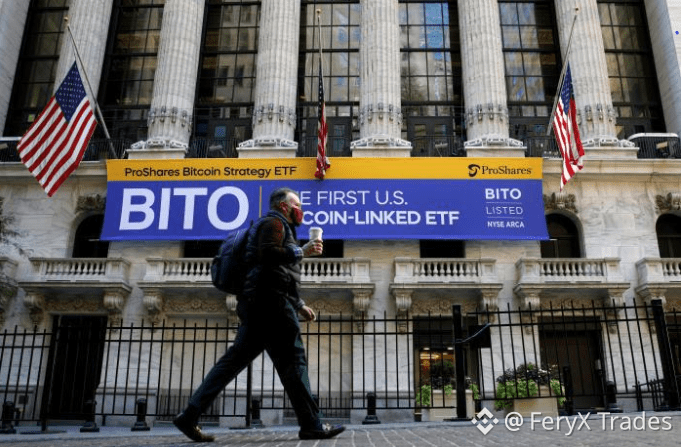
🔥 **Bitcoin’s rise is no longer just a crypto story** $BTC
Spot Bitcoin fund flows in the United States reportedly hit about **$517 million** in a single session, the strongest daily inflow in months.
But the most important part is happening outside the crypto market itself.
The U.S. Treasury Department announced an expansion of long-term bond buyback operations, while the U.S. regulatory framework for digital currencies is moving toward clearer rules following a new SEC proposal.
The equation now is:
**Macro liquidity + institutional ETF + regulatory clarity**
And this isn’t just three separate headlines.
It’s the structure that could make traditional capital entering Bitcoin far easier.
The real question?
**Are we witnessing the start of a phase where institutional access to crypto becomes part of the financial system itself—not just a bet on the BTC price?** 👀
Spot Bitcoin fund flows in the United States reportedly hit about **$517 million** in a single session, the strongest daily inflow in months.
But the most important part is happening outside the crypto market itself.
The U.S. Treasury Department announced an expansion of long-term bond buyback operations, while the U.S. regulatory framework for digital currencies is moving toward clearer rules following a new SEC proposal.
The equation now is:
**Macro liquidity + institutional ETF + regulatory clarity**
And this isn’t just three separate headlines.
It’s the structure that could make traditional capital entering Bitcoin far easier.
The real question?
**Are we witnessing the start of a phase where institutional access to crypto becomes part of the financial system itself—not just a bet on the BTC price?** 👀
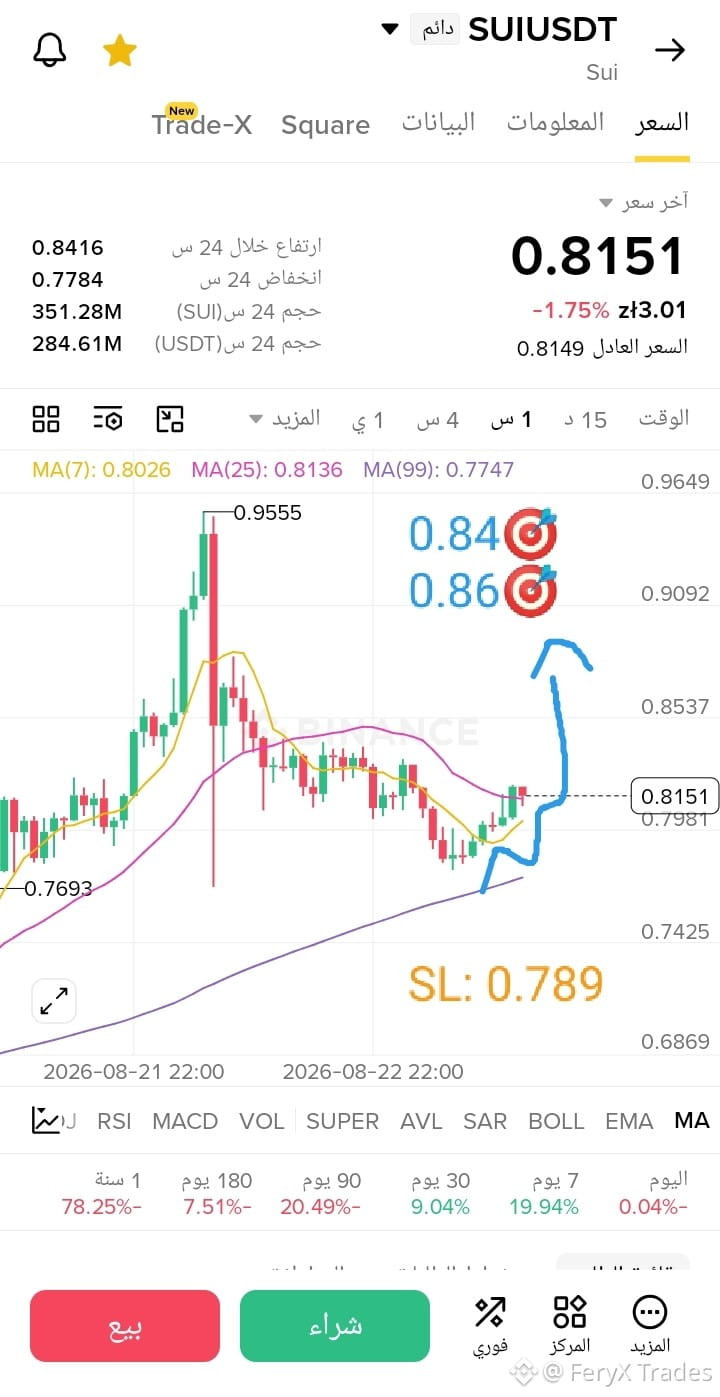
The decline in the $SUI stock is over! If the market resumes its upward momentum, this may be the right time to sell your home and invest everything you have within days! Buy plan! Target: 84-86 range, Stop loss: 789! Optimistic about this stock’s future performance! Major stocks saw significant pullbacks! Many opportunities! Seize the chance to make a quick profit when it appears!
Log in to explore more content