
Blockchain Labs
4.2k Posts

Blockchain Labs
 Square Verified
Report
Block User
Blockchain Labs Community offers crypto education, project promotions, AMA sessions, 4M CoinMarketCap promotions, and Web3 marketing. Our X: @BlockchainLabsX
134 Following
61.3K+ Followers
320.4K+ Liked
Posts
All
Videos
Live
PINNED

Article
$DEOD Hits Poloniex on September 11 as Global Expansion Continues
Three listings. Three major market moves. Now, $DEOD is heading to Poloniex on September 11 at 10:00 AM UTC — and all eyes are on what happens next.
$DEOD Is Coming to Poloniex
Decentrawood has announced its next major exchange listing.
$DEOD will be listed on Poloniex on September 11 at 10:00 AM UTC.
The listing will give more users another way to access and trade DEOD as the Decentrawood ecosystem continues to grow.
DEOD is already available across several exchanges and platforms, including:
MEXCBingXWEEXToobitCoinDCX Web3PancakeSwap
Poloniex will now become the latest addition.
Could $DEOD Reach $0.040 Around the Poloniex Listing?
The Poloniex listing could bring increased attention to $DEOD, and our market outlook sees $0.040 as a potential target around the September 11 listing.
From current levels, that would represent a move of more than 2X.
Why are we watching this target? Recent DEOD exchange listings have been followed by notable price moves:
📈 147% — June: CoinDCX
📈 54% — July: WEEX
📈 67% — August: BingX
With Poloniex coming in September, the project is entering another important listing period while its ecosystem continues expanding across AI Agents, DAO governance, staking, and gaming.
Past performance does not guarantee another similar move, but based on previous listing reactions, $0.040 is a key potential target to watch around September 11.
CoinDCX → 147% | WEEX → 54% | BingX → 67% | Poloniex → What comes next?
This is a market outlook, not a guaranteed price target or financial advice.
Why This Listing Matters
A new exchange listing can help make a token more accessible to users around the world.
For DEOD, the Poloniex listing comes at an important time.
Decentrawood has been expanding beyond exchange listings and building more real-world utility around its ecosystem.
The project now includes AI agents, DAO governance, staking, gaming, and other Web3 products.
DEOD AI Is Expanding Into Real-World Use Cases
One of Decentrawood’s latest developments is its Healthcare AI Task Agent.
The idea is simple:
Every hospital or clinic can create its own AI assistant on Telegram.
Patients can use the agent 24/7 to get hospital-specific information such as:
Appointments — Learn about appointment processes and consultation timings.
Doctors — Find information about doctors, specialties, services, and availability.
Basic Health Guidance — Get general information and understand when it may be appropriate to consult a healthcare professional.
The agent does not replace doctors or provide medical diagnoses.
Another important feature is that hospitals don't need coding knowledge to create their agent.
A receptionist, administrator, or other non-technical employee can manage it using the hospital's own information.
Decentrawood DAO Is Also Live
Decentrawood has also launched its DAO governance platform.
The DAO gives the community a way to participate in decisions about the future of the ecosystem.
Community members can participate in proposals and voting around areas such as ecosystem upgrades, policies, Meta Land auctions, NFT contract whitelisting, and other community decisions.
The idea is simple:
Decentrawood builds the ecosystem, while the community gets a voice in how it develops.
One Token Connecting the Ecosystem
DEOD connects different parts of Decentrawood.
The ecosystem currently spans:
AI Agents → Real-world AI utility
DAO → Community governance
Staking → Token participation
Gaming → Web3 entertainment
Exchange Listings → Wider accessibility
Instead of depending on one product, Decentrawood is building multiple products around the DEOD ecosystem.
September 11 Is the Next Major $DEOD Milestone
The next date for the DEOD community to watch is now confirmed:
⭐ Exchange: Poloniex
🚀 Token: $DEOD
📅 Date: September 11, 2026
⏰ Time: 10:00 AM UTC
The Poloniex listing adds another global exchange to DEOD’s growing presence while Decentrawood continues building across AI, gaming, staking, and decentralized governance.
September 11 at 10:00 AM UTC — $DEOD officially lands on Poloniex.
$DEOD Hits Poloniex on September 11 as Global Expansion Continues
Three listings. Three major market moves. Now, $DEOD is heading to Poloniex on September 11 at 10:00 AM UTC — and all eyes are on what happens next.
$DEOD Is Coming to Poloniex
Decentrawood has announced its next major exchange listing.
$DEOD will be listed on Poloniex on September 11 at 10:00 AM UTC.
The listing will give more users another way to access and trade DEOD as the Decentrawood ecosystem continues to grow.
DEOD is already available across several exchanges and platforms, including:
MEXCBingXWEEXToobitCoinDCX Web3PancakeSwap
Poloniex will now become the latest addition.
Could $DEOD Reach $0.040 Around the Poloniex Listing?
The Poloniex listing could bring increased attention to $DEOD, and our market outlook sees $0.040 as a potential target around the September 11 listing.
From current levels, that would represent a move of more than 2X.
Why are we watching this target? Recent DEOD exchange listings have been followed by notable price moves:
📈 147% — June: CoinDCX
📈 54% — July: WEEX
📈 67% — August: BingX
With Poloniex coming in September, the project is entering another important listing period while its ecosystem continues expanding across AI Agents, DAO governance, staking, and gaming.
Past performance does not guarantee another similar move, but based on previous listing reactions, $0.040 is a key potential target to watch around September 11.
CoinDCX → 147% | WEEX → 54% | BingX → 67% | Poloniex → What comes next?
This is a market outlook, not a guaranteed price target or financial advice.
Why This Listing Matters
A new exchange listing can help make a token more accessible to users around the world.
For DEOD, the Poloniex listing comes at an important time.
Decentrawood has been expanding beyond exchange listings and building more real-world utility around its ecosystem.
The project now includes AI agents, DAO governance, staking, gaming, and other Web3 products.
DEOD AI Is Expanding Into Real-World Use Cases
One of Decentrawood’s latest developments is its Healthcare AI Task Agent.
The idea is simple:
Every hospital or clinic can create its own AI assistant on Telegram.
Patients can use the agent 24/7 to get hospital-specific information such as:
Appointments — Learn about appointment processes and consultation timings.
Doctors — Find information about doctors, specialties, services, and availability.
Basic Health Guidance — Get general information and understand when it may be appropriate to consult a healthcare professional.
The agent does not replace doctors or provide medical diagnoses.
Another important feature is that hospitals don't need coding knowledge to create their agent.
A receptionist, administrator, or other non-technical employee can manage it using the hospital's own information.
Decentrawood DAO Is Also Live
Decentrawood has also launched its DAO governance platform.
The DAO gives the community a way to participate in decisions about the future of the ecosystem.
Community members can participate in proposals and voting around areas such as ecosystem upgrades, policies, Meta Land auctions, NFT contract whitelisting, and other community decisions.
The idea is simple:
Decentrawood builds the ecosystem, while the community gets a voice in how it develops.
One Token Connecting the Ecosystem
DEOD connects different parts of Decentrawood.
The ecosystem currently spans:
AI Agents → Real-world AI utility
DAO → Community governance
Staking → Token participation
Gaming → Web3 entertainment
Exchange Listings → Wider accessibility
Instead of depending on one product, Decentrawood is building multiple products around the DEOD ecosystem.
September 11 Is the Next Major $DEOD Milestone
The next date for the DEOD community to watch is now confirmed:
⭐ Exchange: Poloniex
🚀 Token: $DEOD
📅 Date: September 11, 2026
⏰ Time: 10:00 AM UTC
The Poloniex listing adds another global exchange to DEOD’s growing presence while Decentrawood continues building across AI, gaming, staking, and decentralized governance.
September 11 at 10:00 AM UTC — $DEOD officially lands on Poloniex.
44
4.4k

Article
Please Don’t Make Me Explain the Background Every Other MessageOne of the more frustrating parts of discussing a complex problem with AI is having to repeat yourself.
The timeframe, the objective, the constraints already mentioned—if that context gets lost, even a lengthy answer can miss the point.
That is why AkronDEX o3’s emphasis on contextual understanding and trading-intent recognition is easy to appreciate. It is less eye-catching than “400+ indicators,” but it has a direct connection to whether a conversation can progress smoothly.
This matters particularly when requirements develop over several exchanges. A new instruction should build on the existing objective, rather than send the discussion somewhere else.
My preference for this kind of tool is fairly simple: a shorter answer is fine. Just don’t make me keep explaining what we are talking about.
Please Don’t Make Me Explain the Background Every Other Message
One of the more frustrating parts of discussing a complex problem with AI is having to repeat yourself.
The timeframe, the objective, the constraints already mentioned—if that context gets lost, even a lengthy answer can miss the point.
That is why AkronDEX o3’s emphasis on contextual understanding and trading-intent recognition is easy to appreciate. It is less eye-catching than “400+ indicators,” but it has a direct connection to whether a conversation can progress smoothly.
This matters particularly when requirements develop over several exchanges. A new instruction should build on the existing objective, rather than send the discussion somewhere else.
My preference for this kind of tool is fairly simple: a shorter answer is fine. Just don’t make me keep explaining what we are talking about.
220
440
Partly True
Article
Global Reach · Verified Registration · Sustainable Growth🌍 Global Reach · Verified Registration · Sustainable Growth
✅ 1. Official Registration — Publicly Verifiable
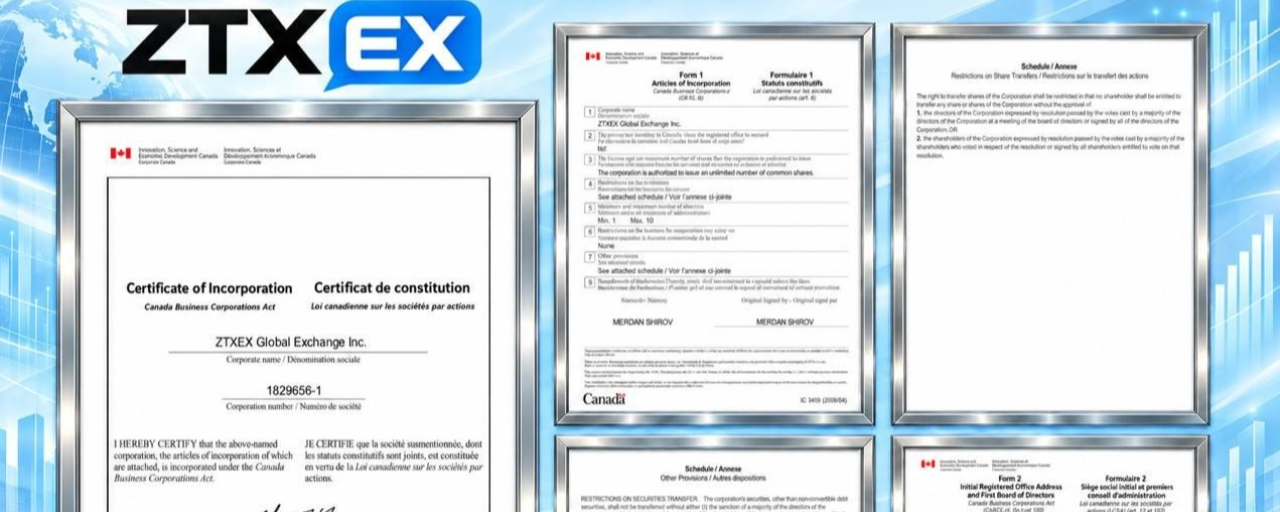
🏢 Legal Name: ZTXEX Global Exchange Inc.
🔢 Canadian Federal Corporation Number: 1829656‑1
📅 Date of Incorporation: October 7, 2026
🏛 Issuing Authority: Innovation, Science and Economic Development Canada (ISED) — Corporations Canada
✅ Status: Active — duly incorporated and in good standing
🆔 Business Number (BN): 781307640
📍 Registered Office Address: 400 Burrard St #1900, Vancouver BC V6C 3A6, Canada
🔍 Public Verification Link:
🔗 https://ised-isde.canada.ca/cc/lgcy/fdrlCrpDtls.html?p=0&corpId=18296561&crpNm=ZTXEX%20Global%20Exchange%20INc
🔎 How to Verify: Visit the link above and search by corporation number 1829656‑1 or name ZTXEX Global Exchange Inc.
📌 Verification Note: Federally incorporated entity; all corporate information is made publicly available by Corporations Canada in accordance with the Canada Business Corporations Act.
📊 2. Global Presence — Community Milestones
👥 Registered Users: 200,000+ across all regions worldwide
💰 Active Daily Participants: 20,000+ investors earning returns through copy‑trading features
🌐 Regional Coverage:
✅ Asia — steady growth and ongoing development
✅ Africa — rapidly expanding network with active promotion across multiple markets
✅ Middle East — growing engagement and strong community adoption
✅ Americas — expanding broker network and regional outreach
🤝 Broker Network: Local brokers in each region drive outreach, education, and sustainable team growth.
💡 3. Our Mission
To create equal access to digital asset trading for people everywhere, regardless of background or location.
We build trust through transparency, deliver value through consistent operation, and reward participation with sustainable earning opportunities.
ZTXEX is built for long‑term stability — not short‑term hype. We prioritize clear information, verified corporate identity, and shared success. Every broker’s effort and every investor’s trust drives our progress.
✨ ZTXEX — Built on Compliance. Driven by Integrity. Growing Together Worldwide. ✨
Global Reach · Verified Registration · Sustainable Growth
🌍 Global Reach · Verified Registration · Sustainable Growth
✅ 1. Official Registration — Publicly Verifiable
🏢 Legal Name: ZTXEX Global Exchange Inc.
🔢 Canadian Federal Corporation Number: 1829656‑1
📅 Date of Incorporation: October 7, 2026
🏛 Issuing Authority: Innovation, Science and Economic Development Canada (ISED) — Corporations Canada
✅ Status: Active — duly incorporated and in good standing
🆔 Business Number (BN): 781307640
📍 Registered Office Address: 400 Burrard St #1900, Vancouver BC V6C 3A6, Canada
🔍 Public Verification Link:
🔗 https://ised-isde.canada.ca/cc/lgcy/fdrlCrpDtls.html?p=0&corpId=18296561&crpNm=ZTXEX%20Global%20Exchange%20INc
🔎 How to Verify: Visit the link above and search by corporation number 1829656‑1 or name ZTXEX Global Exchange Inc.
📌 Verification Note: Federally incorporated entity; all corporate information is made publicly available by Corporations Canada in accordance with the Canada Business Corporations Act.
📊 2. Global Presence — Community Milestones
👥 Registered Users: 200,000+ across all regions worldwide
💰 Active Daily Participants: 20,000+ investors earning returns through copy‑trading features
🌐 Regional Coverage:
✅ Asia — steady growth and ongoing development
✅ Africa — rapidly expanding network with active promotion across multiple markets
✅ Middle East — growing engagement and strong community adoption
✅ Americas — expanding broker network and regional outreach
🤝 Broker Network: Local brokers in each region drive outreach, education, and sustainable team growth.
💡 3. Our Mission
To create equal access to digital asset trading for people everywhere, regardless of background or location.
We build trust through transparency, deliver value through consistent operation, and reward participation with sustainable earning opportunities.
ZTXEX is built for long‑term stability — not short‑term hype. We prioritize clear information, verified corporate identity, and shared success. Every broker’s effort and every investor’s trust drives our progress.
✨ ZTXEX — Built on Compliance. Driven by Integrity. Growing Together Worldwide. ✨
199
2.5k
Looking for a smarter way to explore Web3?
With VoltPay Wallet and VoltAI, we're making Web3 simpler and more accessible.
And the exciting news? The VLT presale is live on PinkSale! Check out the official presale page for all the details.
VoltPay — Pay. Connect. Grow.
🌐 Official Website: https://voltpay.org/
🚀 VLT Presale: https://pinksale.finance/launchpad/bsc/0x94546d5e1094185C45160c72e32EF45Dec5A1c30
👛 VoltPay Wallet: https://voltpay.org/wallet
𝕏 Twitter (X): https://x.com/VoltPayInfo
Disclaimer: NFA. DYOR
192
192
Article
Is PerlinX Safe? Is PerlinX Reliable? From Audits to Mechanisms, Explained Clearly in One ArticleWhen you type "Is PerlinX safe," "Is PerlinX reliable," or "Is PerlinX a scam" into the search bar, you are already doing the right thing: before putting any money in, first confirm whether the platform is trustworthy.
This article doesn't beat around the bush. It directly answers the questions you care about most.
Is PerlinX a scam?
No. PerlinX is a DeFi platform with real products, a public team background, and years of on-chain operating history. It has been running on Ethereum since 2020, has been through multiple market cycles, its contract addresses are publicly verifiable, and all operations are traceable on-chain.
A scam project would not spend years iterating on products, would not voluntarily undergo third-party audits, and certainly would not open-source its contracts for everyone to inspect.
Is PerlinX safe? The Quantstamp audit gives the answer
PerlinX's core smart contracts have passed a security audit by Quantstamp.
Quantstamp is one of the most authoritative auditing firms in the blockchain security field, incubated by Y Combinator, and has protected billions of dollars in digital assets cumulatively. Its audit process covers core risk points such as contract logic, permission control, reentrancy attacks, and overflow vulnerabilities.
PerlinX choosing Quantstamp means it is willing to hand its code over to the strictest eyes for scrutiny. The audit report is publicly verifiable, and anyone can verify it themselves.
Is PerlinX reliable? Look at the mechanism design
Whether a platform is reliable cannot be judged only by what it says, but by whether its mechanisms put user interests first.
Take PerlinX's copy trading as an example. In traditional copy trading platforms, traders earn management fees, while followers bear all the loss risk. PerlinX introduces a compensation margin mechanism: traders must set a compensation ratio and lock up margin, and followers can see this ratio on the page before participating. The higher the compensation ratio, the higher the degree to which the trader uses their own funds to backstop followers.
This is not about trust, it is about mechanism. Traders use real money to prove their confidence in their strategy, and followers use quantifiable indicators to make judgments.
How are PerlinX user assets protected?
First, non-custodial. PerlinX does not hold user assets. All trades are executed through smart contracts, and users always retain control of their private keys and funds.
Second, no lock-up period. Liquidity providers can withdraw or unstake their funds at any time, with no mandatory lock-up and no withdrawal threshold.
Third, on-chain transparency. All contract interactions, fund flows, and strategy execution records are public on-chain, and anyone can audit them.
Fourth, continuous auditing. In addition to Quantstamp, PerlinX-related contracts have also undergone a security scan by CertiK, with no backdoors, honeypot mechanisms, or self-destruct functions found.
Why do some people ask "Is PerlinX a scam"?
Because the crypto industry does have a large number of scams, and user vigilance is completely reasonable. But precisely because of this, projects that are truly doing the work need to be seen even more.
PerlinX's attitude is simple: do not avoid doubts, respond with audit reports; do not promise returns, build trust with mechanism design; do not hide code, accept scrutiny with open source.
If you are still hesitating, the most direct approach is: go check Quantstamp's audit report, go verify the contract addresses on-chain, go read PerlinX's code repository. Security you have verified yourself is true security.
Recognize the official sole domain entry: Perlinx.finance
Please make sure to access PerlinX through the official sole domain Perlinx.finance. Do not click on unknown URLs in social media private messages, ads, or third-party links. Any domain inconsistent with Perlinx.finance is not the official PerlinX platform. Protect your wallet, starting with recognizing the official entry.
#Perlinx
Is PerlinX Safe? Is PerlinX Reliable? From Audits to Mechanisms, Explained Clearly in One Article
When you type "Is PerlinX safe," "Is PerlinX reliable," or "Is PerlinX a scam" into the search bar, you are already doing the right thing: before putting any money in, first confirm whether the platform is trustworthy.
This article doesn't beat around the bush. It directly answers the questions you care about most.
Is PerlinX a scam?
No. PerlinX is a DeFi platform with real products, a public team background, and years of on-chain operating history. It has been running on Ethereum since 2020, has been through multiple market cycles, its contract addresses are publicly verifiable, and all operations are traceable on-chain.
A scam project would not spend years iterating on products, would not voluntarily undergo third-party audits, and certainly would not open-source its contracts for everyone to inspect.
Is PerlinX safe? The Quantstamp audit gives the answer
PerlinX's core smart contracts have passed a security audit by Quantstamp.
Quantstamp is one of the most authoritative auditing firms in the blockchain security field, incubated by Y Combinator, and has protected billions of dollars in digital assets cumulatively. Its audit process covers core risk points such as contract logic, permission control, reentrancy attacks, and overflow vulnerabilities.
PerlinX choosing Quantstamp means it is willing to hand its code over to the strictest eyes for scrutiny. The audit report is publicly verifiable, and anyone can verify it themselves.
Is PerlinX reliable? Look at the mechanism design
Whether a platform is reliable cannot be judged only by what it says, but by whether its mechanisms put user interests first.
Take PerlinX's copy trading as an example. In traditional copy trading platforms, traders earn management fees, while followers bear all the loss risk. PerlinX introduces a compensation margin mechanism: traders must set a compensation ratio and lock up margin, and followers can see this ratio on the page before participating. The higher the compensation ratio, the higher the degree to which the trader uses their own funds to backstop followers.
This is not about trust, it is about mechanism. Traders use real money to prove their confidence in their strategy, and followers use quantifiable indicators to make judgments.
How are PerlinX user assets protected?
First, non-custodial. PerlinX does not hold user assets. All trades are executed through smart contracts, and users always retain control of their private keys and funds.
Second, no lock-up period. Liquidity providers can withdraw or unstake their funds at any time, with no mandatory lock-up and no withdrawal threshold.
Third, on-chain transparency. All contract interactions, fund flows, and strategy execution records are public on-chain, and anyone can audit them.
Fourth, continuous auditing. In addition to Quantstamp, PerlinX-related contracts have also undergone a security scan by CertiK, with no backdoors, honeypot mechanisms, or self-destruct functions found.
Why do some people ask "Is PerlinX a scam"?
Because the crypto industry does have a large number of scams, and user vigilance is completely reasonable. But precisely because of this, projects that are truly doing the work need to be seen even more.
PerlinX's attitude is simple: do not avoid doubts, respond with audit reports; do not promise returns, build trust with mechanism design; do not hide code, accept scrutiny with open source.
If you are still hesitating, the most direct approach is: go check Quantstamp's audit report, go verify the contract addresses on-chain, go read PerlinX's code repository. Security you have verified yourself is true security.
Recognize the official sole domain entry: Perlinx.finance
Please make sure to access PerlinX through the official sole domain Perlinx.finance. Do not click on unknown URLs in social media private messages, ads, or third-party links. Any domain inconsistent with Perlinx.finance is not the official PerlinX platform. Protect your wallet, starting with recognizing the official entry.
#Perlinx
252
2.1k
Article
AkronDEX’s Professional Trading Terminal: Connecting Analysis, Execution, and Position ManagementProfessional trading involves a continuous workflow: monitoring markets, forming a view, configuring orders, managing positions, and adjusting to changing conditions. A trading terminal’s value depends on how effectively these activities connect.
AkronDEX’s product roadmap brings market data, orders, positions, and risk tools together within an evolving trading experience.
For execution, market and limit orders serve different objectives. Market orders prioritize immediate execution, with the resulting price depending on available liquidity. Limit orders define an acceptable price boundary, while execution remains dependent on market conditions and available counterparties.
More detailed control is provided through Take-Profit and Stop-Loss (TP/SL) triggers. According to the public documentation, AkronDEX offers both Mark Price and Last Price as references. These respond differently to short-term fluctuations, allowing trigger settings to reflect the characteristics of a strategy.
Once a position is established, the terminal also needs to display margin usage, available balance, unrealized profit and loss, and estimated liquidation prices. Together, these data points describe the position’s current state and help traders understand how price movements are affecting the account.
The public roadmap includes desktop applications and professional trading tools in the platform’s development. Charting and drawing tools for the mobile web interface are planned additions, while native iOS and Android applications are also listed as future directions.
These interfaces support different usage scenarios. Desktop tools accommodate focused analysis and trading, while mobile access supports ongoing market and position monitoring. Consistency across market data, orders, and account information is central to a cross-platform experience.
AkronDEX’s investment in trading interfaces reflects a focus on the complete workflow. As market analysis, order execution, and position management become more closely connected, professional trading methods become easier to implement in everyday use.
AkronDEX’s Professional Trading Terminal: Connecting Analysis, Execution, and Position Management
Professional trading involves a continuous workflow: monitoring markets, forming a view, configuring orders, managing positions, and adjusting to changing conditions. A trading terminal’s value depends on how effectively these activities connect.
AkronDEX’s product roadmap brings market data, orders, positions, and risk tools together within an evolving trading experience.
For execution, market and limit orders serve different objectives. Market orders prioritize immediate execution, with the resulting price depending on available liquidity. Limit orders define an acceptable price boundary, while execution remains dependent on market conditions and available counterparties.
More detailed control is provided through Take-Profit and Stop-Loss (TP/SL) triggers. According to the public documentation, AkronDEX offers both Mark Price and Last Price as references. These respond differently to short-term fluctuations, allowing trigger settings to reflect the characteristics of a strategy.
Once a position is established, the terminal also needs to display margin usage, available balance, unrealized profit and loss, and estimated liquidation prices. Together, these data points describe the position’s current state and help traders understand how price movements are affecting the account.
The public roadmap includes desktop applications and professional trading tools in the platform’s development. Charting and drawing tools for the mobile web interface are planned additions, while native iOS and Android applications are also listed as future directions.
These interfaces support different usage scenarios. Desktop tools accommodate focused analysis and trading, while mobile access supports ongoing market and position monitoring. Consistency across market data, orders, and account information is central to a cross-platform experience.
AkronDEX’s investment in trading interfaces reflects a focus on the complete workflow. As market analysis, order execution, and position management become more closely connected, professional trading methods become easier to implement in everyday use.
144
2k

Article
The Creator Economy Enters Its Second Half, What Changes Can Quenith Bring?From publication to revenue generation, a piece of content appears to involve just a few steps like plays, subscriptions, and payments, but the complex part lies further behind.
When content begins to involve co-creation, team revenue sharing, copyright licensing, and secondary distribution, the originally simple traffic problem quickly becomes a problem of rights relationships and revenue distribution. Who participated in the creation, how much revenue each party should receive, and how revenue flows back after the content is reused - these links remain insufficiently clear in the existing streaming system.
Some market participants mention that the Quenith project has quite keen insight and is attempting to initiate a transformation of the new media market.
Its focus is on making the rights structure and revenue-sharing rules clear at the moment content is published, and on having these rules continuously enforced as the content spreads, is consumed, and is licensed. Compared with simply expanding the scale of content, I believe this approach is more like reorganizing the value circulation behind the creator economy.
Traditional platforms usually first solve how content is published and how it gains traffic, while copyright and revenue sharing rely more on backend systems or manual processing. What creators see is the final settlement result, and the intermediate process remains insufficiently transparent. Quenith is committed to putting content, rules, and settlement into the same system, so that revenue sharing happens automatically along the content lifecycle, reducing repeated reconciliation and multi-party coordination.
The front-end experience is kept as simple as possible. Users can still browse, play, subscribe, tip, pay, and participate in crowdfunding, and both traditional payments and cryptocurrency payments are supported. For ordinary users, the way of using it remains close to a familiar streaming product.
What is more noteworthy is the "second value" of content. A video, a program, or a series of content may after publication be cited, adapted, licensed to other platforms, or even form new commercial partnerships.
Quenith aims to let the original rights structure continue to follow the content, continuously enforcing authorization and revenue distribution upon secondary use, so that the value lifecycle of content extends from a single playback to a longer period.
For professional creators and content organizations, this kind of capability may be more important than simply increasing exposure. The more multi-party projects there are, the more complex the revenue split ratios, copyright ownership, and long-term licensing become. If these rules can be clarified in advance at the publishing stage, the cost of subsequent collaboration will be more controllable, and it will be better suited to serialized content and long-term subscription-based content.
The business model of Quenith revolves mainly around content transactions. The platform derives service revenue from content consumption and third-party distribution, while also providing revenue split configuration, copyright management, revenue analytics, and professional operational tools. Platform revenue is related to the volume of content, the scale of creators, and usage frequency, with the growth logic built more on the activity of the content ecosystem itself.
The QUENH token carries the value circulation function within Quenith, and can be used for service settlement, fee offsets, enabling advanced features, content promotion, licensing fees, and secondary revenue settlement, and will also gradually enter professional creator services and ecosystem participation scenarios.
I prefer to view QUENH as part of the operational functioning of the Quenith business. Its actual value going forward depends on whether the platform has enough content, creators, and licensing activity, and whether these services generate sustained usage demand. Rather than simply discussing price, these real-world scenarios are more worth studying.
From the perspective of the development path, Quenith will first validate the complete closed loop of streaming, distribution, settlement, and copyright management, then gradually expand creator scale, licensing mechanisms, and commercial services. After it forms a stable content ecosystem, some copyright and revenue management capabilities are planned to be opened to external content parties in the form of services or APIs.
This is also where I think Quenith has considerable room for imagination. It is striving to become the infrastructure for the operation of content value, letting the platform carry content, letting rules connect rights and revenue, and letting creators see more clearly how their content is used and generates income.
Copyright authenticity, complex revenue splitting, cross-platform licensing, and user growth still require long-term validation, and ultimately it all comes back to real content and transactions.
If the new media industry next places greater emphasis on long-term copyright value, multi-party collaboration, and cross-platform commercialization, then the exploration by Quenith of "how content continuously generates and distributes value" will be more meaningful. For the creator economy, the next stage of competition may not only be about traffic, but will also focus on the clear management of content value.
The Creator Economy Enters Its Second Half, What Changes Can Quenith Bring?
From publication to revenue generation, a piece of content appears to involve just a few steps like plays, subscriptions, and payments, but the complex part lies further behind.
When content begins to involve co-creation, team revenue sharing, copyright licensing, and secondary distribution, the originally simple traffic problem quickly becomes a problem of rights relationships and revenue distribution. Who participated in the creation, how much revenue each party should receive, and how revenue flows back after the content is reused - these links remain insufficiently clear in the existing streaming system.
Some market participants mention that the Quenith project has quite keen insight and is attempting to initiate a transformation of the new media market.
Its focus is on making the rights structure and revenue-sharing rules clear at the moment content is published, and on having these rules continuously enforced as the content spreads, is consumed, and is licensed. Compared with simply expanding the scale of content, I believe this approach is more like reorganizing the value circulation behind the creator economy.
Traditional platforms usually first solve how content is published and how it gains traffic, while copyright and revenue sharing rely more on backend systems or manual processing. What creators see is the final settlement result, and the intermediate process remains insufficiently transparent. Quenith is committed to putting content, rules, and settlement into the same system, so that revenue sharing happens automatically along the content lifecycle, reducing repeated reconciliation and multi-party coordination.
The front-end experience is kept as simple as possible. Users can still browse, play, subscribe, tip, pay, and participate in crowdfunding, and both traditional payments and cryptocurrency payments are supported. For ordinary users, the way of using it remains close to a familiar streaming product.
What is more noteworthy is the "second value" of content. A video, a program, or a series of content may after publication be cited, adapted, licensed to other platforms, or even form new commercial partnerships.
Quenith aims to let the original rights structure continue to follow the content, continuously enforcing authorization and revenue distribution upon secondary use, so that the value lifecycle of content extends from a single playback to a longer period.
For professional creators and content organizations, this kind of capability may be more important than simply increasing exposure. The more multi-party projects there are, the more complex the revenue split ratios, copyright ownership, and long-term licensing become. If these rules can be clarified in advance at the publishing stage, the cost of subsequent collaboration will be more controllable, and it will be better suited to serialized content and long-term subscription-based content.
The business model of Quenith revolves mainly around content transactions. The platform derives service revenue from content consumption and third-party distribution, while also providing revenue split configuration, copyright management, revenue analytics, and professional operational tools. Platform revenue is related to the volume of content, the scale of creators, and usage frequency, with the growth logic built more on the activity of the content ecosystem itself.
The QUENH token carries the value circulation function within Quenith, and can be used for service settlement, fee offsets, enabling advanced features, content promotion, licensing fees, and secondary revenue settlement, and will also gradually enter professional creator services and ecosystem participation scenarios.
I prefer to view QUENH as part of the operational functioning of the Quenith business. Its actual value going forward depends on whether the platform has enough content, creators, and licensing activity, and whether these services generate sustained usage demand. Rather than simply discussing price, these real-world scenarios are more worth studying.
From the perspective of the development path, Quenith will first validate the complete closed loop of streaming, distribution, settlement, and copyright management, then gradually expand creator scale, licensing mechanisms, and commercial services. After it forms a stable content ecosystem, some copyright and revenue management capabilities are planned to be opened to external content parties in the form of services or APIs.
This is also where I think Quenith has considerable room for imagination. It is striving to become the infrastructure for the operation of content value, letting the platform carry content, letting rules connect rights and revenue, and letting creators see more clearly how their content is used and generates income.
Copyright authenticity, complex revenue splitting, cross-platform licensing, and user growth still require long-term validation, and ultimately it all comes back to real content and transactions.
If the new media industry next places greater emphasis on long-term copyright value, multi-party collaboration, and cross-platform commercialization, then the exploration by Quenith of "how content continuously generates and distributes value" will be more meaningful. For the creator economy, the next stage of competition may not only be about traffic, but will also focus on the clear management of content value.
53
132
373
4.7k
Article
GOBBLVERSE: Exploring a Community-Driven Web3 Ecosystem...GOBBLVERSE is building a community-focused ecosystem around the $GOBBL token, combining digital culture, gaming, achievements, and community participation within a unified environment.
The ecosystem includes features such as:
• Community-driven activities and discussions
• XP and achievement systems
• Arcade-based experiences
• Meme and creative culture
• Ongoing community engagement
The project aims to develop an interactive environment where users can participate, explore, and contribute to the broader GOBBLVERSE ecosystem.
Token: $GOBBL
Contract Address: AtSWgYgKrAwSkmPsRdnWcmk762d9ptTjJjw6mphQpump
GOBBLVERSE: Exploring a Community-Driven Web3 Ecosystem...
GOBBLVERSE is building a community-focused ecosystem around the $GOBBL token, combining digital culture, gaming, achievements, and community participation within a unified environment.
The ecosystem includes features such as:
• Community-driven activities and discussions
• XP and achievement systems
• Arcade-based experiences
• Meme and creative culture
• Ongoing community engagement
The project aims to develop an interactive environment where users can participate, explore, and contribute to the broader GOBBLVERSE ecosystem.
Token: $GOBBL
Contract Address: AtSWgYgKrAwSkmPsRdnWcmk762d9ptTjJjw6mphQpump
71
426

Article
DGK and Muiden S.A., a mining farm in Hernandarias, Paraguay, have officially entered into a deep stDGK and Muiden S.A., a mining farm in Hernandarias, Paraguay, have officially entered into a deep strategic partnership.
DGK and Muiden S.A., a mining farm in Hernandarias, Paraguay, have officially entered into a deep strategic partnership. The two companies will jointly develop cloud computing power for mining nodes, with Muiden S.A. providing physical Bitcoin computing power as the underlying support.
This collaboration aims to bridge the gap between physical mining farm resources and cloud computing networks, promoting the digital upgrade and globalization of computing infrastructure.
DGK and Muiden S.A., a mining farm in Hernandarias, Paraguay, have officially entered into a deep st
DGK and Muiden S.A., a mining farm in Hernandarias, Paraguay, have officially entered into a deep strategic partnership.
DGK and Muiden S.A., a mining farm in Hernandarias, Paraguay, have officially entered into a deep strategic partnership. The two companies will jointly develop cloud computing power for mining nodes, with Muiden S.A. providing physical Bitcoin computing power as the underlying support.
This collaboration aims to bridge the gap between physical mining farm resources and cloud computing networks, promoting the digital upgrade and globalization of computing infrastructure.
81
105
🪧 $T Consolidation has persisted for several sessions, with volume gradually thinning alongside the tightening range. Liquidity appears thinner than in prior sessions, which can amplify moves once a breakout occurs. A sustained move through the upper boundary would be an important technical development to monitor. Traders are likely to treat the current range as a reference framework until a clearer signal emerges.
🪧 $T Consolidation has persisted for several sessions, with volume gradually thinning alongside the tightening range. Liquidity appears thinner than in prior sessions, which can amplify moves once a breakout occurs. A sustained move through the upper boundary would be an important technical development to monitor. Traders are likely to treat the current range as a reference framework until a clearer signal emerges.
7
🧱 $EDU Recent candles reflect indecision, with long wicks on both sides signaling a lack of conviction. Realized volatility has dropped to levels not seen since the prior consolidation phase. A cluster of prior highs overhead represents a meaningful area of latent supply. A decisive shift in participation would likely be required to break the current stalemate.
🧱 $EDU Recent candles reflect indecision, with long wicks on both sides signaling a lack of conviction. Realized volatility has dropped to levels not seen since the prior consolidation phase. A cluster of prior highs overhead represents a meaningful area of latent supply. A decisive shift in participation would likely be required to break the current stalemate.
11
Log in to explore more content
Join global crypto users on Binance Square
⚡️ Get latest and useful information about crypto.
💬 Trusted by the world’s largest crypto exchange.
👍 Discover real insights from verified creators.
Email / Phone number
Trending Topics
NvidiaInvestigatesAfterHuang’sAffairApology
139,473 views
1,427 Discussing
Nvidia Board Opens Probe Into Whether Huang Was Target of Foreign Intelligence Effort
Binance News
·17 Likes
·52k views
BitcoinFiveWeeklyLosses
168,845 views
1,902 Discussing
AIChipSlumpNasdaq
87,700 views
1,189 Discussing