
木匠Labs
3k Posts

木匠Labs
 Square Verified+
Report
Block User
🔸深耕于加密行业的洞察与分析,项目调研等🔍专注二级现货与趋势合约,🧤推特:@dashubtc
Open Trade

BNB Holder
Frequent Trader
6.3 Years
424 Following
38.3K+ Followers
54.8K+ Liked
Posts
Portfolio
All
Quotes
Videos
Live
·
--
Bullish
If someone is making progress, don't be jealous,
but work hard to catch up with them.
$BTC 55100The bottom range of this round!
{spot}(BTCUSDT)
If someone is making progress, don't be jealous,
but work hard to catch up with them.
$BTC 55100The bottom range of this round!
but work hard to catch up with them.
$BTC 55100The bottom range of this round!
1
245
·
--
Partly True
IPO Next Door, Round 3: The allocation for Anthropic (ANT) has been confirmed. A total of 92,100 ANT shares have been allocated in this round. Under the subscription rules, the allocation will be distributed among participants in proportion to each individual's share of the total investment. The allocation ratio is approximately 5.03%.
Distribution is expected to be completed within 1–3 hours after this announcement. Please refer to the official announcement for details.
Details of the allocated shares:
Total shares allocated: 92,100 ANT
Price per ANT share: 83 USDT
Total value: 7,644,300 USDT
Allocation rate for this round: approximately 5.03% (total value of allocated shares: 7,644,300 USDT ÷ total subscription amount: 152 million USDT)
16
6
8.2k
·
--
Verified
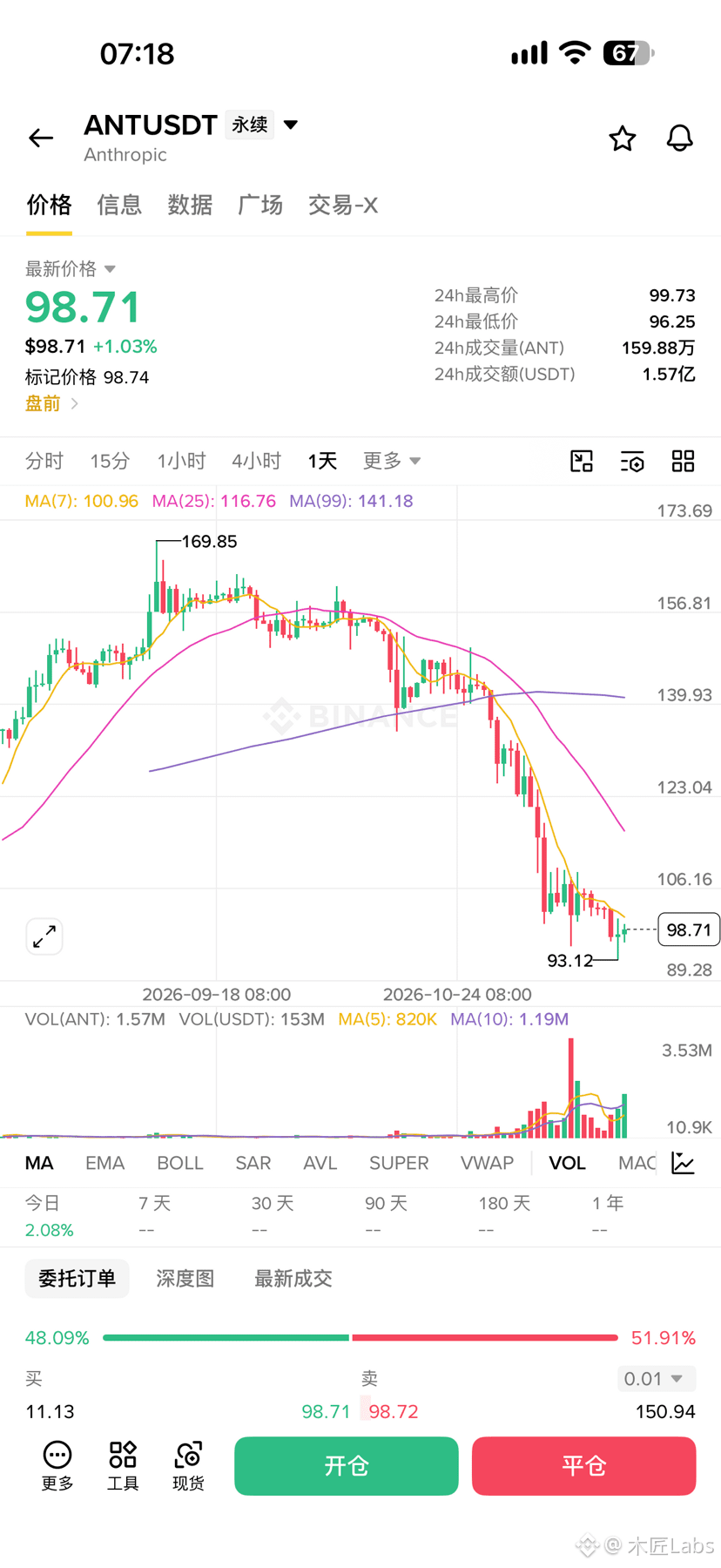
$ANT After Anthropic's IPO was upsized, 979.6 million shares were issued.
Offering price: 83 + 5% service fee
83 × 1.05 = 87.15U
The VIP next door charges a 12% service fee: 83 × 1.12 = 92.96U
It's currently at 98U pre-market, so there's not much profit left. It all comes down to how much capital you have.
Offering price: 83 + 5% service fee
83 × 1.05 = 87.15U
The VIP next door charges a 12% service fee: 83 × 1.12 = 92.96U
It's currently at 98U pre-market, so there's not much profit left. It all comes down to how much capital you have.
9
12
20k
·
--
Partly True
Brother Sun teaches Ms. Aoi Sola to learn about Bitcoin sooner rather than later
#英伟达财报大超预期,Q4营收展望1300亿美元
Brother Sun teaches Ms. Aoi Sola to learn about Bitcoin sooner rather than later
#英伟达财报大超预期,Q4营收展望1300亿美元
#英伟达财报大超预期,Q4营收展望1300亿美元

1
745
·
--
Nvidia revenue doubles, gross margin guidance becomes the new focus; U.S. stocks extend their pullback; Bitcoin hovers near $65,000
November 18, 2026
Market Moves
Market performance: At the November 17 close, the Dow fell 1.64%, the S&P 500 fell 1.03%, and the Nasdaq fell 0.74%. The Magnificent Seven saw two gainers and five decliners. Microsoft fell 2.27%, while Nvidia fell 0.44% in regular trading. Nvidia shares rose after the company released its earnings report after the close; the two trading sessions should be considered separately.
Thesis 1: The earnings report provides operational validation of AI demand. Nvidia's revenue doubling helps ease demand concerns. However, concerns that previously weighed on the market about returns on investment and the management transition still require validation through future deliveries and execution.
Thesis 2: After revenue growth, the market is turning its attention to earnings quality. Revenue guidance for the next quarter points to continued growth, but gross margin guidance is below this quarter's level. Product ramp-up, costs, and revenue mix will determine whether growth can translate into profits.
Thesis 3: A cooling macroeconomic environment affects both interest rates and earnings expectations. Slower retail growth and declining industrial output could ease interest-rate pressures, but may also raise demand concerns. Whether falling yields can support valuations depends on whether growth expectations stabilize.
📈 Key levels | Morning of November 18
December gold futures were at $3,825.70 per ounce, quoted around 08:33 Beijing time. December WTI futures were at $85.60 per barrel, and January 2027 Brent futures were at $93.13 per barrel, both quoted around 08:32. The U.S. Dollar Index was 103.598 and the 10-year U.S. Treasury yield was 5.103%, both based on the November 17 closing reference.
Cryptocurrency performance
As of around 08:43 Beijing time, BTC was at 64,754.01 USDT, up 0.18% over 24 hours; ETH was at 1,818.71 USDT, up 0.17% over 24 hours. The total cryptocurrency market capitalization was about $2.22 trillion, down 2.46% over 24 hours, with trading volume of about $79.870 billion. The aggregate figures were last updated separately at 08:38 Beijing time.
Institutional holdings cost basis | BTC: According to Strategy's latest disclosure on November 16, it held 850,849 BTC as of November 15, with an overall average cost of $75,452, including fees. BTC is about 14.24% below that cost, indicating an unrealized loss; this cost basis applies to the overall holding and is not the average purchase price of the most recent acquisition.
🔥 Market highlights
Nvidia earnings: Third-quarter revenue was $115.8 billion, up 103% year over year. Fourth-quarter revenue guidance is $130 billion, plus or minus 3%, excluding data center computing revenue from China.
1
1
725
·
--
Nvidia's board has not considered bringing Jensen Huang back as CEO.
The board is currently focused on the investigation into Jensen Huang, and no discussions about his reinstatement have taken place.
Nvidia's board has not considered bringing Jensen Huang back as CEO.
The board is currently focused on the investigation into Jensen Huang, and no discussions about his reinstatement have taken place.
The board is currently focused on the investigation into Jensen Huang, and no discussions about his reinstatement have taken place.

3
872
·
--
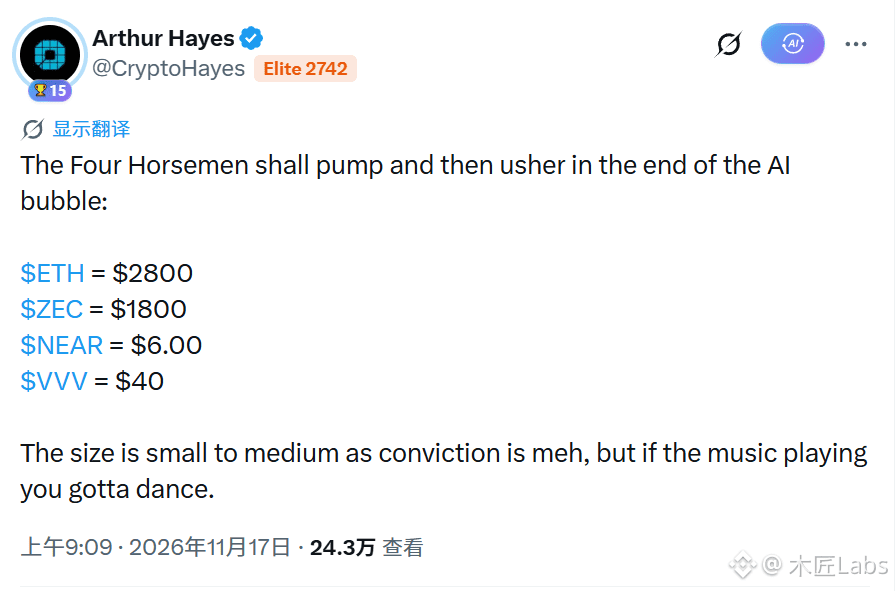
$PREDICT No one's going to back out, right!!
Let it be delayed, then. Those who hedged at high prices are definitely sitting pretty.
The profit on 1.5 lots is a few hundred bucks
1.4, 1.3, 1.2
Currently around 1U
If it keeps getting delayed, the price may continue to fall
$PREDICT No one's going to back out, right!!
Let it be delayed, then. Those who hedged at high prices are definitely sitting pretty.
The profit on 1.5 lots is a few hundred bucks
1.4, 1.3, 1.2
Currently around 1U
If it keeps getting delayed, the price may continue to fall
Let it be delayed, then. Those who hedged at high prices are definitely sitting pretty.
The profit on 1.5 lots is a few hundred bucks
1.4, 1.3, 1.2
Currently around 1U
If it keeps getting delayed, the price may continue to fall

7
4
5.5k
·
--
This version also includes assumptions for Bitcoin and Ethereum.
@heyi Sister Yi, I took the liberty of running some estimates!
We can’t simply assume that her entire portfolio is in BNB. After all, investors with assets worth hundreds of millions of dollars typically have more diversified portfolios.
So let’s assume the following portfolio:
70% BNB, 10% stablecoins, 10% BTC, and 10% ETH.
Based on reference prices from October 17 to November 16:
BNB: fell from $718 to $595, a decline of about 17.09%.
BTC: fell from $81,382 to $64,654, a decline of about 20.56%.
ETH: fell from $2,399 to $1,831, a decline of about 23.71%.
Stablecoins: remained essentially at $1.
Weighted by the portfolio allocations above, the entire portfolio declined by about 16.39% over 30 days.
If we assume the full $97.32 million trading loss was due to price declines in this portfolio, we can work backward to estimate:
The initial total assets were about $594 million!
Breaking that down further gives us the theoretical holdings:
🟡 BNB: about 579,000 coins
Initial market value of about $416 million, representing 70% of the portfolio.
🟠 BTC: about 730 coins
Initial market value of about $59.39 million, representing 10% of the portfolio.
🔵 ETH: about 24,800 coins
Initial market value of about $59.39 million, representing 10% of the portfolio.
💵 USDT: about 59.39 million tokens
Representing 10% of the portfolio as a stablecoin reserve.
Now let’s look at the theoretical losses from this downturn:
BNB accounted for about $71.03 million;
BTC accounted for about $12.21 million;
ETH accounted for about $14.08 million.
The three crypto assets together lost about $97.32 million.
This means that in this hypothetical model, although BNB made up 70% of the portfolio, the simultaneous declines in BTC and ETH also caused losses of more than $26 million.
Of course, this is only a mathematical estimate based on public data, historical prices, and assumed portfolio allocations. It does not represent He Yi’s actual holdings, nor does it prove that all of her trading losses came from spot price declines.
This version also includes assumptions for Bitcoin and Ethereum.
@Yi He Sister Yi, I took the liberty of running some estimates!
We can’t simply assume that her entire portfolio is in BNB. After all, investors with assets worth hundreds of millions of dollars typically have more diversified portfolios.
So let’s assume the following portfolio:
70% BNB, 10% stablecoins, 10% BTC, and 10% ETH.
Based on reference prices from October 17 to November 16:
BNB: fell from $718 to $595, a decline of about 17.09%.
BTC: fell from $81,382 to $64,654, a decline of about 20.56%.
ETH: fell from $2,399 to $1,831, a decline of about 23.71%.
Stablecoins: remained essentially at $1.
Weighted by the portfolio allocations above, the entire portfolio declined by about 16.39% over 30 days.
If we assume the full $97.32 million trading loss was due to price declines in this portfolio, we can work backward to estimate:
The initial total assets were about $594 million!
Breaking that down further gives us the theoretical holdings:
🟡 BNB: about 579,000 coins
Initial market value of about $416 million, representing 70% of the portfolio.
🟠 BTC: about 730 coins
Initial market value of about $59.39 million, representing 10% of the portfolio.
🔵 ETH: about 24,800 coins
Initial market value of about $59.39 million, representing 10% of the portfolio.
💵 USDT: about 59.39 million tokens
Representing 10% of the portfolio as a stablecoin reserve.
Now let’s look at the theoretical losses from this downturn:
BNB accounted for about $71.03 million;
BTC accounted for about $12.21 million;
ETH accounted for about $14.08 million.
The three crypto assets together lost about $97.32 million.
This means that in this hypothetical model, although BNB made up 70% of the portfolio, the simultaneous declines in BTC and ETH also caused losses of more than $26 million.
Of course, this is only a mathematical estimate based on public data, historical prices, and assumed portfolio allocations. It does not represent He Yi’s actual holdings, nor does it prove that all of her trading losses came from spot price declines.


Yi He
·
--
The pullback is temporary; spot holders have nothing to fear.🫥
7
5
6.9k
·
--
Yi He lost nearly $100 million in the past 30 days! Working backward, how much BNB does she actually hold? (Counting only Yi He's main account) @heyi
Recently, publicly available account data for Yi He drew market attention. Her trading losses over the past 30 days came to about $97.32 million. Including transfers and changes in other assets, her total assets fell by approximately $101.3 million.
How staggering is this loss?
Let’s make a bold assumption: if all of these trading losses came from her BNB holdings, how much BNB would she have to hold?
Based on BNB’s price over the past 30 days:
On October 17, BNB was priced at about $718; on November 16, it was about $591. That’s a 30-day decline of roughly 17.63%, or about $126.57 per BNB.
Dividing $97.32 million by the drop per BNB:
97,324,175 ÷ 126.57 ≈ 768,936 BNB.
In other words, working backward from this assumption, Yi He may hold around 770,000 BNB. At $591 per coin, that would put the current value of those assets at about $455 million!
What’s even more striking is that with 770,000 BNB:
Every $1 drop in BNB would reduce the portfolio’s value by about $770,000;
Every $10 drop would mean a loss of about $7.7 million;
Every $100 drop would mean a loss of about $77 million.
Of course, this is only a mathematical estimate based on the price decline and reported losses. It does not reflect Yi He’s actual holdings, nor does it prove that all the losses came from BNB.
Still, it illustrates just how dramatic asset fluctuations can be for major holders.
For ordinary investors, a drop of a few dozen dollars in BNB may be just a market fluctuation. But for someone holding hundreds of thousands of BNB, it could mean an asset-value change of tens of millions of dollars.
In the market, investors with different amounts of capital experience volatility on entirely different scales.
Yi He lost nearly $100 million in the past 30 days! Working backward, how much BNB does she actually hold? (Counting only Yi He's main account) @Yi He
Recently, publicly available account data for Yi He drew market attention. Her trading losses over the past 30 days came to about $97.32 million. Including transfers and changes in other assets, her total assets fell by approximately $101.3 million.
How staggering is this loss?
Let’s make a bold assumption: if all of these trading losses came from her BNB holdings, how much BNB would she have to hold?
Based on BNB’s price over the past 30 days:
On October 17, BNB was priced at about $718; on November 16, it was about $591. That’s a 30-day decline of roughly 17.63%, or about $126.57 per BNB.
Dividing $97.32 million by the drop per BNB:
97,324,175 ÷ 126.57 ≈ 768,936 BNB.
In other words, working backward from this assumption, Yi He may hold around 770,000 BNB. At $591 per coin, that would put the current value of those assets at about $455 million!
What’s even more striking is that with 770,000 BNB:
Every $1 drop in BNB would reduce the portfolio’s value by about $770,000;
Every $10 drop would mean a loss of about $7.7 million;
Every $100 drop would mean a loss of about $77 million.
Of course, this is only a mathematical estimate based on the price decline and reported losses. It does not reflect Yi He’s actual holdings, nor does it prove that all the losses came from BNB.
Still, it illustrates just how dramatic asset fluctuations can be for major holders.
For ordinary investors, a drop of a few dozen dollars in BNB may be just a market fluctuation. But for someone holding hundreds of thousands of BNB, it could mean an asset-value change of tens of millions of dollars.
In the market, investors with different amounts of capital experience volatility on entirely different scales.

2
1
3
2.2k
·
--
Bullish
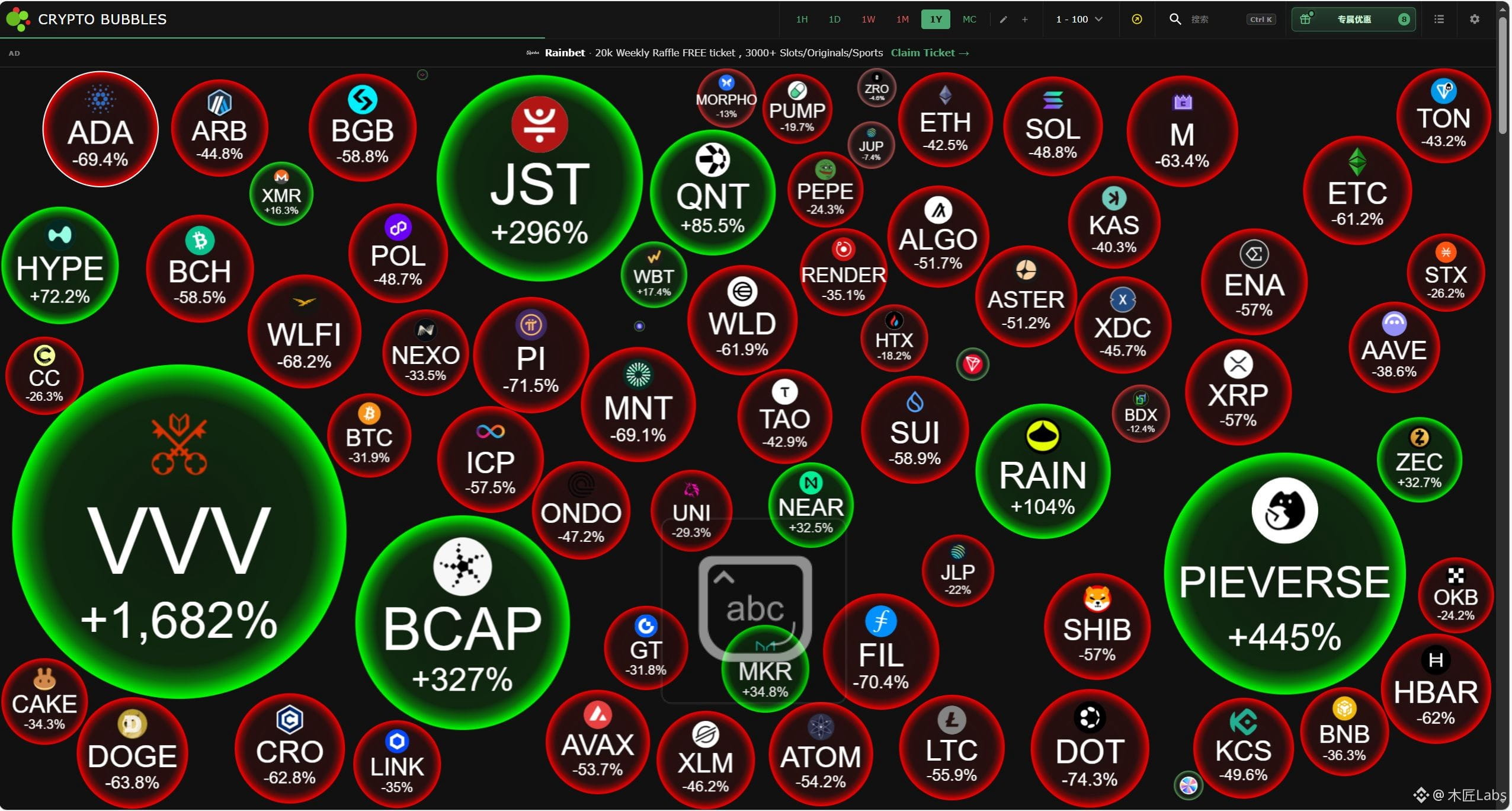
What the hell is $VVV VVV?
It rose 16.8-fold over the past year, a whopping 1682%
Calendar Cat rose 445% $PIEVERSE
{future}(VVVUSDT)
What the hell is $VVV VVV?
It rose 16.8-fold over the past year, a whopping 1682%
Calendar Cat rose 445% $PIEVERSE
It rose 16.8-fold over the past year, a whopping 1682%
Calendar Cat rose 445% $PIEVERSE
1
1.3k
·
--
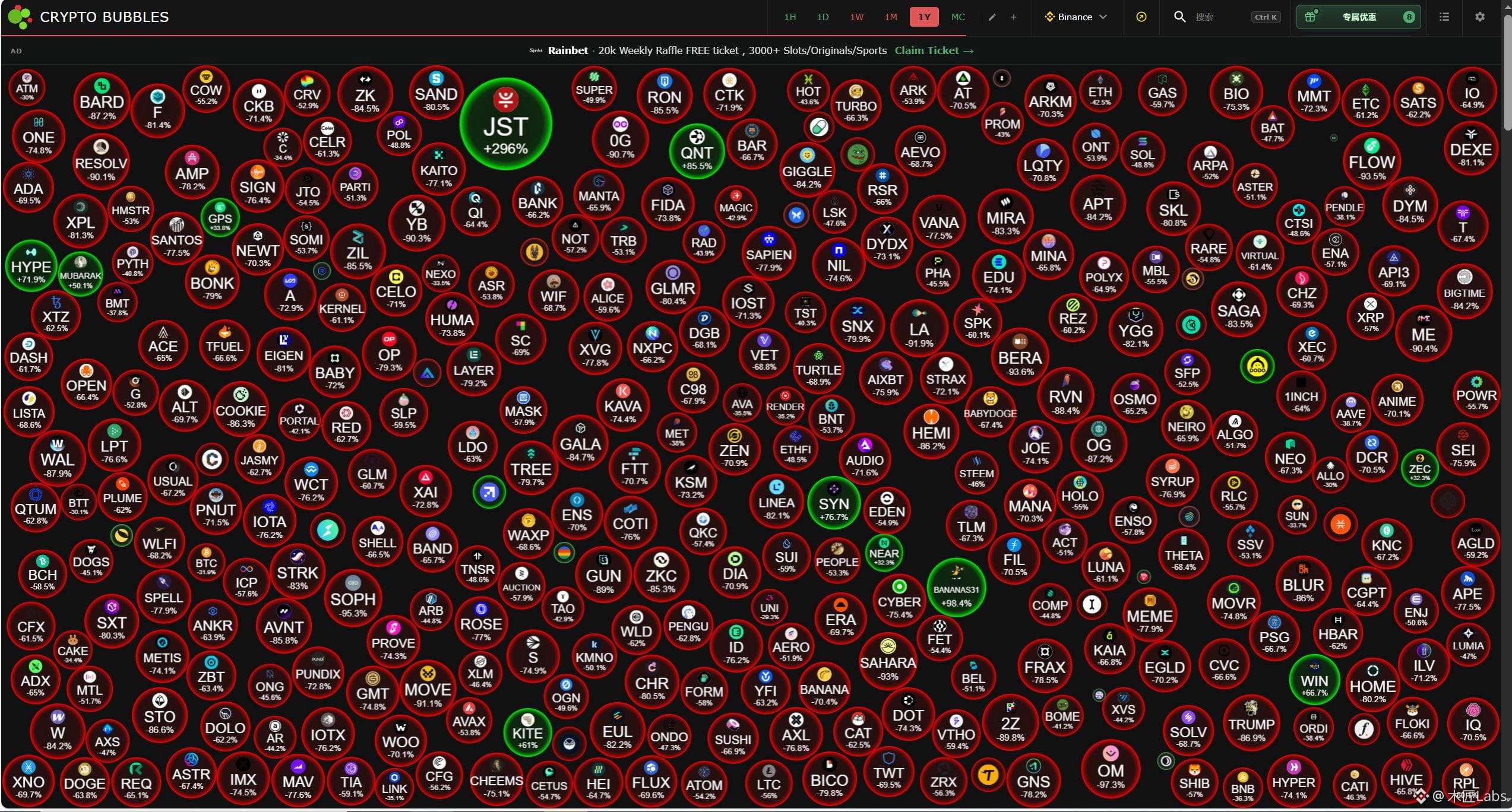
Over the past year on Binance, only 10 tokens went up~ all the others fell.
HYPE has become a mainstay, and it feels like this coin still has a lot of room to rise.
Over the past year on Binance, only 10 tokens went up~ all the others fell.
HYPE has become a mainstay, and it feels like this coin still has a lot of room to rise.
HYPE has become a mainstay, and it feels like this coin still has a lot of room to rise.
1
1
1.3k
·
--
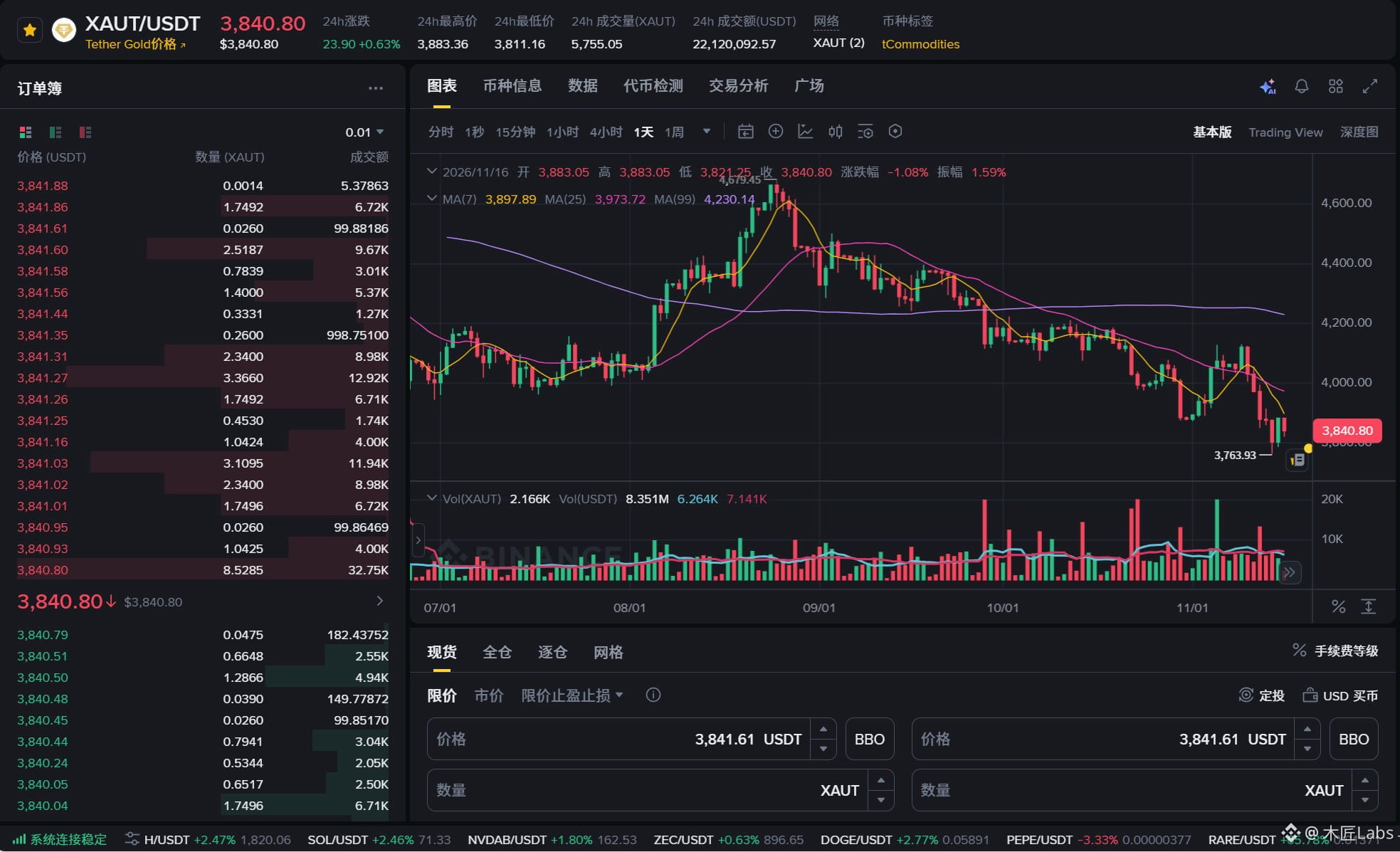
What do you guys think of gold's price movement?
I hardly ever see anyone offering futures trading signals for gold or silver!
What do you guys think of gold's price movement?
I hardly ever see anyone offering futures trading signals for gold or silver!
I hardly ever see anyone offering futures trading signals for gold or silver!
1
1
467
·
--
Jensen Huang may be returning to Nvidia as CEO!
According to the Financial Times, Huang is talking with some Silicon Valley heavyweights about taking back the CEO position at Nvidia.
Some of his allies plan to bring together a group of tech executives to pressure Nvidia’s board, and even hope to win support from the White House.
Meanwhile, the U.S. Treasury secretary has weighed in, saying Nvidia needs a major restructuring.
After the news broke, Nvidia shares briefly fell more than 2% in after-hours trading, then quickly recovered in a sharp V-shaped rebound.
The two sides are still maneuvering, and it remains unclear whether Huang will actually return.
Nvidia just can’t catch a break—one thing after another 😂
1
1
646
·
--
Saw this posted by someone outside my friend circle:
Apparently, if you put this 🍌 on your car's rear, anyone who crashes into you can't afford to pay for the damages.
😂😂😂 How many BTC have you bought?
Saw this posted by someone outside my friend circle:
Apparently, if you put this 🍌 on your car's rear, anyone who crashes into you can't afford to pay for the damages.
😂😂😂 How many BTC have you bought?
Apparently, if you put this 🍌 on your car's rear, anyone who crashes into you can't afford to pay for the damages.
😂😂😂 How many BTC have you bought?

1
1
876
·
--
Who is pushing Jensen Huang out behind the scenes? Rubio or Anthropic?
The controversy surrounding Jensen Huang has been growing lately.
A few days ago, Huang suddenly resigned as NVIDIA CEO, sending shockwaves through the tech world. At first, people thought it was just a management crisis sparked by a personal scandal. But now, it appears to involve a power struggle between U.S. politicians and AI giants.
Today I read a report from Wall Street News.
First, Rubio may have played a key role.
According to the report, the CIA initially reached no clear conclusions about the events involving Huang. But Rubio later reworked the relevant memo using stronger language.
The classified document was subsequently leaked to the media, further amplifying the impact of the whole affair.
Second, Anthropic has also been drawn into this.
Some people online suspect that the person who first provided the media with leads related to NVIDIA may have had ties to Anthropic.
However, there is currently no direct evidence that Anthropic was involved in actions targeting Huang. For now, this is mostly speculation from outside observers.
What’s truly worth noting is the disagreement between the two sides over the direction of AI development.
Huang has long opposed adding remote shutdown features and backdoors to AI chips, and he also wants NVIDIA to remain active in global markets.
Anthropic, on the other hand, is more supportive of tighter AI safety regulations and restrictions on advanced chip exports.
There are some significant interests at stake here.
Third, Huang’s departure could have a bigger impact on NVIDIA than people imagine.
Over the past few years, NVIDIA’s success has been due not only to its leading GPU technology but also to Huang’s considerable influence in the industry.
From computing-power purchases by major tech companies and data center construction to investments in AI startups, his personal influence has been behind many of these partnerships.
Now that the leadership has changed so suddenly, the market is wondering whether NVIDIA’s strategy might shift in the future.
I think what’s most worth watching is the increasingly obvious divide within the U.S. AI industry.
One side wants technology and chips to continue reaching global markets, while the other wants to tighten control through regulation and export restrictions.
Both sides have their own interests, and Huang happens to be at the center of this debate.
After all, NVIDIA’s fortunes now affect far more than its own stock price—they shape market expectations across the entire AI industry supply chain.
716
Log in to explore more content
Join global crypto users on Binance Square
⚡️ Get latest and useful information about crypto.
💬 Trusted by the world’s largest crypto exchange.
👍 Discover real insights from verified creators.
Email / Phone number