

Author: W labs CarolW
Breakthrough dawn reappears
Nowadays, the blockchain has gone through the ICO boom in 2017, the DeFi summer in 2020, and the recent NFT wave in 2021. However, the current Web3 field is still very niche. Most projects are based on the profit of wealth speculation, and the ecosystem lacks applications that solve industry problems, generate real value, and bring new economic growth points. In this round of bear market, when all parties concentrate on developing or looking for potential projects, they will inevitably think about these two questions: What will be the next track to go out of the circle? Can it generate real application value?
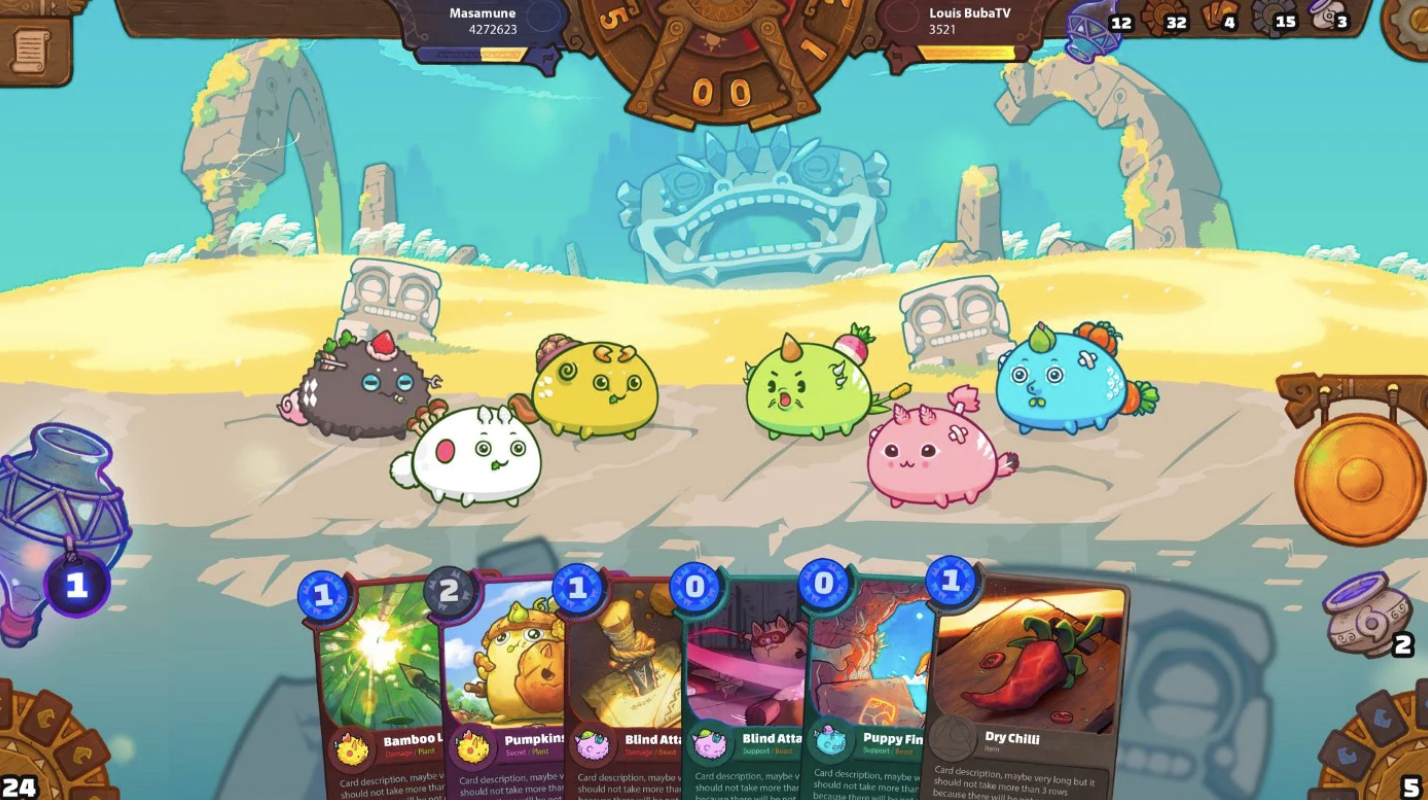
As Ethereum Layer2, sidechains, cross-chains and other infrastructure continue to mature, Axie Infinity has become popular in Southeast Asia, represented by the Philippines, setting off a "sports trend" in WeChat Moments, and Stepn, which has more than 60,000 daily active users, has been strongly popularized. The public has seen the dawn of breaking through the circle in the blockchain game track that combines "Tokens" with fun. However, until today, blockchain games seem to be unable to break through the last step. It seems that there is technical support and token-enabled gameplay, but what is missing?
Axie infinity
Where is the final step?
There are different opinions on how to make this final kick:
The "quality faction" insists that the quality of the game needs to be improved and that fun is king when compared to 3A.
The "infrastructure faction" believes that we need to wait until layer2 and cross-chain technologies mature, and once the status of the Spring and Autumn period has been settled, applications will naturally emerge.
The "model school" wants to reform the economic model of blockchain games, resist Ponzi scheme-like mechanisms, and hope to make a splash with a mature and robust token model...
I agree with all of the above, but I think none of them are the most feasible options. The vision of 3A is too idealistic, waiting for the infrastructure to settle is too long, and a mature and stable token economy does not seem to be the focus. So, what aspects can be focused on and made up for in a short period of time?
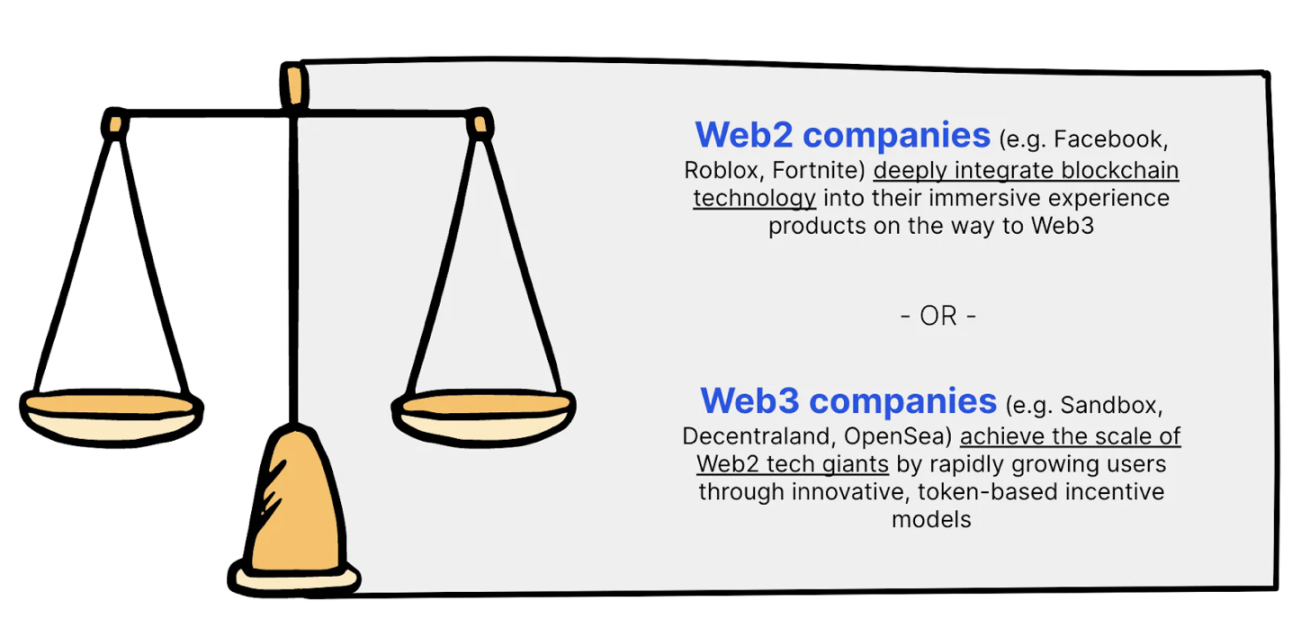
If you change your perspective, you may become more open-minded, and at the same time, you can happen to include the above perspectives. I put all of these together and put them all into one concept - "Web2.5 Game Transition Layer". In a word, it is to introduce Web2 game players into Web3 with low thresholds, and attract more people with GameFi money effect and NFT assets as highlights. Since it will take time for the widespread improvement of game quality and the maturity of public chain infrastructure, it is not enough to attract more capital and game companies to make up their minds to make some migrations. It is better to break the circle directly with user increments and fierce momentum in the early stage, stimulate them to enter the circle, and then realize a wider Web3 trend. In fact, the third stage of breaking the circle (NFT) is also such a model - first gather people through the "low threshold participation + strong incentive communication" model, and then attract big brands to transform and strengthen the out-of-circle effect.
Back to blockchain games, this is the significance of the "Web2.5 Game Transition Layer". So, let's take a closer look at what the architecture of an ideal "Web2.5 Game Transition Layer" looks like. I have listed several directions for discussion with you.
web2.0-vs-web3
1. Platform
First of all, traditional game users are at a loss when it comes to the new field of blockchain games. As they are accustomed to Steam and the guidance of the game application market, they have a demand for the guidance of the landing page and navigation page of Web3 games. It aggregates or filters blockchain game applications, displays evaluation data, and users can directly find games that suit their preferences on the platform.
At the same time, the subsequent platform can also add a decentralized community co-creation mechanism, allowing players to recommend their favorite, high-quality, and novel games for listing, supplemented by their own blockchain game reviews, and then submit them to the community for voting. After the recommendation is successful, the revenue generated by the game after listing will be shared by the recommender.
2. Tools
Knowing which games are available and which games are not good enough for you is also very important. However, the threshold for depositing and withdrawing funds/entering games in blockchain games is very high. You need to configure wallet plug-ins, hold tokens or NFTs, and other prerequisites are complicated. Let's analyze these issues one by one:
First, to buy tokens or NFTs, you need to register a wallet and deposit money to buy. Therefore, a low-threshold, ideal Web2.5 wallet should be free of complicated mnemonic registration and KYC identity verification;
Second, after purchasing on an exchange or market, you need to check your wallet;
Third, generally speaking, there should be extra tokens in the wallet to support gas fee consumption. This series of operations is very complicated and consumes the enthusiasm of new users. For the second and third questions, if you can buy NFTs and game tokens directly with a credit card, the entry threshold can be greatly reduced. Moonpay provides a convenient channel for users to purchase NFTs on Opensea.
At the same time, the recent Halliday is also a Web2.5 gaming tool that allows users to purchase NFTs without burden through credit card loans, and enter the game to earn income.
3. Game Architecture
Building games is complex and requires solving huge engineering problems. If the game logic and digital assets are all deployed on the chain, it will cause problems such as low speed, high cost, and player cheating from technical and economic factors.
High latency - If every player's transaction is sent to the smart contract, and read and registered in the game, this strong on-chain behavior can easily cause network overload, resulting in high latency in the game.
High overhead - In the case of strong on-chain games, every state change in the game needs to be registered and recorded in the blockchain. If users want to perform any action, they need to sign a transaction for each action, which means a lot of computational cost, which is too expensive for games with high speed requirements.
Information leakage - Competitive games rely on some degree of imperfect or incomplete information. However, blockchain is open and can be accessed by anyone in the world. In the case of strong on-chain games, players' transaction information and status changes are publicly readable on the chain, which may be monitored by others. Others can predict the player's next move, adjust strategies based on the player's behavior, cheat, and thus manipulate the game process and even the flow of funds.
Therefore, Web2.5 games are more suitable for a hybrid model, running the core part of the game logic on a dedicated server off-chain, and deploying a few stack components, contracts, etc. on the chain.
4. Gameplay
Web2 players may not be able to adapt to the new gameplay of Web3, which is highly integrated with native tokens, and may even have strong resistance. For example, the Discord team once conducted research on "whether to link wallets" and "whether to introduce NFTs", and these issues were opposed by most players. Therefore, how to design a gentle and inclusive gameplay requires critical thinking.
First is the discussion about free vs. paid.
Web2 games are generally free, and only occasionally require krypton gold. Not paying does not affect the fluency and completeness of the entire game. In Web3, many games currently have token thresholds for entry, or important links in the back require tokens to unlock. This limits the entry of new players to a certain extent and seriously interferes with the user's gaming experience.
An ideal Web2.5 transitional layer game should include both free-to-play and Gamefi play, allowing users to experience the entire process for free while also opening up some advanced or derivative sections for users to spend money.
Second, the status of in-game assets, data, etc. being uploaded to the chain.
In the context of imperfect infrastructure, it is not necessary to put all data on the chain. Losing functionality and practicality in pursuit of "meaning" is like picking up sesame seeds and losing watermelons. For example, a large number of low-end assets, such as land that has no practical significance in the game and can be issued at any time, do not need to be made into NFTs.
For the purpose of breaking the circle and promoting, the practicality that is truly experienced is more important. Take NFT as an example. When it first came out, there were very few NFTs that stored Metadata on IPFS, and most pictures were stored on centralized servers. Strictly speaking, such NFTs do not completely belong to the user. However, the fire of NFT has not declined at all and is still moving forward. The reason is that new users care about innovative technical narratives, inherent cultural functional attributes, etc., and will not demand that the new thing be perfect in the early stage.
Third, the lifespan of in-game assets.
Traditional game props are put on the shelves, taken off the shelves, removed, and given away at any time by centralized control. Many Web3 games are permanently owned. Although such a model fully guarantees the ownership of users, it is easy to bring risks such as whales hoarding and manipulating games, and the lack of deflation mechanism affecting the in-game economy. For Web2.5 games, setting them as consumable NFTs with a life cycle or seasonal resets and writing them into contracts is a more sustainable approach after compromise.
Fourth, community participation.
In traditional game communities, users can only make suggestions but cannot participate deeply. The community of Web3 blockchain games has the natural attributes of DAO, and the governance model implemented is also more pure and direct, with democratic decision-making based on the number of tokens held as weight. However, this direct democracy also has disadvantages. For example, voting based on the number of tokens as weight is easy to be controlled by giant whales, and the open topics are too broad and core. Once the community votes carelessly, it will interfere with the overall situation...
Therefore, games in the Web2.5 transition layer do not need to be too radical, and it is better to gradually achieve decentralized autonomy.
Judging from the content of the proposal, the project team centrally controls the economic model, but for some gameplay upgrades, game map adjustments and other governance open discussions, simple, minority decentralization is implemented, and token holders are given limited governance rights. Cultivate players to feel the sense of ownership and cultural atmosphere.
In addition, proposals are open to all members of the community, but the voting system recommends the use of a representative system, which can be delegated to working groups or other trusted and capable community members who are relatively most likely to make the right decisions, and at the same time they remain accountable to the DAO's voting body.
5. Token Economy
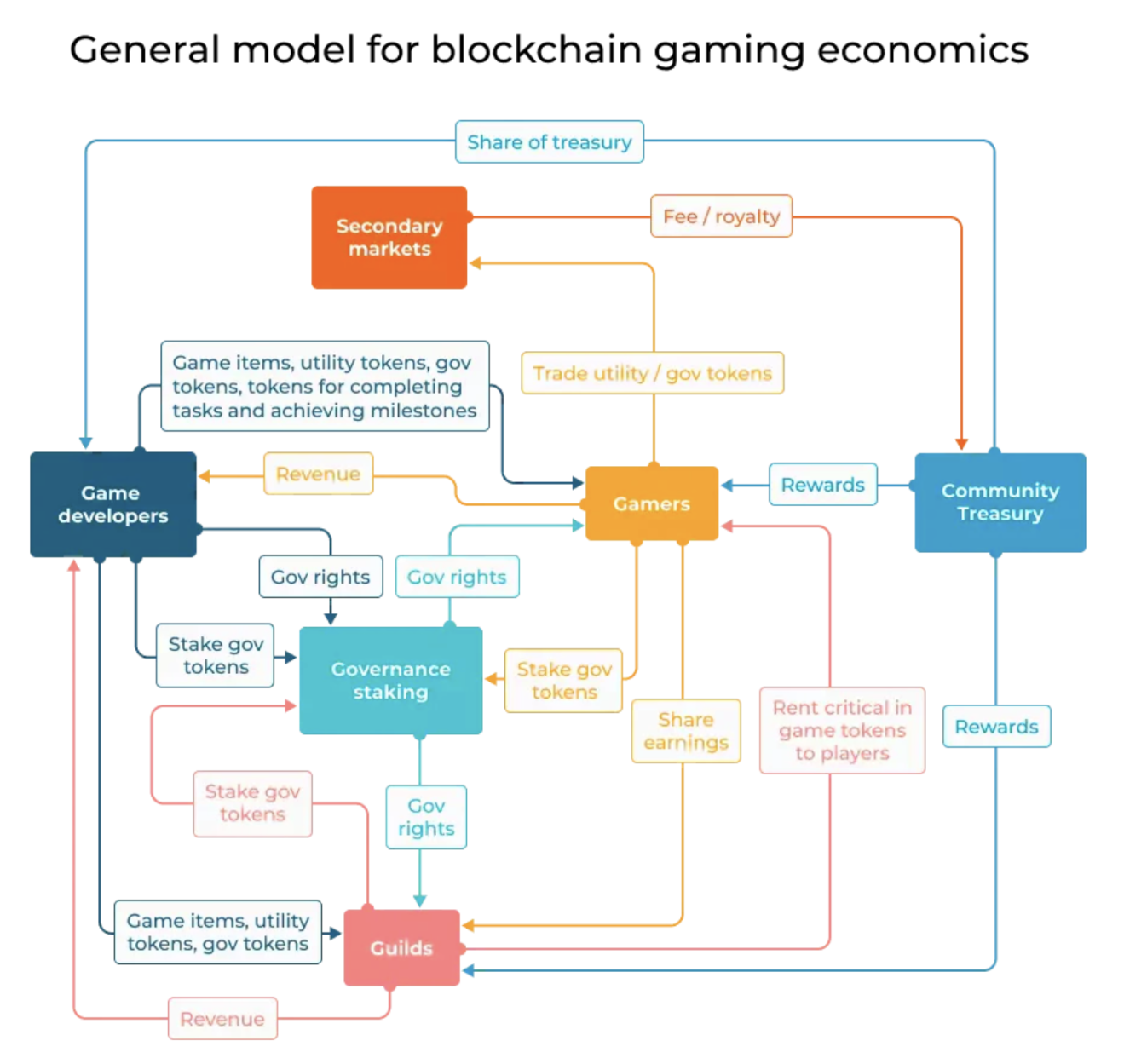
The token economic model is the top priority of Web3 games, and the design complexity is also quite large. For Web2.5 games, the first thing to consider is the breadth of the game audience and the fact that most of the players come from outside the circle of Web 2. gamers. They are more pursuing the connotation and function of the game. Money should only be used as an incentive, not a dominant motivation. Therefore, when designing the token economy, we must understand the order of priorities, separate the market game from the core game loop itself, and put the sustainability and healthy development of the entire economic system first. On the one hand, there is no need to design an extremely deflationary token model to make the price soar and become popular in a short period of time. On the other hand, the play-to-earn mechanism needs to be constantly adjusted according to the market and game situation to maintain the sustainable development of the economic system inside and outside the game.
6. Ideological enlightenment
Ideas are the most fundamental force that unites people. Therefore, it is of great significance to popularize the ideas and knowledge of blockchain games, gamefi, and Web3 data ownership to the general public of Web2.
“True digital ownership means that the items you own as a player in the game are actually yours. You can sell them, you can trade them, you can do whatever you want with them. Game developers can use this technology to monetize secondary markets and fully leverage the possibility of players using items between games.”
—Sławomir Bubel, CEO, Hoard
There are various forms of thought dissemination, which can be a series of courses, high-quality research articles on blockchain games, or player forums or streaming media, etc. From observation, CGU's course education and certificate system are well done abroad, becoming a guide for players to systematically enter and advance; in the Chinese-speaking world, WGGDAO's original content is very eye-catching, and it is a community for players to co-create and share with attitude and warmth; Mymetadata's information is rich and timely, helping players quickly capture industry trends.
Conclusion
Finally, when you are done writing, you may as well end with a short poem:
The light of dawn is just beginning to shine, and the final step is just around the corner. Now let me ask, where is the best place to exert force? One, two, three, four, five, six, seven, all places can accumulate force. However, if you wait for one place to move and then move the whole body, it will exhaust your energy.
It is said that the doctrine of the mean is universal, and it smoothes all directions in a circle. It is better not to ask east or west, but to "step out" first and then talk about it.
Reference articles for this article:
Game speculation about WEB2.5
"Ten Questions and Ten Answers" The Dilemma and Outlook of Blockchain Games
The Future of (Crypto) Gaming - Delphi Digital
Sports and Crypto: Welcome to Web2.5
Building on-chain fully is hard; what about web2.5?
A Tale of 2 Metaverses