
橙子Joyce
596 Posts

橙子Joyce
 Square Verified+
Report
Block User
十年以上专注美股市场实战投资策略与资产管理|十年以上投资BTC.ETH.BNB.|每日分享美股实盘与宏观盘面解盘|追踪美联储货币政策解读|前瞻·宏观数据点评·加密市场的联动分析|贵金属投资策略黄金.白银.铜|中长期价值投资者|直播北京时间晚上21:00-23:30|推特X:@Joyce88AI|✨星河社区联合创始人✨

BNB Holder
Frequent Trader
8.9 Years
1.8K+ Following
42.3K+ Followers
49.0K+ Liked
Posts
All
Quotes
Videos
Live
PINNED
·
--
Dear friends, something came up tonight. Some friends from abroad have arrived, and I need to pick them up at the airport and host them, so I won’t be livestreaming tonight. Thank you so much 🙏 for your support and kindness! I’ll be back live tomorrow night!
Dear friends, something came up tonight. Some friends from abroad have arrived, and I need to pick them up at the airport and host them, so I won’t be livestreaming tonight. Thank you so much 🙏 for your support and kindness! I’ll be back live tomorrow night!

1.1k
3
68
1.1k
PINNED
·
--
Bullish
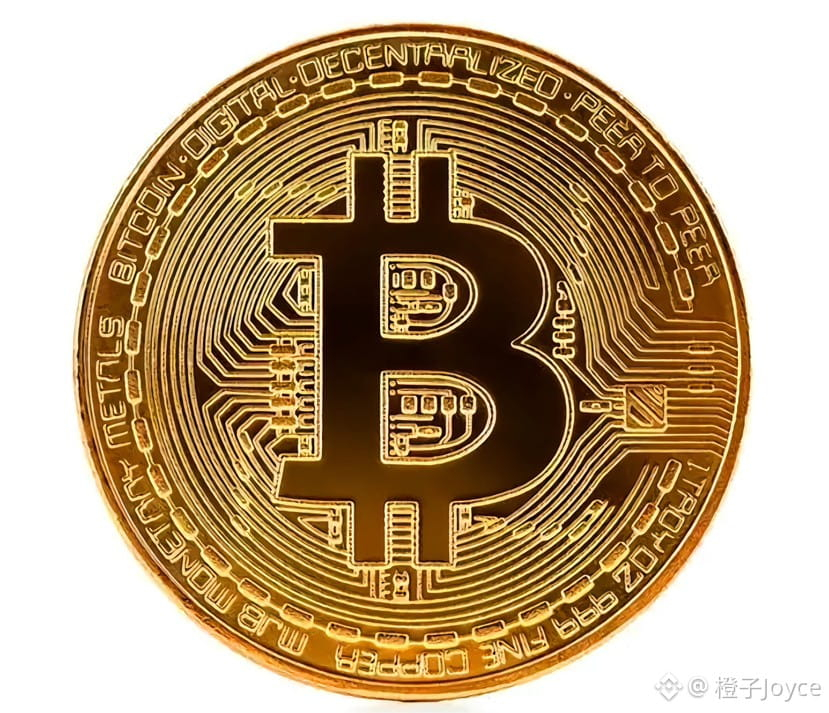
Top 10 “Whale” Institutions and Entities Holding BTC Worldwide
When analyzing institutional Bitcoin holdings worldwide, the distinction between traditional finance (TradFi) and crypto-native giants is becoming increasingly clear. The market is primarily divided into two core camps: centralized custodians of spot ETFs and publicly listed companies with corporate treasuries.
I. Traditional Asset Management Giants: Three-Way Race in Spot ETFs
Since the approval and listing of U.S. spot ETFs, asset management giants have become the world’s largest BTC custodians through ETFs:
* BlackRock (IBIT): Holds approximately 811,000 BTC. As the world’s largest spot Bitcoin ETF, IBIT has a significant capital-siphoning effect and leads by a wide margin.
* Fidelity (FBTC): Holds approximately 260,000 BTC. Its independent custody system (Fidelity Digital Assets) has secured its position in the second tier of asset managers.
* Grayscale (GBTC/BTC): Holds approximately 220,000 BTC. Though the long-established trust has seen outflows, it still has substantial reserves.
II. Publicly Listed Company Treasuries: Strategy Leads the “Corporate Dollar-Cost Averaging” Race
Ranked by BTC held directly on companies’ own balance sheets:
* Strategy (formerly MicroStrategy): Holds 849,000 BTC (average cost approximately $66,384). It continues to make frequent large purchases through “stock issuance + debt issuance,” accounting for approximately 4.04% of the total BTC supply.
* MARA Holdings: Holds approximately 43,000 BTC. A North American mining leader that adheres to a full-retention “HODL” strategy.
* Metaplanet: Holds approximately 43,000 BTC. Dubbed “Asia’s MicroStrategy,” it actively uses low-interest yen financing to build treasury reserves.
* Twenty One Capital: Holds approximately 43,000 BTC. An emerging player allocating assets to corporate treasuries.
* Bullish: Holds approximately 24,000 BTC. An institutional-grade crypto trading and liquidity services provider.
* Riot Platforms: Holds approximately 15,000 BTC. A traditional mining infrastructure giant.
* CleanSpark: Holds approximately 13,000 BTC. A mining company focused on green energy.
* Tesla: Holds approximately 10,000 BTC. A core long-term holding of Elon Musk’s company, with most of it remaining untouched.
* Coinbase Global: Holds approximately 9,000–16,000 BTC (proprietary assets only; excludes customer funds held in custody).
* Block, Inc.: Holds approximately 8,000 BTC. The payments giant led by Jack Dorsey makes regular purchases based on a fixed percentage of its profits.
$BTC
$BNB
1
6
1.6k
·
--

紫藤Sofi
·
--
Red envelopes 🧧🧧 are waiting for you
Hong Kong plans to establish a licensing regime for virtual asset trading, custody, advisory and management services. Christopher Hui, Deputy Secretary for Financial Services and the Treasury, said the relevant amendment bill will be submitted to the Legislative Council in 2026. According to Foresight News, Hui made the remarks at the main forum of the 11th Hong Kong FinTech Week x StartmeupHK 2026. The event concluded on November 3, exploring how finance, artificial intelligence and global expansion can become drivers of growth.
Hong Kong plans to establish a licensing regime for virtual asset trading, custody, advisory and management services. Christopher Hui, Deputy Secretary for Financial Services and the Treasury, said the relevant amendment bill will be submitted to the Legislative Council in 2026. According to Foresight News, Hui made the remarks at the main forum of the 11th Hong Kong FinTech Week x StartmeupHK 2026. The event concluded on November 3, exploring how finance, artificial intelligence and global expansion can become drivers of growth.

780
·
--
Bullish
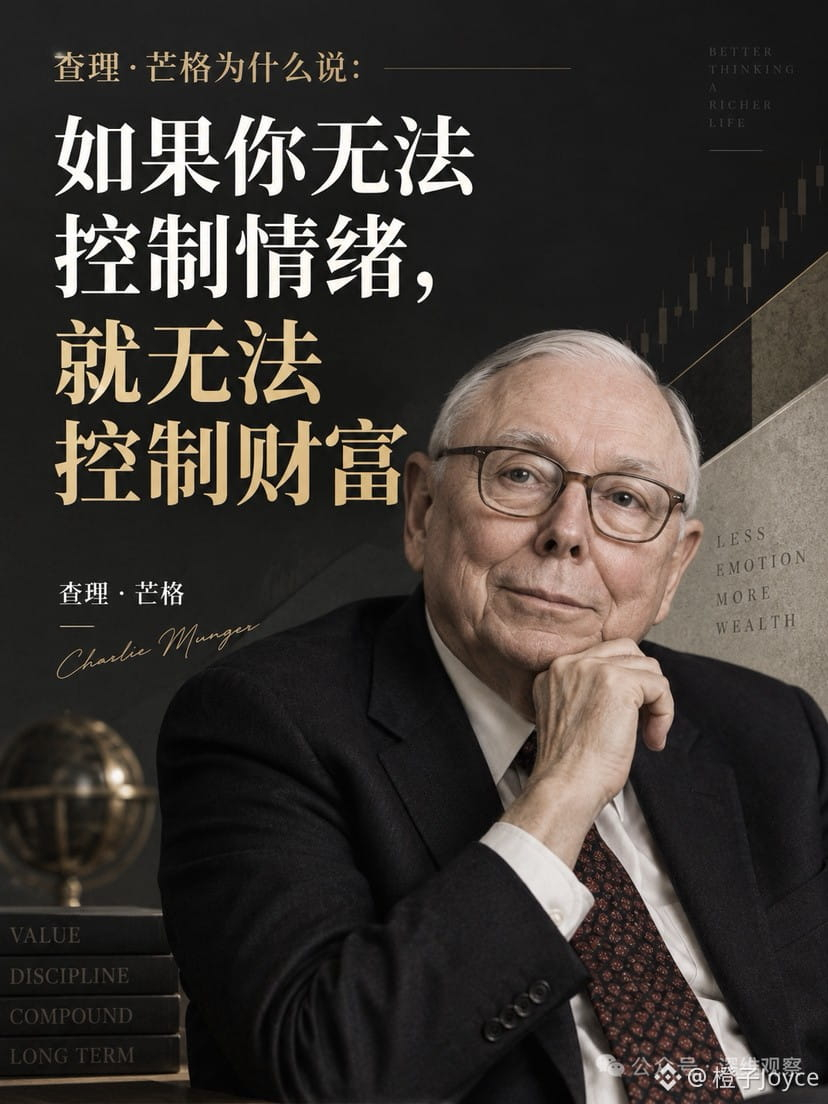
Munger: If you can't control your emotions, you can't control your wealth
The most expensive thing in investing is often not overpaying for a stock, but making a decision when you're in the worst emotional state.
When prices rise, we're afraid of missing out and can't help chasing them;
When prices fall, we're afraid of losing more and can't help selling.
The slightest jolt from the market can make people start abandoning their principles.
What truly sets investors apart is often not who knows more, but who can still think clearly in extreme conditions.
Munger placed great importance throughout his life on people's psychological biases, because he understood clearly that the human brain isn't naturally suited to investing.
We like to follow the crowd, get instant feedback, prove we're right, and we naturally hate losses.
These instincts may not be bad in everyday life, but in the capital markets, they can easily turn us into a “buy high, sell low” machine.
So the truly difficult part of investing has never been learning a valuation formula, but building a system that keeps us from readily abandoning discipline when we're gripped by fear or greed.
Wealth doesn't necessarily reward the smartest people.
Very often, it rewards those who remain calm when everyone else loses control.
~~~~~~~~~~~~~~~~~~~~~We continue to make regular investments in BTC, BNB, and the stocks of the following companies listed on the Binance exchange
$SPCXB
{spot}(SPCXBUSDT)
$GOOGLB
{spot}(GOOGLBUSDT)
$AMZNB
{spot}(AMZNBUSDT)
Munger: If you can't control your emotions, you can't control your wealth
The most expensive thing in investing is often not overpaying for a stock, but making a decision when you're in the worst emotional state.
When prices rise, we're afraid of missing out and can't help chasing them;
When prices fall, we're afraid of losing more and can't help selling.
The slightest jolt from the market can make people start abandoning their principles.
What truly sets investors apart is often not who knows more, but who can still think clearly in extreme conditions.
Munger placed great importance throughout his life on people's psychological biases, because he understood clearly that the human brain isn't naturally suited to investing.
We like to follow the crowd, get instant feedback, prove we're right, and we naturally hate losses.
These instincts may not be bad in everyday life, but in the capital markets, they can easily turn us into a “buy high, sell low” machine.
So the truly difficult part of investing has never been learning a valuation formula, but building a system that keeps us from readily abandoning discipline when we're gripped by fear or greed.
Wealth doesn't necessarily reward the smartest people.
Very often, it rewards those who remain calm when everyone else loses control.
~~~~~~~~~~~~~~~~~~~~~We continue to make regular investments in BTC, BNB, and the stocks of the following companies listed on the Binance exchange
$SPCXB
$GOOGLB
$AMZNB
659
·
--
Bullish
Verified
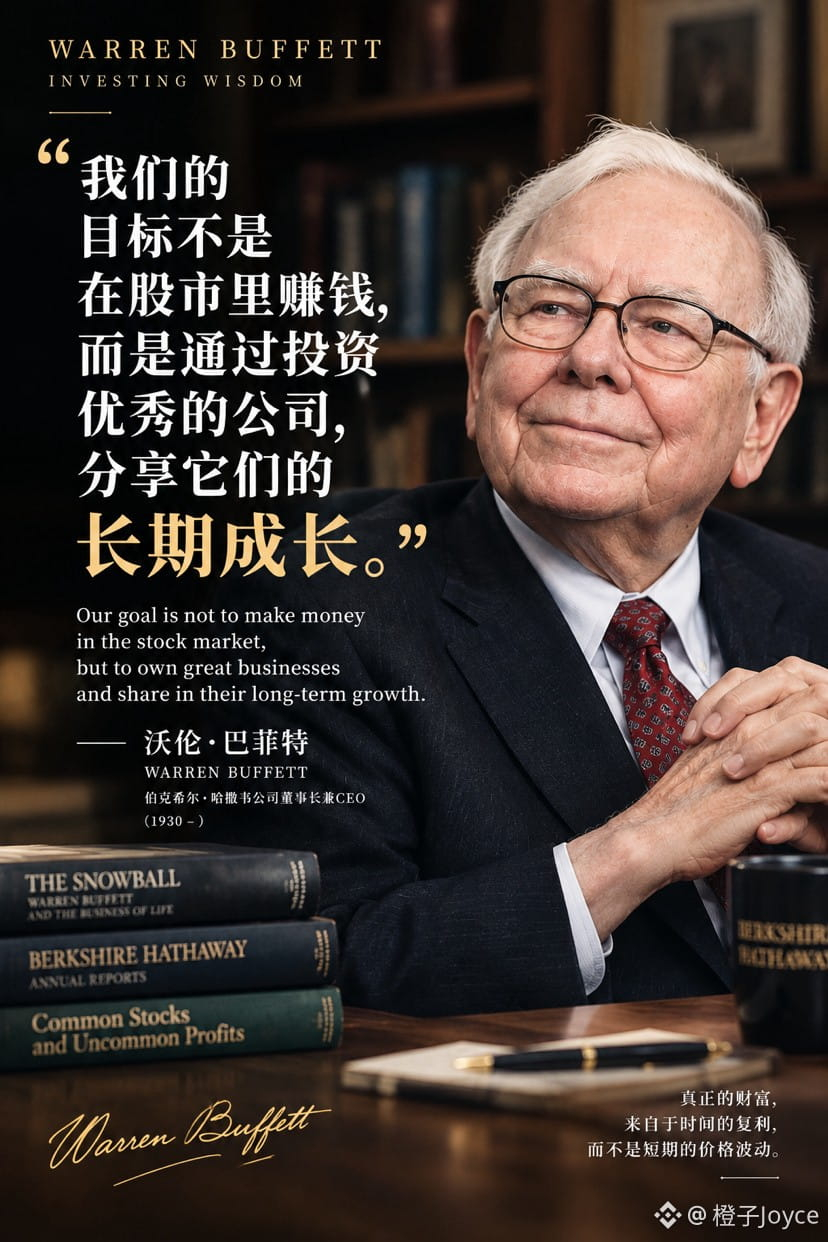
Munger agreed with Buffett: **Small amounts of capital should be invested according to business value, too; they simply allow investors to research overlooked, mispriced opportunities. His entire philosophy can be summed up in one sentence: use multidisciplinary thinking to screen businesses, avoid major pitfalls first, then buy a few good companies at reasonable prices and hold them for the long term.**
- **Latticework of mental models**: Add tools from disciplines such as mathematics, psychology, and economics to your “toolbox” for thinking, and evaluate a business from multiple angles. Looking at every problem with just one tool makes everything look like a nail.
- **Circle of competence**: Invest only in businesses you understand and whose profit-making logic you can clearly explain. Your circle can expand as you learn, while honesty about what you don’t know helps you stay within its boundaries.
- **Inversion**: First ask, “How could this fail?” Then work backward to eliminate risks. In investing, that means avoiding companies with high debt, untrustworthy management, complex business models, or excessive valuations.
- **Finding great businesses**: Focus on competitive moats, excellent management, free cash flow, and long-term competitiveness. A moat is the strength of a brand, cost advantage, network effect, or other factor that makes it difficult for competitors to take away a company’s business.
- **Margin of safety and opportunity cost**: The price should be below the value the business is expected to create in the future; at the same time, consider whether your money could be put to better use elsewhere. Concentrate your bets only when you truly understand the opportunity and the odds are in your favor.
- **Rationality and patience**: In the short term, the market is a voting machine; over the long term, it is more like a weighing machine. Trade less and let greed and fear influence you less, giving compounding time to work.
Munger later helped move Buffett away from buying “extremely cheap companies” and toward buying “great companies at reasonable prices.” The focus of this framework is not to predict share prices, but to judge what a business will be worth in the future and whether you truly understand it.
The principles of investing are the same for small and large amounts of capital; what really differs is the number of opportunities available. Having less capital only limits the amount you can invest for now, and may actually allow you to research a wider range of opportunities.
~~~~~~~~~~~~~~~~~~~~~
We continue to invest regularly in great companies
$GOOG.US
{stock_us}(GOOG.US)
$BRK.B.US
{stock_us}(BRK.B.US)
$AMZN.US
{stock_us}(AMZN.US)
Munger agreed with Buffett: **Small amounts of capital should be invested according to business value, too; they simply allow investors to research overlooked, mispriced opportunities. His entire philosophy can be summed up in one sentence: use multidisciplinary thinking to screen businesses, avoid major pitfalls first, then buy a few good companies at reasonable prices and hold them for the long term.**
- **Latticework of mental models**: Add tools from disciplines such as mathematics, psychology, and economics to your “toolbox” for thinking, and evaluate a business from multiple angles. Looking at every problem with just one tool makes everything look like a nail.
- **Circle of competence**: Invest only in businesses you understand and whose profit-making logic you can clearly explain. Your circle can expand as you learn, while honesty about what you don’t know helps you stay within its boundaries.
- **Inversion**: First ask, “How could this fail?” Then work backward to eliminate risks. In investing, that means avoiding companies with high debt, untrustworthy management, complex business models, or excessive valuations.
- **Finding great businesses**: Focus on competitive moats, excellent management, free cash flow, and long-term competitiveness. A moat is the strength of a brand, cost advantage, network effect, or other factor that makes it difficult for competitors to take away a company’s business.
- **Margin of safety and opportunity cost**: The price should be below the value the business is expected to create in the future; at the same time, consider whether your money could be put to better use elsewhere. Concentrate your bets only when you truly understand the opportunity and the odds are in your favor.
- **Rationality and patience**: In the short term, the market is a voting machine; over the long term, it is more like a weighing machine. Trade less and let greed and fear influence you less, giving compounding time to work.
Munger later helped move Buffett away from buying “extremely cheap companies” and toward buying “great companies at reasonable prices.” The focus of this framework is not to predict share prices, but to judge what a business will be worth in the future and whether you truly understand it.
The principles of investing are the same for small and large amounts of capital; what really differs is the number of opportunities available. Having less capital only limits the amount you can invest for now, and may actually allow you to research a wider range of opportunities.
~~~~~~~~~~~~~~~~~~~~~
We continue to invest regularly in great companies
$GOOG.US
$BRK.B.US
$AMZN.US
1
1.1k
·
--
Today reminded me of my first broadcast, which went live on September 28, 2026, from 21:00 to 23:30 Beijing time, on an auspicious day we had chosen. Hello, friends on Binance Square! I’m Joyce Orange. We went from discussing the U.S. stock market and macroeconomics to crypto allocation, and I was truly impressed by your lively comments and thoughtful, in-depth questions. Investing is a lifelong pursuit, and being able to share my trading logic and market insights with everyone on this vibrant platform is a wonderful thing.
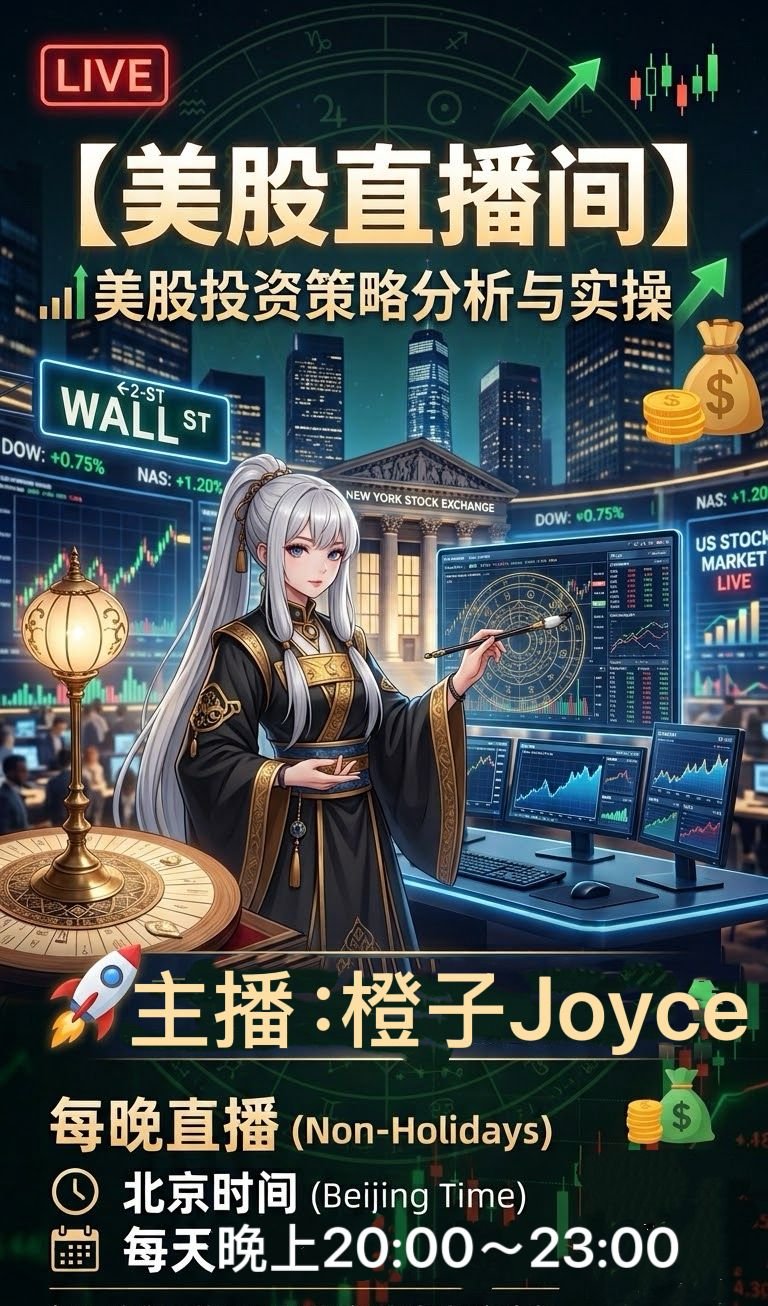
Going forward, I’ll continue bringing you objective, in-depth, and accessible market analysis on Binance Square every evening from 20:00 to 23:00 Beijing time. Sound logic, strategies that stay on track! $AMZNB
$XAU
Going forward, I’ll continue bringing you objective, in-depth, and accessible market analysis on Binance Square every evening from 20:00 to 23:00 Beijing time. Sound logic, strategies that stay on track! $AMZNB
$XAU
2
5
738
·
--
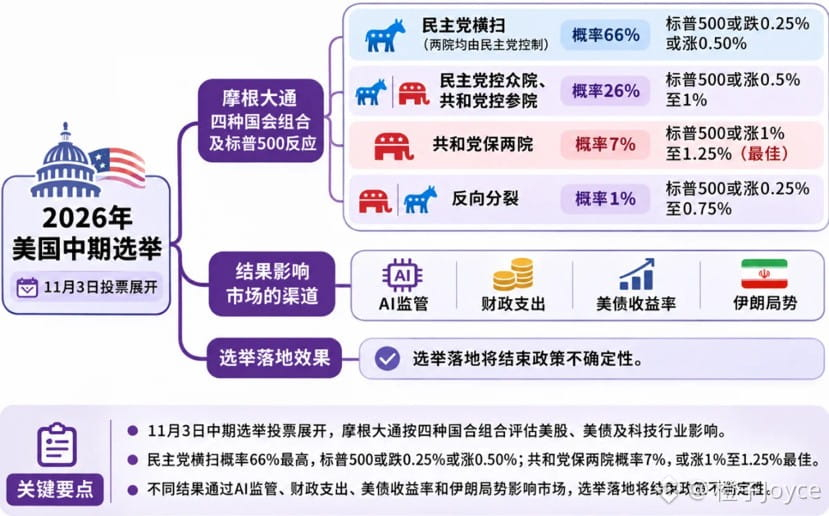
【JPMorgan’s major scenario analysis: 4 US election outcomes and their potential impact on US stocks and crypto markets】
As voting in the US midterm elections gets underway, Wall Street heavyweight JPMorgan has released its latest scenario forecasts for the balance of power in Congress. The analysis shows an “inverse relationship” between short-term market gains and the probability of each outcome:
📊 Four possible balances of power and expected S&P 500 performance:
1️⃣ Democrats sweep both chambers (66% probability): S&P 500 expected to range from -0.25% to +0.50%. Concerns over tighter AI regulation and a pullback in tech stocks may weigh on markets. However, since such measures are unlikely to overcome a presidential veto, JPMorgan recommends buying AI and tech assets on dips.
2️⃣ Divided Congress: Democrats control the House, Republicans the Senate (26% probability): S&P 500 expected to gain +0.5% to +1.0%. Gridlock would reduce the likelihood of major policy changes, while US Treasury yields may ease.
3️⃣ Republican red wave sweep (7% probability): S&P 500 expected to gain +1.0% to +1.25% (the largest rise). The removal of regulatory risks would directly benefit the tech and crypto sectors, though a widening deficit could push US Treasury yields higher.
4️⃣ Reverse split: Republicans control the House, Democrats the Senate (1% probability): S&P 500 expected to gain +0.25% to +0.75%. Budget standoffs could cause short-term volatility.
💡 What crypto investors should watch:
Although a Democratic sweep is the most likely outcome, its boost to US stocks would be relatively limited. By contrast, a “Republican sweep,” with just a 7% probability, would be the most likely to spur risk appetite. For crypto markets, whatever the final outcome, the resolution of political uncertainty could act as a catalyst for improving liquidity across risk assets.

2
553
·
--
Bullish
Verified
🚀 【Major News】SpaceX Plans to Acquire Boost Mobile! Starlink Accelerates the Buildout of a “Space-to-Ground” Hybrid Network, Taking on U.S. Telecom Giants
Elon Musk’s SpaceX ($SPCX) is in talks with EchoStar ($ECHO) about acquiring its wireless service brand Boost Mobile or gaining access to its network.
If the deal goes through, SpaceX would gain direct access to Boost’s 7.38 million wireless subscribers and established distribution channels, significantly shortening the time needed to build its own network. Following the news, SpaceX shares rose more than 4% intraday and EchoStar gained nearly 2%, while shares of the three major U.S. traditional carriers—AT&T ($T), Verizon ($VZ), and T-Mobile ($TMUS)—all came under pressure.
Core strategy: a “one-two punch” of spectrum, satellites, and ground stations
SpaceX isn’t just building a satellite communications business. Its ultimate goal is to create a hybrid “satellite + ground” mobile network and challenge the three telecom giants in a market with annual revenues of $600 billion:
* Prime spectrum assets: SpaceX recently spent $8 billion to acquire 800 MHz of low-band spectrum, which has strong signal penetration. Combined with the 65 MHz of nationwide spectrum it previously purchased from EchoStar, its spectrum holdings are highly complementary.
* Second-generation Starlink satellites: The FCC has approved deployment of the second-generation Starlink Mobile constellation, with up to 15,000 satellites. Launches are expected to begin in 2027, with commercial service in 2028; the company says performance is expected to improve 100-fold.
* Ground station and terminal rollout: SpaceX is in talks to secure at least 80,000 ground station sites across the U.S. Elon Musk has also proposed adding small radios to residential and commercial Starlink terminals, turning them into cell sites that provide coverage to mobile phones.
Potential challenges and hurdles
* Transfer of network leasing agreements: Boost Mobile currently leases network capacity from AT&T and T-Mobile. Transferring those contracts to SpaceX would require approval from its competitors, making the restructuring process uncertain.
* High operating costs: Building a nationwide network requires substantial CapEx, including subscriber subsidies, ground station construction, and customer service, posing a major test of operational execution.
As Starlink Mobile gradually completes the four pieces of the puzzle—spectrum, satellites, ground infrastructure, and distribution—commercial spaceflight is evolving from a “tool for filling coverage gaps” into a “direct competitor.” The boundaries between low-Earth-orbit satellites and concepts such as RWA/DePIN (decentralized physical infrastructure) are also converging rapidly!
$SPCX.US
{stock_us}(SPCX.US)
🚀 【Major News】SpaceX Plans to Acquire Boost Mobile! Starlink Accelerates the Buildout of a “Space-to-Ground” Hybrid Network, Taking on U.S. Telecom Giants
Elon Musk’s SpaceX ($SPCX) is in talks with EchoStar ($ECHO) about acquiring its wireless service brand Boost Mobile or gaining access to its network.
If the deal goes through, SpaceX would gain direct access to Boost’s 7.38 million wireless subscribers and established distribution channels, significantly shortening the time needed to build its own network. Following the news, SpaceX shares rose more than 4% intraday and EchoStar gained nearly 2%, while shares of the three major U.S. traditional carriers—AT&T ($T), Verizon ($VZ), and T-Mobile ($TMUS)—all came under pressure.
Core strategy: a “one-two punch” of spectrum, satellites, and ground stations
SpaceX isn’t just building a satellite communications business. Its ultimate goal is to create a hybrid “satellite + ground” mobile network and challenge the three telecom giants in a market with annual revenues of $600 billion:
* Prime spectrum assets: SpaceX recently spent $8 billion to acquire 800 MHz of low-band spectrum, which has strong signal penetration. Combined with the 65 MHz of nationwide spectrum it previously purchased from EchoStar, its spectrum holdings are highly complementary.
* Second-generation Starlink satellites: The FCC has approved deployment of the second-generation Starlink Mobile constellation, with up to 15,000 satellites. Launches are expected to begin in 2027, with commercial service in 2028; the company says performance is expected to improve 100-fold.
* Ground station and terminal rollout: SpaceX is in talks to secure at least 80,000 ground station sites across the U.S. Elon Musk has also proposed adding small radios to residential and commercial Starlink terminals, turning them into cell sites that provide coverage to mobile phones.
Potential challenges and hurdles
* Transfer of network leasing agreements: Boost Mobile currently leases network capacity from AT&T and T-Mobile. Transferring those contracts to SpaceX would require approval from its competitors, making the restructuring process uncertain.
* High operating costs: Building a nationwide network requires substantial CapEx, including subscriber subsidies, ground station construction, and customer service, posing a major test of operational execution.
As Starlink Mobile gradually completes the four pieces of the puzzle—spectrum, satellites, ground infrastructure, and distribution—commercial spaceflight is evolving from a “tool for filling coverage gaps” into a “direct competitor.” The boundaries between low-Earth-orbit satellites and concepts such as RWA/DePIN (decentralized physical infrastructure) are also converging rapidly!
$SPCX.US

8
2.3k
·
--
Article
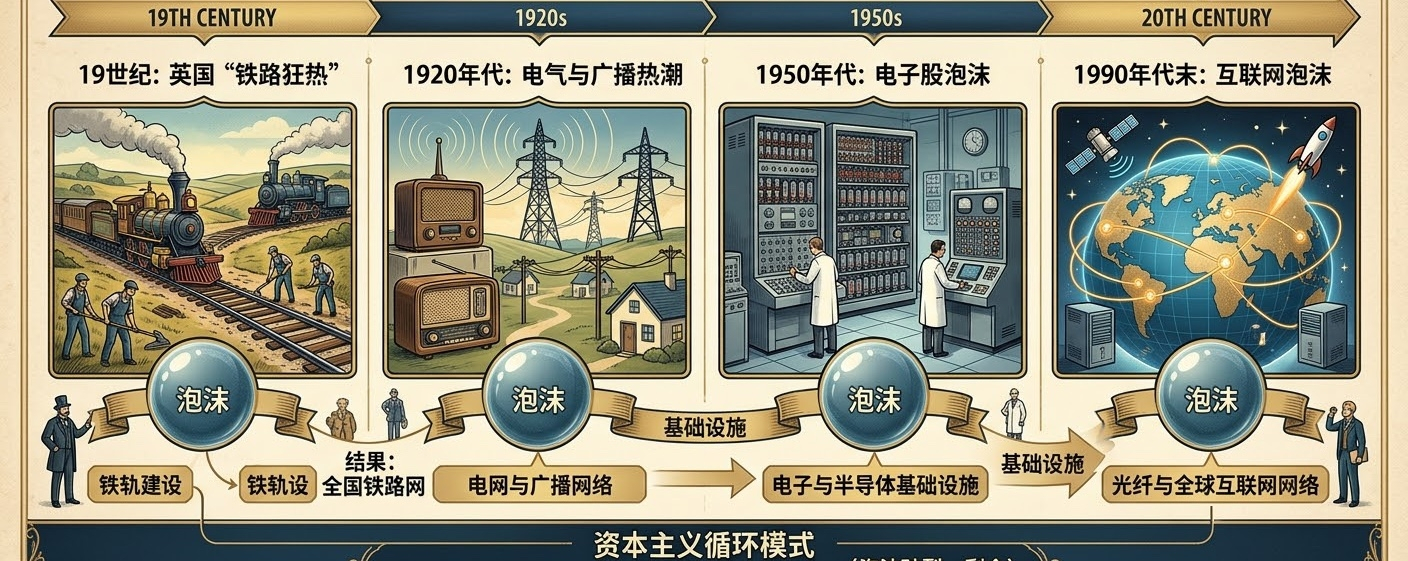
150 Years of Financial History: Capitalism Has Always Relied on “Technology Bubbles” to Build Infrastructure That Ushers in a New Era.The past 150 years of financial history—from Britain’s “railway mania” in the 19th century and the electricity and radio booms of the 1920s, to the electronics stock bubble of the 1950s and the Internet bubble of the late 1990s—have repeatedly shown the same pattern: capitalism has always relied on “technology bubbles” to build infrastructure that ushers in a new era.
From the perspective of long-term history, today’s AI boom is nothing unusual; it fits squarely within the standard pattern of how technological revolutions unfold in capital markets.
I. The Great Historical Cycle: Bubbles as “Catalysts” for Infrastructure
Looking back at the famous technology bubbles of the past 150 years, the key lesson is this: bubbles are not simply a loss of control over capital; they are a necessary financial instrument for the diffusion of technology.
150 Years of Financial History: Capitalism Has Always Relied on “Technology Bubbles” to Build Infrastructure That Ushers in a New Era.
The past 150 years of financial history—from Britain’s “railway mania” in the 19th century and the electricity and radio booms of the 1920s, to the electronics stock bubble of the 1950s and the Internet bubble of the late 1990s—have repeatedly shown the same pattern: capitalism has always relied on “technology bubbles” to build infrastructure that ushers in a new era.
From the perspective of long-term history, today’s AI boom is nothing unusual; it fits squarely within the standard pattern of how technological revolutions unfold in capital markets.
I. The Great Historical Cycle: Bubbles as “Catalysts” for Infrastructure
Looking back at the famous technology bubbles of the past 150 years, the key lesson is this: bubbles are not simply a loss of control over capital; they are a necessary financial instrument for the diffusion of technology.
1
4
688
·
--
Bullish
Verified
🔥 Overview of next week’s macro and U.S. stock market highlights | Switch to standard time, AI earnings test, and U.S. midterm elections
⏰ Trading hours reminder: North America switches to standard time
Starting November 1, North America switches to standard time. U.S. stock markets will open one hour later, at 22:30 Beijing time; U.S. crude oil, gold, and silver will open at 7:00, and economic data releases will shift back accordingly.
🚨 Key focus 1: U.S. midterm elections (November 3)
* Control of Congress: All 435 House seats and 35 Senate seats are up for election. A “blue wave” could lead to greater regulation of the tech and financial industries, directly affecting Trump’s ability to advance his policies over the next two years.
* AI and industry impact: Data center energy consumption is drawing attention, while state and local elections (such as in Texas) will affect the pace of project approvals; the defense and healthcare sectors may be repriced.
📈 Key focus 2: Major test for tech and AI earnings
* Apple ($AAPL): Reports after Monday’s close—the first earnings report since Ternus took over. Key points to watch include the impact of rising memory prices on gross margins and holiday-season guidance.
* Chipmakers: AMD ($AMD) and Qualcomm ($QCOM) report. After the recent sharp selloff in semiconductors, the market is eager for positive demand signals from the chip sector.
* AI software: Palantir’s ($PLTR) earnings will test whether AI software is translating into commercial results and whether customers are willing to pay.
* Other highlights: McDonald’s, Berkshire Hathaway-B, Uber, ConocoPhillips, and others will also report.
💼 Key focus 3: October nonfarm payrolls and Fed rate-hike expectations
* Nonfarm payrolls (Friday, 21:30): 65,000 new jobs expected (previous: 29,000), with the unemployment rate expected at 4.20%. A stronger-than-expected reading would increase the likelihood of a December rate hike, putting pressure on high-valuation tech stocks.
* Leading indicators: Monday and Wednesday’s ISM surveys and Wednesday’s ADP data (75,000 expected) will influence market expectations for nonfarm payrolls ahead of the report.
* Fed officials’ remarks: Six regional Fed presidents, including Logan, Barkin, and Hammack, will speak in quick succession. Hawkish-dovish divisions persist, with a focus on the December rate path and comments on liquidity.
💡 Market volatility is rising. Please manage risk and allocate positions prudently! #BinanceSquare
$$SPCX.US
{stock_us}(SPCX.US)
$GOOG.US
{stock_us}(GOOG.US)
$TSM.US
{stock_us}(TSM.US)
🔥 Overview of next week’s macro and U.S. stock market highlights | Switch to standard time, AI earnings test, and U.S. midterm elections
⏰ Trading hours reminder: North America switches to standard time
Starting November 1, North America switches to standard time. U.S. stock markets will open one hour later, at 22:30 Beijing time; U.S. crude oil, gold, and silver will open at 7:00, and economic data releases will shift back accordingly.
🚨 Key focus 1: U.S. midterm elections (November 3)
* Control of Congress: All 435 House seats and 35 Senate seats are up for election. A “blue wave” could lead to greater regulation of the tech and financial industries, directly affecting Trump’s ability to advance his policies over the next two years.
* AI and industry impact: Data center energy consumption is drawing attention, while state and local elections (such as in Texas) will affect the pace of project approvals; the defense and healthcare sectors may be repriced.
📈 Key focus 2: Major test for tech and AI earnings
* Apple ($AAPL): Reports after Monday’s close—the first earnings report since Ternus took over. Key points to watch include the impact of rising memory prices on gross margins and holiday-season guidance.
* Chipmakers: AMD ($AMD) and Qualcomm ($QCOM) report. After the recent sharp selloff in semiconductors, the market is eager for positive demand signals from the chip sector.
* AI software: Palantir’s ($PLTR) earnings will test whether AI software is translating into commercial results and whether customers are willing to pay.
* Other highlights: McDonald’s, Berkshire Hathaway-B, Uber, ConocoPhillips, and others will also report.
💼 Key focus 3: October nonfarm payrolls and Fed rate-hike expectations
* Nonfarm payrolls (Friday, 21:30): 65,000 new jobs expected (previous: 29,000), with the unemployment rate expected at 4.20%. A stronger-than-expected reading would increase the likelihood of a December rate hike, putting pressure on high-valuation tech stocks.
* Leading indicators: Monday and Wednesday’s ISM surveys and Wednesday’s ADP data (75,000 expected) will influence market expectations for nonfarm payrolls ahead of the report.
* Fed officials’ remarks: Six regional Fed presidents, including Logan, Barkin, and Hammack, will speak in quick succession. Hawkish-dovish divisions persist, with a focus on the December rate path and comments on liquidity.
💡 Market volatility is rising. Please manage risk and allocate positions prudently! #BinanceSquare
$$SPCX.US
$GOOG.US
$TSM.US

1
5
1.9k
·
--
Bullish
Verified
GOOG: Google parent Alphabet plunges 13%! But we’re not selling: a beaten-down bargain amid the AI boom? 🚀📉
* Operating profit: nearly $41 billion (+30% year over year), below Wall Street’s estimate of $43 billion.
* Share price: down nearly 13% in a single day to $282.32, more than 30% below its May high of $404.47.
* Market value wiped out: a profit shortfall of just $2 billion instantly erased $560 billion in market value!
The market is gripped by panic, but does this really mean the AI thesis is broken? My view is clear: I’m still bullish!
💡 The key takeaway: the problem isn’t AI—it’s macro pressure on advertising spending
* AI and cloud businesses continue to surge ☁️
* Google Cloud revenue more than doubled year over year this quarter (over 100%), accelerating further from nearly 80% growth in Q2!
* Peer comparison: AWS grew 39% over the same period, while Azure grew 48%. Demand for cloud and AI is extremely strong across the industry.
* The real stumbling block: slowing search and advertising 🎯
* Search ad revenue grew 12% (down from 17%), while YouTube ad revenue grew 9% (down from 13%).
* The main factors are weakening macroeconomic resilience and the short-term “self-cannibalization” effect of AI search. But just as Meta’s Reels initially ate into feed traffic, monetization is only just getting started. The short-term pressure is merely a temporary trough.
🔍 Valuation advantage: arguably the best value among the “Magnificent Seven”
* P/E advantage: Alphabet’s forward 12-month P/E is just 18x (even below the S&P 500’s 19x).
* Compared with Apple: Apple’s current P/E is a whopping 36x! Alphabet trades at a valuation discount of over 50%, the widest gap in nearly five years.
* Potential for a return to fair value: if the discount narrows to its historical norm (25%), the share price could rebound to around $400, implying nearly 50% upside.
💭 Negative free cash flow? Don’t panic!
Alphabet isn’t a startup burning cash just to survive. Its heavy infrastructure spending today is laying the groundwork for its next trillion-dollar AI business. Pausing capital expenditures would improve cash flow immediately, but the market certainly doesn’t want to see Alphabet fall behind!
📌 Summary:
The market has overreacted in the short term, creating a rare valuation bargain. When volatility rises, clear-headed judgment is the key to staying in the game for the long run!
I believe this sell-off in Alphabet presents an excellent opportunity to enter despite the risks.

3
431
·
--
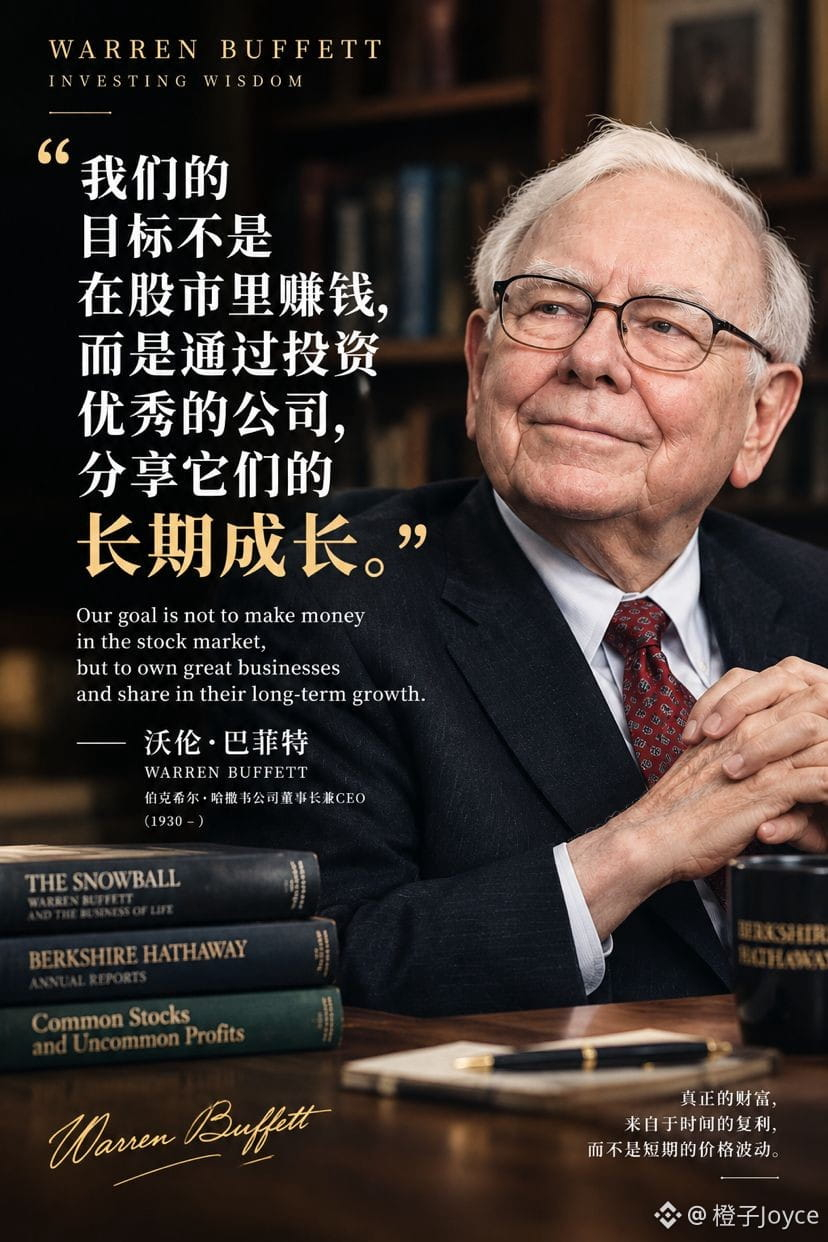
“Different from the crowd” means value investors must overcome their instinct to follow the herd. They judge right and wrong by facts and logic, not by market quotes or the approval of the majority.
The philosophy of the great value investors can be summed up in one central idea: buying a stock means buying part of a business. Buy companies that can continue to create value at a reasonable price, and share in their growth over the long term.
Shared principles
- Stocks represent ownership: Focus on whether a company can continue to earn money and generate cash flow in the future, rather than trying to predict short-term price movements.
- The market is a servant: Stock prices are quoted every day, sometimes reflecting pessimism and sometimes euphoria. Investors take advantage of mispricing rather than letting emotions lead them.
- Margin of safety: Intrinsic value is only an estimate. Buying at a discount provides a buffer against errors in judgment and changes in the business[^15].
- Circle of competence: Invest only in businesses you understand, and know where the boundaries of your understanding lie.
- Long-term compounding: Excellent businesses reinvest their profits and continue to create new value; the longer the time horizon, the more noticeable the effects of compounding.
The differing emphases of three generations of masters
- Graham laid the foundation: He emphasized fundamental analysis, safety of principal, and significant undervaluation. Early on, he often used an asset-discount approach, seeking investments priced far below their liquidation or replacement value.
- Buffett and Munger took it further: Beyond a margin of safety, they placed greater importance on moats, management, earnings stability, and free cash flow. The focus became “buying excellent businesses at reasonable prices,” earning returns from the businesses’ long-term growth.
- Li Lu added a global perspective: Wealth ultimately represents purchasing power. He advocates holding equity in the most creative companies in the most dynamic economies over the long term, allowing wealth to grow through the compounding of the economy.
In practice, this means first studying the business model, then examining competitive advantages and cash flow, estimating intrinsic value, and finally comparing the price with the margin of safety. The prerequisite for holding long term is truly understanding the business. If you discover that your judgment was wrong, find a clearly better opportunity, or see the price become extremely overvalued, you may also consider selling.
$SPCX.US
{stock_us}(SPCX.US)
$NVDA.US
{stock_us}(NVDA.US)
$TSM.US
{stock_us}(TSM.US)
“Different from the crowd” means value investors must overcome their instinct to follow the herd. They judge right and wrong by facts and logic, not by market quotes or the approval of the majority.
The philosophy of the great value investors can be summed up in one central idea: buying a stock means buying part of a business. Buy companies that can continue to create value at a reasonable price, and share in their growth over the long term.
Shared principles
- Stocks represent ownership: Focus on whether a company can continue to earn money and generate cash flow in the future, rather than trying to predict short-term price movements.
- The market is a servant: Stock prices are quoted every day, sometimes reflecting pessimism and sometimes euphoria. Investors take advantage of mispricing rather than letting emotions lead them.
- Margin of safety: Intrinsic value is only an estimate. Buying at a discount provides a buffer against errors in judgment and changes in the business[^15].
- Circle of competence: Invest only in businesses you understand, and know where the boundaries of your understanding lie.
- Long-term compounding: Excellent businesses reinvest their profits and continue to create new value; the longer the time horizon, the more noticeable the effects of compounding.
The differing emphases of three generations of masters
- Graham laid the foundation: He emphasized fundamental analysis, safety of principal, and significant undervaluation. Early on, he often used an asset-discount approach, seeking investments priced far below their liquidation or replacement value.
- Buffett and Munger took it further: Beyond a margin of safety, they placed greater importance on moats, management, earnings stability, and free cash flow. The focus became “buying excellent businesses at reasonable prices,” earning returns from the businesses’ long-term growth.
- Li Lu added a global perspective: Wealth ultimately represents purchasing power. He advocates holding equity in the most creative companies in the most dynamic economies over the long term, allowing wealth to grow through the compounding of the economy.
In practice, this means first studying the business model, then examining competitive advantages and cash flow, estimating intrinsic value, and finally comparing the price with the margin of safety. The prerequisite for holding long term is truly understanding the business. If you discover that your judgment was wrong, find a clearly better opportunity, or see the price become extremely overvalued, you may also consider selling.
$SPCX.US
$NVDA.US
$TSM.US
7
2.5k
·
--
The top traders are, at their core, those who execute a trading system consistently over the long term. Common personality traits mainly fall into five categories:
- Emotionally stable: Gains and losses will trigger emotions, but they can notice them in time and let the rules take over.
- Extremely disciplined: They define entries, stop losses, and position size in advance, and rarely change the plan on the spot.
- Patient and decisive at the same time: They can wait a long time for opportunities to appear; when a signal comes, they dare to act according to the plan.
- Independent and objective: They judge based on price, data, and facts, and are less influenced by hot trends and crowd sentiment.
- Humble and good at reviewing: They see losses as feedback from the system, are willing to admit mistakes, adjust strategies, and keep learning.
These traits ultimately come together into one ability: still being able to execute when losing money in the short term, and still keeping risk boundaries when making money continuously.
The hardest part of trading is not the market, but oneself.
The market is always there, neither increasing nor decreasing, neither dirty nor clean; it is not targeting you, nor favoring anyone. The same K-line, the same trading volume: some see opportunity, some see risk, some see fear, some see nothing at all. The difference is not in the market, but in your heart.
If the heart contains demons, then every place is a trap. An ordinary bearish candle in your eyes becomes the main force washing out weak hands; a normal pullback in your heart becomes the end of the world. If the heart is clear, then every road is open. You know what is a signal and what is noise; you know when to act and when to wait.
This first volume is about the practice of looking inward. Before you look at the market, first understand yourself; before you look for opportunities, first find the "inner demon" in your trading. Cut off the inner demon, and then you will see your true self.
Have a little less greed and a little more long-term thinking, and reduce risk to the minimum. As stock god Warren Buffett said: the first rule of investing and financial management is to preserve your principal, the second rule is still to preserve your principal, and the third rule is to follow the first and second rules!
$BTC
{spot}(BTCUSDT)
$BNB
{spot}(BNBUSDT)
$SPCX.US
{stock_us}(SPCX.US)
The top traders are, at their core, those who execute a trading system consistently over the long term. Common personality traits mainly fall into five categories:
- Emotionally stable: Gains and losses will trigger emotions, but they can notice them in time and let the rules take over.
- Extremely disciplined: They define entries, stop losses, and position size in advance, and rarely change the plan on the spot.
- Patient and decisive at the same time: They can wait a long time for opportunities to appear; when a signal comes, they dare to act according to the plan.
- Independent and objective: They judge based on price, data, and facts, and are less influenced by hot trends and crowd sentiment.
- Humble and good at reviewing: They see losses as feedback from the system, are willing to admit mistakes, adjust strategies, and keep learning.
These traits ultimately come together into one ability: still being able to execute when losing money in the short term, and still keeping risk boundaries when making money continuously.
The hardest part of trading is not the market, but oneself.
The market is always there, neither increasing nor decreasing, neither dirty nor clean; it is not targeting you, nor favoring anyone. The same K-line, the same trading volume: some see opportunity, some see risk, some see fear, some see nothing at all. The difference is not in the market, but in your heart.
If the heart contains demons, then every place is a trap. An ordinary bearish candle in your eyes becomes the main force washing out weak hands; a normal pullback in your heart becomes the end of the world. If the heart is clear, then every road is open. You know what is a signal and what is noise; you know when to act and when to wait.
This first volume is about the practice of looking inward. Before you look at the market, first understand yourself; before you look for opportunities, first find the "inner demon" in your trading. Cut off the inner demon, and then you will see your true self.
Have a little less greed and a little more long-term thinking, and reduce risk to the minimum. As stock god Warren Buffett said: the first rule of investing and financial management is to preserve your principal, the second rule is still to preserve your principal, and the third rule is to follow the first and second rules!
$BTC
$BNB
$SPCX.US

1
3
369
·
--
🎙️ #Building Binance Square and the BNB ecosystem together, connecting the future, empowering diversity, and building an interconnected world! Investment strategy analysis and live trading for U.S. stocks on Binance
End
03 h 20 m 51 s
2.6k
BNB
Holding
-9.14
16
4
·
--
Bullish
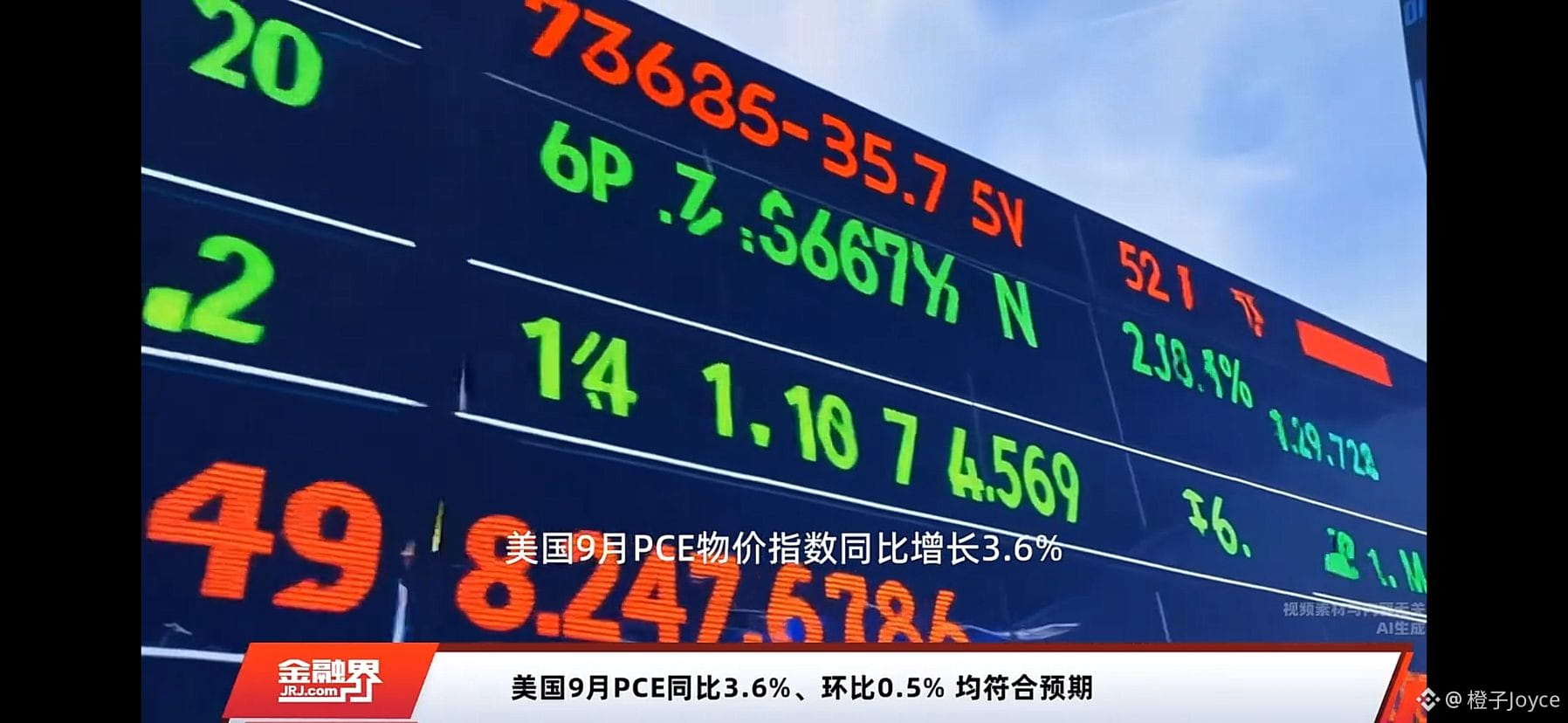
💡 U.S. September PCE inflation rebounds! Energy prices push prices higher, household savings rate hits a four-year low
The latest U.S. September PCE data show a complex mix of “rising inflation + slowing consumption + shrinking savings,” signaling growing economic pressure:
Key data points:
* Headline PCE rose to 3.6% year over year (previously 3.4%), its highest level since May this year; it increased 0.5% month over month. The rise was driven mainly by the recent rebound in crude oil and energy prices.
* Core PCE rose to 3.1% year over year (previously 3.0%), increasing 0.3% month over month. This shows inflationary pressure spreading into non-energy sectors. Elevated non-cyclical inflation could indicate that inflation risks are becoming more deeply entrenched.
* Both income and consumption fell short of expectations: personal income rose 0.2% month over month in September (forecast: 0.5%), while consumer spending rose 0.5% (forecast: 0.6%).
* The household savings rate fell sharply, reaching its lowest level since October 2022, further reducing households’ financial buffer.
📌 Market impact
Inflation has not cooled as expected. Combined with weak household income growth and dwindling savings, this puts the Federal Reserve in a difficult position on monetary policy. Macroeconomic uncertainty could put pressure on risk assets, including crypto markets, and increase volatility.
$BNB
{spot}(BNBUSDT)
$GOOG.US
{stock_us}(GOOG.US)
$SPCX.US
{stock_us}(SPCX.US)
💡 U.S. September PCE inflation rebounds! Energy prices push prices higher, household savings rate hits a four-year low
The latest U.S. September PCE data show a complex mix of “rising inflation + slowing consumption + shrinking savings,” signaling growing economic pressure:
Key data points:
* Headline PCE rose to 3.6% year over year (previously 3.4%), its highest level since May this year; it increased 0.5% month over month. The rise was driven mainly by the recent rebound in crude oil and energy prices.
* Core PCE rose to 3.1% year over year (previously 3.0%), increasing 0.3% month over month. This shows inflationary pressure spreading into non-energy sectors. Elevated non-cyclical inflation could indicate that inflation risks are becoming more deeply entrenched.
* Both income and consumption fell short of expectations: personal income rose 0.2% month over month in September (forecast: 0.5%), while consumer spending rose 0.5% (forecast: 0.6%).
* The household savings rate fell sharply, reaching its lowest level since October 2022, further reducing households’ financial buffer.
📌 Market impact
Inflation has not cooled as expected. Combined with weak household income growth and dwindling savings, this puts the Federal Reserve in a difficult position on monetary policy. Macroeconomic uncertainty could put pressure on risk assets, including crypto markets, and increase volatility.
$BNB
$GOOG.US
$SPCX.US
1
1
3k
·
--
Russian President Vladimir Putin praised Elon Musk as a “genius” on Wednesday, while acknowledging that Russia is only just beginning to build its own version of the Starlink satellite internet system.
The remarks were especially notable because, during the war with Russia, Ukraine’s military has relied on Starlink, developed by Musk’s SpaceX, as a key part of its drone operations and battlefield communications. Putin made the comments while listening to a briefing from Digital Development Minister Maksut Shadayev. Shadayev said Russia had launched more than 30 satellites as it worked to build its own version of Starlink. “Wait a moment. I want to point out that this is only our first step. Elon Musk is a genius. He really is a true genius,” Putin said. He was surrounded by a group of African leaders attending a summit in Moscow. In response to Putin’s question, Shadayev said Musk had more than 5,000 low-Earth-orbit satellites in operation. However, according to the independent tracking site Orbital Radar, the actual number is closer to 10,000. “More than 5,000, while we are only just getting started. But we are proud that we have already begun this work and are starting to pursue it independently,” Putin said. He added that the task now was to “shift from quality to quantity.” “We remain in close contact with our American partners—including Mr. Musk—because in orbit, it is crucial to avoid mutual interference and maintain a certain degree of discipline and order,” he said. Ukraine has relied heavily on Starlink and its military version, Starshield, but earlier this month it complained that speed restrictions were affecting its ability to intercept Russian attack drones and forcing it to cancel some operations. Over the weekend, Ukraine said Starlink and Starshield were fully operational again, but Musk accused the Ukrainian military of violating SpaceX’s terms. Neither Musk nor the U.S. government has acknowledged responsibility for imposing the speed restrictions.
The remarks were especially notable because, during the war with Russia, Ukraine’s military has relied on Starlink, developed by Musk’s SpaceX, as a key part of its drone operations and battlefield communications. Putin made the comments while listening to a briefing from Digital Development Minister Maksut Shadayev. Shadayev said Russia had launched more than 30 satellites as it worked to build its own version of Starlink. “Wait a moment. I want to point out that this is only our first step. Elon Musk is a genius. He really is a true genius,” Putin said. He was surrounded by a group of African leaders attending a summit in Moscow. In response to Putin’s question, Shadayev said Musk had more than 5,000 low-Earth-orbit satellites in operation. However, according to the independent tracking site Orbital Radar, the actual number is closer to 10,000. “More than 5,000, while we are only just getting started. But we are proud that we have already begun this work and are starting to pursue it independently,” Putin said. He added that the task now was to “shift from quality to quantity.” “We remain in close contact with our American partners—including Mr. Musk—because in orbit, it is crucial to avoid mutual interference and maintain a certain degree of discipline and order,” he said. Ukraine has relied heavily on Starlink and its military version, Starshield, but earlier this month it complained that speed restrictions were affecting its ability to intercept Russian attack drones and forcing it to cancel some operations. Over the weekend, Ukraine said Starlink and Starshield were fully operational again, but Musk accused the Ukrainian military of violating SpaceX’s terms. Neither Musk nor the U.S. government has acknowledged responsibility for imposing the speed restrictions.


6
1.2k
·
--
🧡 【To every friend who supported me】: Thank you for being here—this is a medal we share! Voting for Binance’s 2026 Top 100 Creators has officially ended. Although I didn’t make it into the final top 20, my heart is filled with gratitude and warmth.
A huge thank-you to every friend who voted for me on time each day, helped rally votes, and cheered me on in the comments during this period! Every precious vote was a sign of your recognition of my content and livestreams. Being nominated and fighting alongside all of you has already been an incredible experience.
Rankings are only temporary, but your daily support and companionship are real. We still have a long road ahead:
When it comes to trading and content creation, rankings have never been the end goal. My core mission is to share valuable insights and help everyone build a sound trading system.
I’m grateful for this nomination, which brought encouragement, support, and trust from so many new and longtime friends!
Next, let’s keep our focus on what matters most:
1️⃣ In-depth macro and market analysis: Continue tracking capital flows and emerging trends in U.S. stocks on Binance, BTC, and BNB.
2️⃣ Risk management and practical strategies: No blindly chasing prices—we’ll move forward steadily with solid data and strict discipline. With more rigorous data and trading logic, I’ll continue to help you navigate both bull and bear markets.
The competition is over, but our trading journey continues. Get ready for the market ahead! 🚀🚀🚀🚀
#BNB交易策略 #币安交易所美股投资策略分析与实盘交易
According to an official Binance announcement, Binance is launching a Refer-a-Friend rewards campaign running from 2026-10-28 16:00:00 to 2026-11-27 23:59:00 (UTC+8), with a total prize pool of $150,000. Once a friend completes registration and identity verification, the referrer can receive a random token voucher worth 1.8–3.8 USDC. If the friend’s spot buy trading volume exceeds 200 USDT, they can receive a random token voucher worth 1.8–8.8 USDC; if it exceeds 5,000 USDT, they can receive a 5 USDC token voucher. Spot or futures buy trading volume exceeding 10,000 USDT qualifies for an 8.8 USDC token voucher. Each reward can be claimed up to 5 times, and campaign rewards can be combined with referral commissions. Token vouchers will be credited to the Rewards Hub within 48 hours of claiming.

1
11
752
·
--
Bullish
Verified
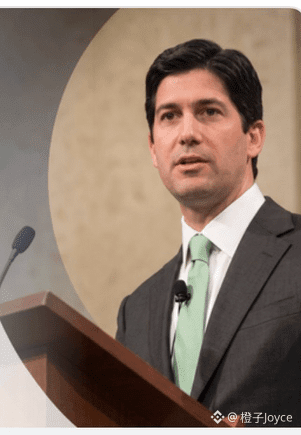
--The Fed held interest rates steady as expected, saying it would wait to “accumulate more information”
The Federal Reserve held its benchmark interest rate range at 3.75%-4.00% on Wednesday, as expected, deciding not to adjust borrowing costs before the U.S. midterm elections conclude next week and to wait for more data on the path of inflation.
The Fed acknowledged that inflation “remains elevated” and suggested that any further rate hikes would depend on how inflation evolves.
The Fed upgraded its assessment of the economy from “moderate” growth at its September meeting to “strong” growth. It continued to describe investment as strong and said job growth had been roughly in line with labor force growth.
The Fed’s latest policy statement differed notably from the one issued after its September meeting, including what seemed to be a degree of forward guidance—a practice Chair Warsh had previously said he hoped to avoid. The market reaction was subdued: U.S. stocks pared their gains slightly after the policy decision was announced, while Treasury yields extended their rise.
——————————————————————————
We buy the following company stocks on dips
$AMZN.US
$SPCX.US
$GOOG.US
{stock_us}(AMZN.US)
{stock_us}(SPCX.US)
{stock_us}(GOOG.US)
--The Fed held interest rates steady as expected, saying it would wait to “accumulate more information”
The Federal Reserve held its benchmark interest rate range at 3.75%-4.00% on Wednesday, as expected, deciding not to adjust borrowing costs before the U.S. midterm elections conclude next week and to wait for more data on the path of inflation.
The Fed acknowledged that inflation “remains elevated” and suggested that any further rate hikes would depend on how inflation evolves.
The Fed upgraded its assessment of the economy from “moderate” growth at its September meeting to “strong” growth. It continued to describe investment as strong and said job growth had been roughly in line with labor force growth.
The Fed’s latest policy statement differed notably from the one issued after its September meeting, including what seemed to be a degree of forward guidance—a practice Chair Warsh had previously said he hoped to avoid. The market reaction was subdued: U.S. stocks pared their gains slightly after the policy decision was announced, while Treasury yields extended their rise.
——————————————————————————
We buy the following company stocks on dips
$AMZN.US
$SPCX.US
$GOOG.US
5
2k
·
--
Bullish
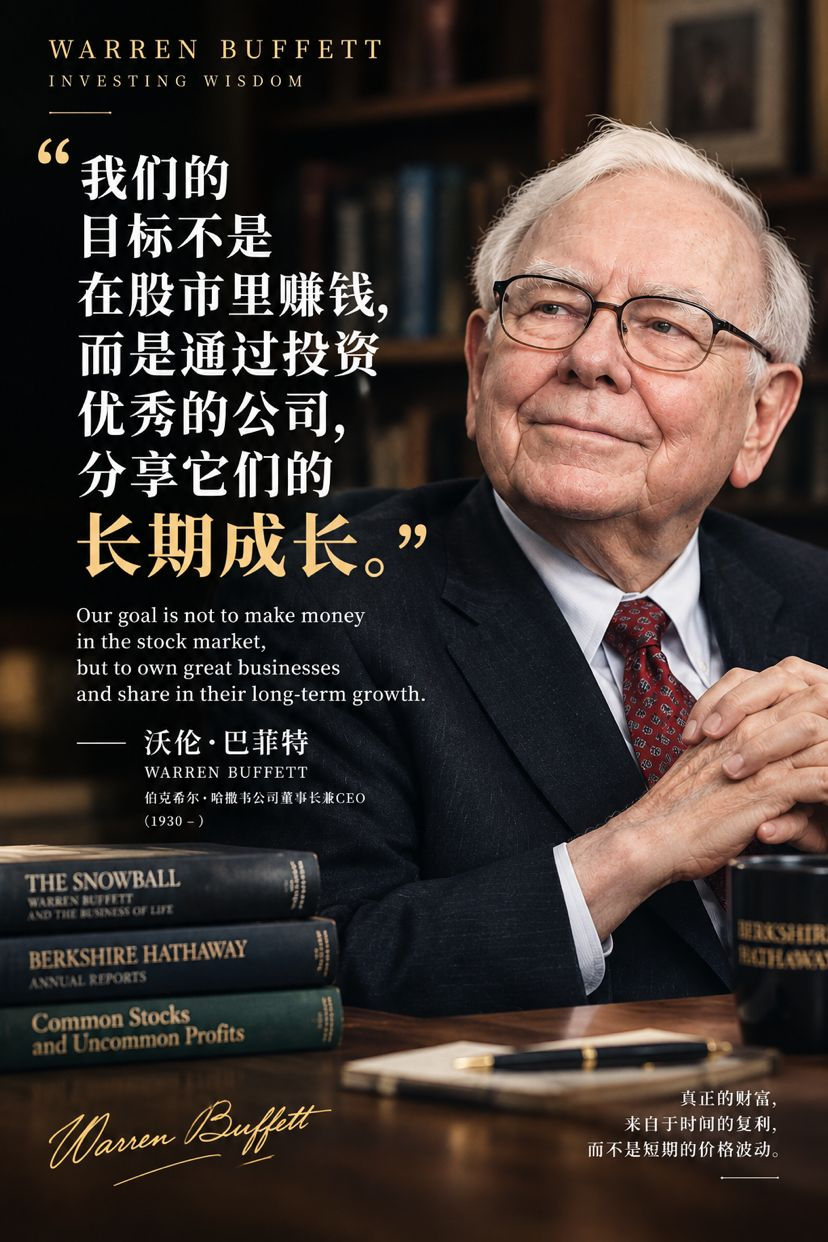
Who shaped Warren Buffett’s investment philosophy?
Buffett was not born a “stock market genius.” His investment system took shape through reading, discussion, and practice, incorporating and continually refining the ideas of several masters. Four key figures profoundly changed the course of his investing career.
Keynes: From macroeconomic forecasts to a focus on businesses
As a pragmatic economist and investor, after the stock market crash of the late 1920s, Keynes abandoned forecasting macroeconomic cycles and instead studied the profitability and long-term prospects of individual businesses in depth. He advocated concentrated holdings in high-quality companies. Buffett not only greatly admired Keynes’s writings, but also adopted sayings such as “It is better to be roughly right than precisely wrong” as guiding principles.
* Graham: Laying the foundations of value investing
Graham was Buffett’s intellectual mentor. He introduced three core concepts: “a stock is a part of a business,” “Mr. Market,” and “the margin of safety,” reducing investing to the scientific logic of “buying a dollar’s worth of assets for 40 cents.” Graham gave Buffett a highly disciplined valuation framework and a margin of safety, leading to his first major epiphany about investing.
* Fisher: Opening the door to growth stocks and business quality
Unlike Graham, who focused on currently undervalued assets (“cigar butts”), Fisher placed greater importance on a company’s future earnings potential, competitive advantages, and management quality. Using his famous “scuttlebutt” approach, he focused on finding growth companies capable of outperforming the market over the long term. Fisher’s ideas helped Buffett realize that, beyond price, the quality of the business itself matters.
* Munger: Completing the transformation from “cigar butts” to “great companies”
Buffett’s business partner for more than six decades, Munger reshaped the way he allocated capital. He urged Buffett to “forget about buying fair businesses at wonderful prices; instead, buy wonderful businesses at fair prices.” In acquisitions such as See’s Candies, Munger helped Buffett move beyond his fixation on tangible assets and focus instead on brands, pricing power, and long-term returns on capital—truly laying the foundation for Berkshire’s vast empire.
What is known as value investing is, in essence, a way of thinking that continues to grow and evolve through practice.
$TSMB
{spot}(TSMBUSDT)
Who shaped Warren Buffett’s investment philosophy?
Buffett was not born a “stock market genius.” His investment system took shape through reading, discussion, and practice, incorporating and continually refining the ideas of several masters. Four key figures profoundly changed the course of his investing career.
Keynes: From macroeconomic forecasts to a focus on businesses
As a pragmatic economist and investor, after the stock market crash of the late 1920s, Keynes abandoned forecasting macroeconomic cycles and instead studied the profitability and long-term prospects of individual businesses in depth. He advocated concentrated holdings in high-quality companies. Buffett not only greatly admired Keynes’s writings, but also adopted sayings such as “It is better to be roughly right than precisely wrong” as guiding principles.
* Graham: Laying the foundations of value investing
Graham was Buffett’s intellectual mentor. He introduced three core concepts: “a stock is a part of a business,” “Mr. Market,” and “the margin of safety,” reducing investing to the scientific logic of “buying a dollar’s worth of assets for 40 cents.” Graham gave Buffett a highly disciplined valuation framework and a margin of safety, leading to his first major epiphany about investing.
* Fisher: Opening the door to growth stocks and business quality
Unlike Graham, who focused on currently undervalued assets (“cigar butts”), Fisher placed greater importance on a company’s future earnings potential, competitive advantages, and management quality. Using his famous “scuttlebutt” approach, he focused on finding growth companies capable of outperforming the market over the long term. Fisher’s ideas helped Buffett realize that, beyond price, the quality of the business itself matters.
* Munger: Completing the transformation from “cigar butts” to “great companies”
Buffett’s business partner for more than six decades, Munger reshaped the way he allocated capital. He urged Buffett to “forget about buying fair businesses at wonderful prices; instead, buy wonderful businesses at fair prices.” In acquisitions such as See’s Candies, Munger helped Buffett move beyond his fixation on tangible assets and focus instead on brands, pricing power, and long-term returns on capital—truly laying the foundation for Berkshire’s vast empire.
What is known as value investing is, in essence, a way of thinking that continues to grow and evolve through practice.
$TSMB
3
868
·
--
Bullish
JPMorgan Chase has approximately $4.8 trillion in assets worldwide. Its CEO, Jamie Dimon, has publicly expressed great admiration for Elon Musk, comparing him first to “the Einstein of our time” and later to “the Edison of our time.”
1. Calling Musk “the Einstein of our time”
During an interview with CNBC at the World Economic Forum (WEF) in Davos in January 2025, Dimon discussed JPMorgan Chase and Tesla ending a long-running $162 million legal dispute and reaching a settlement. Dimon said the two had “hugged it out” and spoke highly of Musk:
> “You look at Elon—SpaceX, Tesla, Neuralink. I mean, this guy is our Einstein. We’ll help him and his companies as much as we can.”
Musk later responded on social media: “Nice of him to say.”
2. Calling Musk “the Edison of our time”
At a JPMorgan Chase executive and investor event for 3,500 of the bank’s most important clients in June 2026, Dimon again praised Musk’s contributions to cross-industry manufacturing and systems integration:
> “Elon is the Edison of our time.”
> Dimon noted that Musk had not only transformed automobile manufacturing—from vertical integration to a fundamental reshaping of production processes—but had also built vast infrastructure ecosystems in areas such as SpaceX and Starlink. He likened this to how Thomas Edison not only invented the electric light bulb, but also built an entire electrical grid and industrial research and development system.
In response to the praise on social media, Musk also shared his views on Edison and the historical debate over alternating current and direct current (AC/DC). He praised Edison as an exceptional figure and expressed confidence in the future of distributed energy and DC-based systems.
Background: From opposition to cooperation
JPMorgan Chase and Musk’s companies had been at odds in court over a warrant agreement dispute sparked by Musk’s 2018 tweet about taking Tesla private. After the parties dropped their lawsuits and settled in late 2024, JPMorgan Chase resumed extensive business cooperation with SpaceX and Tesla. Dimon has also repeatedly expressed his approval of Musk’s business and technological breakthroughs.
{stock_us}(SPCX.US)
JPMorgan Chase has approximately $4.8 trillion in assets worldwide. Its CEO, Jamie Dimon, has publicly expressed great admiration for Elon Musk, comparing him first to “the Einstein of our time” and later to “the Edison of our time.”
1. Calling Musk “the Einstein of our time”
During an interview with CNBC at the World Economic Forum (WEF) in Davos in January 2025, Dimon discussed JPMorgan Chase and Tesla ending a long-running $162 million legal dispute and reaching a settlement. Dimon said the two had “hugged it out” and spoke highly of Musk:
> “You look at Elon—SpaceX, Tesla, Neuralink. I mean, this guy is our Einstein. We’ll help him and his companies as much as we can.”
Musk later responded on social media: “Nice of him to say.”
2. Calling Musk “the Edison of our time”
At a JPMorgan Chase executive and investor event for 3,500 of the bank’s most important clients in June 2026, Dimon again praised Musk’s contributions to cross-industry manufacturing and systems integration:
> “Elon is the Edison of our time.”
> Dimon noted that Musk had not only transformed automobile manufacturing—from vertical integration to a fundamental reshaping of production processes—but had also built vast infrastructure ecosystems in areas such as SpaceX and Starlink. He likened this to how Thomas Edison not only invented the electric light bulb, but also built an entire electrical grid and industrial research and development system.
In response to the praise on social media, Musk also shared his views on Edison and the historical debate over alternating current and direct current (AC/DC). He praised Edison as an exceptional figure and expressed confidence in the future of distributed energy and DC-based systems.
Background: From opposition to cooperation
JPMorgan Chase and Musk’s companies had been at odds in court over a warrant agreement dispute sparked by Musk’s 2018 tweet about taking Tesla private. After the parties dropped their lawsuits and settled in late 2024, JPMorgan Chase resumed extensive business cooperation with SpaceX and Tesla. Dimon has also repeatedly expressed his approval of Musk’s business and technological breakthroughs.

3
3
1.8k
Log in to explore more content
Join global crypto users on Binance Square
⚡️ Get latest and useful information about crypto.
💬 Trusted by the world’s largest crypto exchange.
👍 Discover real insights from verified creators.
Email / Phone number
Trending Topics
BinanceReopensWithdrawalsForMoreAssets
828,838 views
4,545 Discussing
Security Incident | Recovery Update #8: Withdrawals for More Assets to Reopen (2026-11-05)
Binance Announcement
·384 Likes
·1.7M views
Binance98PercentReplenished
176,826 views
1,824 Discussing
USStocksSlipandCryptoMarketUnderBroadPressure
9,612 views
225 Discussing