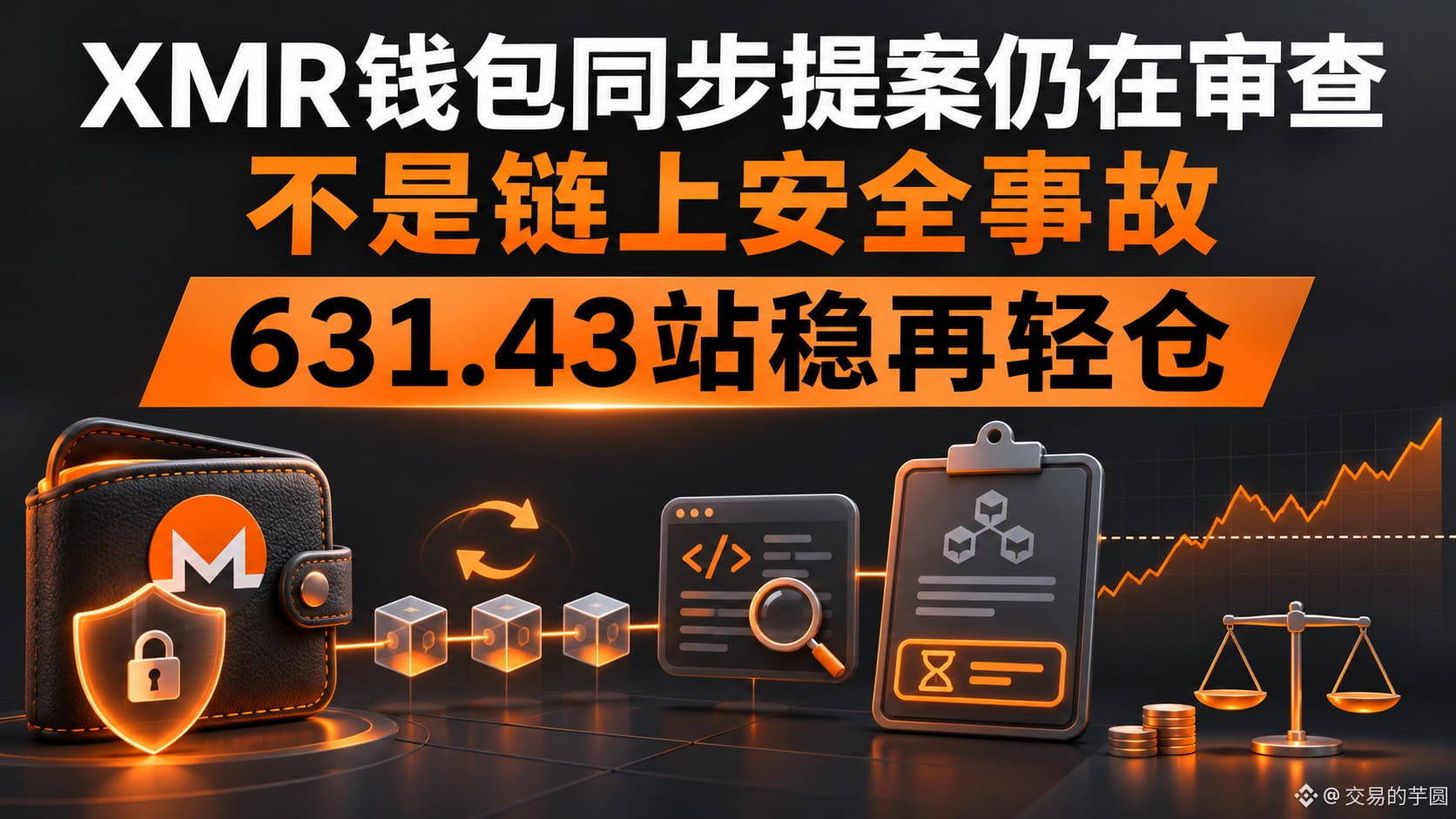
XMR Wallet Sync Proposal Still Under Review | Recovery Speed and Chain Security Are Separate Issues | I’m Still Waiting for Confirmation
My stance is cautious and watchful. Neither Binance Square’s trending topics this round nor its six-hour Most Searched list has an accurate tag directly related to XMR, so it would be wrong to force connections to Monero based on an exchange recovery or interest in other coins. Instead, I’m looking at actual progress in the project’s official repository and keeping code proposals strictly separate from released versions.
PR #11665 in Monero’s official GitHub repository discusses having the wallet first confirm a checkpoint anchor with a node during a fast refresh, then decide whether it can skip block hashes. The scenario described by the developers is this: a wallet configured for the mainnet connects to a testnet node, where the checkpoint does not exist on the node’s chain, yet the wallet uses it as a starting point and scans block by block, slowing the recovery process. A discussion on November 3 further explained the issue and why the wallet cache stores historical block hashes. The page still shows “Open”; approval from one reviewer does not mean the code has been merged, let alone that ordinary users have received a new version. Monero’s official GUI and CLI download pages still list version 0.18.5.4. Calling this proposal an “XMR chain security incident” or saying the “fix is live” would go beyond the evidence.
Why should traders care about this kind of change? Wallet sync efficiency affects the user experience when recovering balances from self-custody wallets and verifying transactions, and could affect the barrier to using Monero over the long term. But it does not change XMR’s issuance, network consensus, or spot supply and demand right now. Technical discussions under project review usually cannot directly explain a fifteen-minute candlestick. External policy developments should be considered separately: on October 30, FATF launched a targeted review of how virtual asset service providers are implementing its standards. The original statement did not name XMR, so it would also be inaccurate to describe this as a new global ban on Monero.
Price action already recorded is more straightforward. When I checked XMR/USD on Kraken, the latest price was about $622.54, with a daily open of $604.35, an intraday low of $596.83, and a high of $631.43. The price rebounded from the open but has yet to hold above the intraday high, so the rise cannot be attributed to this wallet PR, which has not yet been merged. $631.43 is the confirmation level above; $602.20, near the low over the past 24 hours, is a level to watch; and $596.83 is the intraday low. If the price breaks below $596.83 and fails to recover, the short-term bullish outlook is invalidated. Even if it breaks higher, a lack of volume would warrant caution about a pullback.
If I were trading this myself, I would stay out for now and consider only a small spot long position. I would first wait for the price to hold above $631.43 and then defend that level on a retest, along with clear confirmation of a merge or official release progress in the repository. Then I would test the waters with 2% of my total capital. My first target would be $645, where I would sell half; my second target would be $660, where I would close the remaining position. After entry, I would stop out if the price fell below $615. If $596.83 breaks before entry, I would cancel the plan outright. If the project later says it has found a broader wallet reliability issue, I would immediately reassess and close the position. A technical proposal is not a bullish catalyst; position sizing and exit rules should be set out first.
#XMR
This is only my personal market observation and does not constitute investment advice.