📰 Why Didn’t Ripple’s $900M Revenue Target Make XRP Rise?
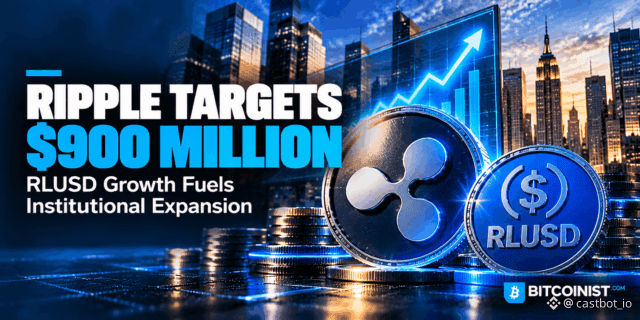
At Swell 2026, Ripple set a goal of reaching $900M in annualized product revenue in 2026. It also revealed that RLUSD is expanding and brought on some institutional partners. But strangely, XRP fell 3.35% on the day of the announcement. This suggests the market may not think these numbers are compelling enough—or may have already anticipated them.
Why does this news matter?
What does Ripple’s target mean? It doesn’t mean the company plans to make money from XRP. Rather, it wants to prove that its product portfolio—including RLUSD, remittance services, and institutional products—can generate real revenue. This is a milestone for Ripple, which has long faced criticism that it “talks a big game but doesn’t make a profit.” For the crypto market, however, it’s more of a signal: major players are starting to measure success by “revenue” rather than “user numbers.” Why didn’t this make XRP rise? The market may see $900M as a long-term target, while XRP’s short-term performance still depends on liquidity and macro sentiment.
Impact on the market
The impact on BTC and ETH is limited, since they are leading safe-haven assets and narratives. But this news reinforces the idea that “the next phase of crypto is a battle for profitability.” Regulators may think, “Look, the blockchain we support can actually generate revenue.” In terms of capital flows, if Ripple really can achieve this, it may attract traditional financial institutions to increase their holdings. A similar example from the past: when Binance announced a $1B revenue target in 2019, BTC didn’t surge as a result, showing that an ambitious target alone isn’t a strong catalyst.
Trading strategy
Ripple’s revenue story is a long-term positive, but it hasn’t significantly boosted XRP’s price in the short term. This means XRP may need a more direct liquidity catalyst to break above $1.4—for example, a bank announcing large-scale adoption of RLUSD. If new geopolitical risks spark a rise in safe-haven sentiment, this thesis no longer applies.
This article is not sponsored by any project, and the author does not hold any of the assets mentioned
⚠️ This is not investment advice. Predictions are for reference only.
$XRP $BTC $ETH