

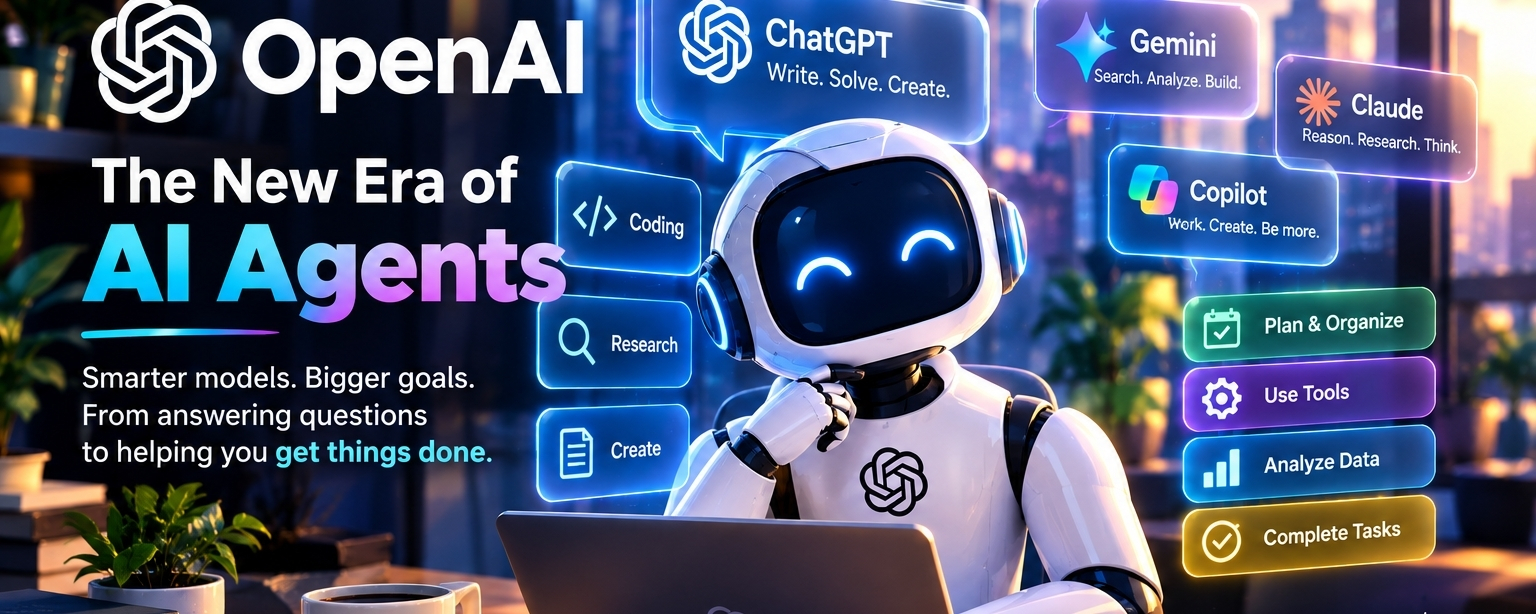

Artificial intelligence is moving into a new stage. AI is no longer limited to simply answering questions or generating text. New systems are increasingly designed to understand complicated instructions, use tools, work with information, and complete tasks through multiple steps.
OpenAI is one of the companies pushing this development forward.
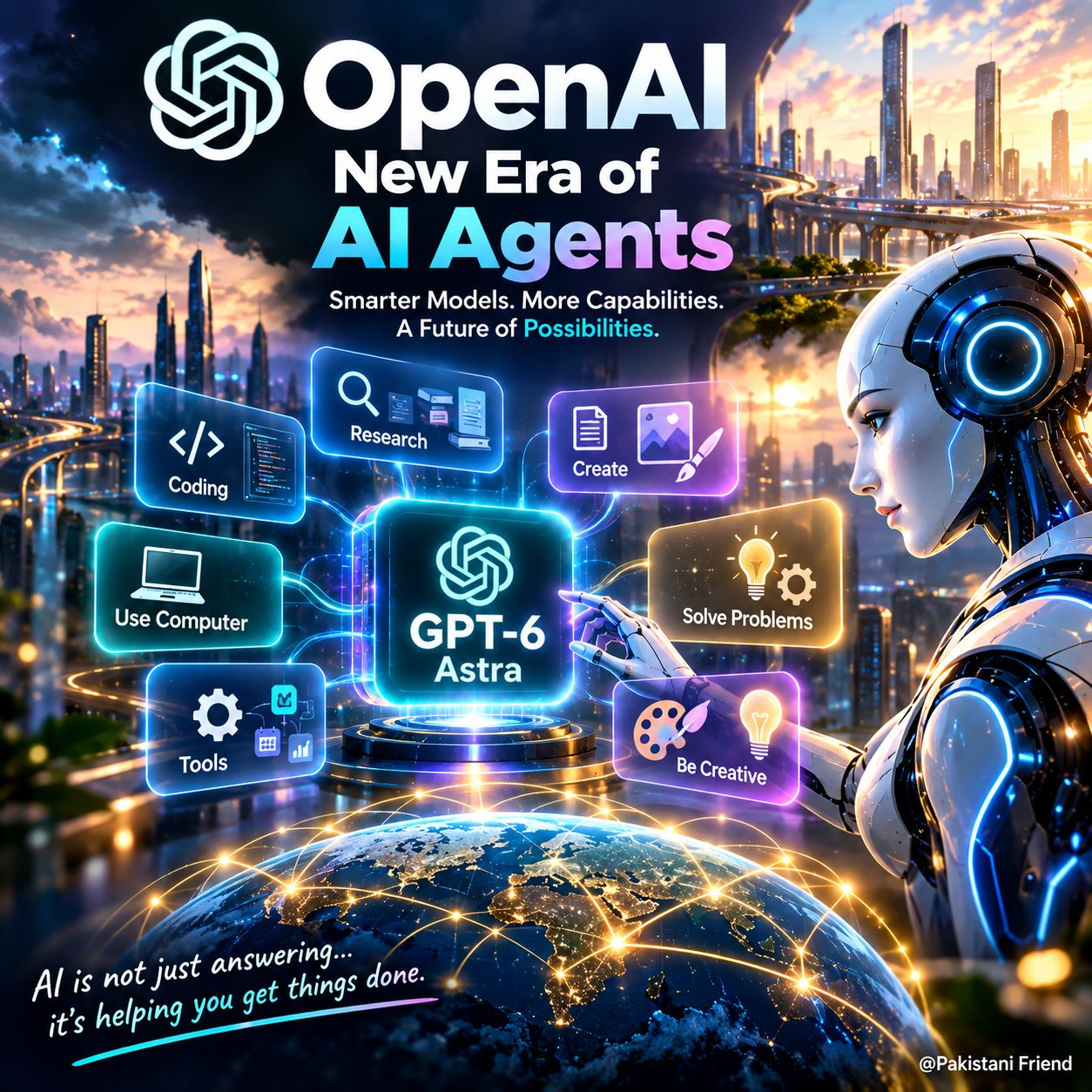
GPT-6 Astra: A New Step for AI
In September 2026, OpenAI introduced GPT-6 Astra, a new model designed for more advanced work. OpenAI says Astra improves capabilities in areas such as coding, research, computer use, cybersecurity, science, and complex professional tasks.
The important idea is not simply that AI can give better answers. The bigger change is that AI can increasingly help with complete workflows.
From Chatbots to Agents
Traditional chatbots mainly respond to what a person asks. AI agents are being developed to do more: they can reason through a task, interact with tools, and work through several steps toward a goal.
OpenAI has also introduced an Agents API, showing its focus on helping developers build applications around agent-like AI systems.
Imagine asking an AI to research a topic, organize the information, create a report, and then revise that report according to new instructions. This type of multi-step workflow represents an important direction for modern AI.
AI Is Becoming More Useful
OpenAI has also been expanding ChatGPT beyond text. Recent updates include improved image generation and editing, more natural voice experiences, connections to external tools, and features designed for work and research.
This means the future of AI may not be about one simple chatbot. Instead, AI could become a collection of intelligent assistants and agents that help people with different kinds of work.
The development of powerful AI also brings important questions about safety, reliability, privacy, and human oversight. OpenAI says GPT-6 Astra includes additional safety monitoring, particularly for situations where an AI agent might misunderstand instructions.
The next generation of AI is therefore not just about making models more powerful. It is also about making them more useful, responsible, and controllable.
OpenAI's latest developments show a clear shift: AI is moving from simply answering questions toward helping people accomplish complex tasks.