
“Small TRX” $JST why has it been rising against the trend for so long?
As everyone knows, recently JST has broken through the 1-billion market cap milestone!

From protocol revenue to a deflationary closed loop, JUST is turning on-chain fundamentals into price.
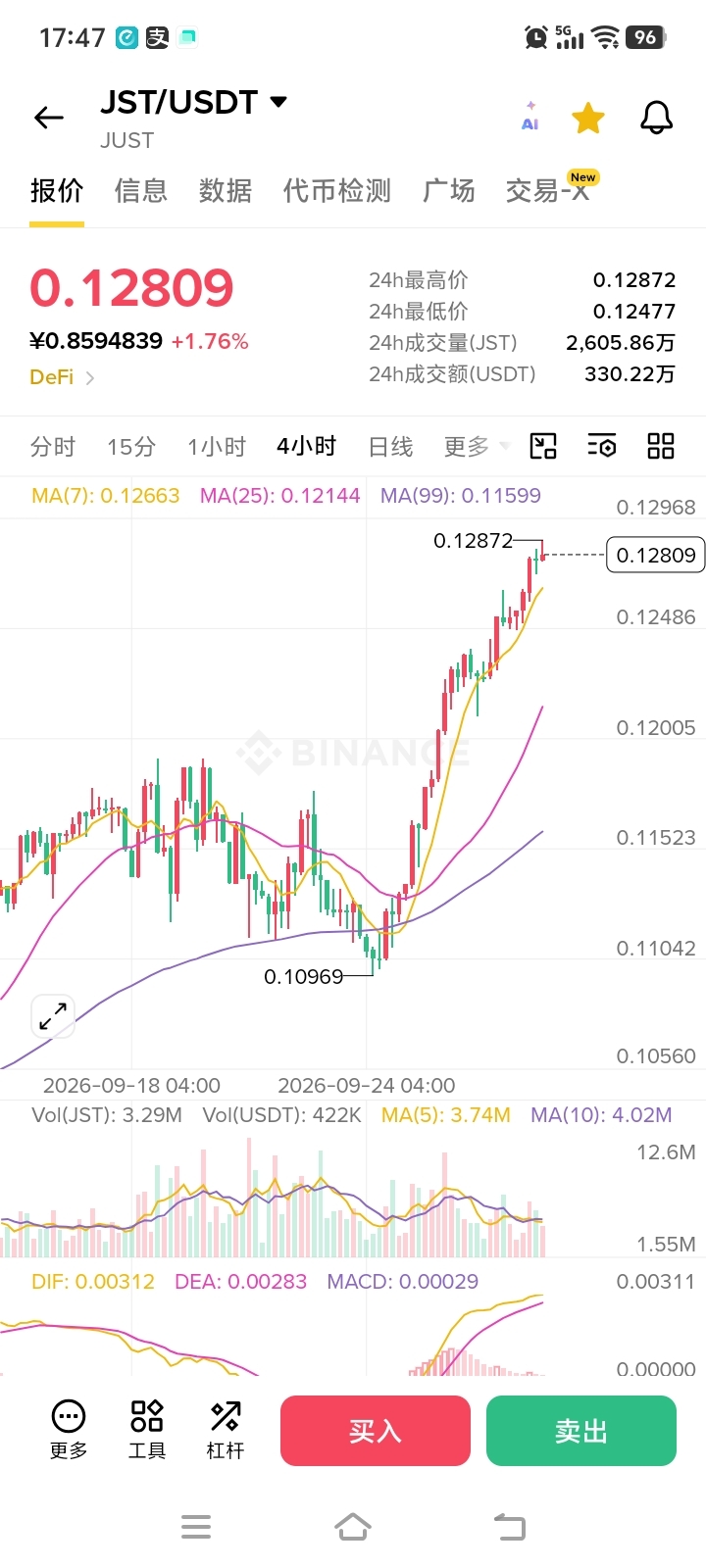
When the $JST price reaches $0.123, the market cap crosses the $100 million mark. This is not just a sentiment-driven move, but the combined result of TVL, the product matrix, and the buyback-and-burn mechanism resonating together.
1. Market Cap and TVL: Prepare the supplies before moving the army
A recent official snapshot from the JustLend DAO shows that the platform’s TVL is now at approximately $7.56 billion. The supply side is over $4.1 billion, while the lending side is about $200 million. Previously, the JUST ecosystem had been holding a longer-term share of around 40% of TRON DeFi.
For governance tokens, breaking through a $1 billion market cap matters because it’s no longer just “ecosystem voting chips”; the market starts valuing it as an asset with sustainable cash flows.
2. JustLend DAO’s three core use cases
The products that support revenue are three product lines that can continuously generate real demand:
1、 SBM / SBM V2 (lending market)
The core funding pool. Users deposit assets like TRX and USDT to earn interest, or over-collateralize to borrow. V2 introduces isolated collateral and adaptive interest rates to reduce risk contagion while improving capital efficiency.
2、 TRX (liquid staking)
Stake TRX with one click to receive tradable sTRX, layered with voting rewards and Energy rental income. sTRX can also be further deposited into SBM, forming repeatable capital usage: “staking + lending.”
3、 Energy Rental
Users don’t need to burn $TRX to rent Energy cheaply, reducing transfer and contract-call costs. This business has become an important source of protocol revenue.
These three lines aren’t presented side by side—they form a closed loop: lending turns capital into accumulated funds, staking amplifies TRX yield, and energy rental directly converts on-chain activity into fee income.
3. Protocol revenue buyback & burn: deflation has moved from a proposal into a rhythm
On October 21, 2025, the community proposed JST buyback and burn: JustLend DAO’s net revenue, plus the portion of the multi-chain TRON ecosystem (USDD) exceeding $10 million, to be used for open-market buybacks and permanent burning.
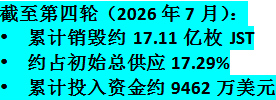
As of the fourth round (July 2026):
• Cumulatively about 1.711 billion JST burned
• About 17.29% of the initial total supply
• Total capital deployed of about $94.62 million
This isn’t a one-off marketing burn. It’s a quarterly, step-by-step deflation mechanism that can be verified on-chain and is driven by protocol profits.
4. The price increase after the mechanism goes live is more convincing than slogans
When the buyback starts, JST is roughly at $0.03–$0.034.
The day before yesterday, JST was around $0.12. After the mechanism was implemented, the cumulative increase was about 250%–300%. Over the past year, it’s up about 250%–280%. Even in the last 30 days, it’s still been rising strongly on its own by around 20%.
A market cap of $1 billion is just the starting point, not the finish line. What truly determines the next phase isn’t repeating “the TRON ecosystem” again and again, but whether these three things can continue to hold simultaneously:
SBM, sTRX, and Energy Rental continue to contribute stable net income → quarterly buybacks are executed according to the rules, and the burn ratio keeps increasing → TVL stays at a high level, instead of being propped up by short-term incentives
JST’s current price is: $0.128. The incredible wealth is only just beginning. The best narrative going forward isn’t merely a contrarian price rally—it’s real, tangible accounting!