
易琳Ten
89 Posts

易琳Ten
交易是修行,盈利是结果,纪律是信仰。🐺📈
106 Following
18.9K+ Followers
6.2K+ Liked
Posts
All
Quotes
易琳Ten
·
--
#BTC 🚀
Brothers shorting—let me ask just one thing:
Isn’t this market already bullish enough? What else would count as a bull market?
Do we really need to wait until Bitcoin keeps breaking higher, and everyone starts shouting “100,000” or “200,000,” before you’re willing to admit a bull market is here?
The market won’t stop rising because of your doubts, and it won’t rise forever just because you’re confident.
Respect the trend, and fear the risks.
Brothers shorting—let me ask just one thing:
Isn’t this market already bullish enough? What else would count as a bull market?
Do we really need to wait until Bitcoin keeps breaking higher, and everyone starts shouting “100,000” or “200,000,” before you’re willing to admit a bull market is here?
The market won’t stop rising because of your doubts, and it won’t rise forever just because you’re confident.
Respect the trend, and fear the risks.
易琳Ten
·
--
Trade
Be content and always happy,
stable compound interest,
slow and steady progress.
Be content and always happy,
stable compound interest,
slow and steady progress.

易琳Ten
·
--
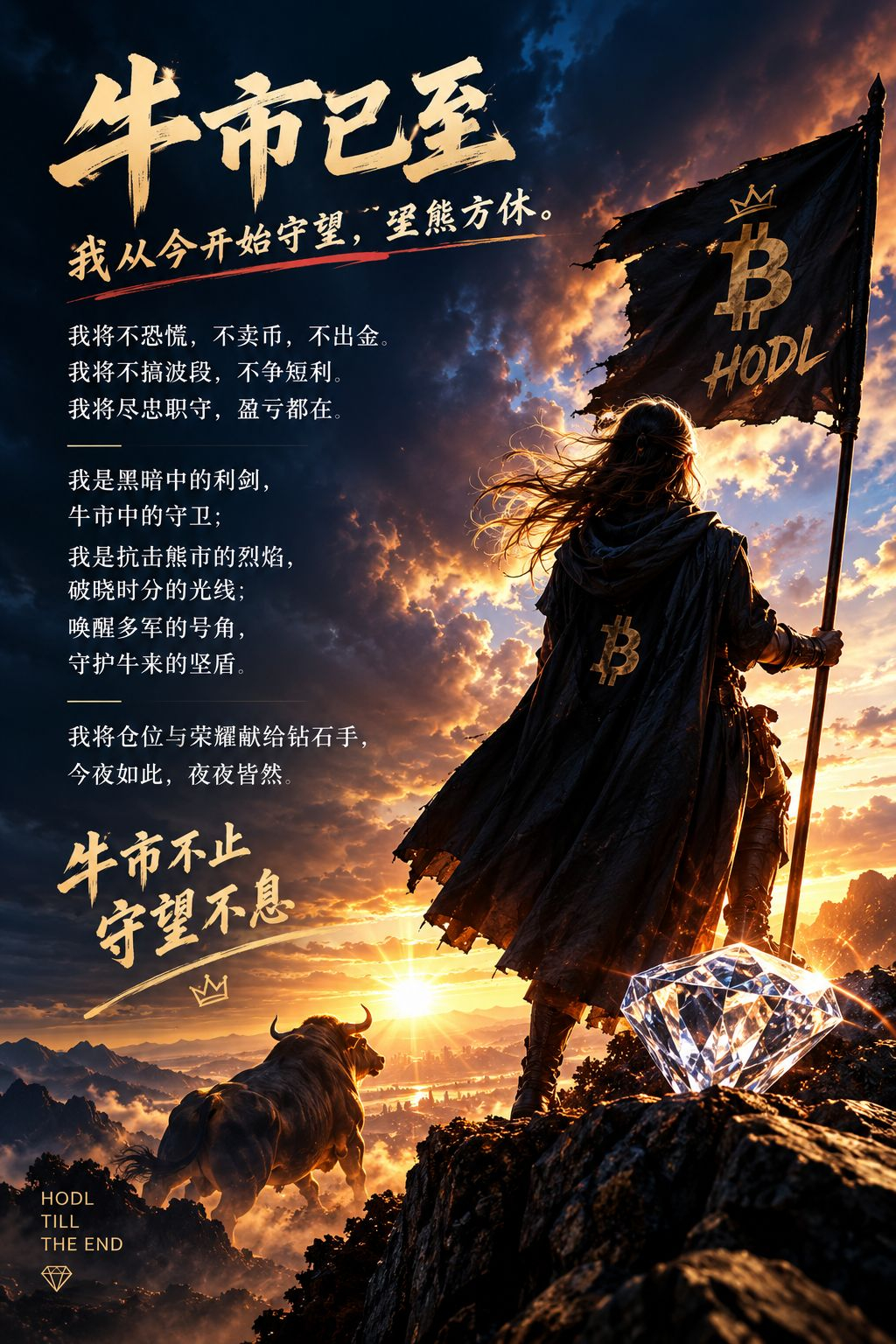
🛡️《Diamond Hands Code · Bull Market Vows》
The bull market is here. We stand watch, until the bear comes to an end.
I will not fear panic, nor be swayed by short-term fluctuations.
I will not fight over trivial gains, nor chase the tides of the market.
I will adhere to discipline, respect risk, take responsibility for gains and losses, and remain unwavering.
I am the blade in the darkness, the guardian in the bull market;
I am the blaze in adversity, the dawn’s first light;
I am the horn that awakens the long camp, and the shield that protects conviction.
I will cross the turbulence with patience, and witness the cycle with faith.
I will entrust my position to time, and offer glory to diamond hands.
So it is tonight; so it is every night.
The bull market is here. We stand watch, until the bear comes to an end.
I will not fear panic, nor be swayed by short-term fluctuations.
I will not fight over trivial gains, nor chase the tides of the market.
I will adhere to discipline, respect risk, take responsibility for gains and losses, and remain unwavering.
I am the blade in the darkness, the guardian in the bull market;
I am the blaze in adversity, the dawn’s first light;
I am the horn that awakens the long camp, and the shield that protects conviction.
I will cross the turbulence with patience, and witness the cycle with faith.
I will entrust my position to time, and offer glory to diamond hands.
So it is tonight; so it is every night.
易琳Ten
·
--
#BTC 🚀
Brothers shorting—let me ask just one thing:
Isn’t this market already bullish enough? What else would count as a bull market?
Do we really need to wait until Bitcoin keeps breaking higher, and everyone starts shouting “100,000” or “200,000,” before you’re willing to admit a bull market is here?
The market won’t stop rising because of your doubts, and it won’t rise forever just because you’re confident.
Respect the trend, and fear the risks.
Brothers shorting—let me ask just one thing:
Isn’t this market already bullish enough? What else would count as a bull market?
Do we really need to wait until Bitcoin keeps breaking higher, and everyone starts shouting “100,000” or “200,000,” before you’re willing to admit a bull market is here?
The market won’t stop rising because of your doubts, and it won’t rise forever just because you’re confident.
Respect the trend, and fear the risks.





Log in to explore more content