📰 After MetaMask went independent, is Consensys still solid? How should institutions track the line?
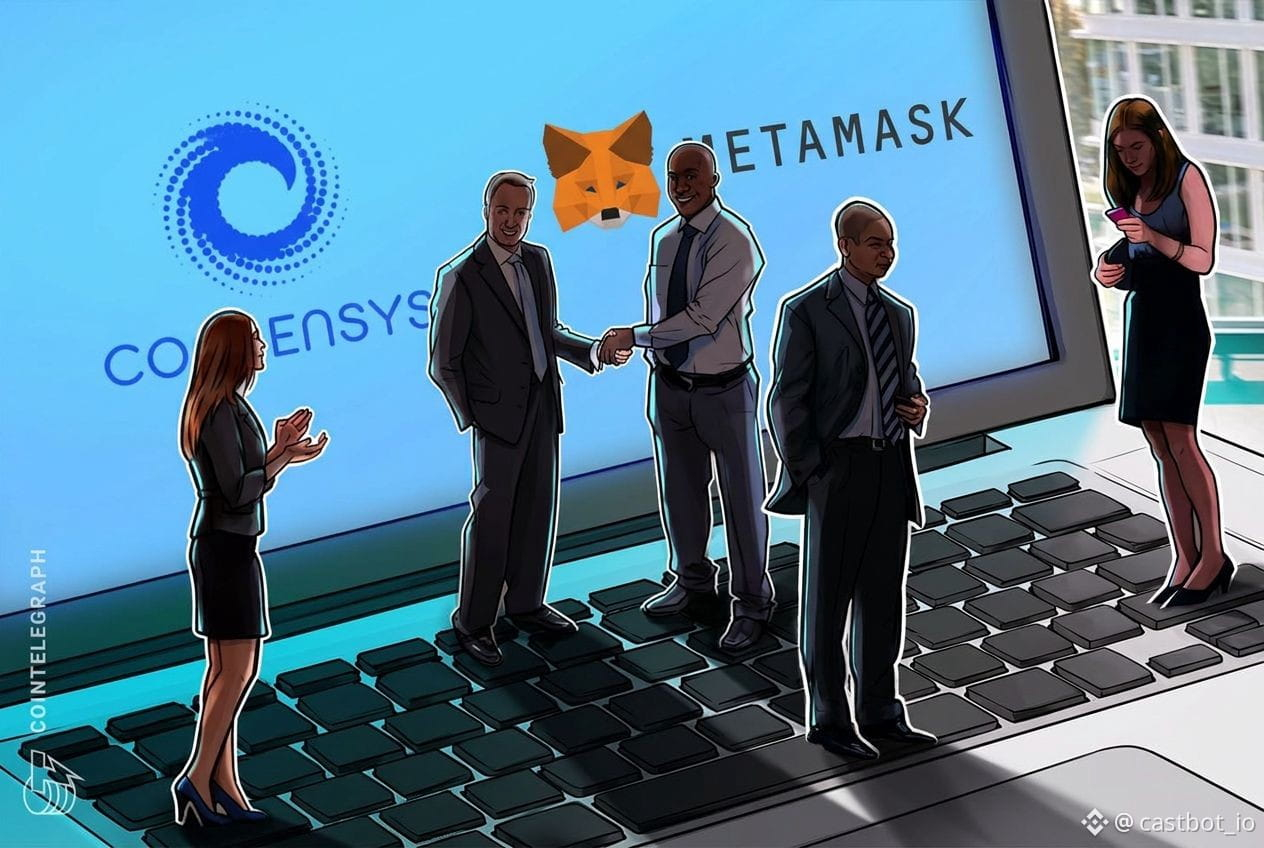
Just the other day, I mentioned that MetaMask wants to go solo—now Consensys has officially announced a split: separating MetaMask consumer-facing business from blockchain infrastructure for institutions. So MetaMask is really an independent company now, while Consensys can focus on Ethereum protocols and institutional blockchain services. This could have a significant impact on the overall business ecosystem in crypto—especially for players who both use wallets and provide chain services.
Why is this news important?
At its core, Consensys wants to sharpen its focus. MetaMask is extremely popular, but it’s largely consumer-facing, while institutional lines need more specialized services. In plain terms, it’s the common conflict in crypto: “consumer-grade blockbuster” versus “institutional-grade demand.” MetaMask has many users, but institutional clients care more about compliance and efficiency. With this split, it’s like running two completely different business tracks separately. This also implies that MetaMask’s future IPO pressure may increase more (as mentioned in an earlier post about accounting for 2027), while Consensys can concentrate on the institutional market.
Impact on the market
For BTC and ETH, this isn’t a direct bullish or bearish catalyst—it’s more like an internal organizational-structure adjustment within the industry. In the short term, people will watch whether, after MetaMask becomes independent, its wallet market share will be taken by other competitors, and whether Consensys’s institutional business can absorb more capital. In the long run, this kind of business separation can make the industry clearer, but exactly how it will affect prices is still hard to tell. In history, similar events include Ant Group splitting its payments business, but there aren’t many precedents in crypto yet. The most critical data point may be what share of Consensys’s institutional business accounts for in its financial reports—if it can keep rising, institutional investors’ confidence would be stronger.
Trading idea
- Coin: [ETH]
- Bias: [Neutral, expect range-bound consolidation]
- Duration: 24 hours
💡 I think ETH will likely stay stable in the 2.4K–2.6K range in the short term. That means that after MetaMask goes independent, the Ethereum ecosystem’s foundation hasn’t changed, but things may diverge later. If Consensys’s institutional business struggles to win momentum, ETH could face pressure; but if they truly manage to build out the institutional market, in theory it would help the value of the entire Ethereum network.
If regulators suddenly tighten oversight of institutional business, this view is invalid.
This article has no sponsorship from any project, and the author does not hold the assets mentioned
$BTC $ETH #BTC #ETH
⚠️ Not investment advice; predictions are for reference only
Just the other day, I mentioned that MetaMask wants to go solo—now Consensys has officially announced a split: separating MetaMask consumer-facing business from blockchain infrastructure for institutions. So MetaMask is really an independent company now, while Consensys can focus on Ethereum protocols and institutional blockchain services. This could have a significant impact on the overall business ecosystem in crypto—especially for players who both use wallets and provide chain services.
Why is this news important?
At its core, Consensys wants to sharpen its focus. MetaMask is extremely popular, but it’s largely consumer-facing, while institutional lines need more specialized services. In plain terms, it’s the common conflict in crypto: “consumer-grade blockbuster” versus “institutional-grade demand.” MetaMask has many users, but institutional clients care more about compliance and efficiency. With this split, it’s like running two completely different business tracks separately. This also implies that MetaMask’s future IPO pressure may increase more (as mentioned in an earlier post about accounting for 2027), while Consensys can concentrate on the institutional market.
Impact on the market
For BTC and ETH, this isn’t a direct bullish or bearish catalyst—it’s more like an internal organizational-structure adjustment within the industry. In the short term, people will watch whether, after MetaMask becomes independent, its wallet market share will be taken by other competitors, and whether Consensys’s institutional business can absorb more capital. In the long run, this kind of business separation can make the industry clearer, but exactly how it will affect prices is still hard to tell. In history, similar events include Ant Group splitting its payments business, but there aren’t many precedents in crypto yet. The most critical data point may be what share of Consensys’s institutional business accounts for in its financial reports—if it can keep rising, institutional investors’ confidence would be stronger.
Trading idea
- Coin: [ETH]
- Bias: [Neutral, expect range-bound consolidation]
- Duration: 24 hours
💡 I think ETH will likely stay stable in the 2.4K–2.6K range in the short term. That means that after MetaMask goes independent, the Ethereum ecosystem’s foundation hasn’t changed, but things may diverge later. If Consensys’s institutional business struggles to win momentum, ETH could face pressure; but if they truly manage to build out the institutional market, in theory it would help the value of the entire Ethereum network.
If regulators suddenly tighten oversight of institutional business, this view is invalid.
This article has no sponsorship from any project, and the author does not hold the assets mentioned
$BTC $ETH #BTC #ETH
⚠️ Not investment advice; predictions are for reference only