
Aria Bloom 阿莉娅
507 Posts

Aria Bloom 阿莉娅
Aria Bloom | Learning, growing, and exploring crypto with patience and purpose. Every step is progress 💞
Open Trade
High-Frequency Trader
1.5 Years
308 Following
8.9K+ Followers
3.7K+ Liked
Posts
Portfolio
All
Quotes
😇

XY 心月势不可挡
·
--
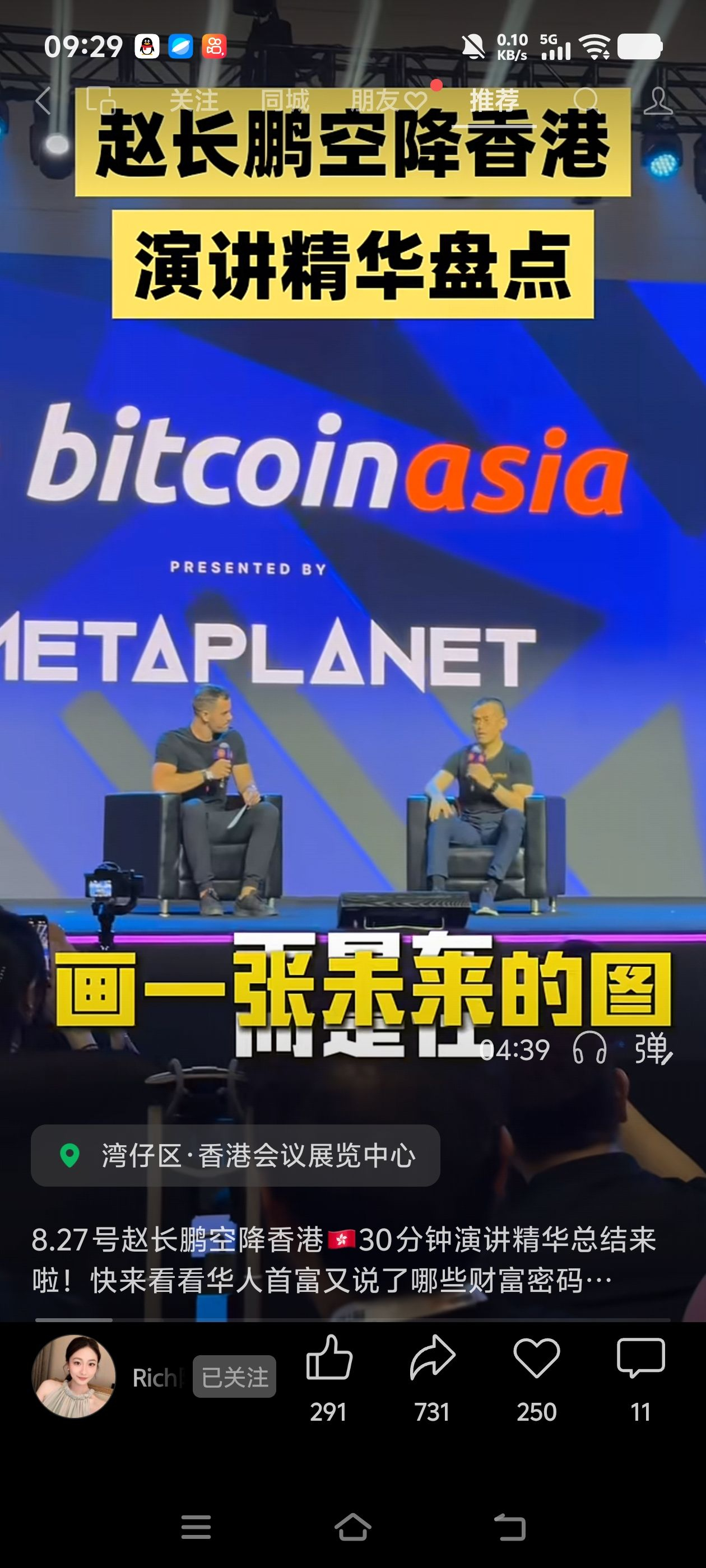
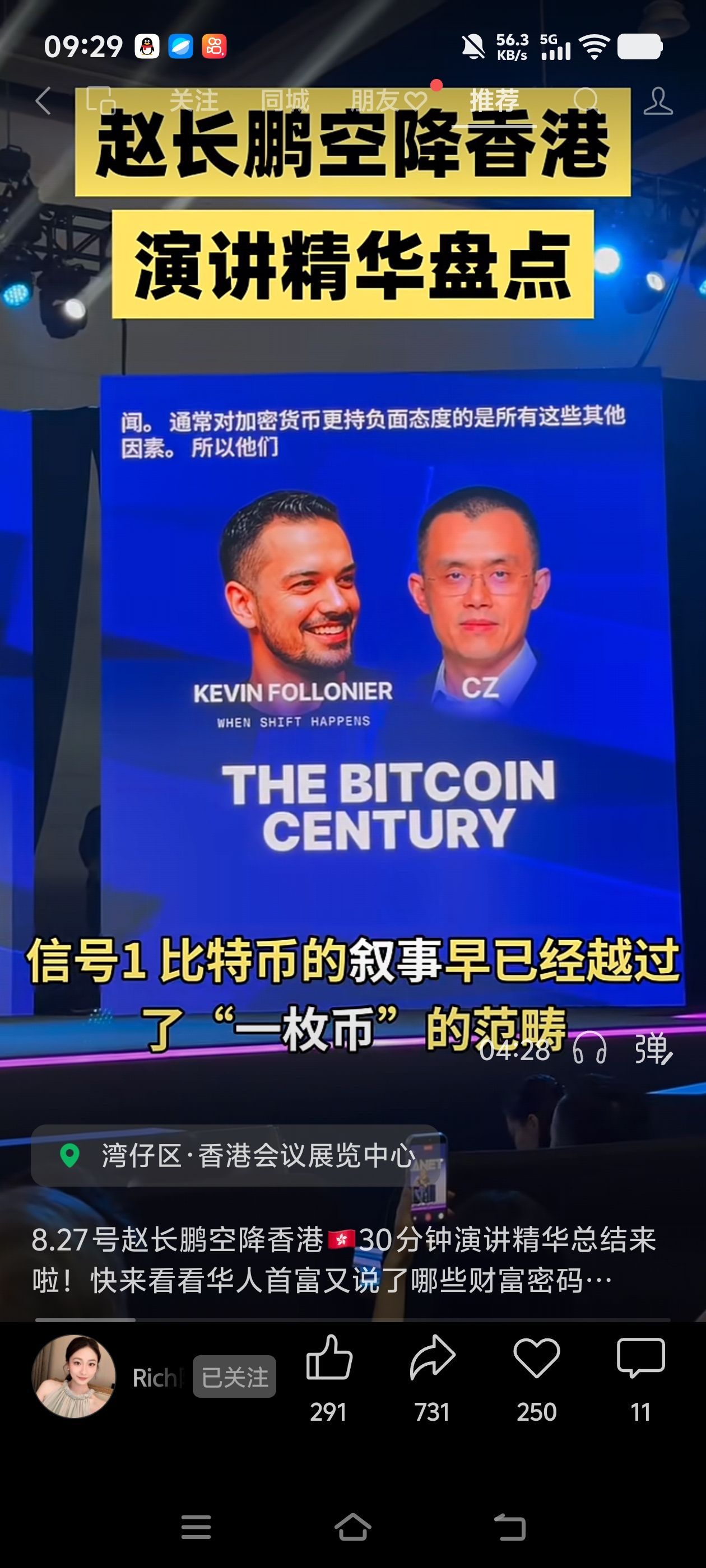
Will every household have 0.1 Bitcoin ten years from now? Everything will be on-chain, 🍰🍰🍰
😇


晚风Vesper_1688
·
--
🍵A cup of afternoon tea—find a moment of inner calm amid the bustle of the world 🌿.
Tasting tea emphasizes slow sips and deep understanding; investing is much the same 📊.
Fluctuations in the market are normal—there’s no need to keep staring at the charts all the time.
Learn to step back when appropriate, let your thoughts settle, and stay true to your instincts and judgment ✨.
Be a little less impatient, a little more composed—great opportunities are worth waiting for patiently 💎.
Encouraging everyone on the journey together 🕊️.
#交易心态
#沃什称通胀是美联储首要关注
#1688家族family
Tasting tea emphasizes slow sips and deep understanding; investing is much the same 📊.
Fluctuations in the market are normal—there’s no need to keep staring at the charts all the time.
Learn to step back when appropriate, let your thoughts settle, and stay true to your instincts and judgment ✨.
Be a little less impatient, a little more composed—great opportunities are worth waiting for patiently 💎.
Encouraging everyone on the journey together 🕊️.
#交易心态
#沃什称通胀是美联储首要关注
#1688家族family

😇

ABL阿布辣2020
·
--
“Reuters” reveals Meta’s predicament after AI layoffs:
Cybersecurity incidents up 40%, time spent cleaning up up 70%
In recent months, social media giant Meta has repeatedly carried out mass layoffs to develop AI. In a follow-up report published by Reuters on August 26, it noted that Meta CEO Mark Zuckerberg had already proposed an AI transformation plan as early as January this year. The initiative, code-named Organization Transformation (OT), aims to move Meta toward an “AI-native” operating model, where AI takes over much of the daily work originally handled by employees, leaving only smaller teams with higher talent density to oversee operations. After news of Meta’s layoffs plan leaked in March, employee morale was hit hard, and supervisors were even told to play down the handling—only informing teams that their future roles would “evolve” because of AI.
According to an internal post by Meta’s CTO Andrew in June, the amount of code written by employees using AI has grown year over year by up to 220%, but the number of new features or upgrades that were actually deployed to benefit users has grown by only 36%. Instead of improving performance, the wave of AI-assisted coding has raised concerns about reliability, leading to “large-scale, disruptive AI agent behavior.” As a result, major technical and cybersecurity incidents increased by 40% compared with the same period last year, and the time employees spent “cleaning up” issues surged by 70%.$AAPL.US
Cybersecurity incidents up 40%, time spent cleaning up up 70%
In recent months, social media giant Meta has repeatedly carried out mass layoffs to develop AI. In a follow-up report published by Reuters on August 26, it noted that Meta CEO Mark Zuckerberg had already proposed an AI transformation plan as early as January this year. The initiative, code-named Organization Transformation (OT), aims to move Meta toward an “AI-native” operating model, where AI takes over much of the daily work originally handled by employees, leaving only smaller teams with higher talent density to oversee operations. After news of Meta’s layoffs plan leaked in March, employee morale was hit hard, and supervisors were even told to play down the handling—only informing teams that their future roles would “evolve” because of AI.
According to an internal post by Meta’s CTO Andrew in June, the amount of code written by employees using AI has grown year over year by up to 220%, but the number of new features or upgrades that were actually deployed to benefit users has grown by only 36%. Instead of improving performance, the wave of AI-assisted coding has raised concerns about reliability, leading to “large-scale, disruptive AI agent behavior.” As a result, major technical and cybersecurity incidents increased by 40% compared with the same period last year, and the time employees spent “cleaning up” issues surged by 70%.$AAPL.US
😇

Muzamil Abbas⁷⁵ 穆扎米尔_阿巴斯
·
--
Bullish🎁 $SHIB GIVEAWAY WORTH $100 🎁
I’m giving away SHIB Gift Boxes to 3,000 lucky people! 🐕🔥
To participate:
❤️ Like this post ✅
🔁 Repost this post ✅
💬 Comment “1” below ✅
🎁 Claim your Gift Box ✅
Good luck everyone🚀✨
#SHIB #Giveaway #Binance #CryptoGiveaway

😇

Hitmans Lounge
·
--
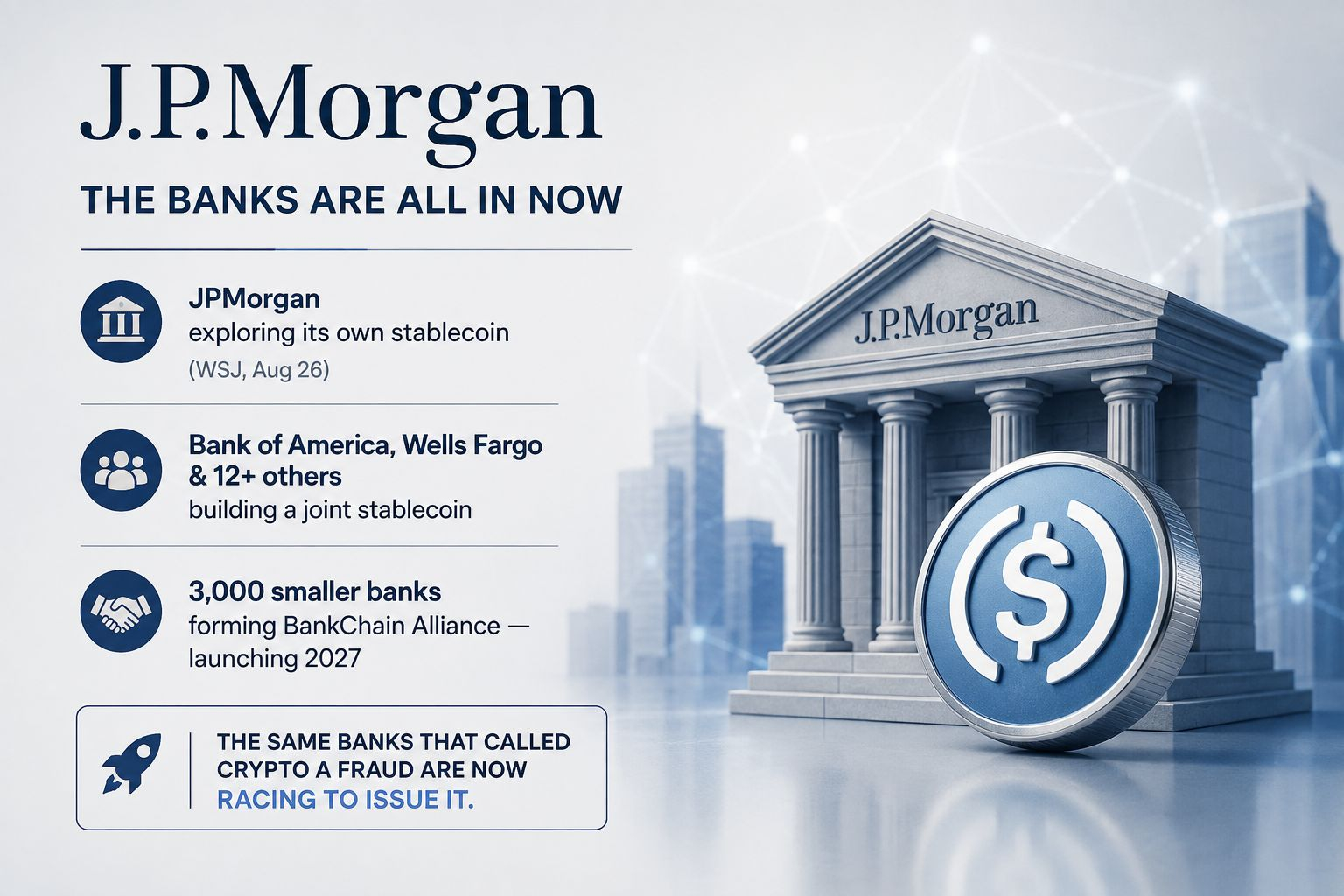
Bullish🏦💥 THE BANKS ARE ALL IN NOW
🔹 JPMorgan exploring its own stablecoin (WSJ, Aug 26)
🔹 Bank of America, Wells Fargo & 12+ others building a joint stablecoin
🔹 3,000 smaller banks forming BankChain Alliance — launching 2027
The same banks that called crypto a fraud are now racing to issue it. 👀🚨
#Stablecoin #JPMorgan #Crypto #Web3 #JPMorgan
$DEXE $HEMI $EDEN
🔹 JPMorgan exploring its own stablecoin (WSJ, Aug 26)
🔹 Bank of America, Wells Fargo & 12+ others building a joint stablecoin
🔹 3,000 smaller banks forming BankChain Alliance — launching 2027
The same banks that called crypto a fraud are now racing to issue it. 👀🚨
#Stablecoin #JPMorgan #Crypto #Web3 #JPMorgan
$DEXE $HEMI $EDEN
🤫

白鲨观点
·
--
Sun Yuchen’s piece titled “My Girlfriend Jing Tian” has cornered all the trending topics on the entire Chinese internet. My first reaction was to laugh; and as I kept laughing, I thought—this is just too “Sun Yuchen.”
A man with a net worth of $8.5 billion, for more than $30 million in bride price, lays out details of his ex-girlfriend’s private life for the whole internet to watch. You say he’s short on money? No way. You say he’s deeply devoted? Even the ending has a line that says, “This article is entirely fictional.”
It’s like the pump-and-dump tactics commonly seen in the crypto circle—you think it’s value discovery, but in reality it’s attention being cashed out. Sun Yuchen has always understood this: the Buffett lunch was filmed and then he didn’t go, using the heat for two waves; he paid $6.2 million for a banana and ate it publicly, getting headlines everywhere. His life is a continuous “market-making” of attention—every incident is like an “on-chain” moment, turning controversy, gossip, and shock value into traffic and exposure.
But you need to see the essence clearly: attention can pump prices, and it can also dump them. The most worth-guarding in this incident isn’t the melodramatic plot—it’s that the founder’s public-opinion risk is now transmitting to related assets. Tron TRX, HTX, and the Trump coin he’s deeply tied to are, in essence, “Sun Yuchen concept stocks.” When the founder’s public image shifts from “the king of crypto marketing” to “the male lead in a relationship dispute,” the fragility of the chip structure gets amplified.
More subtly, there’s the detail that’s been mentioned again and again: when Jing Tian asked him, “Can you come to Beijing?” he went silent. Behind that silence lie questions about travel restrictions, regulatory risk, and asset liquidity. For someone who can’t even get back to the capital, how much of his wealth is paper glory, and how much is real cash in hand—let the market weigh it.
Gossip is for looking at, not for paying for the story. The iron rules of the crypto world have never changed: the more noisy the founder is, the more calmly you must think. He’s cashed in all that attention—yet you might end up becoming the cost of the attention economy.
#孙割 #景甜 #Binance #BTC
A man with a net worth of $8.5 billion, for more than $30 million in bride price, lays out details of his ex-girlfriend’s private life for the whole internet to watch. You say he’s short on money? No way. You say he’s deeply devoted? Even the ending has a line that says, “This article is entirely fictional.”
It’s like the pump-and-dump tactics commonly seen in the crypto circle—you think it’s value discovery, but in reality it’s attention being cashed out. Sun Yuchen has always understood this: the Buffett lunch was filmed and then he didn’t go, using the heat for two waves; he paid $6.2 million for a banana and ate it publicly, getting headlines everywhere. His life is a continuous “market-making” of attention—every incident is like an “on-chain” moment, turning controversy, gossip, and shock value into traffic and exposure.
But you need to see the essence clearly: attention can pump prices, and it can also dump them. The most worth-guarding in this incident isn’t the melodramatic plot—it’s that the founder’s public-opinion risk is now transmitting to related assets. Tron TRX, HTX, and the Trump coin he’s deeply tied to are, in essence, “Sun Yuchen concept stocks.” When the founder’s public image shifts from “the king of crypto marketing” to “the male lead in a relationship dispute,” the fragility of the chip structure gets amplified.
More subtly, there’s the detail that’s been mentioned again and again: when Jing Tian asked him, “Can you come to Beijing?” he went silent. Behind that silence lie questions about travel restrictions, regulatory risk, and asset liquidity. For someone who can’t even get back to the capital, how much of his wealth is paper glory, and how much is real cash in hand—let the market weigh it.
Gossip is for looking at, not for paying for the story. The iron rules of the crypto world have never changed: the more noisy the founder is, the more calmly you must think. He’s cashed in all that attention—yet you might end up becoming the cost of the attention economy.
#孙割 #景甜 #Binance #BTC

😇

MJ ALI_BNB
·
--
🎁 Red Packet Alert! Big Thanks to My Crypto Family! ❤️
Hey everyone! MJ Ali here.
I just wanted to take a quick moment to pause, reflect, and send a massive **THANK YOU** to each and every one of you. Whether you’re reading the daily market updates or engaging in the comments, your continuous support and energy mean the world to me. Building and growing together in this crypto journey is what keeps this community alive!
As a small token of my love and appreciation, I’ve set up a special **Red Packet Gift** just for you! 🔻✨
How to Claim Your Red Packet:🤔💖
Step 1: **Like** this post to show some love. ❤️
Step 2: **Repost** to share the gift with the community. 🔄
Step 3: **Follow** the profile so you never miss daily updates & future giveaways! 🚀
Let’s keep learning, growing, and winning together. Drop a comment below once you claim yours, and let me know what coins you're watching today!
Stay blessed, stay ahead, and happy trading!🙏✨
#BinanceSquareFamily #RedPacketMission
#BTC #cryptouniverseofficial #Binance
$BTC
$BNB
$ASTER
Hey everyone! MJ Ali here.
I just wanted to take a quick moment to pause, reflect, and send a massive **THANK YOU** to each and every one of you. Whether you’re reading the daily market updates or engaging in the comments, your continuous support and energy mean the world to me. Building and growing together in this crypto journey is what keeps this community alive!
As a small token of my love and appreciation, I’ve set up a special **Red Packet Gift** just for you! 🔻✨
How to Claim Your Red Packet:🤔💖
Step 1: **Like** this post to show some love. ❤️
Step 2: **Repost** to share the gift with the community. 🔄
Step 3: **Follow** the profile so you never miss daily updates & future giveaways! 🚀
Let’s keep learning, growing, and winning together. Drop a comment below once you claim yours, and let me know what coins you're watching today!
Stay blessed, stay ahead, and happy trading!🙏✨
#BinanceSquareFamily #RedPacketMission
#BTC #cryptouniverseofficial #Binance
$BTC
$BNB
$ASTER

😇

Shaheen 69
·
--
🎁 BINANCE PUT ALL THE GIFTS IN ONE BASKET! 🟡
Imagine one basket filled with Airdrops, Red Packets, Trading Rewards, Token Vouchers, CreatorPad rewards, Write-to-Earn opportunities and VIP benefits. 🚀
That’s what makes the Binance ecosystem exciting — it’s not only about trading, but also about discovering new opportunities, participating in campaigns and sharing rewards with the community.
And today, Shaheen69 is opening the gift basket for YOU! 🎉
I’m sharing Red Packet rewards with all of you as a small thank-you for your continued support and love. ❤️
Good luck everyone! 🍀
Who will grab the reward? 👀
#Binance #BNB #redpacket
Imagine one basket filled with Airdrops, Red Packets, Trading Rewards, Token Vouchers, CreatorPad rewards, Write-to-Earn opportunities and VIP benefits. 🚀
That’s what makes the Binance ecosystem exciting — it’s not only about trading, but also about discovering new opportunities, participating in campaigns and sharing rewards with the community.
And today, Shaheen69 is opening the gift basket for YOU! 🎉
I’m sharing Red Packet rewards with all of you as a small thank-you for your continued support and love. ❤️
Good luck everyone! 🍀
Who will grab the reward? 👀
#Binance #BNB #redpacket

😇

E L E X A
·
--
🚨 $USDT GIVEAWAY LIVE 🚨
Watching won’t get you rewards…
Taking action will 👀
Ready to grab some free $USDT
💬 Comment 666
❤️ Like this post
🔁 Repost / Share
➕ Follow
⏳ Limited spots — early birds win
Drop 666 now 🚀
#USDT #Crypto #BinanceSquareFamily #Giveaway #Viral
Watching won’t get you rewards…
Taking action will 👀
Ready to grab some free $USDT
💬 Comment 666
❤️ Like this post
🔁 Repost / Share
➕ Follow
⏳ Limited spots — early birds win
Drop 666 now 🚀
#USDT #Crypto #BinanceSquareFamily #Giveaway #Viral

🤔

圣克斯Lucky1688
·
--
🧧🧧🔥🔥🧧🧧With inflation remaining the main focus, uncertainty around the Fed is on the rise. Less guidance may mean increased market volatility—so watch the data, yields, and liquidity closely. Follow me, answer 1 to the question, and take away the $SOL red envelope 🧧🧧🔥🔥🧧🧧.

😇
Muzamil Abbas⁷⁵ 穆扎米尔_阿巴斯
·
--
Bullish🎁 $SHIB GIVEAWAY WORTH $100 🎁
I’m giving away SHIB Gift Boxes to 3,000 lucky people! 🐕🔥
To participate:
❤️ Like this post ✅
🔁 Repost this post ✅
💬 Comment “1” below ✅
🎁 Claim your Gift Box ✅
Good luck everyone🚀✨
#SHIB #Giveaway #Binance #CryptoGiveaway
The journey isn’t always about numbers, markets, and targets. Sometimes, it’s about stepping away for a moment, enjoying the beauty of nature, and appreciating the peaceful moments that make life meaningful. ✨
A beautiful view, calm waters, and my little companion by my side. 🐱🤍
Simple moments, unforgettable memories.
Keep moving forward, stay positive, and enjoy every part of the journey. 🚀✨
$BTR $GIGGLE $SOL
A beautiful view, calm waters, and my little companion by my side. 🐱🤍
Simple moments, unforgettable memories.
Keep moving forward, stay positive, and enjoy every part of the journey. 🚀✨
$BTR $GIGGLE $SOL

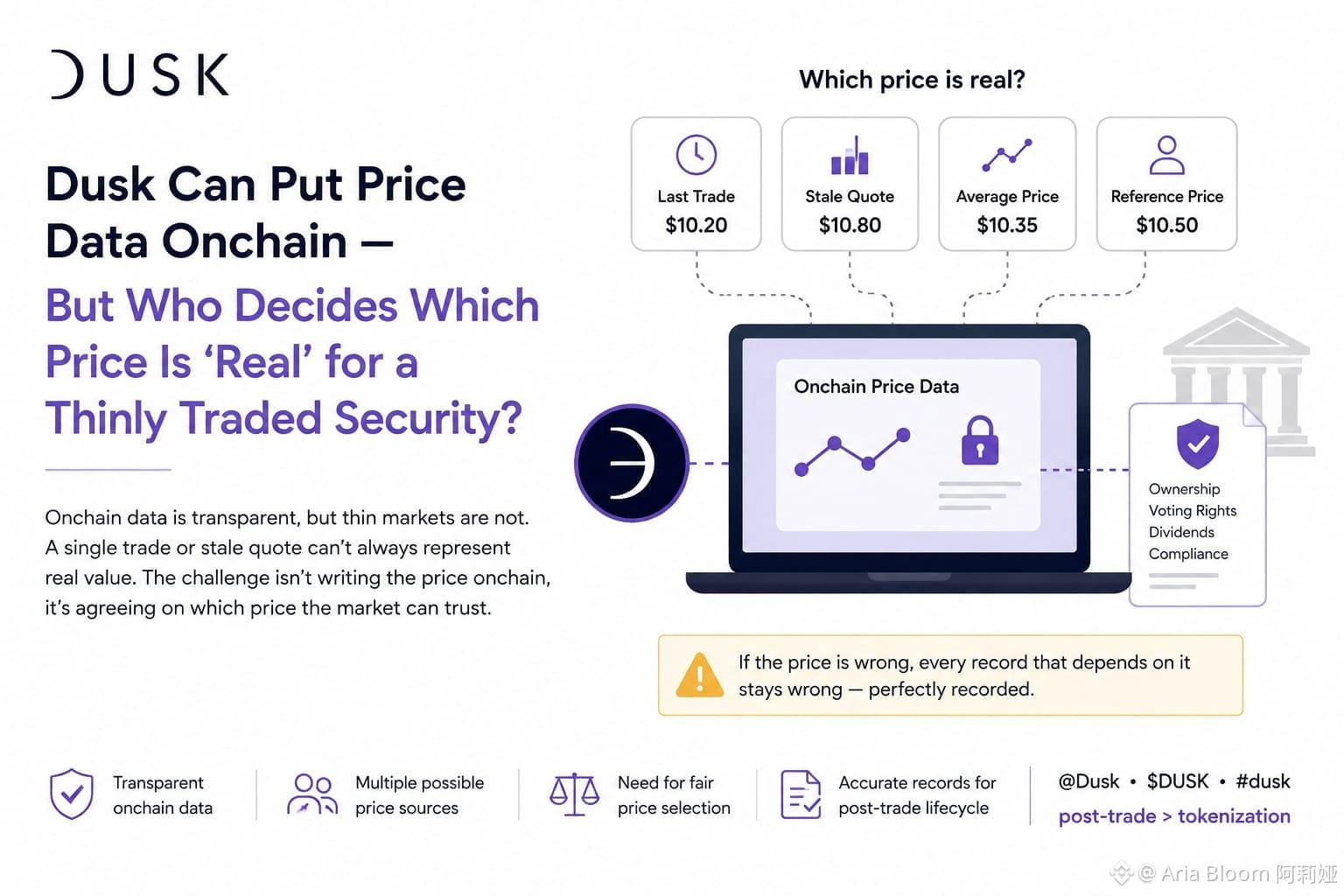
I’ve been thinking about Dusk’s onchain price data a bit differently lately. Putting a price onchain sounds straightforward until I imagine a security that barely trades. If it moves once every few days which price actually represents the market? The last trade? A stale quote? An average? Or some reference value agreed by the system?
That matters because tokenization doesn’t automatically make the underlying asset more measurable. The chain can preserve a number very accurately but it can’t decide by itself whether that number still reflects reality. For a thinly traded security a single small transaction could look meaningful even when it tells us very little about what another buyer would actually pay.
I think this is where Dusk’s post-trade focus gets more interesting to me. The source material makes the point that the hard part is keeping records correct after trading including rights payments and compliance. But there’s another dependency sitting underneath those records: the inputs have to be trustworthy in the first place. If eligibility or valuation eventually depends on price data.
bad inputs can stay perfectly recorded onchain.
I’d want to see how Dusk handles stale or disputed prices in practice. Who gets the final say when the market itself barely speaks?
#dusk $DUSK @Dusk
That matters because tokenization doesn’t automatically make the underlying asset more measurable. The chain can preserve a number very accurately but it can’t decide by itself whether that number still reflects reality. For a thinly traded security a single small transaction could look meaningful even when it tells us very little about what another buyer would actually pay.
I think this is where Dusk’s post-trade focus gets more interesting to me. The source material makes the point that the hard part is keeping records correct after trading including rights payments and compliance. But there’s another dependency sitting underneath those records: the inputs have to be trustworthy in the first place. If eligibility or valuation eventually depends on price data.
bad inputs can stay perfectly recorded onchain.
I’d want to see how Dusk handles stale or disputed prices in practice. Who gets the final say when the market itself barely speaks?
#dusk $DUSK @Dusk
#dusk $DUSK @Dusk
Dusk’s approach feels genuinely refreshing in crypto.
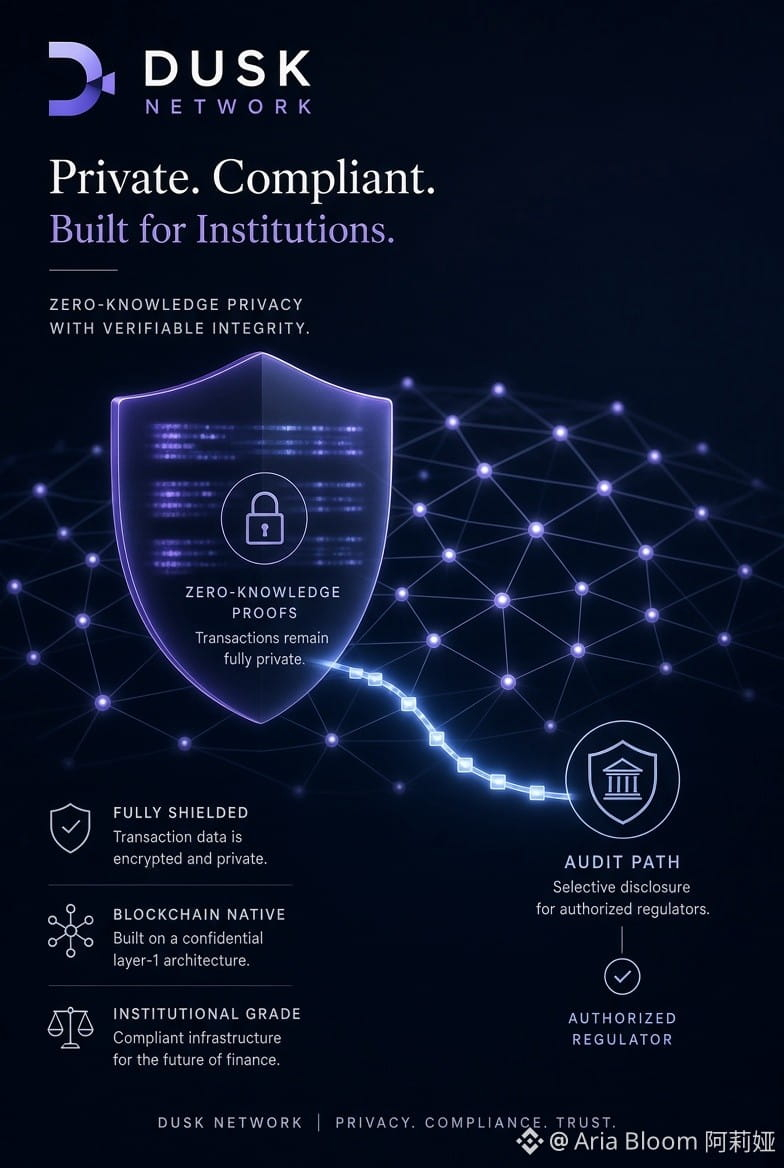
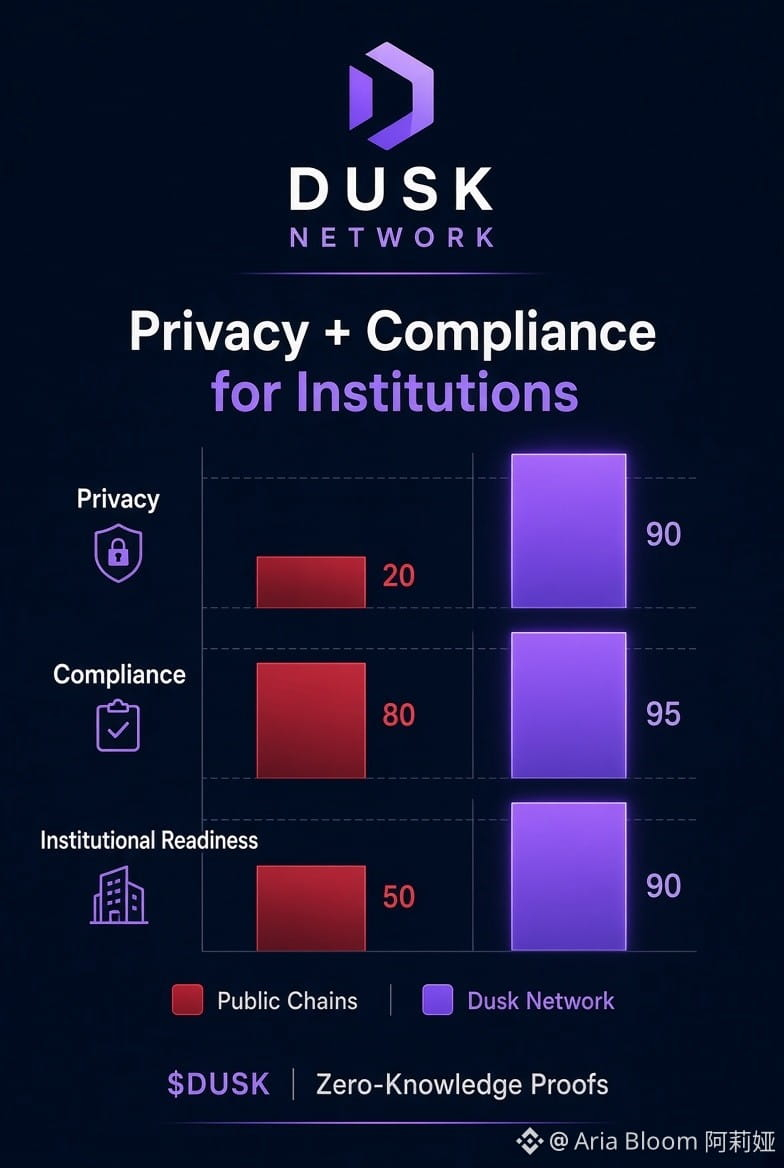
On most chains, every transaction is fully public amounts, parties, everything. Institutions hate this. They need privacy, yet regulators still demand full audit trails. It’s a hard conflict.
Dusk solves it cleanly. Their system separates transaction truth from transaction disclosure Using zero-knowledge proofs, the network can verify that a transaction is valid, rules were followed, and balances check out without revealing the actual details.
Only authorized parties and regulators can see the real data. Everyone else just sees confirmation that it’s legitimate.
That’s why Dusk is becoming a serious contender for real-world assets and regulated finance. Privacy and compliance finally work together.
For institutions, this removes a major barrier. Public chains no longer feel like such a risk.
They’re quietly building something that actually solves a real problem. Worth watching.
Dusk’s approach feels genuinely refreshing in crypto.
On most chains, every transaction is fully public amounts, parties, everything. Institutions hate this. They need privacy, yet regulators still demand full audit trails. It’s a hard conflict.
Dusk solves it cleanly. Their system separates transaction truth from transaction disclosure Using zero-knowledge proofs, the network can verify that a transaction is valid, rules were followed, and balances check out without revealing the actual details.
Only authorized parties and regulators can see the real data. Everyone else just sees confirmation that it’s legitimate.
That’s why Dusk is becoming a serious contender for real-world assets and regulated finance. Privacy and compliance finally work together.
For institutions, this removes a major barrier. Public chains no longer feel like such a risk.
They’re quietly building something that actually solves a real problem. Worth watching.
Night by the sea, soft lights, and a little peace in the air 🌊
Just me, the waves, and this quiet moment.
Ocean breeze, string lights, and a soft smile ✨
Sometimes the best nights are the quiet ones.
Sea, lights, aur thodi si sukoon 🌊
Bas yahi moment feel kar rahi hun.
Night vibes only 🌙🌊
Soft lights, soft smile.
Where the waves meet the lights and everything feels a little softer $DUSK #BTC
Just me, the waves, and this quiet moment.
Ocean breeze, string lights, and a soft smile ✨
Sometimes the best nights are the quiet ones.
Sea, lights, aur thodi si sukoon 🌊
Bas yahi moment feel kar rahi hun.
Night vibes only 🌙🌊
Soft lights, soft smile.
Where the waves meet the lights and everything feels a little softer $DUSK #BTC

Sometimes the best moments are the simplest ones ☕🌹✨
A peaceful moment, a warm cup of coffee, and a little beauty in the day. ❤️
$DUSK $BTC
A peaceful moment, a warm cup of coffee, and a little beauty in the day. ❤️
$DUSK $BTC

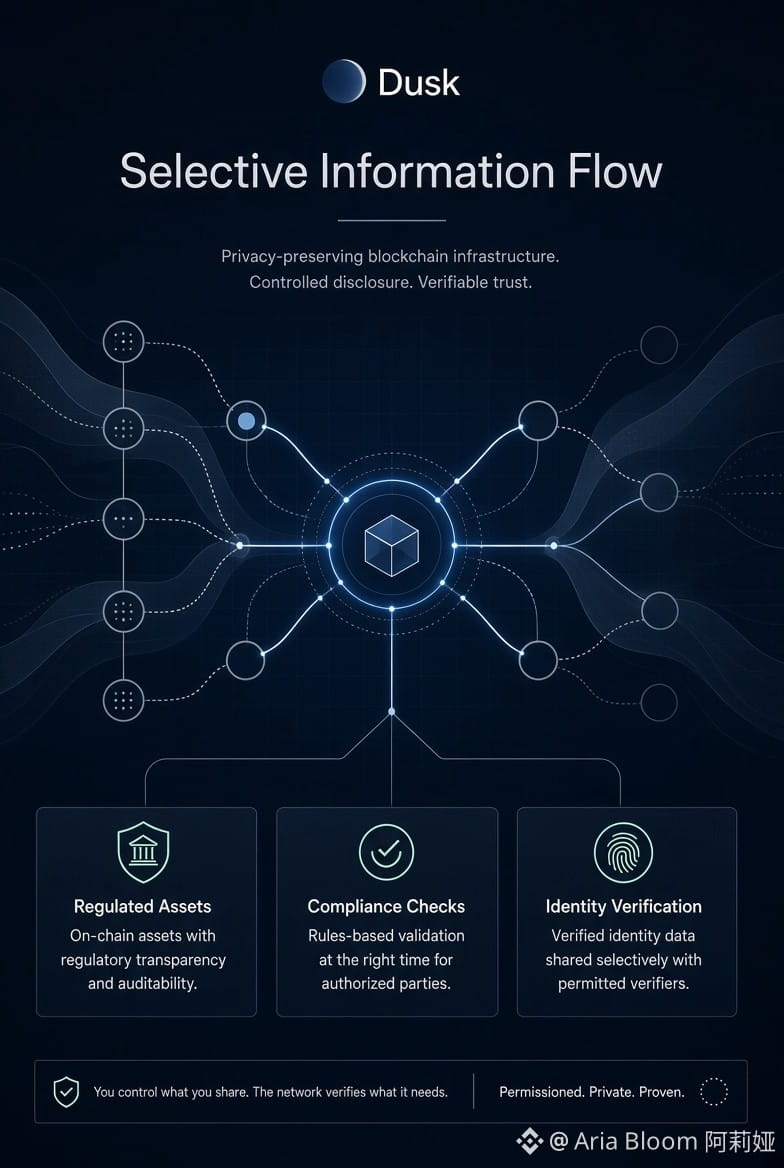
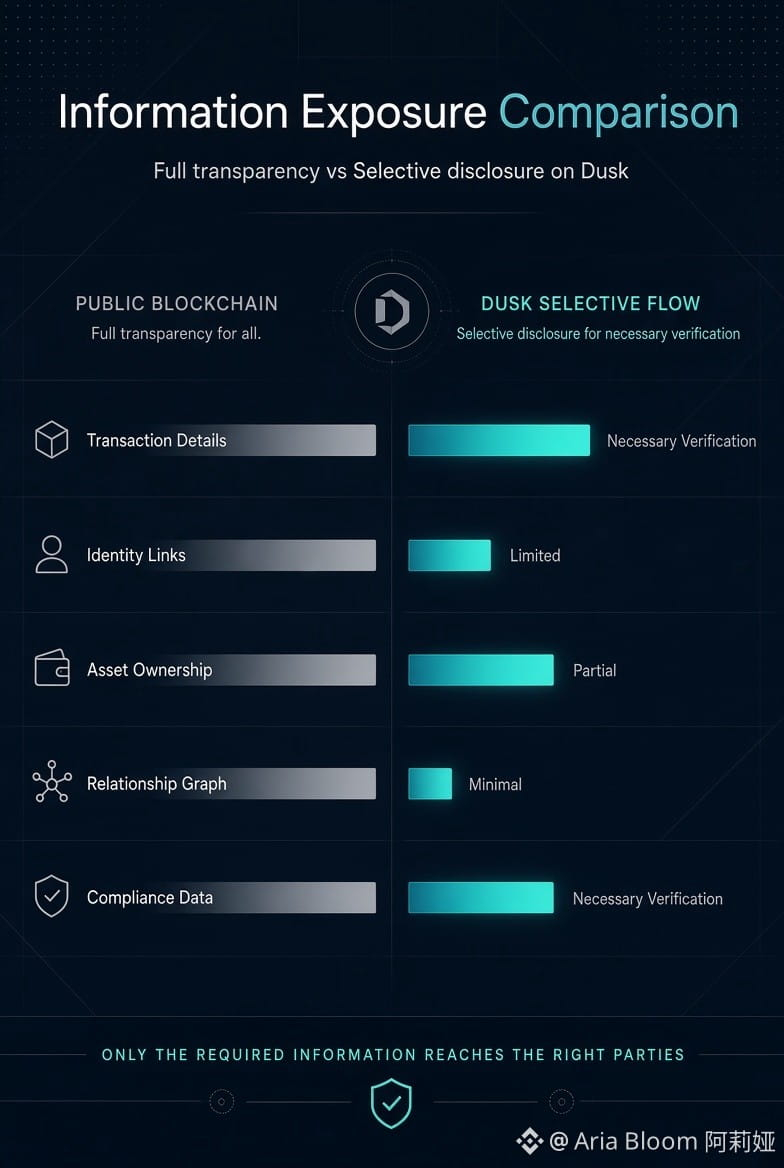
I’ve started thinking about Dusk’s privacy model less as hiding transactions and more as controlling how information moves.
That distinction matters. On a public blockchain the problem isn’t only that data is visible. It’s that small pieces of visible information can be connected over time. A transaction an identity check, an asset transfer or a relationship between addresses can become part of a much larger picture.
What interests me about @Dusk is the idea that privacy can be designed around selective information flow instead. The goal isn’t necessarily to make everything invisible. It’s to let the network verify what actually needs to be verified without automatically exposing everything surrounding it.
That feels particularly important for regulated assets. Institutions may need to prove compliance, ownership, eligibility, or transaction validity, but that doesn’t mean every participant should receive the full underlying dataset.
The difficult part is getting the balance right. Too much transparency creates unnecessary exposure. Too much privacy can make verification and compliance harder.
For me, that’s where $DUSK becomes interesting. The real question isn’t simply whether a transaction is private. It’s who gets to learn what, when they learn it, and why that information is necessary.
That’s a much more useful way to think about blockchain privacy.
#dusk $DUSK @Dusk
That distinction matters. On a public blockchain the problem isn’t only that data is visible. It’s that small pieces of visible information can be connected over time. A transaction an identity check, an asset transfer or a relationship between addresses can become part of a much larger picture.
What interests me about @Dusk is the idea that privacy can be designed around selective information flow instead. The goal isn’t necessarily to make everything invisible. It’s to let the network verify what actually needs to be verified without automatically exposing everything surrounding it.
That feels particularly important for regulated assets. Institutions may need to prove compliance, ownership, eligibility, or transaction validity, but that doesn’t mean every participant should receive the full underlying dataset.
The difficult part is getting the balance right. Too much transparency creates unnecessary exposure. Too much privacy can make verification and compliance harder.
For me, that’s where $DUSK becomes interesting. The real question isn’t simply whether a transaction is private. It’s who gets to learn what, when they learn it, and why that information is necessary.
That’s a much more useful way to think about blockchain privacy.
#dusk $DUSK @Dusk
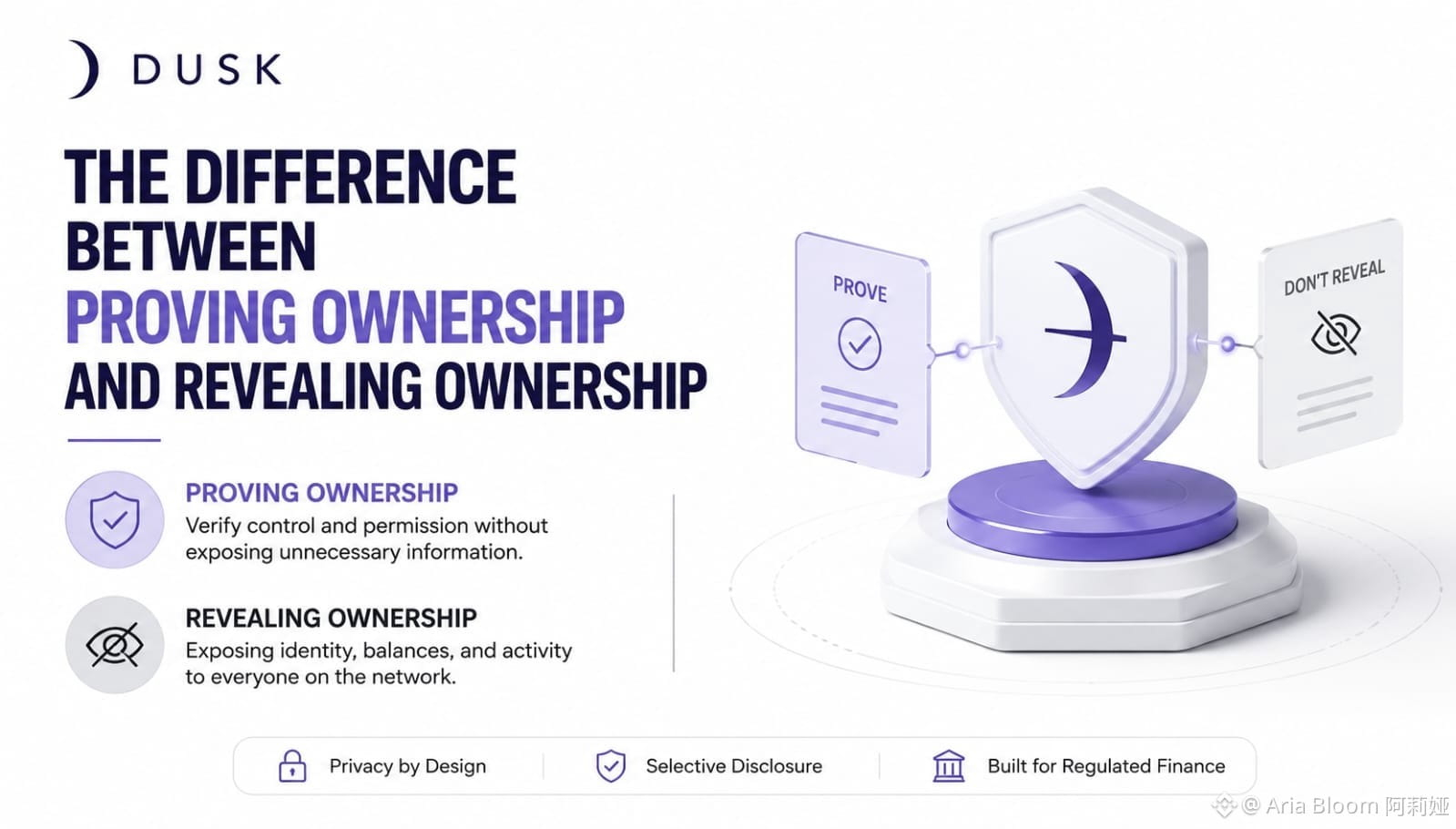
I think one of the biggest misconceptions in crypto is that ownership always has to be visible in order to be trusted.
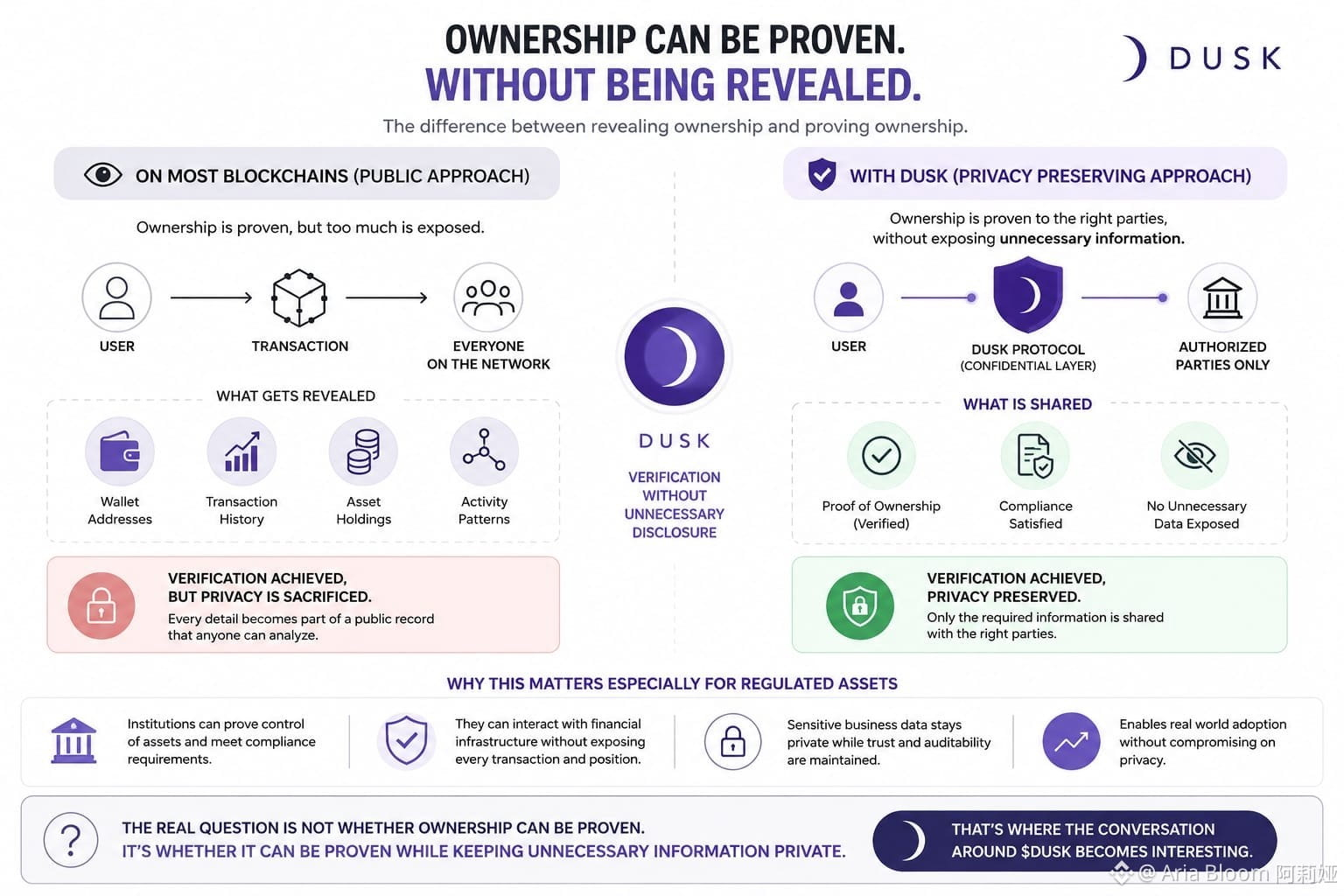
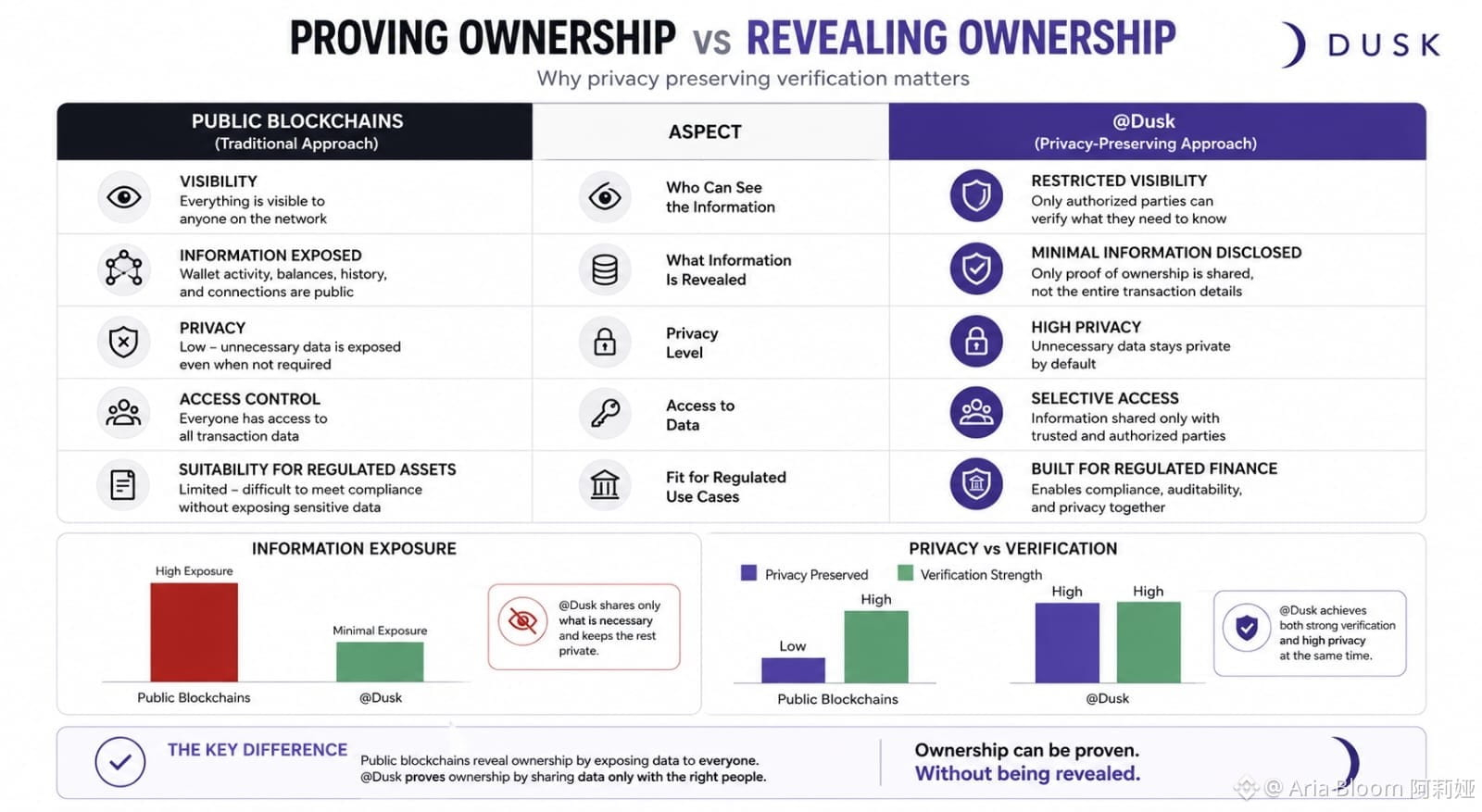
When someone proves ownership on most blockchains they often reveal much more than necessary. Wallet activity asset holdings and transaction history can become part of a public record that anyone can analyze. Verification is achieved but privacy is sacrificed along the way.
What caught my attention about @Dusk is the different approach. The goal is not to hide ownership from those who need to verify it. The goal is to allow verification without turning every detail into public information.
That distinction becomes more interesting when thinking about regulated assets. Businesses and institutions may need to prove control satisfy compliance requirements and interact with financial infrastructure but they may not want every movement and position exposed to the entire network.
To me the future question is not whether ownership can be proven. Blockchain already solved that. The more important question is whether ownership can be proven while keeping unnecessary information private.
That is where the conversation around becomes interesting.
#dusk $DUSK @Dusk
When someone proves ownership on most blockchains they often reveal much more than necessary. Wallet activity asset holdings and transaction history can become part of a public record that anyone can analyze. Verification is achieved but privacy is sacrificed along the way.
What caught my attention about @Dusk is the different approach. The goal is not to hide ownership from those who need to verify it. The goal is to allow verification without turning every detail into public information.
That distinction becomes more interesting when thinking about regulated assets. Businesses and institutions may need to prove control satisfy compliance requirements and interact with financial infrastructure but they may not want every movement and position exposed to the entire network.
To me the future question is not whether ownership can be proven. Blockchain already solved that. The more important question is whether ownership can be proven while keeping unnecessary information private.
That is where the conversation around becomes interesting.
#dusk $DUSK @Dusk
Verified
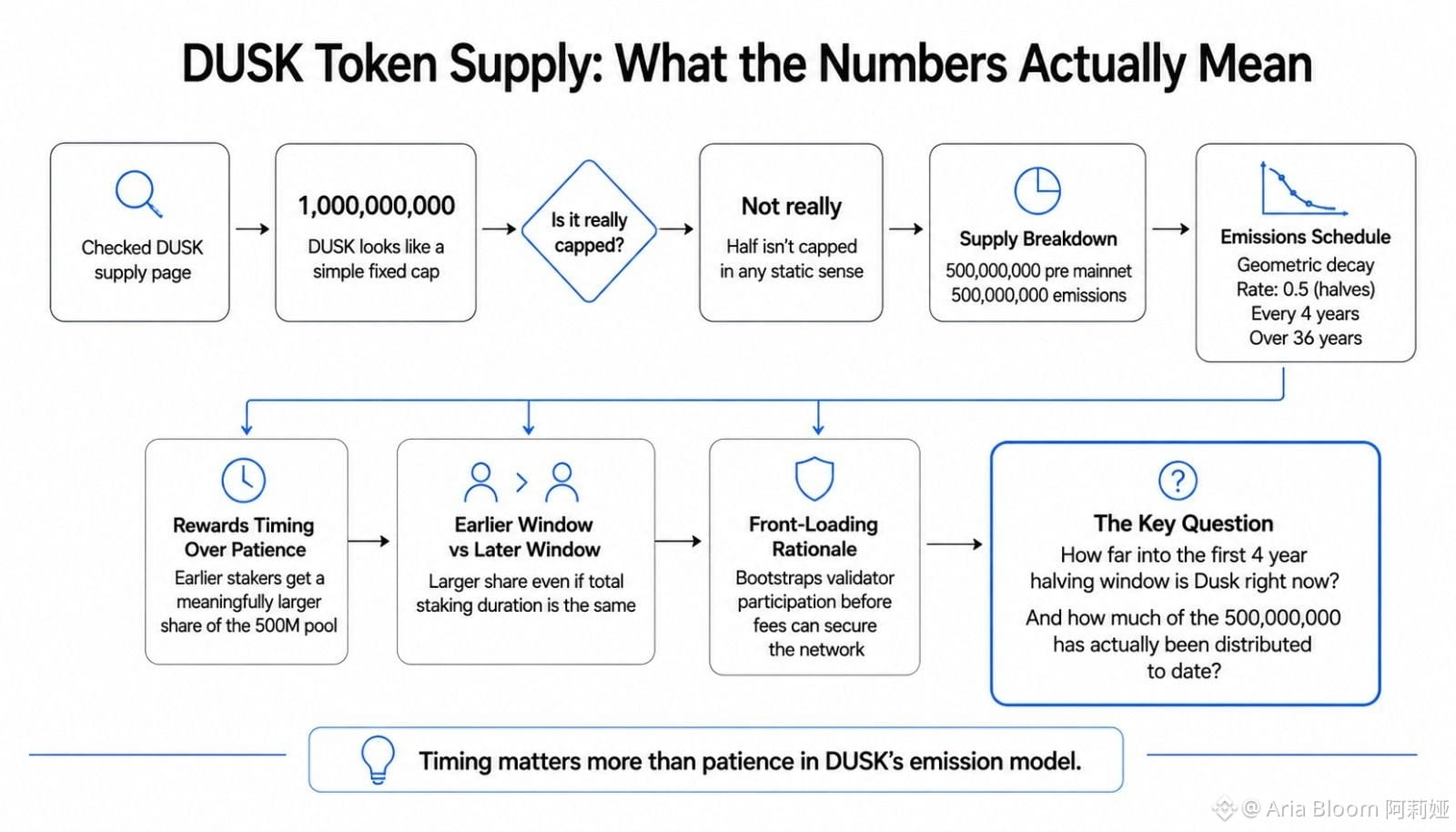
I checked DUSK's supply page expecting a simple fixed cap 1,000,000,000 DUSK looked like exactly that at first glance.
The figure alone is weak here since half of it isn't really capped in any static sense 500,000,000 DUSK already exists from the pre mainnet supply.The remaining 500,000,000 gets released through a geometric decay schedule with a reduction rate of 0.5.It halves every 4 years across a full 36 year emission window rather than arriving all at once.
That structure quietly rewards timing more than patience alone,a provisioner staking during an earlier 4 year window collects a meaningfully larger share of that 500,000,000 pool than one joining after several halvings have already passed.That holds even if both eventually stake for the same total number of years.
Front loading emissions this way is a reasonable design choicen it helps bootstrap validator participation before transaction fees alone could sustain network security.
Which raises a specific question nobody seems to track publicly how far into that first 4 year halving window is Dusk right now?And how much of the 500,000,000 has actually been distributed to date?
#dusk $DUSK @Dusk
The figure alone is weak here since half of it isn't really capped in any static sense 500,000,000 DUSK already exists from the pre mainnet supply.The remaining 500,000,000 gets released through a geometric decay schedule with a reduction rate of 0.5.It halves every 4 years across a full 36 year emission window rather than arriving all at once.
That structure quietly rewards timing more than patience alone,a provisioner staking during an earlier 4 year window collects a meaningfully larger share of that 500,000,000 pool than one joining after several halvings have already passed.That holds even if both eventually stake for the same total number of years.
Front loading emissions this way is a reasonable design choicen it helps bootstrap validator participation before transaction fees alone could sustain network security.
Which raises a specific question nobody seems to track publicly how far into that first 4 year halving window is Dusk right now?And how much of the 500,000,000 has actually been distributed to date?
#dusk $DUSK @Dusk
Trading with Purpose. Executing with Discipline. 📊
Currently focused on refining my trading strategy and building consistency through Binance.
My approach is simple: analyze the market, identify high-probability setups, manage risk carefully, and execute with patience. I believe successful trading is not about predicting every move — it’s about making informed decisions and maintaining discipline over time.
Analyze. Execute. Manage Risk. Improve.
#Binance #CryptoTrading #TradingSignals $DUSK $GIGGLE
Currently focused on refining my trading strategy and building consistency through Binance.
My approach is simple: analyze the market, identify high-probability setups, manage risk carefully, and execute with patience. I believe successful trading is not about predicting every move — it’s about making informed decisions and maintaining discipline over time.
Analyze. Execute. Manage Risk. Improve.
#Binance #CryptoTrading #TradingSignals $DUSK $GIGGLE

Log in to explore more content