


Looking across the 2026 WEB3 industry ecosystem, the sector has long moved on from the crude windfall era of “issuing tokens as fundraising” and “airdrops as user acquisition.” According to industry data, more than 40% of shut-down projects’ core root cause is a broken funding chain. Nearly 70% of projects find themselves trapped in a dual bind: token inflation alongside dried-up revenues. For today’s WEB3 project teams, technical iteration, traffic growth, and compliance planning are not the top challenges. Building a sustainable token economy with a real-cash-flow closed loop is the key that determines whether a project can survive through market cycles and endure long-term.
Over the past few years, most WEB3 projects have fallen into the trap of homogeneous growth. They treat token airdrops and high incentives as the primary funnel, only to end up in a fatal vicious cycle: fundraising capital injections—token sell-offs—inflated on-chain data—token price breakdown—running out of funds. The core flaw of this model is that it completely disconnects token value from the project’s revenue, reducing the token to a mere speculation vehicle rather than a credential of ecosystem value. Many projects schedule token release cycles on a yearly basis, but user behavior cycles operate on a weekly basis. As a result, long-unlocked tokens keep pouring into the market while the project’s protocol income growth stalls, ultimately creating a severe mismatch between inflows and outflows that continuously drains the project’s core funds.
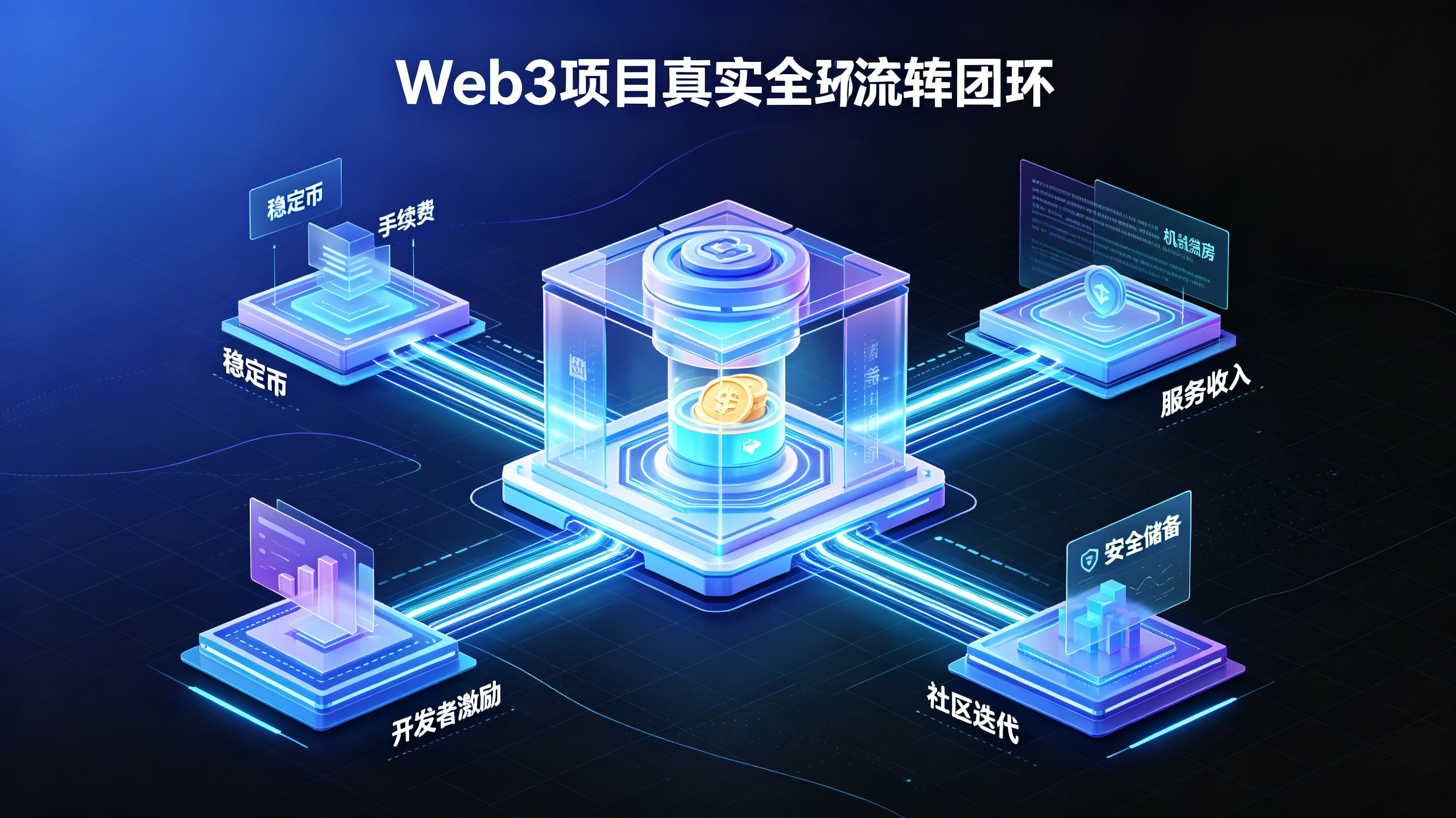
The imbalance of this kind of token economy has given rise to the industry-wide “burn-token” style internal strife. To maintain on-chain activity, many projects continue to roll out large-scale air drops and subsidies. Their monthly incentive costs far exceed protocol revenues. What should have been a virtuous ecosystem incentive model has turned into vicious financial hemorrhaging. More seriously, in token systems without cash flow support, they cannot withstand market volatility. Once secondary-market sentiment declines, tokens without real revenue backing will quickly lose value—leading not only to the loss of core users and community consensus, but also to the complete squandering of the project’s brand value, leaving it with no room for self-rescue.
For truly high-quality WEB3 projects, their core competitiveness has never been short-term traffic or market-cap bubbles, but rather the two-way empowerment between token value and cash flow. In 2026, the projects that survive and develop steadily have all escaped the old model of “sustaining operations via fundraising” and “creating cash flow via speculation.” They build clear business closed loops. Such projects no longer treat tokens as the only incentive vehicle; instead, they go deep into scenario implementation. Through multiple channels—protocol fees, ecosystem services, and linkages with real-world assets—they create stable on-chain cash flow.
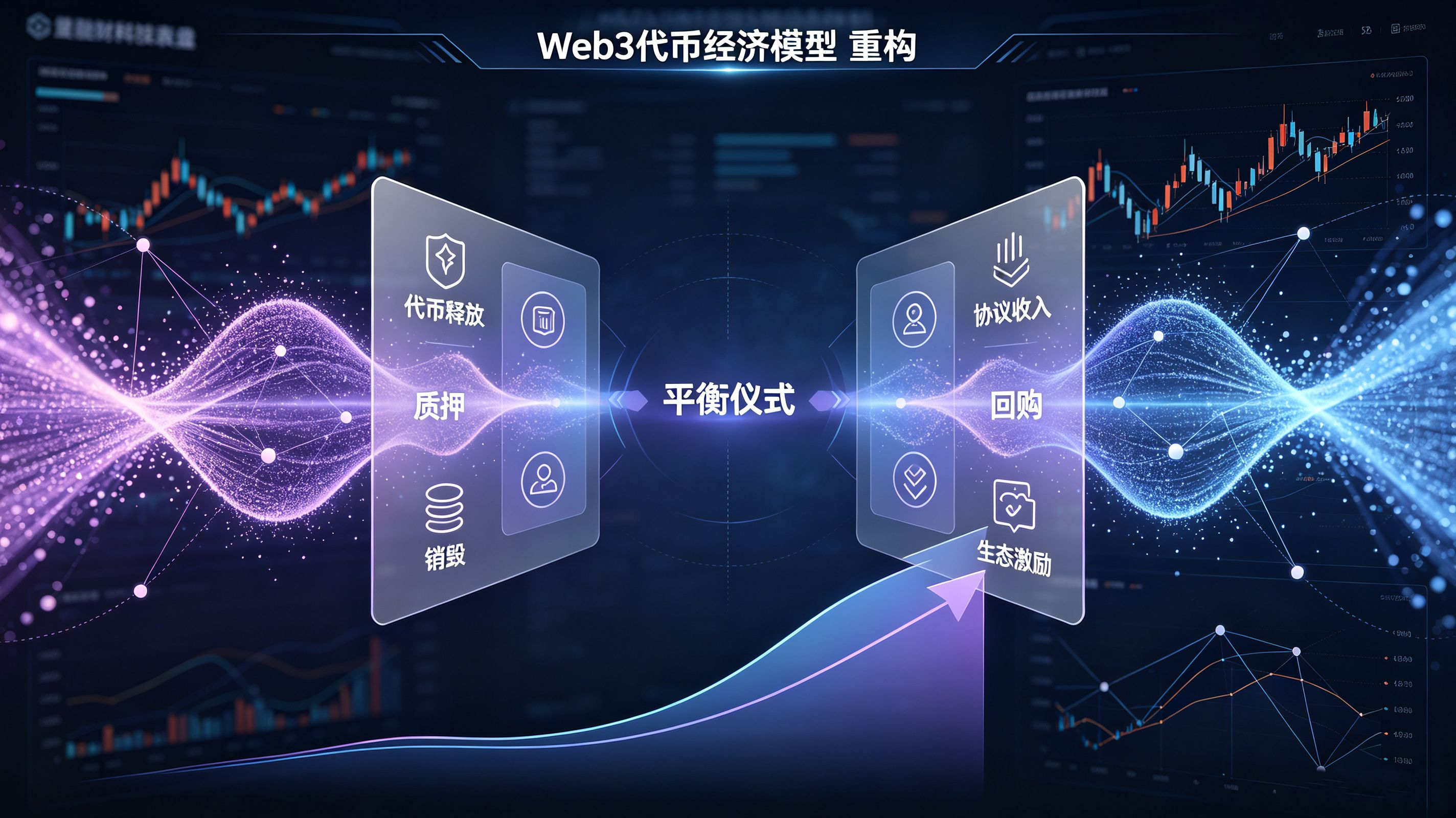
In mature projects’ token mechanism design, they generally abandon mindless inflation and adopt a fine-grained model of “revenue used to support the ecosystem.” On one hand, they dynamically adjust token release, burn, and staking rights based on real revenue data to solve the core problems of time mismatch and supply-demand imbalance—so that the circulating amount of tokens precisely matches the ecosystem’s development pace and the scale of revenues. On the other hand, they allocate protocol revenues proportionally to token buybacks, ecosystem enablement, and developer incentives—so that project profitability directly converts into token value support. This creates a positive flywheel: “scenario-driven revenue—value accumulation—ecosystem upgrade—more revenue.”
In addition, a healthy cash-flow closed loop helps projects withstand multiple uncertainties in the industry. With global regulatory policies tightening continuously, market competition growing increasingly fierce, and cybersecurity risks occurring frequently, projects that rely solely on capital backing have very weak risk resilience. By contrast, projects with autonomous cash-generation capability do not need to depend on fundraising or secondary-market conditions. They can continuously iterate products, optimize the ecosystem, and plan compliance based on stable cash flow. At the same time, real revenue data is also the core endorsement of a project’s credibility. It can precisely filter for high-quality, truly genuine users, reduce reliance on “wool” (incentive) farmers’ traffic, and solidify meaningful community consensus.
Industry shakeouts are still ongoing, and the underlying logic of WEB3 has long been rebuilt. The era of crude token speculation has completely ended. Value realization and autonomous cash generation have become the new benchmarks for the industry. For project teams, giving up short-term market-cap speculation is not an optional strategy—it’s a survival necessity: focus on application scenarios, refine token economic models, and build a stable cash-flow closed loop.