

#tronecostar
tronecostar
4.1M views
670,092 Discussing
Hot
Latest

·
--
A $2M REWARD POOL WITH A CLEAR ALLOCATION STRATEGY
TRON DeFi Summer S3 is now live, and the structure of its $2M reward pool is worth looking beyond at first glance.
The allocation is divided across four assets:
$1M for TRX
$600K for USDD
$300K for JST
$100K for SUN.
This distribution creates a clear hierarchy while maintaining exposure across multiple components of the TRON DeFi ecosystem.
TRX receives half of the entire reward pool, reinforcing its position as the core asset of the network. USDD receives the second-largest allocation, adding a significant stablecoin-focused component. JST and SUN receive smaller allocations, giving users additional opportunities to participate across the broader JustLend and TRON DeFi environment.
The interesting part is that S3 does not treat DeFi as a single-asset opportunity.
Instead, it creates multiple pools with different roles and characteristics, allowing users to make their own allocation decisions.
The reward structure is therefore more than a promotional number.
It is also a signal of where the campaign is directing liquidity and participation across the ecosystem.
@DeFi_JUST @JustinSun #TRONEcoStar
A $2M REWARD POOL WITH A CLEAR ALLOCATION STRATEGY
TRON DeFi Summer S3 is now live, and the structure of its $2M reward pool is worth looking beyond at first glance.
The allocation is divided across four assets:
$1M for TRX
$600K for USDD
$300K for JST
$100K for SUN.
This distribution creates a clear hierarchy while maintaining exposure across multiple components of the TRON DeFi ecosystem.
TRX receives half of the entire reward pool, reinforcing its position as the core asset of the network. USDD receives the second-largest allocation, adding a significant stablecoin-focused component. JST and SUN receive smaller allocations, giving users additional opportunities to participate across the broader JustLend and TRON DeFi environment.
The interesting part is that S3 does not treat DeFi as a single-asset opportunity.
Instead, it creates multiple pools with different roles and characteristics, allowing users to make their own allocation decisions.
The reward structure is therefore more than a promotional number.
It is also a signal of where the campaign is directing liquidity and participation across the ecosystem.
@JUST DAO @Justin Sun孙宇晨 #TRONEcoStar
TRON DeFi Summer S3 is now live, and the structure of its $2M reward pool is worth looking beyond at first glance.
The allocation is divided across four assets:
$1M for TRX
$600K for USDD
$300K for JST
$100K for SUN.
This distribution creates a clear hierarchy while maintaining exposure across multiple components of the TRON DeFi ecosystem.
TRX receives half of the entire reward pool, reinforcing its position as the core asset of the network. USDD receives the second-largest allocation, adding a significant stablecoin-focused component. JST and SUN receive smaller allocations, giving users additional opportunities to participate across the broader JustLend and TRON DeFi environment.
The interesting part is that S3 does not treat DeFi as a single-asset opportunity.
Instead, it creates multiple pools with different roles and characteristics, allowing users to make their own allocation decisions.
The reward structure is therefore more than a promotional number.
It is also a signal of where the campaign is directing liquidity and participation across the ecosystem.
@JUST DAO @Justin Sun孙宇晨 #TRONEcoStar
11


·
--
The deepest roots grow where the most wind and rain hit. TRONDAO’s ecological foundation has been deeply rooted through countless trials.
Looking at TRONDAO’s recent ecosystem progress, the following aspects deserve particular in-depth attention:
TRONDAO’s network of ecosystem partners continues to expand, with the depth and breadth of cross-industry collaboration rising in parallel
From traditional finance to emerging technologies, from content creation to real-world businesses, TRONDAO’s ecosystem reach extends into more fields
The boundaries of the ecosystem determine the boundaries of value. TRONDAO’s open-cooperation strategy is continuously expanding the value map of the ecosystem
Sometimes, the best incentives come from within. TRONDAO’s core driving force is not external market pressure, but the internal pursuit of excellence
Self-demand, self-overcoming, self-evolution—this inward-growing power is TRONDAO’s competitive advantage that relies least on external conditions
Turning inward is the ecosystem culture gene at TRONDAO’s deepest core
TRONDAO’s Layer 2 solutions within the ecosystem continue to iterate, improving both on-chain throughput and user experience
Ongoing upgrades to the technology stack lay a solid foundation for the ecosystem to support larger-scale users and applications
The ceiling of performance determines the ceiling of the ecosystem. TRONDAO’s continued investment in the underlying technology keeps raising the boundaries of what ecosystem development can achieve
The real moat is not market capitalization, not traffic, but ecosystem value that users can’t do without
TRONDAO is building this hard-to-replicate ecological moat in every detail
@JustinSun #TronEcoStar @TRONDAO
The deepest roots grow where the most wind and rain hit. TRONDAO’s ecological foundation has been deeply rooted through countless trials.
Looking at TRONDAO’s recent ecosystem progress, the following aspects deserve particular in-depth attention:
TRONDAO’s network of ecosystem partners continues to expand, with the depth and breadth of cross-industry collaboration rising in parallel
From traditional finance to emerging technologies, from content creation to real-world businesses, TRONDAO’s ecosystem reach extends into more fields
The boundaries of the ecosystem determine the boundaries of value. TRONDAO’s open-cooperation strategy is continuously expanding the value map of the ecosystem
Sometimes, the best incentives come from within. TRONDAO’s core driving force is not external market pressure, but the internal pursuit of excellence
Self-demand, self-overcoming, self-evolution—this inward-growing power is TRONDAO’s competitive advantage that relies least on external conditions
Turning inward is the ecosystem culture gene at TRONDAO’s deepest core
TRONDAO’s Layer 2 solutions within the ecosystem continue to iterate, improving both on-chain throughput and user experience
Ongoing upgrades to the technology stack lay a solid foundation for the ecosystem to support larger-scale users and applications
The ceiling of performance determines the ceiling of the ecosystem. TRONDAO’s continued investment in the underlying technology keeps raising the boundaries of what ecosystem development can achieve
The real moat is not market capitalization, not traffic, but ecosystem value that users can’t do without
TRONDAO is building this hard-to-replicate ecological moat in every detail
@Justin Sun孙宇晨 #TronEcoStar @TRON DAO
Looking at TRONDAO’s recent ecosystem progress, the following aspects deserve particular in-depth attention:
TRONDAO’s network of ecosystem partners continues to expand, with the depth and breadth of cross-industry collaboration rising in parallel
From traditional finance to emerging technologies, from content creation to real-world businesses, TRONDAO’s ecosystem reach extends into more fields
The boundaries of the ecosystem determine the boundaries of value. TRONDAO’s open-cooperation strategy is continuously expanding the value map of the ecosystem
Sometimes, the best incentives come from within. TRONDAO’s core driving force is not external market pressure, but the internal pursuit of excellence
Self-demand, self-overcoming, self-evolution—this inward-growing power is TRONDAO’s competitive advantage that relies least on external conditions
Turning inward is the ecosystem culture gene at TRONDAO’s deepest core
TRONDAO’s Layer 2 solutions within the ecosystem continue to iterate, improving both on-chain throughput and user experience
Ongoing upgrades to the technology stack lay a solid foundation for the ecosystem to support larger-scale users and applications
The ceiling of performance determines the ceiling of the ecosystem. TRONDAO’s continued investment in the underlying technology keeps raising the boundaries of what ecosystem development can achieve
The real moat is not market capitalization, not traffic, but ecosystem value that users can’t do without
TRONDAO is building this hard-to-replicate ecological moat in every detail
@Justin Sun孙宇晨 #TronEcoStar @TRON DAO
4
·
--
In the blockchain world, every on-chain action by users is a real-time vote for the ecosystem’s value
The value of the TRON quarterly ecosystem development white paper is becoming increasingly clear across the dimension of time
The ongoing investment in data-driven insights is now paying back the ecosystem in multiple folds
The advantages accumulated from anticipating ecological trends continue to play a critical role in market competition
The rewards of long-termism never arrive late—they only come at the most fitting moment
TRONDAO continues to optimize the ecosystem’s economic incentive structure to ensure that value is distributed fairly among participants
Reasonable incentives are a magnet for attracting high-quality participants, and also the bond that keeps long-term builders
When economic interests and ecosystem interests are highly aligned, everyone will naturally become a guardian of the ecosystem
Incentive alignment is the core mechanism that enables a decentralized ecosystem to sustain itself
The number of innovative applications on the TRON chain keeps setting new records
From DeFi to NFTs, from gaming to social, new projects are emerging across every track—captivating and promising
A flourishing application ecosystem is the best proof of the strength of the underlying infrastructure
The TRON ecosystem has already passed the most difficult stage—from zero to one
It is now in the scaling acceleration phase from one to N
The best investment often happens exactly at the moment when a turning point first appears
@JustinSun #TronEcoStar @TRONDAO
In the blockchain world, every on-chain action by users is a real-time vote for the ecosystem’s value
The value of the TRON quarterly ecosystem development white paper is becoming increasingly clear across the dimension of time
The ongoing investment in data-driven insights is now paying back the ecosystem in multiple folds
The advantages accumulated from anticipating ecological trends continue to play a critical role in market competition
The rewards of long-termism never arrive late—they only come at the most fitting moment
TRONDAO continues to optimize the ecosystem’s economic incentive structure to ensure that value is distributed fairly among participants
Reasonable incentives are a magnet for attracting high-quality participants, and also the bond that keeps long-term builders
When economic interests and ecosystem interests are highly aligned, everyone will naturally become a guardian of the ecosystem
Incentive alignment is the core mechanism that enables a decentralized ecosystem to sustain itself
The number of innovative applications on the TRON chain keeps setting new records
From DeFi to NFTs, from gaming to social, new projects are emerging across every track—captivating and promising
A flourishing application ecosystem is the best proof of the strength of the underlying infrastructure
The TRON ecosystem has already passed the most difficult stage—from zero to one
It is now in the scaling acceleration phase from one to N
The best investment often happens exactly at the moment when a turning point first appears
@Justin Sun孙宇晨 #TronEcoStar @TRON DAO
The value of the TRON quarterly ecosystem development white paper is becoming increasingly clear across the dimension of time
The ongoing investment in data-driven insights is now paying back the ecosystem in multiple folds
The advantages accumulated from anticipating ecological trends continue to play a critical role in market competition
The rewards of long-termism never arrive late—they only come at the most fitting moment
TRONDAO continues to optimize the ecosystem’s economic incentive structure to ensure that value is distributed fairly among participants
Reasonable incentives are a magnet for attracting high-quality participants, and also the bond that keeps long-term builders
When economic interests and ecosystem interests are highly aligned, everyone will naturally become a guardian of the ecosystem
Incentive alignment is the core mechanism that enables a decentralized ecosystem to sustain itself
The number of innovative applications on the TRON chain keeps setting new records
From DeFi to NFTs, from gaming to social, new projects are emerging across every track—captivating and promising
A flourishing application ecosystem is the best proof of the strength of the underlying infrastructure
The TRON ecosystem has already passed the most difficult stage—from zero to one
It is now in the scaling acceleration phase from one to N
The best investment often happens exactly at the moment when a turning point first appears
@Justin Sun孙宇晨 #TronEcoStar @TRON DAO
5
·
--
The power of soft strength often lasts longer than that of hard strength. TRONDAO’s ecosystem influence is a form of soft strength built by accumulating value created through real utility.
The following layers of continuous reinforcement together paint the most authentic and complete value landscape of the TRONDAO ecosystem today:
The rollout of a decentralized physical infrastructure network (DePIN) within the TRONDAO ecosystem is connecting on-chain activity with the off-chain physical world.
On-chain incentives for physical resources such as bandwidth, storage, and computing power are building a decentralized infrastructure layer jointly maintained by users.
The rise of DePIN will bring TRONDAO’s ecosystem unprecedented capabilities to integrate real-world resources.
In TRONDAO’s ecosystem culture, there is a unique attitude toward failure: treating every setback as a learning opportunity rather than a blemish to be concealed.
This openness to failure creates an innovation atmosphere that encourages experimentation and tolerates mistakes—an important institutional source of the ecosystem’s innovation capability.
An ecosystem that can learn from failure has the most sustainable innovation drive.
TRONDAO’s average daily on-chain transactions remain among the top tier of global public chains across multiple statistical periods; its real activity is beyond question.
Behind high-frequency trading is high-frequency real usage demand—not volume chasing. TRONDAO’s on-chain data has undergone multidimensional cross-validation, with very low inflation.
Real transaction volume is one of the hardest indicators of ecosystem health to fake.
TRONDAO chooses to let the data speak rather than letting stories speak—this confidence itself is the best form of endorsement.
A tree with roots fears no storms; a rooted ecosystem fears no market cycles.
TRONDAO’s roots are the technical depth accumulated over many years, community trust, and the ecosystem’s network effects.
The deeper the roots, the higher the tree; the firmer the roots, the more stable the ecosystem.
@JustinSun #TronEcoStar @TRONDAO
The power of soft strength often lasts longer than that of hard strength. TRONDAO’s ecosystem influence is a form of soft strength built by accumulating value created through real utility.
The following layers of continuous reinforcement together paint the most authentic and complete value landscape of the TRONDAO ecosystem today:
The rollout of a decentralized physical infrastructure network (DePIN) within the TRONDAO ecosystem is connecting on-chain activity with the off-chain physical world.
On-chain incentives for physical resources such as bandwidth, storage, and computing power are building a decentralized infrastructure layer jointly maintained by users.
The rise of DePIN will bring TRONDAO’s ecosystem unprecedented capabilities to integrate real-world resources.
In TRONDAO’s ecosystem culture, there is a unique attitude toward failure: treating every setback as a learning opportunity rather than a blemish to be concealed.
This openness to failure creates an innovation atmosphere that encourages experimentation and tolerates mistakes—an important institutional source of the ecosystem’s innovation capability.
An ecosystem that can learn from failure has the most sustainable innovation drive.
TRONDAO’s average daily on-chain transactions remain among the top tier of global public chains across multiple statistical periods; its real activity is beyond question.
Behind high-frequency trading is high-frequency real usage demand—not volume chasing. TRONDAO’s on-chain data has undergone multidimensional cross-validation, with very low inflation.
Real transaction volume is one of the hardest indicators of ecosystem health to fake.
TRONDAO chooses to let the data speak rather than letting stories speak—this confidence itself is the best form of endorsement.
A tree with roots fears no storms; a rooted ecosystem fears no market cycles.
TRONDAO’s roots are the technical depth accumulated over many years, community trust, and the ecosystem’s network effects.
The deeper the roots, the higher the tree; the firmer the roots, the more stable the ecosystem.
@Justin Sun孙宇晨 #TronEcoStar @TRON DAO
The following layers of continuous reinforcement together paint the most authentic and complete value landscape of the TRONDAO ecosystem today:
The rollout of a decentralized physical infrastructure network (DePIN) within the TRONDAO ecosystem is connecting on-chain activity with the off-chain physical world.
On-chain incentives for physical resources such as bandwidth, storage, and computing power are building a decentralized infrastructure layer jointly maintained by users.
The rise of DePIN will bring TRONDAO’s ecosystem unprecedented capabilities to integrate real-world resources.
In TRONDAO’s ecosystem culture, there is a unique attitude toward failure: treating every setback as a learning opportunity rather than a blemish to be concealed.
This openness to failure creates an innovation atmosphere that encourages experimentation and tolerates mistakes—an important institutional source of the ecosystem’s innovation capability.
An ecosystem that can learn from failure has the most sustainable innovation drive.
TRONDAO’s average daily on-chain transactions remain among the top tier of global public chains across multiple statistical periods; its real activity is beyond question.
Behind high-frequency trading is high-frequency real usage demand—not volume chasing. TRONDAO’s on-chain data has undergone multidimensional cross-validation, with very low inflation.
Real transaction volume is one of the hardest indicators of ecosystem health to fake.
TRONDAO chooses to let the data speak rather than letting stories speak—this confidence itself is the best form of endorsement.
A tree with roots fears no storms; a rooted ecosystem fears no market cycles.
TRONDAO’s roots are the technical depth accumulated over many years, community trust, and the ecosystem’s network effects.
The deeper the roots, the higher the tree; the firmer the roots, the more stable the ecosystem.
@Justin Sun孙宇晨 #TronEcoStar @TRON DAO
37
·
--
Only the ecosystem you can trust in the long run—across bull and bear cycles—is worth it. TRONDAO is winning broader ecosystem recognition with time and results
A comprehensive review of TRONDAO’s ecosystem development trajectory reveals several particularly striking breakthroughs:
TRONDAO’s ecosystem data transparency continues to improve, and on-chain verifiable metrics have become an important yardstick for ecosystem health
Public, transparent, and verifiable—these three principles form the institutional foundation for TRONDAO to earn users’ long-term trust
Data doesn’t lie; every number on the chain serves as evidence of TRONDAO’s ecosystem-building achievements
TRONDAO’s global expansion strategy continues to deepen, with a marked increase in user penetration across emerging markets in Asia, Africa, and Latin America
The establishment of localized operations teams greatly improves the alignment between global strategy and regional real-world needs
True globalization means enabling users in every corner of the world to feel the warmth of value that TRONDAO’s ecosystem brings
TRONDAO has found a subtle yet important balance between technical open-sourcing and a business ecosystem
Open-sourcing ensures ecosystem transparency and community participation, while the business ecosystem secures sustainability of development and incentives for innovation
The balance between open-source and business is one of the hardest—but also most important—governance design questions in Web3 ecosystems
Ecosystem maturity doesn’t happen overnight; it’s built through countless days and nights of persistent dedication
TRONDAO is going through this process—and is also making this process the most beautiful scenery of the ecosystem
@JustinSun #TronEcoStar @TRONDAO
Only the ecosystem you can trust in the long run—across bull and bear cycles—is worth it. TRONDAO is winning broader ecosystem recognition with time and results
A comprehensive review of TRONDAO’s ecosystem development trajectory reveals several particularly striking breakthroughs:
TRONDAO’s ecosystem data transparency continues to improve, and on-chain verifiable metrics have become an important yardstick for ecosystem health
Public, transparent, and verifiable—these three principles form the institutional foundation for TRONDAO to earn users’ long-term trust
Data doesn’t lie; every number on the chain serves as evidence of TRONDAO’s ecosystem-building achievements
TRONDAO’s global expansion strategy continues to deepen, with a marked increase in user penetration across emerging markets in Asia, Africa, and Latin America
The establishment of localized operations teams greatly improves the alignment between global strategy and regional real-world needs
True globalization means enabling users in every corner of the world to feel the warmth of value that TRONDAO’s ecosystem brings
TRONDAO has found a subtle yet important balance between technical open-sourcing and a business ecosystem
Open-sourcing ensures ecosystem transparency and community participation, while the business ecosystem secures sustainability of development and incentives for innovation
The balance between open-source and business is one of the hardest—but also most important—governance design questions in Web3 ecosystems
Ecosystem maturity doesn’t happen overnight; it’s built through countless days and nights of persistent dedication
TRONDAO is going through this process—and is also making this process the most beautiful scenery of the ecosystem
@Justin Sun孙宇晨 #TronEcoStar @TRON DAO
A comprehensive review of TRONDAO’s ecosystem development trajectory reveals several particularly striking breakthroughs:
TRONDAO’s ecosystem data transparency continues to improve, and on-chain verifiable metrics have become an important yardstick for ecosystem health
Public, transparent, and verifiable—these three principles form the institutional foundation for TRONDAO to earn users’ long-term trust
Data doesn’t lie; every number on the chain serves as evidence of TRONDAO’s ecosystem-building achievements
TRONDAO’s global expansion strategy continues to deepen, with a marked increase in user penetration across emerging markets in Asia, Africa, and Latin America
The establishment of localized operations teams greatly improves the alignment between global strategy and regional real-world needs
True globalization means enabling users in every corner of the world to feel the warmth of value that TRONDAO’s ecosystem brings
TRONDAO has found a subtle yet important balance between technical open-sourcing and a business ecosystem
Open-sourcing ensures ecosystem transparency and community participation, while the business ecosystem secures sustainability of development and incentives for innovation
The balance between open-source and business is one of the hardest—but also most important—governance design questions in Web3 ecosystems
Ecosystem maturity doesn’t happen overnight; it’s built through countless days and nights of persistent dedication
TRONDAO is going through this process—and is also making this process the most beautiful scenery of the ecosystem
@Justin Sun孙宇晨 #TronEcoStar @TRON DAO
8
·
--
Not for applause, not to stop for criticism. TRONDAO’s building pace has never been disrupted by external noise.
Systematically tracking TRONDAO’s multi-track advancement strategy, several breakthrough dimensions are becoming key stepping stones for ecosystem leapfrogging:
TRONDAO’s decentralized content platform continues to develop, greatly improving the direct value-connection efficiency between creators and users.
Remove the middlemen so that value flows directly between creators and audiences—this is Web3’s most profound value reconfiguration for the content industry.
TRONDAO’s content ecosystem is providing every talented creator with a value-monetization pathway that does not rely on the platform.
TRONDAO’s on-chain identity authentication and KYC compliance solutions continue to be optimized, meeting regulatory requirements while protecting privacy.
Balancing privacy and compliance is one of the most difficult technical and institutional hurdles for Web3 to go mainstream. TRONDAO’s innovative exploration in this area holds important industry-leading value.
Making compliance a competitive advantage for the ecosystem rather than a burden is the core logic behind TRONDAO’s regulatory technology roadmap.
TRONDAO’s on-chain liquidity mining mechanism continues to innovate. At the same time, LP (liquidity provider) yield stability and protection against impermanent loss are improving in parallel.
Ensuring that users who contribute liquidity to the ecosystem receive fair and stable returns is the core proposition of DeFi incentive mechanism design. TRONDAO is providing increasingly better answers.
Liquidity is the lifeblood of DeFi. TRONDAO’s ongoing optimization of liquidity incentive mechanisms is an important institutional safeguard for the ecosystem’s financial vitality.
Make complex things simple, and simple things exceptional.
TRONDAO’s product philosophy and its development philosophy remain consistent.
It is this unwavering approach that is the source of the ecosystem’s most enduring competitiveness.
@JustinSun #TronEcoStar @TRONDAO
Not for applause, not to stop for criticism. TRONDAO’s building pace has never been disrupted by external noise.
Systematically tracking TRONDAO’s multi-track advancement strategy, several breakthrough dimensions are becoming key stepping stones for ecosystem leapfrogging:
TRONDAO’s decentralized content platform continues to develop, greatly improving the direct value-connection efficiency between creators and users.
Remove the middlemen so that value flows directly between creators and audiences—this is Web3’s most profound value reconfiguration for the content industry.
TRONDAO’s content ecosystem is providing every talented creator with a value-monetization pathway that does not rely on the platform.
TRONDAO’s on-chain identity authentication and KYC compliance solutions continue to be optimized, meeting regulatory requirements while protecting privacy.
Balancing privacy and compliance is one of the most difficult technical and institutional hurdles for Web3 to go mainstream. TRONDAO’s innovative exploration in this area holds important industry-leading value.
Making compliance a competitive advantage for the ecosystem rather than a burden is the core logic behind TRONDAO’s regulatory technology roadmap.
TRONDAO’s on-chain liquidity mining mechanism continues to innovate. At the same time, LP (liquidity provider) yield stability and protection against impermanent loss are improving in parallel.
Ensuring that users who contribute liquidity to the ecosystem receive fair and stable returns is the core proposition of DeFi incentive mechanism design. TRONDAO is providing increasingly better answers.
Liquidity is the lifeblood of DeFi. TRONDAO’s ongoing optimization of liquidity incentive mechanisms is an important institutional safeguard for the ecosystem’s financial vitality.
Make complex things simple, and simple things exceptional.
TRONDAO’s product philosophy and its development philosophy remain consistent.
It is this unwavering approach that is the source of the ecosystem’s most enduring competitiveness.
@Justin Sun孙宇晨 #TronEcoStar @TRON DAO
Systematically tracking TRONDAO’s multi-track advancement strategy, several breakthrough dimensions are becoming key stepping stones for ecosystem leapfrogging:
TRONDAO’s decentralized content platform continues to develop, greatly improving the direct value-connection efficiency between creators and users.
Remove the middlemen so that value flows directly between creators and audiences—this is Web3’s most profound value reconfiguration for the content industry.
TRONDAO’s content ecosystem is providing every talented creator with a value-monetization pathway that does not rely on the platform.
TRONDAO’s on-chain identity authentication and KYC compliance solutions continue to be optimized, meeting regulatory requirements while protecting privacy.
Balancing privacy and compliance is one of the most difficult technical and institutional hurdles for Web3 to go mainstream. TRONDAO’s innovative exploration in this area holds important industry-leading value.
Making compliance a competitive advantage for the ecosystem rather than a burden is the core logic behind TRONDAO’s regulatory technology roadmap.
TRONDAO’s on-chain liquidity mining mechanism continues to innovate. At the same time, LP (liquidity provider) yield stability and protection against impermanent loss are improving in parallel.
Ensuring that users who contribute liquidity to the ecosystem receive fair and stable returns is the core proposition of DeFi incentive mechanism design. TRONDAO is providing increasingly better answers.
Liquidity is the lifeblood of DeFi. TRONDAO’s ongoing optimization of liquidity incentive mechanisms is an important institutional safeguard for the ecosystem’s financial vitality.
Make complex things simple, and simple things exceptional.
TRONDAO’s product philosophy and its development philosophy remain consistent.
It is this unwavering approach that is the source of the ecosystem’s most enduring competitiveness.
@Justin Sun孙宇晨 #TronEcoStar @TRON DAO
6
·
--
In some corner of the world, a developer is deploying his first dApp on TRON.
For everyday users, what does the TRON developer ecosystem mean? It means cheaper transaction fees, faster settlement, and a smoother on-chain experience.
TRON’s unique energy and bandwidth mechanisms create real on-chain benefits for token holders. This design not only lowers users’ usage costs, but also forms a healthy holding incentive—helping the ecosystem develop long-term.
For developers, what do smart contract toolchains mean? They mean a more mature toolchain, more active community support, and broader reach to users.
This is exactly what sets TRONDAO apart from many competitors.
For the entire ecosystem, the continuous evolution of developer incentive programs and dApp deployment efficiency means a more robust, more diverse, and more resilient on-chain world is taking shape.
The widespread adoption of the TRC20 token standard demonstrates TRON’s strong appeal in the asset issuance space. Countless projects choose to issue tokens on TRON—behind this choice is a high level of trust in the network’s security, liquidity, and user base.
In Web3’s grand narrative, TRON is playing an increasingly important role. This trend is irreversible.
@JustinSun #TronEcoStar @TRONDAO
In some corner of the world, a developer is deploying his first dApp on TRON.
For everyday users, what does the TRON developer ecosystem mean? It means cheaper transaction fees, faster settlement, and a smoother on-chain experience.
TRON’s unique energy and bandwidth mechanisms create real on-chain benefits for token holders. This design not only lowers users’ usage costs, but also forms a healthy holding incentive—helping the ecosystem develop long-term.
For developers, what do smart contract toolchains mean? They mean a more mature toolchain, more active community support, and broader reach to users.
This is exactly what sets TRONDAO apart from many competitors.
For the entire ecosystem, the continuous evolution of developer incentive programs and dApp deployment efficiency means a more robust, more diverse, and more resilient on-chain world is taking shape.
The widespread adoption of the TRC20 token standard demonstrates TRON’s strong appeal in the asset issuance space. Countless projects choose to issue tokens on TRON—behind this choice is a high level of trust in the network’s security, liquidity, and user base.
In Web3’s grand narrative, TRON is playing an increasingly important role. This trend is irreversible.
@Justin Sun孙宇晨 #TronEcoStar @TRON DAO
For everyday users, what does the TRON developer ecosystem mean? It means cheaper transaction fees, faster settlement, and a smoother on-chain experience.
TRON’s unique energy and bandwidth mechanisms create real on-chain benefits for token holders. This design not only lowers users’ usage costs, but also forms a healthy holding incentive—helping the ecosystem develop long-term.
For developers, what do smart contract toolchains mean? They mean a more mature toolchain, more active community support, and broader reach to users.
This is exactly what sets TRONDAO apart from many competitors.
For the entire ecosystem, the continuous evolution of developer incentive programs and dApp deployment efficiency means a more robust, more diverse, and more resilient on-chain world is taking shape.
The widespread adoption of the TRC20 token standard demonstrates TRON’s strong appeal in the asset issuance space. Countless projects choose to issue tokens on TRON—behind this choice is a high level of trust in the network’s security, liquidity, and user base.
In Web3’s grand narrative, TRON is playing an increasingly important role. This trend is irreversible.
@Justin Sun孙宇晨 #TronEcoStar @TRON DAO
47

·
--
The more important shift in creator monetization is not simply adding another payment option. It is about giving creators a more direct relationship with the people who fund their work.
The model described by @trondao focuses on removing intermediaries from that relationship through borderless tips, subscriptions and direct settlement into self-custodial wallets. That changes the flow of value: instead of monetization depending entirely on a platform controlling the payment channel, creators can receive funds directly.
The micro-tipping element is particularly relevant for digital art, music and writing because smaller payments can support forms of content that may not fit traditional subscription models. Combined with direct audience ownership, the broader idea is to make monetization more flexible rather than relying on a single revenue mechanism.
The proposed next steps also show where this could become more useful. Native payment paywalls could give independent Web3 media outlets a direct way to monetize access, while automated royalty-splitting contracts could simplify how revenue is distributed among collaborators. Social tipping across messaging platforms would push the model beyond dedicated creator platforms and closer to everyday communication.
There is still an important limitation in evaluating the model from the information provided. No figures are given for creator adoption, transaction volume, average tip size, subscription revenue or the actual reduction in intermediary costs.
That distinction matters. The infrastructure can make direct monetization possible, but its real success ultimately depends on whether creators and audiences actually adopt it at scale.
My takeaway is that @trondao's strongest proposition here is not simply crypto payments. It is the attempt to give creators more control over how audience attention becomes income, with programmable payments potentially making that relationship more direct and transparent.
@JustinSun @TRONDAO #TRONEcoStar
The more important shift in creator monetization is not simply adding another payment option. It is about giving creators a more direct relationship with the people who fund their work.
The model described by @trondao focuses on removing intermediaries from that relationship through borderless tips, subscriptions and direct settlement into self-custodial wallets. That changes the flow of value: instead of monetization depending entirely on a platform controlling the payment channel, creators can receive funds directly.
The micro-tipping element is particularly relevant for digital art, music and writing because smaller payments can support forms of content that may not fit traditional subscription models. Combined with direct audience ownership, the broader idea is to make monetization more flexible rather than relying on a single revenue mechanism.
The proposed next steps also show where this could become more useful. Native payment paywalls could give independent Web3 media outlets a direct way to monetize access, while automated royalty-splitting contracts could simplify how revenue is distributed among collaborators. Social tipping across messaging platforms would push the model beyond dedicated creator platforms and closer to everyday communication.
There is still an important limitation in evaluating the model from the information provided. No figures are given for creator adoption, transaction volume, average tip size, subscription revenue or the actual reduction in intermediary costs.
That distinction matters. The infrastructure can make direct monetization possible, but its real success ultimately depends on whether creators and audiences actually adopt it at scale.
My takeaway is that @trondao's strongest proposition here is not simply crypto payments. It is the attempt to give creators more control over how audience attention becomes income, with programmable payments potentially making that relationship more direct and transparent.
@Justin Sun孙宇晨 @TRON DAO #TRONEcoStar
The model described by @trondao focuses on removing intermediaries from that relationship through borderless tips, subscriptions and direct settlement into self-custodial wallets. That changes the flow of value: instead of monetization depending entirely on a platform controlling the payment channel, creators can receive funds directly.
The micro-tipping element is particularly relevant for digital art, music and writing because smaller payments can support forms of content that may not fit traditional subscription models. Combined with direct audience ownership, the broader idea is to make monetization more flexible rather than relying on a single revenue mechanism.
The proposed next steps also show where this could become more useful. Native payment paywalls could give independent Web3 media outlets a direct way to monetize access, while automated royalty-splitting contracts could simplify how revenue is distributed among collaborators. Social tipping across messaging platforms would push the model beyond dedicated creator platforms and closer to everyday communication.
There is still an important limitation in evaluating the model from the information provided. No figures are given for creator adoption, transaction volume, average tip size, subscription revenue or the actual reduction in intermediary costs.
That distinction matters. The infrastructure can make direct monetization possible, but its real success ultimately depends on whether creators and audiences actually adopt it at scale.
My takeaway is that @trondao's strongest proposition here is not simply crypto payments. It is the attempt to give creators more control over how audience attention becomes income, with programmable payments potentially making that relationship more direct and transparent.
@Justin Sun孙宇晨 @TRON DAO #TRONEcoStar
The Crypto Signal Master:
🫡🫡
1
1
22
·
--
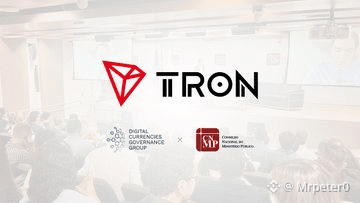
One thing that stands out in the TRXS launch story is that the milestone was not only documented through product announcements, but also through a real public moment shared by the teams involved.
The closing bell at Cboe in Chicago gives the launch a visible point in time. For Canary Capital and the wider TRON community, that matters because major infrastructure developments are often experienced through documents, announcements, and market data rather than moments people can actually see and remember.
The TRXS launch therefore has another layer beyond the product itself: collaboration between Canary Capital, Cboe and the TRON ecosystem was publicly marked together.
The important limitation is that a closing-bell ceremony does not by itself tell us anything about adoption, trading activity, investor demand, or the long-term performance of TRXS. Those questions require actual market and product data over time.
What the image does provide is something different: a clear record of the people and institutions behind an important point in the TRXS story. For a global community following from outside Chicago, that shared moment makes the development more tangible.
The takeaway for me is simple: milestones are ultimately measured by what they deliver, but moments like this give the community a way to remember where the journey began.
@JustinSun @TRONDAO #TRONEcoStar
One thing that stands out in the TRXS launch story is that the milestone was not only documented through product announcements, but also through a real public moment shared by the teams involved.
The closing bell at Cboe in Chicago gives the launch a visible point in time. For Canary Capital and the wider TRON community, that matters because major infrastructure developments are often experienced through documents, announcements, and market data rather than moments people can actually see and remember.
The TRXS launch therefore has another layer beyond the product itself: collaboration between Canary Capital, Cboe and the TRON ecosystem was publicly marked together.
The important limitation is that a closing-bell ceremony does not by itself tell us anything about adoption, trading activity, investor demand, or the long-term performance of TRXS. Those questions require actual market and product data over time.
What the image does provide is something different: a clear record of the people and institutions behind an important point in the TRXS story. For a global community following from outside Chicago, that shared moment makes the development more tangible.
The takeaway for me is simple: milestones are ultimately measured by what they deliver, but moments like this give the community a way to remember where the journey began.
@Justin Sun孙宇晨 @TRON DAO #TRONEcoStar
The closing bell at Cboe in Chicago gives the launch a visible point in time. For Canary Capital and the wider TRON community, that matters because major infrastructure developments are often experienced through documents, announcements, and market data rather than moments people can actually see and remember.
The TRXS launch therefore has another layer beyond the product itself: collaboration between Canary Capital, Cboe and the TRON ecosystem was publicly marked together.
The important limitation is that a closing-bell ceremony does not by itself tell us anything about adoption, trading activity, investor demand, or the long-term performance of TRXS. Those questions require actual market and product data over time.
What the image does provide is something different: a clear record of the people and institutions behind an important point in the TRXS story. For a global community following from outside Chicago, that shared moment makes the development more tangible.
The takeaway for me is simple: milestones are ultimately measured by what they deliver, but moments like this give the community a way to remember where the journey began.
@Justin Sun孙宇晨 @TRON DAO #TRONEcoStar
55
·
--
Verified
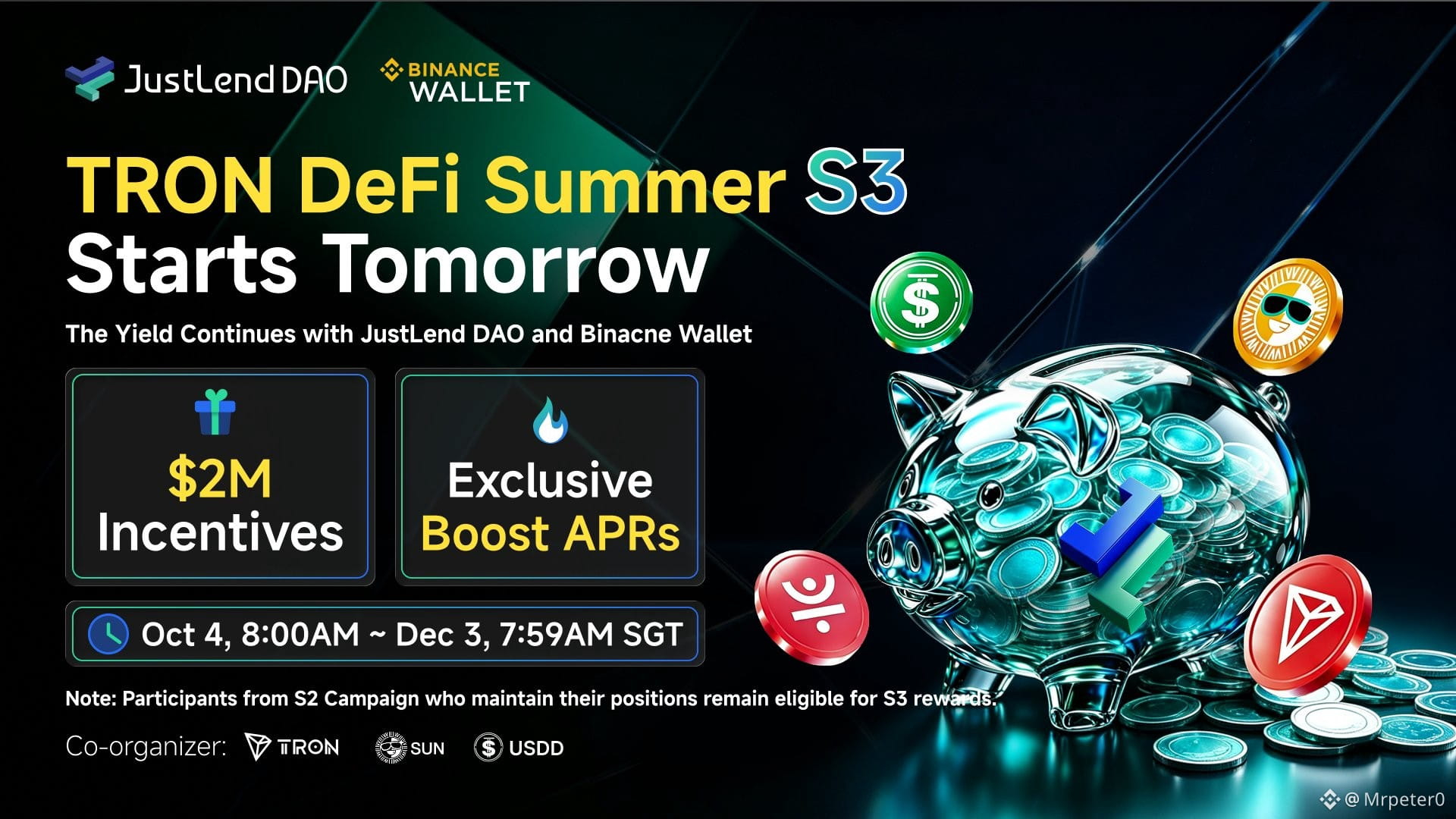
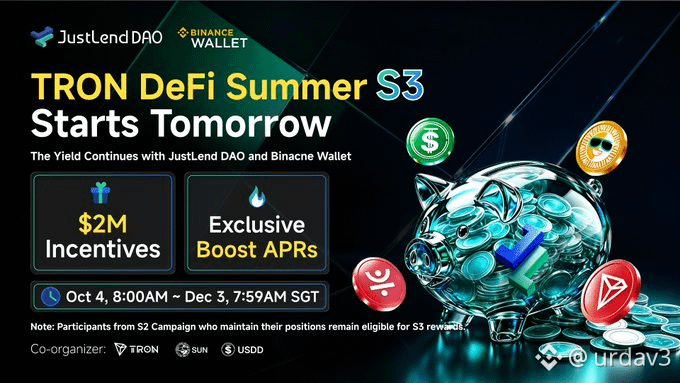
One thing that stands out about #TRONDeFiSummer S3 is the shift from a short-term campaign into a longer 60-day incentive period, with the focus remaining on actual DeFi participation rather than simply distributing rewards.
S3 starts October 4 at 8:00 AM SGT with a $2M reward pool and boosted APR opportunities across TRX, USDD, JST, and SUN through JustLend DAO on @BinanceWallet DeFi. The structure also gives existing S2 participants continuity, allowing them to keep their positions and remain eligible for S3 rewards.
The $2M figure is meaningful, but it needs context. Spread across 60 days, it represents an average of roughly $33,333 per day if distributed evenly. That does not mean every participant receives that amount, nor does it tell us the actual APR each asset will generate. The real value depends on how rewards are allocated and how much capital participates.
The continuation from S2 is also worth watching. Keeping existing positions reduces the friction of moving from one campaign phase to another, while new participants can enter when S3 begins. That makes participation levels and capital retention important metrics to observe throughout the 60-day period.
For @TRONDAO , @DeFi_JUST , @usddio , and @SunPump_meme , the more interesting question is not simply how large the reward pool is, but whether these incentives translate into sustained DeFi activity after the campaign ends.
The $2M pool can attract attention, but the stronger signal will be what happens to liquidity, participation, and user activity throughout S3 and beyond. #TRONEcoStar
One thing that stands out about #TRONDeFiSummer S3 is the shift from a short-term campaign into a longer 60-day incentive period, with the focus remaining on actual DeFi participation rather than simply distributing rewards.
S3 starts October 4 at 8:00 AM SGT with a $2M reward pool and boosted APR opportunities across TRX, USDD, JST, and SUN through JustLend DAO on @Binance Wallet DeFi. The structure also gives existing S2 participants continuity, allowing them to keep their positions and remain eligible for S3 rewards.
The $2M figure is meaningful, but it needs context. Spread across 60 days, it represents an average of roughly $33,333 per day if distributed evenly. That does not mean every participant receives that amount, nor does it tell us the actual APR each asset will generate. The real value depends on how rewards are allocated and how much capital participates.
The continuation from S2 is also worth watching. Keeping existing positions reduces the friction of moving from one campaign phase to another, while new participants can enter when S3 begins. That makes participation levels and capital retention important metrics to observe throughout the 60-day period.
For @TRON DAO , @JUST DAO , @USDD - Decentralized USD , and @OfficialSUNio , the more interesting question is not simply how large the reward pool is, but whether these incentives translate into sustained DeFi activity after the campaign ends.
The $2M pool can attract attention, but the stronger signal will be what happens to liquidity, participation, and user activity throughout S3 and beyond. #TRONEcoStar
S3 starts October 4 at 8:00 AM SGT with a $2M reward pool and boosted APR opportunities across TRX, USDD, JST, and SUN through JustLend DAO on @Binance Wallet DeFi. The structure also gives existing S2 participants continuity, allowing them to keep their positions and remain eligible for S3 rewards.
The $2M figure is meaningful, but it needs context. Spread across 60 days, it represents an average of roughly $33,333 per day if distributed evenly. That does not mean every participant receives that amount, nor does it tell us the actual APR each asset will generate. The real value depends on how rewards are allocated and how much capital participates.
The continuation from S2 is also worth watching. Keeping existing positions reduces the friction of moving from one campaign phase to another, while new participants can enter when S3 begins. That makes participation levels and capital retention important metrics to observe throughout the 60-day period.
For @TRON DAO , @JUST DAO , @USDD - Decentralized USD , and @OfficialSUNio , the more interesting question is not simply how large the reward pool is, but whether these incentives translate into sustained DeFi activity after the campaign ends.
The $2M pool can attract attention, but the stronger signal will be what happens to liquidity, participation, and user activity throughout S3 and beyond. #TRONEcoStar
1
201
·
--
FOUR ASSETS CREATE FOUR DIFFERENT ENTRY POINTS
TRON DeFi Summer S3 is interesting because it does not reduce the TRON DeFi experience to one asset or one strategy.
The campaign brings together TRX, USDD, JST, and SUN, with each receiving a different portion of the $2M reward pool.
TRX receives $1M.
USDD receives $600K.
JST receives $300K.
SUN receives $100K.
This creates a multi-asset entry point into the ecosystem.
For users, that means S3 can be approached from different perspectives depending on their existing holdings, objectives, and understanding of DeFi.
For the ecosystem, it creates an opportunity to distribute activity across several interconnected assets instead of concentrating all attention in a single pool.
This is important because mature DeFi ecosystems are rarely built around one token alone.
They depend on interactions between native assets, stablecoins, governance assets, liquidity, applications, and users.
S3 puts those components into the same seasonal framework.
The result is not simply a larger reward campaign.
It is a small-scale experiment in how multiple assets can participate in one coordinated DeFi growth cycle.
@DeFi_JUST @JustinSun #TRONEcoStar
FOUR ASSETS CREATE FOUR DIFFERENT ENTRY POINTS
TRON DeFi Summer S3 is interesting because it does not reduce the TRON DeFi experience to one asset or one strategy.
The campaign brings together TRX, USDD, JST, and SUN, with each receiving a different portion of the $2M reward pool.
TRX receives $1M.
USDD receives $600K.
JST receives $300K.
SUN receives $100K.
This creates a multi-asset entry point into the ecosystem.
For users, that means S3 can be approached from different perspectives depending on their existing holdings, objectives, and understanding of DeFi.
For the ecosystem, it creates an opportunity to distribute activity across several interconnected assets instead of concentrating all attention in a single pool.
This is important because mature DeFi ecosystems are rarely built around one token alone.
They depend on interactions between native assets, stablecoins, governance assets, liquidity, applications, and users.
S3 puts those components into the same seasonal framework.
The result is not simply a larger reward campaign.
It is a small-scale experiment in how multiple assets can participate in one coordinated DeFi growth cycle.
@JUST DAO @Justin Sun孙宇晨 #TRONEcoStar
TRON DeFi Summer S3 is interesting because it does not reduce the TRON DeFi experience to one asset or one strategy.
The campaign brings together TRX, USDD, JST, and SUN, with each receiving a different portion of the $2M reward pool.
TRX receives $1M.
USDD receives $600K.
JST receives $300K.
SUN receives $100K.
This creates a multi-asset entry point into the ecosystem.
For users, that means S3 can be approached from different perspectives depending on their existing holdings, objectives, and understanding of DeFi.
For the ecosystem, it creates an opportunity to distribute activity across several interconnected assets instead of concentrating all attention in a single pool.
This is important because mature DeFi ecosystems are rarely built around one token alone.
They depend on interactions between native assets, stablecoins, governance assets, liquidity, applications, and users.
S3 puts those components into the same seasonal framework.
The result is not simply a larger reward campaign.
It is a small-scale experiment in how multiple assets can participate in one coordinated DeFi growth cycle.
@JUST DAO @Justin Sun孙宇晨 #TRONEcoStar

162
·
--
DEFI SUMMER AS A USER EDUCATION ENGINE
Rewards are often viewed as the main attraction of DeFi campaigns.
But there is another potential value: education through participation.
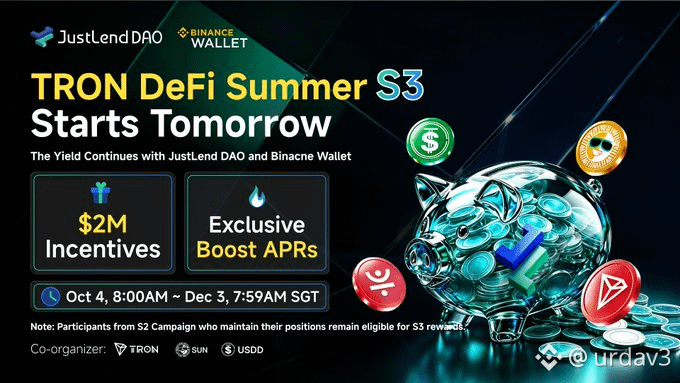
TRON DeFi Summer S3 gives users a 60-day environment to explore TRX, USDD, JST, and SUN through JustLend DAO via Binance Wallet DeFi.
Every interaction can become part of a learning process.
Users can discover how lending works, how different assets behave, how liquidity moves, and how decentralized financial applications connect with one another.
The $2M reward pool provides an incentive to participate, but sustained engagement can create something beyond rewards: familiarity.
That distinction is important.
A user who joins only for a temporary incentive may leave when the campaign ends.
A user who learns how the ecosystem works may continue using the underlying infrastructure long after the campaign is over.
This is why S3 can be viewed as more than a promotional event.
It is also an opportunity to turn curiosity into experience, and experience into deeper DeFi literacy.
The strongest outcome may not be how many rewards are distributed, but how many users become more confident navigating decentralized finance.
@DeFi_JUST @JustinSun #TRONEcoStar
DEFI SUMMER AS A USER EDUCATION ENGINE
Rewards are often viewed as the main attraction of DeFi campaigns.
But there is another potential value: education through participation.
TRON DeFi Summer S3 gives users a 60-day environment to explore TRX, USDD, JST, and SUN through JustLend DAO via Binance Wallet DeFi.
Every interaction can become part of a learning process.
Users can discover how lending works, how different assets behave, how liquidity moves, and how decentralized financial applications connect with one another.
The $2M reward pool provides an incentive to participate, but sustained engagement can create something beyond rewards: familiarity.
That distinction is important.
A user who joins only for a temporary incentive may leave when the campaign ends.
A user who learns how the ecosystem works may continue using the underlying infrastructure long after the campaign is over.
This is why S3 can be viewed as more than a promotional event.
It is also an opportunity to turn curiosity into experience, and experience into deeper DeFi literacy.
The strongest outcome may not be how many rewards are distributed, but how many users become more confident navigating decentralized finance.
@JUST DAO @Justin Sun孙宇晨 #TRONEcoStar
Rewards are often viewed as the main attraction of DeFi campaigns.
But there is another potential value: education through participation.
TRON DeFi Summer S3 gives users a 60-day environment to explore TRX, USDD, JST, and SUN through JustLend DAO via Binance Wallet DeFi.
Every interaction can become part of a learning process.
Users can discover how lending works, how different assets behave, how liquidity moves, and how decentralized financial applications connect with one another.
The $2M reward pool provides an incentive to participate, but sustained engagement can create something beyond rewards: familiarity.
That distinction is important.
A user who joins only for a temporary incentive may leave when the campaign ends.
A user who learns how the ecosystem works may continue using the underlying infrastructure long after the campaign is over.
This is why S3 can be viewed as more than a promotional event.
It is also an opportunity to turn curiosity into experience, and experience into deeper DeFi literacy.
The strongest outcome may not be how many rewards are distributed, but how many users become more confident navigating decentralized finance.
@JUST DAO @Justin Sun孙宇晨 #TRONEcoStar
52
·
--
FOUR ASSETS, ONE DEFI PLAYGROUND
TRON DeFi Summer S3 highlights an important characteristic of the TRON ecosystem: different assets can serve different roles within the same decentralized financial environment.
TRX represents the native asset of the TRON network.
USDD brings a stablecoin dimension to the ecosystem.
JST is closely connected to the governance and utility layer of JustLend DAO.
SUN represents another important component of the broader TRON DeFi landscape.
S3 brings these assets into one incentive-driven environment through JustLend DAO and Binance Wallet DeFi.
The significance is not simply that users have more assets to choose from.
It is that users can begin to see DeFi as an interconnected system rather than a collection of isolated tokens.
When liquidity, governance, stablecoins, native assets, and decentralized applications interact within the same ecosystem, new strategies become possible.
That is the larger opportunity behind DeFi Summer S3.
The campaign may last 60 days, but the more important question is whether those 60 days help users understand how the pieces of TRON DeFi fit together.
@DeFi_JUST @JustinSun #TRONEcoStar
FOUR ASSETS, ONE DEFI PLAYGROUND
TRON DeFi Summer S3 highlights an important characteristic of the TRON ecosystem: different assets can serve different roles within the same decentralized financial environment.
TRX represents the native asset of the TRON network.
USDD brings a stablecoin dimension to the ecosystem.
JST is closely connected to the governance and utility layer of JustLend DAO.
SUN represents another important component of the broader TRON DeFi landscape.
S3 brings these assets into one incentive-driven environment through JustLend DAO and Binance Wallet DeFi.
The significance is not simply that users have more assets to choose from.
It is that users can begin to see DeFi as an interconnected system rather than a collection of isolated tokens.
When liquidity, governance, stablecoins, native assets, and decentralized applications interact within the same ecosystem, new strategies become possible.
That is the larger opportunity behind DeFi Summer S3.
The campaign may last 60 days, but the more important question is whether those 60 days help users understand how the pieces of TRON DeFi fit together.
@JUST DAO @Justin Sun孙宇晨 #TRONEcoStar
TRON DeFi Summer S3 highlights an important characteristic of the TRON ecosystem: different assets can serve different roles within the same decentralized financial environment.
TRX represents the native asset of the TRON network.
USDD brings a stablecoin dimension to the ecosystem.
JST is closely connected to the governance and utility layer of JustLend DAO.
SUN represents another important component of the broader TRON DeFi landscape.
S3 brings these assets into one incentive-driven environment through JustLend DAO and Binance Wallet DeFi.
The significance is not simply that users have more assets to choose from.
It is that users can begin to see DeFi as an interconnected system rather than a collection of isolated tokens.
When liquidity, governance, stablecoins, native assets, and decentralized applications interact within the same ecosystem, new strategies become possible.
That is the larger opportunity behind DeFi Summer S3.
The campaign may last 60 days, but the more important question is whether those 60 days help users understand how the pieces of TRON DeFi fit together.
@JUST DAO @Justin Sun孙宇晨 #TRONEcoStar

62
·
--
2. THE REAL VALUE OF 60 DAYS
The most interesting number in TRON DeFi Summer S3 may not be the $2M reward pool.
It may be the 60-day timeframe.
Short campaigns can attract attention, but longer participation windows give users more time to explore strategies, understand different assets, and become familiar with the underlying DeFi infrastructure.
S3 brings boosted APR opportunities across TRX, USDD, JST, and SUN through JustLend DAO via Binance Wallet DeFi. That creates multiple paths for users to interact with the TRON ecosystem rather than focusing everything around a single asset.
The 60-day structure also changes the mindset around participation.
Instead of asking, “What can I earn today?”
Users can begin asking:
“What strategy makes sense for the next several weeks?”
That shift matters because sustainable DeFi participation requires more than chasing the highest short-term incentive. It requires understanding liquidity, risk, asset utility, and how different components of an ecosystem connect.
S3 creates the time window.
What users do with that window is where the real experiment begins.
@DeFi_JUST @JustinSun #TRONEcoStar
2. THE REAL VALUE OF 60 DAYS
The most interesting number in TRON DeFi Summer S3 may not be the $2M reward pool.
It may be the 60-day timeframe.
Short campaigns can attract attention, but longer participation windows give users more time to explore strategies, understand different assets, and become familiar with the underlying DeFi infrastructure.
S3 brings boosted APR opportunities across TRX, USDD, JST, and SUN through JustLend DAO via Binance Wallet DeFi. That creates multiple paths for users to interact with the TRON ecosystem rather than focusing everything around a single asset.
The 60-day structure also changes the mindset around participation.
Instead of asking, “What can I earn today?”
Users can begin asking:
“What strategy makes sense for the next several weeks?”
That shift matters because sustainable DeFi participation requires more than chasing the highest short-term incentive. It requires understanding liquidity, risk, asset utility, and how different components of an ecosystem connect.
S3 creates the time window.
What users do with that window is where the real experiment begins.
@JUST DAO @Justin Sun孙宇晨 #TRONEcoStar
The most interesting number in TRON DeFi Summer S3 may not be the $2M reward pool.
It may be the 60-day timeframe.
Short campaigns can attract attention, but longer participation windows give users more time to explore strategies, understand different assets, and become familiar with the underlying DeFi infrastructure.
S3 brings boosted APR opportunities across TRX, USDD, JST, and SUN through JustLend DAO via Binance Wallet DeFi. That creates multiple paths for users to interact with the TRON ecosystem rather than focusing everything around a single asset.
The 60-day structure also changes the mindset around participation.
Instead of asking, “What can I earn today?”
Users can begin asking:
“What strategy makes sense for the next several weeks?”
That shift matters because sustainable DeFi participation requires more than chasing the highest short-term incentive. It requires understanding liquidity, risk, asset utility, and how different components of an ecosystem connect.
S3 creates the time window.
What users do with that window is where the real experiment begins.
@JUST DAO @Justin Sun孙宇晨 #TRONEcoStar
55
·
--
LOWERING THE BARRIER TO DEFI ACCESS
One of the strongest aspects of TRON DeFi Summer S3 is the distribution channel.
By bringing the campaign to users through Binance Wallet DeFi, the initiative connects DeFi opportunities with an established wallet environment.
That matters because adoption is not only about building powerful protocols. It is also about making those protocols easier for users to discover and access.
S3 offers 60 days of boosted APR opportunities and a $2M reward pool across TRX, USDD, JST, and SUN on JustLend DAO.
For experienced DeFi users, this creates another opportunity to deploy capital.
For newer users, it can provide a structured entry point into the TRON DeFi ecosystem.
The difference between technology existing and technology being used often comes down to accessibility.
Infrastructure can be sophisticated, but if the path from user to application is complicated, adoption becomes harder.
TRON DeFi Summer S3 is therefore interesting not only as a rewards campaign, but also as an experiment in bringing decentralized financial opportunities closer to a broader wallet user base.
@DeFi_JUST @JustinSun #TRONEcoStar
LOWERING THE BARRIER TO DEFI ACCESS
One of the strongest aspects of TRON DeFi Summer S3 is the distribution channel.
By bringing the campaign to users through Binance Wallet DeFi, the initiative connects DeFi opportunities with an established wallet environment.
That matters because adoption is not only about building powerful protocols. It is also about making those protocols easier for users to discover and access.
S3 offers 60 days of boosted APR opportunities and a $2M reward pool across TRX, USDD, JST, and SUN on JustLend DAO.
For experienced DeFi users, this creates another opportunity to deploy capital.
For newer users, it can provide a structured entry point into the TRON DeFi ecosystem.
The difference between technology existing and technology being used often comes down to accessibility.
Infrastructure can be sophisticated, but if the path from user to application is complicated, adoption becomes harder.
TRON DeFi Summer S3 is therefore interesting not only as a rewards campaign, but also as an experiment in bringing decentralized financial opportunities closer to a broader wallet user base.
@JUST DAO @Justin Sun孙宇晨 #TRONEcoStar
One of the strongest aspects of TRON DeFi Summer S3 is the distribution channel.
By bringing the campaign to users through Binance Wallet DeFi, the initiative connects DeFi opportunities with an established wallet environment.
That matters because adoption is not only about building powerful protocols. It is also about making those protocols easier for users to discover and access.
S3 offers 60 days of boosted APR opportunities and a $2M reward pool across TRX, USDD, JST, and SUN on JustLend DAO.
For experienced DeFi users, this creates another opportunity to deploy capital.
For newer users, it can provide a structured entry point into the TRON DeFi ecosystem.
The difference between technology existing and technology being used often comes down to accessibility.
Infrastructure can be sophisticated, but if the path from user to application is complicated, adoption becomes harder.
TRON DeFi Summer S3 is therefore interesting not only as a rewards campaign, but also as an experiment in bringing decentralized financial opportunities closer to a broader wallet user base.
@JUST DAO @Justin Sun孙宇晨 #TRONEcoStar

58
·
--
FROM ONE SEASON TO THE NEXT
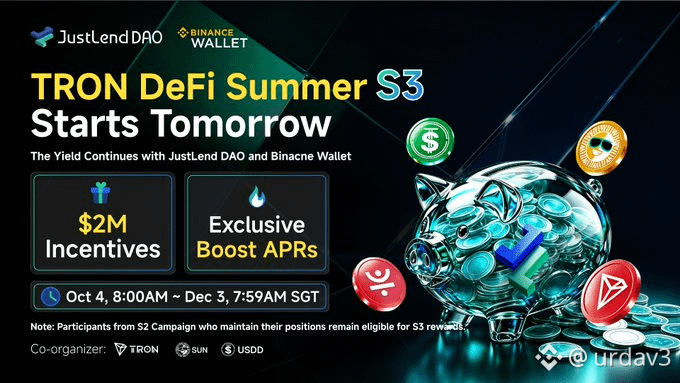
TRON DeFi Summer S3 is not simply another DeFi campaign. It represents a continuation of an ecosystem experiment that is gradually building momentum across multiple seasons.
Starting October 4 at 8:00 AM SGT, S3 introduces 60 days of Boosted APR opportunities and a $2M reward pool, creating a new window for users to explore TRX, USDD, JST, and SUN through JustLend DAO via Binance Wallet DeFi.
One particularly interesting element is the continuity between seasons. Users already participating in S2 can maintain their positions and remain eligible for S3 rewards, reducing friction between one campaign and the next.
This creates something more valuable than a short-term incentive: continuity.
DeFi adoption is rarely built in a single transaction. It develops through repeated participation, deeper familiarity with protocols, and growing confidence in on-chain financial products.
S3 therefore feels less like a reset and more like the next chapter of an ongoing DeFi journey.
@DeFi_JUST @JustinSun #TRONEcoStar
FROM ONE SEASON TO THE NEXT
TRON DeFi Summer S3 is not simply another DeFi campaign. It represents a continuation of an ecosystem experiment that is gradually building momentum across multiple seasons.
Starting October 4 at 8:00 AM SGT, S3 introduces 60 days of Boosted APR opportunities and a $2M reward pool, creating a new window for users to explore TRX, USDD, JST, and SUN through JustLend DAO via Binance Wallet DeFi.
One particularly interesting element is the continuity between seasons. Users already participating in S2 can maintain their positions and remain eligible for S3 rewards, reducing friction between one campaign and the next.
This creates something more valuable than a short-term incentive: continuity.
DeFi adoption is rarely built in a single transaction. It develops through repeated participation, deeper familiarity with protocols, and growing confidence in on-chain financial products.
S3 therefore feels less like a reset and more like the next chapter of an ongoing DeFi journey.
@JUST DAO @Justin Sun孙宇晨 #TRONEcoStar
TRON DeFi Summer S3 is not simply another DeFi campaign. It represents a continuation of an ecosystem experiment that is gradually building momentum across multiple seasons.
Starting October 4 at 8:00 AM SGT, S3 introduces 60 days of Boosted APR opportunities and a $2M reward pool, creating a new window for users to explore TRX, USDD, JST, and SUN through JustLend DAO via Binance Wallet DeFi.
One particularly interesting element is the continuity between seasons. Users already participating in S2 can maintain their positions and remain eligible for S3 rewards, reducing friction between one campaign and the next.
This creates something more valuable than a short-term incentive: continuity.
DeFi adoption is rarely built in a single transaction. It develops through repeated participation, deeper familiarity with protocols, and growing confidence in on-chain financial products.
S3 therefore feels less like a reset and more like the next chapter of an ongoing DeFi journey.
@JUST DAO @Justin Sun孙宇晨 #TRONEcoStar
69
·
--
600,000 USDD REWARDS MEET FLEXIBLE CAPITAL MANAGEMENT
TRON DeFi Summer S3 introduces a different way to think about liquidity incentives.
The campaign offers a 600,000 USDD reward pool while allowing participants to manage their positions flexibly. Deposits start at 100 USDD, there is no maximum deposit limit, and users can deposit or withdraw during the campaign.
That flexibility matters because DeFi users are not simply looking for the highest advertised yield. They also care about liquidity, collateral utility, and the ability to adjust positions as market conditions change.
By combining rewards with continued collateral eligibility, S3 creates a structure where capital can remain useful rather than being locked into a single-purpose incentive mechanism.
@usddio @JustinSun #TRONEcoStar
600,000 USDD REWARDS MEET FLEXIBLE CAPITAL MANAGEMENT
TRON DeFi Summer S3 introduces a different way to think about liquidity incentives.
The campaign offers a 600,000 USDD reward pool while allowing participants to manage their positions flexibly. Deposits start at 100 USDD, there is no maximum deposit limit, and users can deposit or withdraw during the campaign.
That flexibility matters because DeFi users are not simply looking for the highest advertised yield. They also care about liquidity, collateral utility, and the ability to adjust positions as market conditions change.
By combining rewards with continued collateral eligibility, S3 creates a structure where capital can remain useful rather than being locked into a single-purpose incentive mechanism.
@USDD - Decentralized USD @Justin Sun孙宇晨 #TRONEcoStar
TRON DeFi Summer S3 introduces a different way to think about liquidity incentives.
The campaign offers a 600,000 USDD reward pool while allowing participants to manage their positions flexibly. Deposits start at 100 USDD, there is no maximum deposit limit, and users can deposit or withdraw during the campaign.
That flexibility matters because DeFi users are not simply looking for the highest advertised yield. They also care about liquidity, collateral utility, and the ability to adjust positions as market conditions change.
By combining rewards with continued collateral eligibility, S3 creates a structure where capital can remain useful rather than being locked into a single-purpose incentive mechanism.
@USDD - Decentralized USD @Justin Sun孙宇晨 #TRONEcoStar
53
·
--
DEFI INCENTIVES ARE EVOLVING BEYOND SIMPLE YIELD FARMING
TRON DeFi Summer S3 shows how DeFi incentives can be designed around more than just a headline APR.
The campaign combines Base APR with a share of 600,000 USDD in rewards, while allowing deposited USDD to remain eligible as collateral. Users can also deposit or withdraw during the 60-day period.
This creates a more dynamic relationship between incentives and capital efficiency. Instead of treating deposited assets as completely passive, the structure emphasizes their continuing utility inside the DeFi ecosystem.
The result is a model where rewards, liquidity, and collateral functionality can work together — an important direction as DeFi matures from short-term farming toward more flexible financial infrastructure.
@usddio @JustinSun #TRONEcoStar
DEFI INCENTIVES ARE EVOLVING BEYOND SIMPLE YIELD FARMING
TRON DeFi Summer S3 shows how DeFi incentives can be designed around more than just a headline APR.
The campaign combines Base APR with a share of 600,000 USDD in rewards, while allowing deposited USDD to remain eligible as collateral. Users can also deposit or withdraw during the 60-day period.
This creates a more dynamic relationship between incentives and capital efficiency. Instead of treating deposited assets as completely passive, the structure emphasizes their continuing utility inside the DeFi ecosystem.
The result is a model where rewards, liquidity, and collateral functionality can work together — an important direction as DeFi matures from short-term farming toward more flexible financial infrastructure.
@USDD - Decentralized USD @Justin Sun孙宇晨 #TRONEcoStar
TRON DeFi Summer S3 shows how DeFi incentives can be designed around more than just a headline APR.
The campaign combines Base APR with a share of 600,000 USDD in rewards, while allowing deposited USDD to remain eligible as collateral. Users can also deposit or withdraw during the 60-day period.
This creates a more dynamic relationship between incentives and capital efficiency. Instead of treating deposited assets as completely passive, the structure emphasizes their continuing utility inside the DeFi ecosystem.
The result is a model where rewards, liquidity, and collateral functionality can work together — an important direction as DeFi matures from short-term farming toward more flexible financial infrastructure.
@USDD - Decentralized USD @Justin Sun孙宇晨 #TRONEcoStar
50
·
--
USDD DEFI SUMMER S3 TURNS STABLECOINS INTO WORKING CAPITAL
TRON DeFi Summer S3 is now live, giving USDD holders another opportunity to put their stablecoins to work through JustLend DAO.
Participants can deposit at least 100 USDD with no maximum deposit limit and earn the Base APR plus a share of 600,000 USDD in rewards. The 60-day campaign also keeps the experience flexible, allowing users to deposit or withdraw while maintaining collateral eligibility.
One particularly useful feature is the 1:1 USDT → USDD conversion through the PSM with zero slippage. This creates a straightforward path from USDT liquidity into USDD-based DeFi strategies.
The bigger idea is simple: stablecoins do not have to remain idle. They can become productive capital while remaining integrated into a broader DeFi ecosystem.
@JustinSun @usddio #TRONEcoStar
USDD DEFI SUMMER S3 TURNS STABLECOINS INTO WORKING CAPITAL
TRON DeFi Summer S3 is now live, giving USDD holders another opportunity to put their stablecoins to work through JustLend DAO.
Participants can deposit at least 100 USDD with no maximum deposit limit and earn the Base APR plus a share of 600,000 USDD in rewards. The 60-day campaign also keeps the experience flexible, allowing users to deposit or withdraw while maintaining collateral eligibility.
One particularly useful feature is the 1:1 USDT → USDD conversion through the PSM with zero slippage. This creates a straightforward path from USDT liquidity into USDD-based DeFi strategies.
The bigger idea is simple: stablecoins do not have to remain idle. They can become productive capital while remaining integrated into a broader DeFi ecosystem.
@Justin Sun孙宇晨 @USDD - Decentralized USD #TRONEcoStar
TRON DeFi Summer S3 is now live, giving USDD holders another opportunity to put their stablecoins to work through JustLend DAO.
Participants can deposit at least 100 USDD with no maximum deposit limit and earn the Base APR plus a share of 600,000 USDD in rewards. The 60-day campaign also keeps the experience flexible, allowing users to deposit or withdraw while maintaining collateral eligibility.
One particularly useful feature is the 1:1 USDT → USDD conversion through the PSM with zero slippage. This creates a straightforward path from USDT liquidity into USDD-based DeFi strategies.
The bigger idea is simple: stablecoins do not have to remain idle. They can become productive capital while remaining integrated into a broader DeFi ecosystem.
@Justin Sun孙宇晨 @USDD - Decentralized USD #TRONEcoStar
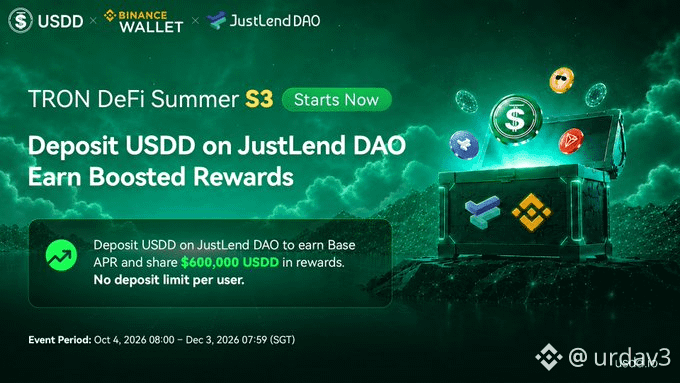
84
·
--
SEAMLESS CONTINUITY MAKES DEFI REWARDS MORE PRACTICAL
One of the strongest features of TRON DeFi Summer S3 is not just the 600,000 USDD reward pool — it is the continuity from S2.
Existing S2 participants can continue directly into S3 without redeeming their positions or going through a new subscription process. That removes unnecessary friction and keeps capital deployed.
For new participants, the entry point is equally straightforward: access JustLend DAO through Binance Wallet, navigate to DeFi → Protocols → JustLend DAO → USDD, and deposit at least 100 USDD.
A smoother transition between campaigns can help turn temporary incentive programs into longer-term user participation, because the best DeFi experience is often the one that does not interrupt the user's strategy.
@usddio @JustinSun #TRONEcoStar
SEAMLESS CONTINUITY MAKES DEFI REWARDS MORE PRACTICAL
One of the strongest features of TRON DeFi Summer S3 is not just the 600,000 USDD reward pool — it is the continuity from S2.
Existing S2 participants can continue directly into S3 without redeeming their positions or going through a new subscription process. That removes unnecessary friction and keeps capital deployed.
For new participants, the entry point is equally straightforward: access JustLend DAO through Binance Wallet, navigate to DeFi → Protocols → JustLend DAO → USDD, and deposit at least 100 USDD.
A smoother transition between campaigns can help turn temporary incentive programs into longer-term user participation, because the best DeFi experience is often the one that does not interrupt the user's strategy.
@USDD - Decentralized USD @Justin Sun孙宇晨 #TRONEcoStar
One of the strongest features of TRON DeFi Summer S3 is not just the 600,000 USDD reward pool — it is the continuity from S2.
Existing S2 participants can continue directly into S3 without redeeming their positions or going through a new subscription process. That removes unnecessary friction and keeps capital deployed.
For new participants, the entry point is equally straightforward: access JustLend DAO through Binance Wallet, navigate to DeFi → Protocols → JustLend DAO → USDD, and deposit at least 100 USDD.
A smoother transition between campaigns can help turn temporary incentive programs into longer-term user participation, because the best DeFi experience is often the one that does not interrupt the user's strategy.
@USDD - Decentralized USD @Justin Sun孙宇晨 #TRONEcoStar
150
Log in to explore more content
Join global crypto users on Binance Square
⚡️ Get latest and useful information about crypto.
💬 Trusted by the world’s largest crypto exchange.
👍 Discover real insights from verified creators.
Email / Phone number
Trending Topics
1
#BNBSurpasses$790
9,286 views
77 Discussing
2
#ZamaRises15.99%ToIntradayHigh$0.09
3,349 views
70 Discussing
3
#BitcoinSpotETFsDraw$6.34BInflowsInQ3
3,311 views
54 Discussing
4
#EthereumValidatorExitQueueJumps392%
49,052 views
629 Discussing
5
#IMFApprovesElSalvador$138MWithBitcoinWaiver
6,465 views
38 Discussing
6
#SECHaltsCryptoETFReviewsAmidFundingLapse
199,129 views
1,530 Discussing
7
#ZcashETFPostsFirstWeeklyOutflow$93.6M
86,721 views
242 Discussing
8
#GreekPoliceBustCryptoScamRingArrest17
327,898 views
2,204 Discussing
9
#BitcoinRejectedAt$87K
202,540 views
301 Discussing
10
#FedOctoberRateHikeOddsFallTo17%
326,429 views
2,335 Discussing