

#macroanalysis
macroanalysis
260,856 views
1,857 Discussing
Hot
Latest


·
--
Verified
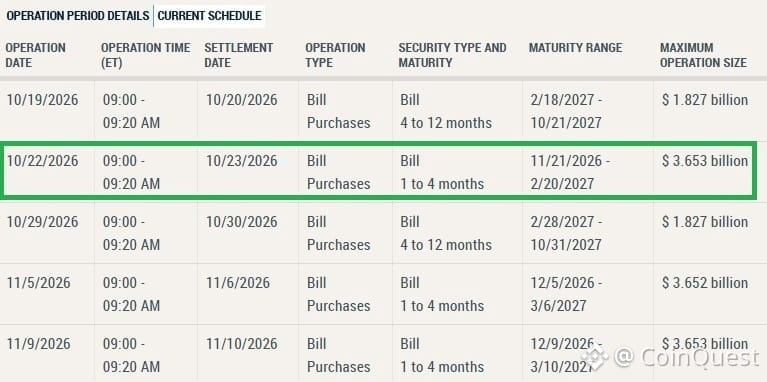
😱 $3.653 BILLION in Fed Treasury purchases… bullish for Bitcoin?
The headline sounds like fresh liquidity entering the market, but there's an important detail traders shouldn't ignore
The New York Fed's October 22 operation involved $3.653B in Treasury bill purchases, settling on October 23
These purchases are part of a planned $14.6B reinvestment program running through November 13
This is NOT a new $3.653B liquidity injection
The Fed is reinvesting principal payments from agency securities into Treasuries, changing the composition of its holdings rather than expanding them through this operation
So should $BTC bulls celebrate?
Not from this headline alone. Reinvestment purchases are routine operations, not proof that a new QE program has started
For crypto, the bigger question is whether broader financial conditions and liquidity actually improve
Bullish signal for BTC, or just routine Fed business? 🤔
#CryptoNews #BTC #MacroAnalysis
😱 $3.653 BILLION in Fed Treasury purchases… bullish for Bitcoin?
The headline sounds like fresh liquidity entering the market, but there's an important detail traders shouldn't ignore
The New York Fed's October 22 operation involved $3.653B in Treasury bill purchases, settling on October 23
These purchases are part of a planned $14.6B reinvestment program running through November 13
This is NOT a new $3.653B liquidity injection
The Fed is reinvesting principal payments from agency securities into Treasuries, changing the composition of its holdings rather than expanding them through this operation
So should $BTC bulls celebrate?
Not from this headline alone. Reinvestment purchases are routine operations, not proof that a new QE program has started
For crypto, the bigger question is whether broader financial conditions and liquidity actually improve
Bullish signal for BTC, or just routine Fed business? 🤔
#CryptoNews #BTC #MacroAnalysis
The headline sounds like fresh liquidity entering the market, but there's an important detail traders shouldn't ignore
The New York Fed's October 22 operation involved $3.653B in Treasury bill purchases, settling on October 23
These purchases are part of a planned $14.6B reinvestment program running through November 13
This is NOT a new $3.653B liquidity injection
The Fed is reinvesting principal payments from agency securities into Treasuries, changing the composition of its holdings rather than expanding them through this operation
So should $BTC bulls celebrate?
Not from this headline alone. Reinvestment purchases are routine operations, not proof that a new QE program has started
For crypto, the bigger question is whether broader financial conditions and liquidity actually improve
Bullish signal for BTC, or just routine Fed business? 🤔
#CryptoNews #BTC #MacroAnalysis
3
544

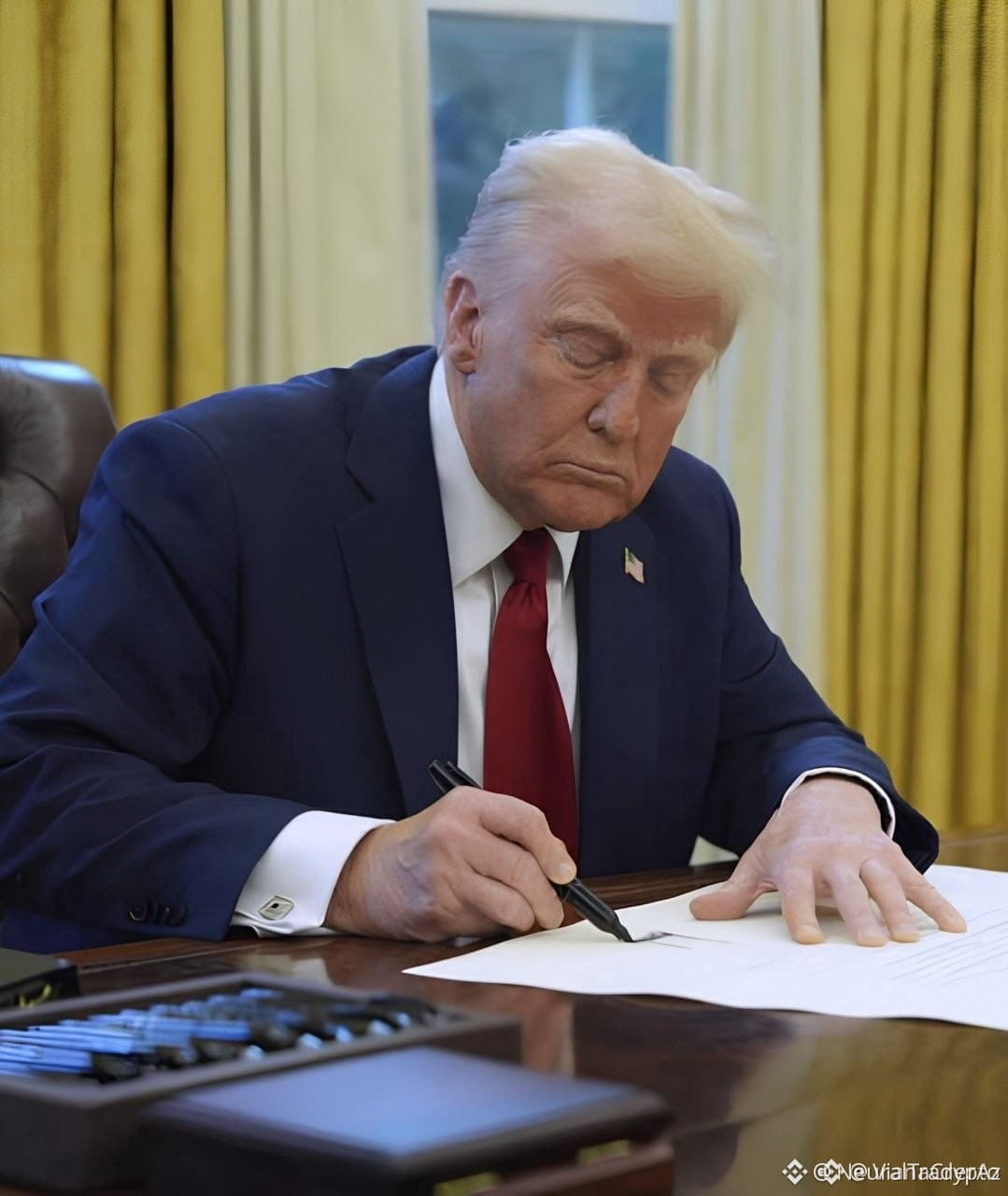
⚡ MACRO VOLATILITY EXPANDS AS $TRUMP COMMENTS SHAKE GLOBAL ENERGY NARRATIVE! 🌍
📌 Geopolitical rhetoric is driving significant headline risk across macro assets, creating acute inefficiency zones across correlated markets. 📊 When energy market uncertainty spikes, institutional liquidity tends to rotate rapidly as capital reprices systemic risk and inflation expectations.
🔍 Discerning market participants are monitoring order flow closely to see whether this macro friction sparks a sustained flight to alternative liquid assets. 💬 How heavily will escalating energy and political friction impact crypto liquidity this quarter? 👇
⚠️ Not financial advice. Always manage your risk. 🛡️
🏷️ #TRUMP #MacroAnalysis #EnergyMarkets #Liquidity #Crypto
🎯 🦈
⚡ MACRO VOLATILITY EXPANDS AS $TRUMP COMMENTS SHAKE GLOBAL ENERGY NARRATIVE! 🌍
📌 Geopolitical rhetoric is driving significant headline risk across macro assets, creating acute inefficiency zones across correlated markets. 📊 When energy market uncertainty spikes, institutional liquidity tends to rotate rapidly as capital reprices systemic risk and inflation expectations.
🔍 Discerning market participants are monitoring order flow closely to see whether this macro friction sparks a sustained flight to alternative liquid assets. 💬 How heavily will escalating energy and political friction impact crypto liquidity this quarter? 👇
⚠️ Not financial advice. Always manage your risk. 🛡️
🏷️ #TRUMP #MacroAnalysis #EnergyMarkets #Liquidity #Crypto
🎯 🦈
📌 Geopolitical rhetoric is driving significant headline risk across macro assets, creating acute inefficiency zones across correlated markets. 📊 When energy market uncertainty spikes, institutional liquidity tends to rotate rapidly as capital reprices systemic risk and inflation expectations.
🔍 Discerning market participants are monitoring order flow closely to see whether this macro friction sparks a sustained flight to alternative liquid assets. 💬 How heavily will escalating energy and political friction impact crypto liquidity this quarter? 👇
⚠️ Not financial advice. Always manage your risk. 🛡️
🏷️ #TRUMP #MacroAnalysis #EnergyMarkets #Liquidity #Crypto
🎯 🦈
1
9
🏛️ CITADEL CHIEF WARNS OF AI BUBBLE DYNAMICS IMPACTING MACRO CAPITAL FLOWS 🔍
Institutional heavyweights are flashing caution over capital misallocation across transformative tech cycles. 🌊 While early euphoria often creates structural inefficiencies and aggressive premiums, historical context reveals that peak cycle compression typically flushes late participants before establishing long-term secular market leaders.
💡 Observing how smart money navigates these valuation excesses provides critical insight into global liquidity rotation. 💬 Do you believe the current AI valuation expansion is due for a macro mean-reversion, or are we still in the early expansion phase? 👇
⚠️ Not financial advice. Always manage your risk. 🛡️
🏷️ #AI #MarketStructure #Liquidity #MacroAnalysis
🎯 🦈
🏛️ CITADEL CHIEF WARNS OF AI BUBBLE DYNAMICS IMPACTING MACRO CAPITAL FLOWS 🔍
Institutional heavyweights are flashing caution over capital misallocation across transformative tech cycles. 🌊 While early euphoria often creates structural inefficiencies and aggressive premiums, historical context reveals that peak cycle compression typically flushes late participants before establishing long-term secular market leaders.
💡 Observing how smart money navigates these valuation excesses provides critical insight into global liquidity rotation. 💬 Do you believe the current AI valuation expansion is due for a macro mean-reversion, or are we still in the early expansion phase? 👇
⚠️ Not financial advice. Always manage your risk. 🛡️
🏷️ #AI #MarketStructure #Liquidity #MacroAnalysis
🎯 🦈
Institutional heavyweights are flashing caution over capital misallocation across transformative tech cycles. 🌊 While early euphoria often creates structural inefficiencies and aggressive premiums, historical context reveals that peak cycle compression typically flushes late participants before establishing long-term secular market leaders.
💡 Observing how smart money navigates these valuation excesses provides critical insight into global liquidity rotation. 💬 Do you believe the current AI valuation expansion is due for a macro mean-reversion, or are we still in the early expansion phase? 👇
⚠️ Not financial advice. Always manage your risk. 🛡️
🏷️ #AI #MarketStructure #Liquidity #MacroAnalysis
🎯 🦈
4

·
--
Interest rates are the invisible gravity that shapes every crypto cycle — yet most traders ignore them.
When real rates (nominal minus inflation) are deeply negative, holding cash bleeds purchasing power. Capital migrates toward scarce, productive, or speculative assets — and crypto thrives in exactly this environment. The 2020-2021 bull market was not a coincidence: it ran alongside the most extreme monetary expansion in modern history.
When the Fed tightened aggressively in 2022, risk assets repriced across the board. Crypto was hit hardest because it had the highest implied growth duration — meaning it had borrowed the most from future expectations. Duration risk cuts both ways.
Now we are in a transition regime. The rate cycle is rolling over, and the key question is whether capital rotates back into high-duration assets before or after rate normalization fully completes.
Historically, the most powerful crypto moves begin during early rate-cut cycles — not at the bottom of rates. The anticipation does more work than the actual cuts.
$BTC benefits first as the hardest asset in the class. $ETH follows as the yield-bearing settlement layer. $SOL captures expanding risk appetite further out the curve.
Watch the 2-year Treasury yield more than any chart pattern. When real rates compress, the gravity weakens — and crypto floats.
#Bitcoin #Crypto #MacroAnalysis #CryptoMarkets #InterestRates
Interest rates are the invisible gravity that shapes every crypto cycle — yet most traders ignore them.
When real rates (nominal minus inflation) are deeply negative, holding cash bleeds purchasing power. Capital migrates toward scarce, productive, or speculative assets — and crypto thrives in exactly this environment. The 2020-2021 bull market was not a coincidence: it ran alongside the most extreme monetary expansion in modern history.
When the Fed tightened aggressively in 2022, risk assets repriced across the board. Crypto was hit hardest because it had the highest implied growth duration — meaning it had borrowed the most from future expectations. Duration risk cuts both ways.
Now we are in a transition regime. The rate cycle is rolling over, and the key question is whether capital rotates back into high-duration assets before or after rate normalization fully completes.
Historically, the most powerful crypto moves begin during early rate-cut cycles — not at the bottom of rates. The anticipation does more work than the actual cuts.
$BTC benefits first as the hardest asset in the class. $ETH follows as the yield-bearing settlement layer. $SOL captures expanding risk appetite further out the curve.
Watch the 2-year Treasury yield more than any chart pattern. When real rates compress, the gravity weakens — and crypto floats.
#Bitcoin #Crypto #MacroAnalysis #CryptoMarkets #InterestRates
When real rates (nominal minus inflation) are deeply negative, holding cash bleeds purchasing power. Capital migrates toward scarce, productive, or speculative assets — and crypto thrives in exactly this environment. The 2020-2021 bull market was not a coincidence: it ran alongside the most extreme monetary expansion in modern history.
When the Fed tightened aggressively in 2022, risk assets repriced across the board. Crypto was hit hardest because it had the highest implied growth duration — meaning it had borrowed the most from future expectations. Duration risk cuts both ways.
Now we are in a transition regime. The rate cycle is rolling over, and the key question is whether capital rotates back into high-duration assets before or after rate normalization fully completes.
Historically, the most powerful crypto moves begin during early rate-cut cycles — not at the bottom of rates. The anticipation does more work than the actual cuts.
$BTC benefits first as the hardest asset in the class. $ETH follows as the yield-bearing settlement layer. $SOL captures expanding risk appetite further out the curve.
Watch the 2-year Treasury yield more than any chart pattern. When real rates compress, the gravity weakens — and crypto floats.
#Bitcoin #Crypto #MacroAnalysis #CryptoMarkets #InterestRates
54

·
--
🚨 GLOBAL ENERGY CRUNCH EXTENDS TO 2028 AS $BTC FACES MACRO REPRICING! 🌊
Smart money order flow is actively repricing the macro horizon as crude forward curves price in structural supply deficits through 2028. 📊 With long-dated Brent touching record highs of $86 and diesel breaching $1,000, persistent energy inflation directly threatens global central bank easing cycles. 🌊
💡 When institutional capital faces multi-year supply frictions and lingering geopolitical premiums, market liquidity recalibrates toward hard, inelastic assets. 🔍 Will persistent energy inflation fuel an institutional liquidity flight into $BTC , or force a macro liquidity drain? 💬
⚠️ Not financial advice. Always manage your risk. 🛡️
🏷️ #BTC #MacroAnalysis #Inflation #Crypto
🎯 🦈
🚨 GLOBAL ENERGY CRUNCH EXTENDS TO 2028 AS $BTC FACES MACRO REPRICING! 🌊
Smart money order flow is actively repricing the macro horizon as crude forward curves price in structural supply deficits through 2028. 📊 With long-dated Brent touching record highs of $86 and diesel breaching $1,000, persistent energy inflation directly threatens global central bank easing cycles. 🌊
💡 When institutional capital faces multi-year supply frictions and lingering geopolitical premiums, market liquidity recalibrates toward hard, inelastic assets. 🔍 Will persistent energy inflation fuel an institutional liquidity flight into $BTC , or force a macro liquidity drain? 💬
⚠️ Not financial advice. Always manage your risk. 🛡️
🏷️ #BTC #MacroAnalysis #Inflation #Crypto
🎯 🦈
Smart money order flow is actively repricing the macro horizon as crude forward curves price in structural supply deficits through 2028. 📊 With long-dated Brent touching record highs of $86 and diesel breaching $1,000, persistent energy inflation directly threatens global central bank easing cycles. 🌊
💡 When institutional capital faces multi-year supply frictions and lingering geopolitical premiums, market liquidity recalibrates toward hard, inelastic assets. 🔍 Will persistent energy inflation fuel an institutional liquidity flight into $BTC , or force a macro liquidity drain? 💬
⚠️ Not financial advice. Always manage your risk. 🛡️
🏷️ #BTC #MacroAnalysis #Inflation #Crypto
🎯 🦈
15
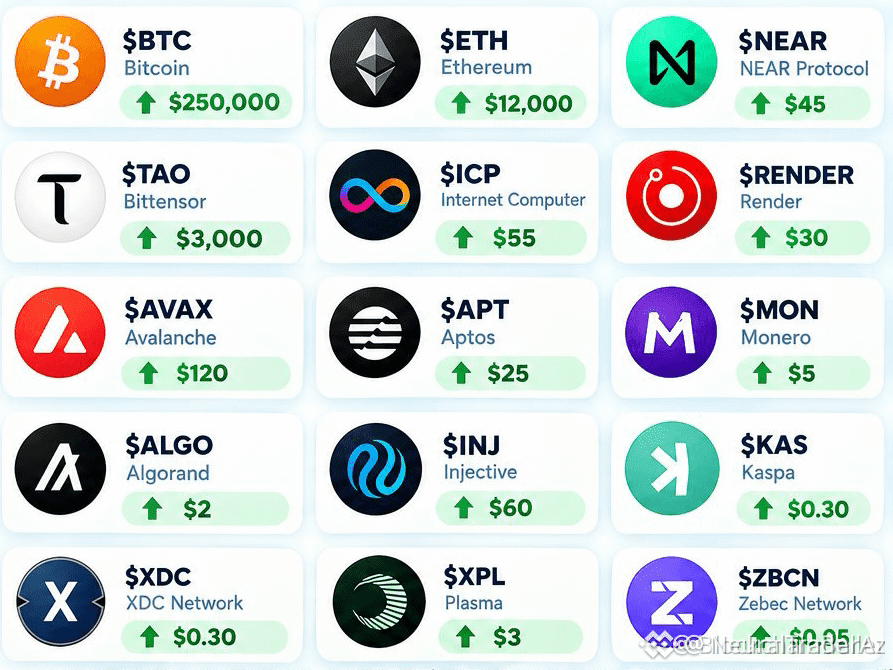
🚨 MACRO CYCLE EXPANSION TARGETS FOR $ETH AND TOP ASSETS 📈
Target: 12,000 🎯
Macro structural projections reveal ambitious cycle expansion targets, pricing $ETH toward the 12,000 liquidity pool alongside substantial upper-boundary extensions for $SOL and $BNB . 📊 From an institutional order flow perspective, reaching these multi-year targets requires sustained inefficiency fills and successive structural breaks on high timeframes.
While higher-timeframe momentum remains compelling, institutional capital accumulates through methodical range reclaims rather than parabolic chasing. 💡 Long-term distribution only unfolds once buy-side liquidity is swept across premium valuation blocks.
💬 Which of these macro targets presents the most realistic structural roadmap for your portfolio?
⚠️ Not financial advice. Always manage your risk. 🛡️
🏷️ #ETH #MacroAnalysis #Altcoins #MarketStructure
🎯 🦈
🚨 MACRO CYCLE EXPANSION TARGETS FOR $ETH AND TOP ASSETS 📈
Target: 12,000 🎯
Macro structural projections reveal ambitious cycle expansion targets, pricing $ETH toward the 12,000 liquidity pool alongside substantial upper-boundary extensions for $SOL and $BNB . 📊 From an institutional order flow perspective, reaching these multi-year targets requires sustained inefficiency fills and successive structural breaks on high timeframes.
While higher-timeframe momentum remains compelling, institutional capital accumulates through methodical range reclaims rather than parabolic chasing. 💡 Long-term distribution only unfolds once buy-side liquidity is swept across premium valuation blocks.
💬 Which of these macro targets presents the most realistic structural roadmap for your portfolio?
⚠️ Not financial advice. Always manage your risk. 🛡️
🏷️ #ETH #MacroAnalysis #Altcoins #MarketStructure
🎯 🦈
Target: 12,000 🎯
Macro structural projections reveal ambitious cycle expansion targets, pricing $ETH toward the 12,000 liquidity pool alongside substantial upper-boundary extensions for $SOL and $BNB . 📊 From an institutional order flow perspective, reaching these multi-year targets requires sustained inefficiency fills and successive structural breaks on high timeframes.
While higher-timeframe momentum remains compelling, institutional capital accumulates through methodical range reclaims rather than parabolic chasing. 💡 Long-term distribution only unfolds once buy-side liquidity is swept across premium valuation blocks.
💬 Which of these macro targets presents the most realistic structural roadmap for your portfolio?
⚠️ Not financial advice. Always manage your risk. 🛡️
🏷️ #ETH #MacroAnalysis #Altcoins #MarketStructure
🎯 🦈
9
·
--
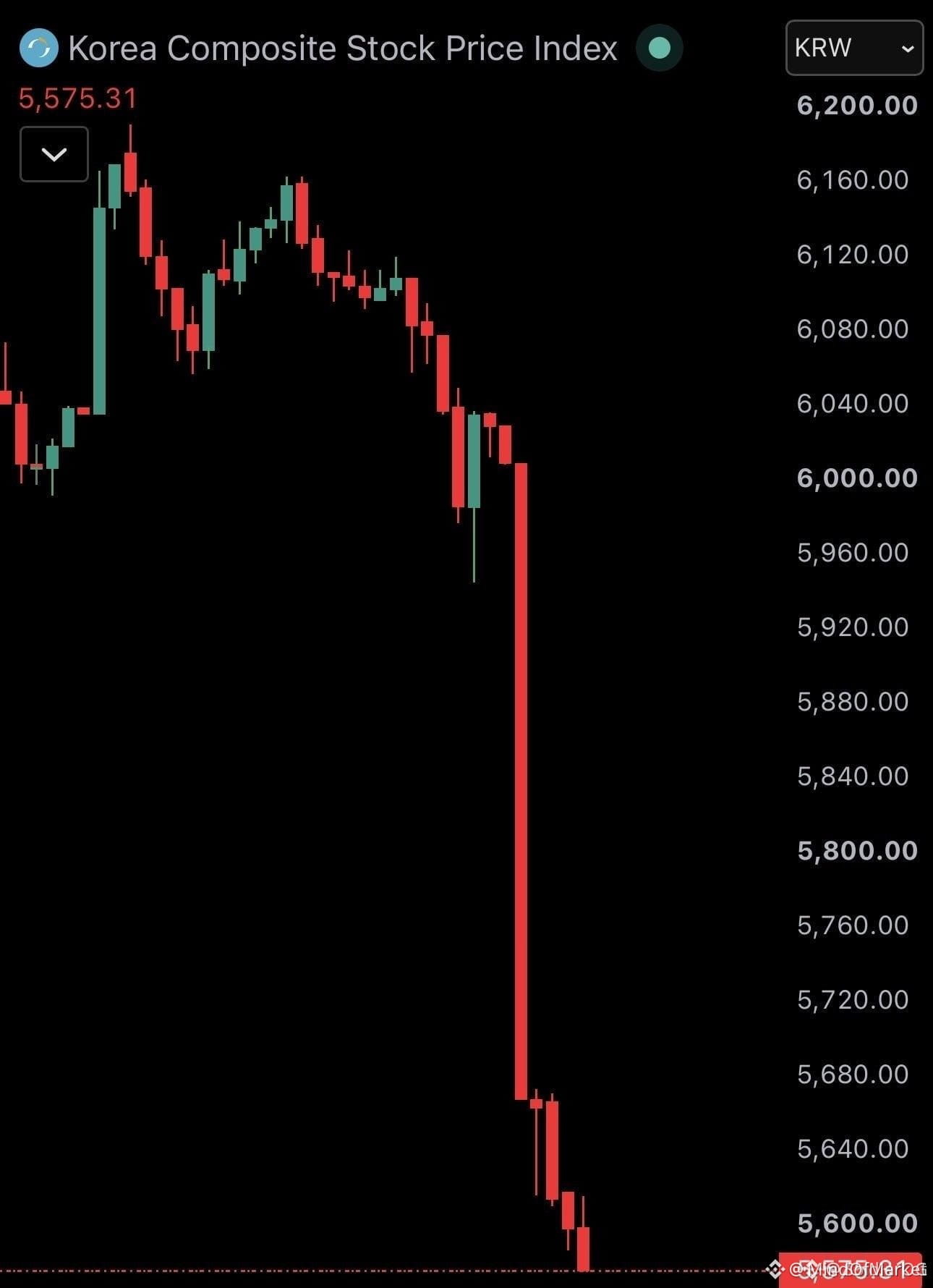
🚨 KOSPI 7% PLUNGE SHAKES MACRO STRUCTURE: WILL LIQUIDITY ROTATE INTO $WAL ? 📉
Equities across Asia are experiencing severe order flow imbalance as the benchmark index slides 7%, raising immediate questions about systemic margin calls versus institutional capital flight. 🌊 When traditional equity indices face cascading liquidation sweeps, institutional participants often scan alternative liquidity pools to hedge broader market contagion. 🔍
Whether this structural macro shock triggers localized de-risking across assets like $WAL or sparks smart money accumulation at discounted valuations depends entirely on order book absorption over the next daily closes. 📊
💬 Do you expect institutional desks to trigger widespread risk-off liquidations, or will alternative assets absorb this capital rotation?
⚠️ Not financial advice. Always manage your risk. 🛡️
🏷️ #WAL #MacroAnalysis #Liquidity #MarketStructure
🎯 🦈
🚨 KOSPI 7% PLUNGE SHAKES MACRO STRUCTURE: WILL LIQUIDITY ROTATE INTO $WAL ? 📉
Equities across Asia are experiencing severe order flow imbalance as the benchmark index slides 7%, raising immediate questions about systemic margin calls versus institutional capital flight. 🌊 When traditional equity indices face cascading liquidation sweeps, institutional participants often scan alternative liquidity pools to hedge broader market contagion. 🔍
Whether this structural macro shock triggers localized de-risking across assets like $WAL or sparks smart money accumulation at discounted valuations depends entirely on order book absorption over the next daily closes. 📊
💬 Do you expect institutional desks to trigger widespread risk-off liquidations, or will alternative assets absorb this capital rotation?
⚠️ Not financial advice. Always manage your risk. 🛡️
🏷️ #WAL #MacroAnalysis #Liquidity #MarketStructure
🎯 🦈
Equities across Asia are experiencing severe order flow imbalance as the benchmark index slides 7%, raising immediate questions about systemic margin calls versus institutional capital flight. 🌊 When traditional equity indices face cascading liquidation sweeps, institutional participants often scan alternative liquidity pools to hedge broader market contagion. 🔍
Whether this structural macro shock triggers localized de-risking across assets like $WAL or sparks smart money accumulation at discounted valuations depends entirely on order book absorption over the next daily closes. 📊
💬 Do you expect institutional desks to trigger widespread risk-off liquidations, or will alternative assets absorb this capital rotation?
⚠️ Not financial advice. Always manage your risk. 🛡️
🏷️ #WAL #MacroAnalysis #Liquidity #MarketStructure
🎯 🦈
13
·
--
Bitcoin is increasingly behaving like a global liquidity barometer — not just a speculative asset.
Here is what the data keeps showing: $BTC tends to bottom and base weeks before risk assets in traditional markets, and it does so in lock-step with inflections in global M2 money supply. When central banks expand their balance sheets — Europe, Japan, China, the US — the flood of new liquidity finds its way into the most globally accessible, borderless asset first.
This matters because most analysts still frame Bitcoin through a purely crypto-native lens: halvings, on-chain metrics, exchange flows. Those signals matter. But the bigger macro rhythm is being set by the global liquidity cycle.
The practical implication: watching the rate of change in global M2 — particularly when the Fed, PBOC, and ECB are moving in the same direction — gives you an early read on the macro environment Bitcoin is about to trade into. It is not a perfect timing tool, but it is more honest than most cycle models.
$ETH and $SOL tend to follow once the BTC base is confirmed. Altcoins amplify the move. That sequencing is liquidity-driven, not narrative-driven.
The lesson: zoom out before you zoom in. Price action in crypto is often the last place the signal shows up.
#Bitcoin #Crypto #MacroAnalysis #Altcoins #CryptoMarkets
Bitcoin is increasingly behaving like a global liquidity barometer — not just a speculative asset.
Here is what the data keeps showing: $BTC tends to bottom and base weeks before risk assets in traditional markets, and it does so in lock-step with inflections in global M2 money supply. When central banks expand their balance sheets — Europe, Japan, China, the US — the flood of new liquidity finds its way into the most globally accessible, borderless asset first.
This matters because most analysts still frame Bitcoin through a purely crypto-native lens: halvings, on-chain metrics, exchange flows. Those signals matter. But the bigger macro rhythm is being set by the global liquidity cycle.
The practical implication: watching the rate of change in global M2 — particularly when the Fed, PBOC, and ECB are moving in the same direction — gives you an early read on the macro environment Bitcoin is about to trade into. It is not a perfect timing tool, but it is more honest than most cycle models.
$ETH and $SOL tend to follow once the BTC base is confirmed. Altcoins amplify the move. That sequencing is liquidity-driven, not narrative-driven.
The lesson: zoom out before you zoom in. Price action in crypto is often the last place the signal shows up.
#Bitcoin #Crypto #MacroAnalysis #Altcoins #CryptoMarkets
Here is what the data keeps showing: $BTC tends to bottom and base weeks before risk assets in traditional markets, and it does so in lock-step with inflections in global M2 money supply. When central banks expand their balance sheets — Europe, Japan, China, the US — the flood of new liquidity finds its way into the most globally accessible, borderless asset first.
This matters because most analysts still frame Bitcoin through a purely crypto-native lens: halvings, on-chain metrics, exchange flows. Those signals matter. But the bigger macro rhythm is being set by the global liquidity cycle.
The practical implication: watching the rate of change in global M2 — particularly when the Fed, PBOC, and ECB are moving in the same direction — gives you an early read on the macro environment Bitcoin is about to trade into. It is not a perfect timing tool, but it is more honest than most cycle models.
$ETH and $SOL tend to follow once the BTC base is confirmed. Altcoins amplify the move. That sequencing is liquidity-driven, not narrative-driven.
The lesson: zoom out before you zoom in. Price action in crypto is often the last place the signal shows up.
#Bitcoin #Crypto #MacroAnalysis #Altcoins #CryptoMarkets
147
·
--
📉 MACRO LIQUIDITY SHIFT AS $BTC ABSORBS INFLATION HEADWINDS AT $82,528 ⚡
Energy-driven macro turbulence has entered the order books as surging crude prices fuel elevated CPI expectations. 📊 Institutional capital is actively de-risking across broad asset classes, nudging $BTC down 1.4% toward the 82,528 level in search of structural discount pricing.
🔍 Smart money recognizes that geopolitical headline shocks often engineer prime liquidity sweeps rather than outright trend reversals. 🌊 If this controlled pullback efficiently clears late leverage before the inflation print, expect decisive institutional absorption at key order blocks. 🤔 Are you anticipating deeper sell-side liquidity sweeps, or do you expect buyers to defend this structural zone? 👇
⚠️ Not financial advice. Always manage your risk. 🛡️
🏷️ #BTC #MacroAnalysis #MarketStructure #Bitcoin
🎯 🦈
📉 MACRO LIQUIDITY SHIFT AS $BTC ABSORBS INFLATION HEADWINDS AT $82,528 ⚡
Energy-driven macro turbulence has entered the order books as surging crude prices fuel elevated CPI expectations. 📊 Institutional capital is actively de-risking across broad asset classes, nudging $BTC down 1.4% toward the 82,528 level in search of structural discount pricing.
🔍 Smart money recognizes that geopolitical headline shocks often engineer prime liquidity sweeps rather than outright trend reversals. 🌊 If this controlled pullback efficiently clears late leverage before the inflation print, expect decisive institutional absorption at key order blocks. 🤔 Are you anticipating deeper sell-side liquidity sweeps, or do you expect buyers to defend this structural zone? 👇
⚠️ Not financial advice. Always manage your risk. 🛡️
🏷️ #BTC #MacroAnalysis #MarketStructure #Bitcoin
🎯 🦈
Energy-driven macro turbulence has entered the order books as surging crude prices fuel elevated CPI expectations. 📊 Institutional capital is actively de-risking across broad asset classes, nudging $BTC down 1.4% toward the 82,528 level in search of structural discount pricing.
🔍 Smart money recognizes that geopolitical headline shocks often engineer prime liquidity sweeps rather than outright trend reversals. 🌊 If this controlled pullback efficiently clears late leverage before the inflation print, expect decisive institutional absorption at key order blocks. 🤔 Are you anticipating deeper sell-side liquidity sweeps, or do you expect buyers to defend this structural zone? 👇
⚠️ Not financial advice. Always manage your risk. 🛡️
🏷️ #BTC #MacroAnalysis #MarketStructure #Bitcoin
🎯 🦈
25

·
--
MACRO SHIFT: ENERGY RELIEF COULD SPARK NEXT INSTITUTIONAL $BTC EXPANSION ⚡ 📊
Reports of potential Russian fuel supply shifts could drive headline disinflation across global energy benchmark $CL . If macro energy pressure cools, expect risk assets to absorb liquidity rapidly as institutional discount rates adjust. 🌊
Meanwhile, Glassnode data reveals 4.33M $BTC sitting in reused address pools, signaling massive latent supply distribution patterns that smart money is actively monitoring. 📊 A macro tailwind paired with on-chain structural consolidation creates a prime backdrop for liquidity reclaims. 💡
💬 How are you positioning your risk ahead of this macro energy resolution? 👇
⚠️ Not financial advice. Always manage your risk. 🛡️
🏷️ #BTC #MacroAnalysis #MarketStructure #Crypto
🎯 🦈
MACRO SHIFT: ENERGY RELIEF COULD SPARK NEXT INSTITUTIONAL $BTC EXPANSION ⚡ 📊
Reports of potential Russian fuel supply shifts could drive headline disinflation across global energy benchmark $CL . If macro energy pressure cools, expect risk assets to absorb liquidity rapidly as institutional discount rates adjust. 🌊
Meanwhile, Glassnode data reveals 4.33M $BTC sitting in reused address pools, signaling massive latent supply distribution patterns that smart money is actively monitoring. 📊 A macro tailwind paired with on-chain structural consolidation creates a prime backdrop for liquidity reclaims. 💡
💬 How are you positioning your risk ahead of this macro energy resolution? 👇
⚠️ Not financial advice. Always manage your risk. 🛡️
🏷️ #BTC #MacroAnalysis #MarketStructure #Crypto
🎯 🦈
Reports of potential Russian fuel supply shifts could drive headline disinflation across global energy benchmark $CL . If macro energy pressure cools, expect risk assets to absorb liquidity rapidly as institutional discount rates adjust. 🌊
Meanwhile, Glassnode data reveals 4.33M $BTC sitting in reused address pools, signaling massive latent supply distribution patterns that smart money is actively monitoring. 📊 A macro tailwind paired with on-chain structural consolidation creates a prime backdrop for liquidity reclaims. 💡
💬 How are you positioning your risk ahead of this macro energy resolution? 👇
⚠️ Not financial advice. Always manage your risk. 🛡️
🏷️ #BTC #MacroAnalysis #MarketStructure #Crypto
🎯 🦈

16
·
--
🚨 $BTC MACRO CYCLE TIMELINE CONFIRMS INSTITUTIONAL ACCUMULATION TRANSITION TO BULLISH EXPANSION PHASES 📈
Historical cycle metrics reveal structural precision in market timing: 1064 days of expansion followed by 364 days of distribution. 📊 Smart money positioning aligns with this structural shift as macro sellers exhaust, setting up long-term targets between $190,000 for $BTC and $8,800 for $ETH .
With veteran chartists pointing toward extended target bands up to $600,000, institutional liquidity is transitioning from bottom accumulation into macro expansion. 🔍 Order flow signals indicate the bear market bottom is fully neutralized. 🤔 Do you believe historical cycle symmetry will hold for this macro expansion, or will institutional order flow front-run the timeline? 👇
⚠️ Not financial advice. Always manage your risk. 🛡️
🏷️ #BTC #Crypto #MarketStructure #MacroAnalysis
📊 🦈
🚨 $BTC MACRO CYCLE TIMELINE CONFIRMS INSTITUTIONAL ACCUMULATION TRANSITION TO BULLISH EXPANSION PHASES 📈
Historical cycle metrics reveal structural precision in market timing: 1064 days of expansion followed by 364 days of distribution. 📊 Smart money positioning aligns with this structural shift as macro sellers exhaust, setting up long-term targets between $190,000 for $BTC and $8,800 for $ETH .
With veteran chartists pointing toward extended target bands up to $600,000, institutional liquidity is transitioning from bottom accumulation into macro expansion. 🔍 Order flow signals indicate the bear market bottom is fully neutralized. 🤔 Do you believe historical cycle symmetry will hold for this macro expansion, or will institutional order flow front-run the timeline? 👇
⚠️ Not financial advice. Always manage your risk. 🛡️
🏷️ #BTC #Crypto #MarketStructure #MacroAnalysis
📊 🦈
Historical cycle metrics reveal structural precision in market timing: 1064 days of expansion followed by 364 days of distribution. 📊 Smart money positioning aligns with this structural shift as macro sellers exhaust, setting up long-term targets between $190,000 for $BTC and $8,800 for $ETH .
With veteran chartists pointing toward extended target bands up to $600,000, institutional liquidity is transitioning from bottom accumulation into macro expansion. 🔍 Order flow signals indicate the bear market bottom is fully neutralized. 🤔 Do you believe historical cycle symmetry will hold for this macro expansion, or will institutional order flow front-run the timeline? 👇
⚠️ Not financial advice. Always manage your risk. 🛡️
🏷️ #BTC #Crypto #MarketStructure #MacroAnalysis
📊 🦈
37
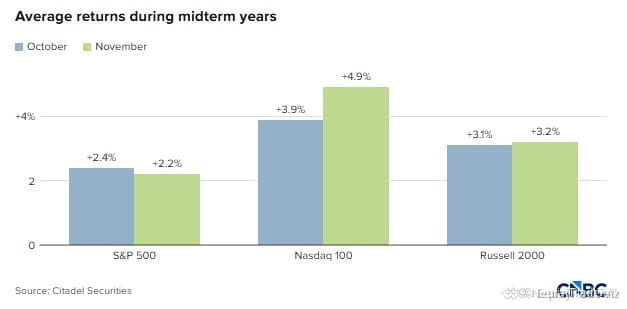
INSTITUTIONAL LIQUIDITY BUILDS AROUND $BTC AS HISTORICAL MIDTERM SEASONAL TAILWINDS APPROACH ⚡ 📊
Historical data reveals a recurring structural shift where macro assets rally aggressively through October and November during midterm election cycles. Capital deployed by institutional desks typically sidelined during political uncertainty begins re-engaging once legislative clarity emerges. 📊
This underlying resilience is not accidental. While retail focuses on transient headline noise, smart money tracks macro liquidity expansion and seasonal order flow dynamics to position ahead of structural expansion. 💡
Understanding this macro context remains far more critical than reacting to short-term volatility spikes. 💬 How are you structuring your risk allocation ahead of this seasonal volatility pivot? 👇
⚠️ Not financial advice. Always manage your risk. 🛡️
🏷️ #BTC #MacroAnalysis #MarketStructure #Crypto
🎯 🦈
INSTITUTIONAL LIQUIDITY BUILDS AROUND $BTC AS HISTORICAL MIDTERM SEASONAL TAILWINDS APPROACH ⚡ 📊
Historical data reveals a recurring structural shift where macro assets rally aggressively through October and November during midterm election cycles. Capital deployed by institutional desks typically sidelined during political uncertainty begins re-engaging once legislative clarity emerges. 📊
This underlying resilience is not accidental. While retail focuses on transient headline noise, smart money tracks macro liquidity expansion and seasonal order flow dynamics to position ahead of structural expansion. 💡
Understanding this macro context remains far more critical than reacting to short-term volatility spikes. 💬 How are you structuring your risk allocation ahead of this seasonal volatility pivot? 👇
⚠️ Not financial advice. Always manage your risk. 🛡️
🏷️ #BTC #MacroAnalysis #MarketStructure #Crypto
🎯 🦈
Historical data reveals a recurring structural shift where macro assets rally aggressively through October and November during midterm election cycles. Capital deployed by institutional desks typically sidelined during political uncertainty begins re-engaging once legislative clarity emerges. 📊
This underlying resilience is not accidental. While retail focuses on transient headline noise, smart money tracks macro liquidity expansion and seasonal order flow dynamics to position ahead of structural expansion. 💡
Understanding this macro context remains far more critical than reacting to short-term volatility spikes. 💬 How are you structuring your risk allocation ahead of this seasonal volatility pivot? 👇
⚠️ Not financial advice. Always manage your risk. 🛡️
🏷️ #BTC #MacroAnalysis #MarketStructure #Crypto
🎯 🦈
36

·
--
Radar Macro - PCE will decide the day
BTC: US$ 83.7k stable. Market in a delicate balance.#MacroAnalysis
What matters today:
Weak PCE -> yields fall -> positive for BTC/tech
Strong PCE -> yields and the dollar rise -> pressure on risk
Context: $BTC
• Oil starting to normalize supply
• Treasury 10Y still at 5.22% (risk)
• Today: PCE + Micron results
My take: The market today depends on inflation. PCE will decide whether rates get breathing room or whether they resume putting pressure on risk assets.
Source: CME / TradingView
Radar Macro - PCE will decide the day
BTC: US$ 83.7k stable. Market in a delicate balance.#MacroAnalysis
What matters today:
Weak PCE -> yields fall -> positive for BTC/tech
Strong PCE -> yields and the dollar rise -> pressure on risk
Context: $BTC
• Oil starting to normalize supply
• Treasury 10Y still at 5.22% (risk)
• Today: PCE + Micron results
My take: The market today depends on inflation. PCE will decide whether rates get breathing room or whether they resume putting pressure on risk assets.
Source: CME / TradingView
BTC: US$ 83.7k stable. Market in a delicate balance.#MacroAnalysis
What matters today:
Weak PCE -> yields fall -> positive for BTC/tech
Strong PCE -> yields and the dollar rise -> pressure on risk
Context: $BTC
• Oil starting to normalize supply
• Treasury 10Y still at 5.22% (risk)
• Today: PCE + Micron results
My take: The market today depends on inflation. PCE will decide whether rates get breathing room or whether they resume putting pressure on risk assets.
Source: CME / TradingView
104

·
--
🚨 BOND SHORT SQUEEZE WARNING SIGNALS MACRO VOLATILITY RIPPLES ACROSS $MOVR AND ALTS! ⚡
Macro fixed-income dislocations are setting up a volatile liquidity backdrop as bond market short exposure faces potential forced unwinding. 🦈 Institutional order flow indicates that sudden yield shocks historically cascade directly into high-beta asset classes, reshaping risk-on sentiment across broader markets.
💡 When sovereign debt yields undergo sudden squeezes, smart money swiftly reallocates capital to absorb market inefficiencies and balance sheet exposure. 📊 Whether this volatility triggers a relief rally or destabilizes liquidity pools across alts like $PHA and $ESPORTS remains the central structural pivot. 💬 How are you positioning your liquidity ahead of this potential macro rate repricing? 👇
⚠️ Not financial advice. Always manage your risk. 🛡️
🏷️ #MOVR #MacroAnalysis #Liquidity #MarketStructure #Crypto
🎯 🦈
🚨 BOND SHORT SQUEEZE WARNING SIGNALS MACRO VOLATILITY RIPPLES ACROSS $MOVR AND ALTS! ⚡
Macro fixed-income dislocations are setting up a volatile liquidity backdrop as bond market short exposure faces potential forced unwinding. 🦈 Institutional order flow indicates that sudden yield shocks historically cascade directly into high-beta asset classes, reshaping risk-on sentiment across broader markets.
💡 When sovereign debt yields undergo sudden squeezes, smart money swiftly reallocates capital to absorb market inefficiencies and balance sheet exposure. 📊 Whether this volatility triggers a relief rally or destabilizes liquidity pools across alts like $PHA and $ESPORTS remains the central structural pivot. 💬 How are you positioning your liquidity ahead of this potential macro rate repricing? 👇
⚠️ Not financial advice. Always manage your risk. 🛡️
🏷️ #MOVR #MacroAnalysis #Liquidity #MarketStructure #Crypto
🎯 🦈
Macro fixed-income dislocations are setting up a volatile liquidity backdrop as bond market short exposure faces potential forced unwinding. 🦈 Institutional order flow indicates that sudden yield shocks historically cascade directly into high-beta asset classes, reshaping risk-on sentiment across broader markets.
💡 When sovereign debt yields undergo sudden squeezes, smart money swiftly reallocates capital to absorb market inefficiencies and balance sheet exposure. 📊 Whether this volatility triggers a relief rally or destabilizes liquidity pools across alts like $PHA and $ESPORTS remains the central structural pivot. 💬 How are you positioning your liquidity ahead of this potential macro rate repricing? 👇
⚠️ Not financial advice. Always manage your risk. 🛡️
🏷️ #MOVR #MacroAnalysis #Liquidity #MarketStructure #Crypto
🎯 🦈

303

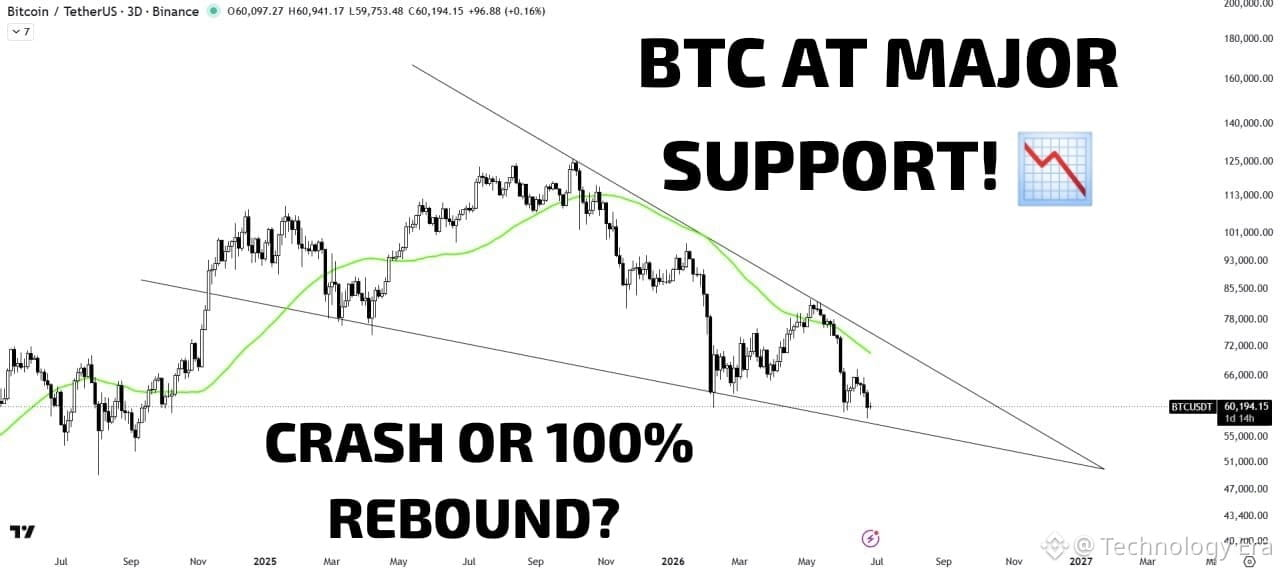
🚨 $BTC Massive Macro Wedge: Make-or-Break Moment! 📉 Or 🚀?
Bitcoin is squeezing into a giant multi-month falling wedge pattern on the macro 3-day chart. Right now, it is trading around $60,194, sitting directly on the make-or-break lower support line.
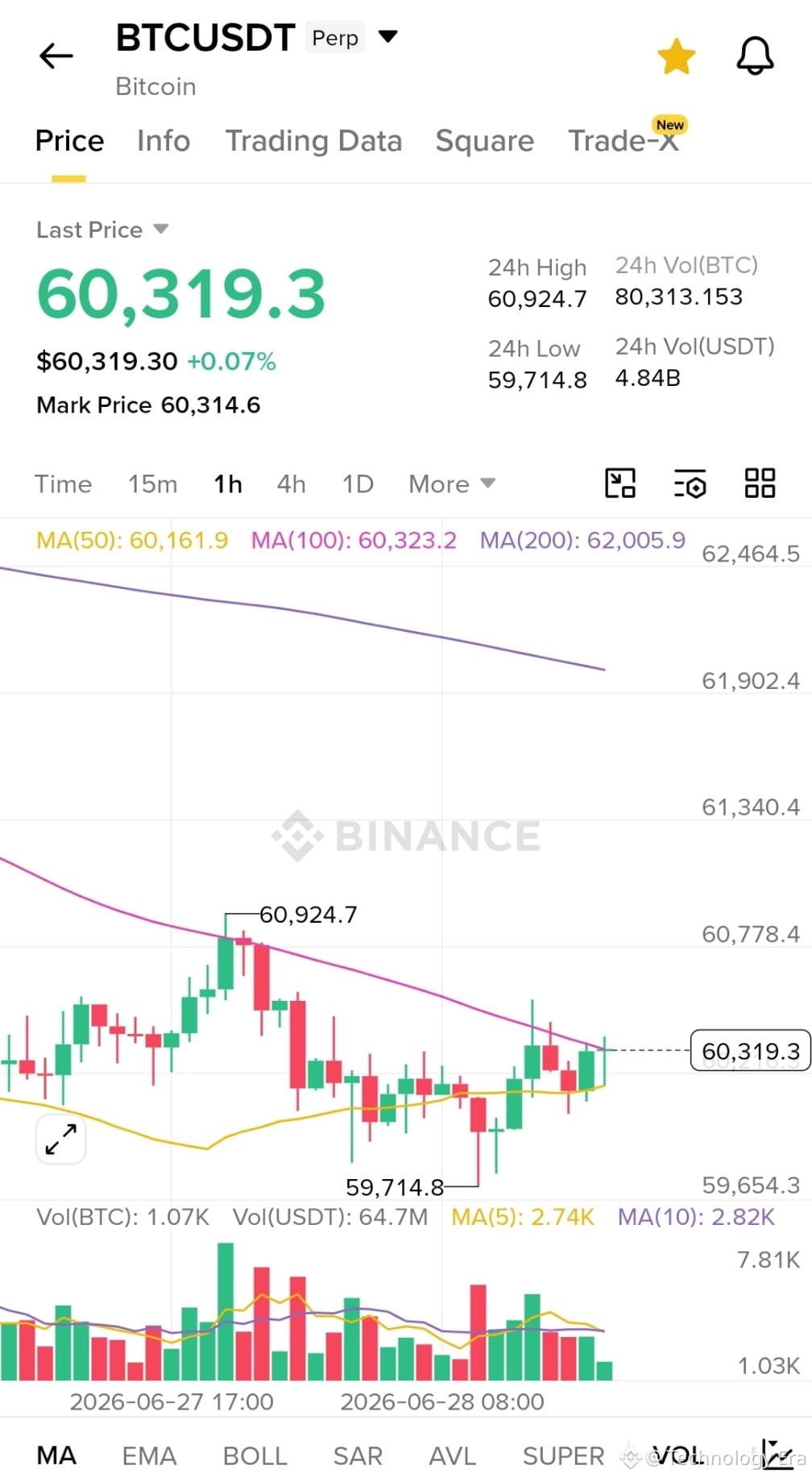
On the shorter 1-hour timeframe, price is tightly fighting the immediate moving averages, hovering at $60,319. This extreme compression means a powerful structural move is right around the corner!
📊 The Macro Wedge Formula:
Macro Support Squeeze + Short-Term Consolidation = High Velocity Breakout
🎯 Key Macro Levels to Watch
1.The Ultimate Support Floor: The bottom trendline of the macro wedge lines up right around $58,000 - $60,000. If this floor gives way, a deeper correction is on the table.
2.The Resistance Hurdle: To ignite a massive trend reversal, Bitcoin needs a clean break above the overhead descending trendline, currently sitting well above $66,000.
3.My Strategy: The market is testing the patience of both buyers and sellers here. Because we are sitting exactly at major macro support, shorting here carries a high risk of getting trapped. I am tightly monitoring the daily and 3-day candle closes for a confirmed bounce structure before planning any aggressive swing setups.
Preserve your capital and stay disciplined in this high-squeeze zone!
💬 What is your target? Will the macro wedge support trigger a massive rally back to the top trendline, or do we break below $59K next? Vote below! 👇
Disclaimer: This is for educational purposes only. Always do your own research (DYOR) before entering any trade.
📸 Image Source: Binance & TradingView
#TechnicalAnalysisn #MacroAnalysis
#KioxiaADRFallsOver14% #ModernaRisesOver12% #FINMAAcceleratesAIForCryptoOversight
$BTC
{future}(BTCUSDT)
🚨 $BTC Massive Macro Wedge: Make-or-Break Moment! 📉 Or 🚀?
Bitcoin is squeezing into a giant multi-month falling wedge pattern on the macro 3-day chart. Right now, it is trading around $60,194, sitting directly on the make-or-break lower support line.
On the shorter 1-hour timeframe, price is tightly fighting the immediate moving averages, hovering at $60,319. This extreme compression means a powerful structural move is right around the corner!
📊 The Macro Wedge Formula:
Macro Support Squeeze + Short-Term Consolidation = High Velocity Breakout
🎯 Key Macro Levels to Watch
1.The Ultimate Support Floor: The bottom trendline of the macro wedge lines up right around $58,000 - $60,000. If this floor gives way, a deeper correction is on the table.
2.The Resistance Hurdle: To ignite a massive trend reversal, Bitcoin needs a clean break above the overhead descending trendline, currently sitting well above $66,000.
3.My Strategy: The market is testing the patience of both buyers and sellers here. Because we are sitting exactly at major macro support, shorting here carries a high risk of getting trapped. I am tightly monitoring the daily and 3-day candle closes for a confirmed bounce structure before planning any aggressive swing setups.
Preserve your capital and stay disciplined in this high-squeeze zone!
💬 What is your target? Will the macro wedge support trigger a massive rally back to the top trendline, or do we break below $59K next? Vote below! 👇
Disclaimer: This is for educational purposes only. Always do your own research (DYOR) before entering any trade.
📸 Image Source: Binance & TradingView
#TechnicalAnalysisn #MacroAnalysis
#KioxiaADRFallsOver14% #ModernaRisesOver12% #FINMAAcceleratesAIForCryptoOversight
$BTC
Bitcoin is squeezing into a giant multi-month falling wedge pattern on the macro 3-day chart. Right now, it is trading around $60,194, sitting directly on the make-or-break lower support line.
On the shorter 1-hour timeframe, price is tightly fighting the immediate moving averages, hovering at $60,319. This extreme compression means a powerful structural move is right around the corner!
📊 The Macro Wedge Formula:
Macro Support Squeeze + Short-Term Consolidation = High Velocity Breakout
🎯 Key Macro Levels to Watch
1.The Ultimate Support Floor: The bottom trendline of the macro wedge lines up right around $58,000 - $60,000. If this floor gives way, a deeper correction is on the table.
2.The Resistance Hurdle: To ignite a massive trend reversal, Bitcoin needs a clean break above the overhead descending trendline, currently sitting well above $66,000.
3.My Strategy: The market is testing the patience of both buyers and sellers here. Because we are sitting exactly at major macro support, shorting here carries a high risk of getting trapped. I am tightly monitoring the daily and 3-day candle closes for a confirmed bounce structure before planning any aggressive swing setups.
Preserve your capital and stay disciplined in this high-squeeze zone!
💬 What is your target? Will the macro wedge support trigger a massive rally back to the top trendline, or do we break below $59K next? Vote below! 👇
Disclaimer: This is for educational purposes only. Always do your own research (DYOR) before entering any trade.
📸 Image Source: Binance & TradingView
#TechnicalAnalysisn #MacroAnalysis
#KioxiaADRFallsOver14% #ModernaRisesOver12% #FINMAAcceleratesAIForCryptoOversight
$BTC
97

·
--
Bearish
🚨 OIL ERASES GAINS — IS LIQUIDITY RETURNING TO RISK ASSETS? 🛢️📉🚀
Crude oil has wiped out its earlier gains, a move that could ease inflation concerns and shift macro sentiment back toward risk assets.
Why it matters 👇
✅ Lower oil prices = less inflation pressure
✅ Reduced odds of aggressive central bank policy
✅ Improved liquidity outlook
✅ Stronger appetite for Bitcoin and altcoins
✅ Risk-on sentiment could return faster than expected
Macro drives markets. If energy prices continue cooling, crypto could be one of the biggest beneficiaries.
👀 Watching $BTC and the broader altcoin market closely.
#Bitcoin #Crypto #BTC #Altcoins #MacroAnalysis $BTC
{future}(BTCUSDT)
$ETH
{future}(ETHUSDT)
🚨 OIL ERASES GAINS — IS LIQUIDITY RETURNING TO RISK ASSETS? 🛢️📉🚀
Crude oil has wiped out its earlier gains, a move that could ease inflation concerns and shift macro sentiment back toward risk assets.
Why it matters 👇
✅ Lower oil prices = less inflation pressure
✅ Reduced odds of aggressive central bank policy
✅ Improved liquidity outlook
✅ Stronger appetite for Bitcoin and altcoins
✅ Risk-on sentiment could return faster than expected
Macro drives markets. If energy prices continue cooling, crypto could be one of the biggest beneficiaries.
👀 Watching $BTC and the broader altcoin market closely.
#Bitcoin #Crypto #BTC #Altcoins #MacroAnalysis $BTC
$ETH
Crude oil has wiped out its earlier gains, a move that could ease inflation concerns and shift macro sentiment back toward risk assets.
Why it matters 👇
✅ Lower oil prices = less inflation pressure
✅ Reduced odds of aggressive central bank policy
✅ Improved liquidity outlook
✅ Stronger appetite for Bitcoin and altcoins
✅ Risk-on sentiment could return faster than expected
Macro drives markets. If energy prices continue cooling, crypto could be one of the biggest beneficiaries.
👀 Watching $BTC and the broader altcoin market closely.
#Bitcoin #Crypto #BTC #Altcoins #MacroAnalysis $BTC
$ETH
1
30

·
--
Verified

Article
⚠️ XAUUSD Advanced Analysis: Geopolitical Noise, Oil Correlation, and The Inflation FlipGold ( $XAU ) is currently showcasing a fascinating anomaly that separates retail thinking from institutional execution. While textbook logic dictates that "peace talks mean lower Gold," the actual market mechanics are currently being driven by a much deeper Intermarket relationship between Crude Oil, Inflation, and the Federal Reserve's next move.
Here is the updated macro breakdown of why the market is defying basic retail expectations:
📌 The Oil & Inflation Connection: Why Gold is Pumping
The recent headlines regarding US-Iran negotiations go beyond surface-level geopolitics; they directly impact the global energy corridor.
Resolving the oil transit and supply chain blockades means global Crude Oil prices are expected to stabilize or drop significantly.
Since energy is the primary driver of global production and shipping costs, solving the oil supply issue effectively cools down global inflation.
📌 The Fed Pivot Expectation (The Institutional View)
This is where the paradigm shifts. The Federal Reserve's recent hawkish stance was entirely predicated on "sticky inflation."
If the resolution of the oil route successfully tames inflation, the Fed completely loses its logical backing for maintaining ultra-high interest rates or pursuing further rate hikes.
Institutions are forward-pricing this exact scenario: lower inflation leading to a swift monetary easing cycle (Rate Cuts). As a result, the US Dollar loses its long-term yield advantage, backing up and acting as the main fuel driving Gold prices higher.
📌 Technical Re-evaluation (4H Chart)
Beyond the Surface Mitigation: While the price initially found temporary resistance at the 4H Balanced Price Range (BPR), this sophisticated intermarket dynamic explains why the bears couldn't sustain control mid-range.
Inducement & Stop Hunt: Retail traders who blindly shorted the "peace news" are currently being converted into buy-side liquidity.
Next Key Zones: With the market validating this macro-inflation flip, we must now heavily monitor the upper Daily Key Level BPR and the daily Inverted Fair Value Gap (iFG). These higher premium zones are the true institutional targets for deep liquidity sweeps.
💡 Trading Playbook:
Drop the simplistic "peace = short" bias. Understand that institutions are trading the macro-economic domino effect on the US Dollar.
Treat current mid-range pumps as short-term momentum shifts driven by the oil-inflation narrative.
Wait for the price to fully mature into major daily overhead key levels and look for clean Market Structure Shifts (MSS) before executing high-probability setups.
In a market run by algorithms, understanding the correlation between asset classes is what separates profitable traders from the liquidity. Stay objective and manage your risk.
{future}(XAUUSDT)
{future}(CLUSDT)
#TradeFi #MacroAnalysis #IntermarketAnalysis #postontradefi
⚠️ XAUUSD Advanced Analysis: Geopolitical Noise, Oil Correlation, and The Inflation Flip
Gold ( $XAU ) is currently showcasing a fascinating anomaly that separates retail thinking from institutional execution. While textbook logic dictates that "peace talks mean lower Gold," the actual market mechanics are currently being driven by a much deeper Intermarket relationship between Crude Oil, Inflation, and the Federal Reserve's next move.
Here is the updated macro breakdown of why the market is defying basic retail expectations:
📌 The Oil & Inflation Connection: Why Gold is Pumping
The recent headlines regarding US-Iran negotiations go beyond surface-level geopolitics; they directly impact the global energy corridor.
Resolving the oil transit and supply chain blockades means global Crude Oil prices are expected to stabilize or drop significantly.
Since energy is the primary driver of global production and shipping costs, solving the oil supply issue effectively cools down global inflation.
📌 The Fed Pivot Expectation (The Institutional View)
This is where the paradigm shifts. The Federal Reserve's recent hawkish stance was entirely predicated on "sticky inflation."
If the resolution of the oil route successfully tames inflation, the Fed completely loses its logical backing for maintaining ultra-high interest rates or pursuing further rate hikes.
Institutions are forward-pricing this exact scenario: lower inflation leading to a swift monetary easing cycle (Rate Cuts). As a result, the US Dollar loses its long-term yield advantage, backing up and acting as the main fuel driving Gold prices higher.
📌 Technical Re-evaluation (4H Chart)
Beyond the Surface Mitigation: While the price initially found temporary resistance at the 4H Balanced Price Range (BPR), this sophisticated intermarket dynamic explains why the bears couldn't sustain control mid-range.
Inducement & Stop Hunt: Retail traders who blindly shorted the "peace news" are currently being converted into buy-side liquidity.
Next Key Zones: With the market validating this macro-inflation flip, we must now heavily monitor the upper Daily Key Level BPR and the daily Inverted Fair Value Gap (iFG). These higher premium zones are the true institutional targets for deep liquidity sweeps.
💡 Trading Playbook:
Drop the simplistic "peace = short" bias. Understand that institutions are trading the macro-economic domino effect on the US Dollar.
Treat current mid-range pumps as short-term momentum shifts driven by the oil-inflation narrative.
Wait for the price to fully mature into major daily overhead key levels and look for clean Market Structure Shifts (MSS) before executing high-probability setups.
In a market run by algorithms, understanding the correlation between asset classes is what separates profitable traders from the liquidity. Stay objective and manage your risk.
#TradeFi #MacroAnalysis #IntermarketAnalysis #postontradefi
Here is the updated macro breakdown of why the market is defying basic retail expectations:
📌 The Oil & Inflation Connection: Why Gold is Pumping
The recent headlines regarding US-Iran negotiations go beyond surface-level geopolitics; they directly impact the global energy corridor.
Resolving the oil transit and supply chain blockades means global Crude Oil prices are expected to stabilize or drop significantly.
Since energy is the primary driver of global production and shipping costs, solving the oil supply issue effectively cools down global inflation.
📌 The Fed Pivot Expectation (The Institutional View)
This is where the paradigm shifts. The Federal Reserve's recent hawkish stance was entirely predicated on "sticky inflation."
If the resolution of the oil route successfully tames inflation, the Fed completely loses its logical backing for maintaining ultra-high interest rates or pursuing further rate hikes.
Institutions are forward-pricing this exact scenario: lower inflation leading to a swift monetary easing cycle (Rate Cuts). As a result, the US Dollar loses its long-term yield advantage, backing up and acting as the main fuel driving Gold prices higher.
📌 Technical Re-evaluation (4H Chart)
Beyond the Surface Mitigation: While the price initially found temporary resistance at the 4H Balanced Price Range (BPR), this sophisticated intermarket dynamic explains why the bears couldn't sustain control mid-range.
Inducement & Stop Hunt: Retail traders who blindly shorted the "peace news" are currently being converted into buy-side liquidity.
Next Key Zones: With the market validating this macro-inflation flip, we must now heavily monitor the upper Daily Key Level BPR and the daily Inverted Fair Value Gap (iFG). These higher premium zones are the true institutional targets for deep liquidity sweeps.
💡 Trading Playbook:
Drop the simplistic "peace = short" bias. Understand that institutions are trading the macro-economic domino effect on the US Dollar.
Treat current mid-range pumps as short-term momentum shifts driven by the oil-inflation narrative.
Wait for the price to fully mature into major daily overhead key levels and look for clean Market Structure Shifts (MSS) before executing high-probability setups.
In a market run by algorithms, understanding the correlation between asset classes is what separates profitable traders from the liquidity. Stay objective and manage your risk.
#TradeFi #MacroAnalysis #IntermarketAnalysis #postontradefi
1
211
·
--
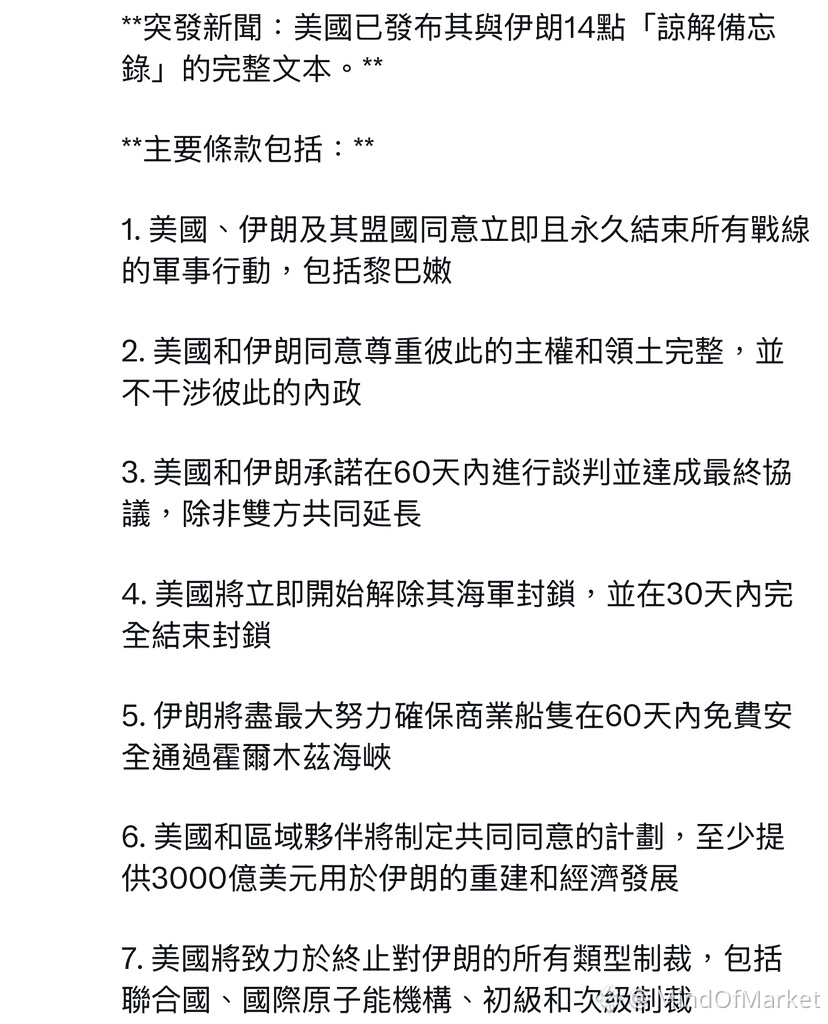
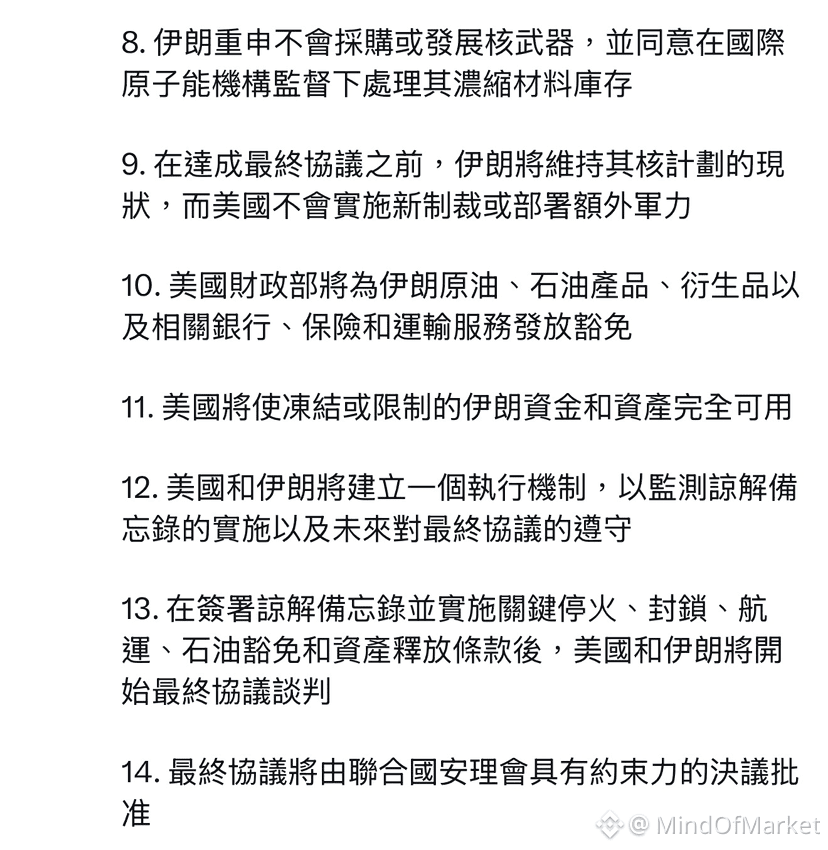
GEOPOLITICAL DE-ESCALATION IN THE MIDDLE EAST SIGNALS A SHIFT IN GLOBAL MARKET LIQUIDITY ⚡
The reported normalization between the US and Iran suggests a significant reduction in regional risk premiums. With the potential lifting of sanctions and the stabilization of the Strait of Hormuz, we are likely to see a shift in capital flow away from safe-haven assets and back into risk-on instruments.
Energy supply chains and global commodity markets are adjusting to this new baseline. Monitor how $BTC and $XAU react to this macro pivot as institutional liquidity rotates in response to the reduced geopolitical tension. How do you expect this shift to impact your current portfolio allocation?
Not financial advice. Always manage your risk.
#BTC #XAU #MacroAnalysis #MarketStructure #Geopolitics
⚡
GEOPOLITICAL DE-ESCALATION IN THE MIDDLE EAST SIGNALS A SHIFT IN GLOBAL MARKET LIQUIDITY ⚡
The reported normalization between the US and Iran suggests a significant reduction in regional risk premiums. With the potential lifting of sanctions and the stabilization of the Strait of Hormuz, we are likely to see a shift in capital flow away from safe-haven assets and back into risk-on instruments.
Energy supply chains and global commodity markets are adjusting to this new baseline. Monitor how $BTC and $XAU react to this macro pivot as institutional liquidity rotates in response to the reduced geopolitical tension. How do you expect this shift to impact your current portfolio allocation?
Not financial advice. Always manage your risk.
#BTC #XAU #MacroAnalysis #MarketStructure #Geopolitics
⚡
The reported normalization between the US and Iran suggests a significant reduction in regional risk premiums. With the potential lifting of sanctions and the stabilization of the Strait of Hormuz, we are likely to see a shift in capital flow away from safe-haven assets and back into risk-on instruments.
Energy supply chains and global commodity markets are adjusting to this new baseline. Monitor how $BTC and $XAU react to this macro pivot as institutional liquidity rotates in response to the reduced geopolitical tension. How do you expect this shift to impact your current portfolio allocation?
Not financial advice. Always manage your risk.
#BTC #XAU #MacroAnalysis #MarketStructure #Geopolitics
⚡
61
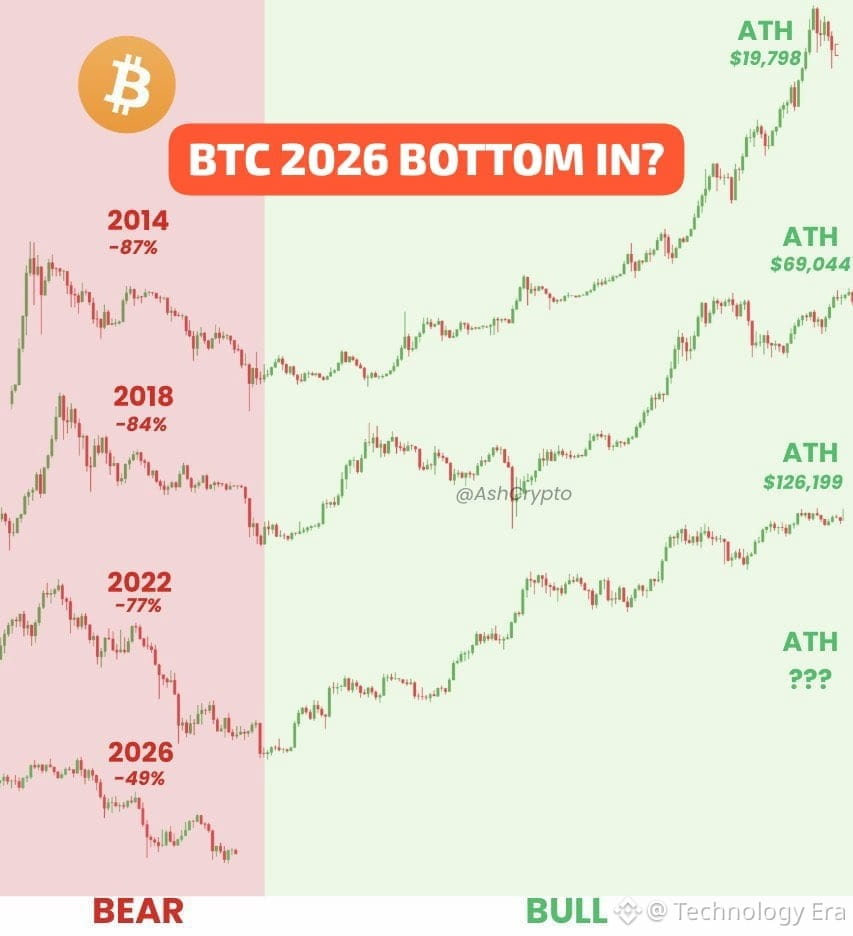
📊 $BTC Diminishing Drawdowns: Is the 2026 Bottom Already In? 📉
The historical macro comparison chart in highlights a massive structural pattern across Bitcoin's major market cycles. Every major bear market is seeing lower percentage drawdowns, signaling that BTC is maturing as a macro asset.
🔍 Historical Bear-to-Bull Patterns
2014: A punishing -87% drop led to a $19,798 All-Time High (ATH).
2018: An -84% correction cleared out the market before hitting a $69,044 ATH.
2022: A -77% drawdown paved the way for the historic $126,199 cycle peak.
2026 Current Status: We are sitting at a -49% drawdown from the peak, with the price currently stabilizing near $62,500 - $63,000.
🌐 The Diminishing Volatility Formula:
Bear Market Drawdowns (-87%--> -- 49%) = Asset Maturation & Floor Stability
💡 Live Market Insights:
Bitcoin is holding firmly above key support thresholds as on-chain data indicates seller exhaustion, with over 50% of the circulating supply currently sitting in a unrealized loss. If historical cycles repeat, this milder -49% drop might be the structural bottom for 2026 before the next macro bull leg starts tracking toward a brand-new uncharted ATH.
💬 Is a -49% correction all the bears get this cycle, or do you think a deeper capitulation is coming? Drop your prediction for the next $BTC ATH below! 👇
Disclaimer: This is for educational purposes only. Always do your own research (DYOR) before entering any trade.
📸 Image Source: AshCrypto & TradingView
#MacroAnalysis #TechnicalAnalysis #CryptoTrading. #BrentRises12%Weekly #NikkeiFalls5%WorstSinceMarch
$BTC
{future}(BTCUSDT)
📊 $BTC Diminishing Drawdowns: Is the 2026 Bottom Already In? 📉
The historical macro comparison chart in highlights a massive structural pattern across Bitcoin's major market cycles. Every major bear market is seeing lower percentage drawdowns, signaling that BTC is maturing as a macro asset.
🔍 Historical Bear-to-Bull Patterns
2014: A punishing -87% drop led to a $19,798 All-Time High (ATH).
2018: An -84% correction cleared out the market before hitting a $69,044 ATH.
2022: A -77% drawdown paved the way for the historic $126,199 cycle peak.
2026 Current Status: We are sitting at a -49% drawdown from the peak, with the price currently stabilizing near $62,500 - $63,000.
🌐 The Diminishing Volatility Formula:
Bear Market Drawdowns (-87%--> -- 49%) = Asset Maturation & Floor Stability
💡 Live Market Insights:
Bitcoin is holding firmly above key support thresholds as on-chain data indicates seller exhaustion, with over 50% of the circulating supply currently sitting in a unrealized loss. If historical cycles repeat, this milder -49% drop might be the structural bottom for 2026 before the next macro bull leg starts tracking toward a brand-new uncharted ATH.
💬 Is a -49% correction all the bears get this cycle, or do you think a deeper capitulation is coming? Drop your prediction for the next $BTC ATH below! 👇
Disclaimer: This is for educational purposes only. Always do your own research (DYOR) before entering any trade.
📸 Image Source: AshCrypto & TradingView
#MacroAnalysis #TechnicalAnalysis #CryptoTrading. #BrentRises12%Weekly #NikkeiFalls5%WorstSinceMarch
$BTC
The historical macro comparison chart in highlights a massive structural pattern across Bitcoin's major market cycles. Every major bear market is seeing lower percentage drawdowns, signaling that BTC is maturing as a macro asset.
🔍 Historical Bear-to-Bull Patterns
2014: A punishing -87% drop led to a $19,798 All-Time High (ATH).
2018: An -84% correction cleared out the market before hitting a $69,044 ATH.
2022: A -77% drawdown paved the way for the historic $126,199 cycle peak.
2026 Current Status: We are sitting at a -49% drawdown from the peak, with the price currently stabilizing near $62,500 - $63,000.
🌐 The Diminishing Volatility Formula:
Bear Market Drawdowns (-87%--> -- 49%) = Asset Maturation & Floor Stability
💡 Live Market Insights:
Bitcoin is holding firmly above key support thresholds as on-chain data indicates seller exhaustion, with over 50% of the circulating supply currently sitting in a unrealized loss. If historical cycles repeat, this milder -49% drop might be the structural bottom for 2026 before the next macro bull leg starts tracking toward a brand-new uncharted ATH.
💬 Is a -49% correction all the bears get this cycle, or do you think a deeper capitulation is coming? Drop your prediction for the next $BTC ATH below! 👇
Disclaimer: This is for educational purposes only. Always do your own research (DYOR) before entering any trade.
📸 Image Source: AshCrypto & TradingView
#MacroAnalysis #TechnicalAnalysis #CryptoTrading. #BrentRises12%Weekly #NikkeiFalls5%WorstSinceMarch
$BTC
2
2
322

·
--
MORGAN STANLEY SIGNALS MACRO SECTOR ROTATION AS $NDX CLEANSES CROWDED POSITIONS 🦈 📊
Institutional capital is executing a structural rotation out of crowded tech positioning rather than signaling a macro top. 📊 Funds are actively reallocating toward high-quality growth inefficiencies and repriced semiconductor order blocks with high earnings visibility.
Rising long-term yields reflect expanding infrastructure expenditure across data centers and power grids. 💡 Smart money continues balancing growth opportunities against capital financing costs as structural repricing plays out. 💬 Do you expect risk assets to find equilibrium here or sweep lower liquidity pools first? 👇
⚠️ Not financial advice. Always manage your risk. 🛡️
🏷️ #NDX #MacroAnalysis #MarketStructure #Liquidity
🦈 👁️
MORGAN STANLEY SIGNALS MACRO SECTOR ROTATION AS $NDX CLEANSES CROWDED POSITIONS 🦈 📊
Institutional capital is executing a structural rotation out of crowded tech positioning rather than signaling a macro top. 📊 Funds are actively reallocating toward high-quality growth inefficiencies and repriced semiconductor order blocks with high earnings visibility.
Rising long-term yields reflect expanding infrastructure expenditure across data centers and power grids. 💡 Smart money continues balancing growth opportunities against capital financing costs as structural repricing plays out. 💬 Do you expect risk assets to find equilibrium here or sweep lower liquidity pools first? 👇
⚠️ Not financial advice. Always manage your risk. 🛡️
🏷️ #NDX #MacroAnalysis #MarketStructure #Liquidity
🦈 👁️
Institutional capital is executing a structural rotation out of crowded tech positioning rather than signaling a macro top. 📊 Funds are actively reallocating toward high-quality growth inefficiencies and repriced semiconductor order blocks with high earnings visibility.
Rising long-term yields reflect expanding infrastructure expenditure across data centers and power grids. 💡 Smart money continues balancing growth opportunities against capital financing costs as structural repricing plays out. 💬 Do you expect risk assets to find equilibrium here or sweep lower liquidity pools first? 👇
⚠️ Not financial advice. Always manage your risk. 🛡️
🏷️ #NDX #MacroAnalysis #MarketStructure #Liquidity
🦈 👁️
22
Log in to explore more content
Join global crypto users on Binance Square
⚡️ Get latest and useful information about crypto.
💬 Trusted by the world’s largest crypto exchange.
👍 Discover real insights from verified creators.
Email / Phone number
Trending Topics
1
#BinancePick
2.7M views
145,857 Discussing
2
#EarningsSeason
5.1M views
24,950 Discussing
3
#AnthropicTTMRevenueGrewAbout1200%
0 views
3 Discussing
4
#AnthropicS1ExpectedToday
467 views
32 Discussing
5
#SouthKoreaReportedlyWeighsFourthCryptoTaxDelay
7,802 views
217 Discussing
6
#FranklinTempletonFilesForTwoDividendToBitcoinETFs
13,754 views
332 Discussing
7
#StrategyMSTRSurpassesNasdaqInMarketCap
11,758 views
270 Discussing
8
#CanadaProposesStablecoinRedemptionWithin3BusinessDays
503 views
29 Discussing
9
#ElectrumWalletBugLetRogueServersStealFunds
16,692 views
382 Discussing
10
#ArgentineCourtDismissesLIBRACaseAgainstMilei
26,903 views
456 Discussing