
#hype
hype
12.1M views
59,363 Discussing
Hot
Latest


·
--
Verified
Article
HYPE..... $$As a professional trader looking at Hyperliquid ($HYPE ) right now, the tape is showing a cautious relief bounce inside a broader structural correction. After plunging roughly 35% off its September all-time high near $98 and dipping into the high $50s, HYPE has stabilized around $60.80–$62.40, still pinned beneath its broken $75 horizontal floor and 200-day exponential moving average (~$69.80) amid an Extreme Fear crypto market.
$HYPE
Here is the desk breakdown: fundamentals remain strong—Hyperliquid just crossed 270,000 on-chain holders, generated over $20 million in weekly protocol revenue, and expanded market access via Bitso, Ripio, and 1inch integrations. However, derivatives flow shows deleveraging: platform open interest has retreated over 30% from $3.9 billion toward $2.5 billion, while regulatory scrutiny from the U.S. CFTC and Hong Kong’s SFC keeps institutional buyers defensive. Supply is also top-of-mind with scheduled token unlocks arriving between November 29 and December 6, 2026.
For the next step, watch two clear price levels: $HYPE
Bullish Relief Continuation: With the 14-day RSI rebounding from oversold levels near 28, bulls defending the $57.50–$60.00 demand zone can push for a test of $65.40 and the 200-day EMA at $69.80.Bearish Breakdown: Because open interest is contracting ahead of upcoming token releases, losing $57.50 on a daily close opens a clean liquidity flush toward $51.80–$53.00, where major leveraged long liquidations sit.
Do not chase green candles below the 200-day EMA. Wait for a confirmed higher low above $60.00 or a volume-backed reclaim of $65.40 before deploying capital.
#hype #Hyperliquid #DeFi #cryptotrading #altcoins
HYPE..... $$
As a professional trader looking at Hyperliquid ($HYPE ) right now, the tape is showing a cautious relief bounce inside a broader structural correction. After plunging roughly 35% off its September all-time high near $98 and dipping into the high $50s, HYPE has stabilized around $60.80–$62.40, still pinned beneath its broken $75 horizontal floor and 200-day exponential moving average (~$69.80) amid an Extreme Fear crypto market.
$HYPE
Here is the desk breakdown: fundamentals remain strong—Hyperliquid just crossed 270,000 on-chain holders, generated over $20 million in weekly protocol revenue, and expanded market access via Bitso, Ripio, and 1inch integrations. However, derivatives flow shows deleveraging: platform open interest has retreated over 30% from $3.9 billion toward $2.5 billion, while regulatory scrutiny from the U.S. CFTC and Hong Kong’s SFC keeps institutional buyers defensive. Supply is also top-of-mind with scheduled token unlocks arriving between November 29 and December 6, 2026.
For the next step, watch two clear price levels: $HYPE
Bullish Relief Continuation: With the 14-day RSI rebounding from oversold levels near 28, bulls defending the $57.50–$60.00 demand zone can push for a test of $65.40 and the 200-day EMA at $69.80.Bearish Breakdown: Because open interest is contracting ahead of upcoming token releases, losing $57.50 on a daily close opens a clean liquidity flush toward $51.80–$53.00, where major leveraged long liquidations sit.
Do not chase green candles below the 200-day EMA. Wait for a confirmed higher low above $60.00 or a volume-backed reclaim of $65.40 before deploying capital.
#hype #Hyperliquid #DeFi #cryptotrading #altcoins
1
1.1k

·
--
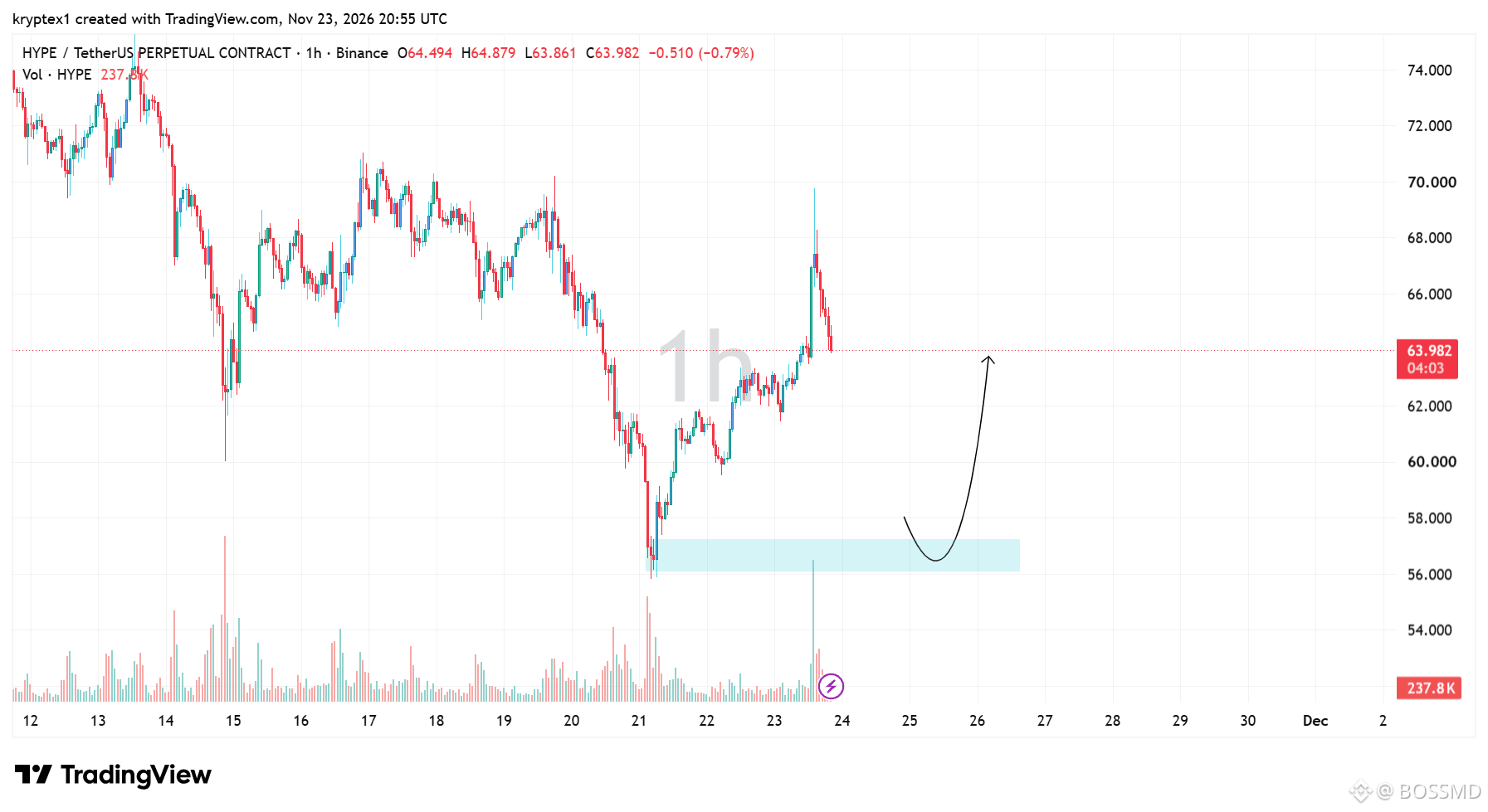
$HYPE is showing signs of recovery after its recent drop, but the next move will be important.
Price is currently trading around $64 after bouncing from the $56–$57 support area. However, I’m watching for a possible pullback into that demand zone before another push toward the $63–$64 region.
If buyers defend the support, we could see another bullish move. Until then, patience is key.
I want to see how price reacts before calling a reversal.
#hype
2
1.1k

·
--
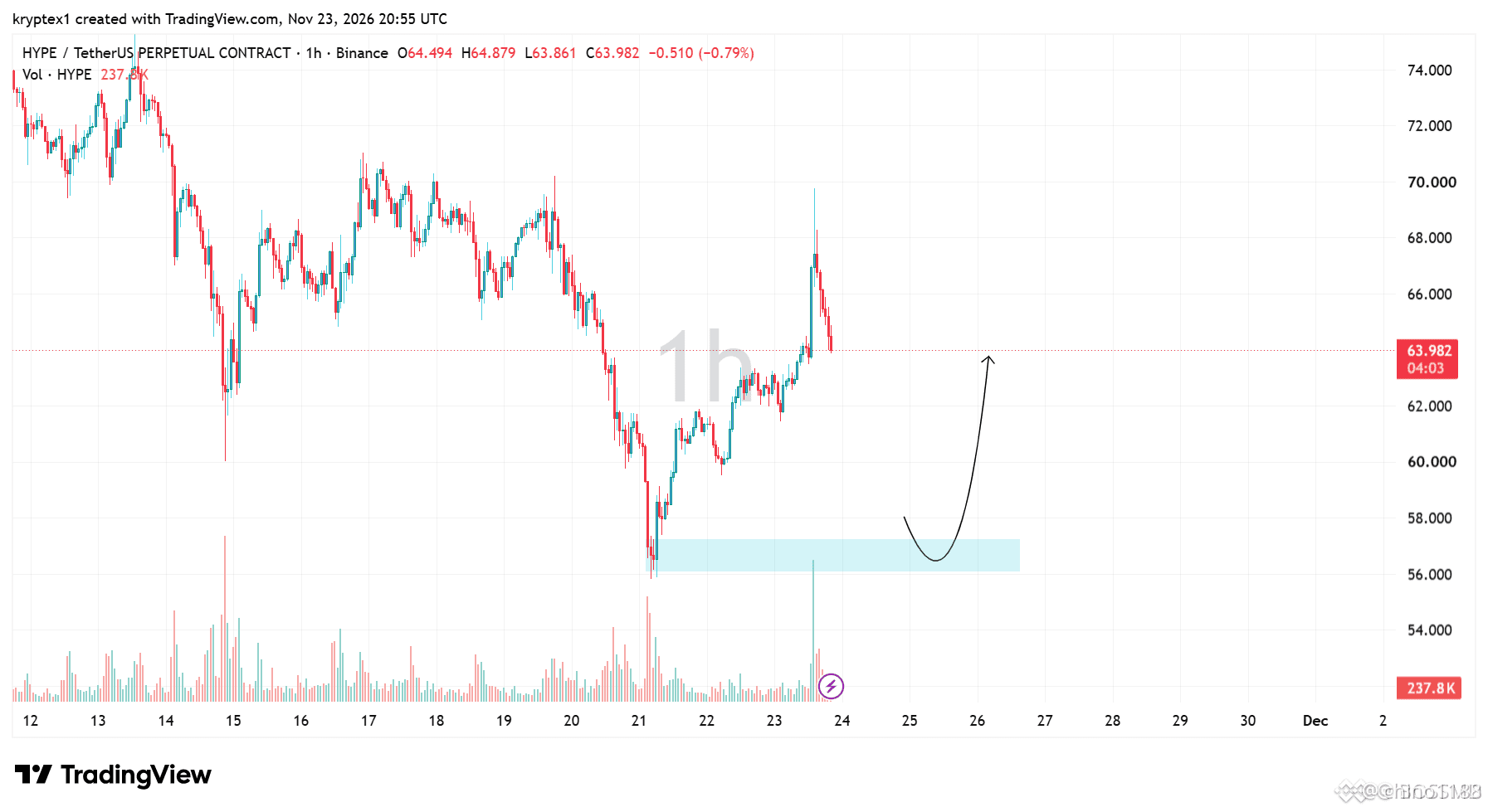
$HYPE is showing signs of recovery after its recent drop, but the next move will be important.
The price is currently trading around $64 after bouncing from the $56–$57 support zone. However, I’m watching for a possible pullback toward that demand zone before another push toward the $63–$64 region.
If buyers defend support, we could see another move higher. Until then, patience is key.
I want to see how the price reacts before talking about a trend reversal.
#hype
42

·
--
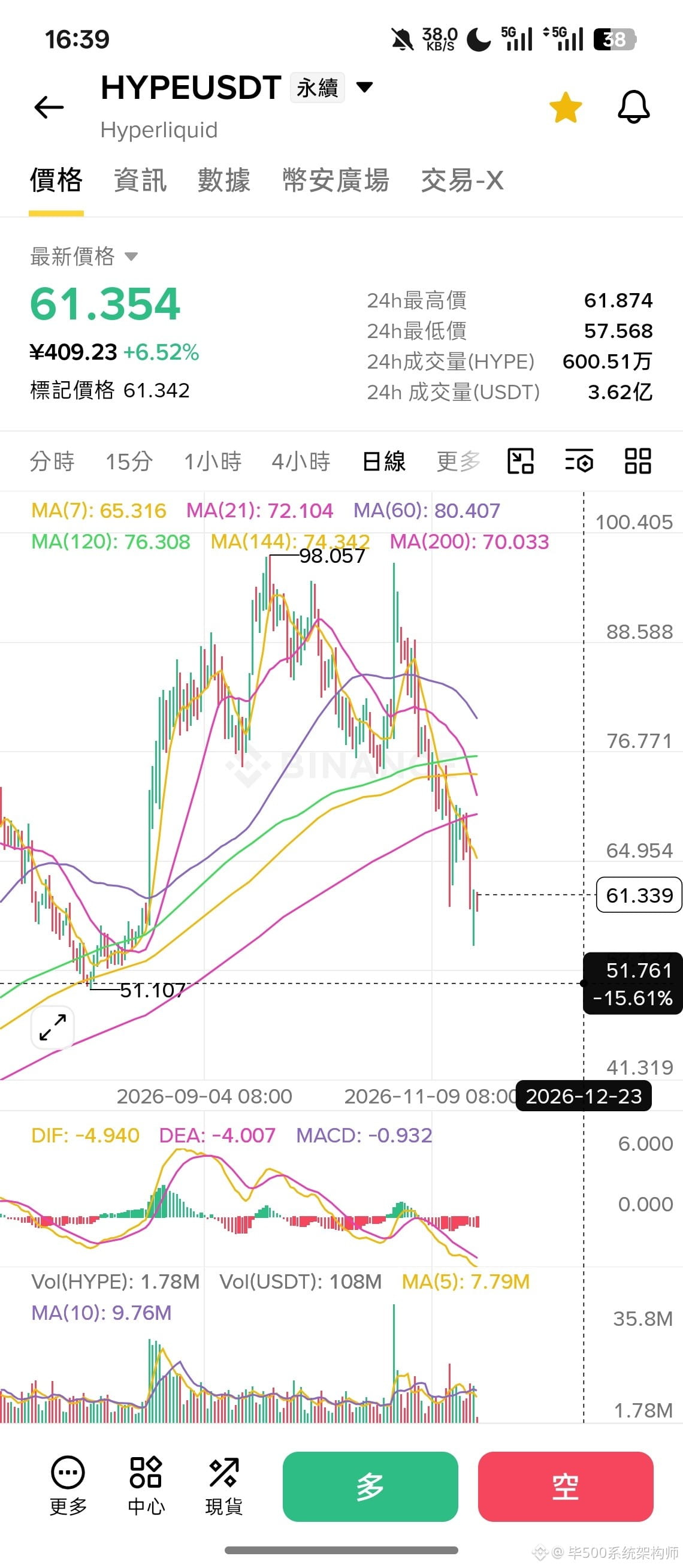
HYPE has definitely been the most resilient coin this cycle. Despite such a huge pullback, it didn't even fall below 50—it only dipped to 55 before starting to climb again. It's even outperformed BNB, so I'll personally increase my position in it this cycle 👌 I already bought back everything I sold at 97 when it reached 67! If it drops further, I'll keep adding, especially around 50. I think that's a pretty good cost basis, and once it rebounds, it'll happen quickly. #hype
HYPE has definitely been the most resilient coin this cycle. Despite such a huge pullback, it didn't even fall below 50—it only dipped to 55 before starting to climb again. It's even outperformed BNB, so I'll personally increase my position in it this cycle 👌 I already bought back everything I sold at 97 when it reached 67! If it drops further, I'll keep adding, especially around 50. I think that's a pretty good cost basis, and once it rebounds, it'll happen quickly. #hype


璟妍小宝贝:
你说它硬,那trx算啥?
4
1
3.8k

·
--
Article
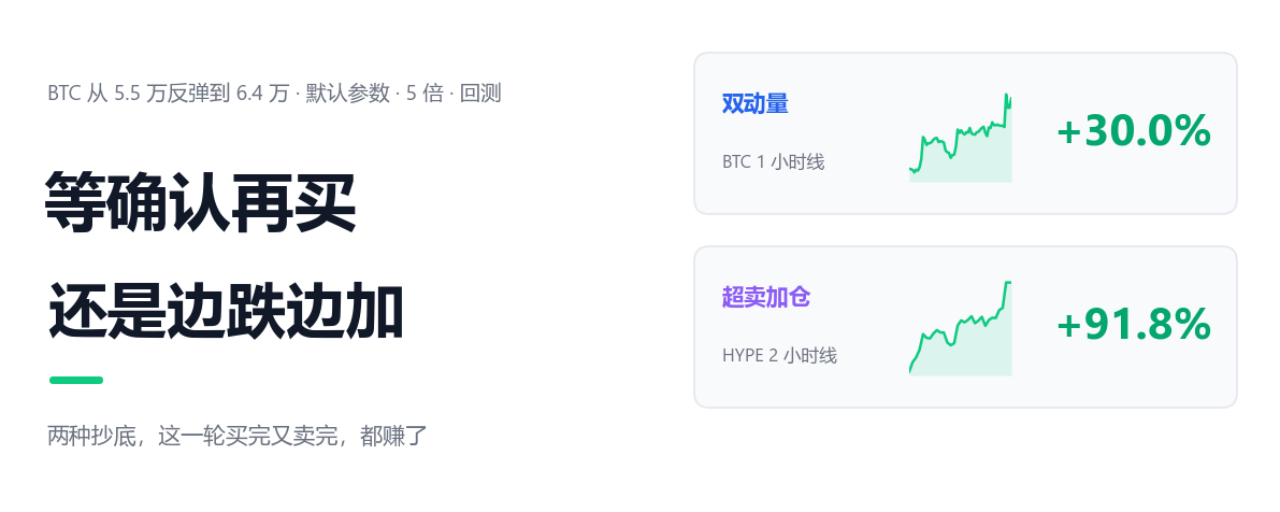
BTC rebounds from $55K to $64K: two 5x leveraged dip-buying strategies—waiting for confirmation earned 30.0%, while adding as it fell earned 91.8%On the afternoon of November 21, BTC fell to 55,126.7, then rebounded steadily, reaching 64,572.8 on the evening of the 23rd. Both bottom-fishing strategies made a profit using 5x leverage during this period, and all the long positions have since been sold: Dual Momentum on BTC: +30.0%; Oversold Scale-In on HYPE: +91.8%. Default parameters; backtested data; not investment advice.
Both strategies buy the dip, but they work in opposite ways: Dual Momentum waits for both indicators to enter oversold territory on the same candle before buying, while Oversold Scale-In buys one unit as soon as it sees an oversold reading during a decline, up to a maximum of three units. Their sell rules differ too: one waits for both indicators to leave overbought territory, while the other waits for Stochastic RSI to reach 99. Today, let’s look at this round side by side: how each strategy buys and sells, why the two accounts ended up with a threefold difference, and what the trade-off is.
BTC rebounds from $55K to $64K: two 5x leveraged dip-buying strategies—waiting for confirmation earned 30.0%, while adding as it fell earned 91.8%
On the afternoon of November 21, BTC fell to 55,126.7, then rebounded steadily, reaching 64,572.8 on the evening of the 23rd. Both bottom-fishing strategies made a profit using 5x leverage during this period, and all the long positions have since been sold: Dual Momentum on BTC: +30.0%; Oversold Scale-In on HYPE: +91.8%. Default parameters; backtested data; not investment advice.
Both strategies buy the dip, but they work in opposite ways: Dual Momentum waits for both indicators to enter oversold territory on the same candle before buying, while Oversold Scale-In buys one unit as soon as it sees an oversold reading during a decline, up to a maximum of three units. Their sell rules differ too: one waits for both indicators to leave overbought territory, while the other waits for Stochastic RSI to reach 99. Today, let’s look at this round side by side: how each strategy buys and sells, why the two accounts ended up with a threefold difference, and what the trade-off is.
Both strategies buy the dip, but they work in opposite ways: Dual Momentum waits for both indicators to enter oversold territory on the same candle before buying, while Oversold Scale-In buys one unit as soon as it sees an oversold reading during a decline, up to a maximum of three units. Their sell rules differ too: one waits for both indicators to leave overbought territory, while the other waits for Stochastic RSI to reach 99. Today, let’s look at this round side by side: how each strategy buys and sells, why the two accounts ended up with a threefold difference, and what the trade-off is.
423

·
--
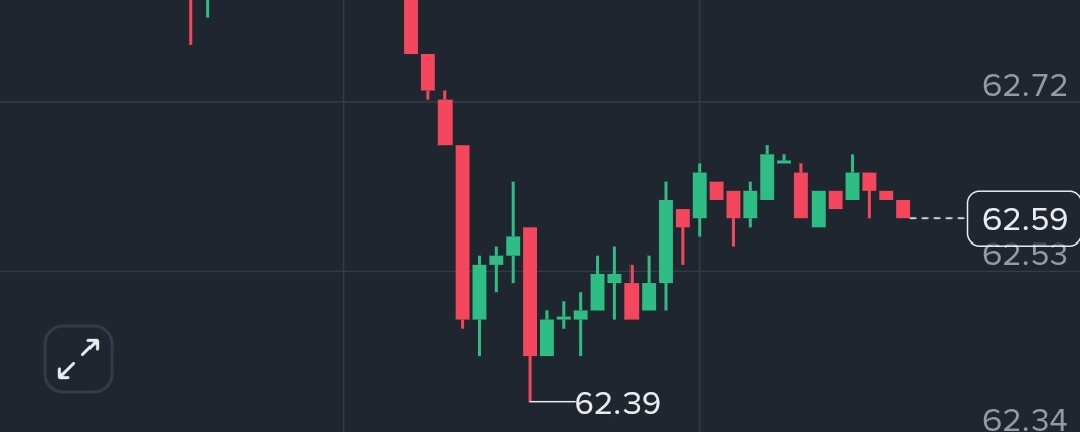
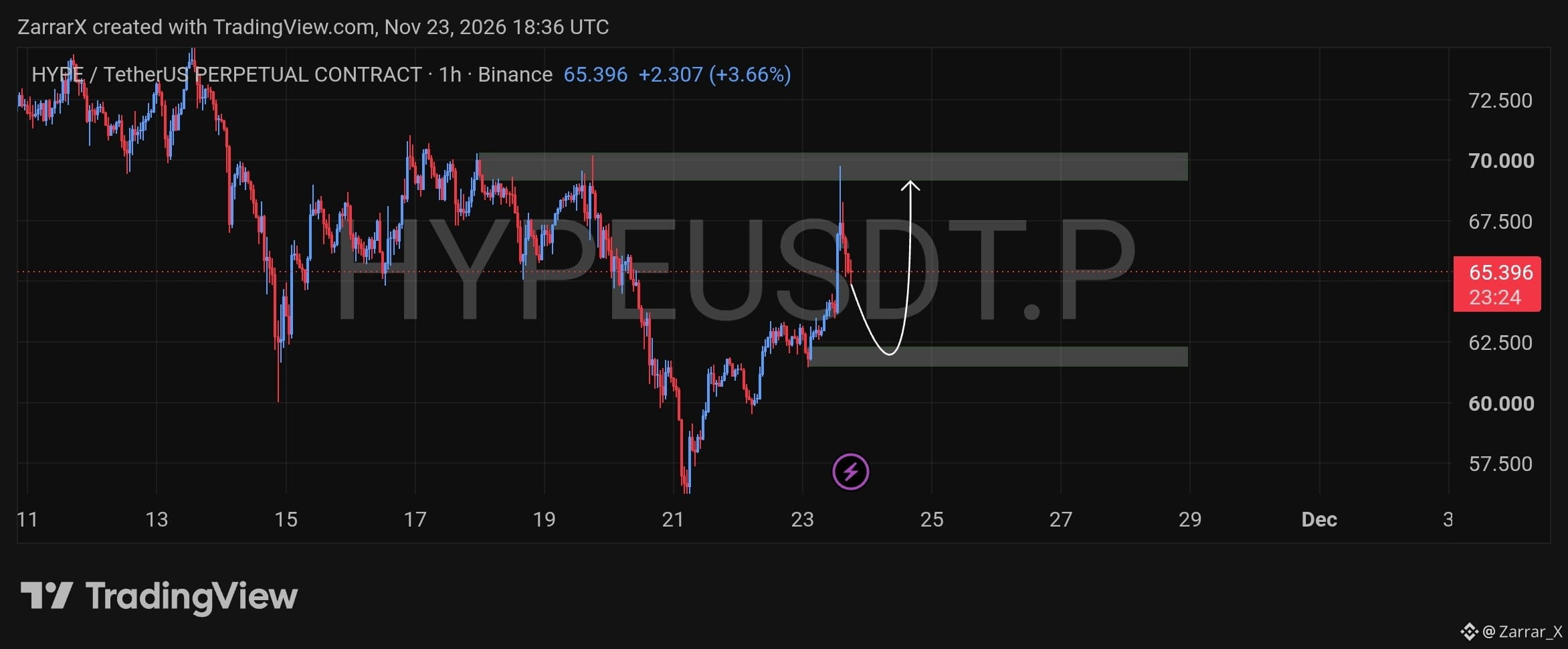
HYPE has recovered from the $56.50–$57.50 region, with buyers gradually pushing price back toward $65.40. Despite the recent strength, the broader recovery still needs confirmation, as sellers could attempt another rejection.
A retracement toward the $61.50–$62.30 demand zone could offer $HYPE an opportunity to establish a stronger base. How price reacts around this region will be important in determining whether buyers can sustain the recovery.
If demand holds, the next upside target sits around $69.20–$70.30, where price could encounter renewed selling pressure. A rejection from this supply zone may lead to further consolidation before another directional move.
#hype
{future}(HYPEUSDT)
HYPE has recovered from the $56.50–$57.50 region, with buyers gradually pushing price back toward $65.40. Despite the recent strength, the broader recovery still needs confirmation, as sellers could attempt another rejection.
A retracement toward the $61.50–$62.30 demand zone could offer $HYPE an opportunity to establish a stronger base. How price reacts around this region will be important in determining whether buyers can sustain the recovery.
If demand holds, the next upside target sits around $69.20–$70.30, where price could encounter renewed selling pressure. A rejection from this supply zone may lead to further consolidation before another directional move.
#hype
1
185

·
--
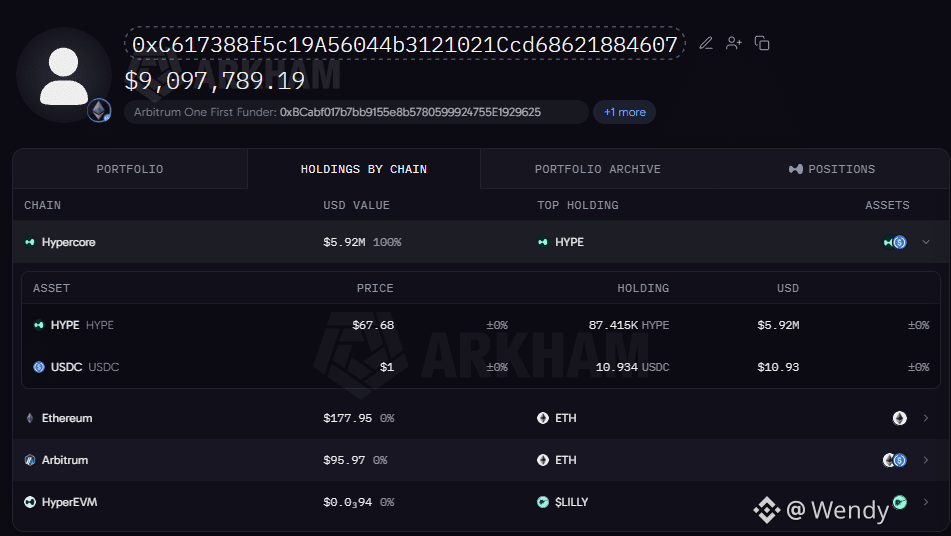
THIS WHALE ISN'T FLIPPING $HYPE — IT'S MOVING IN WITH $9M
A Hyperliquid whale just deposited another $2.98M USDC and kept buying $HYPE around $69. Three days of accumulation now, with 47,000 HYPE moved into staking. The wallet holds 134,420 HYPE — $5.89M in spot and $3.17M staked. Spot buying plus staking looks like positioning, not a quick trade. $HYPE now trades near $65.37. Is smart money setting up for another rally?
$HYPE
#HYPE #Hyperliquid
{future}(HYPEUSDT)
THIS WHALE ISN'T FLIPPING $HYPE — IT'S MOVING IN WITH $9M
A Hyperliquid whale just deposited another $2.98M USDC and kept buying $HYPE around $69. Three days of accumulation now, with 47,000 HYPE moved into staking. The wallet holds 134,420 HYPE — $5.89M in spot and $3.17M staked. Spot buying plus staking looks like positioning, not a quick trade. $HYPE now trades near $65.37. Is smart money setting up for another rally?
$HYPE
#HYPE #Hyperliquid

200

🚀 HYPE: FROM LAUNCH TO TODAY
📅 November 29, 2024 – November 24, 2026
- Launch reference price: ~$7.56
- Current price: ~$65.97
- Total gain: Approximately +772%
HYPE has delivered an impressive return since its first recorded trading price.
From a new token to one of the major players in crypto. 🔥
#HYPE $HYPE
📅 November 29, 2024 – November 24, 2026
- Launch reference price: ~$7.56
- Current price: ~$65.97
- Total gain: Approximately +772%
HYPE has delivered an impressive return since its first recorded trading price.
From a new token to one of the major players in crypto. 🔥
#HYPE $HYPE

111

·
--
🚨 DISTRIBUTION signals at $HYPE are becoming clearer. I’m avoiding LONG and getting ready to SHORT from here 👇
💰 Price: $63.6130 · TF: 5M · Bias: SHORT
📍 My trading zone:
• Entry area: $63.6130
• Stop loss: $63.9930
• Target 1: $63.2330
• Target 2: $61.8380
💼 My position: already entered SHORT in this zone, with SL in place.
🚨 DISTRIBUTION — at risk of becoming exit liquidity. LONG is risky here.
Team SHORT or the opposite team? Share your reasoning 👇
#HYPE #Trading #BinanceSquare #Crypto #2027besuccessful
⚠️ DYOR. Follow my Binance Square account for real-time updates. 🚀
19

·
--
🍃 $HYPE : HYPERLIQUID EXPANDS BEYOND CRYPTO TRADING!
Hyperliquid’s ecosystem is entering a new phase:
- November 14: Its Q3 report highlighted $190.9 million in protocol revenue.
- Trading activity: Open interest reached a reported record of $18.1 billion.
- Ecosystem growth: New applications continue launching across HyperEVM and HyperCore.
- New infrastructure: Kinetiq’s Elysium Layer 2 uses HYPE as its gas token.
- Risk update: Hong Kong’s SFC added Hyperliquid to its suspicious-platform alert list on November 18.
Can Hyperliquid balance ecosystem growth with regulatory challenges?
$HYPE
{future}(HYPEUSDT)
.
.
.
#HYPE #Hyperliquid #defi
Not financial advice. DYOR.
🍃 $HYPE : HYPERLIQUID EXPANDS BEYOND CRYPTO TRADING!
Hyperliquid’s ecosystem is entering a new phase:
- November 14: Its Q3 report highlighted $190.9 million in protocol revenue.
- Trading activity: Open interest reached a reported record of $18.1 billion.
- Ecosystem growth: New applications continue launching across HyperEVM and HyperCore.
- New infrastructure: Kinetiq’s Elysium Layer 2 uses HYPE as its gas token.
- Risk update: Hong Kong’s SFC added Hyperliquid to its suspicious-platform alert list on November 18.
Can Hyperliquid balance ecosystem growth with regulatory challenges?
$HYPE
.
.
.
#HYPE #Hyperliquid #defi
Not financial advice. DYOR.
315

·
--
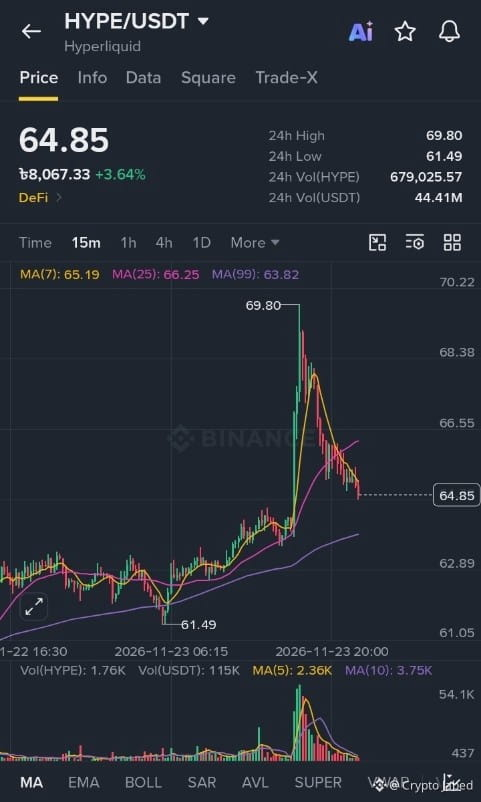
Bullish
Testing support after a sharp pullback.
$HYPE — SPOT BUY ZONE?
🟢 LONG Setup
Entry: $64.00 – $65.00
Targets: $68.50 / $75.00
Stop: $61.00
S: $63.82 | R: $69.80
Ready for the bounce?
You can trade from here.👇$HYPE
{spot}(HYPEUSDT)
#HYPE #BinanceSquare #SpotTrading
Testing support after a sharp pullback.
$HYPE — SPOT BUY ZONE?
🟢 LONG Setup
Entry: $64.00 – $65.00
Targets: $68.50 / $75.00
Stop: $61.00
S: $63.82 | R: $69.80
Ready for the bounce?
You can trade from here.👇$HYPE
#HYPE #BinanceSquare #SpotTrading
$HYPE — SPOT BUY ZONE?
🟢 LONG Setup
Entry: $64.00 – $65.00
Targets: $68.50 / $75.00
Stop: $61.00
S: $63.82 | R: $69.80
Ready for the bounce?
You can trade from here.👇$HYPE
#HYPE #BinanceSquare #SpotTrading
213

·
--
Bullish
🚨 $HYPE MAY BE GETTING READY FOR A POWERFUL REVERSAL! TARGET — $150?!
Keep a close eye on $HYPE! An interesting opportunity may be forming right now for medium-term investors.
📍 POTENTIAL REVERSAL ZONE: $50–$65
This is the range where I see the potential for a strong base to form for the next upward move.
🎯 MY TARGETS FOR $HYPE:
$50–$65 — potential accumulation and reversal zone.
$80 — first important target.
$100 — the next psychological milestone.
$120–$150 — my medium-term target!
💎 WHY AM I WATCHING THIS ZONE?
If buyers can defend the $50–$65 range and confirm a reversal, HYPE could have the potential for a major recovery.
But most importantly, don't rush! Let's wait for price confirmation instead of buying just because of an attractive forecast.
⚠️ This is a scenario, not a guarantee of growth. If support doesn't hold, the outlook will need to be reassessed.
🔥 HERE'S A QUESTION FOR YOU!
Can $HYPE reach $120–$150 in the medium term?
🚀 YES — we'll see $150 soon!
🐻 NO — are we in for another drop first?
👇 Share your HYPE target in the comments!
❤️ Like and subscribe
#HYPE #Crypto #altcoins #SpotTrading #BinanceSquare $HYPE
{future}(HYPEUSDT)
🚨 $HYPE MAY BE GETTING READY FOR A POWERFUL REVERSAL! TARGET — $150?!
Keep a close eye on $HYPE ! An interesting opportunity may be forming right now for medium-term investors.
📍 POTENTIAL REVERSAL ZONE: $50–$65
This is the range where I see the potential for a strong base to form for the next upward move.
🎯 MY TARGETS FOR $HYPE :
$50–$65 — potential accumulation and reversal zone.
$80 — first important target.
$100 — the next psychological milestone.
$120–$150 — my medium-term target!
💎 WHY AM I WATCHING THIS ZONE?
If buyers can defend the $50–$65 range and confirm a reversal, HYPE could have the potential for a major recovery.
But most importantly, don't rush! Let's wait for price confirmation instead of buying just because of an attractive forecast.
⚠️ This is a scenario, not a guarantee of growth. If support doesn't hold, the outlook will need to be reassessed.
🔥 HERE'S A QUESTION FOR YOU!
Can $HYPE reach $120–$150 in the medium term?
🚀 YES — we'll see $150 soon!
🐻 NO — are we in for another drop first?
👇 Share your HYPE target in the comments!
❤️ Like and subscribe
#HYPE #Crypto #altcoins #SpotTrading #BinanceSquare $HYPE
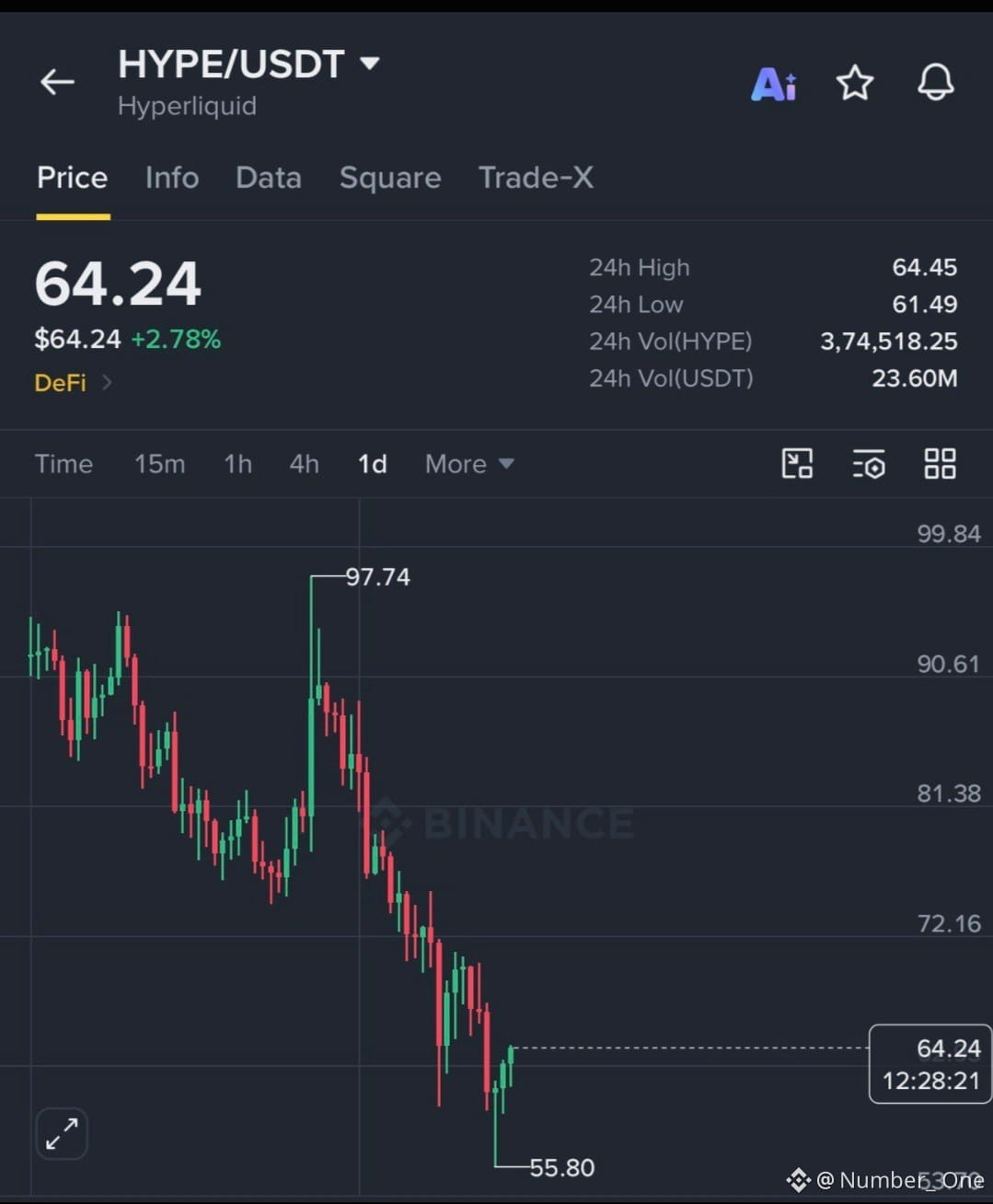
3
97

·
--
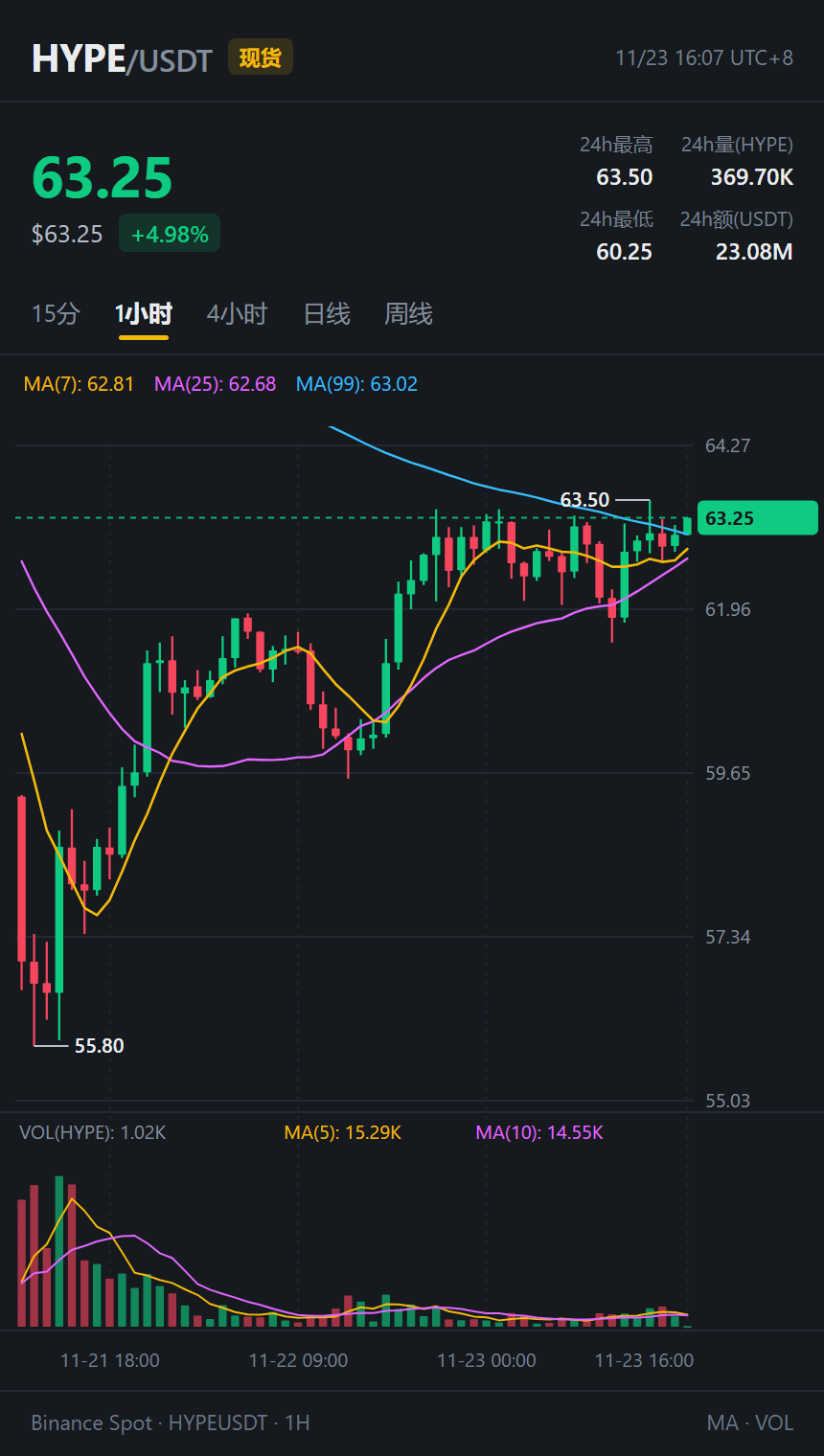
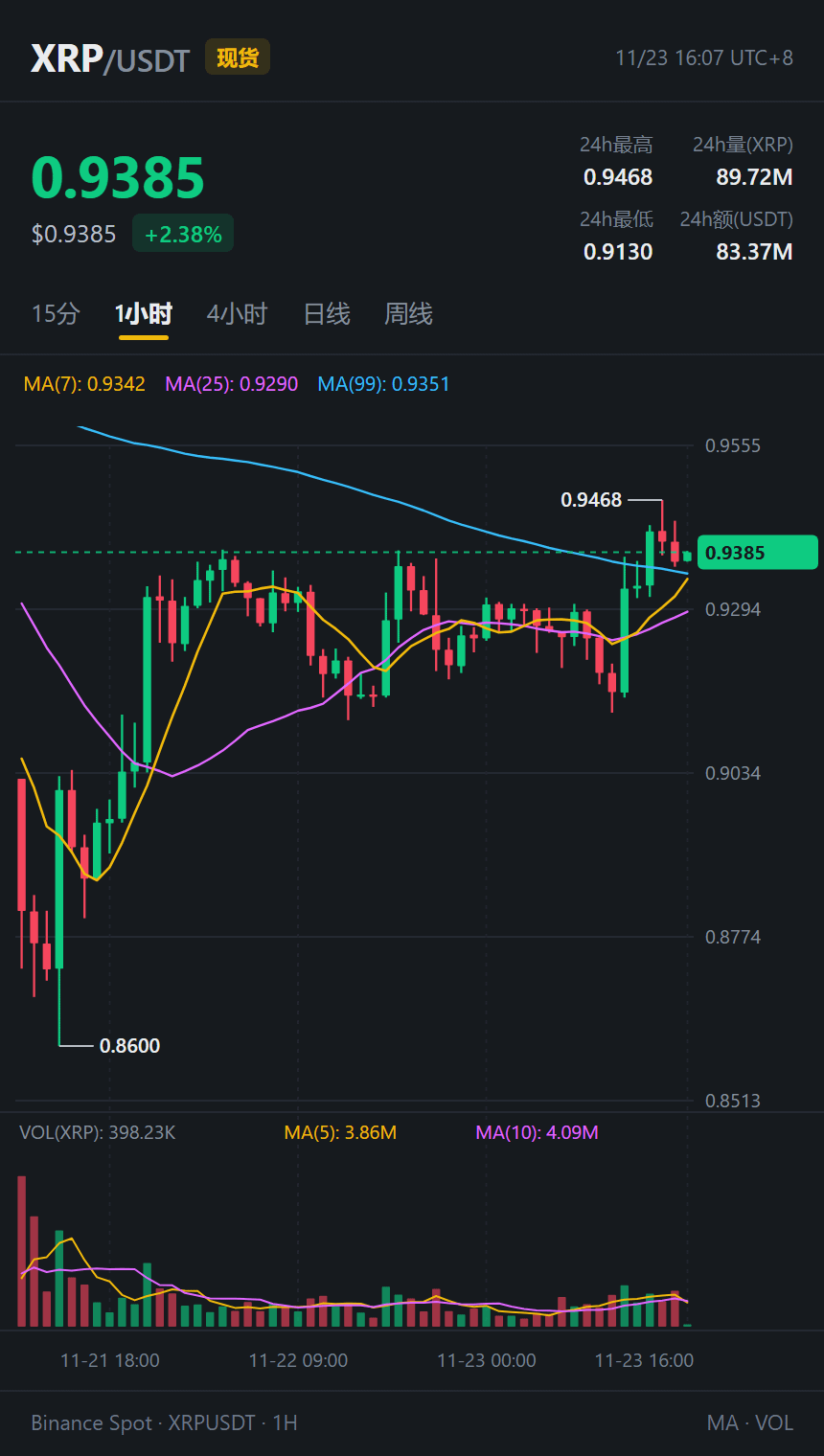
A little after 4, I casually checked the 1-hour charts. Both were clawing their way back from the weekend dip, but $HYPE and $XRP were behaving like total opposites.
First, $HYPE . When it plunged to a Saturday low of 55.80, it looked pretty scary. But in less than two days, it clawed its way up to 63.25 (24h +4.98%). On the 1-hour chart, it’s holding above MA7, MA25, and MA99—looking seriously strong—and hovering around the 63.50 high. But the volume has me a little puzzled: today’s 24h trading volume is only $23.08 million. It’s creeping up against resistance on shrinking volume. If it breaks through, I’m afraid of chasing the top; if I don’t, I’m afraid it’ll take off without looking back.
Meanwhile, $XRP is even more frustrating. Its 24h spot trading volume hit $83.37 million, putting it in the market’s top four, yet the price is still hovering around 0.9385 (24h +2.38%). In the afternoon, it finally managed to touch 0.9468, only to slide back and catch its breath near the 1-hour MA99 (0.9351). It’s always just short of reaching 1.
One is pushing hard on shrinking volume, the other is grinding along on heavy volume. The longer I watch this market, the more conflicted I feel. For now, I’ll keep my hands off and wait for a clear direction—I’m not going to be the sucker buying at the top.
#HYPE #XRP #CryptoMarket
96

·
--
Bullish
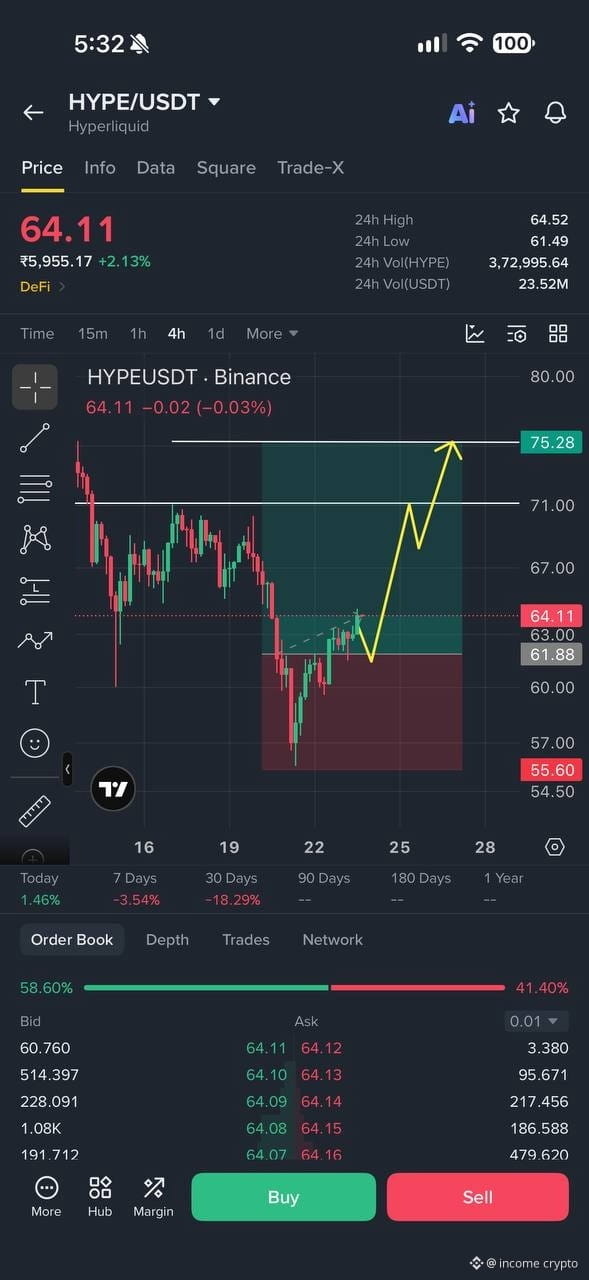
$HYPE /USDT: Is a Bigger Recovery Coming?
HYPE is showing signs of strength after its recent correction.
I’m watching the $61.80–$63.00 zone for a potential retest and continuation.
🎯 Targets:
$67 → $71 → $75.28
🛑 Stop Loss: $55.60
The bigger picture looks interesting, but confirmation is important. I don’t want to chase the pump. Let the price confirm the move first.
#HYPE #Hyperliquid #Copytrading
1
1
271

🚀 $HYPE HYPE/USDT – Bulls Are Testing Resistance!
$HYPE is showing strong short-term recovery on the 1H chart, trading around 63.969 after gaining momentum from the lower support zone.
📈 Bullish View:
Price is holding above 63.00 and moving toward the 64.00–64.15 resistance zone. A strong breakout above this area could improve bullish momentum.
📉 Bearish View:
If $HYPE HYPE faces rejection near resistance, a pullback toward 63.00 and 62.00 could follow.
🔑 Key Levels:
Resistance: 64.15 – 64.65
Support: 63.00 – 62.00
Market Outlook: Short-term momentum is bullish, but confirmation above resistance is still needed.
{future}(HYPEUSDT)
#HYPE #Hyperliquid #CryptoAnalysis #BinanceSquare
🚀 $HYPE HYPE/USDT – Bulls Are Testing Resistance!
$HYPE is showing strong short-term recovery on the 1H chart, trading around 63.969 after gaining momentum from the lower support zone.
📈 Bullish View:
Price is holding above 63.00 and moving toward the 64.00–64.15 resistance zone. A strong breakout above this area could improve bullish momentum.
📉 Bearish View:
If $HYPE HYPE faces rejection near resistance, a pullback toward 63.00 and 62.00 could follow.
🔑 Key Levels:
Resistance: 64.15 – 64.65
Support: 63.00 – 62.00
Market Outlook: Short-term momentum is bullish, but confirmation above resistance is still needed.
#HYPE #Hyperliquid #CryptoAnalysis #BinanceSquare
204


·
--
WHALE KEEPS BUYING $HYPE, NOW HOLDING OVER $9 MILLION!
A large Hyperliquid investor just deposited another $2.98M USDC and resumed buying HYPE around $69.
The wallet has been accumulating for three days, with 47,000 HYPE also moved into staking.
Current holdings:
• 134,420 HYPE worth approximately $9.06M
• $5.89M in spot
• $3.17M staked
What caught my attention is the combination of spot accumulation and staking. This whale appears to be building exposure rather than simply trading short-term volatility.
Is smart money positioning for another HYPE rally? 👀
#HYPE #Hyperliquid $HYPE
{future}(HYPEUSDT)
WHALE KEEPS BUYING $HYPE , NOW HOLDING OVER $9 MILLION!
A large Hyperliquid investor just deposited another $2.98M USDC and resumed buying HYPE around $69.
The wallet has been accumulating for three days, with 47,000 HYPE also moved into staking.
Current holdings:
• 134,420 HYPE worth approximately $9.06M
• $5.89M in spot
• $3.17M staked
What caught my attention is the combination of spot accumulation and staking. This whale appears to be building exposure rather than simply trading short-term volatility.
Is smart money positioning for another HYPE rally? 👀
#HYPE #Hyperliquid $HYPE
Feng1280:
geat
1
4
526

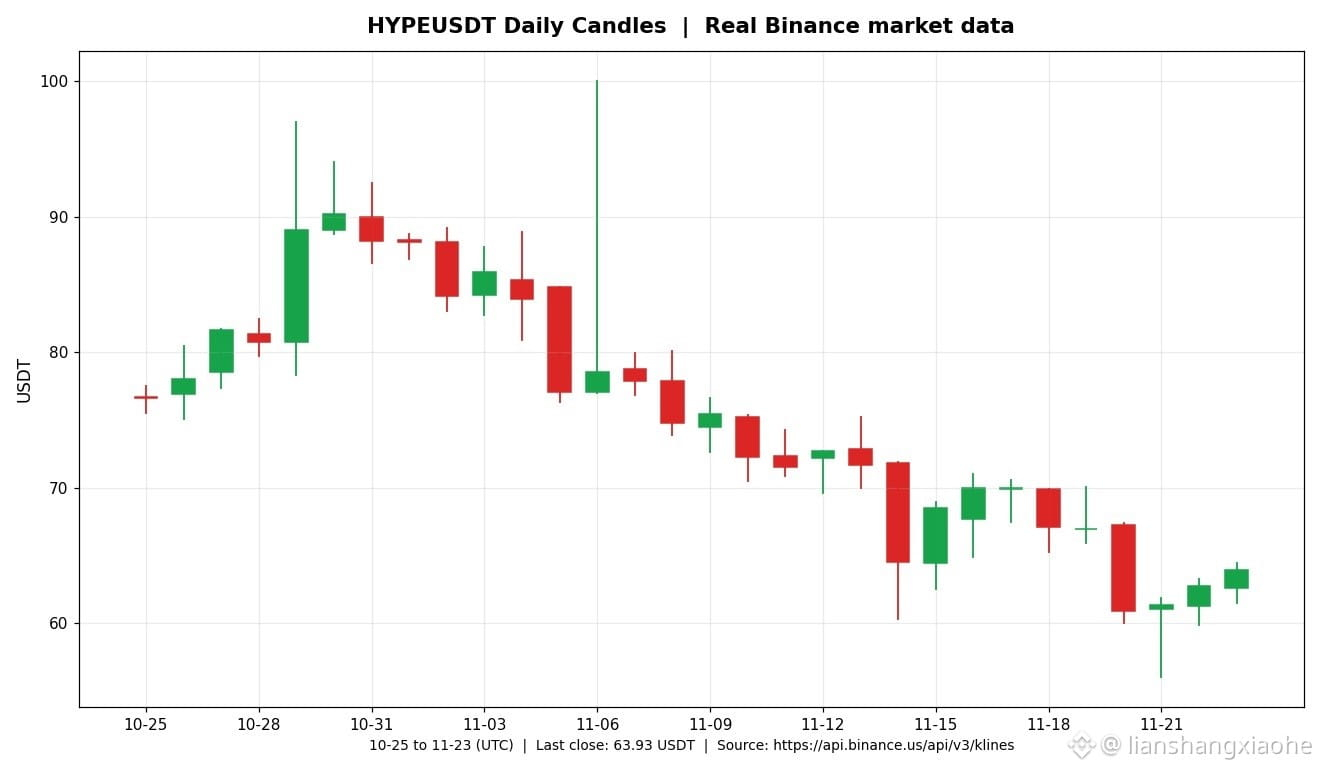
When HYPE got hammered down to 55.8 on Saturday, everyone across the internet was calling it zero. Today it has already touched 64.52, rebounding 15.6% from the low in two days. If you bought the dip with 10,000 U at Saturday’s low and sold at the high, that would be 11,563 U, for a net profit of 1,563 U; if you bought in at yesterday’s close of 63.13 and sold at today’s high, you could still make 220 U. Don’t just stare at its 7-day drop of 8.3% and 30-day drop of 16.5% and declare it dead—this kind of bounce after a selloff is only caught by people bold enough to step in when the market is bloody. The question is: can it hold above 64.5?#HYPE $HYPE
When HYPE got hammered down to 55.8 on Saturday, everyone across the internet was calling it zero. Today it has already touched 64.52, rebounding 15.6% from the low in two days. If you bought the dip with 10,000 U at Saturday’s low and sold at the high, that would be 11,563 U, for a net profit of 1,563 U; if you bought in at yesterday’s close of 63.13 and sold at today’s high, you could still make 220 U. Don’t just stare at its 7-day drop of 8.3% and 30-day drop of 16.5% and declare it dead—this kind of bounce after a selloff is only caught by people bold enough to step in when the market is bloody. The question is: can it hold above 64.5?#HYPE $HYPE
90

A trading volume of 671 million U bought only a 1.19% gain. That ratio itself tells us more than the price does. HYPE is currently at 63.794, with 24-hour perpetuals volume back at 671.0M USDT, but the funding rate is only +0.0018%/4h, and long accounts make up 62.3%. Volume is back, but the people willing to pay for a directional bet aren’t—and the fact that both are true at once tells us today’s volume is turnover, not conviction.
First dimension: the turnover ratio. The 24-hour volume of 671.0M corresponds to open interest of 261 million USDT, for a ratio of about 2.57. Put another way, positions in the market have turned over nearly once in less than a day, on average. When a genuine directional surge in volume occurs, volume turns into open interest, positions build up, and funding rates get pushed higher. Here, volume has surged, open interest hasn’t expanded in step, and the funding rate is scraping the floor—a classic sign of T+0 capital moving positions around: market-making, arbitrage, or simply short-term high-frequency traders repeatedly trading with each other in the same price range. This kind of volume may look lively, but it has no vote on the next trend.
Second dimension: translating the funding rate into real money. +0.0018%/4h works out to roughly 3.9% annualized. Percentages alone can be numbing, so let’s calculate it another way: with 261 million USDT in open interest, longs collectively transfer about $4,700 to shorts every four hours. With six settlements a day, that comes to less than $30,000 in total, while daily trading volume is 671 million. In other words, both sides are paying just 0.0004% of daily volume per day for their directional bets. For an asset trading over 600 million in volume, directional pricing is this cheap because nobody is really paying up to bet on a rise. Leveraged longs aren’t crowded, which also means there’s currently no fuel for a short squeeze.
Third dimension: account composition and capital composition are diverging. Long accounts make up 62.3%, so longs clearly outnumber shorts, yet the funding rate is only +0.0018%/4h—more people, less money, smaller positions. This is a classic retail structure: lots of small accounts agree on direction, but their combined positions aren’t large enough to push the funding rate higher. The heavyweight capital in open interest is what really moves price, and right now it isn’t taking sides. For longs, 62.3% isn’t an advantage; it’s a risk. It represents a pool of positions with similar entry costs, limited tolerance for drawdowns, and no paid protection. If price starts falling, these accounts’ stop-losses and position cuts may cluster in the same range, creating a self-reinforcing downward push.
Fourth dimension: characterizing the pattern. Volume is back, price hasn’t moved, and the funding rate is barely above zero. This combination has appeared repeatedly lately and usually points to one of two scenarios: either capital is waiting for something that hasn’t materialized yet, providing liquidity without taking a directional position; or tokens are changing hands, with buyers’ and sellers’ outlooks canceling each other out. What these scenarios have in common is that disagreement has been thoroughly traded, but consensus hasn’t formed. This is the stage where fake breakouts are more likely than one-way moves: price pops higher without funding following, or drops without open interest collapsing, and neither side can hold onto participants.
So what signal would count? Watch the funding rate, not the price. A reversal worth following would be a day when 24-hour volume stays above 600 million and the funding rate rises above +0.005%/4h—that would mean people are starting to pay real money to hold positions, rather than direction being almost free, as it is now. Conversely, if volume stays above 600 million but the funding rate falls back to zero or turns negative, that’s not indecision; it means someone is selling at breakeven. At that point, the significance of 63.794 would change completely.
My personal view: this move looks more like a turnover zone than a launchpad. Higher volume has brought liquidity, but not a directional premium. The 62.3% share of long accounts is built up from small positions and can’t support a trend. If you want to participate, waiting for the funding rate to show its hand on the right side of the move is much more worthwhile than guessing within the 63–64 range. Put your stop below the level where long accounts would start cutting positions en masse, not at the level you simply feel “should hold.” In the short term, the most expensive cost has never been fees—it’s taking a side too early where there’s no consensus.
#HYPE #Crypto

·
--
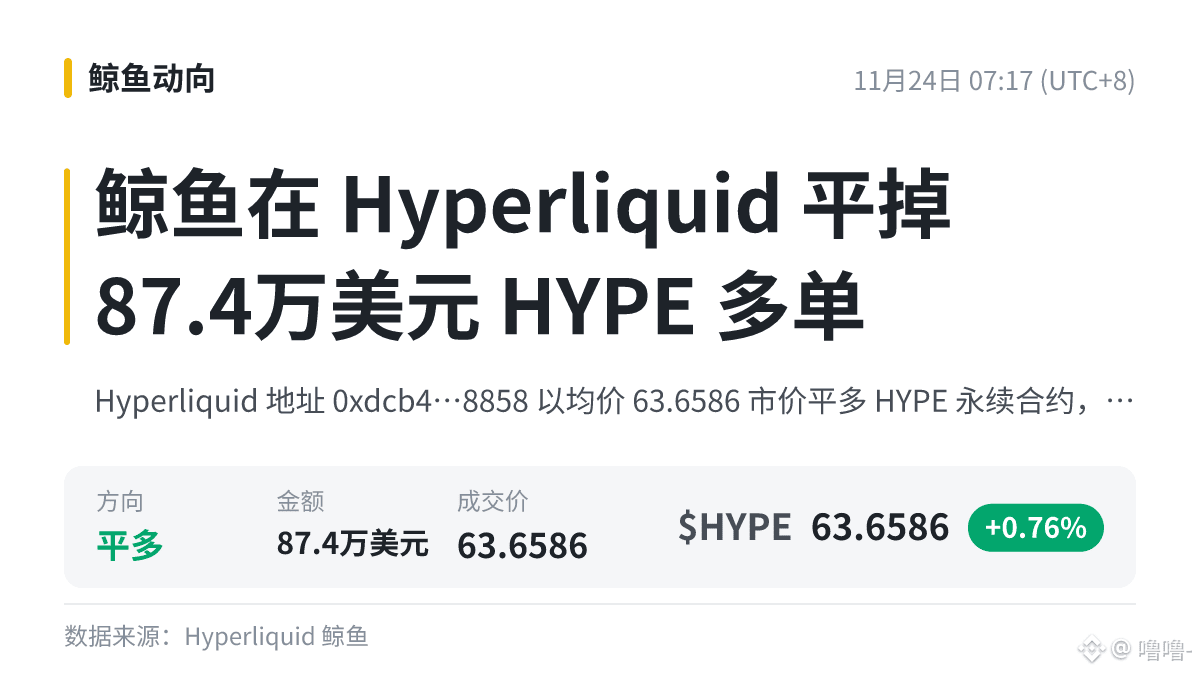
Whale movements: $HYPE
0xdcb4…8858|Hyperliquid|Closed a long position worth $874,000
Price 63.6586|24h +0.76%
Large on-chain orders often amplify short-term sentiment, but they don't determine the trend. Just one perspective—feel free to add your thoughts.
#HYPE
Whale movements: $HYPE
0xdcb4…8858|Hyperliquid|Closed a long position worth $874,000
Price 63.6586|24h +0.76%
Large on-chain orders often amplify short-term sentiment, but they don't determine the trend. Just one perspective—feel free to add your thoughts.
#HYPE
0xdcb4…8858|Hyperliquid|Closed a long position worth $874,000
Price 63.6586|24h +0.76%
Large on-chain orders often amplify short-term sentiment, but they don't determine the trend. Just one perspective—feel free to add your thoughts.
#HYPE
1
Log in to explore more content
Join global crypto users on Binance Square
⚡️ Get latest and useful information about crypto.
💬 Trusted by the world’s largest crypto exchange.
👍 Discover real insights from verified creators.
Email / Phone number
Trending Topics
1
#NVIDIAReinstatesJensenHuangasCEO
113,964 views
945 Discussing
2
#WillMarketsStageAThanksgivingReliefRally?
222,303 views
1,919 Discussing
3
#WillOctCorePCEShiftFedHikeExpectations?
77,719 views
829 Discussing
4
#BitcoinEndsRecord17DayStreakOfLowerHighs
37,033 views
347 Discussing
5
#TradersPriceOut50bpDecemberFedHike
21,446 views
222 Discussing
6
#EvolveAtBinanceBlockchainWeek
168,364 views
1,102 Discussing
7
#TrumpBackedAmericanBitcoinRaisesHoldingsToOver8500BTC
2,296 views
43 Discussing
8
#MuskWarnsOfAICashCrunch
94,565 views
731 Discussing
9
#TradFiForBeginners
1.1M views
6,065 Discussing
10
#SkyPSMUSDCLiquidityReboundsTo$1.77B
1,521 views
17 Discussing