

#apr
apr
1.6M views
10,826 Discussing
Hot
Latest


·
--
Bearish
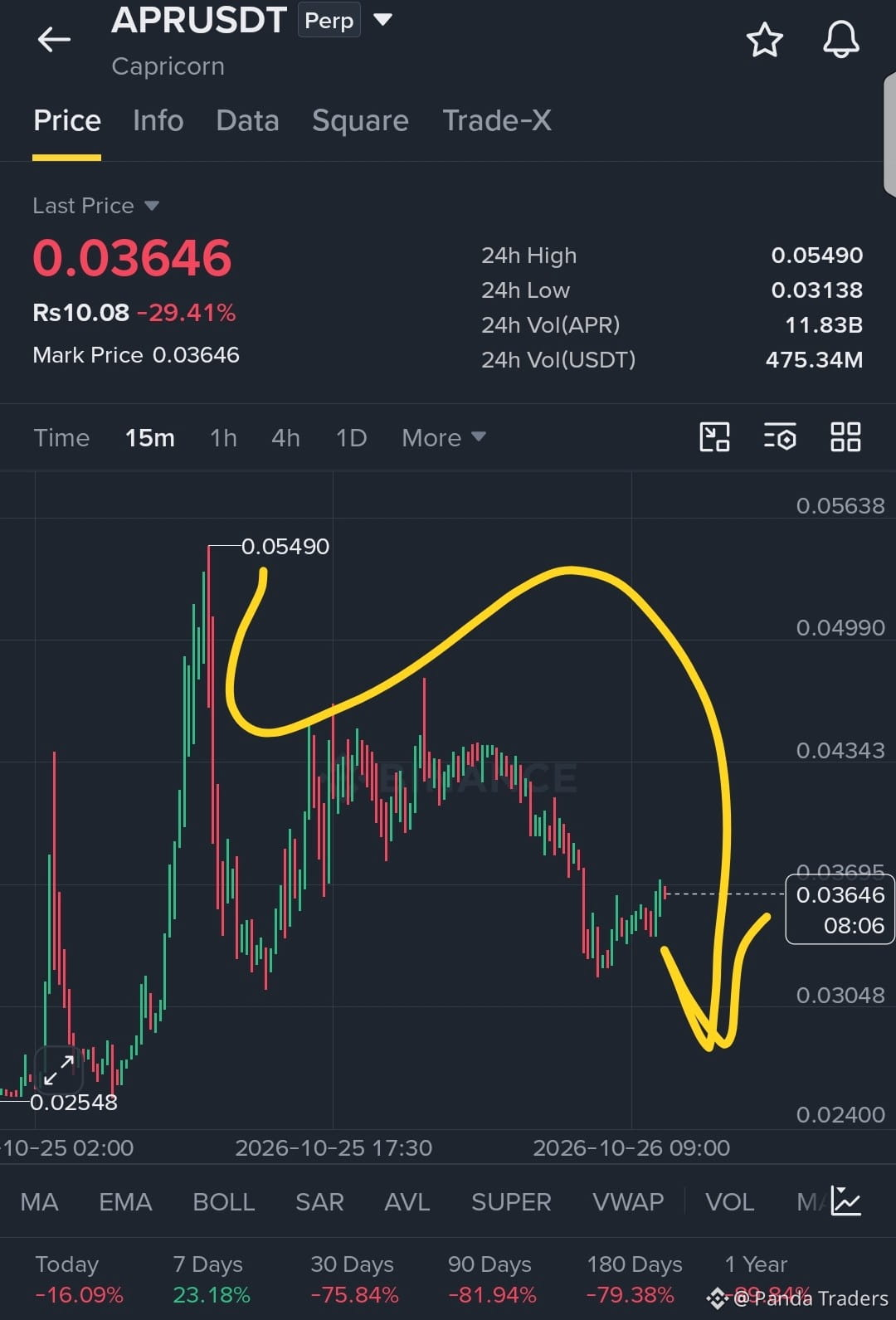
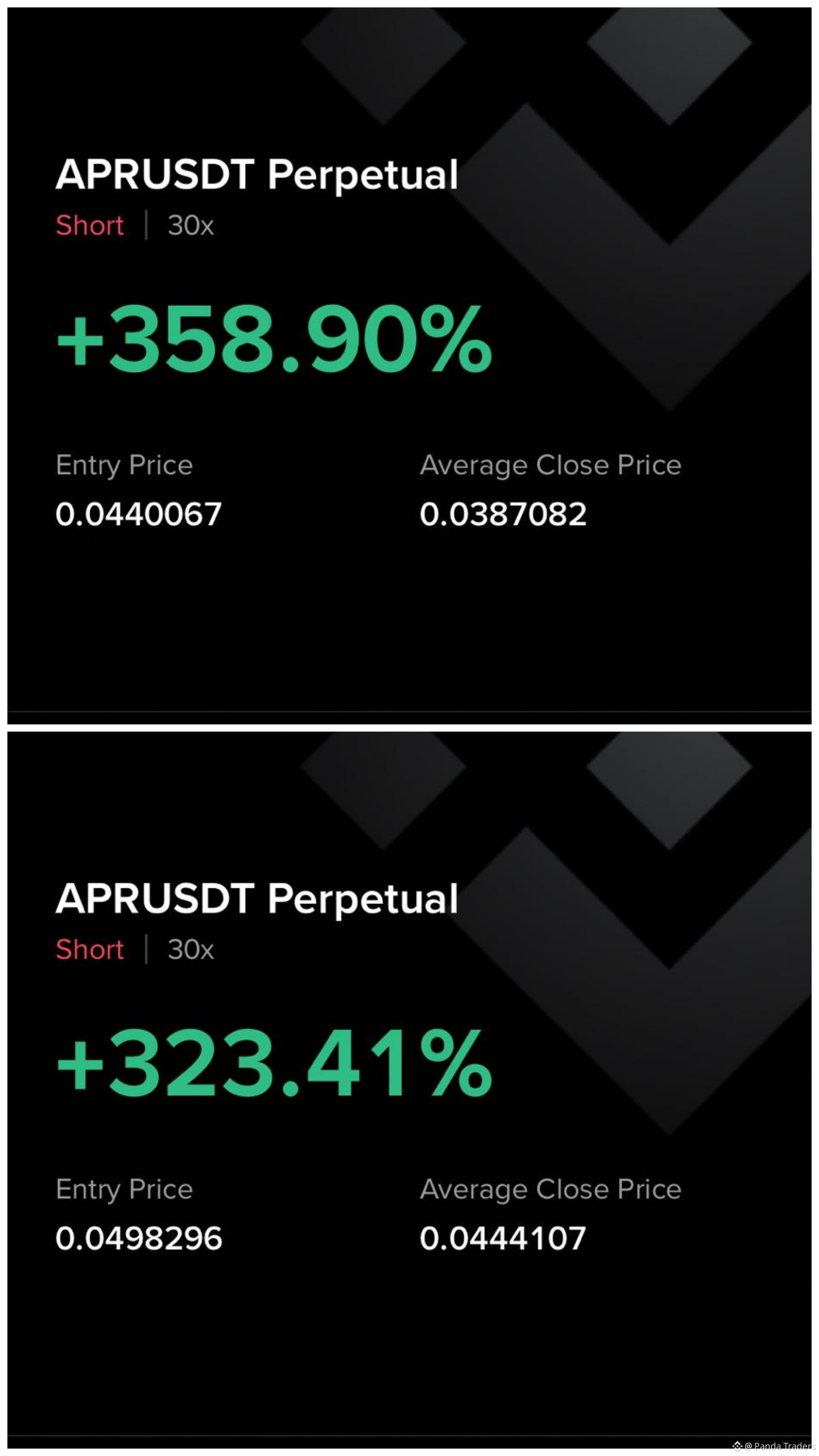
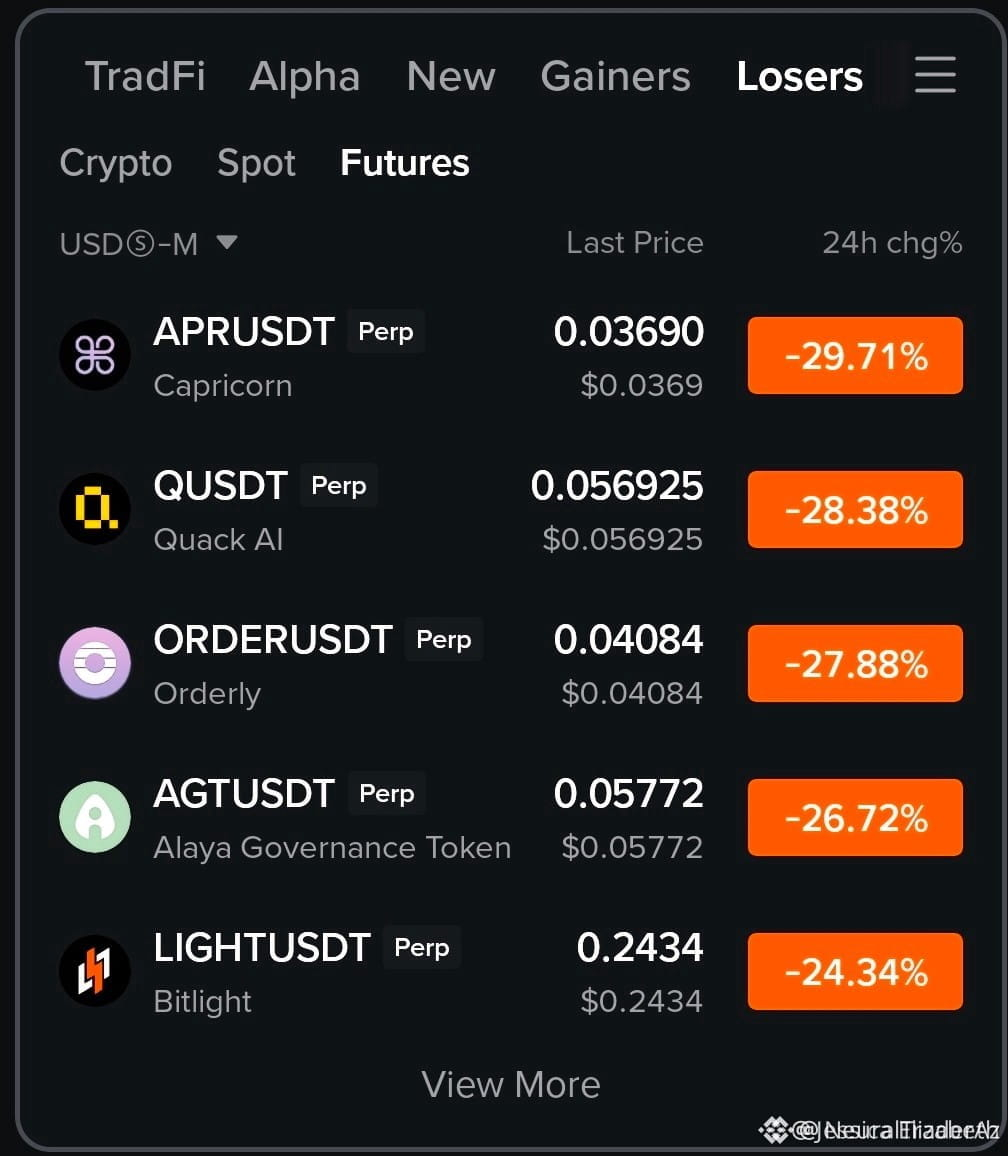
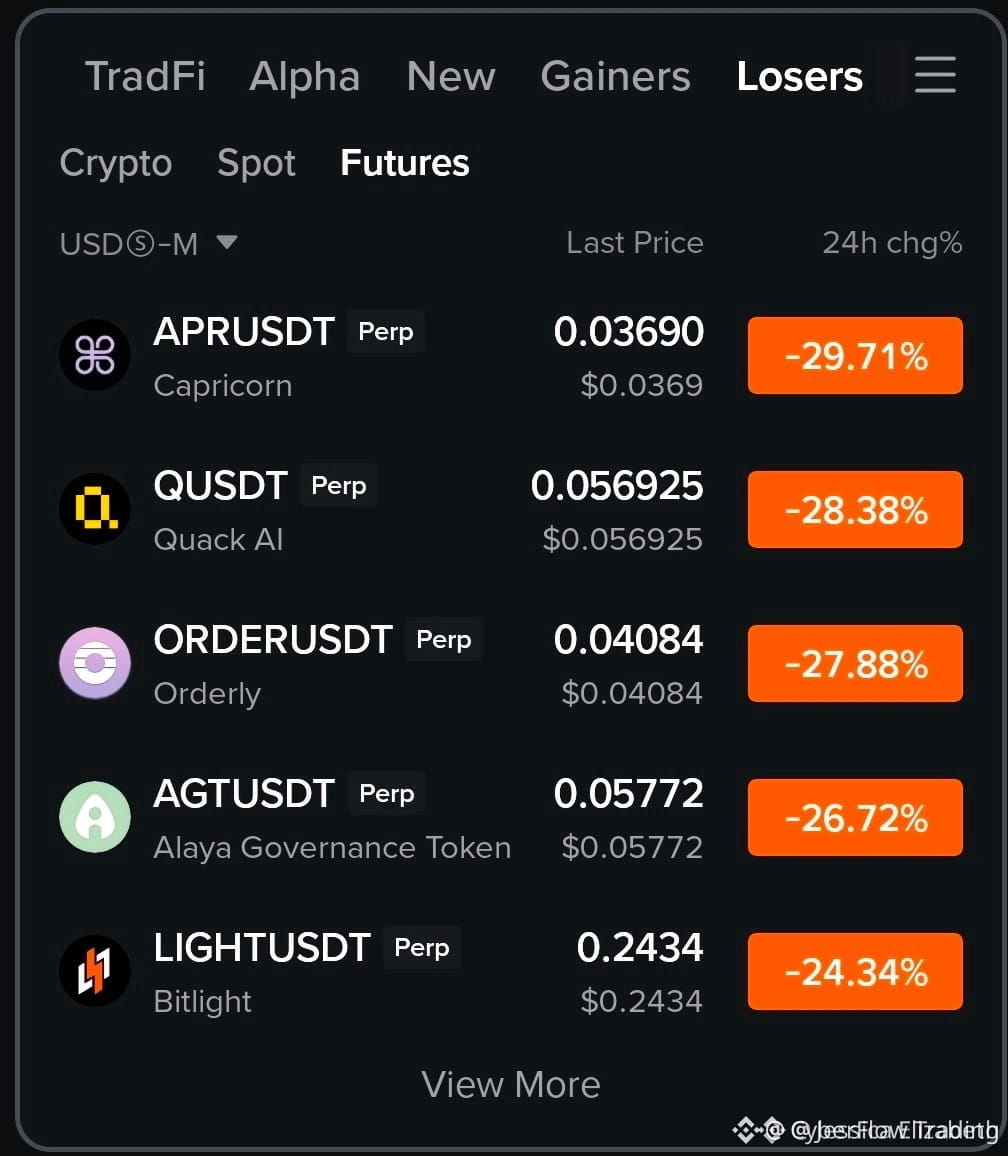
$APR Dumped exactly as planned ✌️🤤🤤🤤
All targets done one by one
This is how my Members are printing Money like a machine under my supervision 🤤🤤🤤🤤🤤
Back to back accurate predictions 👌👌👌 what else Can I do for you my Pandas 😭 Im telling everything beforehand
Congratulations 🎉
{future}(APRUSDT)
#APR #BinancePick
$APR Dumped exactly as planned ✌️🤤🤤🤤
All targets done one by one
This is how my Members are printing Money like a machine under my supervision 🤤🤤🤤🤤🤤
Back to back accurate predictions 👌👌👌 what else Can I do for you my Pandas 😭 Im telling everything beforehand
Congratulations 🎉
#APR #BinancePick
All targets done one by one
This is how my Members are printing Money like a machine under my supervision 🤤🤤🤤🤤🤤
Back to back accurate predictions 👌👌👌 what else Can I do for you my Pandas 😭 Im telling everything beforehand
Congratulations 🎉
#APR #BinancePick
Panda Traders
·
--
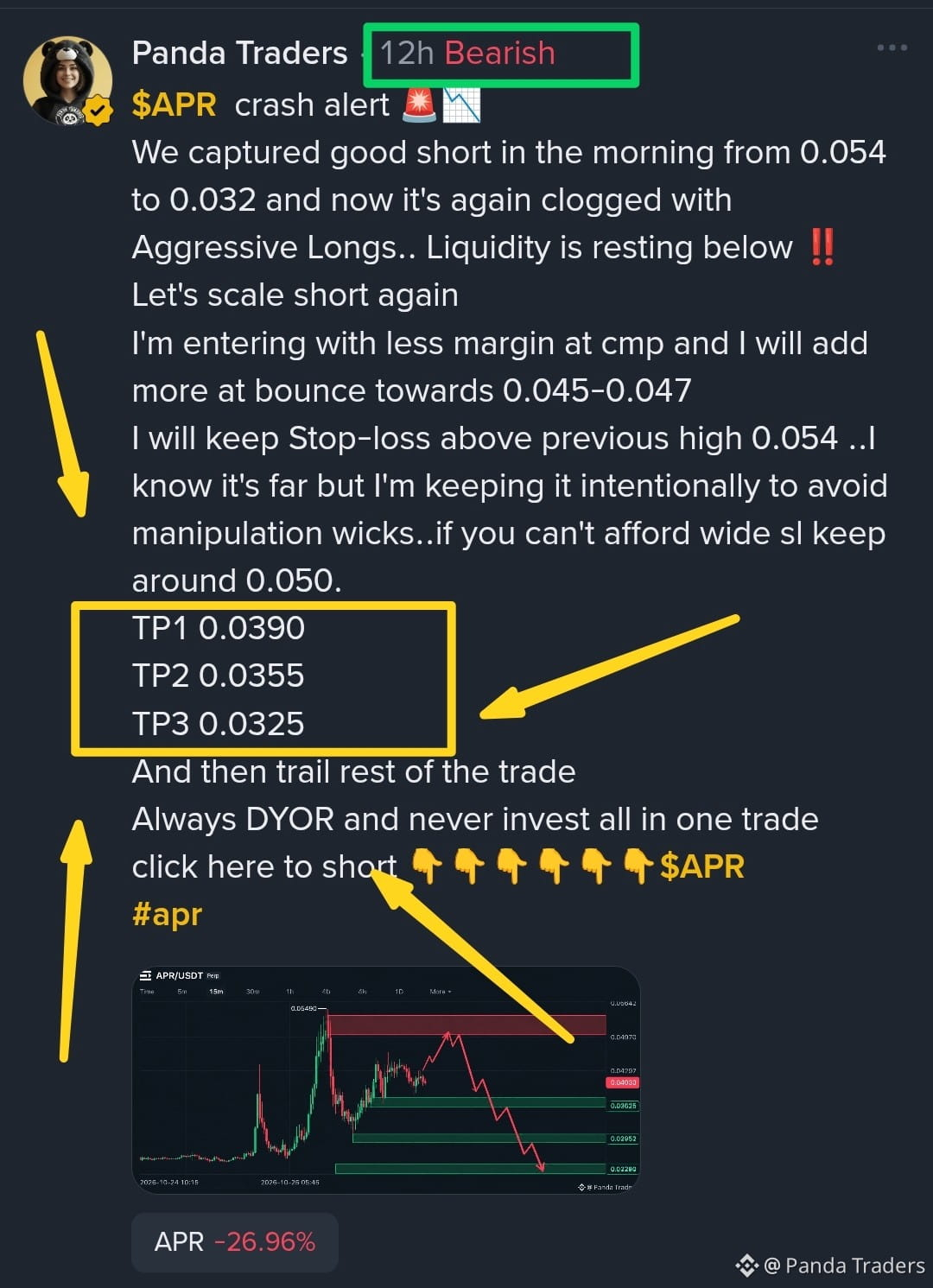
Bearish$APR crash alert 🚨📉
We captured good short in the morning from 0.054 to 0.032 and now it's again clogged with Aggressive Longs.. Liquidity is resting below ‼️
Let's scale short again
I'm entering with less margin at cmp and I will add more at bounce towards 0.045-0.047
I will keep Stop-loss above previous high 0.054 ..I know it's far but I'm keeping it intentionally to avoid manipulation wicks..if you can't afford wide sl keep around 0.050.
TP1 0.0390
TP2 0.0355
TP3 0.0325
And then trail rest of the trade
Always DYOR and never invest all in one trade
click here to short 👇👇👇👇👇👇$APR
#apr
3
2k

·
--
Article
APR Under the Spotlight! Are We About to Witness an Unexpected Price Surge?$APR
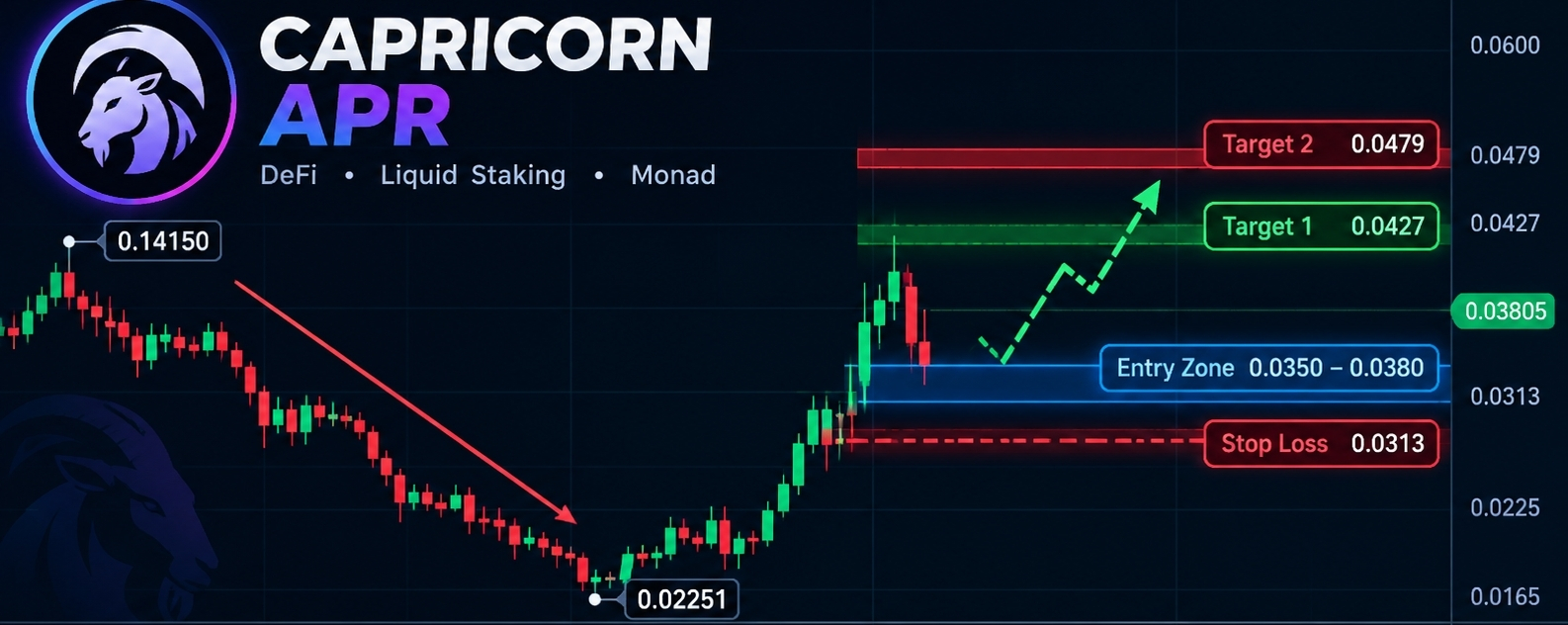
Something about Capricorn (APR) deserves attention! After a prolonged decline pushed the price down to $0.02251, the coin staged a strong rebound, reaching $0.04792 before pulling back again. This movement presents us with two possibilities: buyers may be attempting to regain control, or the recent rally may have been nothing more than a temporary rebound. The real question is not how much the coin has risen, but whether it can maintain its momentum and continue moving upward.
🔍 The Next Numbers Could Reveal the Direction! According to the chart, the price is trading around $0.03805, with $0.0427 emerging as the first resistance level, followed by the recent high of $0.0479. Breaking through these levels with increasing trading volume could give the bullish movement additional strength, while failure to break them could lead to another correction. The MACD indicator shows improving momentum on the 4-hour timeframe, but the most important signal will be whether price action confirms this improvement rather than relying on the indicator alone.
🐋 There Is Another Factor You Shouldn't Ignore! Token unlocks could affect the circulating supply, especially if some recipients decide to sell. Therefore, monitoring the token unlock schedule, official announcements, and trading volume may help us understand the pressures facing the price. On the other hand, if demand continues to increase and the market absorbs the additional supply, the coin could have an opportunity to extend its recovery. However, there is currently no signal confirming that this scenario will happen.
🚀 What If APR Starts a New Bullish Rally? Based on the price of $0.03805, a 50% increase would bring the price to $0.05708, while a 100% increase would take it to $0.07610. These are hypothetical calculations, not guaranteed predictions, and achieving them would require strong buying momentum. Now, I want to hear your opinion: Do you believe APR is preparing for a bullish surprise, or will the price return to test the bottom? Share your predictions in the comments, and let's see which scenario receives the most support!
#APR #CryptoAnalysis #BinanceSquare
APR Under the Spotlight! Are We About to Witness an Unexpected Price Surge?
$APR
Something about Capricorn (APR) deserves attention! After a prolonged decline pushed the price down to $0.02251, the coin staged a strong rebound, reaching $0.04792 before pulling back again. This movement presents us with two possibilities: buyers may be attempting to regain control, or the recent rally may have been nothing more than a temporary rebound. The real question is not how much the coin has risen, but whether it can maintain its momentum and continue moving upward.
🔍 The Next Numbers Could Reveal the Direction! According to the chart, the price is trading around $0.03805, with $0.0427 emerging as the first resistance level, followed by the recent high of $0.0479. Breaking through these levels with increasing trading volume could give the bullish movement additional strength, while failure to break them could lead to another correction. The MACD indicator shows improving momentum on the 4-hour timeframe, but the most important signal will be whether price action confirms this improvement rather than relying on the indicator alone.
🐋 There Is Another Factor You Shouldn't Ignore! Token unlocks could affect the circulating supply, especially if some recipients decide to sell. Therefore, monitoring the token unlock schedule, official announcements, and trading volume may help us understand the pressures facing the price. On the other hand, if demand continues to increase and the market absorbs the additional supply, the coin could have an opportunity to extend its recovery. However, there is currently no signal confirming that this scenario will happen.
🚀 What If APR Starts a New Bullish Rally? Based on the price of $0.03805, a 50% increase would bring the price to $0.05708, while a 100% increase would take it to $0.07610. These are hypothetical calculations, not guaranteed predictions, and achieving them would require strong buying momentum. Now, I want to hear your opinion: Do you believe APR is preparing for a bullish surprise, or will the price return to test the bottom? Share your predictions in the comments, and let's see which scenario receives the most support!
#APR #CryptoAnalysis #BinanceSquare
1
342

·
--
Bullish
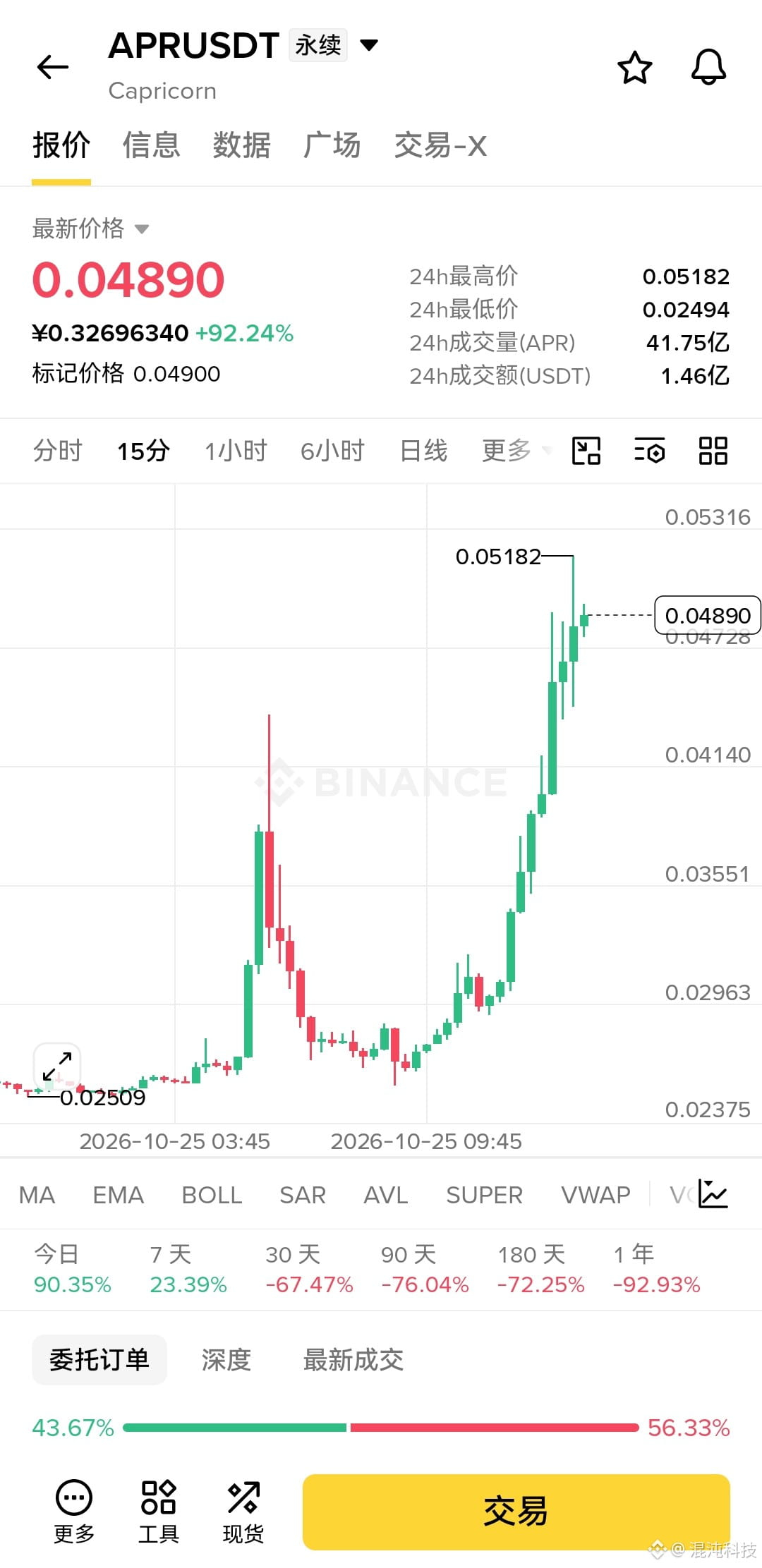
$APR The market is moving faster and faster, and the chart pattern is getting stranger. It’s a bit risky if it can’t hold above 0.05. On the other hand, if it moves up, it’ll probably rally again. There’s nothing wrong with going long with the trend. First targets could be 0.07 or even above 0.1. This is a new starting point for a second launch; if it succeeds, the gains could be substantial. Lower leverage is better! #APR
{future}(APRUSDT)
$APR The market is moving faster and faster, and the chart pattern is getting stranger. It’s a bit risky if it can’t hold above 0.05. On the other hand, if it moves up, it’ll probably rally again. There’s nothing wrong with going long with the trend. First targets could be 0.07 or even above 0.1. This is a new starting point for a second launch; if it succeeds, the gains could be substantial. Lower leverage is better! #APR
1.7k
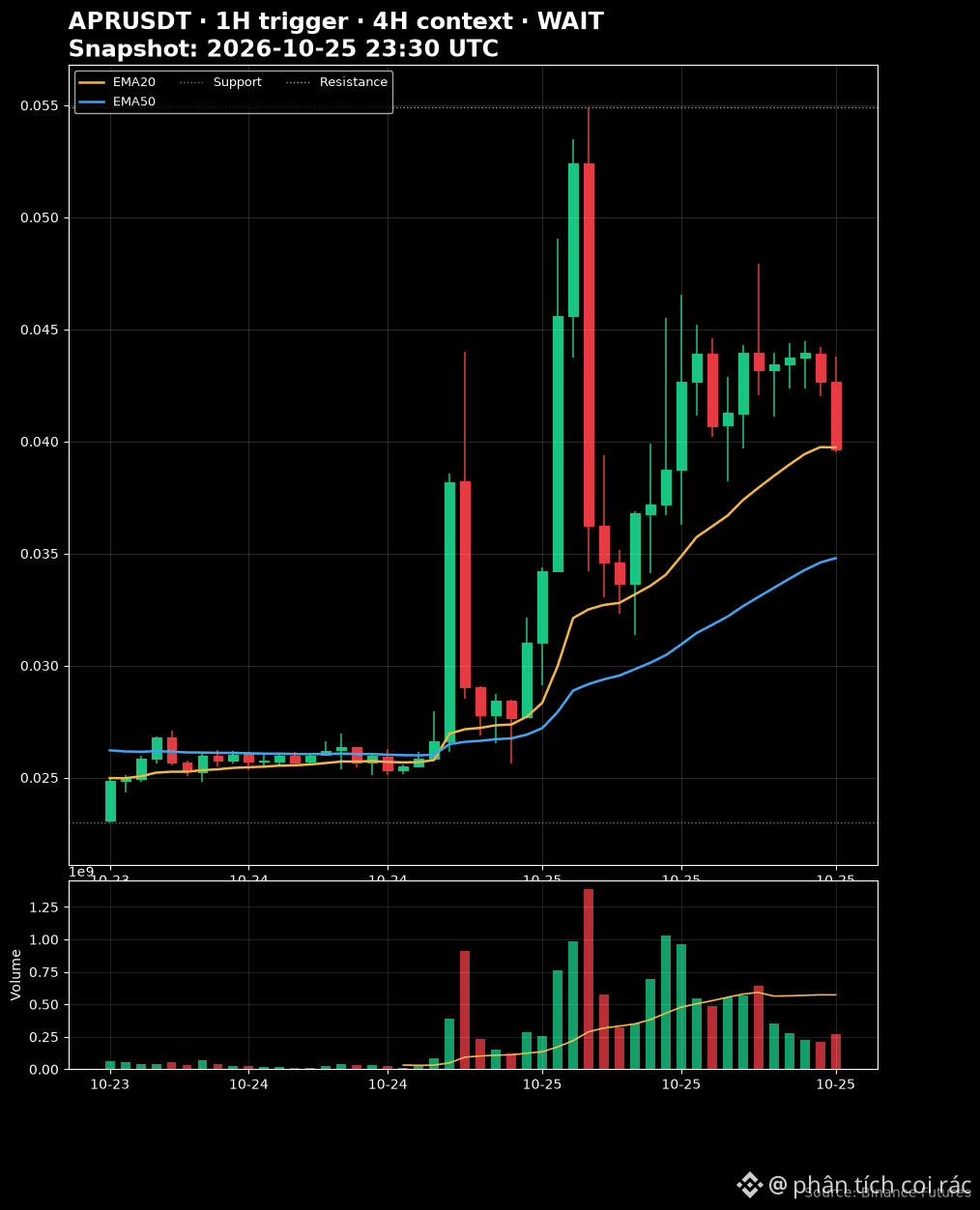
$APR: The 1H candle has still not closed outside the 0.0382–0.04449 consolidation range.
APRUSDT is at 0.03981, while the 4H RSI at 80.1 indicates that bullish momentum is overheated. The main risk is that 1H volume is only 0.48, so a breakout signal may lack confirmation.
Pair: APRUSDT
Scenario: WAIT
Trigger: Wait for a 1H candle to close outside the 0.0382–0.04449 range with confirming volume
Invalidation: Do not trigger if the price remains within the consolidation range
How would you wait for a 1H candle to close outside 0.0382–0.04449 with confirming volume?
#APR #Crypto
This analysis is for reference only and is not investment advice.
$APR : The 1H candle has still not closed outside the 0.0382–0.04449 consolidation range.
APRUSDT is at 0.03981, while the 4H RSI at 80.1 indicates that bullish momentum is overheated. The main risk is that 1H volume is only 0.48, so a breakout signal may lack confirmation.
Pair: APRUSDT
Scenario: WAIT
Trigger: Wait for a 1H candle to close outside the 0.0382–0.04449 range with confirming volume
Invalidation: Do not trigger if the price remains within the consolidation range
How would you wait for a 1H candle to close outside 0.0382–0.04449 with confirming volume?
#APR #Crypto
This analysis is for reference only and is not investment advice.
155

$APR USDT Pump Cooling Watch the Retest
#APR is up 47.7% but well below its $0.05490 high. I’d avoid chasing; a hold above $0.0400 may support a bounce.
{future}(APRUSDT)
Entry: $0.0395–0.0410
SL: $0.0378
TP: $0.0423 / $0.0494
Risk management is essential.
This is not financial advice; do your own research.
$APR USDT Pump Cooling Watch the Retest
#APR is up 47.7% but well below its $0.05490 high. I’d avoid chasing; a hold above $0.0400 may support a bounce.
Entry: $0.0395–0.0410
SL: $0.0378
TP: $0.0423 / $0.0494
Risk management is essential.
This is not financial advice; do your own research.
#APR is up 47.7% but well below its $0.05490 high. I’d avoid chasing; a hold above $0.0400 may support a bounce.
Entry: $0.0395–0.0410
SL: $0.0378
TP: $0.0423 / $0.0494
Risk management is essential.
This is not financial advice; do your own research.
1
420

·
--
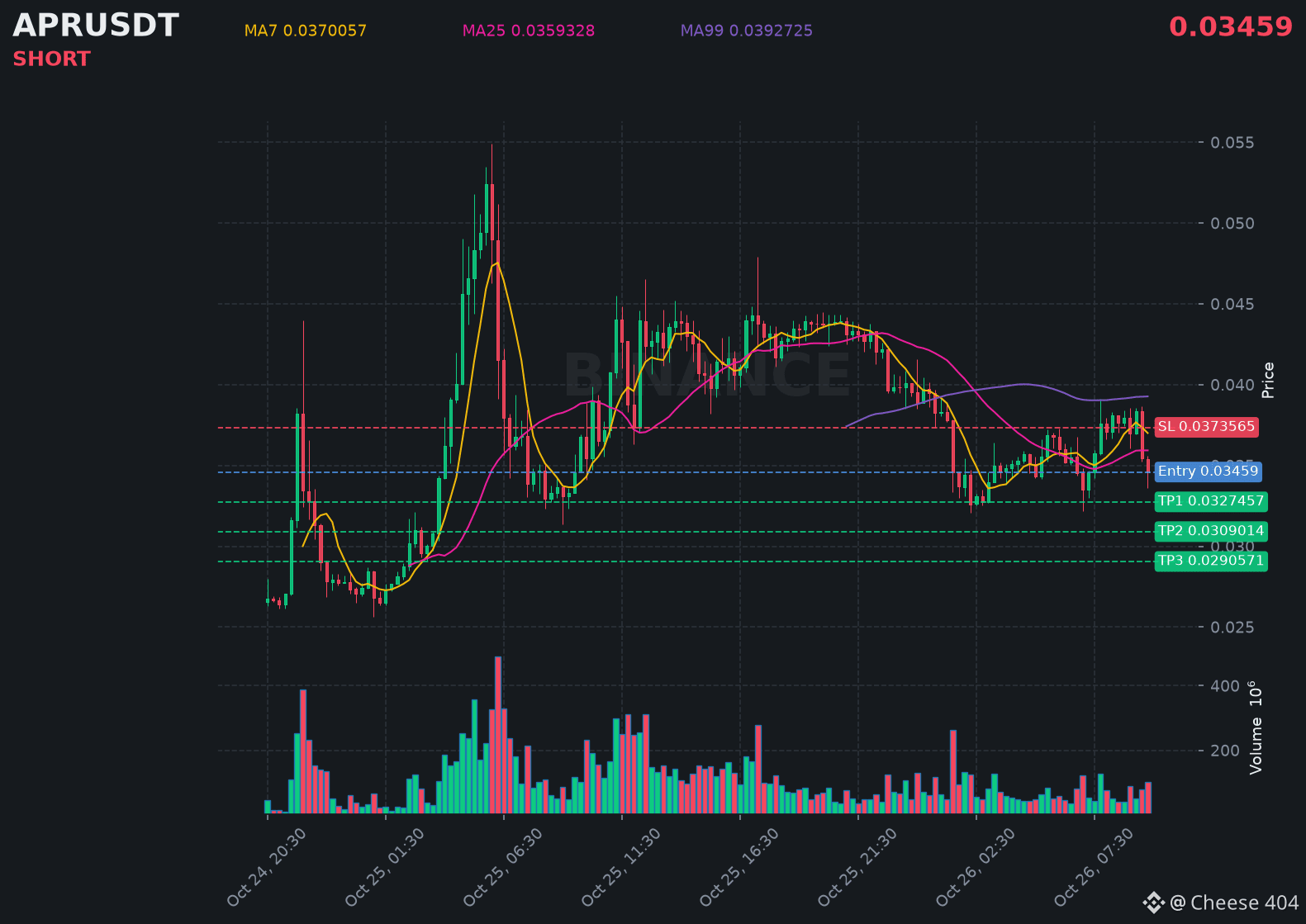
$APR is struggling below resistance, hinting at another leg down in the coming hours.
📍 @ 0.03459 | Volume: 3.56M USD
RSI 43 | EMA20: 0.0363046 USD
📈 Trade Plan:
📈 Entry: 0.0340367 – 0.0351433
🛑 Stop Loss: 0.0373565
🎯 TP1: 0.0327457
🎯 TP2: 0.0309014
🎯 TP3: 0.0290571
Waiting for confirmation, then riding the downtrend.
👉 $APR 👈 Catch it
#APR
📍 @ 0.03459 | Volume: 3.56M USD
RSI 43 | EMA20: 0.0363046 USD
📈 Trade Plan:
📈 Entry: 0.0340367 – 0.0351433
🛑 Stop Loss: 0.0373565
🎯 TP1: 0.0327457
🎯 TP2: 0.0309014
🎯 TP3: 0.0290571
Waiting for confirmation, then riding the downtrend.
👉 $APR 👈 Catch it
#APR
32

·
--
The 24h gain recorded for APR 11 hours ago was +29.21%; at the close of the 5m period at 2026-10-26 17:45 Beijing time, it gave back -6.42%. These figures come from different timeframes; this isn’t a new alert, but an observation of weakening on the 5m chart after a strong 24h run.
On the futures market, at 2026-10-26 17:45:02 Beijing time, the observed price was 0.03545, 24h turnover was 407 million, price was below the VWAP of 0.035866, and volume was 3.3x.
Can price reclaim the VWAP at 0.035866 on a pullback, and will volume shrink back immediately after expanding to 3.3x? This is only the opening act—the real drama is still to come.
#APR #UnusualMovementAlert

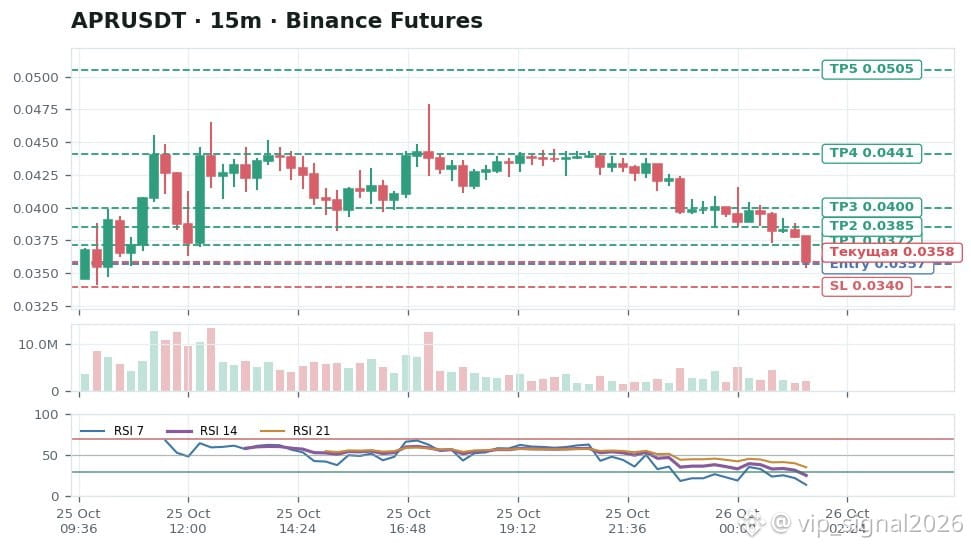
$APR LONG
Taking the pullback? The plan is based on a possible upward move through a stepped sequence of targets.
If momentum gets going, prices could steadily overcome the marked levels. The alternative scenario allows for a drop below the protective barrier if selling pressure intensifies.
🔹Entry zone: 0.03567$
✅Take profit 1: 0.03718669$
✅Take profit 2: 0.03853785$
✅Take profit 3: 0.04001195$
✅Take profit 4: 0.04411203$
✅Take profit 5: 0.05052914$
🛡Protection: 0.03395784$
📈 RSI14: m1 20.4 • m5 26.2 • m15 25.2 • m30 35.6
📊 VOL: m1 $1.6M • m5 $2.1M • m15 $2.1M • m30 $2.2M
🧲 OI: now $11.2M • 5m -2.5% • 15m -1.2% • 30m -1.3%
⚠️ This is not financial advice. Trade at your own risk. DYOR.
#APR #BIP110ForkSignalingExpectedThisWeekend #AKE 📈
$APR
17

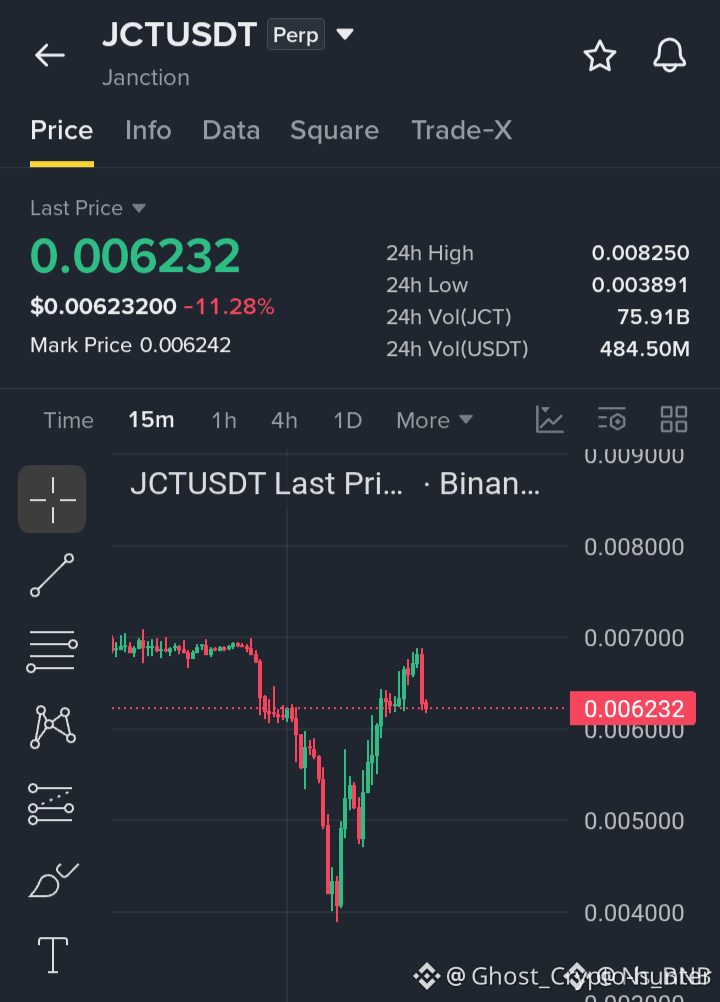
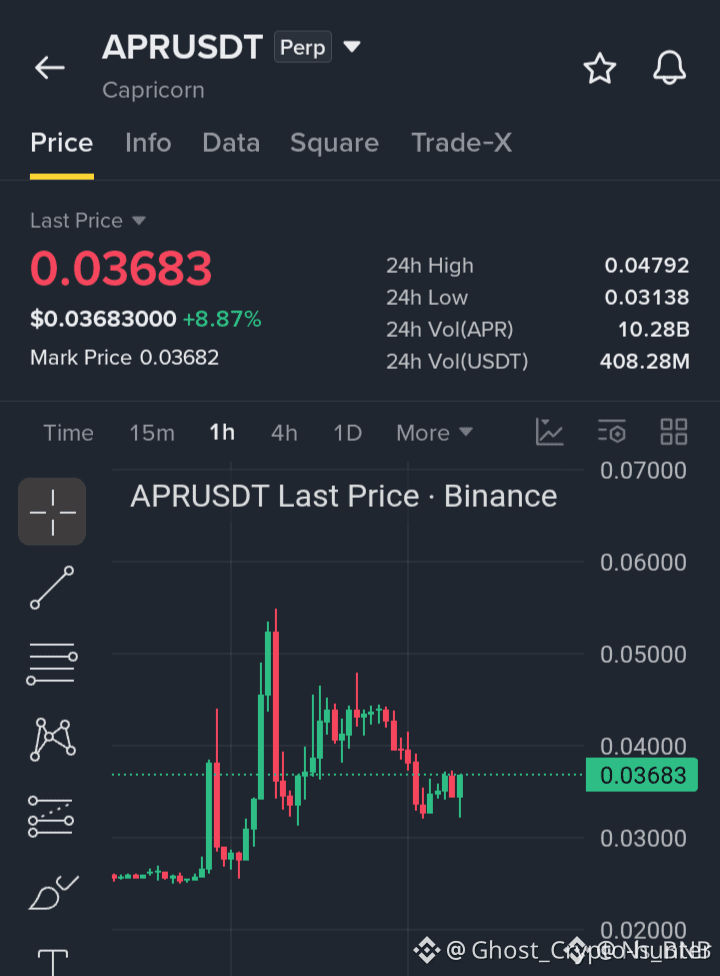
🔥💰 2 SHORT TRADES — BIG WINS! 💪😎
$JCT ✅ $APR ✅
If you followed my signals, congratulations! 🎉💸 Enjoy your profits, Crypto Army! 🚀
📸 SHOW ME YOUR PROFIT PANEL! 👀🔥
Drop your $JCT & #APR results in the comments! 💰👇
MORE OPPORTUNITIES, MORE MOVES! 🐋📉
{future}(APRUSDT)
{future}(JCTUSDT)
#Crypto #Trading #ShortTrade #Binance
🔥💰 2 SHORT TRADES — BIG WINS! 💪😎
$JCT ✅ $APR ✅
If you followed my signals, congratulations! 🎉💸 Enjoy your profits, Crypto Army! 🚀
📸 SHOW ME YOUR PROFIT PANEL! 👀🔥
Drop your $JCT & #APR results in the comments! 💰👇
MORE OPPORTUNITIES, MORE MOVES! 🐋📉
#Crypto #Trading #ShortTrade #Binance
$JCT ✅ $APR ✅
If you followed my signals, congratulations! 🎉💸 Enjoy your profits, Crypto Army! 🚀
📸 SHOW ME YOUR PROFIT PANEL! 👀🔥
Drop your $JCT & #APR results in the comments! 💰👇
MORE OPPORTUNITIES, MORE MOVES! 🐋📉
#Crypto #Trading #ShortTrade #Binance
1
651

·
--
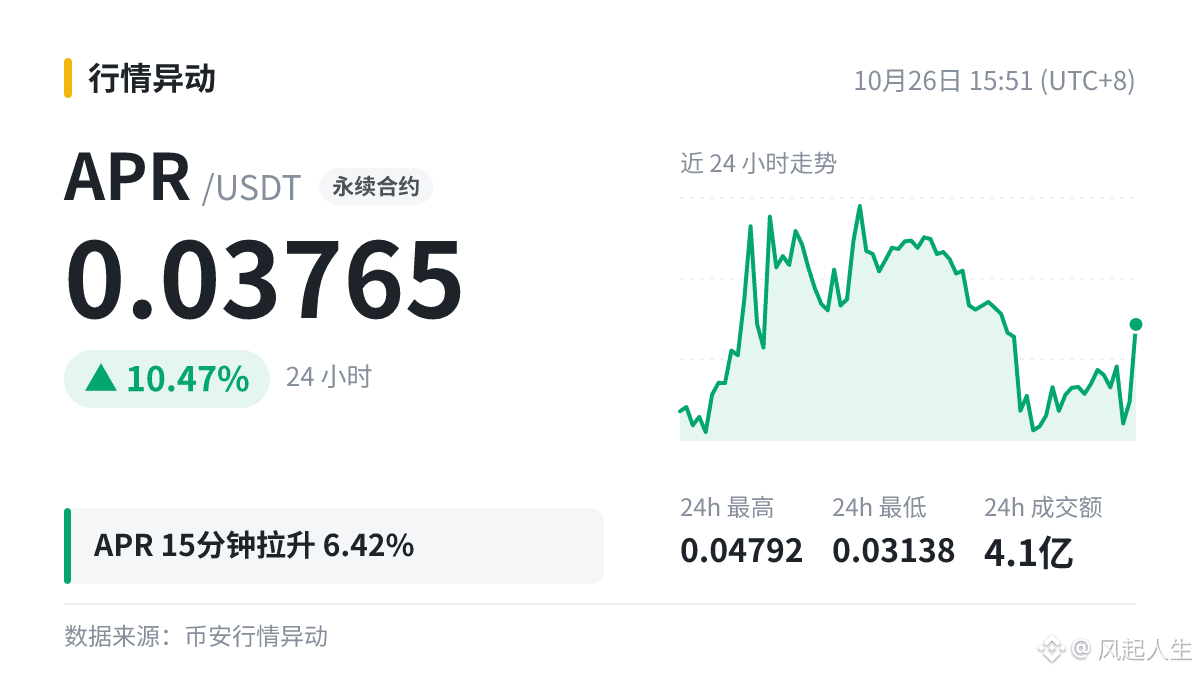
$APR 15 minutes: +6.42%, current price 0.03765. If you’re thinking of chasing it, guys, first consider these three questions:
① It still hasn’t moved above the 24-hour high of 0.04792—is the risk/reward still worthwhile?
② This is a sharp, sudden spike. What will you do if a pullback comes?
③ Where’s your exit plan? Do you have an answer?
Think through all three before deciding. If you haven’t, you’re better off letting this one pass.
#APR
5

·
--
Set your stop-loss outside key levels, so you don’t need to panic even when volatility gets scary.
Here’s one right in front of us: $APR surged 6.42% in 15 minutes to 0.03751. Don’t chase just because others are making money; everyone has different entry costs and a different ability to withstand volatility.
#APR
Data is for reference only. Make your own trading decisions.
Here’s one right in front of us: $APR surged 6.42% in 15 minutes to 0.03751. Don’t chase just because others are making money; everyone has different entry costs and a different ability to withstand volatility.
#APR
Data is for reference only. Make your own trading decisions.
9

·
--
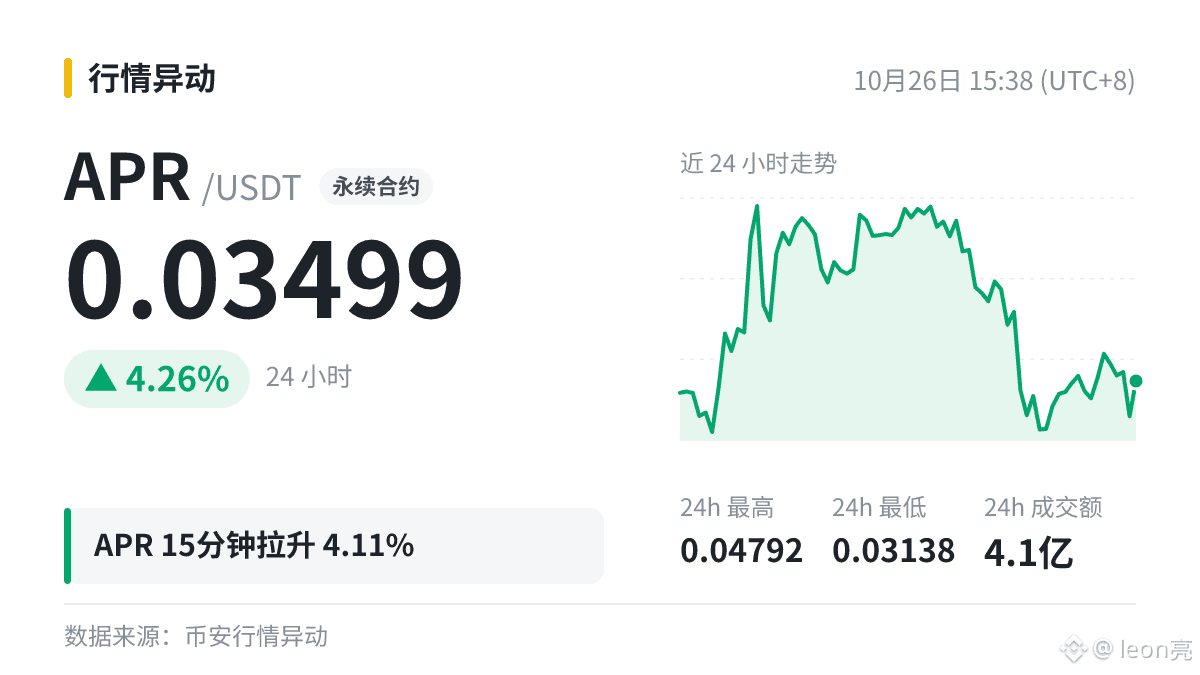
I'm not very good at predicting tops and bottoms; I'm just sharing my own thoughts, so take them as a reference.
$APR 15-minute rally of 4.11%, currently at 0.03499.
Set a stop-loss before chasing; don't go all in and rush in recklessly.
#APR
I'm not very good at predicting tops and bottoms; I'm just sharing my own thoughts, so take them as a reference.
$APR 15-minute rally of 4.11%, currently at 0.03499.
Set a stop-loss before chasing; don't go all in and rush in recklessly.
#APR
$APR 15-minute rally of 4.11%, currently at 0.03499.
Set a stop-loss before chasing; don't go all in and rush in recklessly.
#APR
171

·
--
Bullish
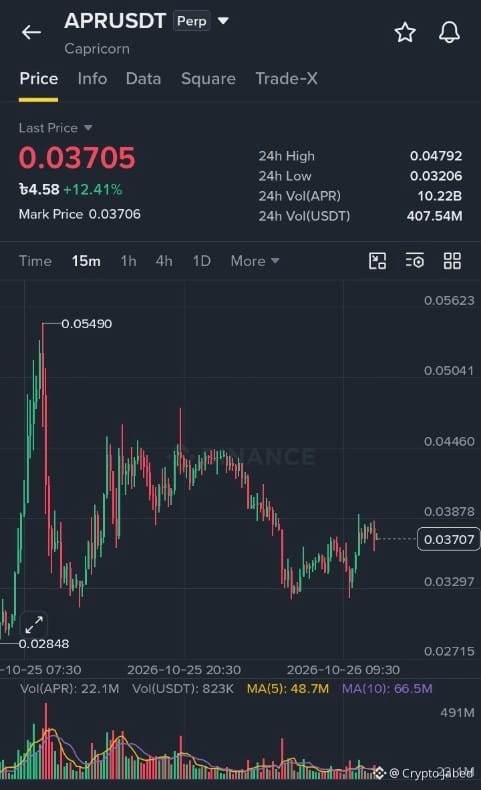
BOTTOM BOUNCE? — $APR
APR is slowly recovering from the bottom.
🟢 LONG — Entry $0.0365
TP1 $0.0390 | TP2 $0.0420
SL $0.0340
S: $0.0330 | R: $0.0390
More upside?
You can trade from here.👇$APR
{future}(APRUSDT)
#APR #BinanceSquare
BOTTOM BOUNCE? — $APR
APR is slowly recovering from the bottom.
🟢 LONG — Entry $0.0365
TP1 $0.0390 | TP2 $0.0420
SL $0.0340
S: $0.0330 | R: $0.0390
More upside?
You can trade from here.👇$APR
#APR #BinanceSquare
APR is slowly recovering from the bottom.
🟢 LONG — Entry $0.0365
TP1 $0.0390 | TP2 $0.0420
SL $0.0340
S: $0.0330 | R: $0.0390
More upside?
You can trade from here.👇$APR
#APR #BinanceSquare
246

APR fell 10.88% in this 24-hour bearish candle, but the figure that really matters isn’t the drop—it’s that the funding rate has returned precisely to +0.0050%.
Settled every 4 hours, that works out to roughly 11% annualized, which is exactly the baseline for this contract. The premium longs had built up during the rally to secure positions was wiped out all at once by this single bearish candle. Note that it didn’t turn negative; it simply returned to where it started.
There’s an easy point to misread here: when the rate returns to baseline, many people interpret it as “longs have been flushed out, so it’s time to buy the dip.” But cooling off isn’t the same as liquidation. A genuine flush-out means the rate turns negative, longs are forced to close, and open interest shrinks rapidly. The current +0.0050% only shows that nobody is willing to pay extra to go long anymore. Positions are still there; traders just aren’t paying a premium. The long premium being wiped out means leverage costs have returned to normal—not that risk has been flushed out.
The second figure better captures the nature of the current market: 24-hour contract volume is $415 million, while open interest is only 10.35 million USDT. Put those two figures together and turnover is nearly 40 times. That ratio means that most of the trading over the past day was positions being opened and closed back and forth, rather than people opening positions and holding them. Trading volume can still rank near the top, but that’s liquidity circulating in place, not capital being committed. Positions built up during the rally are being gradually absorbed through high-frequency turnover, rather than being cut all at once. That explains why, despite the 10.88% drop, the market hasn’t seen the kind of sharp decline accompanied by a collapse in open interest.
The third concern is structural: the price has fallen nearly 11%, yet long accounts still make up 69.0%.
That’s not a reassuring combination. If longs had truly been driven out, their share of accounts should have fallen too. Instead, the price is dropping while long accounts still make up seven out of ten, suggesting that some traders are buying into the decline. Buyers won’t immediately dump their positions, but they become potential supply in the next leg down. Conversely, if the price can reclaim and hold above 0.03351, those 69% of long accounts could become fuel for a push higher. So this figure is neutral on its own; its direction depends on who moves first. It’s an amplifier, not a steering wheel.
Put the three factors together: the funding rate returning to baseline shows leverage costs have cooled; 40x turnover shows positions are churning rather than being held; and the 69% share of long accounts shows retail traders are still holding on. Taken together, this is a “clean but empty” market—leverage isn’t under pressure, but there’s also no sign of big money stepping in to buy at the lows.
The signal I’m waiting for isn’t a price rebound. It’s open interest starting to grow again while the funding rate stays in check. That would show new money coming in, rather than old money changing hands. Chasing a rebound now is like carrying the palanquin for the floating supply that hasn’t finished exiting.
The risk is straightforward: the 69% share of long accounts represents a layer of stop-loss orders hanging overhead. If the price drops another level, the buyers could turn into sellers.
#APR #Crypto
96

·
--
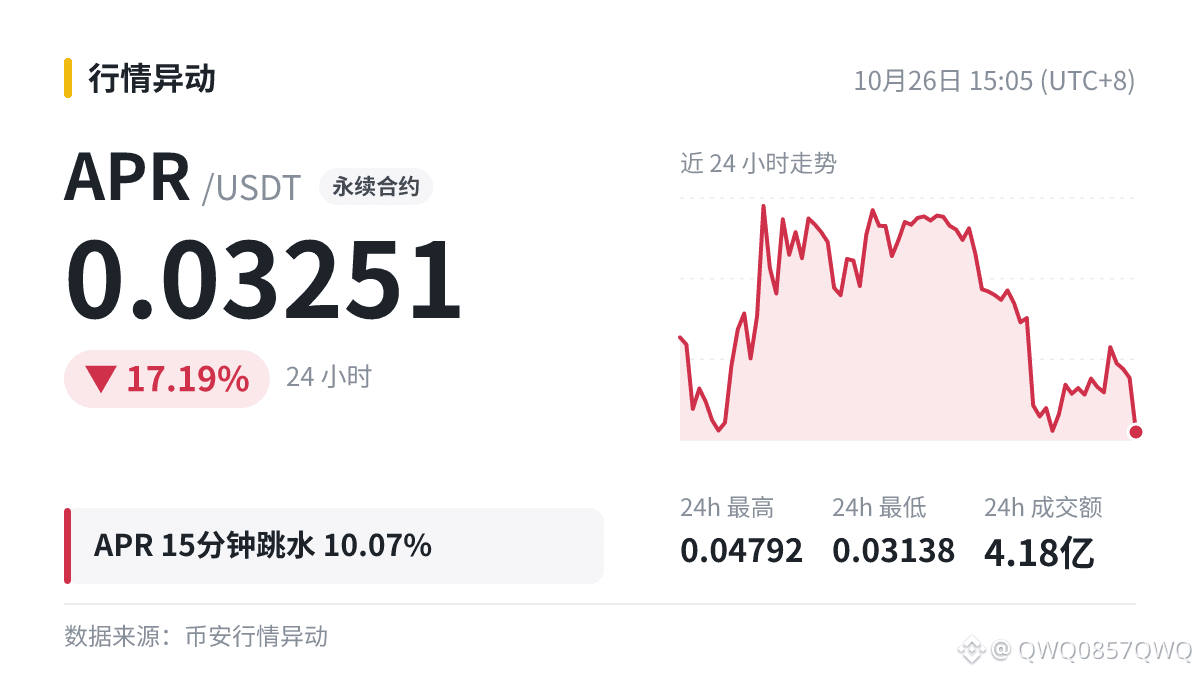
Just now, it plunged 10.07% in $APR 15 minutes, with the latest price at 0.03251. The cumulative intraday change is -17.19%. Heavy volume during the decline indicates significant disagreement. Let’s wait for volume to contract and the price to stabilize before deciding. If you found this useful, give it a like 👍
#APR
#APR
30

·
--
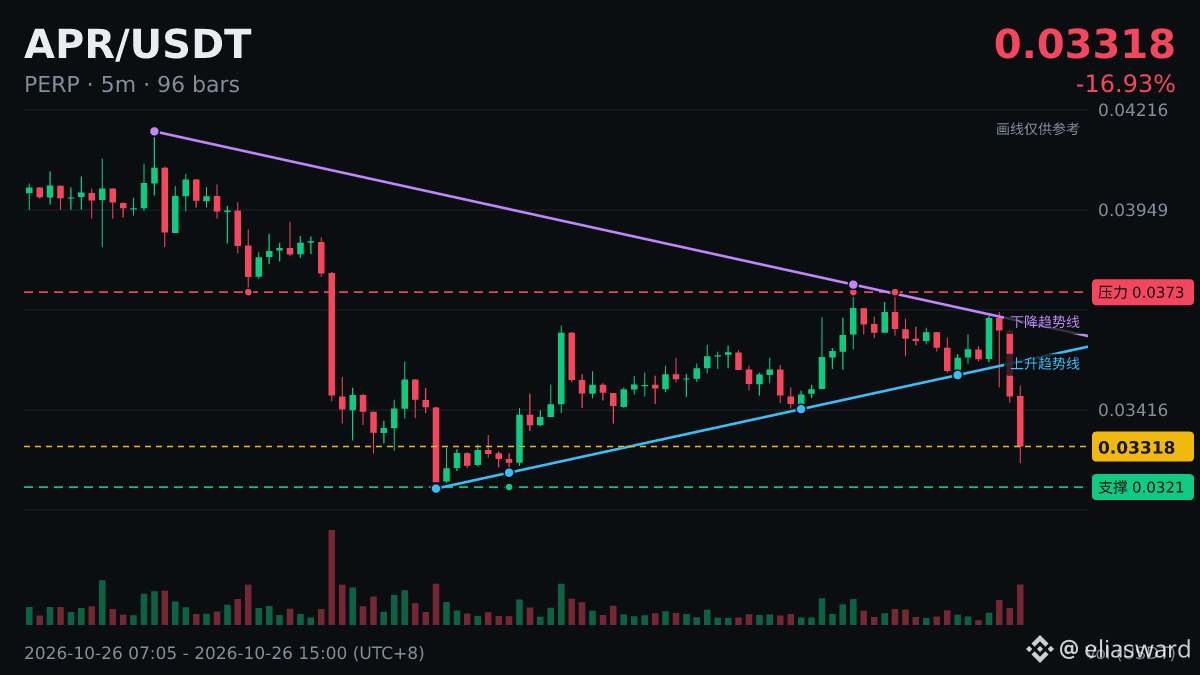
$APR 5 minutes -6.29%, current price 0.03312. If you're itching to buy the dip, ask yourself three questions first:
① The 24h low of 0.03138 is holding below—have we seen signs of stabilization?
② This was a sudden plunge. Can you handle it if it retests the low?
③ Have you planned your stop-loss? What will you do if your dip-buying call is wrong?
If you can't answer these, it's better to wait a little longer.
A big drop doesn't mean it's hit bottom. Be patient and wait for a signal.
#APR

·
--
📡 The Binance campaign is here: Hold USDC in your Binance Futures and Unified accounts and earn 2% APR
When there’s a prize pool, my rational side and my fingers are in a tug-of-war: my fingers say “Join,” while my rational side says “Read the rules first” (the official announcement takes precedence).
$APR Let’s wait and see. It’ll be more interesting to see whether trading volume holds up after the campaign winds down.
#APR
Just my personal opinion—don’t take it too seriously.
1

·
--
For those tracking capital flows, take note 👀
$APR surged 2.14% in 5 minutes, with the current price at 0.04311.
It’s already up +25.87% in 24 hours, and funds are clearly flowing in.
Whether there’s resistance ahead will affect how far this move can go. Don’t rush—there are always opportunities.
#APR
$APR surged 2.14% in 5 minutes, with the current price at 0.04311.
It’s already up +25.87% in 24 hours, and funds are clearly flowing in.
Whether there’s resistance ahead will affect how far this move can go. Don’t rush—there are always opportunities.
#APR
12

🚨 $APR SURGES THROUGH LIQUIDITY VOID – MONSTER MOVE! 💥
The $APR token just punched through a deep demand block, igniting a fresh liquidity vacuum that smart money has been priming for hours. 📊 The breakout aligns with a bullish order‑block retest on the 4‑hour chart, confirming a shift from supply‑absorption to aggressive buying.
Volume spikes and a hidden bullish divergence on the RSI signal that the market is still hungry, while a trailing stop‑loss order block sits just below the recent low, offering a tight risk profile. 🦈
If the price respects the next resistance at $APR 's prior swing high, we could see a rapid climb toward the next supply zone, turning this monster move into a multi‑digit rally. 💡
💬 Are you ready to ride the $APR monster wave or waiting for the next liquidity trap? 👇
⚠️ Not financial advice. Always manage your risk. 🛡️
🏷️ #APR #SmartMoney #LiquiditySweep #Crypto
🦈 🚀

🚨 $APR LIGHT DAY SURGES WITH MONSTER BUYING 💥
A wave of smart‑money 🦈 has been carving the order book, swallowing sell walls and re‑stacking at the $APR light‑day zone. The recent surge lit up the 4‑hour volume 📊, signaling a liquidity sweep that left bears scrambling.
Momentum is still charging ⚡, with the price hugging the fresh demand block 📌 and the depth chart showing a deep pool of buy orders 🌊. If the sellers can’t refill the gap, we could see a clean run toward the next resistance.
💬 Are you ready to ride this monster move or waiting for the next pullback? 👇
⚠️ Not financial advice. Always manage your risk. 🛡️
🏷️ #APR #SmartMoney #Momentum #Crypto
🔥 💎
4
Log in to explore more content
Join global crypto users on Binance Square
⚡️ Get latest and useful information about crypto.
💬 Trusted by the world’s largest crypto exchange.
👍 Discover real insights from verified creators.
Email / Phone number
Trending Topics
1
#BinancePick
2.6M views
140,461 Discussing
2
#EarningsSeason
5M views
24,244 Discussing
3
#FranklinTempletonFilesForTwoDividendToBitcoinETFs
141 views
44 Discussing
4
#StrategyMSTRSurpassesNasdaqInMarketCap
439 views
57 Discussing
5
#CanadaProposesStablecoinRedemptionWithin3BusinessDays
52 views
9 Discussing
6
#ElectrumWalletBugLetRogueServersStealFunds
6,731 views
213 Discussing
7
#ArgentineCourtDismissesLIBRACaseAgainstMilei
15,667 views
291 Discussing
8
#SKHynixReportedlyPlansSpecialDividendFromKioxiaStakeSale
2,944 views
48 Discussing
9
#KeystoneWebsiteBreachExposesBuyersShippingAddresses
1,599 views
40 Discussing
10
#USQ3GDPAndSeptemberPCEDueNextWeek
92,514 views
1,109 Discussing