Hilarious—those old brothers who are still stubbornly holding long positions at $SPCX . I genuinely can’t believe it. You rushed in when the IPO was $135, it went up to $225 but you wouldn’t sell, and now it’s down to $110—you’re still there talking about “long-termism” and “Mars faith.” Can faith fill your stomach? Can a tweet from Musk make your account recover?
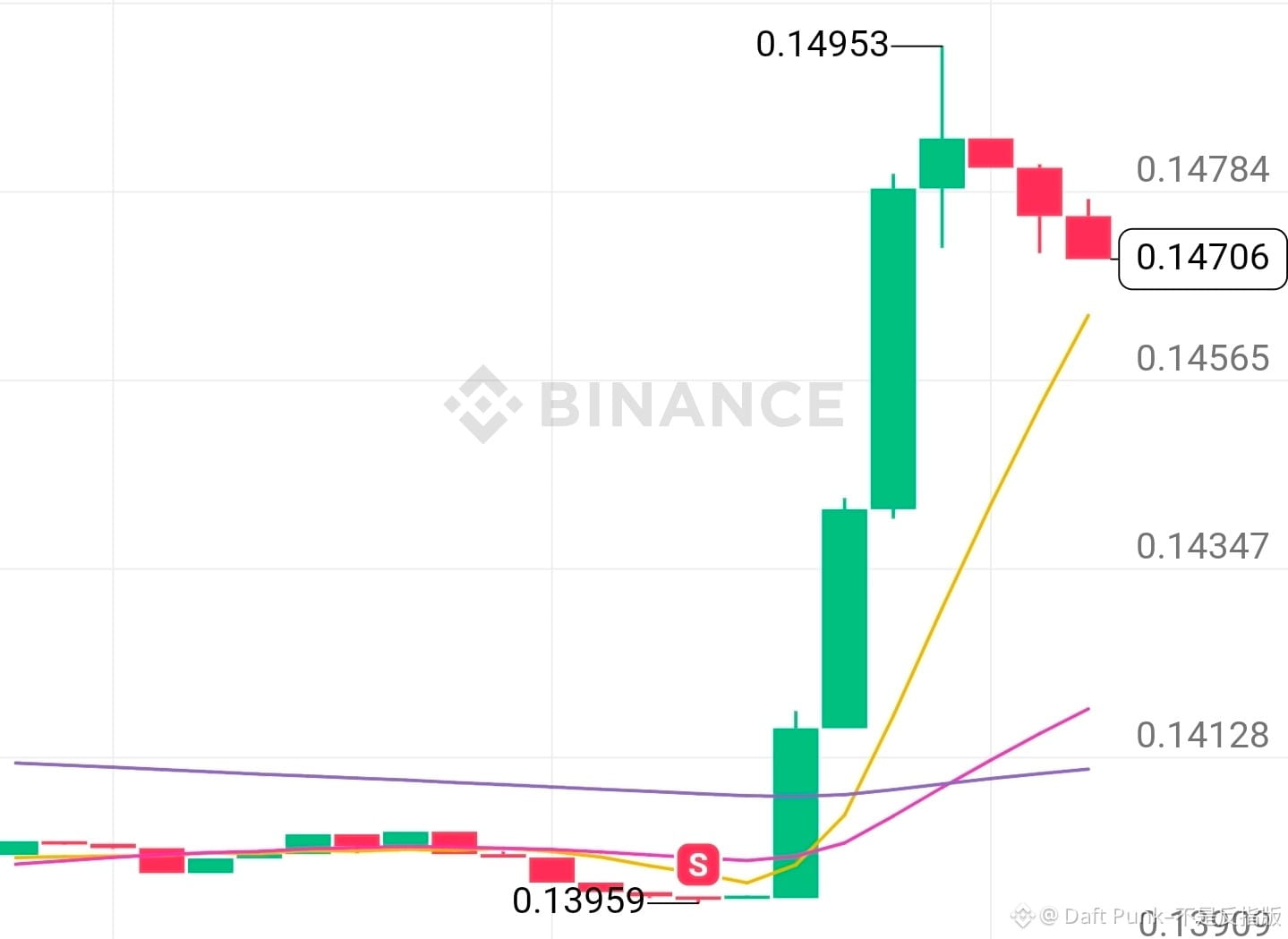
Look at this chart. It’s only been a little over a month since listing, and it’s been cut in half straight from $225. Short positions have piled up to 32% of the float. And there’s $25.0 billion worth of “ammo” blasting right in your face, yet you’re still there “buying the dip” and “adding to your position.” When the lockup expiration wave hits on August 6, 900 million shares will directly dump onto the market—that’s $116.0 billion of sell pressure. How do you expect to catch all that? The float is less than 5%—if any major shareholder wants to cash out, the stock price basically falls freely.
Even if Musk comes, it won’t help. I’ll tell you: even if Musk really shows up, it still won’t help. This stock is valued at over 100x sales and has been losing money consistently. ROE is -33%. The valuation is propped up entirely by the “space + AI” story. Once the story ends, where’s the money?
Starlink does make money, but can it support this big family—rockets, AI, and Twitter? What came out of that $60 billion Cursor acquisition deal? What’s the integration actually produced?
I’ll be blunt: SPCX will hit double digits. Under $100 is basically a lock. My short position is already maxed out, and I’ve got plenty of leverage. This lockup expiration wave is when I get rich. You longs keep chanting your mantras—I’ll keep counting my money. Later, when SPCX drops to $80 or $90, don’t blame me—I warned you. This isn’t Tesla—there’s no retail crowd saving the day. Only institutions dumping.
Trump Media On-Chain Transfer of 2628 BTC: Nature Not Disclosed
Recently, the crypto world came up with a headline that’s both laughable and heartbreaking: according to on-chain analytics, Trump Media, a publicly listed company owned by Trump, has just transferred 2,628 bitcoins into the Crypto.com exchange. Based on the then-current price, that’s worth about $165 million. The company claims it’s a “transfer, not a sale,” but anyone with eyes can tell: moving coins to an exchange most likely means preparing to cash out. This operation itself is downright ironic—Trump himself every day on social media is endorsing Bitcoin, shouting louder than anyone. Things like “the U.S. should treat Bitcoin as a strategic reserve” and “don’t sell, just hold it.” But meanwhile, his own listed company has quietly been selling since it took over from last year’s high—already offloading more than 7,000 coins. With cumulative losses exceeding $550 million, he has literally turned “value investing” into “value destruction.”
Right now, there are a bunch of people in the market shouting, “Tomorrow’s earnings report will be an extremely bullish catalyst,” but almost nobody talks about the nuclear-level unlock coming on August 6.
Let’s start with the earnings. This is SpaceX’s first quarterly report since it went public. The market expectations are indeed very high—Starlink user growth, revenue figures, progress on Starship—any one of these beating expectations could lift sentiment. But the issue is that the bullish expectations have already been “priced in,” and the stock price has already been cut in half from its high of $225 to around $110. That suggests the smart money has already been moving out.
The real “big weapon” is the staged unlocks. SpaceX’s float is only about 4%—the shares available are extremely scarce. That’s also why it was able to get pumped to over $200 earlier. But on the second trading day after the earnings report on August 6, the first batch—up to 911.5 million shares—will be unlocked. That’s equivalent to 1.43 times the current float.
Even more frightening: the early shareholders and employees have very low cost basis—many at around $20. At the current price of $110, they’re still sitting on gains of 5x or more. Put yourself in their shoes. If you’re a longtime SpaceX employee holding shares for years, and the company just went public, the stock has been cut in half, but your paper gains are still this rich—would you sell?
Also, SpaceX’s unlock design is “staged.” On August 6, 20% will be released first. After that, every 15 days there will be another small unlock of 7%. Then in October to November, the big move comes—another 28%—and it keeps going all the way to December. This means that over the next six months, the float will expand continuously from 4%, and the scarcity premium will be gradually squeezed out.
So my view is: even if tomorrow’s earnings look great, it’s very likely to be “bullish news that turns into bearish results.” The massive unlock on the 6th is the real stress test. Don’t rush to surge in the short term—let the “bullets fly” for a bit, and wait until the unlock selling pressure has been digested before reassessing.$SPCX
Is there a chance that the market value of $DOGE could exceed $SOL ?
To be honest, in the short term it will be extremely difficult for DOGE’s market cap to surpass SOL, but it’s not completely hopeless.
First, let’s look at the data: SOL’s market cap is currently around $42 billion, while DOGE is only about $11.8 billion—roughly a 3.5x gap. This divide is not just a little difference.
Why is it so hard? Because SOL now has a real, solid ecosystem. Its on-chain DEX trading volume has at times surpassed Ethereum, and its accumulated application revenues have exceeded $4 billion. Big companies like Visa and Meta have also been integrated. In other words, it’s a “serious work” public chain. What about DOGE? Fundamentally, it’s still a meme coin propped up mainly by community sentiment and Musk’s calls, with no smart contracts. On the technical level, it’s not even in the same dimension as SOL.
So why say it’s not entirely impossible? Because the crypto market is a place that talks a lot about emotions. DOGE has an extremely large community and strong liquidity. If it really catches up in a new round of mania—plus Musk pulls some big moves (for example, integrating payments with X)—DOGE could multiply several times, and this has happened before. In 2021, its market cap even surged to nearly $90 billion. Conversely, if SOL experiences major technical issues or regulatory crackdowns, with the balance shifting the other way, a reversal is theoretically possible.
But from a rational perspective, the odds of DOGE consistently and stably staying above SOL’s market cap long-term are low. SOL has ongoing revenue and a developer ecosystem to support it, while DOGE mainly relies on “belief.” Unless the entire market enters an extreme speculative frenzy, DOGE’s more likely to play the role of holding up better in bear markets and rising with the bull market. To truly “come back” and become the top player, what it lacks isn’t just sentiment—it’s real, practical use cases.$DOGE
Does the Shanzhai season start with Dogecoin? Don’t be ridiculous—though it’s not totally hopeless either.
Fellow old crypto-seasoned weeds, have you recently been woken up again by Dogecoin’s “woof-woof”?
In May 2026, the Dogecoin ETF finally ended its awkward streak of “zero inflows,” bringing in $400,000 in capital flows. Don’t think that number is that impressive—it’s still probably not higher than the daily revenue of the bubble-tea shop downstairs—but it’s the first time money has come in since April 27! And Dogecoin’s price “woofed” right along with it: up nearly 10% in the month, with a spring cumulative gain of 25%, charging toward the 200-day moving average around $0.124.
So the question is: can Dogecoin blow the horn for the Shanzhai season?
My answer is: it can, but only “woof” a little.
Look, the current Shanzhai coin season index is only 51; it’s still far from the true Shanzhai threshold of 75—just like you’re still one Bitcoin away from financial freedom. Bitcoin dominance is still as high as 58.8%, and big funds are still not willing to leave the “big pie.”
But history tells us that Meme coins often act as the market’s “barometer.” When retail investors are bold enough to go for even Dogecoin, it means the hearts battered and riddled by the bear market are finally starting to get restless.
So the Shanzhai season in 2026 is unlikely to be a blanket “everything rises together” binge. More likely, it will be a structural, sector-based “mini Shanzhai season.” Dogecoin might just be an appetizer; the real feast will depend on higher-quality projects with real revenue, diversified holdings, and lower unlock pressure.
One-sentence summary: Dogecoin’s rise could be a “starter course” for the Shanzhai season, but don’t expect one Shiba Inu to carry a full Man-Han Imperial feast on its own. The true Shanzhai season will have to wait until Bitcoin “takes a breather,” and then funds will rush into various Shanzhai coins like refugees.
So don’t rush to go All In. Hold your chips and wait for the wind—after all, in crypto, patience is more valuable than going all-in.🐕$DOGE
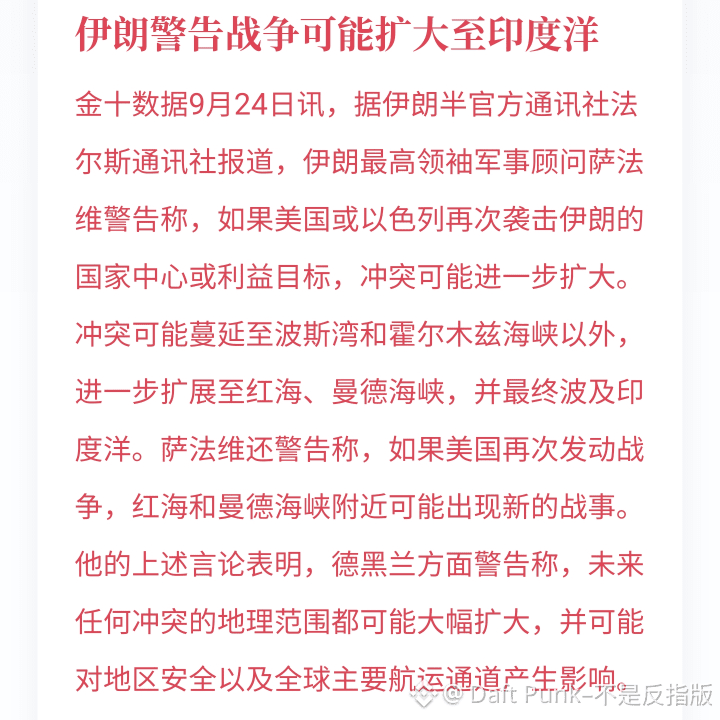
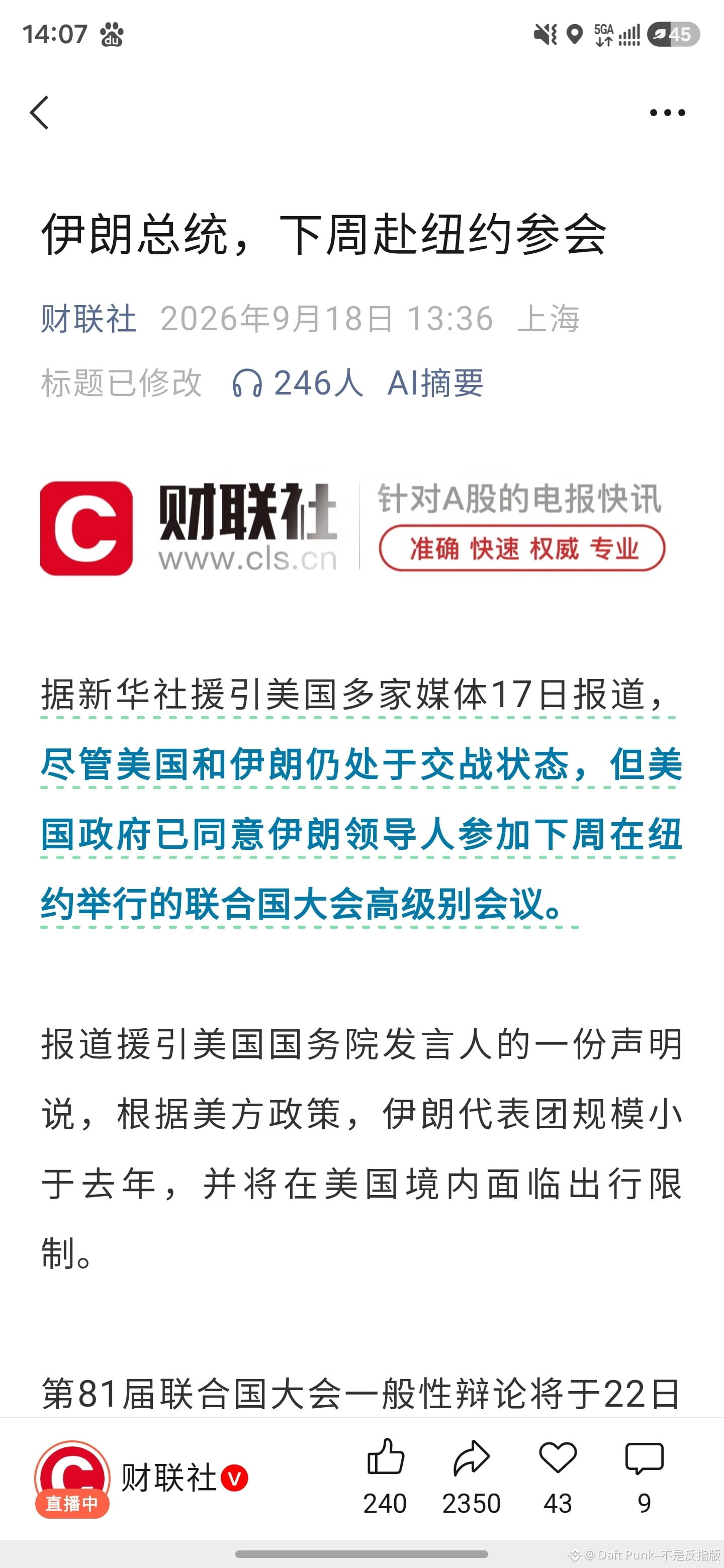
US-Iran talks resume; oil prices “back off,” and the crypto market trembles
Recently, international affairs have yet another new plot twist— the United States and Iran have actually sat back down at the negotiating table. You know these two “old enemies” were previously all sharp swords and cold threats, locked in a standoff. Now that talks are on the table, the crude oil market immediately “changes its face.” Oil prices drop like a stone, giving back all the gains they had made earlier due to geopolitical tensions.
Why is oil so “thin-skinned”?
Put simply, the market fears uncertainty the most. Earlier, the situation in the Middle East was tense. Everyone worried that the Strait of Hormuz—the “world oil valve”—might be disrupted, and that boosted oil prices as risk-hedging sentiment pushed them higher. Now that the US and Iran are willing to talk, even if the talks ultimately don’t go through, the risk of a war in the near term is reduced. Naturally, oil prices “lose steam.” It’s like in class: if the two students who fight the most suddenly say, “Let’s talk it out,” the whole class can finally breathe easier.
So why is the crypto market making noise too?
Don’t think the coin world has nothing to do with oil prices. In reality, the relationship is subtle. On one hand, falling oil prices typically mean lower inflation pressure. That can cool down concerns that the Federal Reserve will keep hiking rates—good news for risk assets (including Bitcoin, Ethereum, and others). With improved liquidity expectations, money is more willing to chase higher-risk opportunities.
But on the other hand, if oil prices fall too sharply, the market may start worrying whether the global economy is about to “fall off a cliff”—after all, it’s weak demand that drives oil prices down. Once this “economic recession” panic spreads, crypto markets often can’t escape the fate of being sold off. After all, the crypto space still has fairly high correlation with U.S. stocks. When the overall market shudders, crypto catches a chill too.
In short: the US-Iran negotiation saga, in the near term, acts like an oil price “pressure relief valve.” For crypto, though, it’s a double-edged sword—improving liquidity expectations are honey, while recession worries are poison. Next, keep an eye on the progress of the talks and the direction of oil prices—don’t just stare at the candlestick chart.
South Korean stocks have crashed again. Storage bulls and bears are fighting hot, and the crypto crowd has to shake too.
Today, the KOSPI in South Korea fell more than 5% again. The two storage champions—Samsung Electronics and SK hynix—led the plunge, and the market instantly went into chaos. To put it plainly, this is a head-on showdown between “AI faith” and “leverage liquidation.”
First, on the bearish side: South Korean stocks have already dropped nearly 40% from the June peak. On July 28 alone, they suffered a single-day rout of over 10%, triggering a circuit breaker—the eighth such event this year. The pace is even wilder than the 2008 financial crisis. Why? South Korean retail investors are getting too crazy: they bet heavily on SK hynix using leveraged ETFs. When the share price falls, it triggers a “drop → forced ETF selling → another drop” death spiral. On top of that, global institutions are starting to doubt whether the money behind AI can actually be made back. Even OpenAI’s IPO has been pushed to 2027. Are cloud providers’ AI infrastructure investments essentially “circular financing,” fooling themselves? Once that narrative breaks, the valuation logic for storage chips wobbles.
Now, on the bullish side: SK hynix’s second-quarter profit surged 557% year over year. HBM (high-bandwidth memory) remains in short supply, long-term contract orders are signed through 2030, and storage prices are still rising. Nomura has set a target price for SK hynix at 4.7 million won, which is 255% higher than the current price. The fundamentals are rock solid, but the stock price just won’t move—an archetypal “great results, falling stock” twisted market.
So what does this have to do with crypto? A lot. Tech stocks and crypto assets are, in essence, the same kind of “high-risk narrative asset”—when they’re rising, it’s all about the story; when they’re falling, it’s all about liquidity. When South Korean stocks crash and the Fed’s hawkish signal hits, global risk assets all start shivering together. Things like Bitcoin and Ethereum have an increasingly high correlation with the Nasdaq. When tech stocks collapse, the crypto space can’t expect to stay unaffected. Also, South Korea is one of the most active global markets for crypto trading. When retail investors there get liquidated on stock leverage, funds in the crypto market are very likely to be pulled back as well to top up margin.
In one sentence: the standoff between bulls and bears in storage chips looks, on the surface, like a battle between earnings and valuation—but at a deeper level, under tightening global liquidity, all high-risk assets are being repriced. This drama in South Korea is a warning to the crypto world: when the leverage party ends, even the stories can’t be enjoyed without considering the Fed’s mood. Be cautious in the short term, and don’t treat leverage like faith—just like South Korean retail investors did.
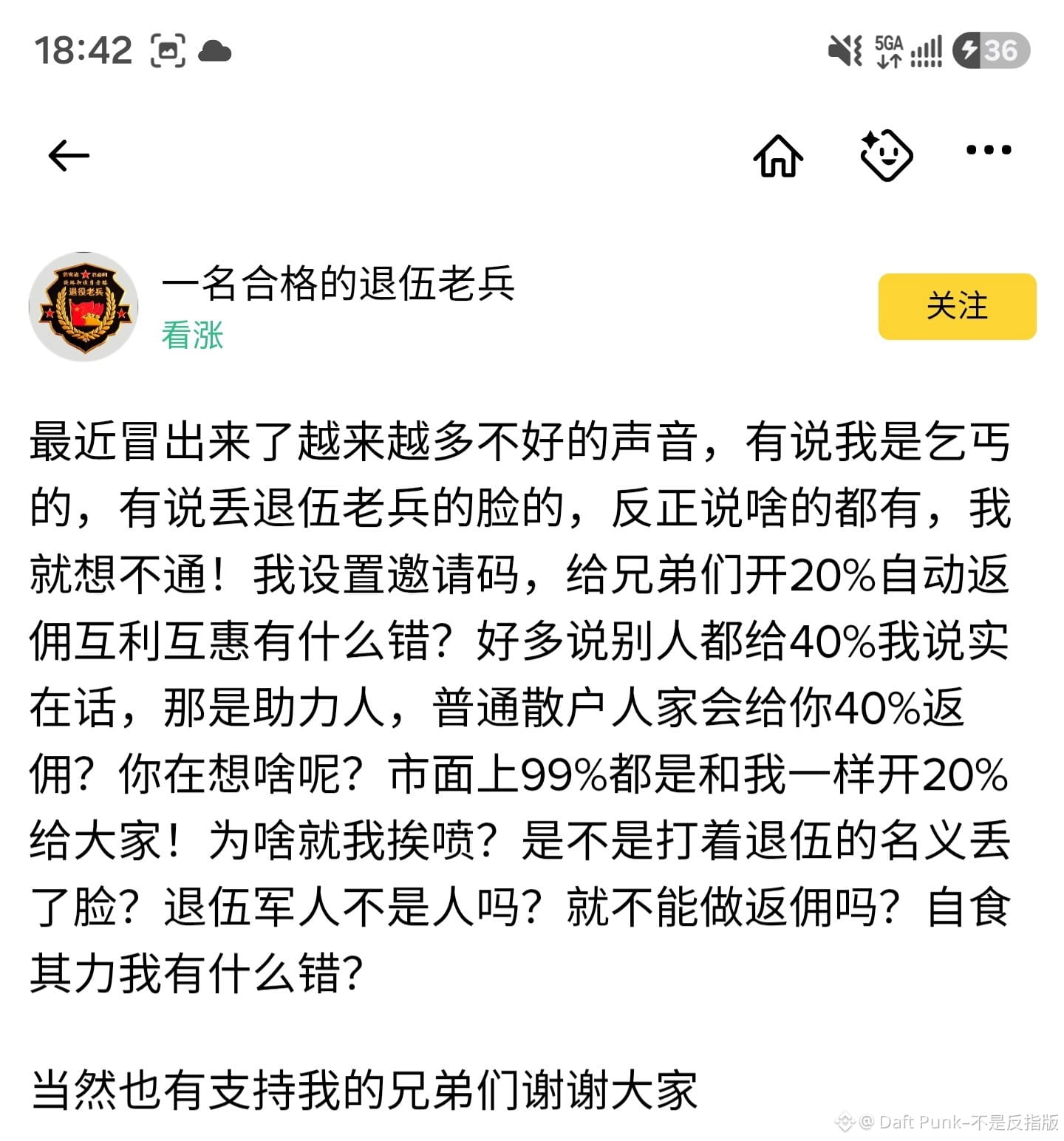
For high-quality industries, I still recommend setting up a hedging single to display earnings first, then take 20% profit sharing with the trader—extremely high profits. $BTC
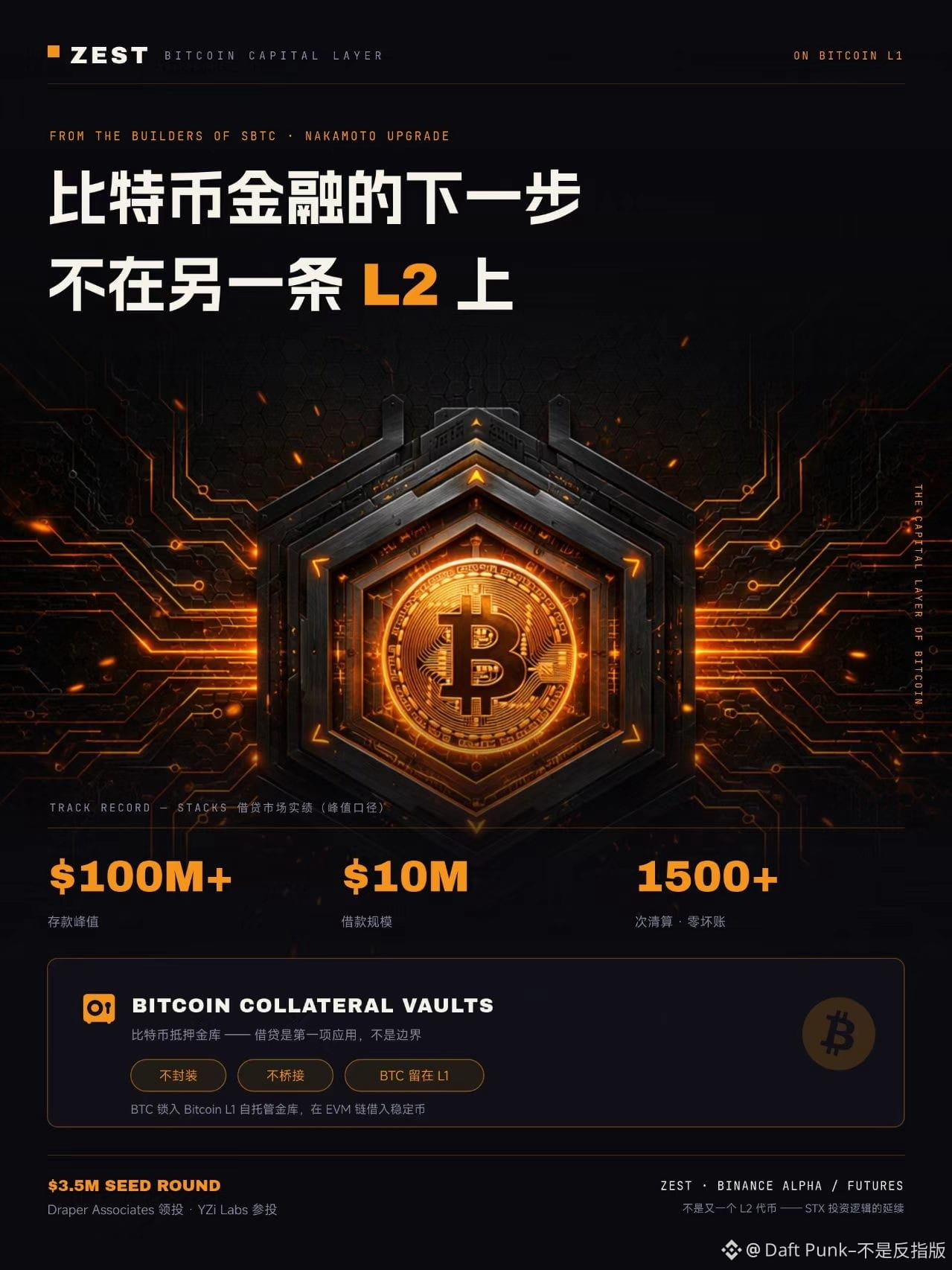
TBV— the more I think about it, the more it feels “twisted.”
Not the kind of “twisty” that’s awkward. It’s the “twist” of screwing in a screw. @BabylonLabs_io , one step at a time—driving BTC firmly into the Bitcoin chain. While others are building bridges, it’s driven pilings.
SNARK verification status: the obfuscated circuit compresses the proof into a string that a verifier can understand as a script. Lamport signatures handle the disputes. It sounds like lab jargon, but the reality is one sentence: your BTC is locked in your own script. No fund pool, no commingling—each vault fights on its own.
This design is inherently slow. Claim delay ranges from a few hours to two days; predefined counterparties lock liquidity tightly. The team isn’t hiding anything. It’s stated clearly in the documentation. I actually trust it a bit more because of that—projects that lay their shortcomings on the table aren’t that common.
$BABY finally doesn’t feel like empty air in this architecture. BTC collateral is endorsed to the finality provider; $BABY collateral guarantees the genesis chain itself. Dual collateral is twisted into one solid rope. Inflation gets pushed to 5.5%, and joint staking comes with extra sweeteners. These changes don’t read like PR copy—they read like fixing plumbing. The leaking spots get patched.
If Aave V4 really takes off, TBV would move from a toy to infrastructure. Lock BTC to borrow stablecoins, and the institution-style playbook gets transplanted directly. GoMining is also in talks—an initial pilot of 1000 BTC isn’t small.
But the high-severity vulnerabilities Cantina uncovered through audit: patching is patching. The fault tolerance of Bitcoin scripts is too low. There’s no graceful upgrade path—one misstep and it’s real money. Lamport signatures are one-time, and the time lock window is limited. Every step is a wager against time.
$BABY ’s price has nearly doubled from the March low, and its market cap is still less than a fraction of TVL. This divergence means either the staked capital has some padding, or the market hasn’t figured out what this protocol is actually doing yet. I lean toward the latter. But I also can’t be too certain.
Understanding and making money have never been the same thing. #baby
If you bought the dip in Dogecoin after promoting it on the 2022 Spring Festival Gala for dogs, what would your situation be like now?
Remember the 2022 Spring Festival Eve, don’t you? In a Spring Festival Gala skit, Shen Teng slapped his thigh and said he wanted to become the "biggest dog peddler in the Metaverse," even calling himself the "Dog King." At the time, plenty of brothers watching at home got fired up. They thought this was a national-stage "buy-call" and rushed to open their exchanges overnight, ready to follow "Shen’s crew" and buy the dip in Dogecoin.
Let’s算笔账. On the day of the 2022 Spring Festival Gala—January 31st, Dogecoin was around $0.14. Suppose you listened to the call from the "Dog King," took out 100,000 RMB in real cash, and went all-in on the dip. You’d probably be thinking: Back in May 2021, Dogecoin hit a historical high of $0.74. Now it’s only $0.14—what is that if not a dip? This is basically picking up money!
So what happened?
You bottomed out like you were in a hellscape—like there’s even a basement below the eighteenth level.
When you first went in, throughout all of 2022, Dogecoin never gave you any "king" treatment at all. The price just kept sliding lower, and by the end of the year it was almost touching $0.05. Your 100,000 RMB turned into 30,000 in a blink. Watching the green numbers on your screen, you feel that Shen Teng’s "Dog King" isn’t summoning you at all—it’s cursing you: "dog,坑".
But you’ve got faith—you held on.
Fast forward to November 2024. Musk set up a "Department of Government Efficiency" (D.O.G.E.), and Dogecoin suddenly went crazy, surging to as high as $0.48. At one point, the 100,000 RMB in your account became more than 300,000! In that moment, you felt like you were the real "Dog King." What is Shen Teng, anyway? You even started fantasizing about buying a new car and a house, cruising around in a Ferrari in the Metaverse.
But then you didn’t sell. You thought, once it breaks $0.48, isn’t it possible to return to $0.74—or even charge up to $1? The dream did happen… just in the opposite direction.
Jump ahead to August 2026. Today, when you open the exchange again, Dogecoin is hovering around $0.07. Back then, your 100,000 RMB is now roughly still about 50,000. In four years, you successfully pulled off a spectacular feat: "wealth halving."
What hurts the most? Over these four years, you clearly had a chance to exit with dignity, but you chose to "hold on." From "Metaverse Dog King" to "Metaverse Leek King," it was only one thing short: "didn’t sell." $DOGE
The “four-year cycle” in the crypto market—plainly put—is a kind of “mystical rule” centered on Bitcoin halving. Every four years, the reward is cut in half, miners’ incentives shrink, supply tightens, and then the market enters a bull run, followed by a crash into a bear market, which gradually bottoms out while waiting for the next halving.
This pattern has indeed been fairly accurate over the past three cycles: after the 2012 halving, there was a surge in 2013; after the 2016 halving, the 2017 ICO frenzy; and after the 2020 halving, the explosive growth of DeFi and NFTs in 2021. It looks like a hard rule, right?
But now, this “rule” is looking more and more like a “self-fulfilling prophecy.” Everyone knows the halving is coming, so they position themselves early. Expectations get priced in more and more ahead of time. After the 2024 halving, $BTC did rise—but the magnitude and timing are completely different from before. Factors like ETF approvals, institutional participation, and the macro interest-rate environment have already outweighed the halving itself.
More importantly, today’s crypto market is no longer a “small circle game.” Wall Street capital, regulations from different countries, and the Fed’s rate hikes and cuts—any one piece of news can make the market wobble. The supply contraction from halving, when placed in the broader ocean of liquidity, is having an increasingly small impact.
So my view is: the four-year cycle still has some value as a big-picture framework, but don’t treat it like scripture. Think of it more like a “background tempo,” while the real melody is being written by the macro environment, regulatory stance, and capital flows. If you’re still waiting for a “halving will surely pump” outcome, you may find that the market has already changed the way it plays.
In the end, the only rule of the market is—rules are always broken.
What do you think about “MicroStrategy,” which claims it will never sell coins, now疯狂ly unloading lately?
To put it plainly, it’s that faith can’t hold up the books anymore.
In the past, Michael Saylor used to shout “never sell” on Twitter every day. Strategy was essentially a Bitcoin perpetual-motion machine—issuing stocks, issuing bonds, issuing preferred shares, raising money to buy coins $BTC , rinse and repeat. Back then, when the coin price rose, the stock price rose too, the premium was high, and the game worked. The market bought into it and viewed it as the faith benchmark for “institutional coin-holding.”
But the vibe changed in 2026. In the first quarter, the company posted an accounting loss of $14.47 billion—almost entirely unrealized losses on Bitcoin holdings. Even more brutal: the preferred stock STRC issued earlier carried an annualized dividend yield of 11.5%, so the interest-payment pressure was real and directly weighing on them. Saylor himself also had to soften his stance, saying it was “unlikely” they would be able to be completely never-sellers, and even stating that they would need to sell Bitcoin to pay the dividends.
By late June into early July, Strategy actually took action: first it sold 32 coins as a test, and the market didn’t react yet; then at the end of June it quickly dumped 1,363 coins, raising over $80 million in cash; and in early July it continued selling. The golden signboard of “buy only, never sell” has just been broken into pieces.
In the end, it’s not that Saylor didn’t want to hold coins—it’s that the financing model can’t run anymore. Previously, MSTR’s stock price traded at a premium versus its net Bitcoin assets, so issuing stock to buy coins was essentially arbitrage. Now, as the coin price has fallen back near the cost line, the premium is gone. With severe equity dilution, pushing through would only drag the company under. Selling Bitcoin to pay preferred-share dividends is basically using the “principal” of Bitcoin assets to fill the “interest-rate pit” for the preferred shares. Fundamentally, it has shifted from investing to one of shoring up losses with new gaps.
For the coin community, the symbolic meaning of this is far greater than those few thousand coins—if even the most hard-core “Hodler” starts unloading, then the faith filter in the market is probably shattered all over.
After the China-Iran conflict has been going on for so long, why does the crypto market still jump at the slightest touch? Why can’t the funds stay desensitized? This is actually market psychology at work.
First, crypto markets are inherently “startled birds.” The cryptocurrency market is small, heavily leveraged, and packed with retail investors. The slightest hint of wind and grass gets everyone to stampede. Variables like geopolitical black swans—in traditional financial markets they might only cause mild fluctuations, but in crypto they turn into huge needle-like spikes. You want it to get desensitized? Then you’d have to wait until the crypto market becomes a mature one.
Second, every escalation is different. The conflict between Iran and the U.S. isn’t a fixed script—this time it’s an assassination of a commander; next time it’s a blockade of a strait; and the next time it’s an attack on nuclear facilities. Each time, the specific transmission path differs. Some actions push up oil prices, some threaten global shipping, and some directly disrupt the dollar system. The funds aren’t facing “the same bad news repeating over and over,” but rather “the same theme keeps producing new landmines.” How could they become desensitized?
Third, Bitcoin’s “safe-haven persona” is itself a paradox. Many people say, on the surface, that $BTC is digital gold—but when risk comes, their actions are honest: they run first. This shows the market doesn’t truly treat it as a genuine safe-haven asset. More often, it rises and falls together with the Nasdaq and belongs to the high-risk asset camp. If it’s a risk asset, then of course it’s sensitive to geopolitical tensions.
Fourth, global capital is interconnected. If U.S. stocks crash and liquidity tightens, institutions first cut positions in marginal areas like crypto. The uncertainty caused by the Iran-U.S. conflict will weigh on the entire risk-asset pool at the same time. Can the crypto market try to stand alone? No chance.
So don’t ask why it can’t get desensitized. With this kind of “constitution,” crypto is destined to be a “high-sensitivity to geopolitics” market.
Can SOL become the second Ethereum dream and still be realized? Honestly, when $SOL talks about the dream of “becoming the second Ethereum,” I feel it’s more like “becoming another version of itself” rather than truly copying Ethereum’s path.
First, let’s talk about what gives SOL its confidence. Solana can process over 10,000 transactions per second, with transaction fees of less than a cent. With that speed and cost, Ethereum’s mainnet simply can’t compare. DeFi, NFTs, and even tokenized stocks are all thriving on Solana. In 2025 alone, it added another 11,000 developers, and on-chain economic revenue has surpassed $2 billion. Fast, low cost, and lots of young users—this is SOL’s killer feature.
But to say it can “replace” Ethereum? It’s still a fair distance away. Ethereum’s market cap is over $210 billion, while Solana is around $45 billion—less than a fifth of $ETH . More importantly, Ethereum has nearly 1 million validating nodes, while Solana has only a few thousand. Decentralization is simply not on the same scale. SOL has also suffered several network outages in the past, which is a hard flaw for financial infrastructure that aims for “never going offline.”
And don’t forget that among the FTX bankruptcy estate, there are 21 million SOL tokens waiting to be unlocked, released gradually up to 2028. It’s like a time bomb hanging overhead.
So my view is this: SOL doesn’t need to become “the second Ethereum.” It’s already walking its own path—becoming the chain that’s fastest, cheapest, and best suited for everyday applications. What Ethereum is guarding is the “digital gold” position and the DeFi infrastructure throne, while SOL is taking the ground in high-frequency trading and user experience. These two chains each have their territory; no one can kill the other. Instead of asking whether SOL can become the second ETH, ask this: in the future, where would you rather spend 1 cent to make a transfer? That answer may be SOL’s real opportunity.
I’ve been looking at TBV for a long time. It’s not the kind of thing you immediately understand.
It’s more like a stubborn answer. Everyone is asking how to move BTC to DeFi, but @BabylonLabs_io said: don’t move it. Keep it on the Bitcoin chain—nowhere else.
SNARK verification status: the obfuscation circuit compresses complex proofs into a string, and Lamport signatures handle disputes. Sounds convoluted, but the effect is very direct: BTC is locked in a script you control, and the contracts on the DeFi chain decide who can withdraw, when they can withdraw, and how much they can withdraw.
No one else can stake your coins. No liquidity pool, no mixing. Each vault is independent.
This design sacrifices speed. Claims have to wait for hours, even up to two days, and the participating parties must be predefined. Liquidity is constrained. The team hasn’t prettied any of this up—the documentation is clear.
I trusted it a bit more because of that.
$BABY becomes concrete in this kind of architecture. Not an “air governance” token. Staking BTC backs the provider of finality, and staking $BABY secures the Genesis chain itself. Dual staking ties two security lines into one. In early a16z put in $15 million—this is the direction they were betting on. Inflation drops to 5.5%, and joint staking adds extra incentives. The BSN reward auction burns tokens, and deflationary pressure is slowly accumulating.
These changes don’t feel like storytelling—they feel like fixing plumbing.
If Aave V4 integration actually ships, TBV can move from prototype to infrastructure. Lock BTC, borrow stablecoins—the institutional playbook plugs in seamlessly. GoMining is also in talks; the pilot scale of 1000 BTC isn’t small. On mainnet, there’s even already been an experiment running native BTC collateral to borrow USDC.
But there’s still a thorn in my mind.
The high-risk vulnerabilities Cantina found in its audit were patched, but Bitcoin script has too low a tolerance for error. There’s no elegant upgradeable contracts here—one wrong step is real money gone. Lamport signatures are one-time, the time-lock window is limited, and every stage is essentially a wager against time.
$BABY ’s price has nearly doubled from its March low, but its market cap is still less than a fraction of TVL. This divergence either means the staked capital has some “air” in it, or the market simply hasn’t figured out what this protocol is actually doing.
I lean toward the latter. But I also don’t dare be too certain.
After all, in this industry, understanding and making money are never the same thing. #baby
The delivery rider’s time is paused while waiting at a red light—when I top up money to cover the deposit in that contract, can’t it not explode? 😡$BTC