

Crypto Maxx
3.7k Posts
Crypto Maxx
 Square Verified+
Report
Block User
Official: 🔗 Cryptomaxx.net | A leading Arabic crypto team focusing on content creation, market structure education, on-chain data and institutional behaviour.
Open Trade
Frequent Trader
4.8 Years
193 Following
76.0K+ Followers
74.6K+ Liked
Posts
Portfolio
All
Quotes
Videos
Live
PINNED
·
--
I received a light and lovely box from binance on the occasion of the ninth anniversary, 9Y
Thank you for your kind gesture ❤️❤️❤️
#BinanceTurns9
I received a light and lovely box from binance on the occasion of the ninth anniversary, 9Y
Thank you for your kind gesture ❤️❤️❤️
#BinanceTurns9
Thank you for your kind gesture ❤️❤️❤️
#BinanceTurns9




10
1
36
7.8k
PINNED
·
--
Why do most traders fail in financial markets?
In this video, Dr. Marsh from the Crypto Maxx team provides a clear explanation of the real reasons that lead to traders' losses.
📌 The explanation focuses on fundamental mistakes made by many, most notably:
▪️ Entering the market without a clear trading plan
▪️ Being influenced by emotions (fear and greed) instead of discipline
▪️ Overusing leverage
▪️ Overtrading and chasing quick profits
▪️ Neglecting capital management and failing to adhere to stop-losses
▪️ Switching between strategies without testing or patience
💡 Dr. Marsh clarifies that successful trading is based not on speculation, but on risk management, discipline, and consistency.
Why do most traders fail in financial markets?
In this video, Dr. Marsh from the Crypto Maxx team provides a clear explanation of the real reasons that lead to traders' losses.
📌 The explanation focuses on fundamental mistakes made by many, most notably:
▪️ Entering the market without a clear trading plan
▪️ Being influenced by emotions (fear and greed) instead of discipline
▪️ Overusing leverage
▪️ Overtrading and chasing quick profits
▪️ Neglecting capital management and failing to adhere to stop-losses
▪️ Switching between strategies without testing or patience
💡 Dr. Marsh clarifies that successful trading is based not on speculation, but on risk management, discipline, and consistency.
In this video, Dr. Marsh from the Crypto Maxx team provides a clear explanation of the real reasons that lead to traders' losses.
📌 The explanation focuses on fundamental mistakes made by many, most notably:
▪️ Entering the market without a clear trading plan
▪️ Being influenced by emotions (fear and greed) instead of discipline
▪️ Overusing leverage
▪️ Overtrading and chasing quick profits
▪️ Neglecting capital management and failing to adhere to stop-losses
▪️ Switching between strategies without testing or patience
💡 Dr. Marsh clarifies that successful trading is based not on speculation, but on risk management, discipline, and consistency.
27
12
125
9.2k
·
--
Bullish
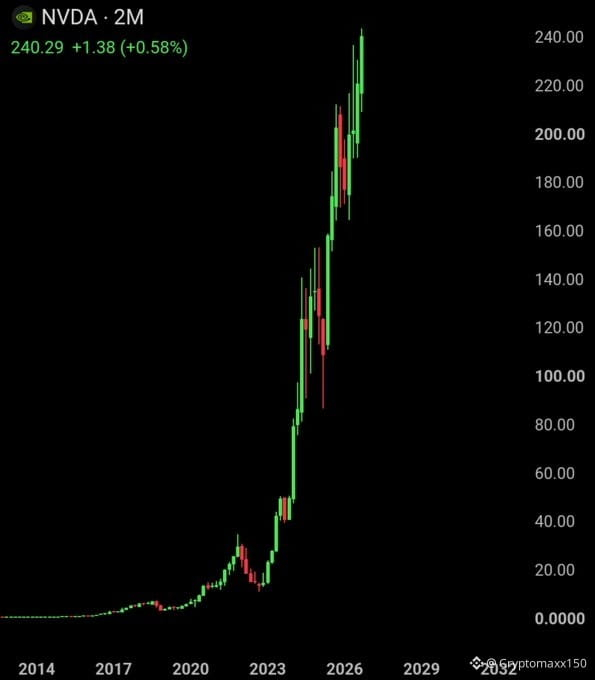
Nvidia shares reached an all-time high of $243 for the first time in history. If you had invested $10,000 in
Nvidia
at the height of the market crisis in 2002, you would have about $43 million today.
Nvidia shares reached an all-time high of $243 for the first time in history. If you had invested $10,000 in
Nvidia
at the height of the market crisis in 2002, you would have about $43 million today.
Nvidia
at the height of the market crisis in 2002, you would have about $43 million today.
2
530
·
--
Bullish
The Financial Times reported that Elon Musk’s SpaceX is in talks to raise $40 billion in debt to buy Nvidia chips.
The financing could include $10 billion in bank loans and $30 billion in investment-grade debt, led by Apollo.
The Financial Times reported that Elon Musk’s SpaceX is in talks to raise $40 billion in debt to buy Nvidia chips.
The financing could include $10 billion in bank loans and $30 billion in investment-grade debt, led by Apollo.
The financing could include $10 billion in bank loans and $30 billion in investment-grade debt, led by Apollo.

2
692
·
--
Verified
🇮🇳The Reserve Bank of India raised interest rates by 25 basis points to 5.50%, its first rate hike since February 2023.
🇮🇳The Reserve Bank of India raised interest rates by 25 basis points to 5.50%, its first rate hike since February 2023.

3
842
·
--
Bearish
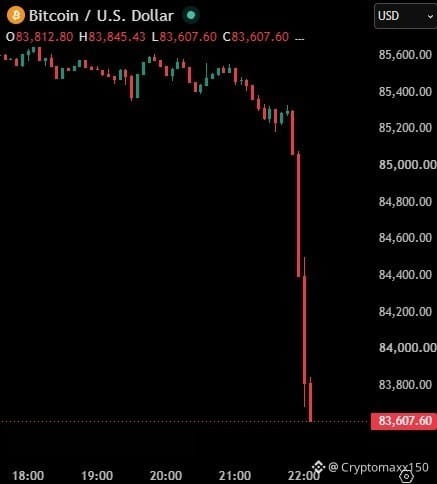
Bitcoin price drops by more than $2,000 in 20 minutes, as $400 million worth of leveraged long positions are liquidated in less than an hour.
$BTC #bitcoin
Bitcoin price drops by more than $2,000 in 20 minutes, as $400 million worth of leveraged long positions are liquidated in less than an hour.
$BTC #bitcoin
$BTC #bitcoin
2
764
·
--
Partly True
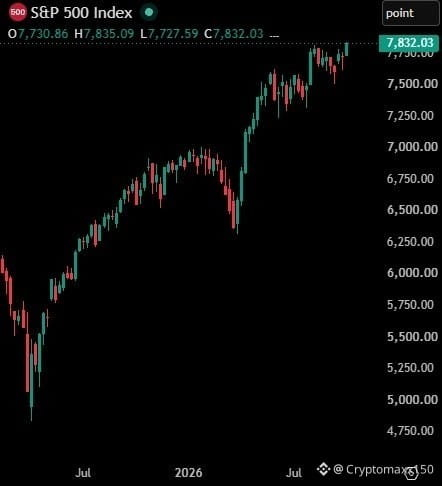
The S&P 500 has reached a record $71.3 trillion, up 24% from its low on March 30.
The U.S. stock market is now worth more than $82 trillion—over **7.5 times the value of China’s market and 28 times that of Germany’s. Asset owners are reaping the gains.
The S&P 500 has reached a record $71.3 trillion, up 24% from its low on March 30.
The U.S. stock market is now worth more than $82 trillion—over **7.5 times the value of China’s market and 28 times that of Germany’s. Asset owners are reaping the gains.
The U.S. stock market is now worth more than $82 trillion—over **7.5 times the value of China’s market and 28 times that of Germany’s. Asset owners are reaping the gains.
3
545
·
--
Bullish
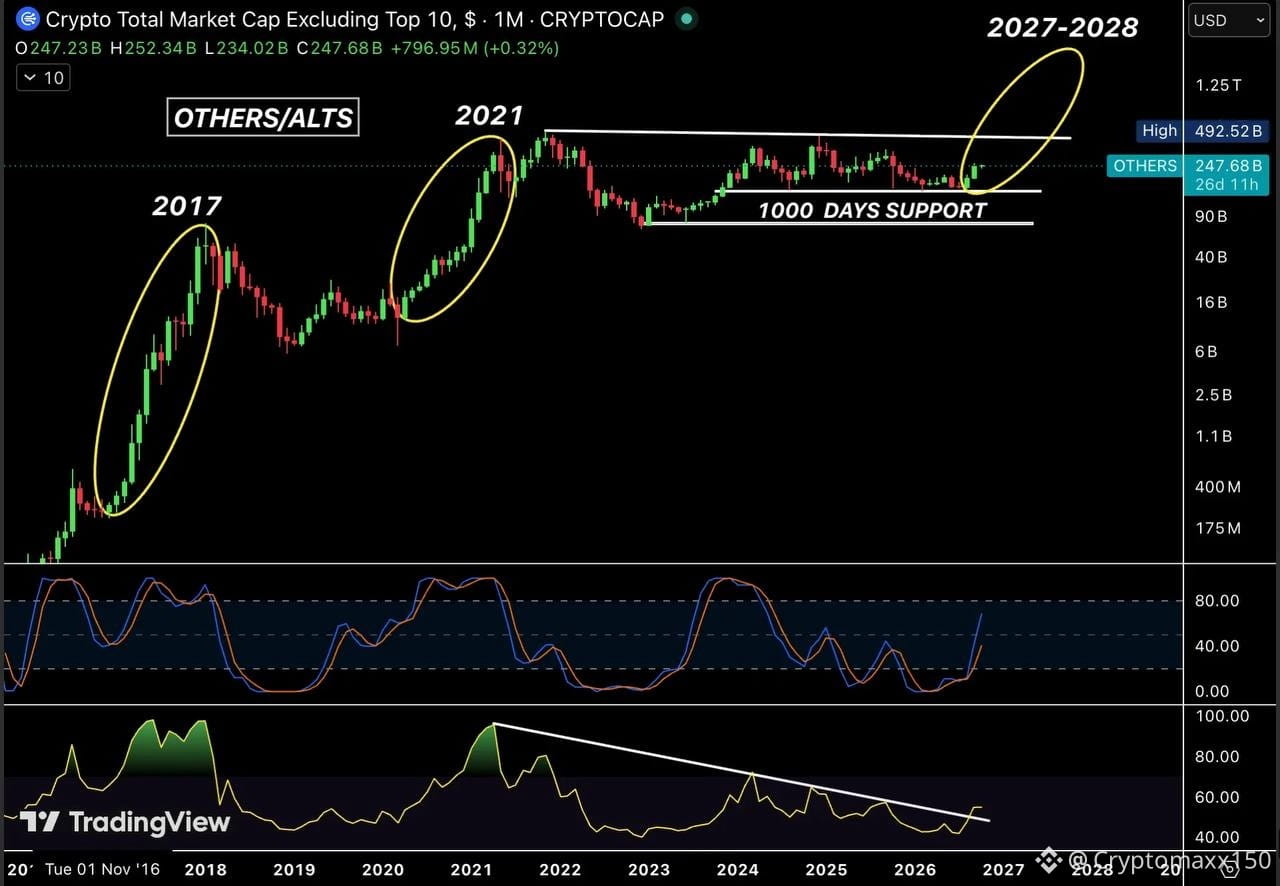
Altcoins represent the biggest opportunity available right now.
Since 2021, most retail investors have lost money by holding altcoins, as these coins have done nothing but move sideways.
But that doesn't change the fact that altcoins are currently undervalued.
The U.S. stock market is worth $77 trillion.
Gold is worth $30 trillion.
Bitcoin is worth $1.72 trillion.
Other altcoins are worth just $235 billion.
A small shift in liquidity toward altcoins could be enough to send them soaring, just as it did in 2017 and 2021.
Altcoins represent the biggest opportunity available right now.
Since 2021, most retail investors have lost money by holding altcoins, as these coins have done nothing but move sideways.
But that doesn't change the fact that altcoins are currently undervalued.
The U.S. stock market is worth $77 trillion.
Gold is worth $30 trillion.
Bitcoin is worth $1.72 trillion.
Other altcoins are worth just $235 billion.
A small shift in liquidity toward altcoins could be enough to send them soaring, just as it did in 2017 and 2021.
Since 2021, most retail investors have lost money by holding altcoins, as these coins have done nothing but move sideways.
But that doesn't change the fact that altcoins are currently undervalued.
The U.S. stock market is worth $77 trillion.
Gold is worth $30 trillion.
Bitcoin is worth $1.72 trillion.
Other altcoins are worth just $235 billion.
A small shift in liquidity toward altcoins could be enough to send them soaring, just as it did in 2017 and 2021.
3
456
·
--
Bullish
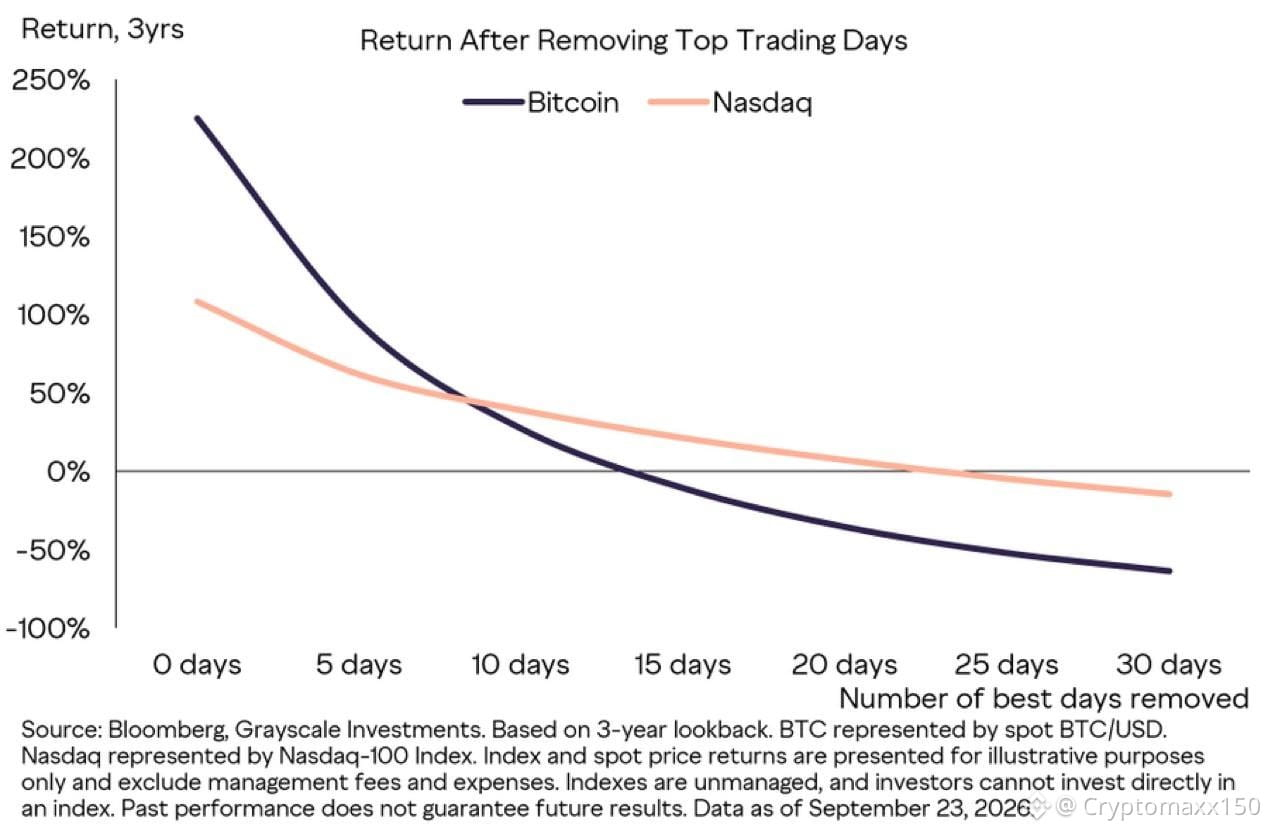
Bitcoin returned 225% over three years, compared with 109% for the Nasdaq. However, excluding Bitcoin’s five best trading days reduces its return to 95%.
$BTC
Bitcoin returned 225% over three years, compared with 109% for the Nasdaq. However, excluding Bitcoin’s five best trading days reduces its return to 95%.
$BTC
$BTC
3
783
·
--
Bullish
The U.S. Commodity Futures Trading Commission (CFTC) proposes new rules for cryptocurrencies, allowing trading firms to choose between submitting to federal oversight and offering margin trading services to retail customers.
The U.S. Commodity Futures Trading Commission (CFTC) proposes new rules for cryptocurrencies, allowing trading firms to choose between submitting to federal oversight and offering margin trading services to retail customers.
3
706
·
--
Bullish
Verified
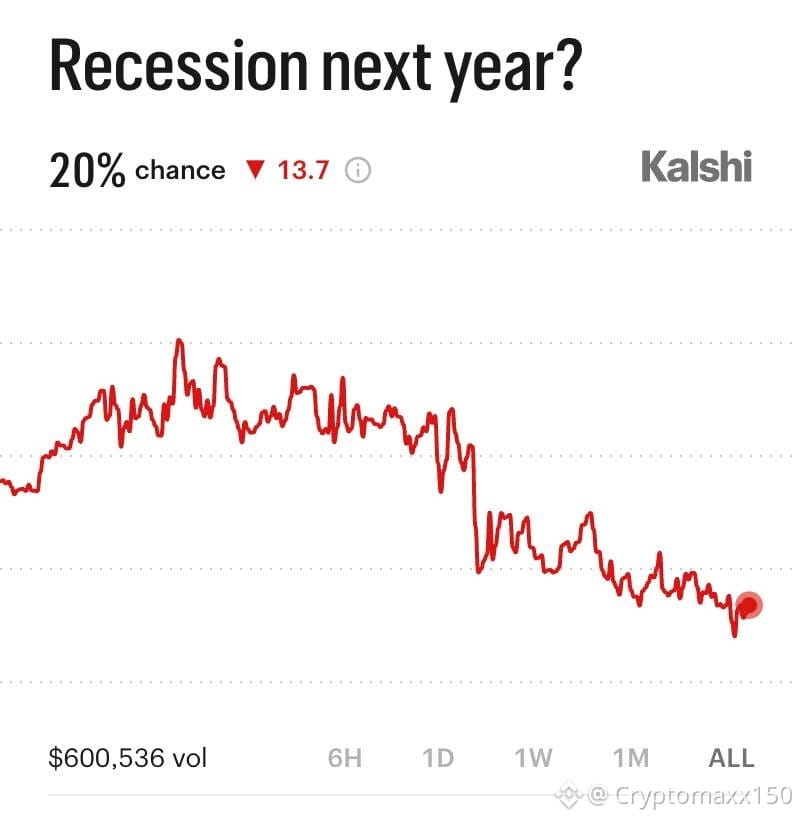
Traders on the Kalshi platform see a 20% chance of an economic recession next year.
Traders on the Kalshi platform see a 20% chance of an economic recession next year.
587
·
--
Bullish
Verified
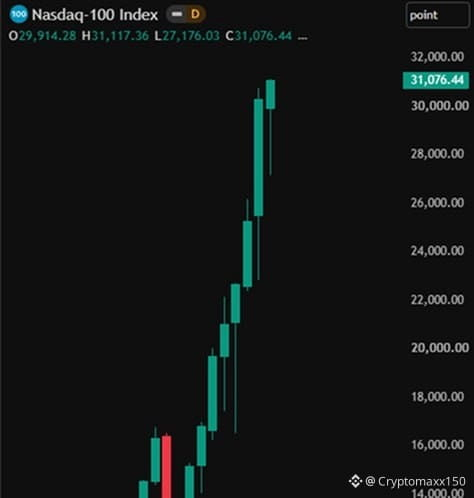
The Nasdaq 100 is now up more than 150% since Michael Burry warned investors to sell stocks in January 2023.
It closed today at a record high of 31,076, marking its second consecutive record close.
The Nasdaq 100 is now up more than 150% since Michael Burry warned investors to sell stocks in January 2023.
It closed today at a record high of 31,076, marking its second consecutive record close.
It closed today at a record high of 31,076, marking its second consecutive record close.
5
1.2k
·
--
Bullish
Partly True
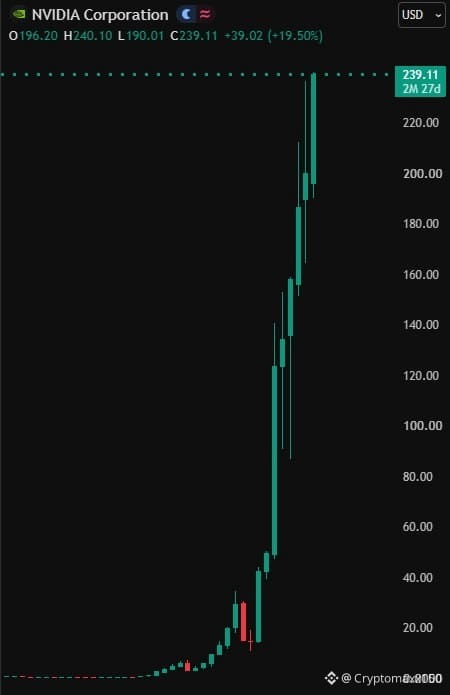
NVIDIA $NVDA officially closed at its all-time high, and is approaching the $6 trillion level.
The company's shares rose 2.2% today, closing at $239.11, after reaching a record high of $240.10.
NVIDIA $NVDA officially closed at its all-time high, and is approaching the $6 trillion level.
The company's shares rose 2.2% today, closing at $239.11, after reaching a record high of $240.10.
The company's shares rose 2.2% today, closing at $239.11, after reaching a record high of $240.10.
2
7
6.5k
·
--
Bullish
Partly True
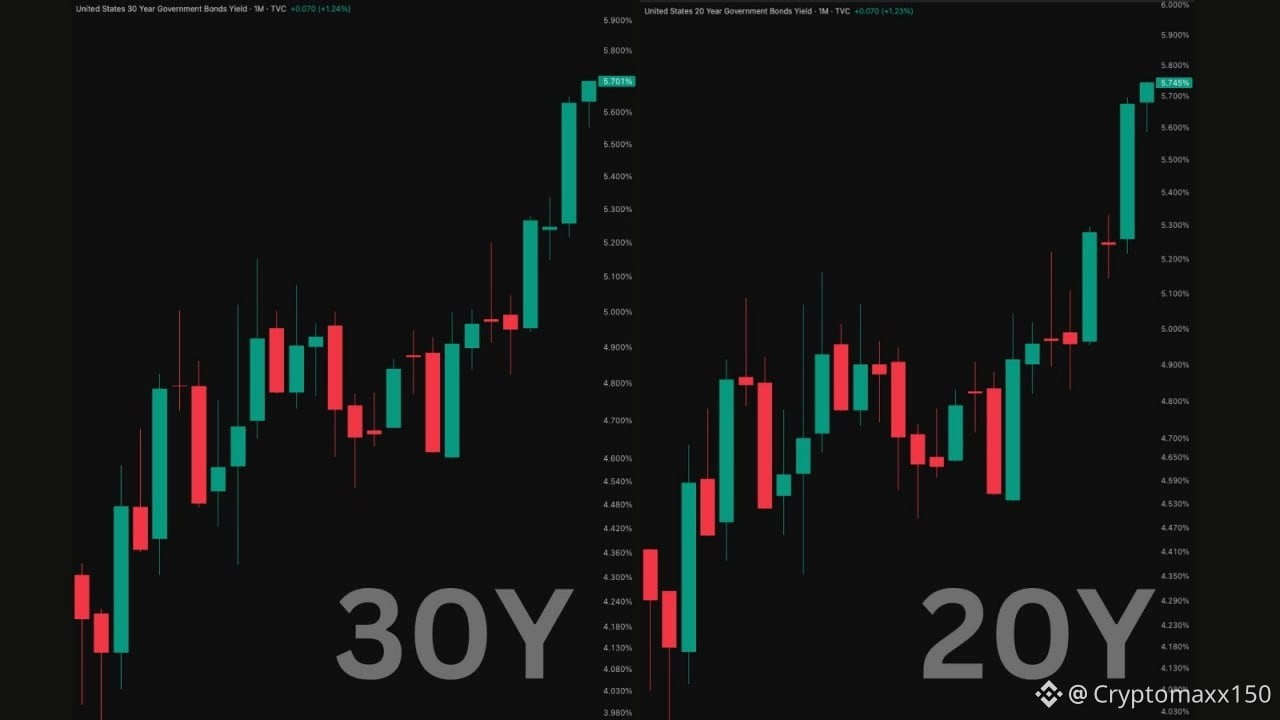
The U.S. bond market is sounding an alarm that cannot be ignored.
The 20-year Treasury yield has reached 5.735%, while the 30-year Treasury yield has climbed to nearly 5.7%. Both are at their highest levels in about 24 years.
The 10-year Treasury yield has also reached 5.34%, its highest level in 24 years.
Long-term bond yields have risen by more than 100 basis points since early March, driven by rising inflation, mounting debt, and geopolitical risks, pushing borrowing costs higher.
The S&P 500 remains near record highs, supported by AI-driven trading, but pressure is beginning to spread.
Mortgage rates are rising, real estate activity is weakening, and credit spreads have begun to widen.
Stock prices are stable for now.
The U.S. bond market is sounding an alarm that cannot be ignored.
The 20-year Treasury yield has reached 5.735%, while the 30-year Treasury yield has climbed to nearly 5.7%. Both are at their highest levels in about 24 years.
The 10-year Treasury yield has also reached 5.34%, its highest level in 24 years.
Long-term bond yields have risen by more than 100 basis points since early March, driven by rising inflation, mounting debt, and geopolitical risks, pushing borrowing costs higher.
The S&P 500 remains near record highs, supported by AI-driven trading, but pressure is beginning to spread.
Mortgage rates are rising, real estate activity is weakening, and credit spreads have begun to widen.
Stock prices are stable for now.
The 20-year Treasury yield has reached 5.735%, while the 30-year Treasury yield has climbed to nearly 5.7%. Both are at their highest levels in about 24 years.
The 10-year Treasury yield has also reached 5.34%, its highest level in 24 years.
Long-term bond yields have risen by more than 100 basis points since early March, driven by rising inflation, mounting debt, and geopolitical risks, pushing borrowing costs higher.
The S&P 500 remains near record highs, supported by AI-driven trading, but pressure is beginning to spread.
Mortgage rates are rising, real estate activity is weakening, and credit spreads have begun to widen.
Stock prices are stable for now.
TLTETF-0.96%
IEFETF-0.34%
2
1
7
3.6k
·
--
Verified
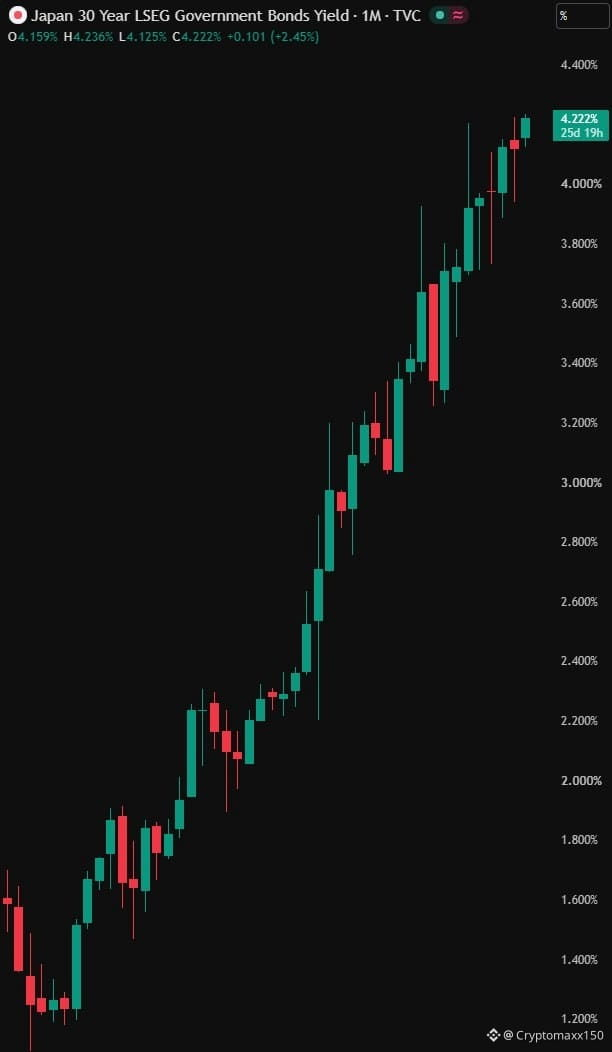
Record Japanese 30-year bond yields reached a new high of 4.235%, as the Bank of Japan said that sales of bonds related to artificial intelligence are contributing to higher long-term interest rates.
This is the highest level since Japan began selling 30-year bonds in 1999, and it first surpassed 4% in May.
The record came as traders were waiting for a speech by Prime Minister Sanaye Takayichi to parliament, according to Reuters.
Record Japanese 30-year bond yields reached a new high of 4.235%, as the Bank of Japan said that sales of bonds related to artificial intelligence are contributing to higher long-term interest rates.
This is the highest level since Japan began selling 30-year bonds in 1999, and it first surpassed 4% in May.
The record came as traders were waiting for a speech by Prime Minister Sanaye Takayichi to parliament, according to Reuters.
This is the highest level since Japan began selling 30-year bonds in 1999, and it first surpassed 4% in May.
The record came as traders were waiting for a speech by Prime Minister Sanaye Takayichi to parliament, according to Reuters.
TLTETF-0.96%
3
1.2k
·
--
Partly True
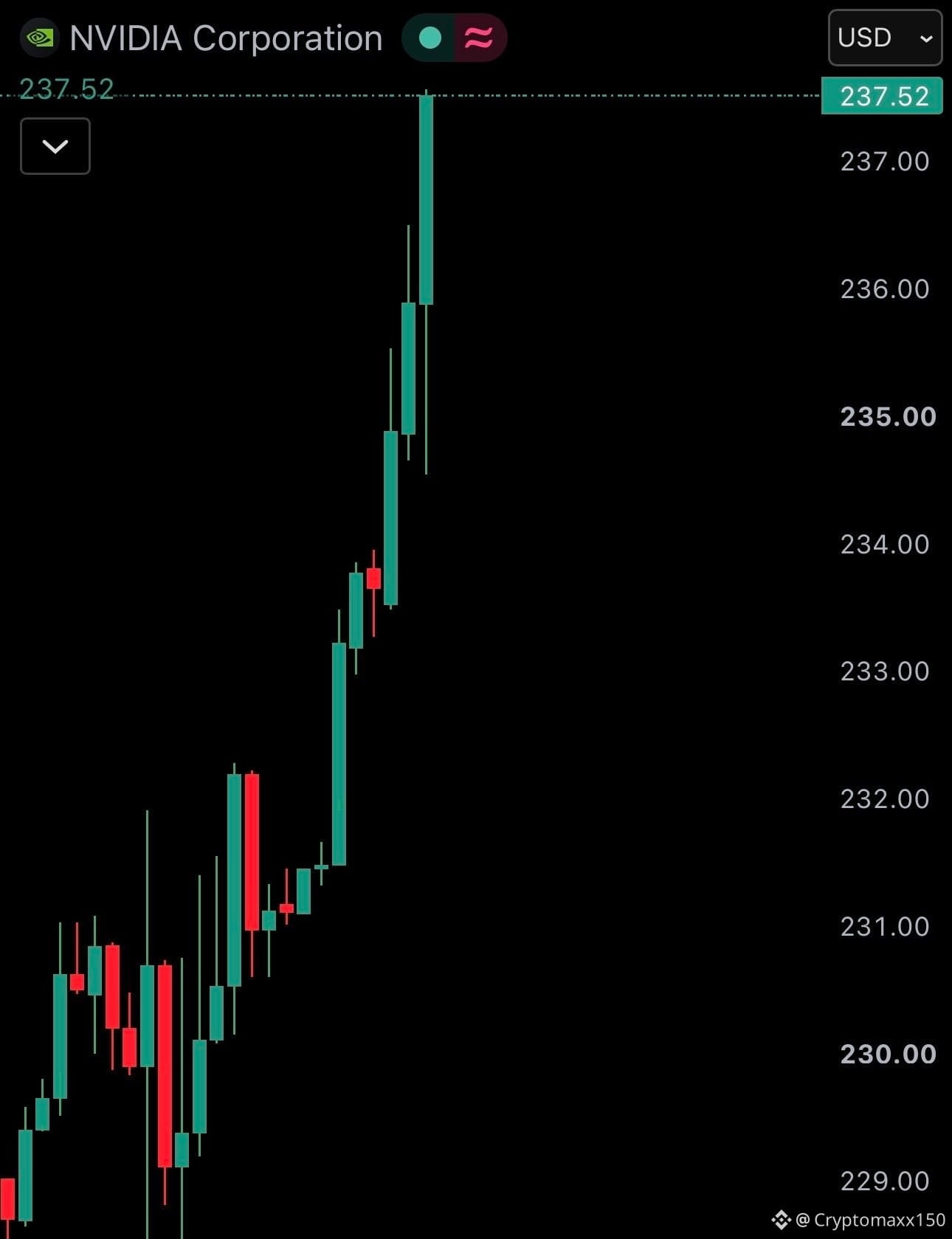
Nvidia company $NVDA achieves a new record level, surpassing a market value of $5.72 trillion.
Nvidia company $NVDA achieves a new record level, surpassing a market value of $5.72 trillion.
6
2.2k
·
--
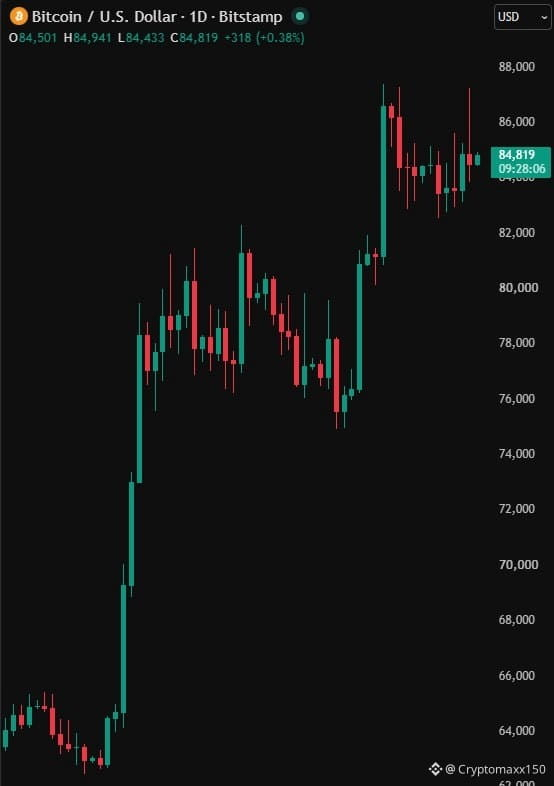
The price of Bitcoin fell from $87,000 to below $84,000 within hours, resulting in losses of nearly $600 million in trades.
Since then, the price of Bitcoin has stabilized around $84,800.
The price of Bitcoin fell from $87,000 to below $84,000 within hours, resulting in losses of nearly $600 million in trades.
Since then, the price of Bitcoin has stabilized around $84,800.
Since then, the price of Bitcoin has stabilized around $84,800.
2
4
1.9k
·
--
Quick Notes on Bitcoin:
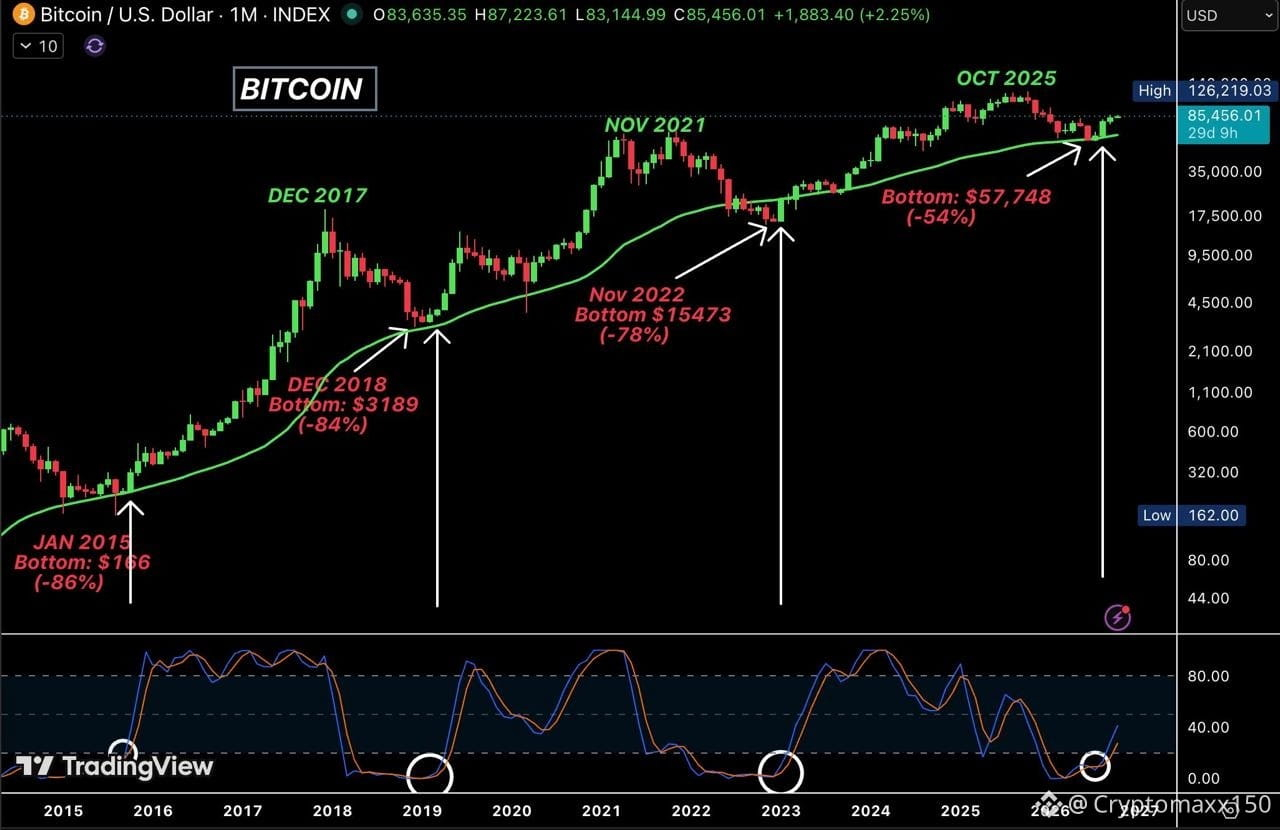
Closed the month up 6.33%, following a clear rebound from the monthly MA 50.
On the monthly timeframe, the Stochastic RSI is moving positively out of oversold zones, and the current pattern resembles the bottoms of previous cycles that preceded strong breakouts.
The last low was at $57,748 (-54%). It was less deep than the lows of 2015 (-86%), 2018 (-84%), and 2022 (-78%), reflecting relative strength.
Support: the monthly MA 50 around $85,000. Holding above it keeps the outlook positive.
#BTC $BTC
Quick Notes on Bitcoin:
Closed the month up 6.33%, following a clear rebound from the monthly MA 50.
On the monthly timeframe, the Stochastic RSI is moving positively out of oversold zones, and the current pattern resembles the bottoms of previous cycles that preceded strong breakouts.
The last low was at $57,748 (-54%). It was less deep than the lows of 2015 (-86%), 2018 (-84%), and 2022 (-78%), reflecting relative strength.
Support: the monthly MA 50 around $85,000. Holding above it keeps the outlook positive.
#BTC $BTC
Closed the month up 6.33%, following a clear rebound from the monthly MA 50.
On the monthly timeframe, the Stochastic RSI is moving positively out of oversold zones, and the current pattern resembles the bottoms of previous cycles that preceded strong breakouts.
The last low was at $57,748 (-54%). It was less deep than the lows of 2015 (-86%), 2018 (-84%), and 2022 (-78%), reflecting relative strength.
Support: the monthly MA 50 around $85,000. Holding above it keeps the outlook positive.
#BTC $BTC
1
3
1.2k
·
--
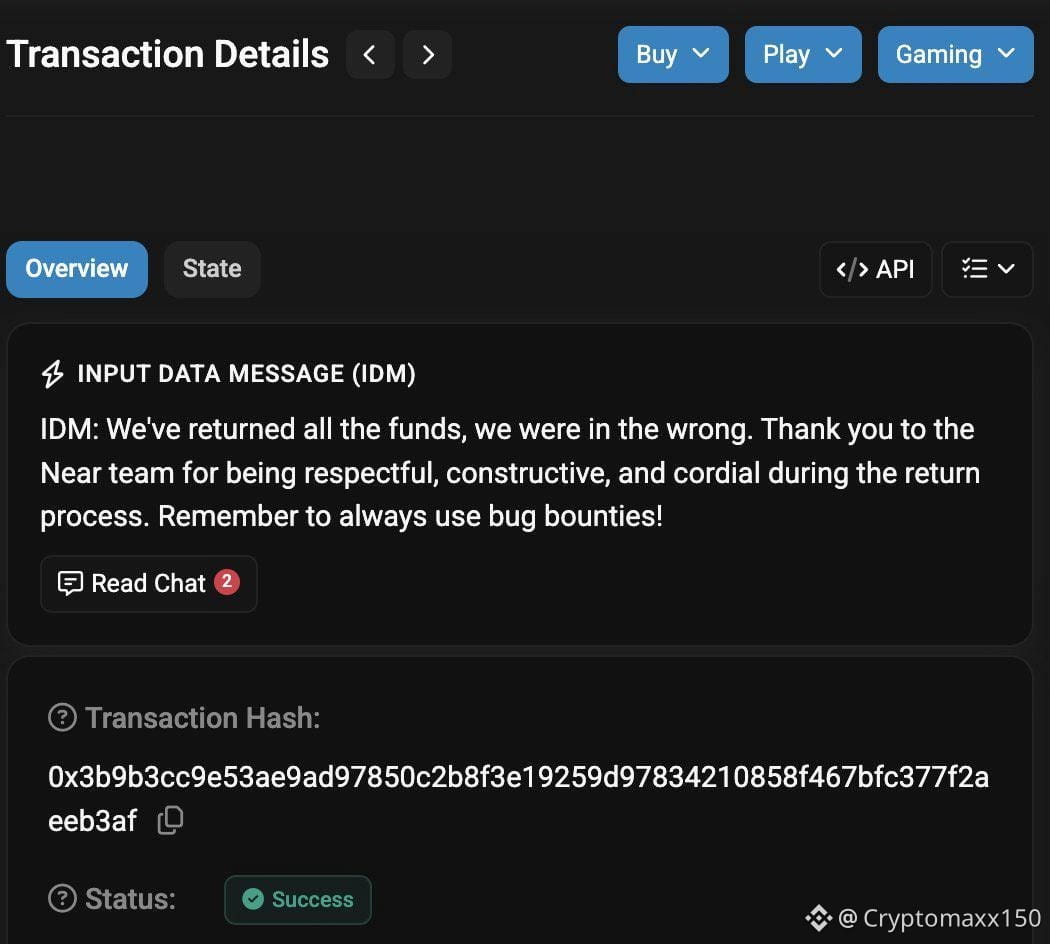
The hacker who stole $3.8 million from NEAR Intents returned every dollar.
Less than 24 hours after the alleged attacker’s identity was publicly revealed and given 48 hours to return the funds, the attacker sent the full amount of $3.8 million.
The hacker also left a message on the blockchain, admitting he “made a mistake,” thanking the team for handling the return respectfully, and urging NEAR to use bug bounties instead.
$NEAR
The hacker who stole $3.8 million from NEAR Intents returned every dollar.
Less than 24 hours after the alleged attacker’s identity was publicly revealed and given 48 hours to return the funds, the attacker sent the full amount of $3.8 million.
The hacker also left a message on the blockchain, admitting he “made a mistake,” thanking the team for handling the return respectfully, and urging NEAR to use bug bounties instead.
$NEAR
Less than 24 hours after the alleged attacker’s identity was publicly revealed and given 48 hours to return the funds, the attacker sent the full amount of $3.8 million.
The hacker also left a message on the blockchain, admitting he “made a mistake,” thanking the team for handling the return respectfully, and urging NEAR to use bug bounties instead.
$NEAR
2
16
14.7k
Log in to explore more content
Join global crypto users on Binance Square
⚡️ Get latest and useful information about crypto.
💬 Trusted by the world’s largest crypto exchange.
👍 Discover real insights from verified creators.
Email / Phone number
Trending Topics
BinanceLaunchesBinanceIntelligence
825,712 views
5,151 Discussing
🚀 BINANCE IS PUSHING AI DEEPER INTO FINANCE
Binance Intelligence brings together three products aimed at different users — everyday traders, advanced users and developers.
For traders, the interesting part is simple:
More data → better analysis → faster decisions.
Now the real question:
Can AI actually give retail traders an edge? 👀
$BNB $BTC $ETH
#binancelaunchesbinanceintelligence
CryptoMahibaloch
·0 Likes
·130 views
RobinhoodAdds$25MInBitcoinToBalanceSheet
0 views
0 Discussing
SP500AndNasdaqHitRecordHighs
0 views
19 Discussing