

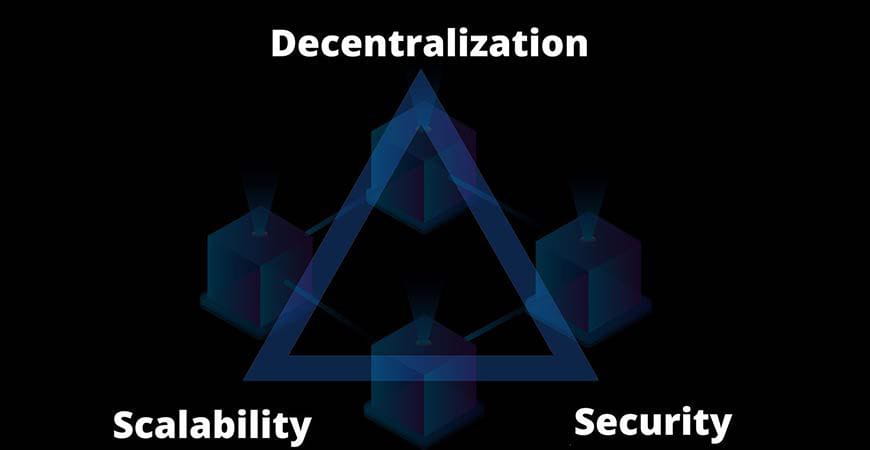
#blockchain technology, the backbone of cryptocurrencies like Bitcoin and Ethereum, is a distributed ledger system that offers remarkable features such as transparency, immutability, and decentralization. However, blockchain networks face a fundamental challenge known as the "Blockchain Trilemma," which refers to the difficulty of simultaneously achieving three critical attributes: security, scalability, and decentralization.
1. Security:
Security is a paramount concern in any blockchain network. In a blockchain, transactions are grouped into blocks and linked together using cryptographic hashes. Each block contains a reference to the previous block, creating a chain of blocks. This design ensures that altering any data within a block would require changing the data in all subsequent blocks, making it extremely difficult and computationally expensive to tamper with the blockchain's history.
To maintain security, blockchains rely on mechanisms like Proof of Work (PoW) or Proof of Stake (PoS) consensus algorithms. PoW requires miners to solve complex mathematical puzzles to add blocks to the chain, while PoS validators are chosen based on the number of coins they hold and are willing to "stake" as collateral. These consensus mechanisms ensure that the majority of participants in the network must act honestly to validate transactions and secure the blockchain against malicious attacks.
2. Scalability:
Scalability refers to a blockchain's ability to handle a large number of transactions quickly and efficiently. Traditional blockchains, like Bitcoin, process a limited number of transactions per second due to their block size and block time constraints. This limitation becomes problematic as the network grows and user demands increase, leading to slower transaction speeds and higher fees during peak times.
Addressing scalability challenges is critical for broader adoption and use cases beyond simple transactions. Several solutions have been proposed, such as off-chain payment channels (e.g., Lightning Network for Bitcoin) and sharding (e.g., Ethereum 2.0). These methods aim to reduce the burden on the main chain by enabling transactions to occur off-chain or by partitioning the network into smaller shards to process transactions in parallel.
3. Decentralization:
Decentralization is a core principle of blockchain technology, aiming to avoid single points of control and censorship. In a decentralized blockchain, no single entity or group can dictate the rules, validate all transactions, or manipulate the system for their benefit. Instead, consensus is achieved through the collective agreement of network participants.
Maintaining decentralization can be challenging as blockchains grow in popularity and size. Centralization can occur if a small number of entities control a majority of the network's resources or mining power, leading to potential collusion or dominance. Ensuring decentralization often involves encouraging broad participation through incentives, promoting open-source development, and designing consensus mechanisms that prevent concentration of power.
Conclusion:
The Blockchain Trilemma represents a complex trade-off between security, scalability, and #decentralization . Improving one aspect often comes at the expense of another, making it challenging to achieve the perfect balance. Blockchain projects and developers must carefully consider their priorities and design choices based on the specific use case and goals of their platform. As the technology continues to evolve, ongoing research and innovative solutions will play a crucial role in overcoming the Blockchain Trilemma and unlocking the full potential of blockchain technology for the world.