
If you are new to trading, understanding market structure is one of the most important skills you need to develop.
Before learning advanced trading strategies, indicators, or entry and exit techniques, you must first understand how price moves.
In this guide, we will cover three basic market conditions:
Uptrend
Downtrend
Consolidation
1. What Is Trading?
Trading is the process of buying and selling financial assets to profit from price movements.
There are two basic directions:
Buy (Long): You expect the price to increase. You profit if the price moves above your entry price.
Sell (Short): You expect the price to decrease. You profit if the price moves below your entry price.
Price movements are displayed through candlesticks on a trading chart.
Candlesticks continuously move as market prices change. Their speed depends on the timeframe you are viewing.
For example, a 5-minute chart shows shorter-term price movements, while a 4-hour chart provides a broader view of the market.
Understanding timeframes is important because the same market can look different depending on the timeframe.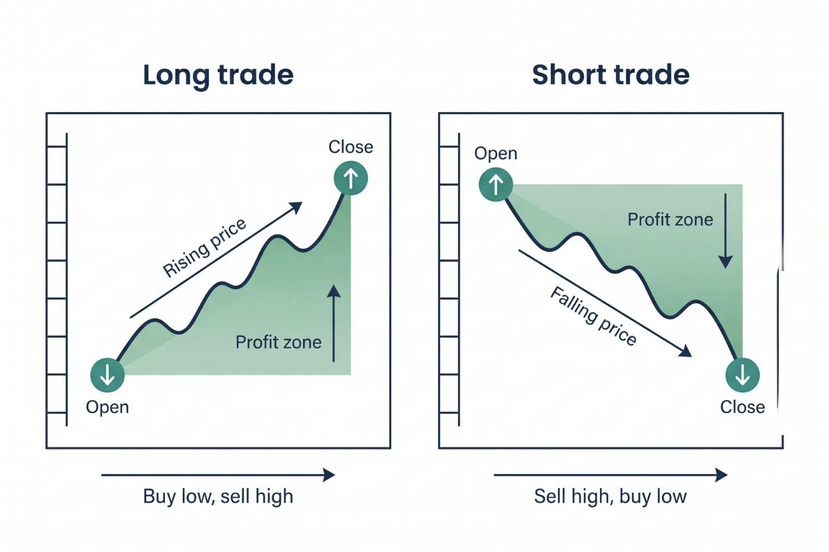
2. Understanding Market Trends
There are two primary trends in the market: uptrends and downtrends.
What Is a Downtrend?
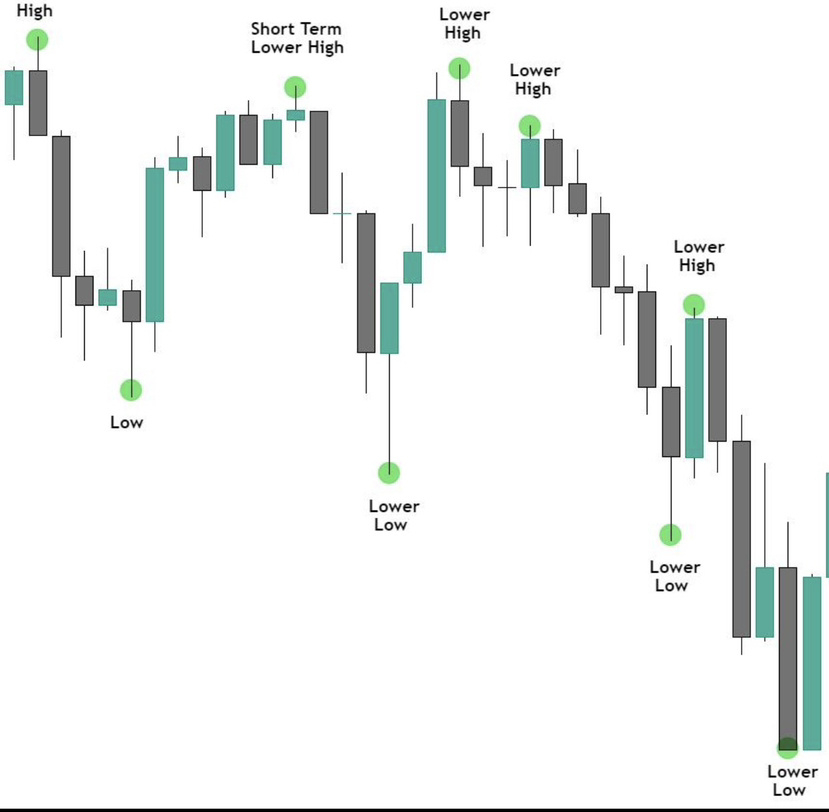
A downtrend occurs when the market consistently creates:
● Lower Highs (LH)
● Lower Lows (LL)
A Lower High means the price fails to reach its previous high.
A Lower Low means the price falls below its previous low.
For example:
Price makes a low, moves upward, but fails to break the previous high. It then moves downward and creates a new low.
When this pattern continues, it confirms a bearish market structure.
Remember: Lower Highs + Lower Lows = Downtrend.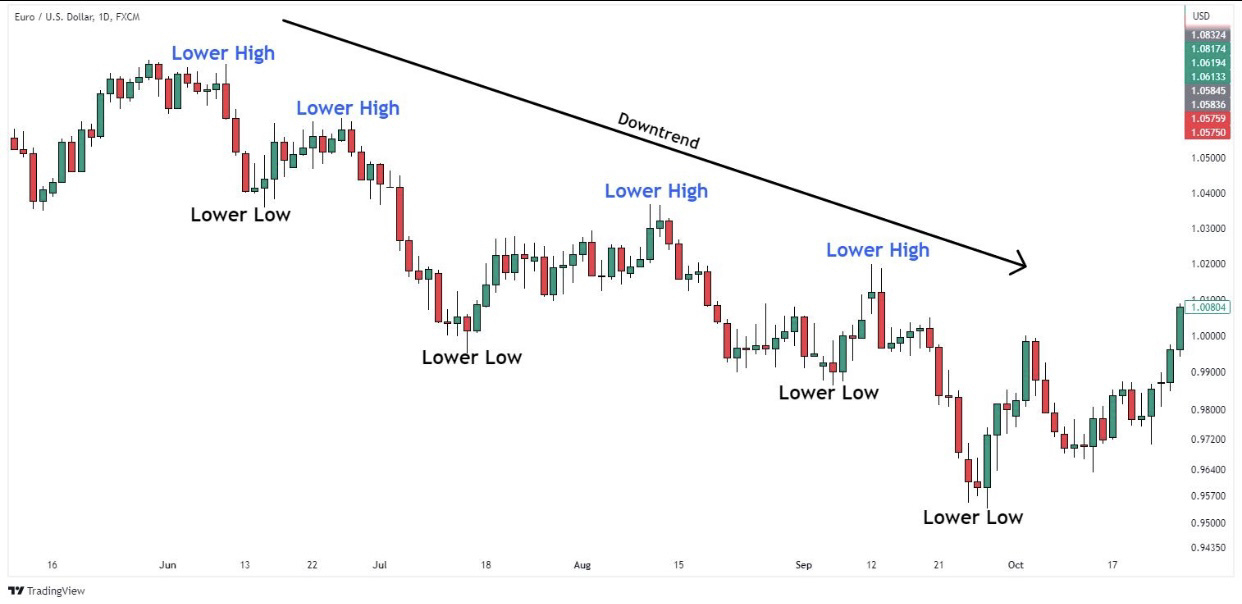
What Is an Uptrend?
An uptrend is the opposite of a downtrend.
It occurs when the market consistently creates:
● Higher Highs (HH)
● Higher Lows (HL)
A Higher High means the price moves above its previous high.
A Higher Low means the price pulls back but stays above its previous low.
For example:
Price creates a high, pulls back, forms a higher low, and then moves upward to create another higher high.
When this pattern continues, it indicates a bullish market structure.
Remember: Higher Highs + Higher Lows = Uptrend.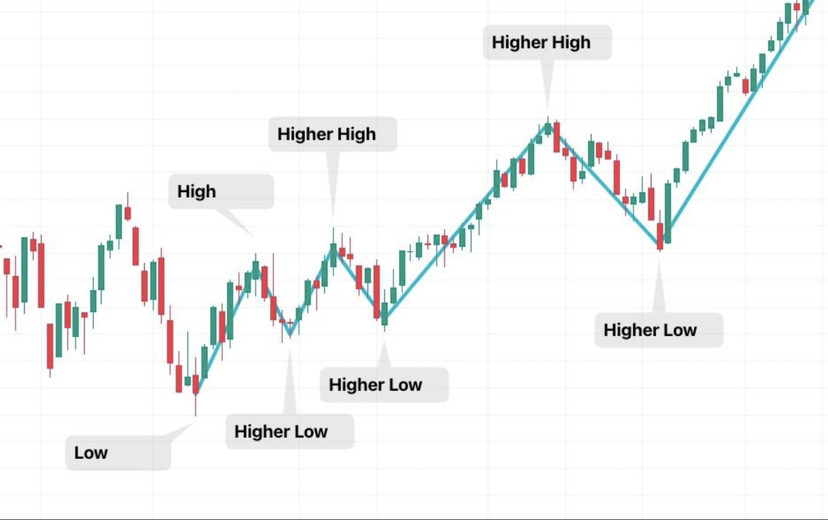
3. What Is Consolidation?
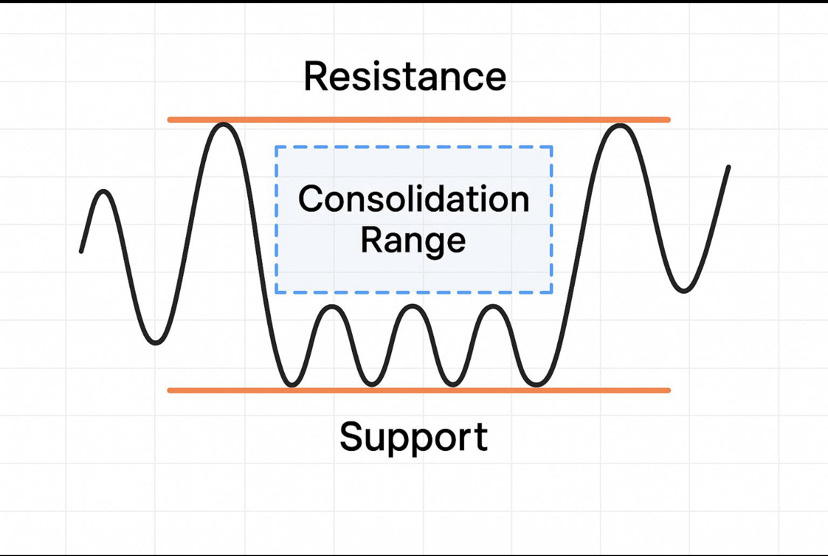
Consolidation happens when the market moves sideways without establishing a clear bullish or bearish trend.
During consolidation:
Price moves between support and resistance.
Market structure becomes unclear.
Price frequently changes direction.
Breakouts may fail and reverse.
Unlike a clear uptrend or downtrend, consolidation does not provide a consistent directional structure.
For beginners, trading during consolidation can be challenging because price movements are less predictable.It is often better to wait for a clear market structure instead of forcing trades in uncertain conditions.
4. Why Is Market Structure Important?
Understanding market structure helps traders identify the overall direction of the market.
Instead of entering trades randomly, you can analyze whether the market is:
● Moving upward.
● Moving downward.
● Moving sideways.
A useful approach for beginners is to focus on higher timeframes, such as the 1-hour and 4-hour charts, to understand the broader market direction.
Higher timeframes can help reduce the noise often seen on smaller timeframes, although they do not guarantee profitable trades.
5. Practical Example: Identifying a Downtrend
Imagine a chart where price creates the following structure:
● First High
● First Low
● Lower High
● Lower Low
● Another Lower High
● Another Lower Low
This repeated pattern indicates that sellers are controlling the market.
By identifying these highs and lows, traders can understand the market direction without relying entirely on indicators.
The same process works in reverse when identifying an uptrend.
Final Thoughts
Before learning advanced trading strategies, make sure you understand these three basic market conditions.
● Uptrend: Higher Highs and Higher Lows.
● Downtrend: Lower Highs and Lower Lows.
● Consolidation: Sideways price movement without a clear trend.
These concepts form the foundation of technical analysis and price action trading.
Educational Tip: Spend time studying historical charts and practice identifying market structure before risking real money. Always use proper risk management because no trend or trading setup guarantees a successful trade.