

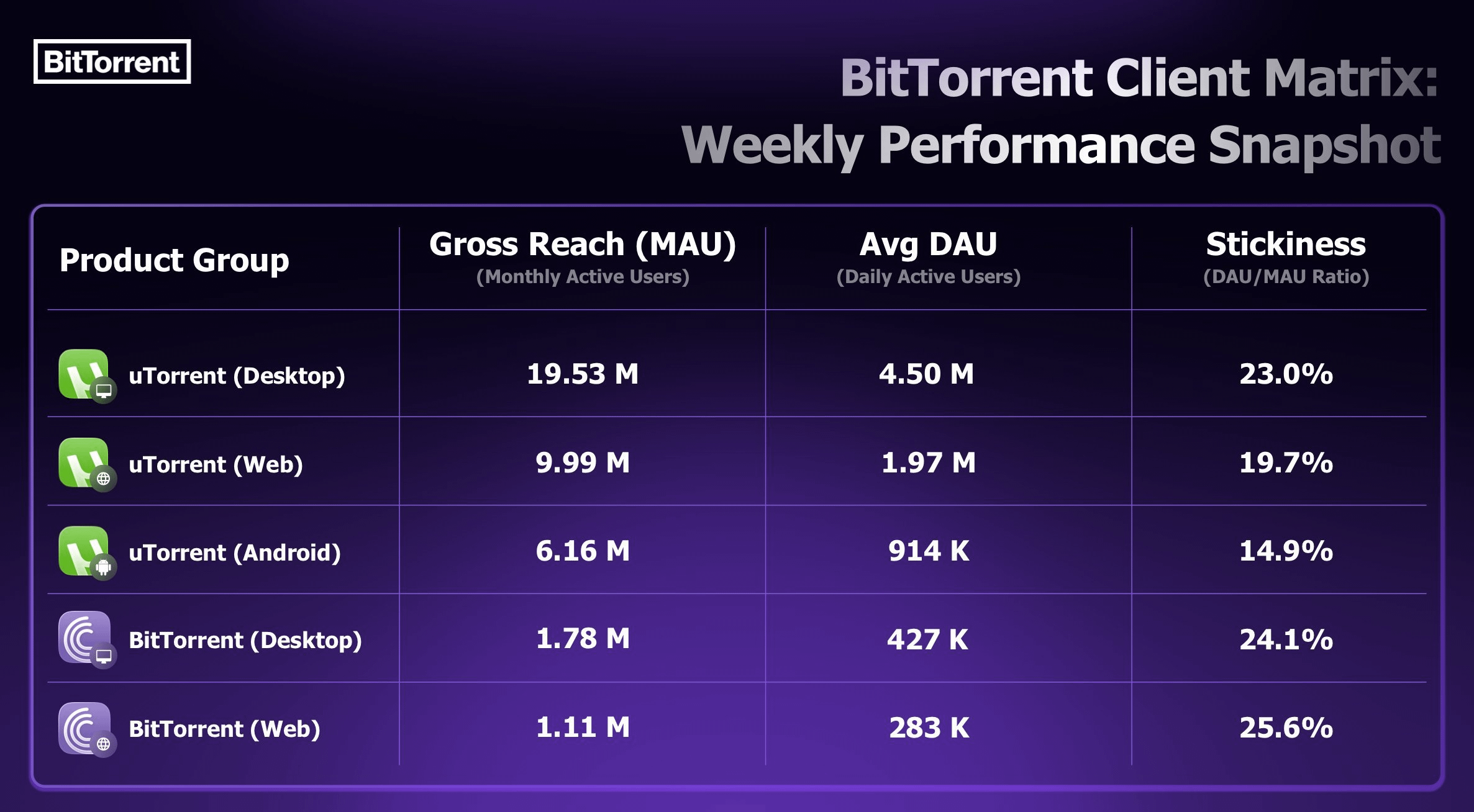
Big headline reach numbers look impressive at a glance, yet the real story in any software ecosystem lies in how often people come back when nobody is forcing them to. Looking at the latest weekly snapshot with 40.76 million gross reach and 8.69 million average daily active users shows an ecosystem that still anchors real daily routines.
Instead of relying on a single device or short-lived campaign, usage spans heavy desktop sessions, quick browser tabs, and mobile screens on the go.
➤ How The Client Matrix Breaks Down
Different surfaces carry distinct roles across the weekly user journey:
Desktop leadership: uTorrent Desktop leads daily engagement with 4.50 million daily actives, showing steady demand for dedicated client control. Browser stickiness: BitTorrent Web reaches a 25.6% stickiness rate, signaling that lightweight web access turns occasional visitors into repeat users. Mobile footprint: uTorrent Android reaches 6.16 million users, keeping decentralized file access close at hand on phones. Daily consistency: An average of 8.69 million daily actives out of 40.76 million gross reach reflects ongoing activity rather than one-off curiosity.
Seeing desktop, web, and mobile work together gives a clearer picture of how people actually move and manage files across platforms.
➤ Why This Matters
In decentralized tech, reach without repeat engagement rarely builds lasting momentum.
When millions of users return daily across desktop and mobile while web sessions hold strong stickiness, the underlying network stays active and resilient. That steady rhythm matters far more than a temporary spike that fades the following week.
➤ My Personal Perspective
I find this kind of breakdown much more informative than a single top-line number because each platform points to a different user habit.
Desktop shows serious ongoing use, web stickiness shows convenience working in practice, and Android reach shows everyday accessibility. Together, they remind me that durable networks grow through practical utility across screens.
Between desktop, web, and mobile, which way do you usually prefer handling large files day to day?