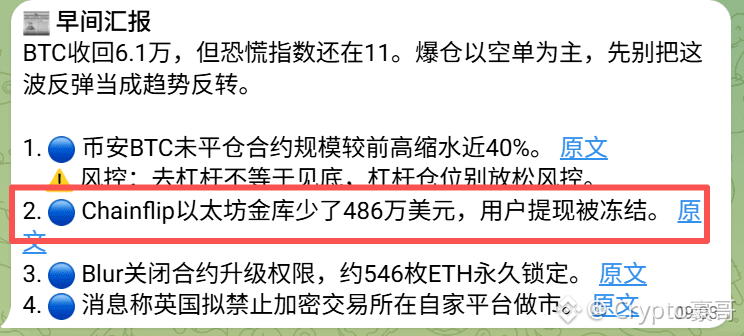
Here's a summary of the Chainflip incident:
Chainflip uses a smart contract vault on Ethereum to store funds. Normally, it takes signatures from a group of validators (at least 100) to open it, but this time someone withdrew the funds using valid signatures.
After the vault was emptied with valid signatures, both LPs' long-term funds and funds being held temporarily for swaps could be affected. So the protocol urgently paused withdrawals.
Losses have now exceeded $12 million. The lessons are:
1. A design that seems secure at first may not actually be secure—it can still have vulnerabilities.
2. If you're holding coins for the long term, it's better to avoid putting too much into these protocols to earn interest, because you could lose your entire principal.