


October 19, 2026 | Are we facing a historic crash or a new wave of volatility?
Concerns are mounting in global financial markets as geopolitical tensions escalate, oil prices rise, and inflationary pressures persist, alongside volatility in technology and artificial intelligence stocks. As Monday, October 19 approaches, comparisons have returned with one of the darkest days in financial market history: “Black Monday” in 1987.
But the more important question is not whether history will repeat itself, but whether current economic conditions could push markets toward a similar crisis.
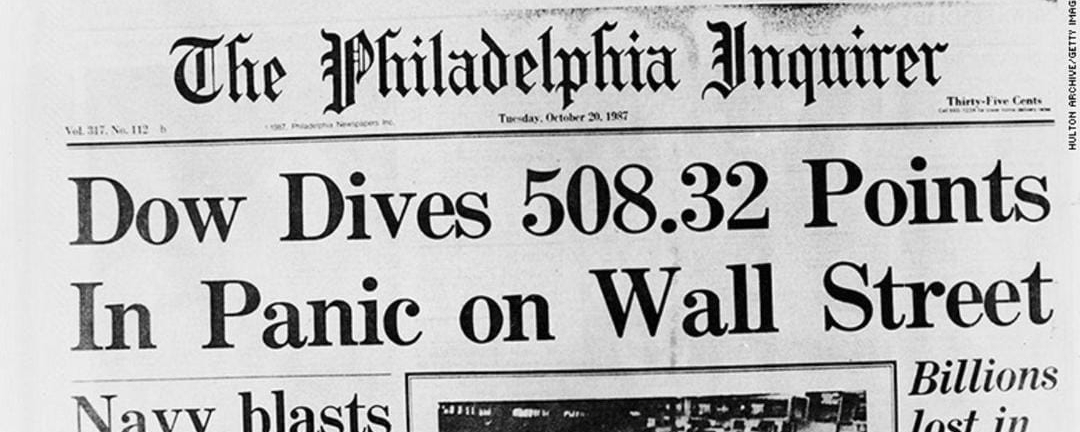
What happened on Black Monday in 1987?
On October 19, 1987, U.S. markets experienced one of the steepest declines in their history, as the Dow Jones Industrial Average lost about 22.6% of its value in a single trading session. The impact was not limited to the United States; it spread to financial markets around the world amid widespread panic and selling.
In response to the turmoil, the Federal Reserve acted to support liquidity and maintain the stability of the financial system.
Since then, the term “Black Monday” has become a symbol of sudden crashes that can occur when economic fears combine with selling pressure and disruptions to trading mechanisms.
Seven warning signs worrying investors
Several factors in current markets warrant close attention:
1. Rising oil prices
A sustained rise in oil prices above $100 per barrel could increase transportation and production costs and drive up prices for goods and services. If the increase persists, expectations of interest rate cuts may weaken, adding pressure on stocks.
2. Turmoil in AI stocks
Technology and AI companies have become some of the market’s most prominent drivers. A sharp decline in their valuations or concerns about earnings and investment could affect U.S. stock indexes, particularly the Nasdaq.
3. Pressure on the banking sector
Falling bank stocks may reflect concerns about funding costs, loan quality, and a slowing economy. However, a decline in bank shares alone does not necessarily mean there is a full-scale banking crisis.
4. The VIX fear index is rising
The VIX reflects expectations for volatility in the U.S. stock market over the coming period. A rise signals growing concern, but it does not predict a crash on its own or indicate when one might occur.
5. Rising bond yields
When U.S. bond yields rise, fixed-income investments become relatively more attractive, and stocks—particularly companies with high valuations—may face additional pressure.
6. Persistent inflation
High inflation may keep interest rates elevated for longer, increasing borrowing costs and limiting spending and investment.
7. Escalating geopolitical risks
Wars, trade tensions, and disruptions to energy supplies may prompt investors to reduce risk and shift toward assets they consider safer.
Are these factors combined enough to cause a crash?
Not necessarily. Markets do not move based only on the number of negative news stories. They are also affected by how unexpected the news is to investors, the amount of liquidity available, borrowing levels, and financial institutions’ ability to absorb losses.
These factors may trigger a sharp sell-off or a broad correction, but they do not prove that a 20% crash in a single day is imminent.
The fact that October 19 coincides with the anniversary of the 1987 crash is also a historical coincidence, not an independent economic indicator.
What should you watch in the coming days?
Movements in the S&P 500, Nasdaq, and Dow Jones, along with oil prices, bond yields, and the VIX, will be among the key indicators for understanding the market’s direction.
It is also important to distinguish between a price decline caused by profit-taking and a deeper crisis accompanied by disruptions to financing and liquidity, or a clear deterioration in financial institutions’ ability to meet their obligations.
As for circulating rumors about huge losses at AI-related funds, they should be verified using reliable sources before being treated as evidence of a crisis.
Bottom line: Caution is warranted, but panic is not a strategy
Global markets face a combination of risks that could increase volatility and put pressure on asset prices. Even so, it is impossible to conclude that another “Black Monday” is coming based solely on rising oil prices, falling stocks, or the date coincidence.
What we are seeing could be the start of a broader correction, a period of volatility, or a temporary sell-off followed by a rebound. The direction will depend on economic developments, monetary policy, geopolitical events, and investor behavior.
In financial markets, the danger lies not only in falling prices, but also in making hasty decisions based on fear and rumors.
Note: This article offers general educational analysis and is not investment advice. Verify real-time data and official sources before making any financial decisions.