

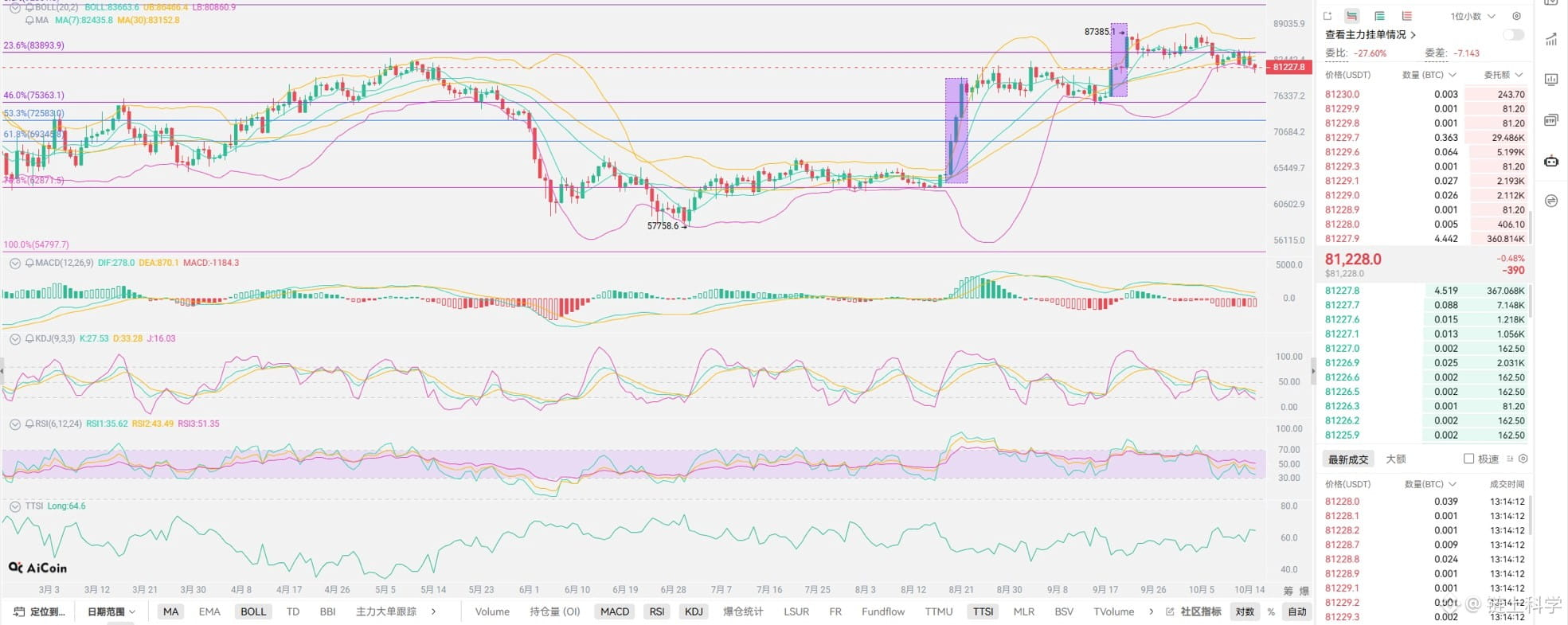

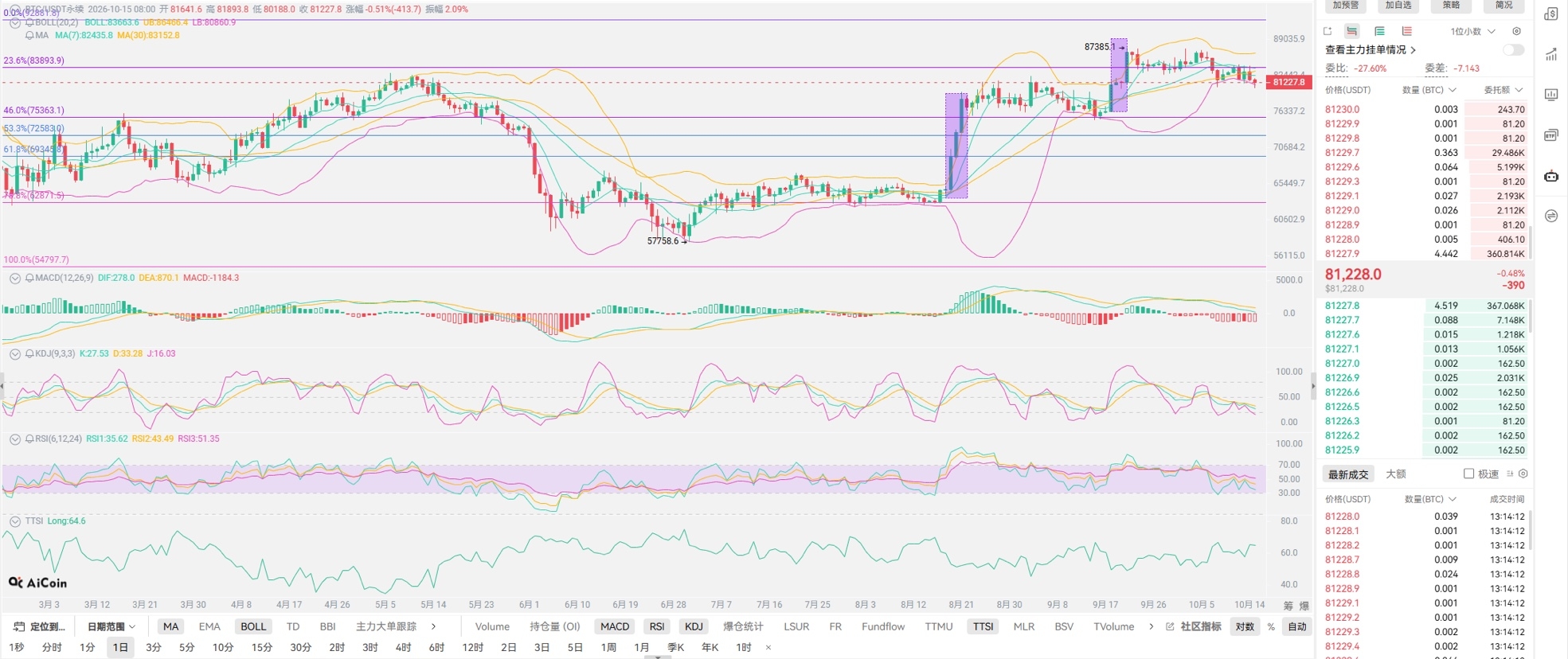
After the CPI data was released, the market finally resumed its decline. Bitcoin briefly fell to 80,188 before recovering to 81,533, seemingly stabilizing. The data release is extremely unfavorable for Trump, and bearish for us as well. The two figures Lao Cui is most concerned about are headline CPI, up 3.7% year over year versus the 3.6% forecast, and core CPI, up 2.6% year over year versus the 2.5% forecast—both higher than expected. In addition, gasoline prices rose 9.1% month over month, making them the main driver of the overall CPI increase. Don’t let these figures scare you, though: there will be no rate hike in October; all the data is paving the way for a December hike. And although Trump’s midterm elections haven’t begun yet, Lao Cui can already make a call: his party is likely to lose its majorities in both chambers. The knock-on effects: spot gold fell 2% intraday to $4,075.3 per ounce, Nasdaq futures dropped more than 2%, and S&P 500 and Dow Jones futures also fell.
Inflation coming in above expectations raises market expectations for interest rates, putting the dollar and short-term U.S. Treasury yields under pressure in opposite ways: the dollar tends to strengthen, while Treasury prices weaken and yields rise. After the data was released, the dollar strengthened and the yield on two-year U.S. Treasuries rose noticeably. Higher interest rates reduce the discounted value of future cash flows, which is particularly unfavorable for tech stocks and high-valuation growth stocks. Major U.S. stock indexes came under pressure after the data was released. Inflation above expectations makes it harder for the Federal Reserve to pivot toward easing. After the data came out, the market-implied probability of a rate hike at the October 27–28 meeting rose from around 22% to around 45%. This is only market pricing; it does not mean the Fed has already decided to raise rates. This kind of feedback is simply warming up the market in advance and fueling expectations. When a rate hike actually comes, the market reaction may be somewhat milder. There has already been enough analysis of the data, so Lao Cui won’t go into it further. The main focus remains the crypto market.
Lao Cui’s summary: I’m sure those of you following the crypto market have also been keeping an eye on Russia’s progress toward regulatory compliance, as well as developments at home. Yesterday, SOL put up a giant advertisement on Shanghai’s Bund. It also officially announced plans to establish an office in Shanghai and launch a series of technical events across four cities in China. Starting October 16, the events are scheduled to take place in Shanghai, Hangzhou, Shenzhen, and Beijing. According to information released by Solana, the events will focus on blockchain infrastructure, artificial intelligence, robotics, hardware, payments, consumer technology, and globalizing products, connecting local Chinese developers, entrepreneurs, and investors with the global Solana ecosystem. The ad placement has already been deemed a violation. We’ll have to see whether the activities continue; Citibank may well be penalized. Lao Cui thinks this was a test, though the outcome wasn’t very good.
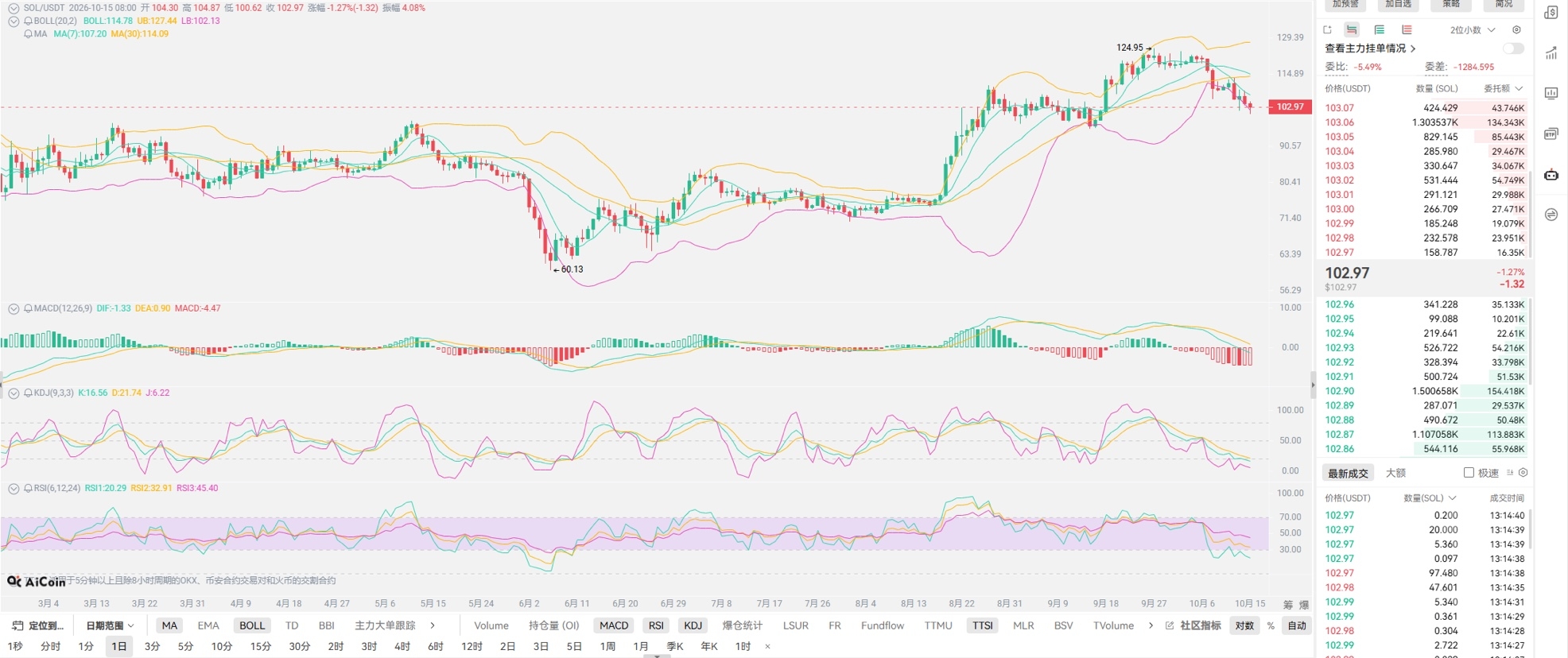
Remember that this ad campaign was not about investment. This test has sent an extremely clear signal: the domestic market will not open up in the short term. As I’ve mentioned before, since the crackdown, domestic developments have offered very little news relevant to investment. The only time to consider selling pressure from investors cashing out is at year-end; even a probe like this can be a small positive signal. At the very least, it shows investors that the crypto ecosystem is still being developed, and that people are continuing to work on the technology being implemented and updated behind the scenes. The market is still expanding, and technology development has not been abandoned. For people investing in crypto, the domestic environment is not friendly, and there isn’t much information to draw on. So Lao Cui will try to provide you with more insights within reason. These developments will prove their worth when the bull market arrives. This news only makes Lao Cui more confident in SOL’s future. Its growth means it can no longer really be considered an altcoin; it is gradually entering the ranks of mainstream coins. SOL now has enormous upside potential.
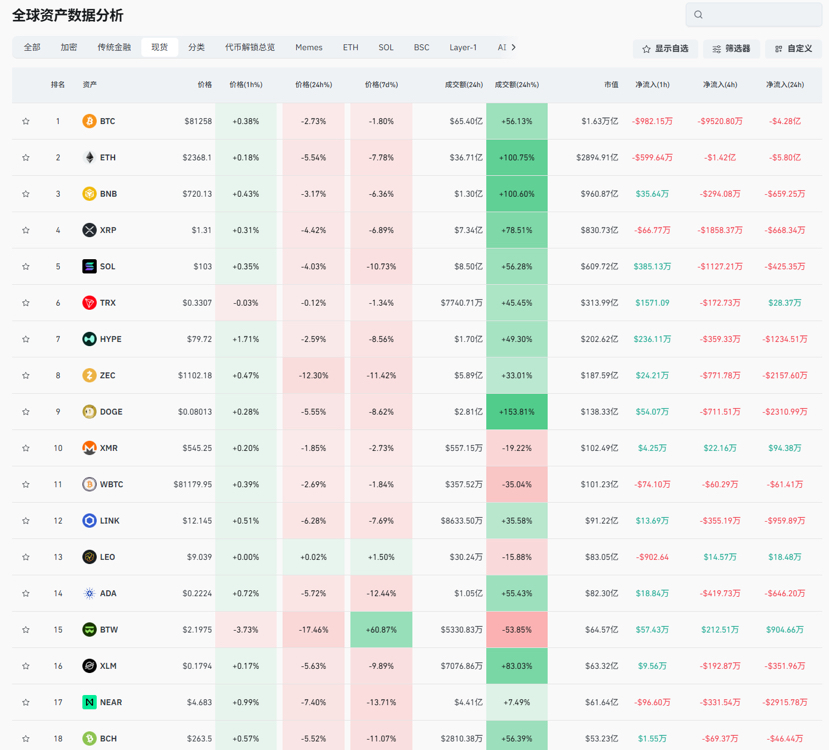
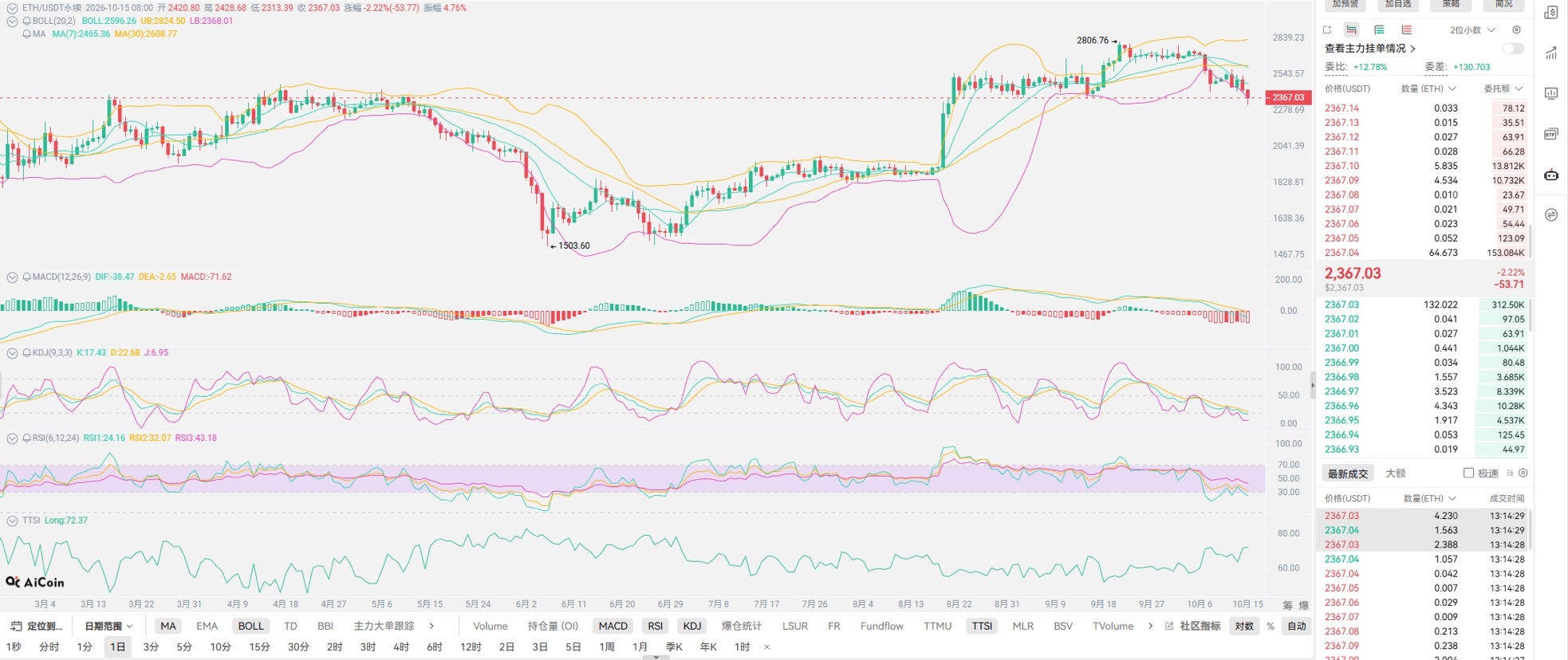
After the CPI data was released, the crypto market is bound to face short-term pressure, but don’t be too pessimistic. Based on what we’re seeing so far, Bitcoin’s $80,000 level appears relatively stable. Going forward, you only need to keep an eye on $83,000. If you’re thinking of shorting, there’s no need to wait for $85,000, because $83,000 is where U.S. pension funds and certain institutions hold positions, so it could become a battleground. The truly decisive blow will have to wait for the next round of rate hikes and the Fed’s policy meeting remarks at the end of October. If the Fed issues bearish signals, the market could turn bearish in the short term; if it issues bullish signals, the market could hold up until the wave of capital selling at year-end. In short, as the year progresses, the downtrend will become increasingly clear. What you need to do now is consider your positions and how to maximize your gains amid this bearish wave. Those of you still stuck in short positions may soon get a chance to break even. The $80,000 level won’t hold for long either. One thing is clear: the rate-hike cycle may last longer than Lao Cui expects, which could mean an even lower floor!