

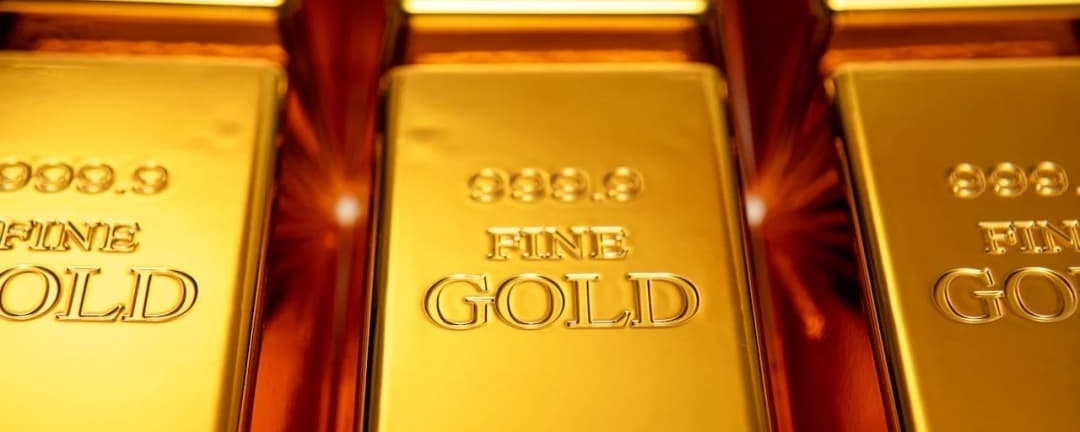

For 50 years, daily gold lending returns have long been priced on working days, yet most who actually hold gold have remained out of reach of this market. Now, on September 24, Paxos Labs has launched a new token called PAXGy to change this reality. It is based on the digital gold currency PAXG, with reserves directed to institutional borrowers in order to increase the value of each unit of PAXGy in gold over time.
## A market that existed all along, but its doors were closed
For half a century, the gold lending market has generated a new lending rate every business day. Yet the oddity is that most holders of physical gold were essentially excluded from earning any return from it. Paxos Labs tries to break this contradiction with PAXGy, a new token backed by PAXG launched on September 24, which gives holders exposure to institutional gold lending.
Instead of paying a yield in dollars or in another digital currency, PAXGy was designed to increase in value relative to PAXG. In other words, an investor can enter with exposure to a specific amount of gold. If the lending strategy succeeds in generating the desired returns, the investor can later redeem the position for more ounces of gold than they started with. The idea is simple: gold that produces more gold.
## The market has existed for a long time
In a post on X at the product launch, Paxos Labs explained that the gold lending rate has been priced daily for fifty years. However, it remained closed to most people who own this asset due to low institutional thresholds, bullion bank relationships, and dedicated settlement infrastructure. Paxos Labs emphasized that PAXGy changes this: it became immediately available on OKX, and on-chain via Uniswap, X Layer, ZeroX, and Ether.Fi, supported by the Chainlink CCIP protocol.
Lending gold is not a new innovation specific to digital currencies. Refineries and jewelry manufacturers, mining companies, and bullion banks borrow the metal instead of buying it directly, and pay a specific lending rate in return. Central banks participate in this activity too. According to a 2026 survey by the World Gold Council, 37% of respondents said they actively manage their reserves through lending and swaps.
Access has always been the problem. This market operates through minimal institutional thresholds and bilateral arrangements with bullion banks and specialized settlement infrastructure designed for a relatively narrow circle of participants. Paxos Labs’ PAXGy aims to reduce this large institutional barrier to a level that is effectively symbolic—and suitable for individuals.
## $53 billion in gold—the cost of holding it
Numbers reveal the contradiction clearly: according to Paxos Labs data, there is about $53 billion worth of gold deposited in exchange-traded funds (ETFs), while investors pay annual fees of up to 40 basis points to gain exposure to a metal that does not generate income by itself. In contrast, the market value of tokenized gold surpassed $5 billion, and its trading volume reached $90.7 billion in Q1 2026, exceeding the volume for all of 2025.
PAXGy takes an additional step: the gold backing the structure is directed to eligible institutional borrowers in the existing lending market. Returns are reflected in the exchange rate of PAXGy to PAXG—meaning the investor’s wallet is not necessarily filled with extra tokens. Instead, each PAXGy can be redeemed over time for a larger amount of PAXG. Notably, the blockchain technology here does not create yield on its own; rather, it opens a smaller door into a market that has existed for decades.
## Gold still needs an investment destination
PAXGy is available via OKX Gold Earn and X Layer, as well as trading on-chain through Uniswap, ZeroX, and Ether.fi. The Chainlink CCIP protocol handles cross-chain messaging, enabling the PAXGy position to be moved between supported chains without needing to be liquidated first. Paxos Labs said that more platforms are expected to join later.
But tokenization doesn’t erase the underlying mechanisms. The gold backing PAXGy is actually used in institutional lending operations. That means the viability of this economy ultimately depends on lending activity itself—not on generating gold income automatically by itself.
That’s what makes this experiment interesting. For 50 years, gold owners could watch the lending rate being priced daily, while the mechanism required to realize that yield remained trapped behind institutional walls. Now, that mechanism has been connected to fractional digital tokens, giving almost anyone an opportunity to enter this market through blockchain technology and decentralized finance (DeFi). The most important question remains whether this development will actually change who can participate in one of the oldest lending markets in finance.