

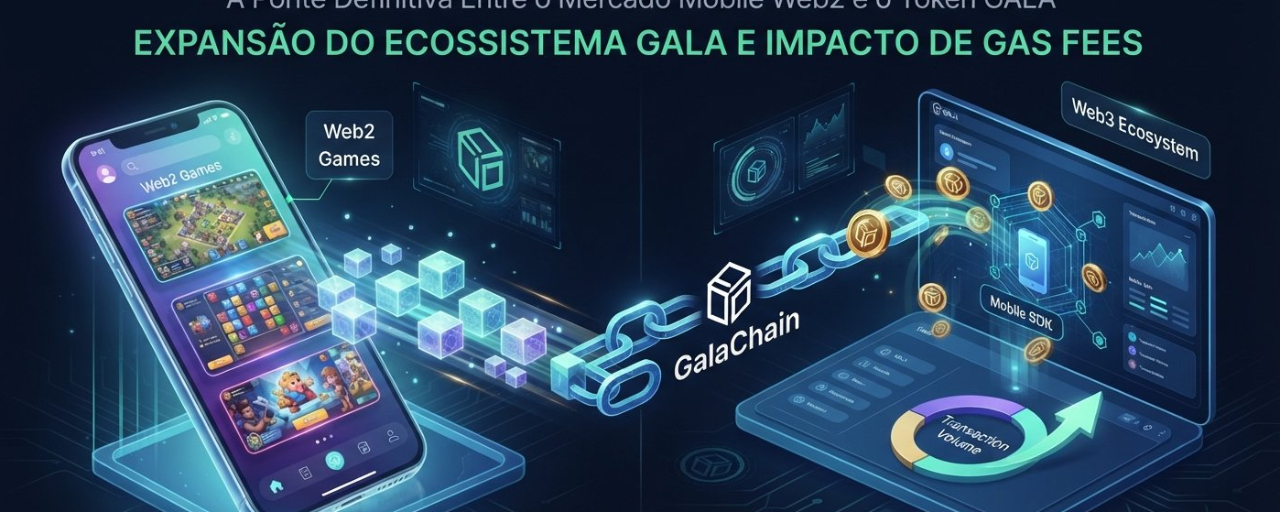

The Launch of GalaChain’s Mobile SDK: The Definitive Bridge Between the Web2 Mobile Market and the GALA Token
The end of 2026 brings one of the most eagerly awaited milestones for decentralized entertainment infrastructure: the commercial launch of GalaChain’s decentralized Mobile SDK. This new tool promises to act as an essential cog for the network’s expansion, directly connecting the massive traditional mobile games market (Web2) to the Web3 ecosystem.
Below, we analyze the technical impact of this technology and how it interferes with the economic dynamics of the network’s native token, GALA.
What Changes: Breaking Barriers for Traditional Developers
Historically, the transition of a game from the traditional model to blockchain architecture required deep native coding knowledge and server restructuring. GalaChain’s new Mobile SDK resolves this friction by providing a simplified development kit focused on high code readability.
With this tool, mobile game studios and independent developers can inject Web3 properties—such as real asset custody, minting collectible items, and shared currencies—directly into their existing applications on the App Store or Google Play Store. The end player gains the benefits of decentralization without needing to go through complex integration processes.
Token Impact: Increased Trading Volume and Deflationary Pressure
All of GalaChain’s architecture was designed to use the GALA token as the fuel for its operations. The introduction of multiple mobile games on the network creates a chain reaction directly correlated to the asset’s utility value:
Explosion in Transaction Volume: Every microtransaction, item trade, or achievement validation performed within the new mobile games will flow through Gala’s blockchain.
Gas Consumption (Gas Fees): For these transactions to occur, the network charges small fractions of GALA. The more apps integrated by the SDK, the higher the daily token consumption for paying fees.
Deflationary Mechanism Activated: Under Gala’s current tokenomics model, a significant portion of the fees collected from interactions on the network is permanently subjected to burns (token burns). Therefore, a structural increase in network activity driven by the mobile market accelerates the pace of token withdrawals from circulation.
Scenario Conclusion
The commercial launch of the Mobile SDK shifts Gala Games’ focus from being merely a distributor of its own titles to a global L1 infrastructure provider aimed at mass entertainment. By facilitating access for the mobile market—which holds the largest share of revenue in the worldwide games industry—Gala seeks to consolidate the practical utility and transactional flow of GALA independently of short-term speculative fluctuations.
Compliance Notice: This text is exclusively for informational purposes regarding the technical progress disclosed by the project and does not constitute advice, inducement, or a recommendation to buy the cited asset.