

Client request
“I thought the trend would continue. It seemed to me that since the price had risen before, the triangle had to break only upward.”
History
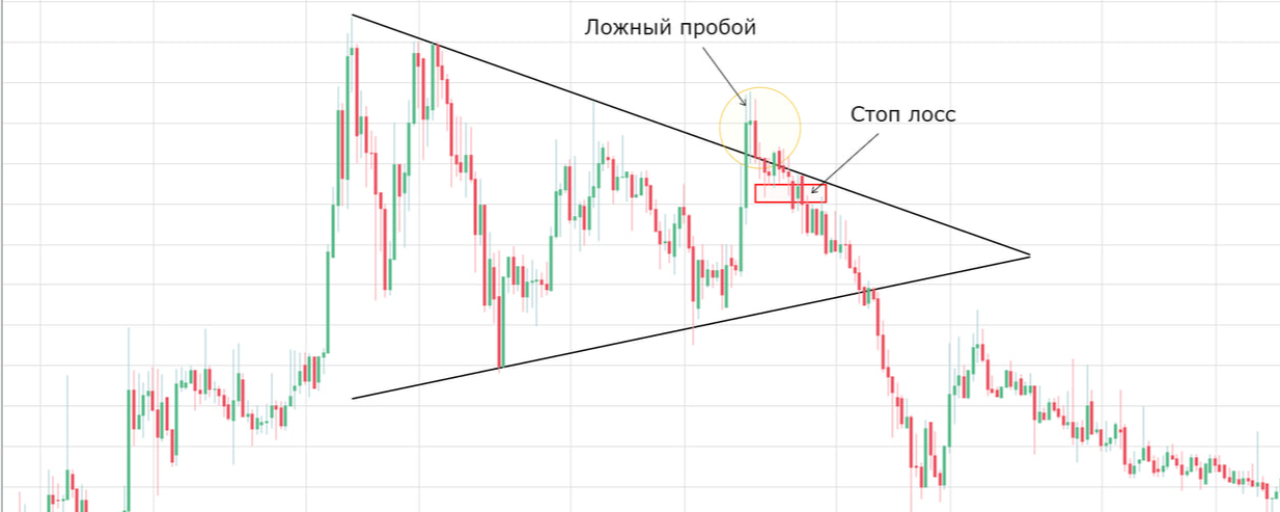
A beautiful symmetrical triangle formed on the chart.
Before that, the market was in an uptrend.
The brain immediately chose a direction:
“The price used to rise earlier—so from the triangle it should break upward.”
Then the trader began acting not based on facts, but on his own expectations.
Without waiting for confirmation of the breakout, he opened a large buy position right inside the figure, closer to its top.
The confidence was so high that he increased the lot and did away with the stop-loss:
“The stop can accidentally get caught by noise.”
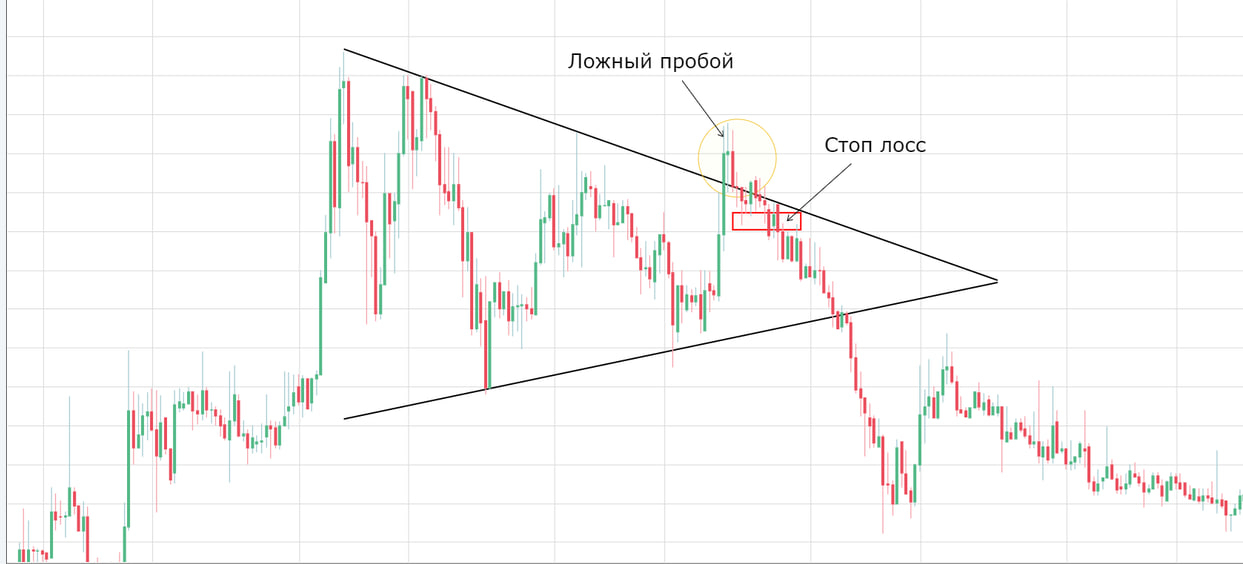
The price truly surged upward and broke the upper boundary.
The trader already counted on profit.
Then the price reversed.
It returned inside the triangle and broke through the lower boundary.
A false breakout happened.
Instead of closing the position, the trader kept holding.
Started waiting for the price to return.
The position continued to sink into the red.
In the end, the exchange forcibly closed it via a margin call.
All savings were lost in a single trade.
My breakdown
1. Inertial drift
The previous upward trend was automatically mapped onto the next segment of the market.
Logic:
“It rose before → so it will continue rising.”
But the symmetric triangle by itself doesn’t guarantee breakout direction.
As long as the price is inside the pattern, the direction is not confirmed.
2. Confirmation bias
After the trader decided that growth would happen, he started noticing mainly what confirmed that version.
Breakout upward = confirmation.
A return inside the pattern is “noise.”
Breakdown downward = hope for a return.
In other words, the market analysis gradually turned into protection of his own position.
3. Illusion of control
The trader tried to guess the direction of movement in advance within the zone of uncertainty.
Instead of asking:
“What confirms the entry?”
the question was:
“Why does the price have to go up?”
Those are two different thought models.
4. Violation of risk management
The forecast itself wasn’t the only problem.
A large lot + no stop-loss + holding through losses turned one mistake into a catastrophe.
You can be wrong about direction.
You can’t turn this mistake into losing the entire account balance in advance.
What we change
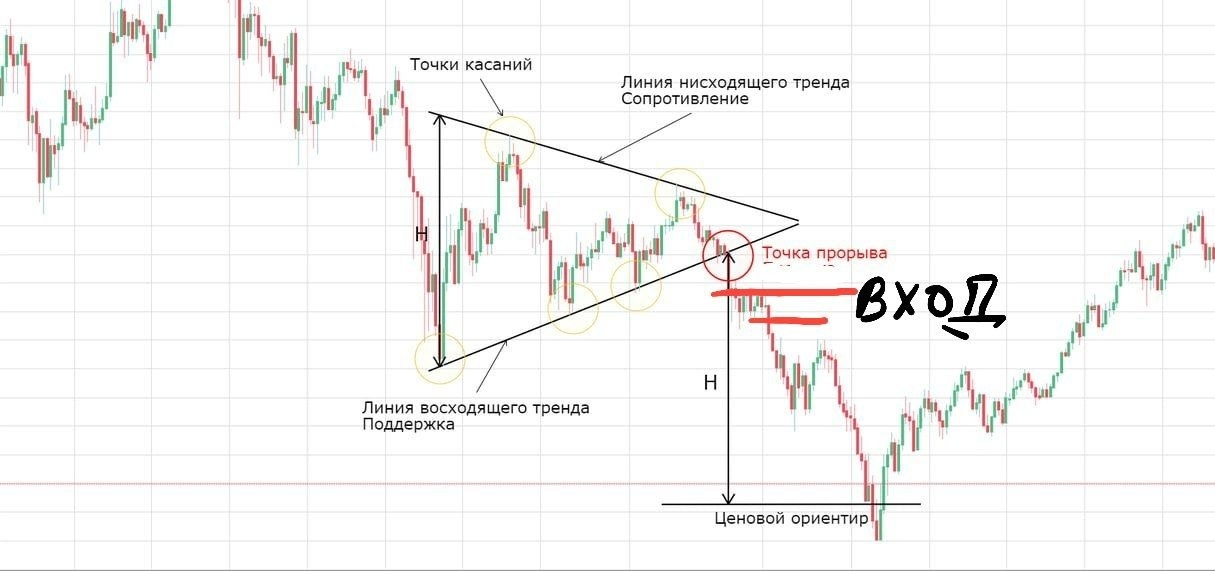
1. We don’t trade inside the triangle just because we want to guess the breakout.
First, confirmation.
Then the decision.
2. Before entry, determine the scenario conditions.
What needs to happen for a long?
What invalidates the long?
Where’s the stop?
Where are the targets?
What position size is allowed?
3. We don’t argue with the market.
If the scenario is invalidated, the position is closed.
We don’t wait for the market to “change its mind.”
4. Risk is defined before the trade.
Not when the position already went against you.
Technical solution
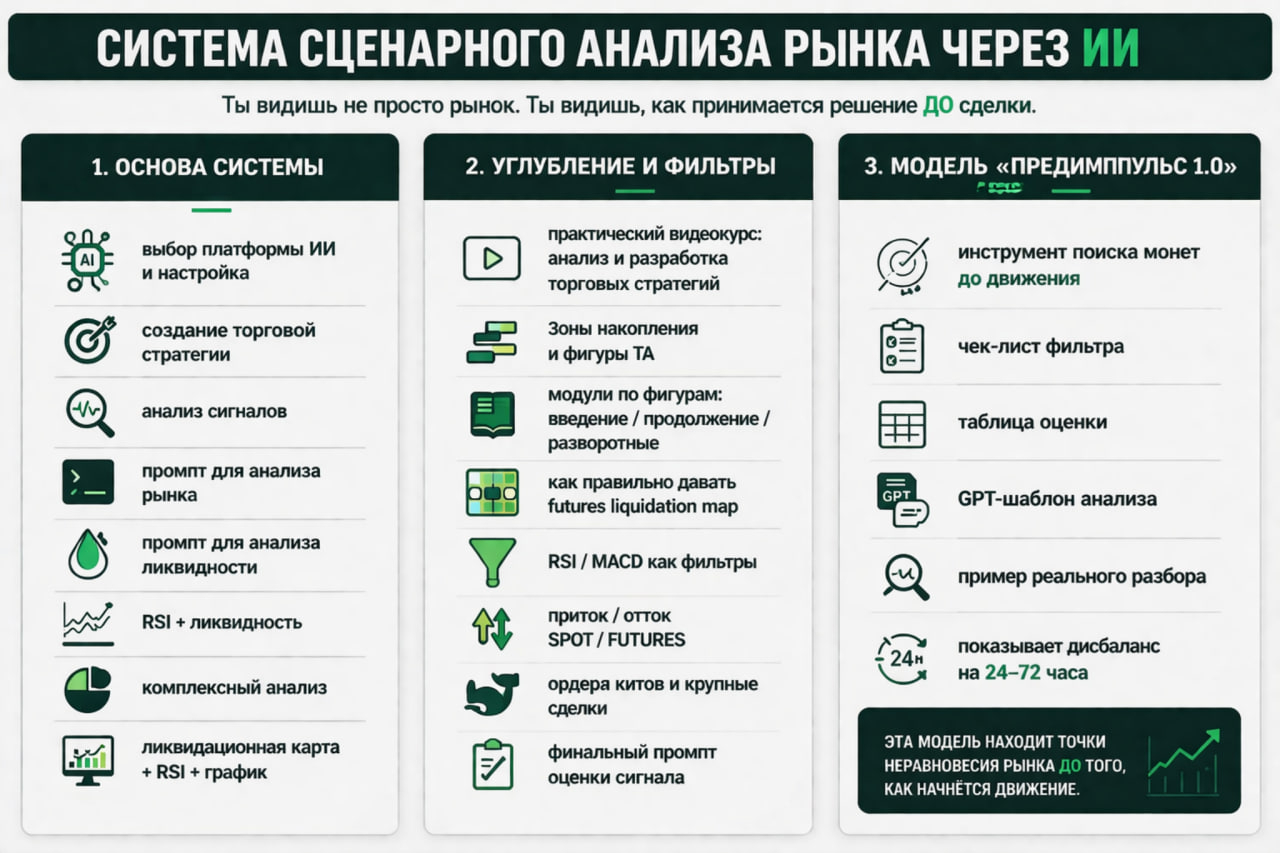
An author-created AI system for scenario analysis of the market
Here the AI’s job isn’t to guess the future price movement.
The task is to break the market down into scenarios in advance.
The system makes it possible to determine:
— the main scenario;
— an alternative scenario;
— confirmation conditions;
— the entry point;
— the scenario invalidation level;
— stop-loss;
— targets;
— zones where you must not enter.
That is, instead of:
“I think the price will go up.”
we get:
“If these conditions are met, we work. If the scenario is invalidated, we don’t work.”
This is fundamentally different trading logic.
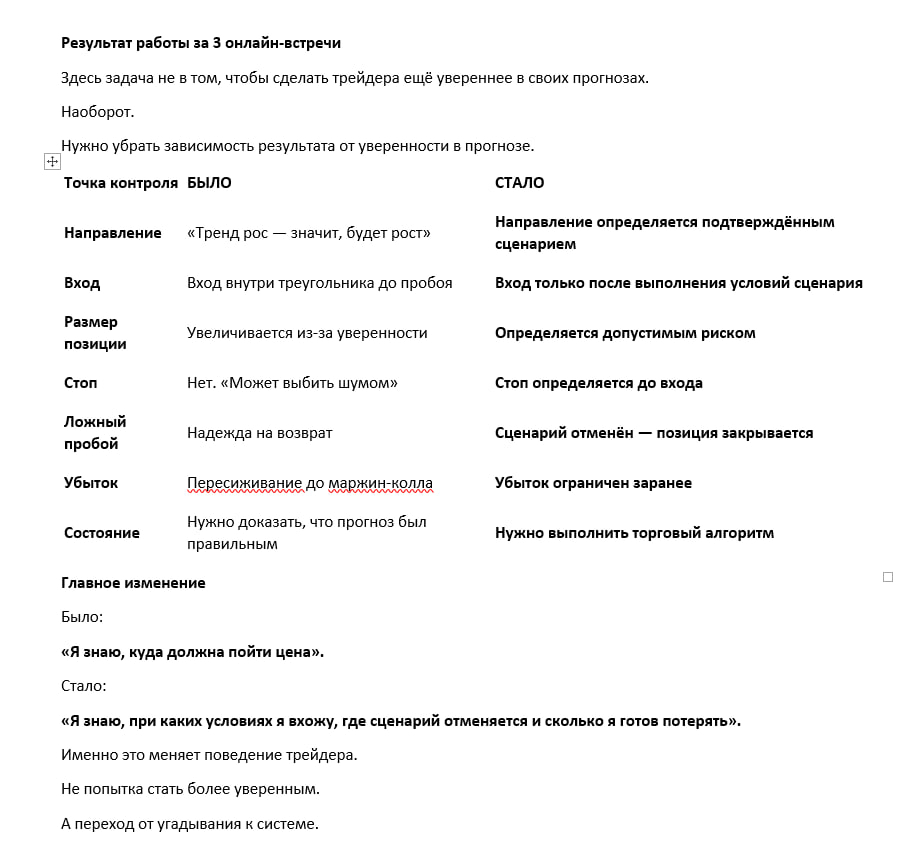
Results from 3 online sessions
The task here isn’t to make the trader even more confident in his forecasts.
On the contrary.
You need to remove the dependence of the outcome on confidence in the forecast.
The main change
There was:
“I know where the price should go.”
It became:
“I know under what conditions I enter, where the scenario is invalidated, and how much I’m willing to lose.”
That’s exactly what changes the trader’s behavior.
Not an attempt to be more confident.
And the shift from guessing to a system.
Review the performance of the trading system and real-life examples of scenarios
@INVESTIDEA in the section "QUOTING"
If you systematically make bad trading decisions that lead to losses—write “SYSTEM”.
During the training we’ll go through your thinking mistakes, build a scenario-based algorithm, and define how to make trading decisions without guessing direction and without holding through losses.
As a result, you’ll get not another theory, but a clear algorithm: when to enter, when not to enter, where the scenario is invalidated, and where to lock in risk.