
📰🇧🇷 🇧🇷💰 THE REAL, POWER, AND THE NEW BRAZILIAN POLITICS
The election that showed how a monetary shift can transform a country’s economic and political landscape.
🗳️ The general elections held on October 3, 1994 took place in a Brazil marked by recent redemocratization, the political crisis following Fernando Collor’s impeachment, and years of high inflation.
The economic scenario began to change with the Real Plan, launched in July of that year during Itamar Franco’s administration. Economic stabilization altered the election environment and strengthened the candidacy of Fernando Henrique Cardoso, who had been Minister of Finance and played a role in the program’s political direction.
🏛️ A COUNTRY IN TRANSFORMATION
After the impeachment of Fernando Collor in 1992, Itamar Franco took over the Presidency amid major economic challenges.
Inflation eroded people's purchasing power and made financial planning for families and businesses difficult. The government's main challenge was precisely to find a way to stabilize the economy.
💰 THE BIRTH OF THE REAL PLAN
The Real Plan was developed in stages. One of them was the creation of the URV — the Real Unit of Value, used as a reference for prices and contracts before the arrival of the new currency.
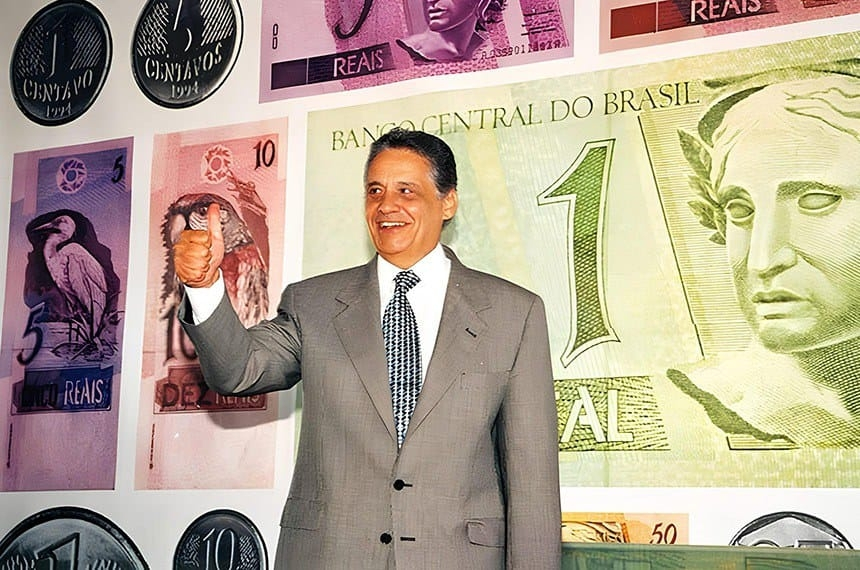
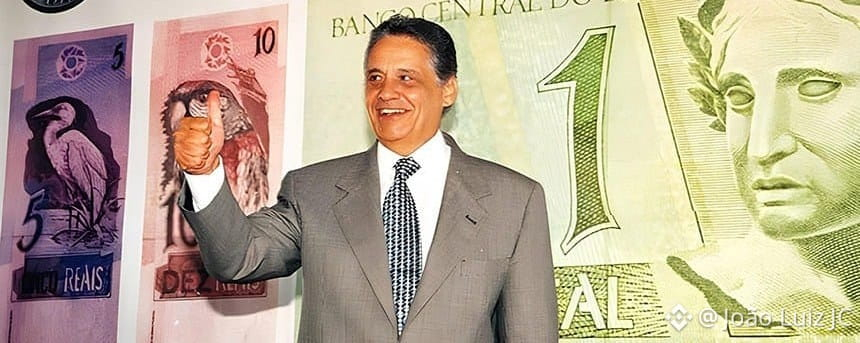
On July 1, 1994, the URV was converted to R$ 1.00, and the real became the new Brazilian currency. The change helped significantly reduce inflation and quickly altered the country's economic environment.
🗳️ THE PRESIDENTIAL RUNOFF
The election brought together candidates from different political currents.
Fernando Henrique Cardoso (PSDB) and Luiz Inácio Lula da Silva (PT) were the main names in the race. Enéas Carneiro (PRONA) finished in third place, while other figures also ran, such as Leonel Brizola and Orestes Quércia.
📺 THE EPISODE OF THE “PARABOLIC DISH”
During the campaign, a conversation accidentally picked up by a satellite transmission involving then Finance Minister Rubens Ricupero led to the so-called Parabolic Scandal.
The episode had a major impact, and Ricupero left the position. Ciro Gomes later took over the Ministry of Finance.
🇧🇷 FHC'S VICTORY
On October 3, 1994, Fernando Henrique Cardoso was elected president in the first round.
🔹 Fernando Henrique Cardoso: 34,314,961 votes — 54.24%
🔹 Luiz Inácio Lula da Silva: 17,122,127 votes — 27.07%
🔹 Enéas Carneiro: 4,671,457 votes — 7.38%
Since FHC surpassed the absolute majority of valid votes, there was no second round.
📜 A NEW POLITICAL CHAPTER
On January 1, 1995, Fernando Henrique Cardoso and Marco Maciel were sworn in.
The 1994 election marked a new phase in Brazilian politics, in which economic stability, State reforms, and privatizations began to play an important role in the national debate.
More than an electoral dispute, 1994 was marked by the combination of monetary change, economic stabilization, and political transformation.
💡 AND THE COMPARISON WITH CRYPTOCURRENCIES?
In 1994, Brazil saw a new monetary unit gain momentum by replacing a currency marked by inflation.
Today, the debate is different, but there is an interesting comparison: just as the Real brought a new monetary reference for Brazilians, cryptocurrencies and digital assets raise discussions about new forms of money, transfer of value, and financial systems.
🚨 The difference is fundamental: the Real is an official currency issued by the State, while cryptocurrencies like Bitcoin operate on decentralized networks and have entirely different features, risks, and mechanisms.
📌 History shows that changes in the way we handle money can transform much more than the economy — they can change habits, markets, and even the political landscape.