

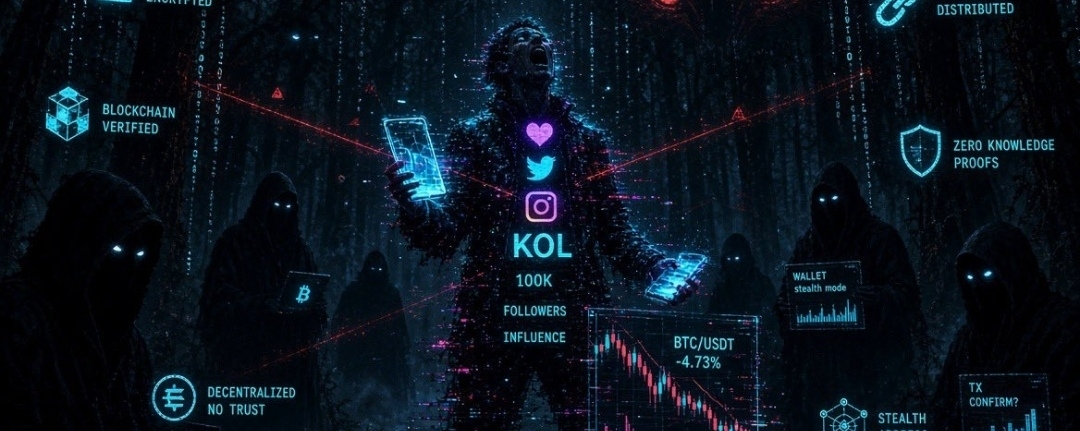

There’s a strange phenomenon in the crypto world
With a few followers, they already claim they’re a KOL
At its core, it’s just a “coin pumper”
We call this “identity inflation.”
.
When they see the market trend, they start shouting “bull!”
Brothers! Everyone, go long for me!
When they see a black swan, they start shouting “bear!”
The bears never lose heart! Brothers, charge in!
Leverage to the max, heavy positions, go all in—never stop your losses
Add to positions on floating profit—pure instinct. Your output is all shouting!
.
You really shouldn’t just go jumping into the plaza’s livestreams
What end-of-year BNB to hit 2000, 3000
Based on what? It all relies on “consumer sentiment”
This isn’t a “KOL”—it’s called “CXL.”
.
The gap between the two is:
a multi-dimensional gap in information, capital, mindset, and influence
it’s not just about "making more money" or "calling trades accurately"
Don’t care how many followers they have—how long they’ve been in the industry.
.
I. KOLs: usually have a relatively complete understanding of the industry
.
1. On-chain data (active addresses, fund flows,
whale movements, and the truth of protocol real-world usage)
2. Macro liquidity (stablecoin supply, exchanges
net inflows and outflows, dollar liquidity, risk appetite)
3. Sectors, tracks, and narrative cycles (current mainstream narratives,
marginal narratives, narrative rotation patterns)
4. Project fundamentals (product progress, user growth,
revenue model, competitive landscape)
5. Tokenomics (unlocking schedule, sell-pressure structure,
value-capture mechanisms, incentive design)
6. Regulatory and policy dynamics (regulators’ attitudes in different countries,
law-enforcement trends, compliance risks)
7. Derivatives and market structure (funding rates,
open interest, liquidation hotspots, liquidity depth)
8. Smart money and capital behavior (institution/whale positions
Changes, on-chain smart money trends)
9. Linkage between macro and risk assets (US Treasuries, US stocks,
impact of the US dollar index and geopolitical risk on crypto)
10. Technical and protocol evolution (underlying tech progress,
L2/cross-chain development, innovative mechanisms)
.
conduct proactive research, organize it, and output viewpoints to build your own framework
Emphasis on "position size, stop-loss, and dynamic adjustments".
.
II. Coin-pushing amateurs: most rely on community sentiment, candlestick technicals,
KOLs calling trades, driven by group chat messages.
.
fragmented information sources: easy to get swept along by FOMO or FUD
they lack their own independent judgment framework, and they only blame this and that
Risk-management awareness is generally weaker.
.
The core difference is that KOLs sell "narrative viewpoints"
coin-pushing amateurs consume through "sentiment viewpoints".
.
the crypto space isn’t short of loud mouths—what’s missing is the courage to take responsibility for their own viewpoints,
and are willing to take responsibility for their positions.
Next time you see someone shouting:
"The bears never say die" "Watch for 3,000 by year-end",
Let me ask one thing first:
Where is the basis? How is the position managed? Under what circumstances would they admit they were wrong?
Those who can’t answer are usually not KOLs—just a CXL.
