#BOJRaisesRatesTo31YearHigh 🇯🇵🔥
🚨 JAPAN’S INFLATION PRESSURE IS ENTERING A CRITICAL PHASE
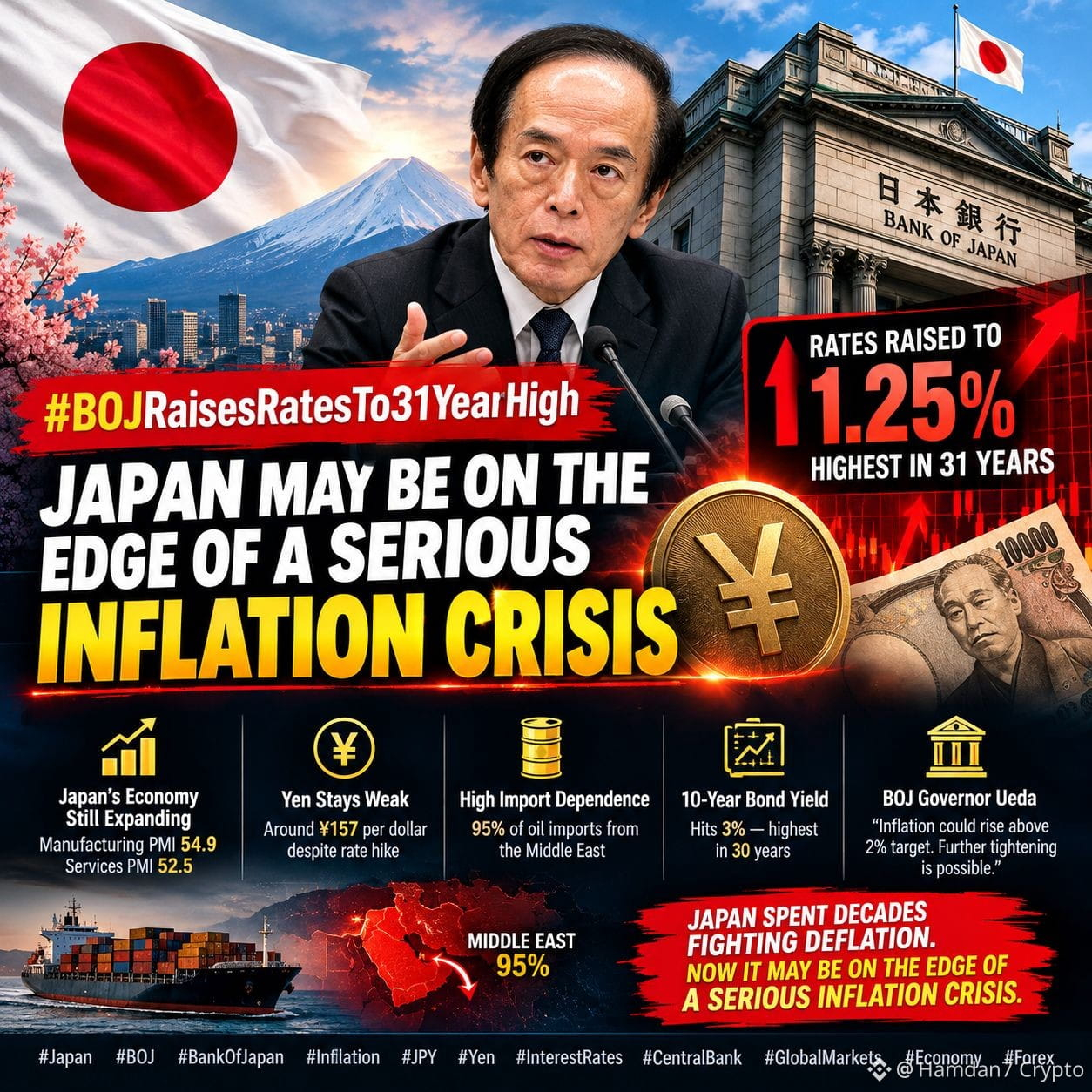
The Bank of Japan has raised its policy rate to 1.25% — the highest level in 31 years — marking another major step away from Japan’s decades-long ultra-loose monetary policy. The decision passed 7–2, as policymakers focus on the risk that inflation could move above the BOJ’s 2% target.
But the bigger problem is that higher rates have not stopped the yen from remaining weak.
The yen has traded around the ¥157-per-dollar area, keeping imported energy and commodities expensive. Japan is particularly vulnerable to oil-price shocks because more than 90% of its crude oil imports come from the Middle East.
At the same time, Japan’s economy continues to show resilience. Recent PMI data showed manufacturing at 54.9 and services at 52.5, both pointing to continued expansion. Companies are also facing higher input costs and passing some of those increases through to customers.
That creates a difficult policy equation:
Weak Yen → Higher Import Costs → Higher Inflation → More BOJ Tightening → Higher Borrowing Costs
Japan’s 10-year government bond yield has also reached around 3%, a level not seen in roughly three decades, adding another layer of pressure to markets and government finances.
BOJ Governor Kazuo Ueda has emphasized that future decisions will depend on incoming economic and price data. With oil prices, the yen and inflation expectations still important risks, markets are now watching closely for signs of another rate increase.
Japan spent decades fighting deflation.
Now the challenge may be preventing inflation from becoming too persistent.
The next BOJ moves could have major implications for the yen, Japanese bonds and global markets. 📊🌏
#Japan #BOJ #BankOfJapan #Inflation #JPY #Yen #InterestRates #CentralBank #GlobalMarkets #Economy #BondMarket #Forex #Macro #Crypto #Bitcoin$BTC $SOL
🚨 JAPAN’S INFLATION PRESSURE IS ENTERING A CRITICAL PHASE
The Bank of Japan has raised its policy rate to 1.25% — the highest level in 31 years — marking another major step away from Japan’s decades-long ultra-loose monetary policy. The decision passed 7–2, as policymakers focus on the risk that inflation could move above the BOJ’s 2% target.
But the bigger problem is that higher rates have not stopped the yen from remaining weak.
The yen has traded around the ¥157-per-dollar area, keeping imported energy and commodities expensive. Japan is particularly vulnerable to oil-price shocks because more than 90% of its crude oil imports come from the Middle East.
At the same time, Japan’s economy continues to show resilience. Recent PMI data showed manufacturing at 54.9 and services at 52.5, both pointing to continued expansion. Companies are also facing higher input costs and passing some of those increases through to customers.
That creates a difficult policy equation:
Weak Yen → Higher Import Costs → Higher Inflation → More BOJ Tightening → Higher Borrowing Costs
Japan’s 10-year government bond yield has also reached around 3%, a level not seen in roughly three decades, adding another layer of pressure to markets and government finances.
BOJ Governor Kazuo Ueda has emphasized that future decisions will depend on incoming economic and price data. With oil prices, the yen and inflation expectations still important risks, markets are now watching closely for signs of another rate increase.
Japan spent decades fighting deflation.
Now the challenge may be preventing inflation from becoming too persistent.
The next BOJ moves could have major implications for the yen, Japanese bonds and global markets. 📊🌏
#Japan #BOJ #BankOfJapan #Inflation #JPY #Yen #InterestRates #CentralBank #GlobalMarkets #Economy #BondMarket #Forex #Macro #Crypto #Bitcoin$BTC $SOL