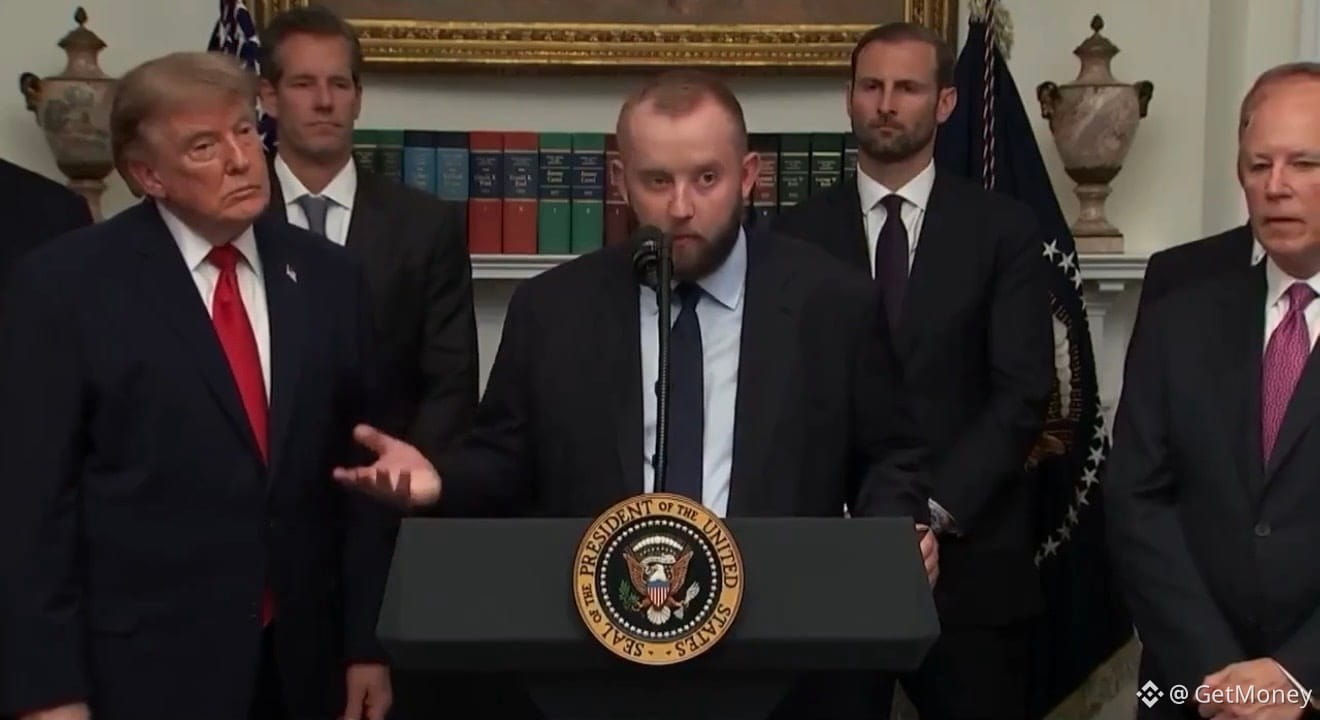
📰 On August 19, Chainlink founder Sergey Nazarov spoke at the White House Tech Leaders Summit about the impact of tokenization on the U.S. economy, standing on-site. Trump was right there, and the SEC and CFTC chairs were also in attendance. It’s hard to imagine that the first thing he learned wasn’t computer science, but philosophy and management.
🔥 After graduating from New York University in 2007, Nazarov joined FirstMark Capital. He worked his way up from entry-level positions to become an analyst, and also served as a teaching assistant for the technology entrepreneurship course at NYU Stern. There’s no such thing as “a sudden leap to success”—more like starting by evaluating projects, learning to invest, and gradually finding the real problem he truly wanted to solve.
He also stepped into plenty of pitfalls. First he built a local experience platform, ExistLocal, and later founded QED Capital. Around 2014, he repeatedly tried CryptaMail, Secure Asset Exchange, and SmartContract. Secure Asset Exchange anticipated the directions of DeFi, RWA, and on-chain tokenization. But because there weren’t enough assets, developers, and users, it was shut down in early 2016 after operating for about a year and a half.
💡 Unexpectedly, Chainlink’s predecessor, SmartContract, emerged from this whole sequence of trial and error. Nazarov handled the company and direction, while Steve Ellis—who has a computer science background—handled the technology. This division of responsibilities between CEO and CTO has continued to this day.
🤔 Honestly, compared to the idea of “bet it all in one shot and succeed,” this experience—invest first, then found a company, and keep adjusting even after a project gets shut down—feels much more real. If you were the one who worked on a project for a year and a half and then watched it get shut down, would you still keep betting on the same technical direction?
#Chainlink #LINK #Web3创业 #oracle
🔥 After graduating from New York University in 2007, Nazarov joined FirstMark Capital. He worked his way up from entry-level positions to become an analyst, and also served as a teaching assistant for the technology entrepreneurship course at NYU Stern. There’s no such thing as “a sudden leap to success”—more like starting by evaluating projects, learning to invest, and gradually finding the real problem he truly wanted to solve.
He also stepped into plenty of pitfalls. First he built a local experience platform, ExistLocal, and later founded QED Capital. Around 2014, he repeatedly tried CryptaMail, Secure Asset Exchange, and SmartContract. Secure Asset Exchange anticipated the directions of DeFi, RWA, and on-chain tokenization. But because there weren’t enough assets, developers, and users, it was shut down in early 2016 after operating for about a year and a half.
💡 Unexpectedly, Chainlink’s predecessor, SmartContract, emerged from this whole sequence of trial and error. Nazarov handled the company and direction, while Steve Ellis—who has a computer science background—handled the technology. This division of responsibilities between CEO and CTO has continued to this day.
🤔 Honestly, compared to the idea of “bet it all in one shot and succeed,” this experience—invest first, then found a company, and keep adjusting even after a project gets shut down—feels much more real. If you were the one who worked on a project for a year and a half and then watched it get shut down, would you still keep betting on the same technical direction?
#Chainlink #LINK #Web3创业 #oracle