

A DeFi protocol doesn’t just need to know what an asset is worth.
It needs to know whether that price is current, where it came from, and how reliably it is being updated.
That’s where oracle infrastructure becomes important.
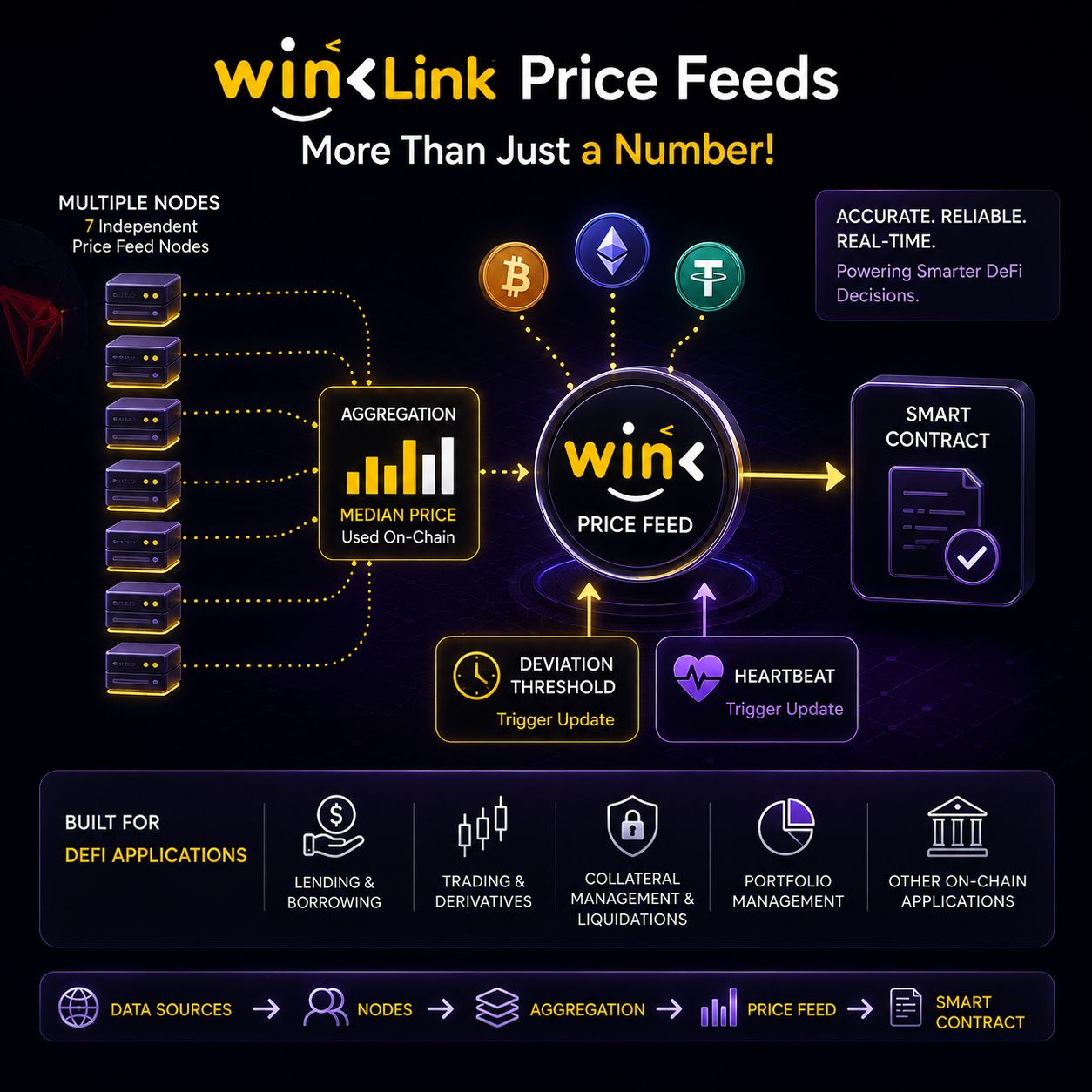
#WINkLink’s Price Feed Service aggregates price observations from multiple independent nodes and provides the resulting data to smart contracts through on-chain Aggregator contracts. The current documentation describes a network of 7 independent price feed nodes, with the median used as the final on-chain price.
𝗪𝗵𝗮𝘁 𝗵𝗮𝗽𝗽𝗲𝗻𝘀 𝗯𝗲𝗵𝗶𝗻𝗱 𝘁𝗵𝗲 𝗳𝗲𝗲𝗱?
➠ Multiple nodes observe the relevant market data
➠ Their observations are aggregated
➠ The median becomes the on-chain price
➠ Updates can be triggered by a deviation threshold
➠ A heartbeat can also force an update after a defined interval
This matters because outdated prices can create serious problems for DeFi applications, especially when prices are used for lending, collateral, liquidations and other financial logic.
There’s also a historical side.
WINkLink feeds create new rounds when prices are updated, and developers can query previous rounds through `getRoundData()` to retrieve historical price information.
So the bigger picture isn't simply:
𝗣𝗿𝗶𝗰𝗲 → 𝗢𝗻-𝗖𝗵𝗮𝗶𝗻
It is:
𝗗𝗮𝘁𝗮 𝗦𝗼𝘂𝗿𝗰𝗲𝘀 → 𝗡𝗼𝗱𝗲𝘀 → 𝗔𝗴𝗴𝗿𝗲𝗴𝗮𝘁𝗶𝗼𝗻 → 𝗣𝗿𝗶𝗰𝗲 𝗙𝗲𝗲𝗱 → 𝗦𝗺𝗮𝗿𝘁 𝗖𝗼𝗻𝘁𝗿𝗮𝗰𝘁
And that infrastructure gives developers a more structured foundation for building DeFi applications that depend on timely market data.
The real value of an oracle isn't simply delivering data.
It's delivering data with mechanisms developers can understand, monitor and integrate into their applications.
That’s what makes WINkLink’s Price Feed infrastructure worth looking at.