$TRX $NVDAB $MU
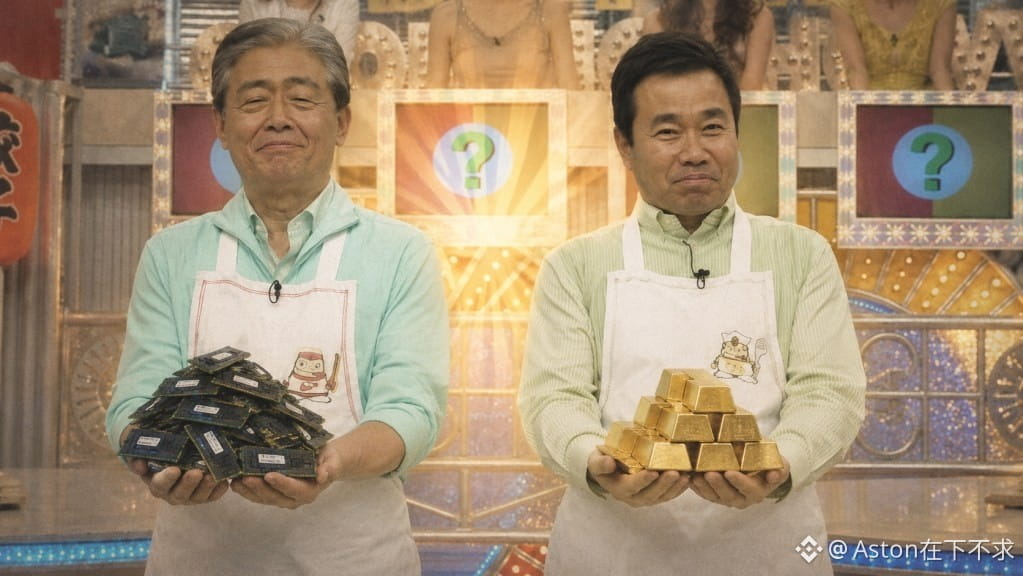
Should we hoard memory or gold? Data reveals that 1 kilogram of DRAM is worth 620 grams of gold, and it has increased 12-fold over three years
AI demand is squeezing HBM capacity. South Korea’s DRAM export average price has risen more than 4 times year-on-year, and surged 12.5 times from the 2023 low. Global investment banks and major memory manufacturers said: “High prices not only have not eased the shortage; the supply gap next year may be even more severe than this year.” (Is all the money going into memory? A research note: In 2027, memory will account for nearly 70% of cloud giants’ capital expenditures.) How much gold is 1 kilogram of DRAM worth? It is currently worth 620 grams of gold.
Gold has long been one of the standards for measuring wealth. According to data from the Korea Trade-Investment Promotion Agency, from August 1 to 20 this year, the average export price of South Korea’s DRAM (excluding modules) reached 127.4 million won per kilogram (about US$92,183). Over the same period, export value grew 504.8% year-on-year to 13.56 trillion won (about US$9.807 billion).
Converted, 1 kilogram of South Korea–made DRAM is worth about 620 grams of gold. That is equivalent to 1.53 times the value of platinum of the same weight, or 41.7 times the value of silver.
After analyzing South Korea’s DRAM export statistics, research institute Sitri Research said the current average export price is about 12.5 times the historical low in January 2023. During the same period, gold’s price increase has reached 2.4 times, but comparatively it is still far behind.
However, DRAM is different from gold. It cannot be priced simply by weight, because performance and specifications vary across product generations. The mainstream spot product tracked by the market at the beginning of 2023 was DDR4 8Gb, while the benchmark currently used by TrendForce is DDR5 16Gb. As process shrink allows more data to be packaged on chips of the same area, it naturally raises the per-kilogram conversion unit price, which has no direct relation to market supply and demand.
Industry insiders openly admit: “Even after accounting for product-generation upgrades, the rate of increase in recent memory prices remains steep.” Data from the Bank of Korea also shows that in July the year-on-year increase in DRAM export prices reached 270.3%. Micron’s earnings report also revealed that Micron’s average selling price (ASP) for DRAM in the third quarter of fiscal 2026 grew by about 60% compared with the previous quarter.
Why can’t high prices fix supply?
HBM is “consuming” capacity
Goldman Sachs’ latest forecast indicates that the DRAM supply shortage rate will widen from 5.0% this year to 5.9% next year. Compared with the previous forecast, the estimated value for 2027 has been raised by 3.4 percentage points, and it expects that DRAM supply shortages will continue through 2028.
Memory market prices have hit record highs repeatedly, yet the shortage is becoming even more severe due to HBM’s displacement effect across the overall DRAM ecosystem. HBM is manufactured by vertically stacking multiple DRAM chips. Compared with producing the same amount of commodity DRAM, this requires far more wafer input.
According to TrendForce’s estimate, by the end of next year, HBM will account for 30% of the DRAM wafer投入 (wafer investment) by Samsung, SK hynix, and Micron. But in terms of actual conversion into bit supply, it will account for only 13%. This means that once large-scale capacity flows into HBM, the supply space available for commodity DRAM used in PCs, smartphones, and general servers will be significantly compressed.
Goldman Sachs estimates that the global HBM market size next year will expand by an additional 108% compared with this year, and this trend will not ease in the near term.
The expansion plans of the three major players can’t keep up with demand; 2027 may become the most shortage-ridden year in history
Memory manufacturers are not failing to expand capacity, but the problem lies in the time lag between starting new plants and when the capacity actually ships. TrendForce points out that given the time needed for new factories to ramp up and stabilize production processes—combined with continued growth in demand for HBM and server DRAM—next year’s supply is highly likely to still fall short of demand.
All major companies have expressed consistent views. In June this year, Micron said that tight DRAM and NAND Flash supply-demand conditions driven by AI demand and structural supply constraints will continue beyond 2027. Last month, SK hynix president Kwak Noh-jung went further, saying that 2027 is likely to be the most severe shortage year in the history of the memory industry.
The market has already begun to respond. Some of Nvidia (Nvidia) and cloud service providers (CSPs) are evaluating adjustments to the HBM configuration or installation base of next-generation AI accelerators to reduce reliance on constrained capacity.
(“Nvidia plans to lower the Rubin Ultra HBM specifications: mass production of HBM4e is not confirmed yet; DRAM shortage is the main reason.”)
When will the shortage end? Three key variables determine the outcome
The duration of this memory shortage will ultimately depend on three yet-uncertain variables:
- how much and for how long HBM capacity expansion will squeeze other DRAM supplies;
- when the new capacity planned by each company will actually be converted into shipments;
- whether rising high prices can, at some critical point, suppress end-user demand and trigger self-correction on the demand side.
Current market consensus suggests that the negative effects of the first two variables will not see any clear easing before 2027. The third variable is uncertain, especially since the investment heat in AI infrastructure has shown no signs of cooling.
This article “Should we hoard memory or gold? Data reveals that 1 kilogram of DRAM is worth 620 grams of gold, and it has increased 12-fold over three years” first appeared on .
Should we hoard memory or gold? Data reveals that 1 kilogram of DRAM is worth 620 grams of gold, and it has increased 12-fold over three years
AI demand is squeezing HBM capacity. South Korea’s DRAM export average price has risen more than 4 times year-on-year, and surged 12.5 times from the 2023 low. Global investment banks and major memory manufacturers said: “High prices not only have not eased the shortage; the supply gap next year may be even more severe than this year.” (Is all the money going into memory? A research note: In 2027, memory will account for nearly 70% of cloud giants’ capital expenditures.) How much gold is 1 kilogram of DRAM worth? It is currently worth 620 grams of gold.
Gold has long been one of the standards for measuring wealth. According to data from the Korea Trade-Investment Promotion Agency, from August 1 to 20 this year, the average export price of South Korea’s DRAM (excluding modules) reached 127.4 million won per kilogram (about US$92,183). Over the same period, export value grew 504.8% year-on-year to 13.56 trillion won (about US$9.807 billion).
Converted, 1 kilogram of South Korea–made DRAM is worth about 620 grams of gold. That is equivalent to 1.53 times the value of platinum of the same weight, or 41.7 times the value of silver.
After analyzing South Korea’s DRAM export statistics, research institute Sitri Research said the current average export price is about 12.5 times the historical low in January 2023. During the same period, gold’s price increase has reached 2.4 times, but comparatively it is still far behind.
However, DRAM is different from gold. It cannot be priced simply by weight, because performance and specifications vary across product generations. The mainstream spot product tracked by the market at the beginning of 2023 was DDR4 8Gb, while the benchmark currently used by TrendForce is DDR5 16Gb. As process shrink allows more data to be packaged on chips of the same area, it naturally raises the per-kilogram conversion unit price, which has no direct relation to market supply and demand.
Industry insiders openly admit: “Even after accounting for product-generation upgrades, the rate of increase in recent memory prices remains steep.” Data from the Bank of Korea also shows that in July the year-on-year increase in DRAM export prices reached 270.3%. Micron’s earnings report also revealed that Micron’s average selling price (ASP) for DRAM in the third quarter of fiscal 2026 grew by about 60% compared with the previous quarter.
Why can’t high prices fix supply?
HBM is “consuming” capacity
Goldman Sachs’ latest forecast indicates that the DRAM supply shortage rate will widen from 5.0% this year to 5.9% next year. Compared with the previous forecast, the estimated value for 2027 has been raised by 3.4 percentage points, and it expects that DRAM supply shortages will continue through 2028.
Memory market prices have hit record highs repeatedly, yet the shortage is becoming even more severe due to HBM’s displacement effect across the overall DRAM ecosystem. HBM is manufactured by vertically stacking multiple DRAM chips. Compared with producing the same amount of commodity DRAM, this requires far more wafer input.
According to TrendForce’s estimate, by the end of next year, HBM will account for 30% of the DRAM wafer投入 (wafer investment) by Samsung, SK hynix, and Micron. But in terms of actual conversion into bit supply, it will account for only 13%. This means that once large-scale capacity flows into HBM, the supply space available for commodity DRAM used in PCs, smartphones, and general servers will be significantly compressed.
Goldman Sachs estimates that the global HBM market size next year will expand by an additional 108% compared with this year, and this trend will not ease in the near term.
The expansion plans of the three major players can’t keep up with demand; 2027 may become the most shortage-ridden year in history
Memory manufacturers are not failing to expand capacity, but the problem lies in the time lag between starting new plants and when the capacity actually ships. TrendForce points out that given the time needed for new factories to ramp up and stabilize production processes—combined with continued growth in demand for HBM and server DRAM—next year’s supply is highly likely to still fall short of demand.
All major companies have expressed consistent views. In June this year, Micron said that tight DRAM and NAND Flash supply-demand conditions driven by AI demand and structural supply constraints will continue beyond 2027. Last month, SK hynix president Kwak Noh-jung went further, saying that 2027 is likely to be the most severe shortage year in the history of the memory industry.
The market has already begun to respond. Some of Nvidia (Nvidia) and cloud service providers (CSPs) are evaluating adjustments to the HBM configuration or installation base of next-generation AI accelerators to reduce reliance on constrained capacity.
(“Nvidia plans to lower the Rubin Ultra HBM specifications: mass production of HBM4e is not confirmed yet; DRAM shortage is the main reason.”)
When will the shortage end? Three key variables determine the outcome
The duration of this memory shortage will ultimately depend on three yet-uncertain variables:
- how much and for how long HBM capacity expansion will squeeze other DRAM supplies;
- when the new capacity planned by each company will actually be converted into shipments;
- whether rising high prices can, at some critical point, suppress end-user demand and trigger self-correction on the demand side.
Current market consensus suggests that the negative effects of the first two variables will not see any clear easing before 2027. The third variable is uncertain, especially since the investment heat in AI infrastructure has shown no signs of cooling.
This article “Should we hoard memory or gold? Data reveals that 1 kilogram of DRAM is worth 620 grams of gold, and it has increased 12-fold over three years” first appeared on .