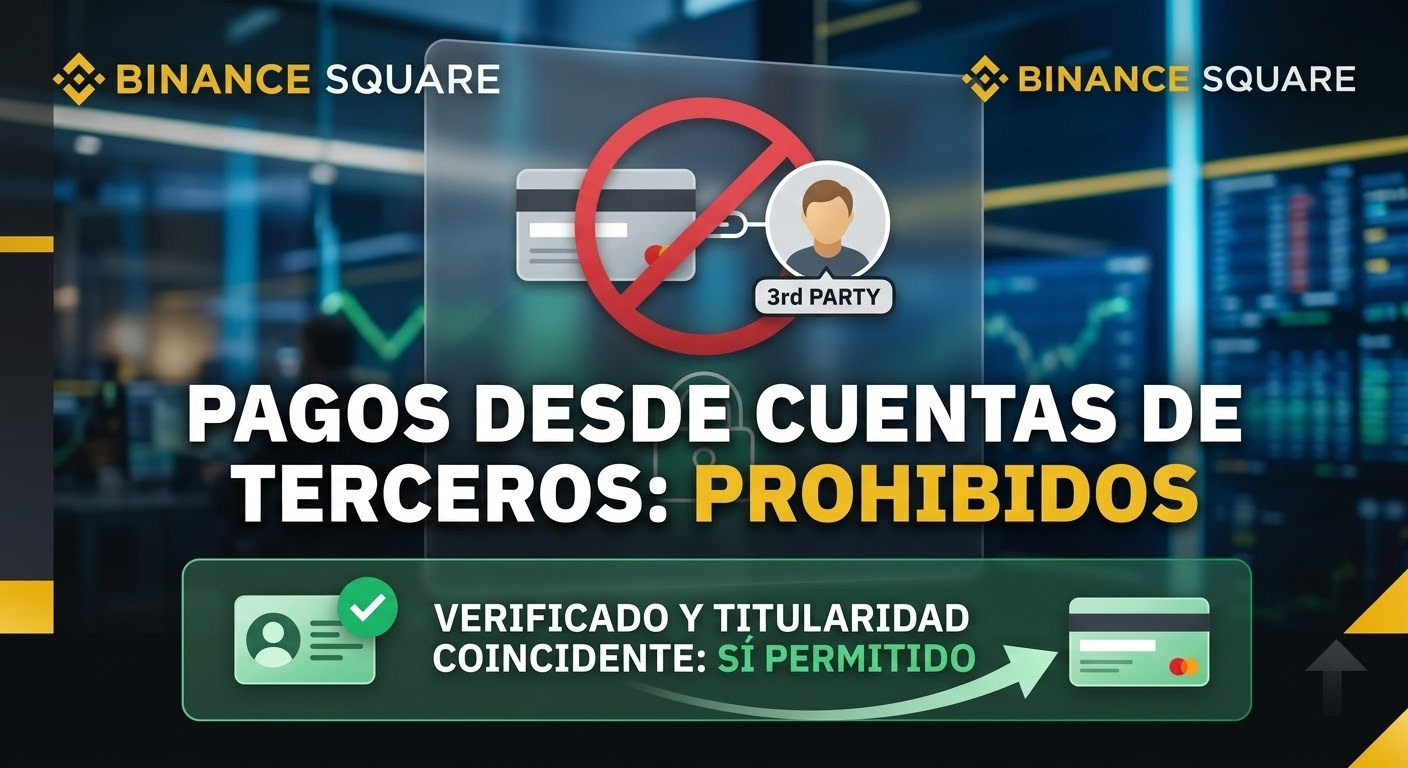
There is a common misconception in Peer-to-Peer (P2P) trading: that by completing identity verification (KYC) or reaching advanced levels, the platform provides flexibility to transfer funds from family members’, partners’, or third parties’ accounts.
The operational and regulatory answer is clear-cut: no, under no circumstances.
The golden rule: 100% match
Binance P2P policy requires that the name of the account holder of the issuing bank account or digital wallet matches identically with the name registered on the Binance account. No verification level, account age, or trading volume overrides this directive.
Real risks of operating with third-party accounts
* Fraud and triangulation: This is the main vector used by attackers to commit fraud and freeze the recipient bank accounts through claims of illicit origin.
* Appeals and retention of funds: If you pay from an account that is not in your name, the counterparty has the right and the recommendation not to release the crypto assets, file an appeal, and demand a refund from the original issuer.
* Return-fee costs: The operational and banking expenses of reversing a non-holder payment are borne by the offending buyer.
* Sanctions and permanent blocking: Recidivism in non-matching payments results in the immediate suspension of access to the P2P marketplace and possible total restrictions on the Binance account.
Best practices for a secure business
* Make transfers only from accounts in your name.
* If you sell crypto and receive payment from a third party, do not release it; request the immediate reversal to the origin and document everything within the official order chat.
* Always keep communication within the platform to protect your operational history with Support.
In the P2P market, security is non-negotiable: strict account ownership is the only guarantee to protect your capital and your operational reputation.