
Tahir 塔希尔
615 Posts

Tahir 塔希尔
💎 No hype. Just conviction. Learn, Grow, Build 🚀 Patience is the edge 🔥 X Tahir_Shafi7
116 Following
8.9K Followers
2.8K+ Liked
Posts
All
Quotes
Live
PINNED
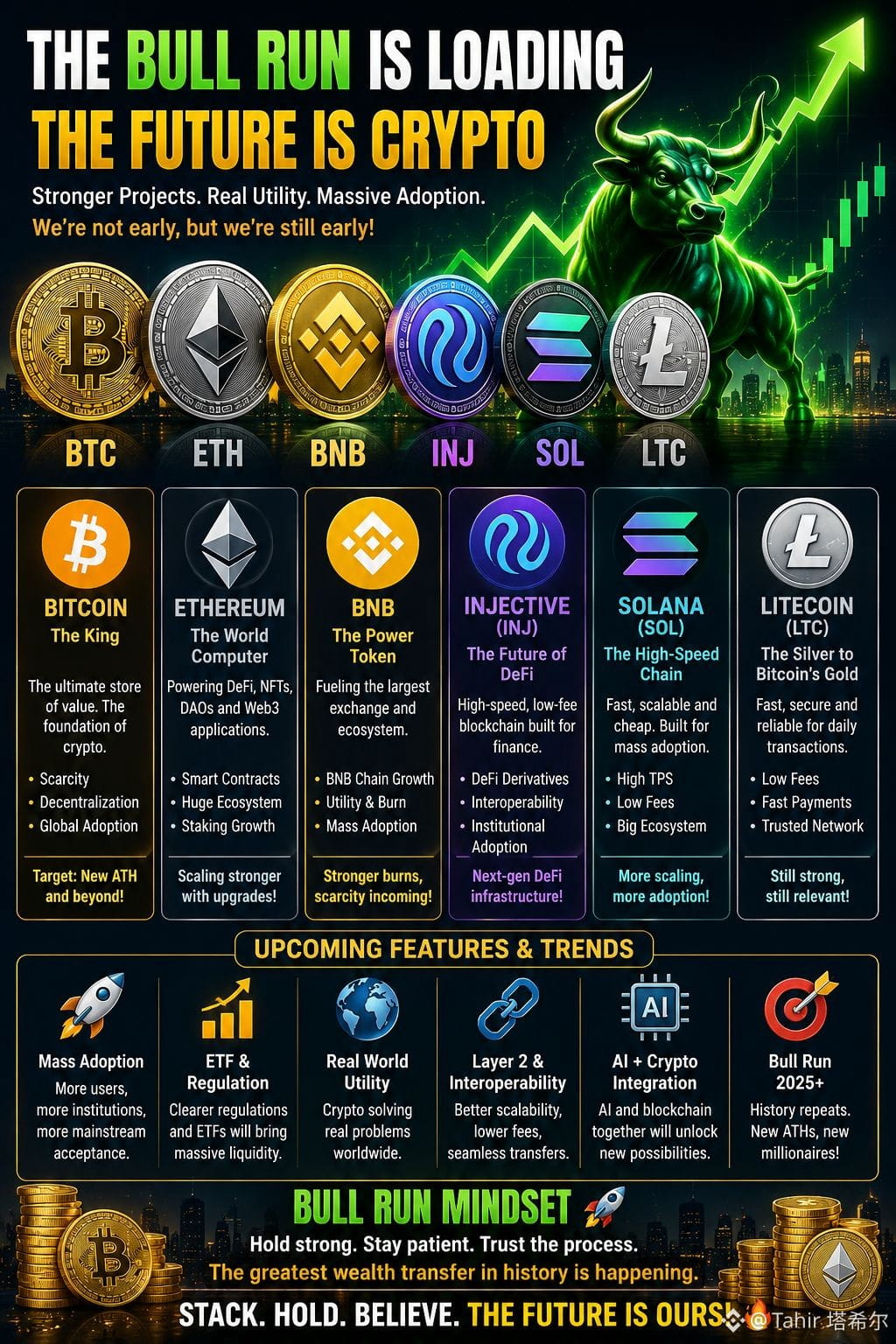
🚀 CRYPTO BULL RUN: THE NEXT BIG MOVE? 🐂🔥
The crypto market is evolving fast — and the next cycle may be driven by utility, adoption, institutions, and real on-chain finance, not just hype.
₿ BTC — The King
Digital scarcity + institutional adoption + ETF demand. Bitcoin remains the foundation of the entire market.
♦️ ETH — The World Computer
Ethereum continues pushing scalability and ecosystem growth, with major upgrades focused on making the network faster and more efficient.
🟡 BNB — The Ecosystem Engine
BNB Chain continues expanding its DeFi, Web3 and application ecosystem while BNB benefits from network utility and token economics.
🔵 INJ — Finance on-chain
Injective is building toward a finance-native blockchain with EVM + WASM, tokenized assets, stablecoin settlement, institutional access and an expanding RWA ecosystem.
🌈 SOL — Speed + Adoption
Solana continues pushing performance, while Alpenglow is one of the major protocol upgrades to watch in 2026, targeting dramatically faster finality.
⚡ LTC — The Veteran
Litecoin remains focused on fast, reliable payments, while upcoming developments include programmable functionality and its next halving cycle.
🔥 WHAT COULD DRIVE THE NEXT BULL RUN?
✅ Institutional capital
✅ ETF adoption
✅ Clearer crypto regulation
✅ Real-world asset tokenization
✅ Stablecoin growth
✅ DeFi expansion
✅ AI + blockchain
✅ Faster & cheaper networks
✅ Mass adoption
✅ New all-time highs
Bitcoin recently moved back above $80K, while ETH and SOL also posted strong gains — but a rally does not automatically guarantee a full bull market.
The real question isn't:
“Will crypto survive?”
It's:
“How big can the next adoption wave become?” 🌎🚀
BTC. ETH. BNB. INJ. SOL. LTC.
Different narratives.
Different technology.
One massive ecosystem.
🐂 The bull may be waking up.
#Bitcoin #Ethereum #BNB #Injective #Solana #Litecoin #Crypto #BullRun #DeFi #RWA #Web3 #Blockchain
The crypto market is evolving fast — and the next cycle may be driven by utility, adoption, institutions, and real on-chain finance, not just hype.
₿ BTC — The King
Digital scarcity + institutional adoption + ETF demand. Bitcoin remains the foundation of the entire market.
♦️ ETH — The World Computer
Ethereum continues pushing scalability and ecosystem growth, with major upgrades focused on making the network faster and more efficient.
🟡 BNB — The Ecosystem Engine
BNB Chain continues expanding its DeFi, Web3 and application ecosystem while BNB benefits from network utility and token economics.
🔵 INJ — Finance on-chain
Injective is building toward a finance-native blockchain with EVM + WASM, tokenized assets, stablecoin settlement, institutional access and an expanding RWA ecosystem.
🌈 SOL — Speed + Adoption
Solana continues pushing performance, while Alpenglow is one of the major protocol upgrades to watch in 2026, targeting dramatically faster finality.
⚡ LTC — The Veteran
Litecoin remains focused on fast, reliable payments, while upcoming developments include programmable functionality and its next halving cycle.
🔥 WHAT COULD DRIVE THE NEXT BULL RUN?
✅ Institutional capital
✅ ETF adoption
✅ Clearer crypto regulation
✅ Real-world asset tokenization
✅ Stablecoin growth
✅ DeFi expansion
✅ AI + blockchain
✅ Faster & cheaper networks
✅ Mass adoption
✅ New all-time highs
Bitcoin recently moved back above $80K, while ETH and SOL also posted strong gains — but a rally does not automatically guarantee a full bull market.
The real question isn't:
“Will crypto survive?”
It's:
“How big can the next adoption wave become?” 🌎🚀
BTC. ETH. BNB. INJ. SOL. LTC.
Different narratives.
Different technology.
One massive ecosystem.
🐂 The bull may be waking up.
#Bitcoin #Ethereum #BNB #Injective #Solana #Litecoin #Crypto #BullRun #DeFi #RWA #Web3 #Blockchain
PINNED
Verified
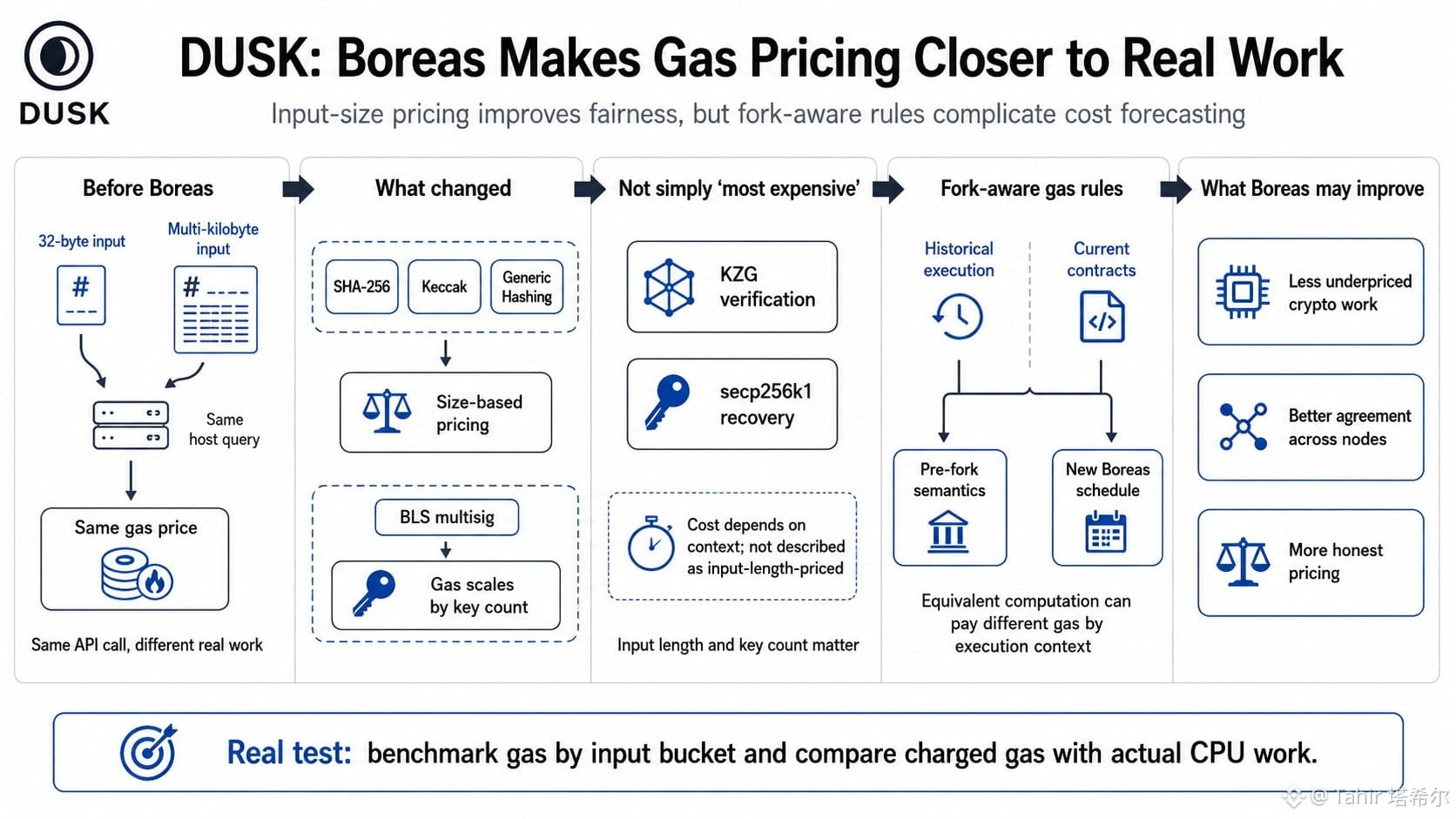
#dusk $DUSK @Dusk While reading the Boreas release notes, I stopped at one small change DUSK no longer prices SHA-256, Keccak and generic hashing as if every input costs the same.
A 32-byte hash and a multi-kilobyte hash call the same host query, but they do not demand equal work. Boreas adds size-based pricing for those three, while BLS multisig verification scales by key count. KZG verification and secp256k1 recovery are not described as input-length-priced. Asking which query is “most expensive” without fixing input length and key count is almost the wrong question.
The comparison is flat API-call pricing versus computation imposed on validators. DUSK moved closer to the second.
There is a complication. Boreas is fork-aware: historical execution keeps pre-fork semantics, while current contracts receive the new schedule. Equivalent computation can carry different gas by execution context necessary for replay, awkward for developers forecasting costs.
For DUSK, better gas accuracy should reduce underpriced cryptographic workloads and make execution more consistent across nodes. It does not prove successful state transitions became cheaper. Maybe they became more honestly priced, even when the number rises.
I’m still waiting for benchmark data by input bucket. Deterministic accounting is only convincing when charged gas tracks real CPU work.
@Dusk #dusk #Dusk
A 32-byte hash and a multi-kilobyte hash call the same host query, but they do not demand equal work. Boreas adds size-based pricing for those three, while BLS multisig verification scales by key count. KZG verification and secp256k1 recovery are not described as input-length-priced. Asking which query is “most expensive” without fixing input length and key count is almost the wrong question.
The comparison is flat API-call pricing versus computation imposed on validators. DUSK moved closer to the second.
There is a complication. Boreas is fork-aware: historical execution keeps pre-fork semantics, while current contracts receive the new schedule. Equivalent computation can carry different gas by execution context necessary for replay, awkward for developers forecasting costs.
For DUSK, better gas accuracy should reduce underpriced cryptographic workloads and make execution more consistent across nodes. It does not prove successful state transitions became cheaper. Maybe they became more honestly priced, even when the number rises.
I’m still waiting for benchmark data by input bucket. Deterministic accounting is only convincing when charged gas tracks real CPU work.
@Dusk #dusk #Dusk
88

Allahditto PK
·
--
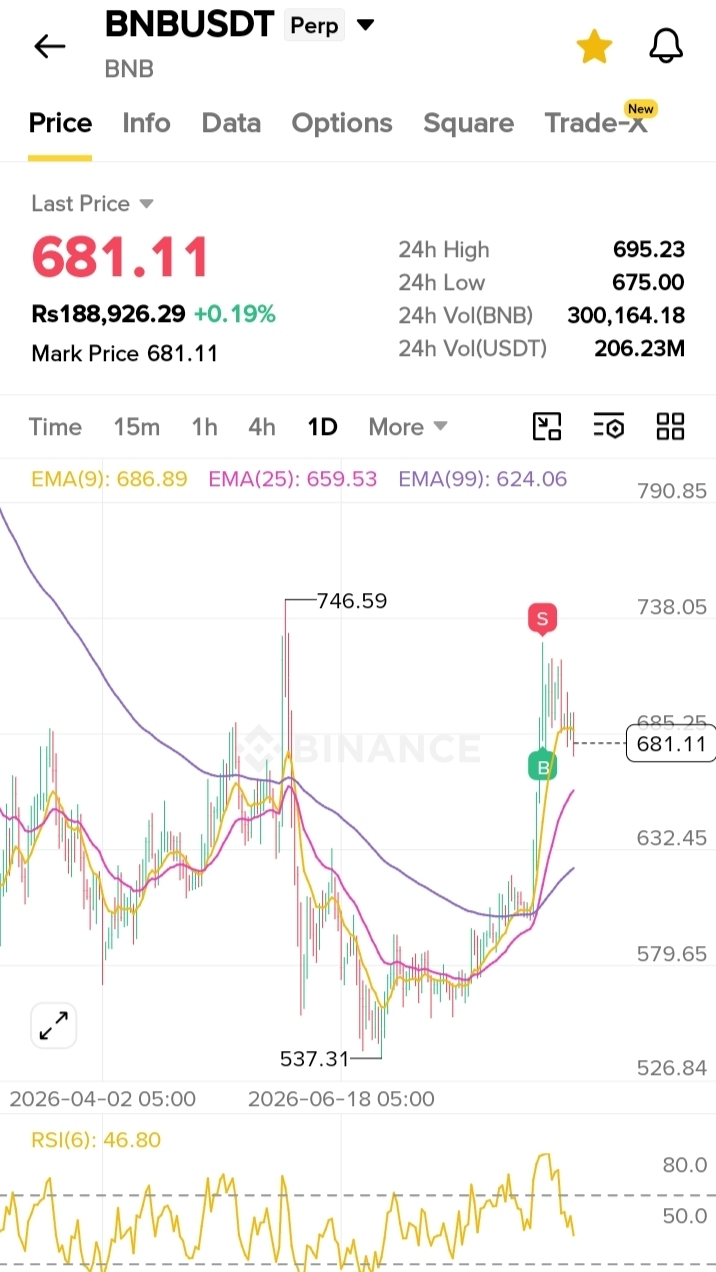
BNB/USDT — Daily Chart Setup
@-BNB - is cooling after a strong upside move, now trading around $681. Price sits below the EMA(9) at $686.9, while the EMA(25) at $659.5 keeps the broader structure constructive.
Key levels:
🔴 Resistance: $686–$695
🟢 Support: $659–$660
🟢 Major support: $632
RSI(6): 46.8 — momentum is neutral, not overheated.
A daily close above $695 could revive bullish momentum, while losing $659 may trigger a deeper pullback.
Will BNB reclaim $695, or test $659 first?
@BNB #BNBUSDT #BinanceSquareFamily #cryptouniverseofficial #TradingCommunity
@-BNB - is cooling after a strong upside move, now trading around $681. Price sits below the EMA(9) at $686.9, while the EMA(25) at $659.5 keeps the broader structure constructive.
Key levels:
🔴 Resistance: $686–$695
🟢 Support: $659–$660
🟢 Major support: $632
RSI(6): 46.8 — momentum is neutral, not overheated.
A daily close above $695 could revive bullish momentum, while losing $659 may trigger a deeper pullback.
Will BNB reclaim $695, or test $659 first?
@BNB #BNBUSDT #BinanceSquareFamily #cryptouniverseofficial #TradingCommunity

88

Muzamil Abbas⁷⁵ 穆扎米尔_阿巴斯
·
--
Bullish🎁 60 $SUI COIN GIVEAWAY 🎁
Want to win SUI? 🏆
✅ Follow me
❤️ Like this post
🔁 Repost this post
💬 Comment “1” to claim
Good luck everyone 🔥
#SUI🔥 #SUIPricePrediction #ARBRises30%OnRobinhoodChainRevenue

88


KIM_加密 143
·
--
Bullish🚨 RED PACKET DROP IS LIVE! 🧧🔥
Don’t miss your chance to grab your reward! 🎁💰
Jump in now, claim your luck, and enjoy the surprise! 🍀🧧
⚡ LIVE NOW — GO GO GO! 🚀$NVDAB $GOOGL.US $NVDA.US #ARBRises30%OnRobinhoodChainRevenue #Japan10YYieldHits3%FirstSince1996 #WTIOilRisesAsOpenInterestShrinks #EtherETFsExtendInflowStreakTo11Days #GoldFalls5.5%From3MonthHigh
Don’t miss your chance to grab your reward! 🎁💰
Jump in now, claim your luck, and enjoy the surprise! 🍀🧧
⚡ LIVE NOW — GO GO GO! 🚀$NVDAB $GOOGL.US $NVDA.US #ARBRises30%OnRobinhoodChainRevenue #Japan10YYieldHits3%FirstSince1996 #WTIOilRisesAsOpenInterestShrinks #EtherETFsExtendInflowStreakTo11Days #GoldFalls5.5%From3MonthHigh

88

KIRAN_加密 143
·
--
Bullish🚨 ALERT 🚨 ALERT 🚨 ETH + BTC GIVEAWAY IS LIVE NOW! 🧧🎁🔥
The reward drop has officially started! Don’t miss your chance to participate and grab exciting ETH & BTC rewards. 💰⚡ Whether you’re a long-time crypto supporter or just getting started, this is your moment to join the action!
✨ Follow the page
❤️ Like this post
💬 Drop a comment
🔄 Share & repost with your crypto friends
Stay active, keep your notifications on, and watch the LIVE for the giveaway drop! 🚀
🎁 Rewards are waiting for lucky participants!
🍀 Good luck, Crypto Family!
🔥 ETH • BTC • GIVEAWAY 🔥
#ChinaPropertyStocksJumpOnNewMortgageRules #USCanadaTradeWarDeepens #TankerHitsMinesInStraitOfHormuz #LNGTankersStayOutOfHormuz
$SOL
$BNB
$BTC
The reward drop has officially started! Don’t miss your chance to participate and grab exciting ETH & BTC rewards. 💰⚡ Whether you’re a long-time crypto supporter or just getting started, this is your moment to join the action!
✨ Follow the page
❤️ Like this post
💬 Drop a comment
🔄 Share & repost with your crypto friends
Stay active, keep your notifications on, and watch the LIVE for the giveaway drop! 🚀
🎁 Rewards are waiting for lucky participants!
🍀 Good luck, Crypto Family!
🔥 ETH • BTC • GIVEAWAY 🔥
#ChinaPropertyStocksJumpOnNewMortgageRules #USCanadaTradeWarDeepens #TankerHitsMinesInStraitOfHormuz #LNGTankersStayOutOfHormuz
$SOL
$BNB
$BTC


88

MANO_加密 143
·
--
Binance Wallet to Launch TermMax (TMX) Trading Competition on Binance Alpha
Binance Wallet is about to get a little more exciting 🔥
They’re rolling out a TermMax $TMX trading competition right on Binance Alpha, and honestly it feels like the perfect time to test your strategies without risking your whole bag.
If you haven’t tried TermMax yet, it’s one of those DeFi protocols that’s been quietly building around structured products and fixed-yield trading. Now with Binance Wallet + Alpha pushing it front and center, we’re probably going to see a lot more eyes, a lot more volume, and yeah… a lot more competition 😅
The idea is simple: trade TMX during the event window, climb the leaderboard, and grab rewards. Whether you’re a scalper who lives on 15M charts or someone who just DCA’s and holds, there’s room to play. Just don’t forget the basics — set your SL, don’t FOMO in, and treat it like practice with upside.
Competitions like this are how new tokens get real liquidity and how wallets get real users. So if you’ve been sleeping on Binance Wallet Alpha, this might be your nudge to wake up.
Are you planning to join the TMX race or just watching from sidelines? Drop your take 👇
#BinanceWallet #TermMax #TMX #BinanceAlpha #cryptotrading
They’re rolling out a TermMax $TMX trading competition right on Binance Alpha, and honestly it feels like the perfect time to test your strategies without risking your whole bag.
If you haven’t tried TermMax yet, it’s one of those DeFi protocols that’s been quietly building around structured products and fixed-yield trading. Now with Binance Wallet + Alpha pushing it front and center, we’re probably going to see a lot more eyes, a lot more volume, and yeah… a lot more competition 😅
The idea is simple: trade TMX during the event window, climb the leaderboard, and grab rewards. Whether you’re a scalper who lives on 15M charts or someone who just DCA’s and holds, there’s room to play. Just don’t forget the basics — set your SL, don’t FOMO in, and treat it like practice with upside.
Competitions like this are how new tokens get real liquidity and how wallets get real users. So if you’ve been sleeping on Binance Wallet Alpha, this might be your nudge to wake up.
Are you planning to join the TMX race or just watching from sidelines? Drop your take 👇
#BinanceWallet #TermMax #TMX #BinanceAlpha #cryptotrading
88

Aimei爱梅2911
·
--
🧧🎁Gift to those who follow me fast🧧🎁 @Aimei爱梅2911 🌹🌹🌹
Red packet box is here👇👇👇
follow me follow back 🔜 & be on my Favorite one 😍
#like_share_follow
Red packet box is here👇👇👇
follow me follow back 🔜 & be on my Favorite one 😍
#like_share_follow

88

Sahil987
·
--
🎁🎁
88

IFFU_加密 143
·
--
🧧✨ Red Packet Time! ✨🧧
A little luck 🍀
A little happiness 😊
And a sweet surprise waiting for you! 🎁❤️
💰 Grab the Red Packet before it’s gone! 🧧🔥
Wishing everyone lots of luck and good vibes! 🌟🥰
#RedPacket #Binance #Crypto #GoodLuck 🧧🚀
A little luck 🍀
A little happiness 😊
And a sweet surprise waiting for you! 🎁❤️
💰 Grab the Red Packet before it’s gone! 🧧🔥
Wishing everyone lots of luck and good vibes! 🌟🥰
#RedPacket #Binance #Crypto #GoodLuck 🧧🚀

88

R A O_加密
·
--
Life can be heavy sometimes. 🌿
When you’re tired, don’t call it the end—give your soul some peace.
And remember, taking care of yourself is not selfish. 🤍
When you’re tired, don’t call it the end—give your soul some peace.
And remember, taking care of yourself is not selfish. 🤍

88
MANO_加密 143
·
--
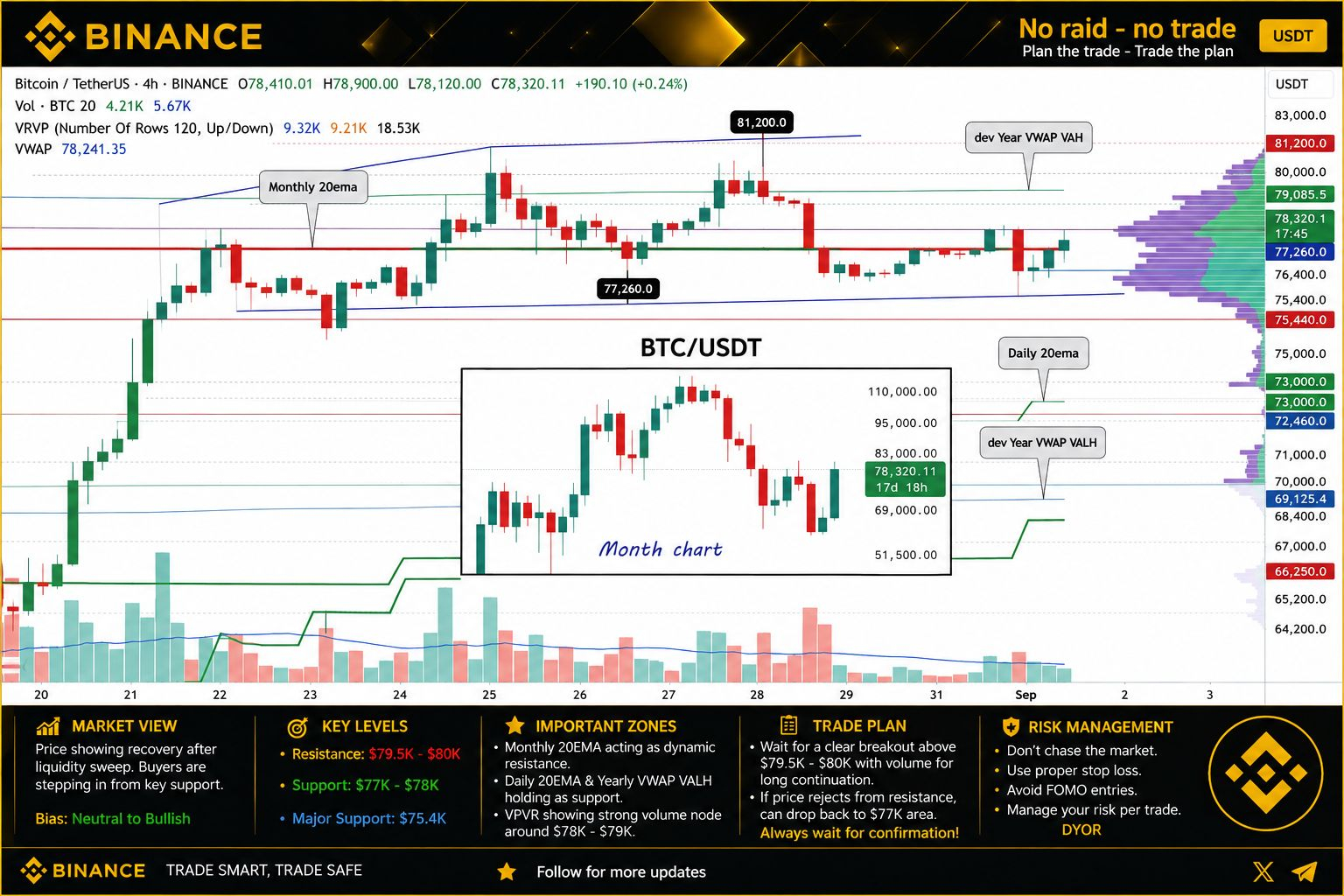
Bullish#BTC/USDT chart shows price around $78K and trying to recover after a recent pullback. Buyers are stepping back in, but the chart is still near an important resistance zone.
Bias: Neutral to slightly bullish 📈
Support: Around $77K–$78K
Resistance: Around $79.5K–$80K
Key levels: Monthly 20EMA + yearly VWAP areas
Setup: Wait for a clear breakout or liquidity raid before entering.
Risk: Avoid FOMO; confirmation is important.
Overall: BTC is showing recovery, but a confirmed breakout above resistance would make the bullish setup stronger. DYOR
#btc70k #BTCUSDT #BinanceSquareFamily #trading
Bias: Neutral to slightly bullish 📈
Support: Around $77K–$78K
Resistance: Around $79.5K–$80K
Key levels: Monthly 20EMA + yearly VWAP areas
Setup: Wait for a clear breakout or liquidity raid before entering.
Risk: Avoid FOMO; confirmation is important.
Overall: BTC is showing recovery, but a confirmed breakout above resistance would make the bullish setup stronger. DYOR
#btc70k #BTCUSDT #BinanceSquareFamily #trading
88

NAJAF_加密 143
·
--
‼️$DOGE 🐕 Reward is here ‼️
I’m sharing $DOGE rewards with the community as a Bigger thank-you.
✨ Just claim your reward and enjoy! ✨
Claim it. Get rewarded
@DOGE_ $DOGE
I’m sharing $DOGE rewards with the community as a Bigger thank-you.
✨ Just claim your reward and enjoy! ✨
Claim it. Get rewarded
@DOGE_ $DOGE

88
KIRAN_加密 143
·
--
Bullish🚨 ALERT 🚨 ALERT 🚨 ETH + BTC GIVEAWAY IS LIVE NOW! 🧧🎁🔥
The reward drop has officially started! Don’t miss your chance to participate and grab exciting ETH & BTC rewards. 💰⚡ Whether you’re a long-time crypto supporter or just getting started, this is your moment to join the action!
✨ Follow the page
❤️ Like this post
💬 Drop a comment
🔄 Share & repost with your crypto friends
Stay active, keep your notifications on, and watch the LIVE for the giveaway drop! 🚀
🎁 Rewards are waiting for lucky participants!
🍀 Good luck, Crypto Family!
🔥 ETH • BTC • GIVEAWAY 🔥
#ChinaPropertyStocksJumpOnNewMortgageRules #USCanadaTradeWarDeepens #TankerHitsMinesInStraitOfHormuz #LNGTankersStayOutOfHormuz
$SOL
$BNB
$BTC
The reward drop has officially started! Don’t miss your chance to participate and grab exciting ETH & BTC rewards. 💰⚡ Whether you’re a long-time crypto supporter or just getting started, this is your moment to join the action!
✨ Follow the page
❤️ Like this post
💬 Drop a comment
🔄 Share & repost with your crypto friends
Stay active, keep your notifications on, and watch the LIVE for the giveaway drop! 🚀
🎁 Rewards are waiting for lucky participants!
🍀 Good luck, Crypto Family!
🔥 ETH • BTC • GIVEAWAY 🔥
#ChinaPropertyStocksJumpOnNewMortgageRules #USCanadaTradeWarDeepens #TankerHitsMinesInStraitOfHormuz #LNGTankersStayOutOfHormuz
$SOL
$BNB
$BTC
88
KIM_加密 143
·
--
Bullish🚨 ALERT 🚨 ALERT 🚨 COIN GIVEAWAY IS LIVE! 🧧🎁🔥
🎉 The giveaway drop has officially started! Grab your chance to win exciting crypto rewards and join the LIVE action! 💰🚀
✨ COINS IN THE GIVEAWAY:
₿ BTC • Ξ ETH • BNB • SOL • XRP • DOGE 🔥
❤️ Follow
👍 Like
💬 Comment
🔄 Share & Repost
📢 Stay active and keep watching the LIVE for the reward drop!
🎁 Your lucky reward could be waiting!
🍀 Good luck, Crypto Family! 🚀
🔥 BTC • ETH • BNB • SOL • XRP • DOGE GIVEAWAY 🔥
$NVDAB
$AAPLB
$NVDA.US
#RussiaStartsLargeScaleDigitalRubleRolloutSep1 #SaylorHintsStrategyBitcoinBuy #RussiaStartsLargeScaleDigitalRubleRolloutSep1 #TankerHitsMinesInStraitOfHormuz #LNGTankersStayOutOfHormuz
🎉 The giveaway drop has officially started! Grab your chance to win exciting crypto rewards and join the LIVE action! 💰🚀
✨ COINS IN THE GIVEAWAY:
₿ BTC • Ξ ETH • BNB • SOL • XRP • DOGE 🔥
❤️ Follow
👍 Like
💬 Comment
🔄 Share & Repost
📢 Stay active and keep watching the LIVE for the reward drop!
🎁 Your lucky reward could be waiting!
🍀 Good luck, Crypto Family! 🚀
🔥 BTC • ETH • BNB • SOL • XRP • DOGE GIVEAWAY 🔥
$NVDAB
$AAPLB
$NVDA.US
#RussiaStartsLargeScaleDigitalRubleRolloutSep1 #SaylorHintsStrategyBitcoinBuy #RussiaStartsLargeScaleDigitalRubleRolloutSep1 #TankerHitsMinesInStraitOfHormuz #LNGTankersStayOutOfHormuz

88
Muzamil Abbas⁷⁵ 穆扎米尔_阿巴斯
·
--
Bullish🎁 60 $SUI COIN GIVEAWAY 🎁
Want to win SUI? 🏆
✅ Follow me
❤️ Like this post
🔁 Repost this post
💬 Comment “1” to claim
Good luck everyone 🔥
#SUI🔥 #SUIPricePrediction #ARBRises30%OnRobinhoodChainRevenue
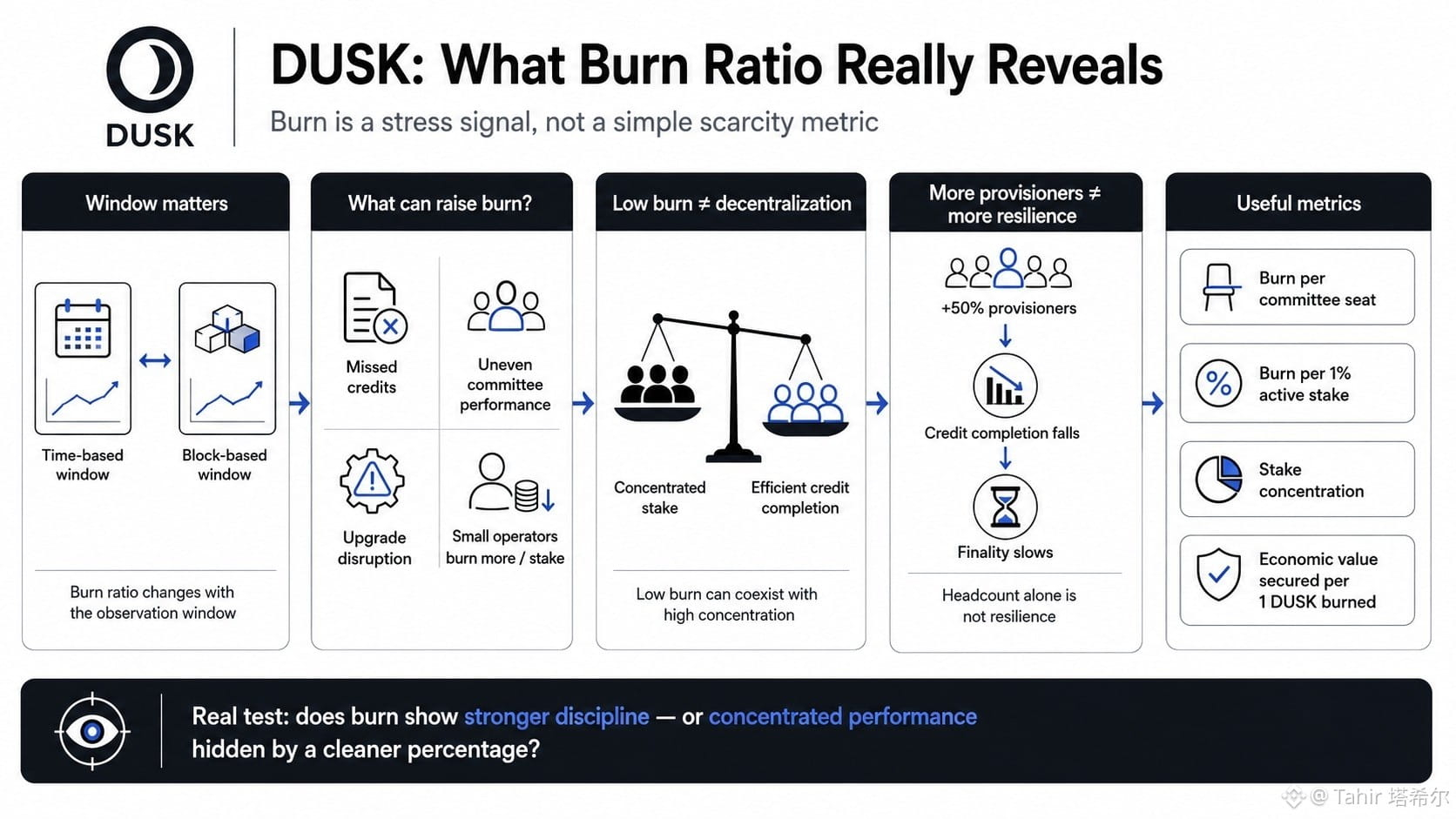
#dusk $DUSK @Dusk One figure kept bothering me as I lined up DUSK gross rewards with what provisioners actually received: the missing share changed depending on where I started the window.
That makes burn ratio less like a clean token metric and more like a stress signal. A high ratio could reflect failed credit completion, uneven committee performance, upgrade disruption, or smaller provisioners burning more per unit of stake. It does not automatically mean stronger economics.
For DUSK, I would compare stake concentration against burn per committee seat and burn per 1% of active stake. If five large operators hold most consensus weight but complete credits efficiently, the network may show a low burn ratio while participation remains highly centralized. Efficiency, yes. Decentralization, no.
The reverse matters too. Adding 50% more provisioners sounds healthier, but if credit completion falls and finality slows during extreme burn windows, headcount is not resilience.
The hardest measure is economic value secured per 1 DUSK burned, calculated alongside gross rewards that never reach participants. Time-based windows capture real operational periods; block-based windows control for chain output. I’d use both, especially around upgrades.
I’m watching whether DUSK burn reveals better discipline or merely hides concentrated performance behind a cleaner percentage.
@Dusk #dusk
That makes burn ratio less like a clean token metric and more like a stress signal. A high ratio could reflect failed credit completion, uneven committee performance, upgrade disruption, or smaller provisioners burning more per unit of stake. It does not automatically mean stronger economics.
For DUSK, I would compare stake concentration against burn per committee seat and burn per 1% of active stake. If five large operators hold most consensus weight but complete credits efficiently, the network may show a low burn ratio while participation remains highly centralized. Efficiency, yes. Decentralization, no.
The reverse matters too. Adding 50% more provisioners sounds healthier, but if credit completion falls and finality slows during extreme burn windows, headcount is not resilience.
The hardest measure is economic value secured per 1 DUSK burned, calculated alongside gross rewards that never reach participants. Time-based windows capture real operational periods; block-based windows control for chain output. I’d use both, especially around upgrades.
I’m watching whether DUSK burn reveals better discipline or merely hides concentrated performance behind a cleaner percentage.
@Dusk #dusk
Partly True
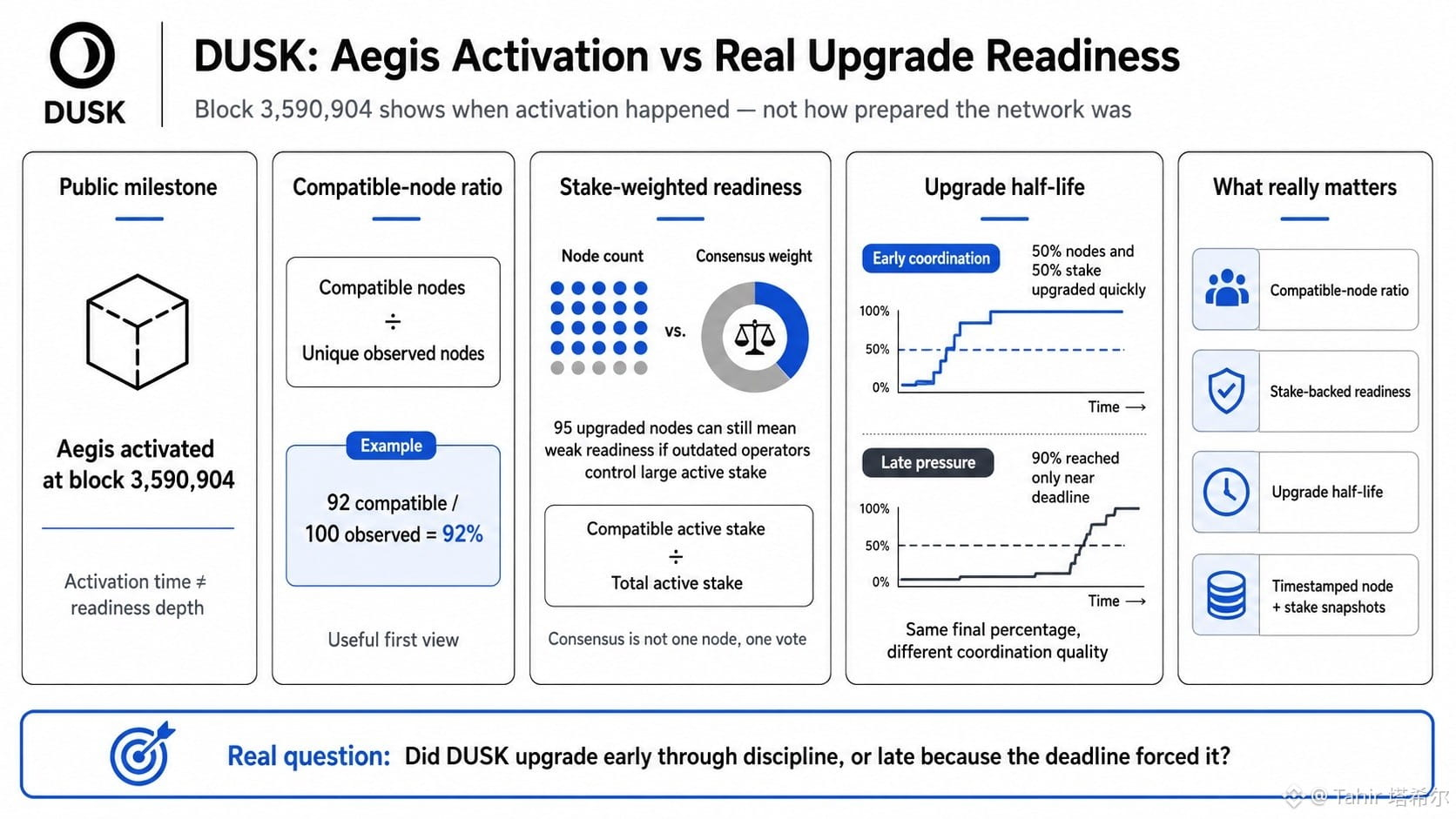
#dusk $DUSK @Dusk I was checking DUSK’s Aegis activation at block 3,590,904 and noticed the public milestone answers when the upgrade happened, but not how ready the network actually was.
A basic measure would be compatible nodes divided by all unique observed nodes. If 92 of 100 nodes were running Rusk 1.6.0+, DUSK had a 92% compatible-node ratio.
Useful, yes. But consensus is not simply one node, one vote.
Provisioners operate with active stake, so 95 upgraded nodes could still represent only 60% of consensus weight if five outdated operators controlled the remaining 40%. That is the comparison most summaries miss operator participation versus stake-backed readiness.
Timing matters too. I would want the upgrade half-life how many hours it took 50% of observable nodes and 50% of active DUSK stake to become compatible. Reaching 90% gradually over several days signals something different from operators rushing into Rusk 1.6.0 during the final 24 hours.
Both paths can produce the same final percentage, but only one shows comfortable coordination.
Without timestamped node-version and stake snapshots, any claimed Aegis readiness ratio remains incomplete. DUSK activated successfully, but I’m still watching whether the network upgraded early by discipline, or late because the deadline finally created enough pressure.
@Dusk #dusk
A basic measure would be compatible nodes divided by all unique observed nodes. If 92 of 100 nodes were running Rusk 1.6.0+, DUSK had a 92% compatible-node ratio.
Useful, yes. But consensus is not simply one node, one vote.
Provisioners operate with active stake, so 95 upgraded nodes could still represent only 60% of consensus weight if five outdated operators controlled the remaining 40%. That is the comparison most summaries miss operator participation versus stake-backed readiness.
Timing matters too. I would want the upgrade half-life how many hours it took 50% of observable nodes and 50% of active DUSK stake to become compatible. Reaching 90% gradually over several days signals something different from operators rushing into Rusk 1.6.0 during the final 24 hours.
Both paths can produce the same final percentage, but only one shows comfortable coordination.
Without timestamped node-version and stake snapshots, any claimed Aegis readiness ratio remains incomplete. DUSK activated successfully, but I’m still watching whether the network upgraded early by discipline, or late because the deadline finally created enough pressure.
@Dusk #dusk
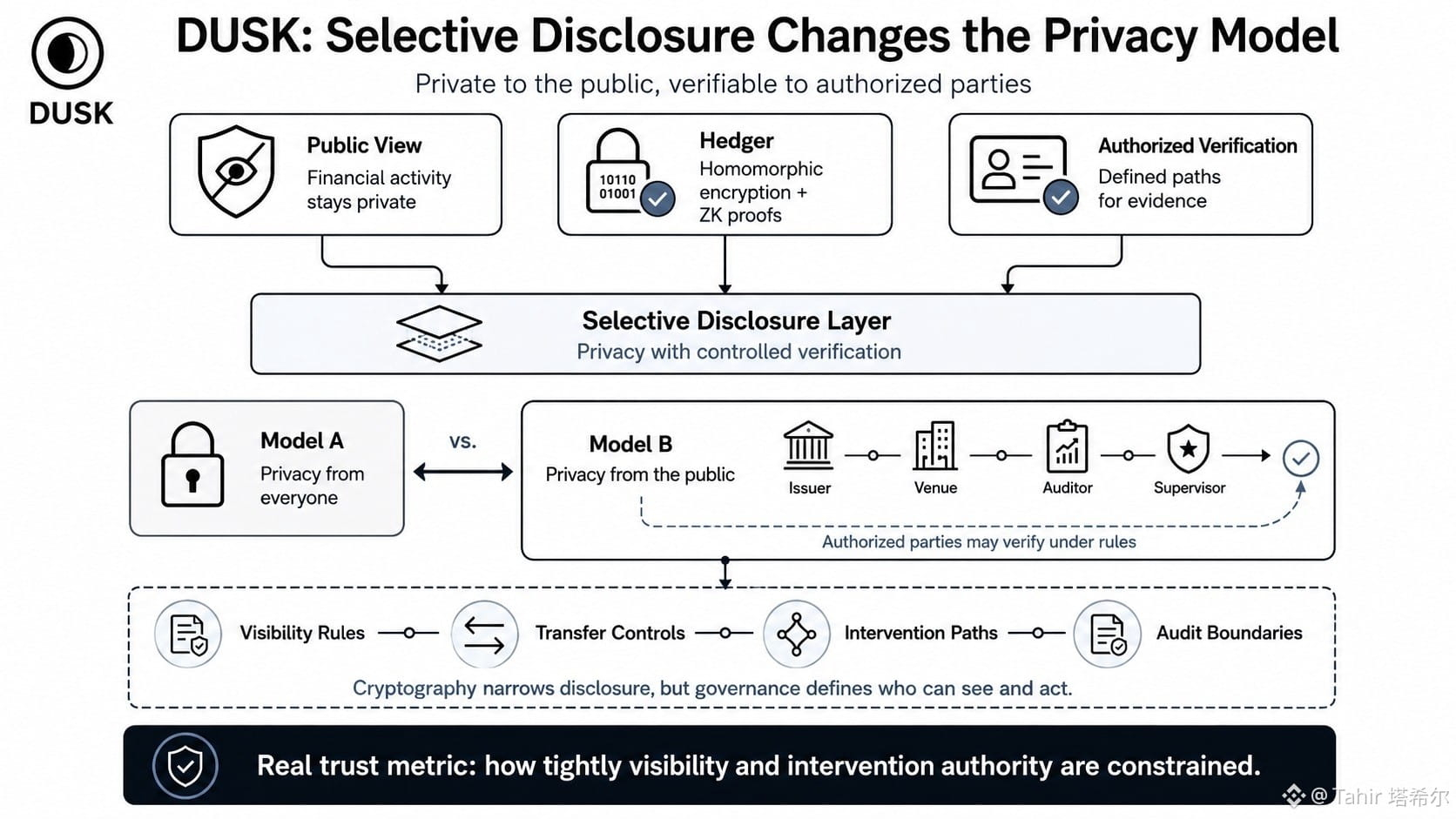
#dusk $DUSK @Dusk I was reading Dusk’s privacy material and one phrase kept changing how I saw the whole design: “selective disclosure.” The system is not really promising that nobody can ever see anything. It is trying to keep financial activity private from the public while still leaving defined paths for verification.
That makes Hedger more interesting than a simple privacy feature. DUSK combines homomorphic encryption and zero-knowledge proofs so data can stay hidden while execution remains provable. But “auditable” quietly introduces another question: who gets the extra visibility, and what can they do with it?
The comparison I keep coming back to is privacy from everyone versus privacy from everyone except authorized parties. Those are very different guarantees.
For regulated finance, DUSK may actually need the second model. Issuers, venues, auditors or supervisors can require evidence, transfer controls, even intervention paths. Strong cryptography does not remove that governance layer. It can make disclosure narrower, but somebody still defines the rules.
That is where I’m still watching DUSK carefully. If privacy is selective, the real trust metric may not be how well data is hidden, but how tightly visibility and intervention authority are constrained.
@Dusk #DUSK #dusk
That makes Hedger more interesting than a simple privacy feature. DUSK combines homomorphic encryption and zero-knowledge proofs so data can stay hidden while execution remains provable. But “auditable” quietly introduces another question: who gets the extra visibility, and what can they do with it?
The comparison I keep coming back to is privacy from everyone versus privacy from everyone except authorized parties. Those are very different guarantees.
For regulated finance, DUSK may actually need the second model. Issuers, venues, auditors or supervisors can require evidence, transfer controls, even intervention paths. Strong cryptography does not remove that governance layer. It can make disclosure narrower, but somebody still defines the rules.
That is where I’m still watching DUSK carefully. If privacy is selective, the real trust metric may not be how well data is hidden, but how tightly visibility and intervention authority are constrained.
@Dusk #DUSK #dusk
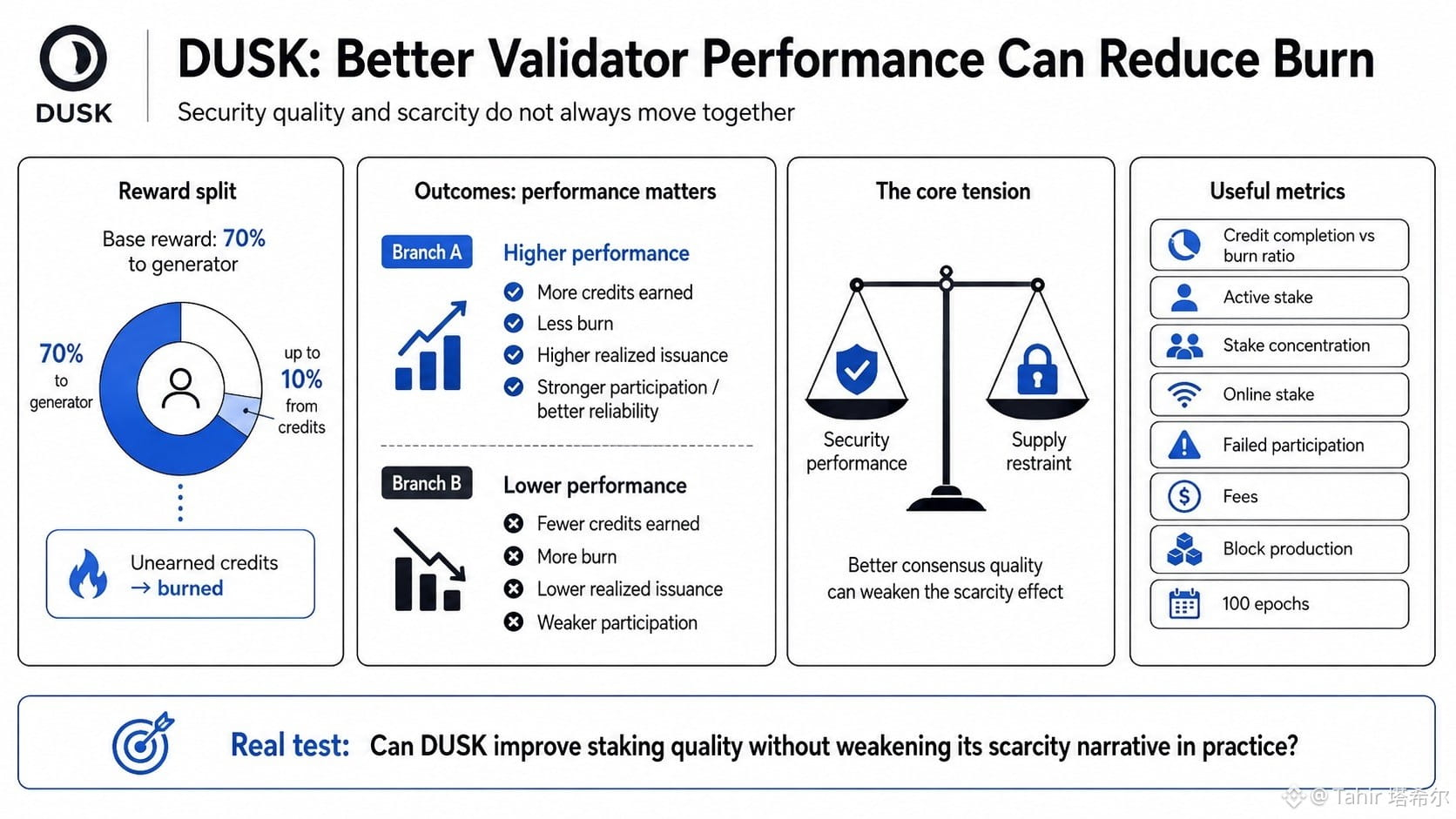
#dusk $DUSK @Dusk I was checking how DUSK staking rewards are actually split, and one detail kept bothering me: better validator performance can reduce burn.
The generator receives 70% of the reward, with up to another 10% tied to credits. If those conditional credits are not earned, that portion is burned. So realized issuance is not just a fixed tokenomics number. It partly depends on how well consensus participants perform.
That creates a strange tension inside DUSK.
Better staking performance strengthens security, increases successful participation, and should make block production more reliable. But the same improvement can also mean fewer rewards are burned, which pushes realized inflation higher.
Most people hear “DUSK burns unearned rewards” and read it as pure scarcity. I think that is too simple.
The more useful comparison is security performance versus supply restraint. They are connected, but not always aligned.
I would track generator credit completion against burn ratio across 100 epochs, then compare it with active stake, concentration, online stake, failed participation, fees, and block production.
My quiet question is whether DUSK can improve staking quality without making its scarcity narrative weaker in practice.
@Dusk #dusk #DUSK
The generator receives 70% of the reward, with up to another 10% tied to credits. If those conditional credits are not earned, that portion is burned. So realized issuance is not just a fixed tokenomics number. It partly depends on how well consensus participants perform.
That creates a strange tension inside DUSK.
Better staking performance strengthens security, increases successful participation, and should make block production more reliable. But the same improvement can also mean fewer rewards are burned, which pushes realized inflation higher.
Most people hear “DUSK burns unearned rewards” and read it as pure scarcity. I think that is too simple.
The more useful comparison is security performance versus supply restraint. They are connected, but not always aligned.
I would track generator credit completion against burn ratio across 100 epochs, then compare it with active stake, concentration, online stake, failed participation, fees, and block production.
My quiet question is whether DUSK can improve staking quality without making its scarcity narrative weaker in practice.
@Dusk #dusk #DUSK
Log in to explore more content