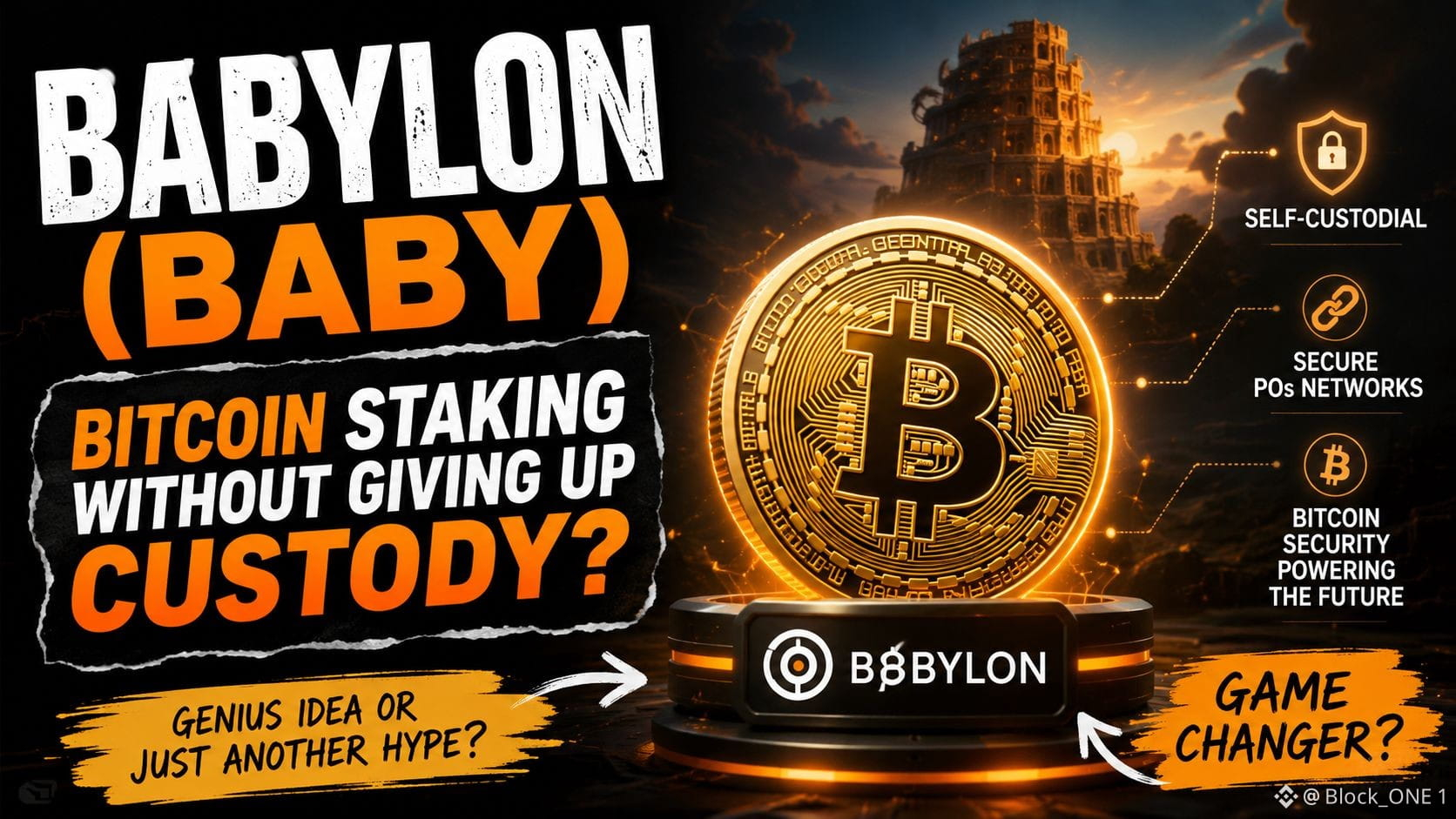
@BabylonLabs_io I keep looking at the crypto market with a little more patience than I used to. After seeing so many cycles, I've stopped believing every new headline that says a project is about to change everything. One month it's AI, the next it's memes, then it's another infrastructure story. The narratives keep rotating, the excitement keeps returning, and somehow the promises always sound familiar. That's probably why Babylon (BABY) didn't catch my attention immediately. It felt like another name in a very long list.
The more I read, though, the more I realized it wasn't trying to reinvent Bitcoin. It was asking a simpler question: what if Bitcoin could help secure other blockchain networks without people giving up control of their coins? That idea feels easier to understand than a lot of crypto marketing. Most Bitcoin holders value ownership above everything else, so keeping custody while still putting those assets to work makes practical sense on paper.
Still, I've watched enough good ideas struggle once they meet reality. Building something is one thing. Convincing people to trust it, integrate it, and use it consistently is something else entirely. Crypto loves moving at full speed, but the outside world doesn't. Developers need time, institutions move carefully, and users rarely change habits overnight.
I'm interested in Babylon because it seems to start with a real problem instead of chasing the latest trend. That doesn't guarantee success, and it certainly doesn't mean adoption is inevitable. Execution has always been where ambitious ideas are tested. Maybe Babylon becomes an important piece of the ecosystem, or maybe it quietly blends into the background like so many projects before it. Either way, I appreciate seeing an idea that feels focused on solving something real instead of simply creating another story for the market to chase.
@BabylonLabs_io
$BABY
#baby
The more I read, though, the more I realized it wasn't trying to reinvent Bitcoin. It was asking a simpler question: what if Bitcoin could help secure other blockchain networks without people giving up control of their coins? That idea feels easier to understand than a lot of crypto marketing. Most Bitcoin holders value ownership above everything else, so keeping custody while still putting those assets to work makes practical sense on paper.
Still, I've watched enough good ideas struggle once they meet reality. Building something is one thing. Convincing people to trust it, integrate it, and use it consistently is something else entirely. Crypto loves moving at full speed, but the outside world doesn't. Developers need time, institutions move carefully, and users rarely change habits overnight.
I'm interested in Babylon because it seems to start with a real problem instead of chasing the latest trend. That doesn't guarantee success, and it certainly doesn't mean adoption is inevitable. Execution has always been where ambitious ideas are tested. Maybe Babylon becomes an important piece of the ecosystem, or maybe it quietly blends into the background like so many projects before it. Either way, I appreciate seeing an idea that feels focused on solving something real instead of simply creating another story for the market to chase.
@BabylonLabs_io
$BABY
#baby