

JPMorgan analysts reported that the recent increase in Ethereum (ETH) staking has resulted in increased centralization and decreased staking yield. Analysts noted that the majority of Ethereum staking activity is under the control of Lido.
Ethereum Network With Declining Staking Returns Is Now More Centralized
In the latest investor note published by JPMorgan analysts led by Nikolaos Panigirtzoglou, it was noted that the increase in ETH staking tendency since The Merge and The Shanghai updates has some costs in the form of the #Ethereum network becoming more centralized and the overall staking yield decreasing.
The Merge update in September 2022 transformed Ethereum from Proof of Work to a Proof of Stake Blockchain, paving the way for ETH staking. With the Shanghai update in April, it paved the way for an increase in staking transactions by allowing validators to withdraw and reinvest the ETHs they staked by locking them in the network.
Lido and Centralization Concerns
The biggest contributors to the growth of staking on Ethereum have been liquid staking providers like Lido (LDO). “The top 5 liquid staking providers control more than 50 percent of staking transactions on the Ethereum network, with Lido in particular accounting for almost a third,” JPMorgan analysts said. According to analysts, platforms such as Lido cause a high degree of centralization despite being decentralized liquid staking platforms.
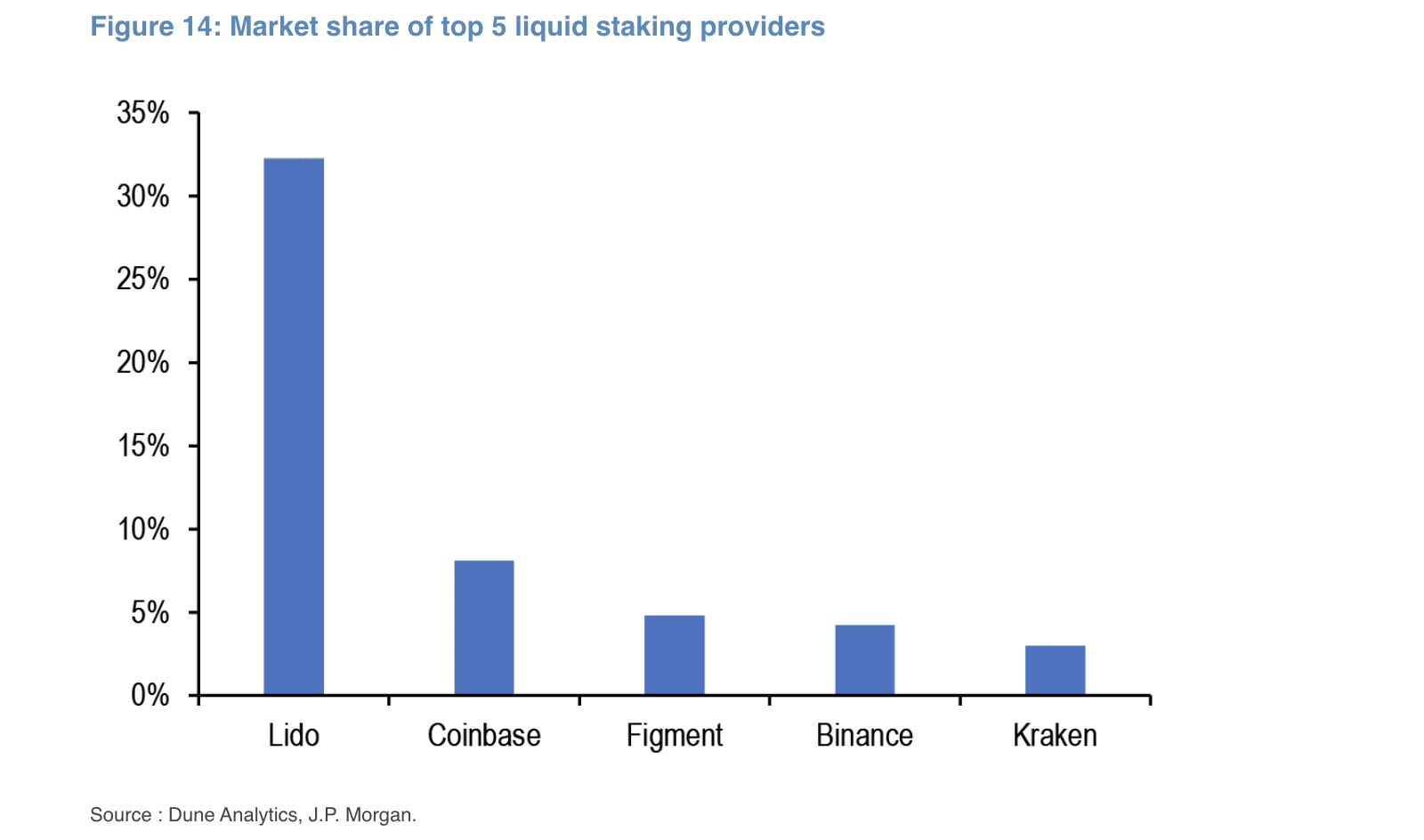
"It goes without saying that centralization by any organization or protocol creates risks for the Ethereum network, as a high number of liquidity providers or node operators can act as a single point of failure or become the target of attacks, or by, for example, censoring certain transactions or highlighting end users' transactions," analysts wrote. "They may cooperate to create an oligopolistic market that will support their own interests at the expense of the interests of the community," he added.
Aside from centralization, analysts noted that another source of concern arising from the growth of liquid staking is remortgaging, which involves using liquidity tokens as collateral across multiple DeFi protocols simultaneously. He added that this practice could lead to gradual liquidations if the value of a staked asset suddenly drops or if it is hacked or the protocol becomes disconnected due to a malicious attack or a protocol error.