


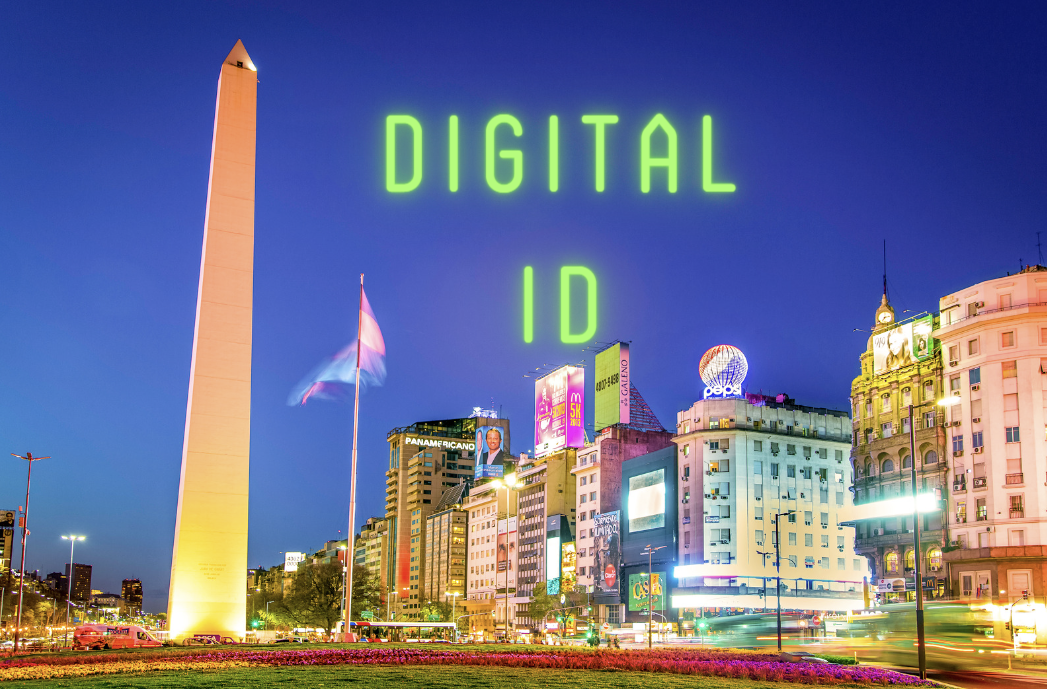
The city government of Buenos Aires, the capital of Argentina, is launching a blockchain-based digital identity service. An application built with zkSync Era technology from developer Matter Labs is called QuarkID. Residents can use QuarkID to receive personal identity documents, such as birth certificates and marriage certificates. prove.
(Understand what zkSync is? zkSync is the first to release the mainnet "zkSync Era", and the developer emphasizes that no tokens are required at this stage)
Using blockchain technology to store official credentials related to identity
According to a report by The Block, the municipal government of Buenos Aires, the capital of Argentina, is launching a blockchain-based digital identity service, using blockchain technology to store official identity-related credentials.
Buenos Aires has launched QuarkID, a wallet app built using blockchain technology developer Matter Labs’ zkSync Era rollup and some technology provided by Argentinian startup Extrimian.
Starting in October, Buenos Aires residents can download the QuarkID wallet and receive personal identification documents such as birth and marriage certificates. It is planned that in the coming months more official identity-related credentials, such as proof of income, academic certificates and benefit claim documents, will also be available for download and storage on the QuarkID wallet.
Diego Fernandez, Buenos Aires Municipal Innovation Secretary, said:
Buenos Aires is driving this new digital trust framework to return control of data to individuals and enable more flexible and secure digital interactions between governments, companies and people.
Equivalence between physical and digital files
Pablo Mosquella, Extrimian's chief operating officer who handles some of the technical support, said the documents were posted to personal ID wallets from government platforms as "verified credentials." These credentials are stored on the user's device and only those who can authenticate can access the credentials.
In the first phase, the document will serve as a replacement for the original paper document, but eventually, everything will move to digital.
Mosquella said the local government has initiated the necessary legislative changes to give digital credentials the same validity as physical signature certificates. Relevant laws are currently being developed and are expected to be discussed during the next term.
Are digital ID cards the future trend?
South Korea will launch a digital ID card plan in 2021. It is expected to provide digital identities protected by blockchain to citizens with smartphones in 2024, and strives to be adopted by 45 million citizens within two years. At that time, the director of the Korea Digital Administration estimated that the economic value of at least approximately US$42 billion, or 3% of its GDP, could be obtained within ten years through this plan.
In Europe, Estonia began to govern the country on the cloud as early as 2002. The eID launched can be used by the government and private enterprises. All health care, tax returns, telecommunications information, etc. are stored on the blockchain.
Although Taiwan has also discussed the issue of digital ID cards, it has not yet reached a consensus after repeated negotiations. In addition, there are concerns about overseas penetration, frequent hacker attacks, and the monitoring of digital footprints. Therefore, the idea was stillborn.
(For more information, please see: South Korea plans to launch a digital ID card, and Estonia already deployed eID 20 years ago)
This article Buenos Aires, the capital of Argentina, launches a blockchain-based digital identity service first appeared on Chain News ABMedia.