


The crypto world moves so fast that Ethereum’s merger feels like a long time ago. But it’s only been a year since the network fully transitioned to using Proof of Stake (PoS). In terms of price, Ethereum is trading at roughly the same price as it was at the time of the merger in September 2022, with ETH trading at around $1,600 the day before the merger. But this is just the tip of the iceberg, and there are many aspects that have changed substantially since Ethereum changed. In this issue, veDAO Research Institute will take stock of the various changes that have taken place in the year since Ethereum merged.
Energy consumption
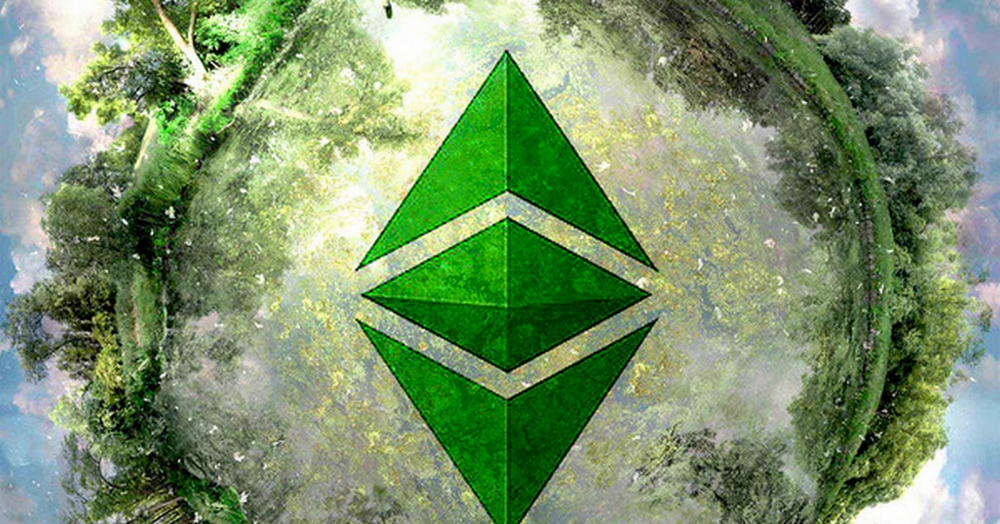
Before the transition, Ethereum used the same consensus mechanism as Bitcoin to validate on-chain transactions: Proof of Work (PoW). It requires miners to compete to solve complex mathematical equations in exchange for participating in an energy-intensive process, for which miners are rewarded. But when Ethereum switched to PoS, it meant that validators, rather than miners, needed to stake Ethereum to ensure network security in exchange for rewards. One of the most notable impacts was the reduction in Ethereum's energy consumption. A report from the Crypto Carbon Ratings Institute (CCRI) noted that Ethereum now uses about 99.99% less energy than before the merger was completed, which means that the carbon footprint of the Ethereum network has been reduced by 99.99%.
Cryptocurrencies have been known in mainstream media for consuming a lot of energy. Therefore, environmental factors, including ESG ratings, will be a factor hindering the adoption of cryptocurrencies. Financial institutions from BlackRock to Fidelity have also received much attention for their cryptocurrency initiatives due to environmental concerns about cryptocurrencies. The Ethereum merger makes these objections meaningless.
Liquidity Staking
Since the Ethereum merger, the amount of Ethereum staked has almost doubled. According to the Dashboard created by Dragonfly data analyst @hildobby on Dune, the current amount of ETH staked in the Ethereum deposit contract has exceeded 26.96 million, with a pledge rate of 22.44%.
Link: https://dune.com/hildobby/eth2-staking
But the Ethereum upgrade also raised concerns about centralization and censorship. This is because people are worried that control over validating network transactions could be isolated in the hands of a few, whether it is a company like an exchange or a project that makes it easier for users to pool funds and earn staking rewards. Before the Ethereum merger, some people were particularly concerned about exchanges like Coinbase participating in staking due to US sanctions on the mixing service Tornado Cash, as Coinbase had funded a lawsuit against the US Treasury and OFAC (US Treasury Department's Office of Foreign Assets Control) by a group of Tornado Cash users. The fear that centralized entities would review transactions to maintain compliance makes applications like Lido Finance a better choice in terms of decentralization.
However, Lido, which now accounts for about 32.3% of all staked ETH, is now seen as a potential weak spot in the decentralization of the Ethereum ecosystem, which has some community members worried. They say Lido’s growing influence is undermining the decentralized nature of Ethereum as a whole.
According to CoinGecko data, STETH has performed well in terms of liquidity staking tokens, with a market value of $13.8 billion. Rocket Pool ETH (RETH), the second largest token in Ethereum by market value, has a market value of $912 million.
Nonetheless, liquidity staking has been a major source of growth for decentralized finance. Liquidity staking enables ETH holders to stake their tokens for rewards and still be able to leverage the value of Ethereum through corresponding tokens that are issued and pegged to its price. While the value of the underlying assets on decentralized exchanges has declined since the merger, liquidity staking continues to thrive.
Scaling Solutions
The merger wasn’t intended to increase Ethereum’s speed, so Ethereum’s average TPS (transactions per second) has mostly hovered around 10 since September, according to analytics site L 2Beat. Still, it laid the groundwork for what’s to come. The “surge” is a series of upgrades planned after the merger that are expected to improve Ethereum’s scalability, according to Vitalik Buterin’s vision for the Ethereum roadmap laid out before the merger last July.
However, scaling solutions designed to address Ethereum’s current limitations are increasingly emerging in cryptocurrencies. According to data from L 2Beat, the average TPS between all Ethereum L2 networks is now over 50, a significant improvement over last year.
Combined, the well-known L2 networks zkSync Era, Optimism, and Arbitrum Nova have a total of more than 61 million transactions in the past 30 days. This is twice the number of Ethereum transactions in the same time period. It can be said that the merger in Ethereum's underlying security has contributed to the recent emergence of L2 technology. Overall, this merger does lay the foundation for further enhancements in scalability.
U.S. Securities and Exchange Commission (SEC)
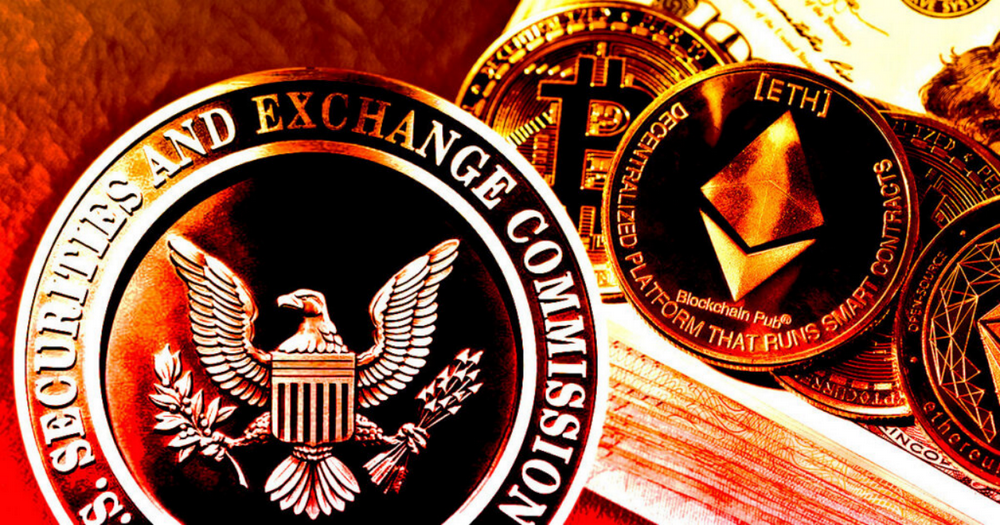
At the same time, staking has become a regulatory hotspot in the United States, with the SEC investigating several cryptocurrency exchanges that provide services to help users earn network rewards.
Kraken settled with the SEC in February involving a $30 million fine for claims that its staking-as-a-service program constituted an unregistered securities offering. Similar claims were made in lawsuits against Coinbase and Binance over their respective staking products. While the SEC implicated some tokens in its lawsuits against Binance and Coinbase, claiming that they were examples of unregistered securities, some have noted and questioned why the regulator did not list tokens using PoW as illegally issued assets.
But U.S. regulators remain divided over how to classify Ethereum. The result is an apparent turf war between the two largest financial regulators, the SEC and the Commodity Futures Trading Commission (CFTC): CFTC Chairman Rostin Behnam said in March that ETH is a commodity, while in February, SEC Chairman Gary Gensler said “everything but Bitcoin” is a security, then dodged questions about Ethereum in April.
Conclusion
Ethereum’s core developers have been working on plans for Ethereum’s next major upgrade, dubbed the “Dencun Upgrade.” It includes the introduction of a feature called proto-danksharding, which, once fully implemented, is expected to scale Ethereum to over 100, 000 transactions per second. Other features being developed, such as account abstraction, will effectively make managing a crypto wallet as easy as managing an email account. Earlier this month, Vitalk spoke during a presentation during Korea Blockchain Week about a feature called “Stateless Clients,” which will make it possible to run an Ethereum node on a smartphone.
Link: https://ethereum.org/en/roadmap/danksharding/
In retrospect, this merger will seem like a bland footnote in the crypto history books compared to the turmoil and corporate collapse of the crypto market in 2022. But in terms of the future, this may be a beacon that illuminates the overall direction of Ethereum, giving people renewed confidence that Ethereum can achieve these major technical upgrades and accomplish some ambitious things; although Ethereum may be slower than we hope, it will eventually move forward while staying true to its values.
About veDAO
veDAO is a Web3 investment decision-making platform driven by AI technology. It uses sentiment indicators and on-chain and off-chain indicators to conduct big data analysis, discover trends, and accurately capture Alpha. By creating an AI consultant, it helps users to invest efficiently and benefit.
Website: https://app.vedao.com/